
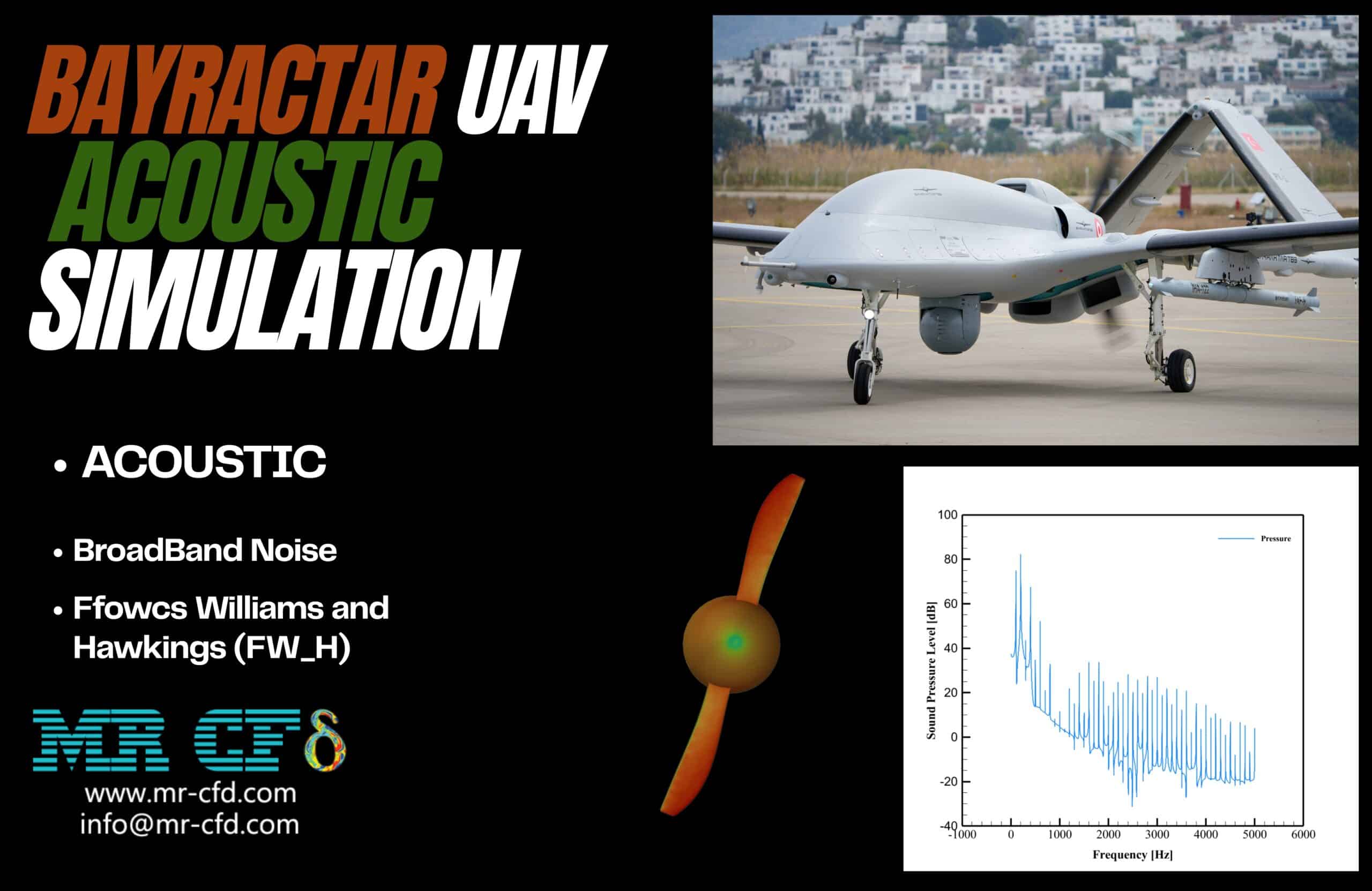
Bayraktar UAV Acoustic Analysis: CFD Simulation by Ansys Fluent
$2,700.00 $1,620.00 HPC
- The problem numerically simulates a Bayractar UAV using ANSYS Fluent software.
- We design the 3-D model with the Design Modeler software.
- We mesh the model with Fluent Meshing software. The element number equals 1,199,753 and their type is polyhedra.
- In this simulation, FW_H and BroadBand Noise are used for acoustic modeling.
To Order Your Project or benefit from a CFD consultation, contact our experts via email (info@mr-cfd.com), online support tab, or WhatsApp at +44 7443 197273.
There are some Free Products to check our service quality.
If you want the training video in another language instead of English, ask it via info@mr-cfd.com after you buy the product.
Description
Acoustic Analysis: Bayraktar UAV CFD Simulation Training
Introduction
In Bayractar UAV Acoustic project, we analyze a Bayraktar UAV acoustically and examine the sources of sound production. We also define receivers around the drone to observe and examine the amount of sound received by the receivers.
Bayraktar is an unmanned aerial vehicle from Turkey . It is a long-lasting, medium-altitude drone. It can be used for surveillance and reconnaissance.
It has a top speed of more than 220 kilometers per hour. The UAV has a fuel capacity of 300 liters. The range can go up to 300 km. 5.48 kilometers is the operational altitude. The greatest height is 7.62 kilometers Maximum loitering time for this drone is 27 hours.
In this simulation, a Bayraktar UAV with one propeller rotating around the horizontal axis is modeled using ANSYS Fluent software. The device is moving at a speed of 140 km/h.
The geometry of the present model is three-dimensional and has been designed using Design Modeler software. We do the meshing of the present model with Fluent Meshing software. The mesh type is Polyhedra, and the element number is 1,199,753.
Methodology
The topic of acoustics is a very widely used and interesting topic in computational fluid dynamics. In this topic, we deal with waves and consequently with pressure.
For this project, we have used two models, BroadBand Noise and Ffowcs Williams and Hawkings (FW_H), and we have explained the settings for both models and examined the differences between the two models.
First, we simulated the BroadBand Noise model steady, and after convergence and aerodynamic stability of the problem, we change the solution model to FW_H and perform the solution transient. If we activate the FW_H model from the beginning, we will hardly reach convergence and the solution may even diverge.
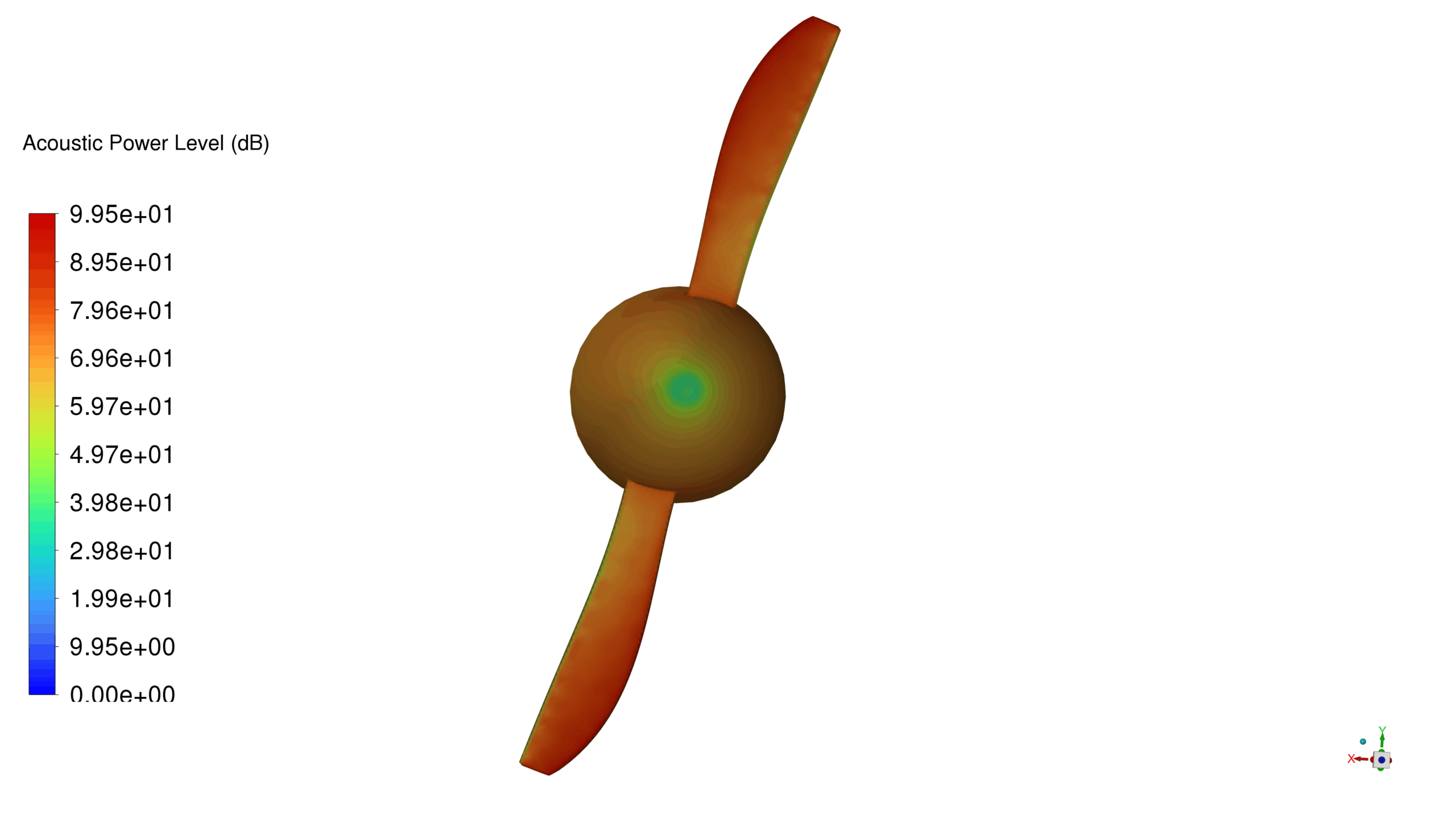
For Bayraktar UAV simulation, In the BroadBand Noise model, we extracted the Acoustic pressure level contour in decibels for the blades and in the FW_H model, we defined 7 receivers around the Bayraktar UAV and extracted the following results:
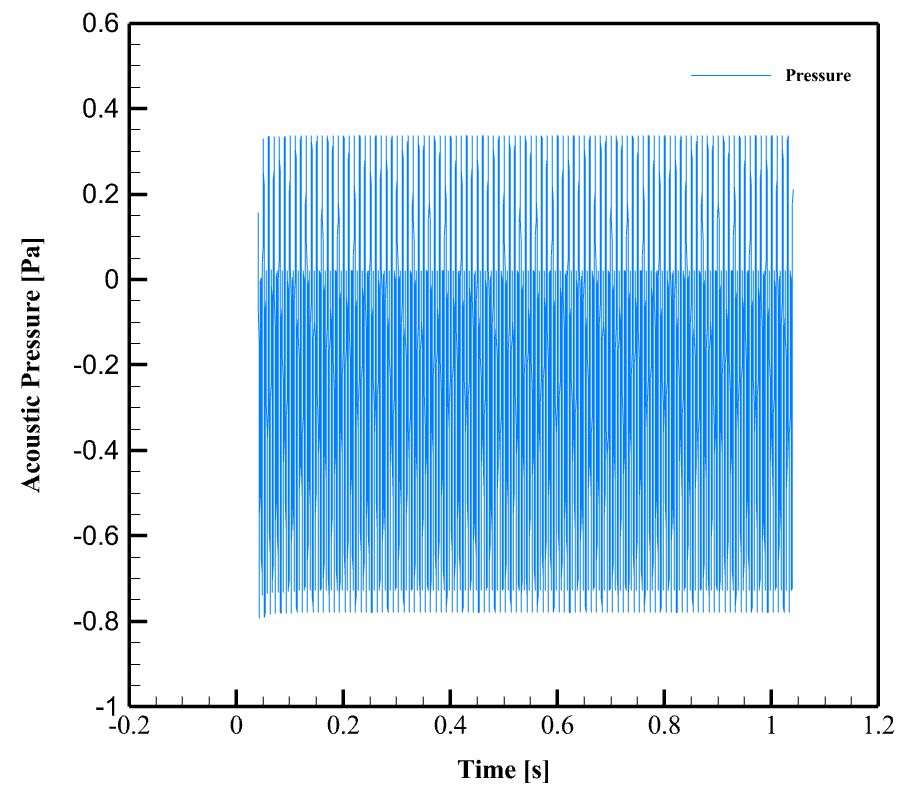
- Acoustic Pressure vs Time: This pressure is actually the acoustic signal calculated from the Faroukas–Williams–Hawkes (FW–H) equation, which is due to the fluctuations in the flow around the propellers.
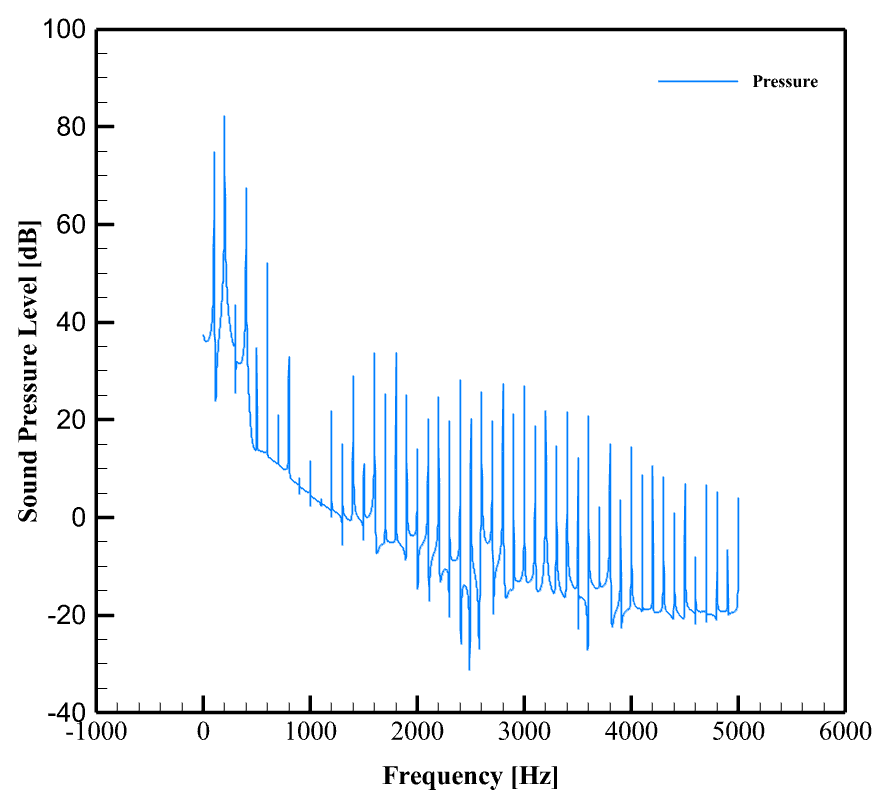
- Sound Pressure Level: SPL is the “physical intensity of the produced sound” and is directly proportional to the sound energy, without the interference of the human ear.
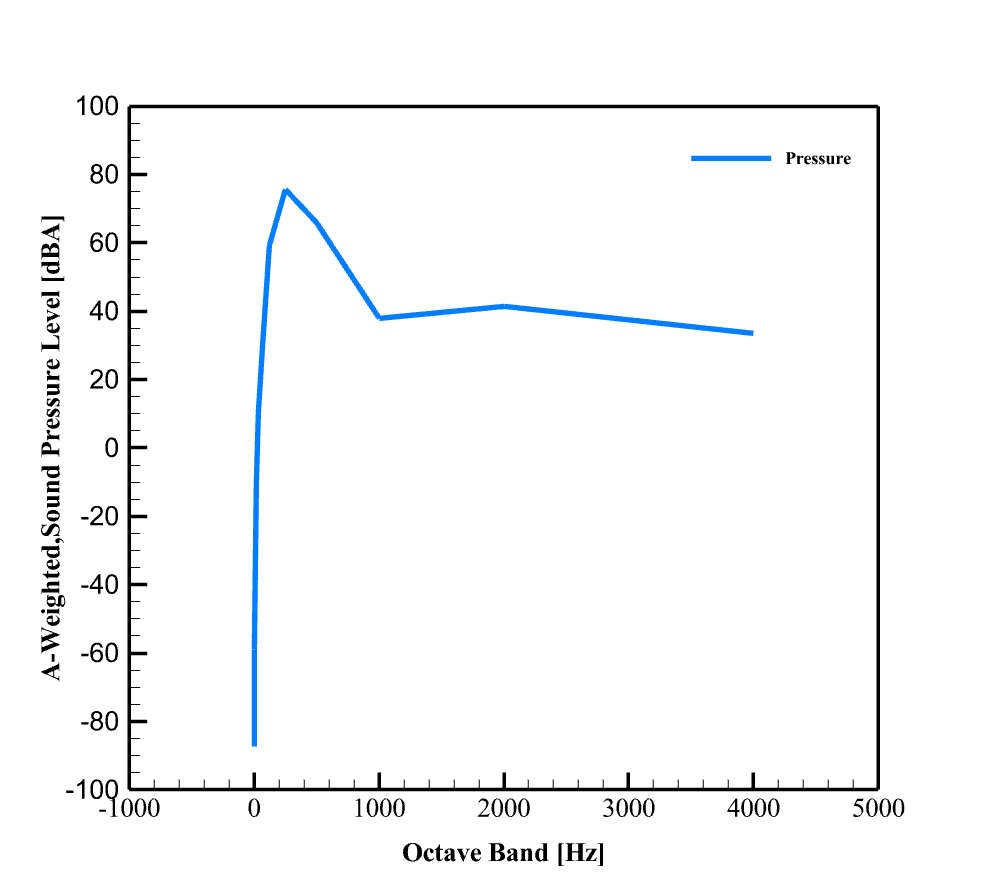
- A-Weighted Sound Pressure Level: A-weighting is a filter-like function that simulates the sensitivity of the human ear. Instead of the physical SPL, the sound level in this graph is calculated to represent the “actual loudness perceived by the ear.”
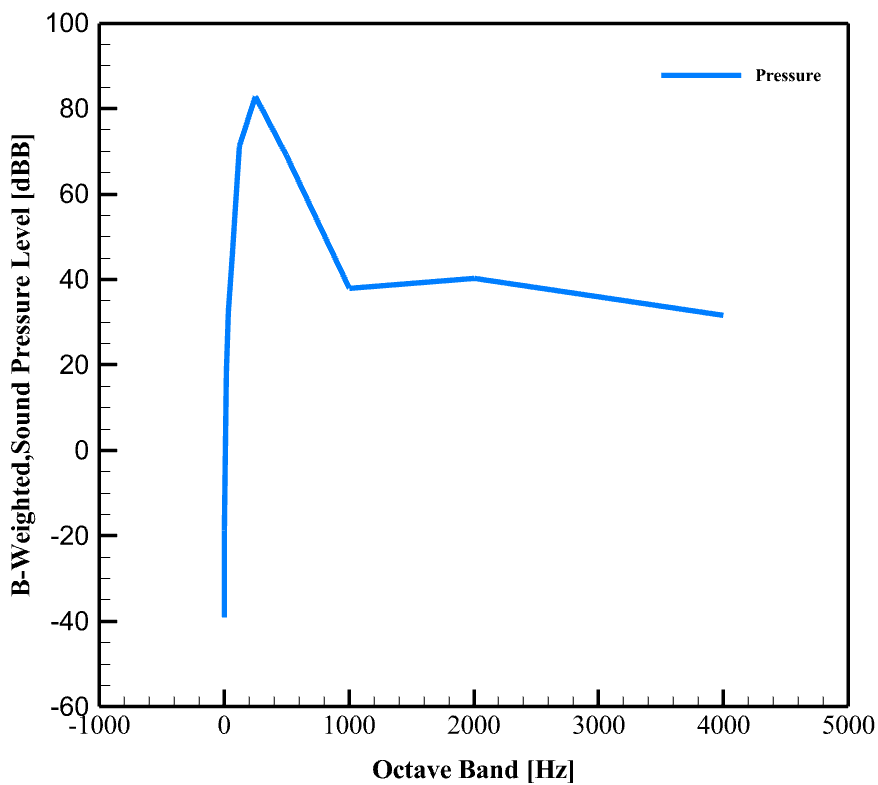
- B-Weighted Sound Pressure Level: The B-weighted filter is weaker than the A-weighted filter and only attenuates a portion of the low frequencies.
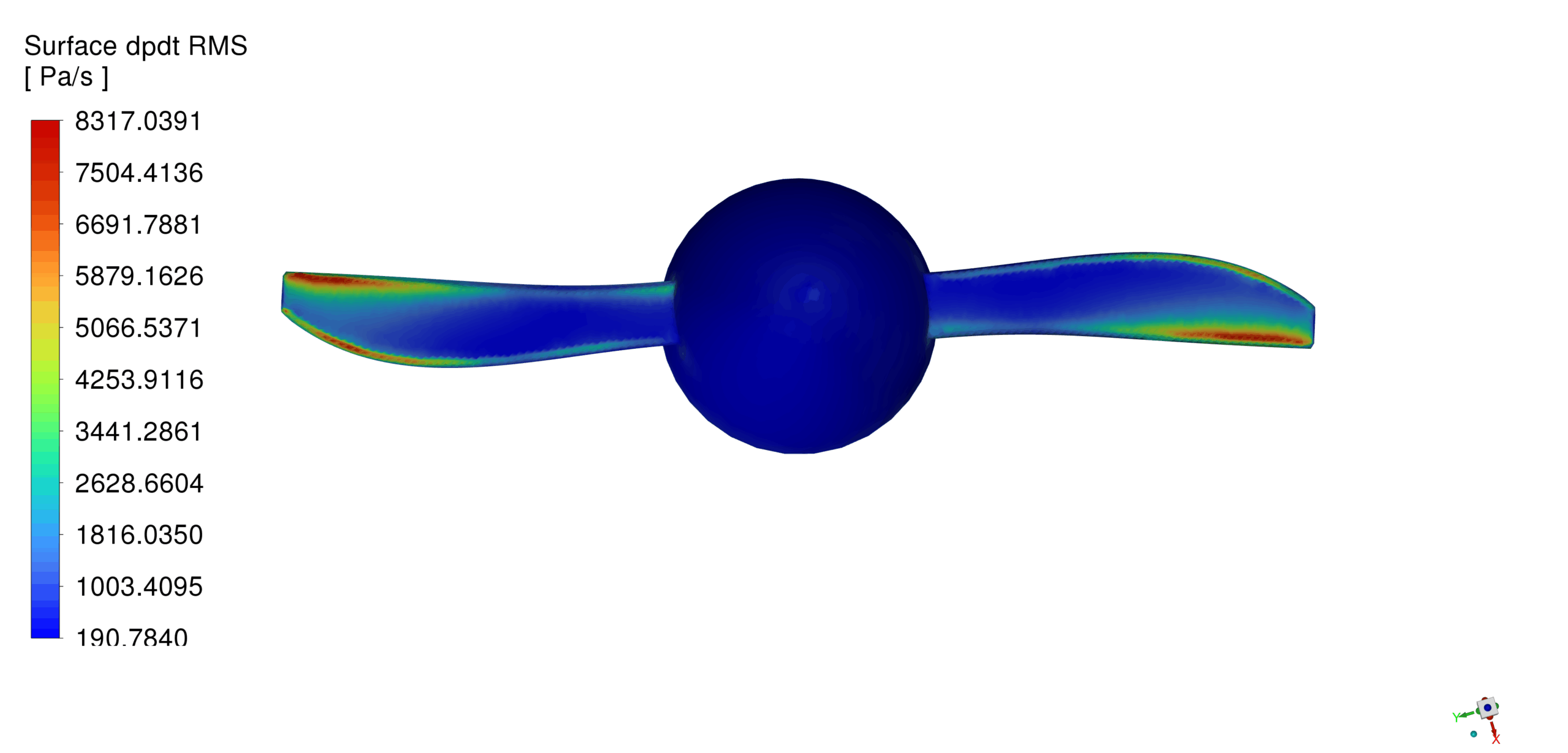
- dpdt RMS: The values in this contour indicate the intensity of the time-dependent pressure fluctuations at each point on the surface.
Results
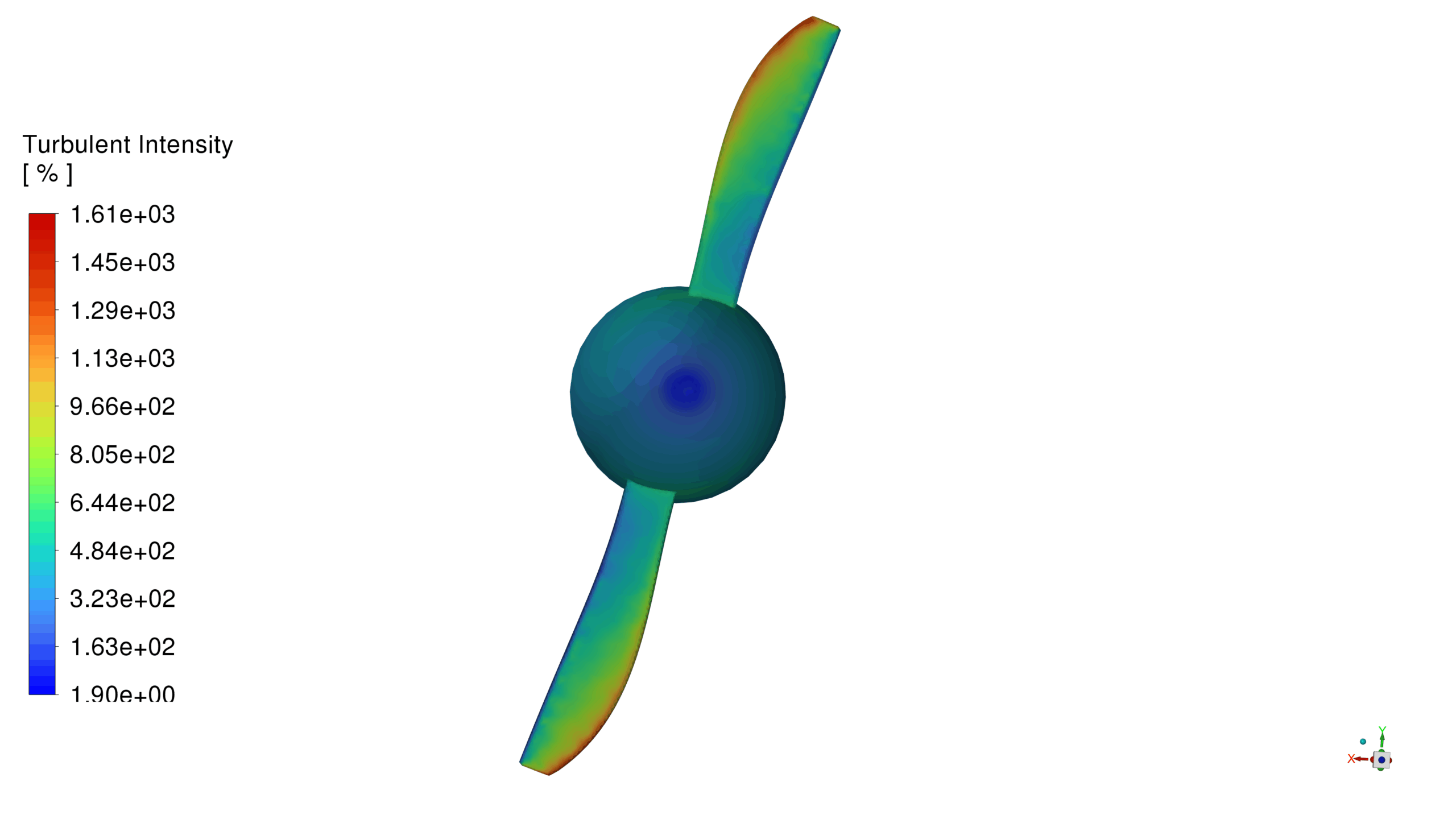
In the BroadBand Noise model for Bayraktar UAV, we can observe the Acoustic pressure level contour in decibels. Acoustic Power Level actually represents the sound power produced by the entire or part of the surface of an object and is expressed in decibels (dB). Comparing this contour with the Turbulent intensity contour, we find the similarity between them.
In reality, the Acoustic pressure level is calculated and displayed based on the Turbulent Intensity. Therefore, wherever the Turbulent intensity is high, the acoustic pressure is also high.
Sometimes, slight differences appear between these two parameters, near the object (source area), the similarity is high and at greater distances, the patterns may different because the intensity depends on the direction of propagation and wave attenuation.
In the FW_H model for Bayraktar UAV, the extracted data for one of the defined receivers can also be viewed.
SPL (Sound Pressure Level) graph is obtained by applying a Fourier transform (FFT) to the time domain signal and shows the noise characteristics in the frequency domain. What is clearly visible are very sharp and distinct peaks at certain frequencies. These peaks, which have high sound pressure levels, indicate tonal noise.
As you can see, the first and strongest peak is at low frequencies (around 150-200 Hz). This is likely the Blade Passing Frequency (BPF). BPF is the product of the number of blades times the rotational speed (Hz) and represents the noise produced each time a blade passes in front of a fixed point.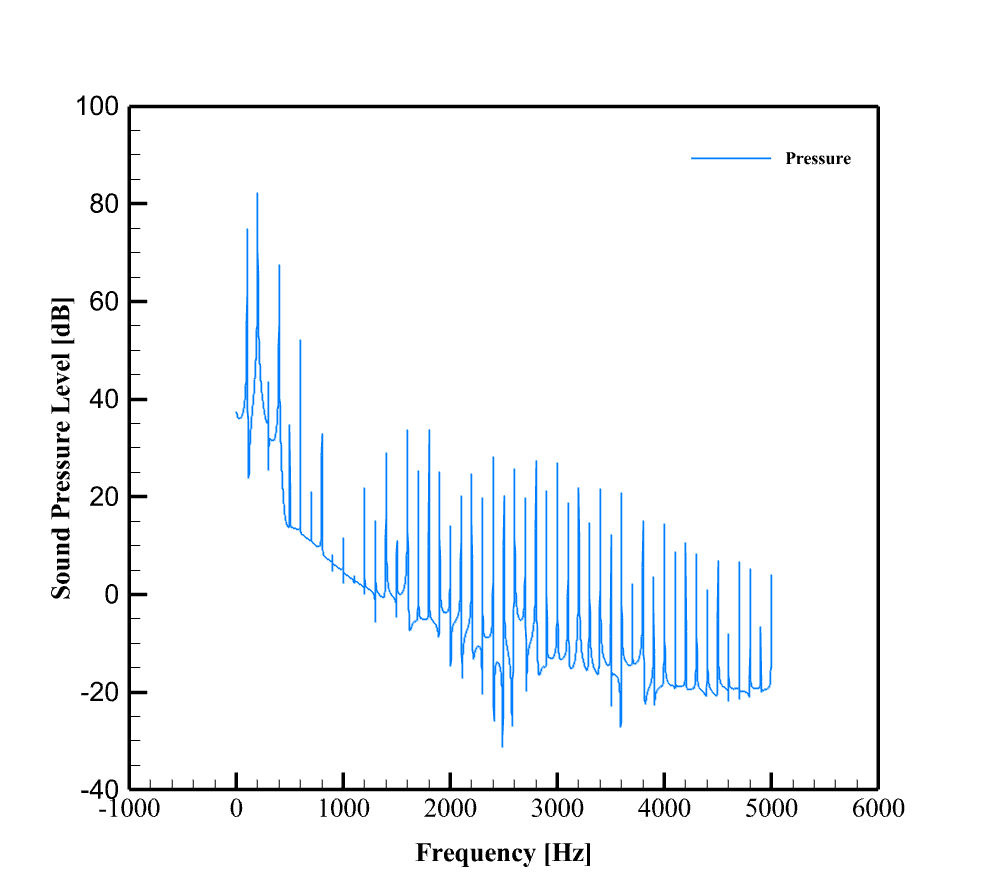
Alongside the tonal peaks, a background noise level (below the peaks) is also observed, representing broadband noise due to flow turbulence, eddies, and other random aerodynamic phenomena. However, the tonal noise is far more dominant in this case. The overall sound pressure level decreases with increasing frequency, although tonal peaks are still evident up to high frequencies (around 4000–5000 Hz).
The graphs below show the sound pressure level for Bayraktar UAV simulation in wider frequency bands (octave) and use A and B weighting filters. Both graphs have a very strong peak in the low frequency bands (around 500 Hz or less) which then decays rapidly.
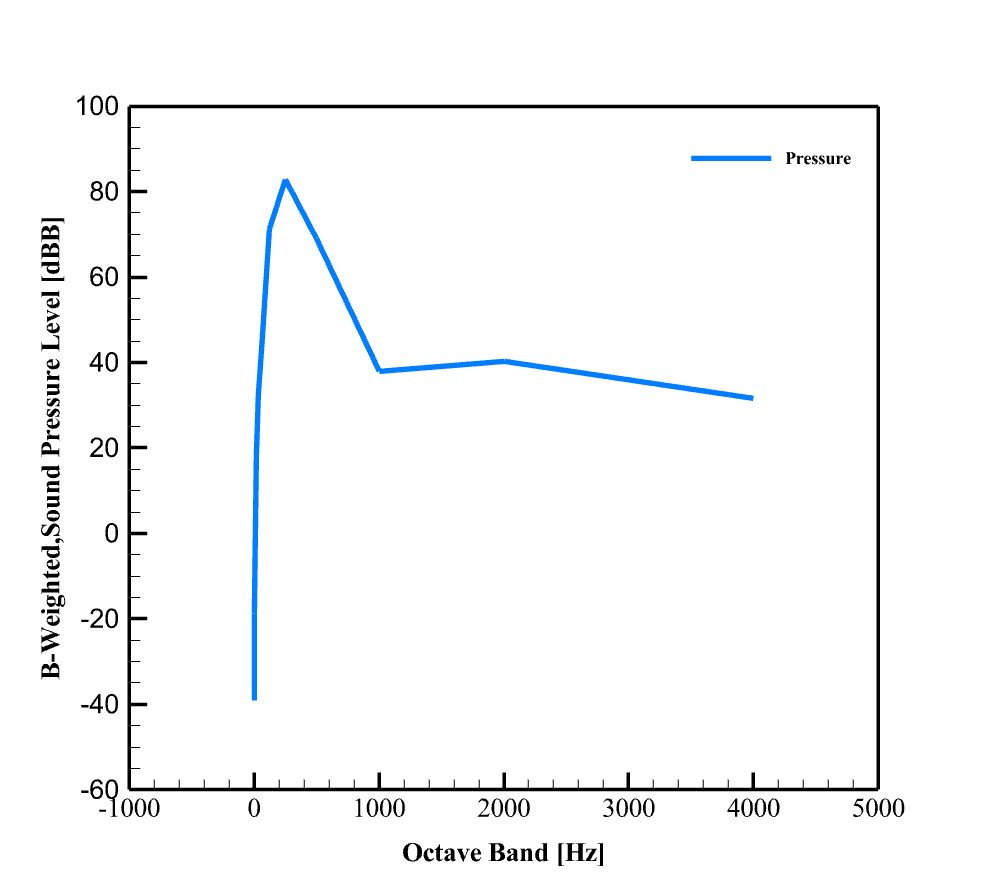 Octave bands collect noise energy in specific frequency ranges rather than representing individual frequencies.
A-weighting simulates the human auditory response, meaning it reduces low and very high frequencies to make the graph more consistent with what the human ear hears. The strong peak at low frequencies in this graph shows that even with this filter applied, the noise at low frequencies is still very dominant and noticeable.
B-weighting also simulates the human auditory response, but it provides less reduction at low frequencies than A-weighting and was used more for older measurements. The similarity of this graph to the A-weighted graph indicates the dominance of noise at low frequencies.
Finally, the SPL is the actual sound intensity from the drone, derived from the pressure field calculated by FW–H, the A-weighted SPL (dBA) is the sound level that humans actually hear (the hearing threshold is taken into account), and the B-weighted SPL (dBB) is an approximation of the perceived sound at medium intensities. Comparing these three shows the difference between the physical energy of the sound and the perceived energy; in drones, the lower frequency (BPF) is usually clear in SPL but less so in dBA.
The Acoustic Pressure graphs for Bayraktar UAV show the time variations of the sound pressure ( p’(t) ) at the receiver location. This pressure is actually the acoustic signal calculated from the Ffowcs–Williams–Hawkes (FW–H) equation, which is due to the fluctuations in the flow around the propellers.
What immediately catches your eye is the very regular and almost periodic nature of the signal. The pressure fluctuates in the range of approximately -0.8 to +0.4 Pascal. This periodicity indicates a primary noise source that is continuously generating pressure in a repeating pattern.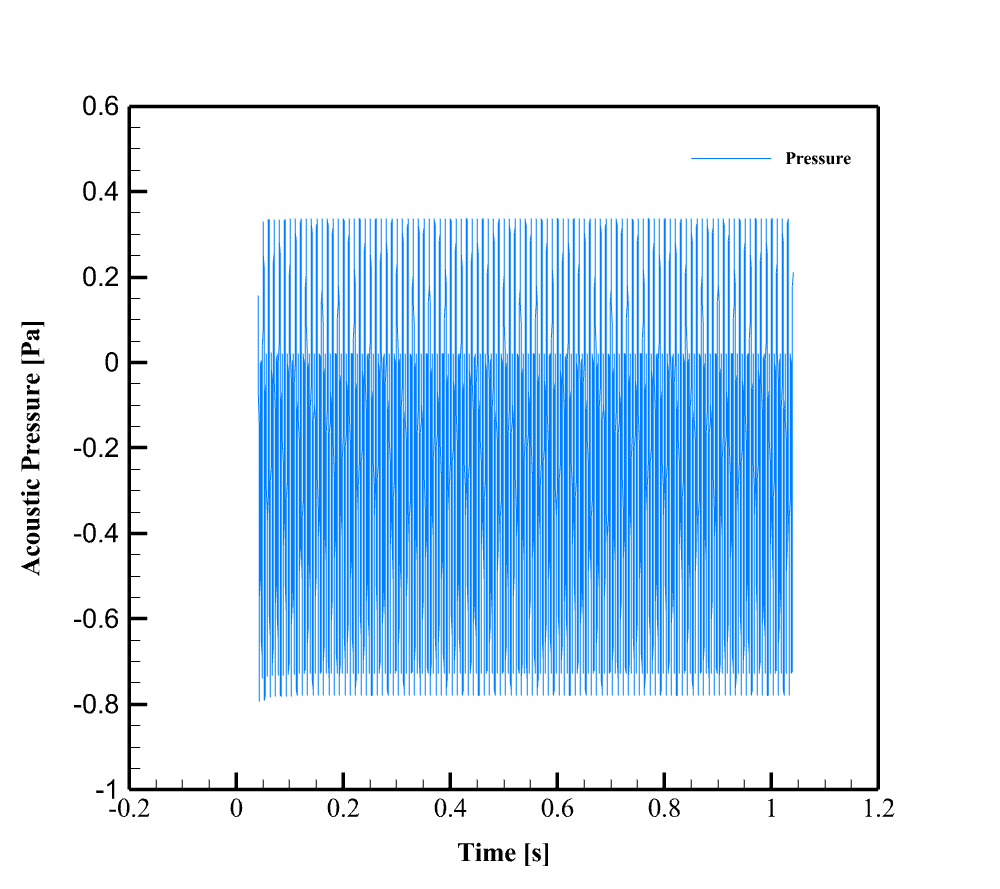 This sinusoidal or nearly sinusoidal and periodic waveform indicates the presence of one or more dominant frequencies (Tonal Noise) in the noise signal. Each pressure pulse is likely to be associated with the passage of a vane or rotating component past a specific point.
The last data that we will discuss in this report is the dpdt RMS contour for for Bayraktar UAV simulation. The values in this contour indicate the intensity of the time-dependent pressure fluctuations at each point on the surface.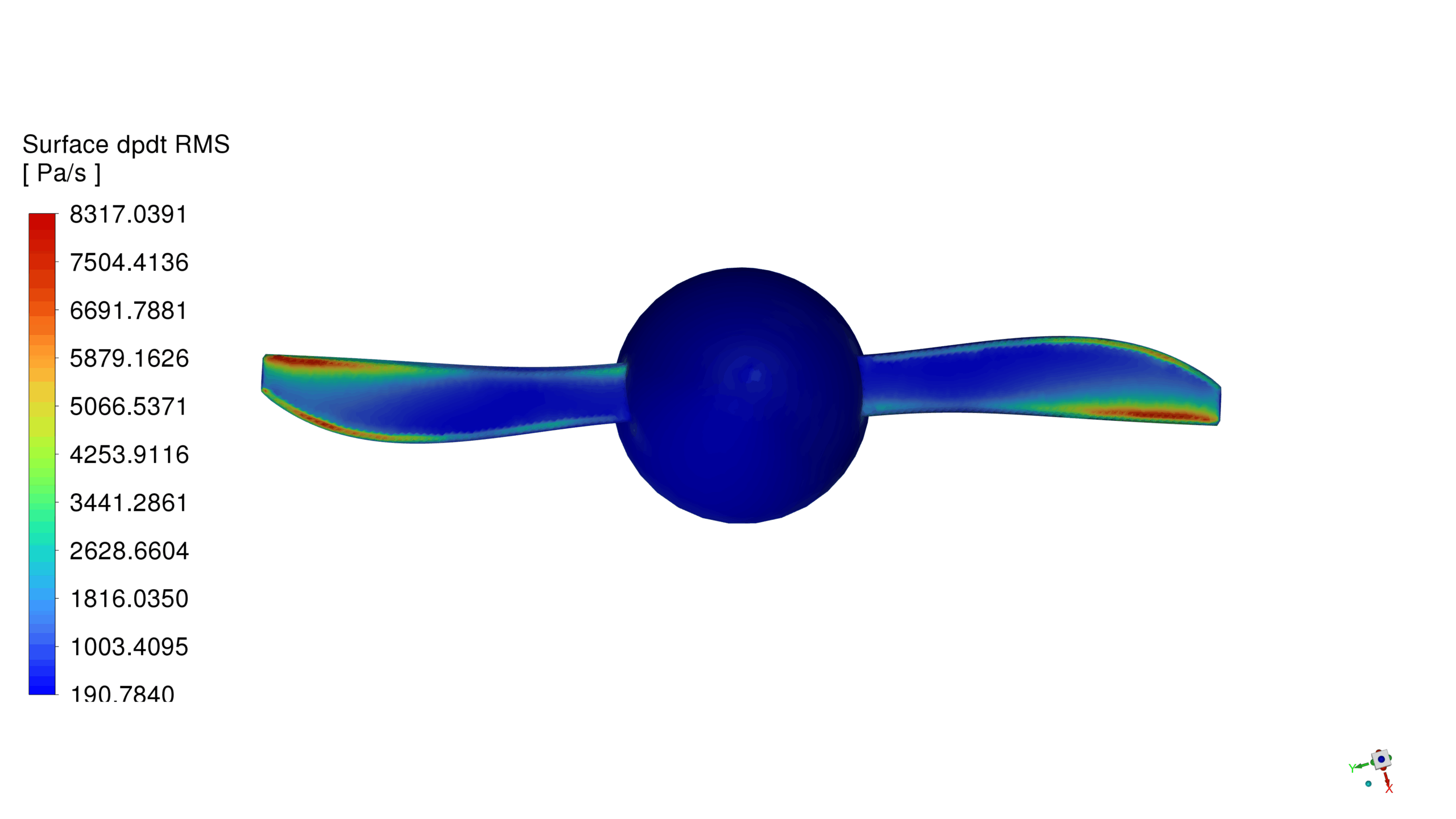
High dp/dt values indicate rapid and severe pressure changes at those points. These rapid pressure changes are the main source of acoustic noise generation. The concentration of high dp/dt values at the blade tips and edges is quite logical and expected for a rotating propeller.
This contour clearly shows the physical sources of noise that lead to the tonal and broadband peaks observed in the frequency domain plots. That is, these pressure fluctuations at the propeller surface propagate sound waves into the environment that we see in the SPL plots.
This description is a brief overview of one of the receivers defined in this project. In the training video of Bayraktar UAV, we analyze and explain the extracted data and compare them with each other in more detail.
You must be logged in to post a review.

 Talk On WhatsApp
 Talk On WeChat

Reviews
There are no reviews yet.