
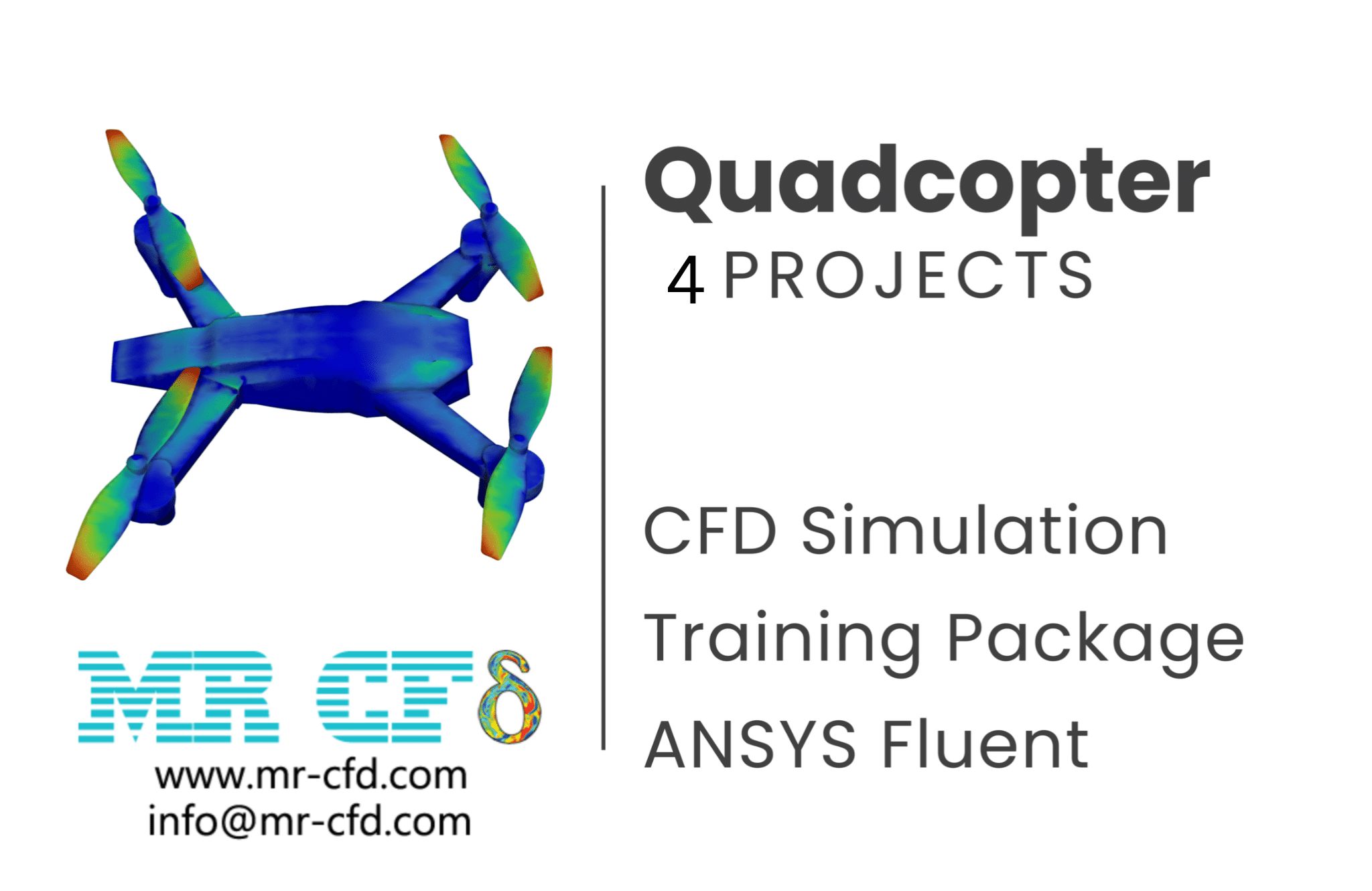
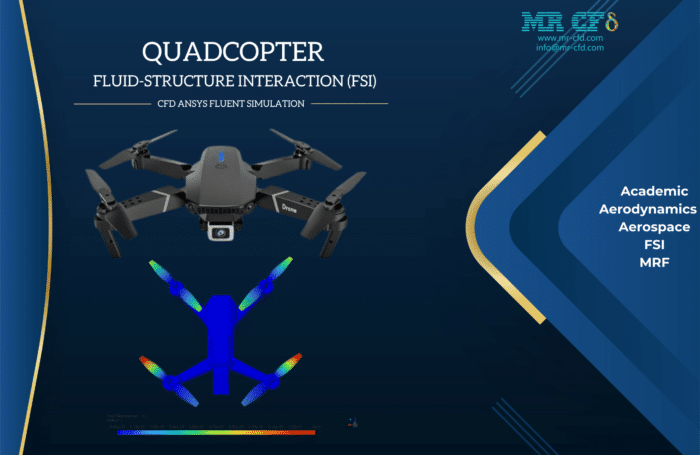
Quadcopter CFD Simulation Training Package: 4 Projects by ANSYS Fluent
$2,999.00 $1,799.40 HPC
- Quadcopter Aerodynamic Analysis: Investigating lift and drag force, lift and drag coefficients with simple aerodynamic analysis
- Dynamic Stability Analysis: Calculate critical stability derivatives and aerodynamic forces for superior flight control system design
- Fluid-Structure Interaction: Model propeller deformation, frame vibration, and component optimization through advanced two-way coupled FSI simulation
- Acoustic Performance: Identify noise sources, analyze propagation patterns, and develop mitigation strategies for environmentally-friendly drone applications
To Order Your Project or benefit from a CFD consultation, contact our experts via email (info@mr-cfd.com), online support tab, or WhatsApp at +44 7443 197273.
There are some Free Products to check our service quality.
If you want the training video in another language instead of English, ask it via info@mr-cfd.com after you buy the product.
Description
Master Cutting-Edge FPV Drone Aerodynamics with Professional CFD Techniques
Elevate your drone design capabilities with our comprehensive Quadcopter CFD Simulation Training Package. This specialized collection includes four advanced projects that cover critical aspects of quadcopter simple aerodynamics analysis, stability derivatives, structural performance, and acoustic analysis using ANSYS Fluent. Whether you’re an engineer, researcher, or drone enthusiast looking to deepen your understanding of unmanned aerial vehicle (UAV) performance, these projects will equip you with industry-standard simulation techniques.
Simple Aerodynamic Analysis
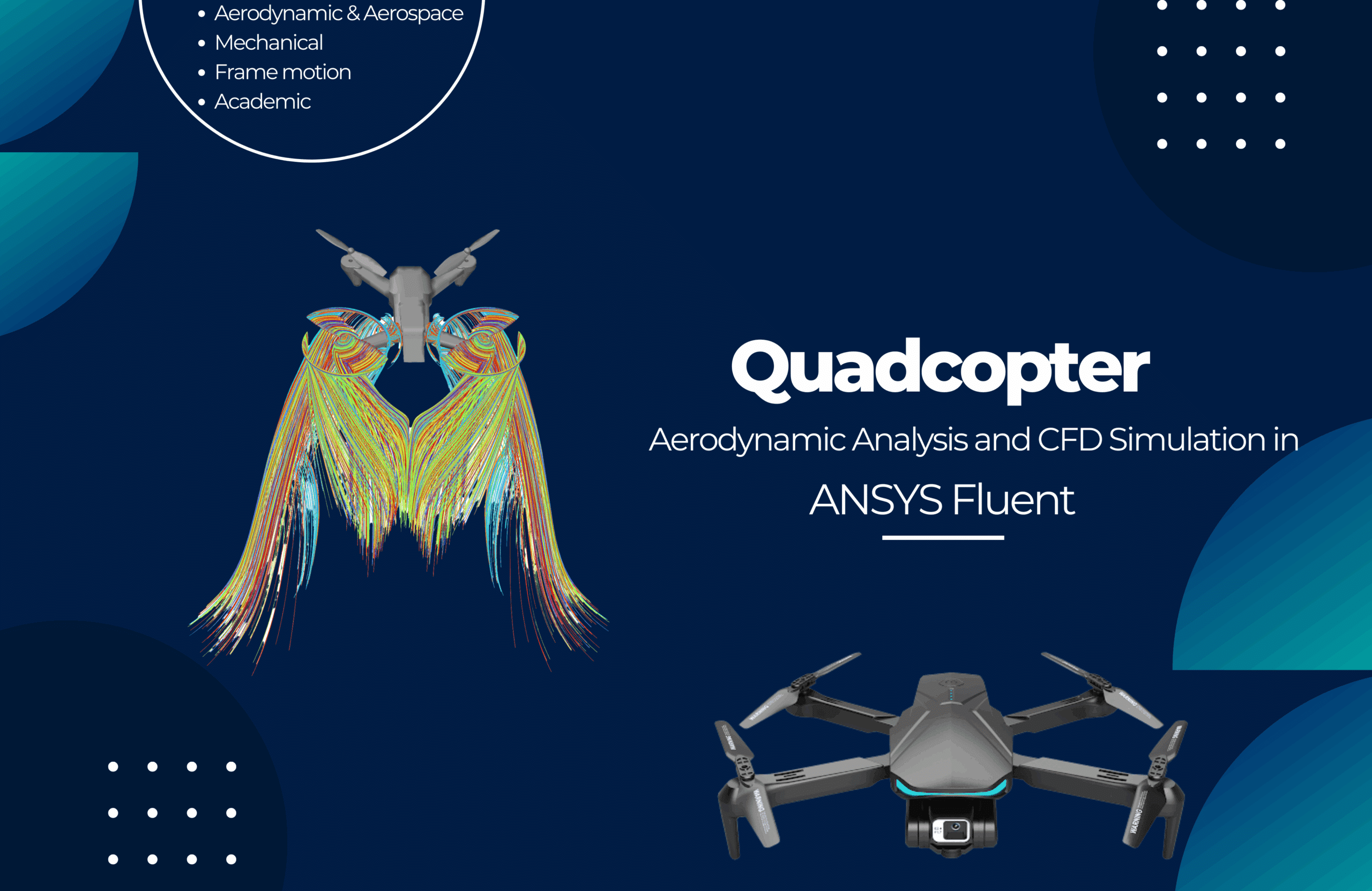
Quadcopter Aerodynamic Analysis and CFD Simulation in Ansys Fluent
- Learn how to set up a condition cell zone for a rotary blade
- Learn techniques for calculating aerodynamic forces and moments across various flight conditions
- Learn how to set boundary conditions with this project
This project will teach you how to start aerodynamic analysis of a drone. For various analyses of a drone, you must first learn how to analyze it from an aerodynamic perspective.
Advanced Aerodynamic Analysis and Flight Dynamics
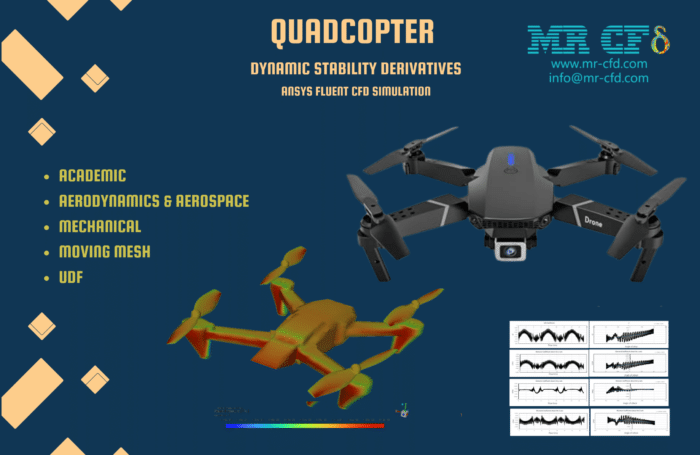
Quadcopter Dynamic Stability Derivatives, Ansys Fluent CFD Simulation
Dive deep into the aerodynamic behavior that determines a quadcopter’s flight stability and maneuverability:
- Master the simulation of key stability derivatives including pitch, roll, and yaw moments
- Implement advanced meshing strategies optimized for rotating components and complex flow fields
- Analyze how propeller wake interactions affect overall vehicle stability
- Develop predictive models for flight control system design and optimization
This project bridges the gap between computational fluid dynamics and flight dynamics, providing essential insights for designing drones with superior handling qualities and resistance to disturbances. You’ll learn how to extract meaningful stability parameters from CFD data that can directly inform control system development.
Multiphysics Simulation for Structural Integrity
Quadcopter Fluid-Structure Interaction (FSI) Simulation using ANSYS Fluent
Take your simulation capabilities to the next level by incorporating structural response to aerodynamic loads:
- Set up sophisticated two-way coupled FSI simulations connecting fluid dynamics with structural mechanics
- Model propeller deformation under aerodynamic loading at various RPMs
- Analyze vibration patterns and potential resonance issues in frame components
- Investigate the impact of structural flexibility on aerodynamic performance and efficiency
- Optimize component design for the ideal balance between weight, strength, and aerodynamic properties
This advanced project teaches you how to predict and mitigate potential structural failures before they occur in physical prototypes. You’ll gain valuable experience in multiphysics simulation that can substantially reduce development time and costs while improving overall design reliability.
Acoustic Analysis for Environmental Impact Assessment
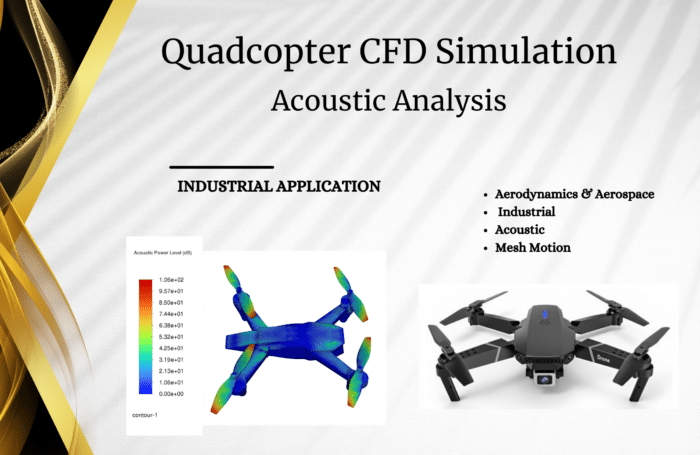
Quadcopter CFD Simulation, Acoustic Analysis, Industrial Application
Address one of the most significant challenges in drone deployment—noise generation and propagation:
- Implement state-of-the-art aeroacoustic simulation techniques using ANSYS Fluent
- Identify primary noise sources including propeller tip vortices, blade-vortex interaction, and turbulent wake
- Analyze noise propagation patterns under various operating conditions and environmental factors
- Develop effective noise reduction strategies through design modifications
- Learn industry-standard methods for evaluating environmental impact and regulatory compliance
This project provides essential knowledge for developing quieter drones suitable for urban environments, cinematography, delivery services, and other noise-sensitive applications. You’ll learn how to balance acoustic performance with aerodynamic efficiency and structural requirements.
What You’ll Master in This Package
- Comprehensive Workflow: Step-by-step guidance from geometry preparation and meshing to solution setup, post-processing, and results interpretation
- Advanced Modeling Techniques: Implementation of rotating reference frames, dynamic mesh methods, and specialized turbulence models for propeller aerodynamics
- Multiphysics Integration: Methods for connecting fluid dynamics with structural mechanics and acoustics for holistic design analysis
- Practical Applications: Real-world case studies demonstrating how simulation insights translate to improved drone performance
- Validation Strategies: Approaches for verifying simulation accuracy against experimental data and analytical solutions
Who Should Enroll
- Aerospace engineers specializing in UAV design and development
- CFD specialists looking to expand their expertise into rotary-wing aerodynamics
- Drone manufacturers seeking to optimize product performance and reduce development cycles
- Academic researchers focused on advanced UAV technologies
- Engineering students pursuing specialization in unmanned aerial systems
Technical Requirements
- Basic understanding of CFD principles and ANSYS Fluent operation
- Familiarity with drone components and flight mechanics fundamentals
- ANSYS Fluent software (compatible with versions 2019 R2 and newer)
- Recommended: Multi-core processor and sufficient RAM for handling complex simulations
Unlock the full potential of computational analysis in drone design with these three specialized projects. Each simulation case includes detailed setup instructions, solver configurations optimized for quadcopter aerodynamics, and comprehensive post-processing guidance to extract meaningful engineering insights. Transform your understanding of drone performance and gain the skills to develop next-generation UAV technologies.
You must be logged in to post a review.
Related products
-
Sale

-
Sale


 Talk On WhatsApp
 Talk On WeChat

Reviews
There are no reviews yet.