


Quantitative Distribution and CFD Simulation of Human-Exhaled Particles in Ventilation Systems
$120.00 $72.00 HPC
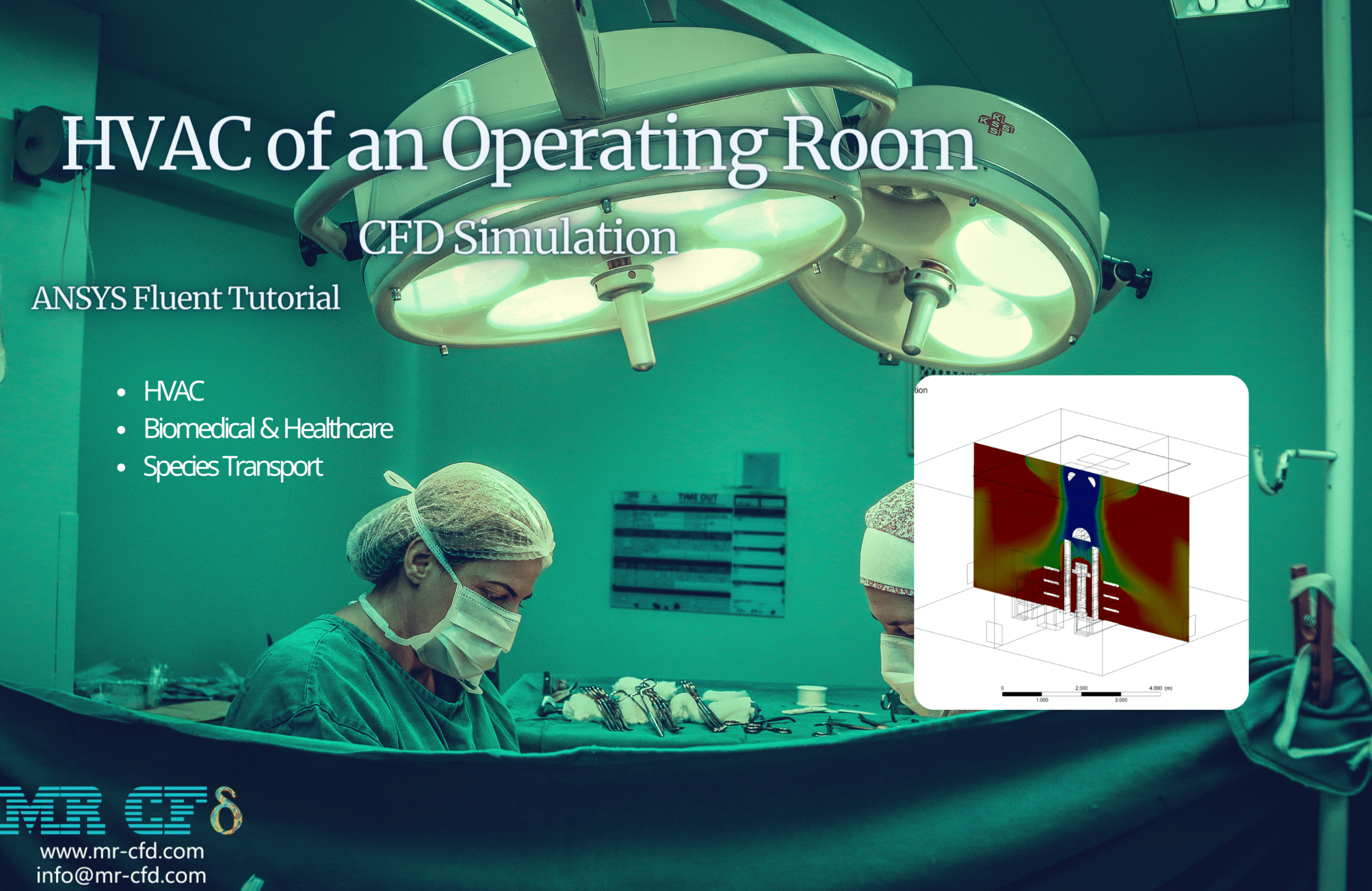
- In this project, the quantitative distribution of human exhaled particles in a ventilated room is simulated using ANSYS Fluent software, based on the methodology from Zhijian Liu’s study.
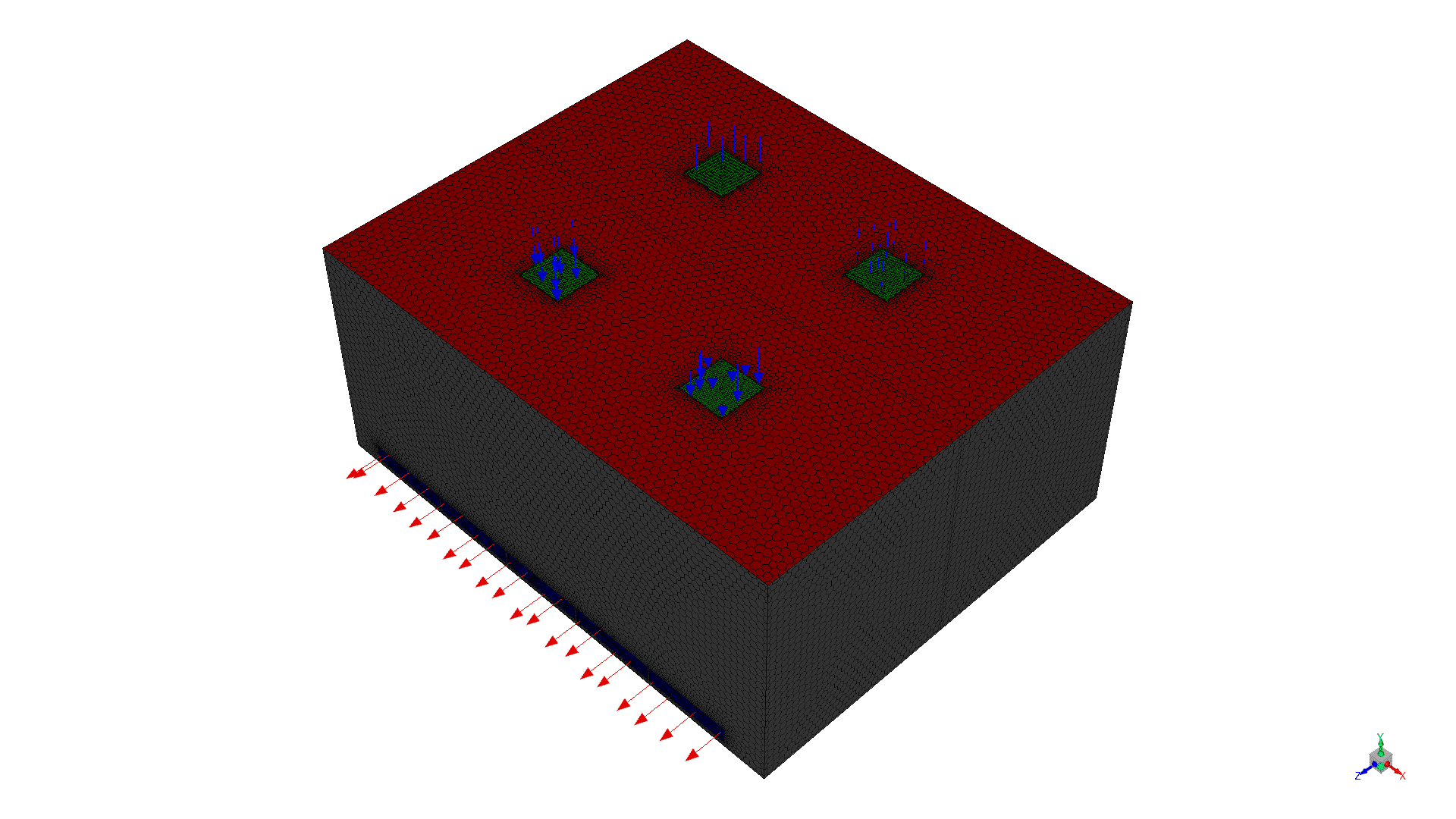
- The 3-D geometry and mesh were created with user-provided files and consist of 547,820 elements.
- The simulation accounts for steady-state flow conditions and transitions to solve energy and DPM equations transiently.
- Airflow dynamics and heat transfer are analyzed using the ideal gas equation to address density variations due to temperature changes.
- The fan’s operation is modeled through a polynomial pressure jump function.
To Order Your Project or benefit from a CFD consultation, contact our experts via email (info@mr-cfd.com), online support tab, or WhatsApp at +44 7443 197273.
There are some Free Products to check our service quality.
If you want the training video in another language instead of English, ask it via info@mr-cfd.com after you buy the product.
Description
Quantitative Distribution and Simulation of Human-Exhaled Particles in Ventilation Systems
Project Description:
In this project, we aim to simulate the Quantitative Distribution of human exhaled particles in a ventilation room. The project parameters are set based on a numerical paper entitled “Quantitative Distribution of Human Exhaled Particles in a Ventilation Room, “written by Zhijian Liu. 150-second simulation is carried out.
CFD Simulation:
In the first step to achieve a quantitative distribution, the flow equations of the continuous phase are solved in a steady state. Based on the particle’s properties, they have no significant effect on the flow field, which is why a 1-way simulation is performed, as in the article. Therefore, we can start injection and continue solving the energy and DPM equations in transient form. It should be noted that the particle type is inert, allowing it to transfer heat to the environment.
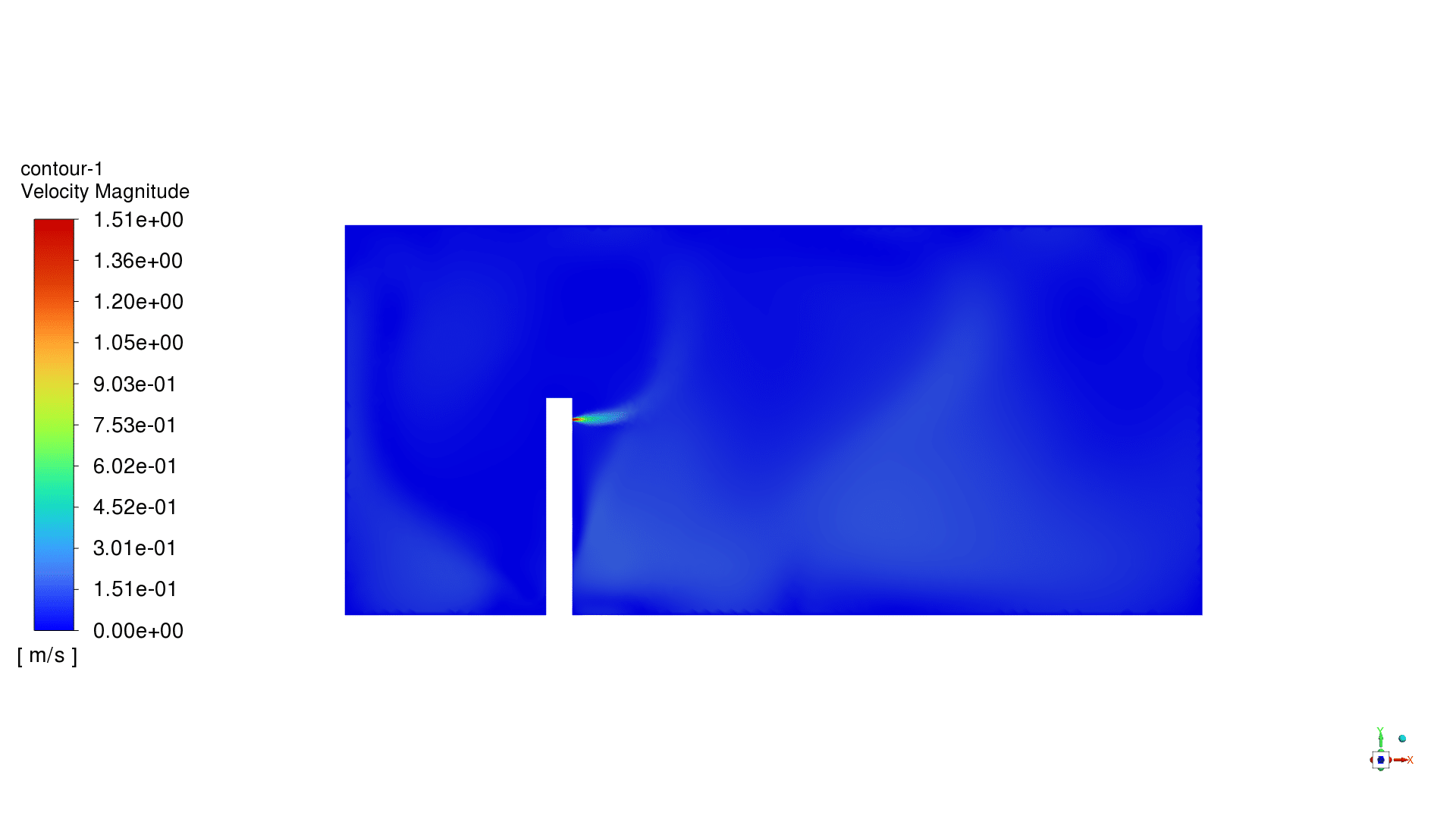
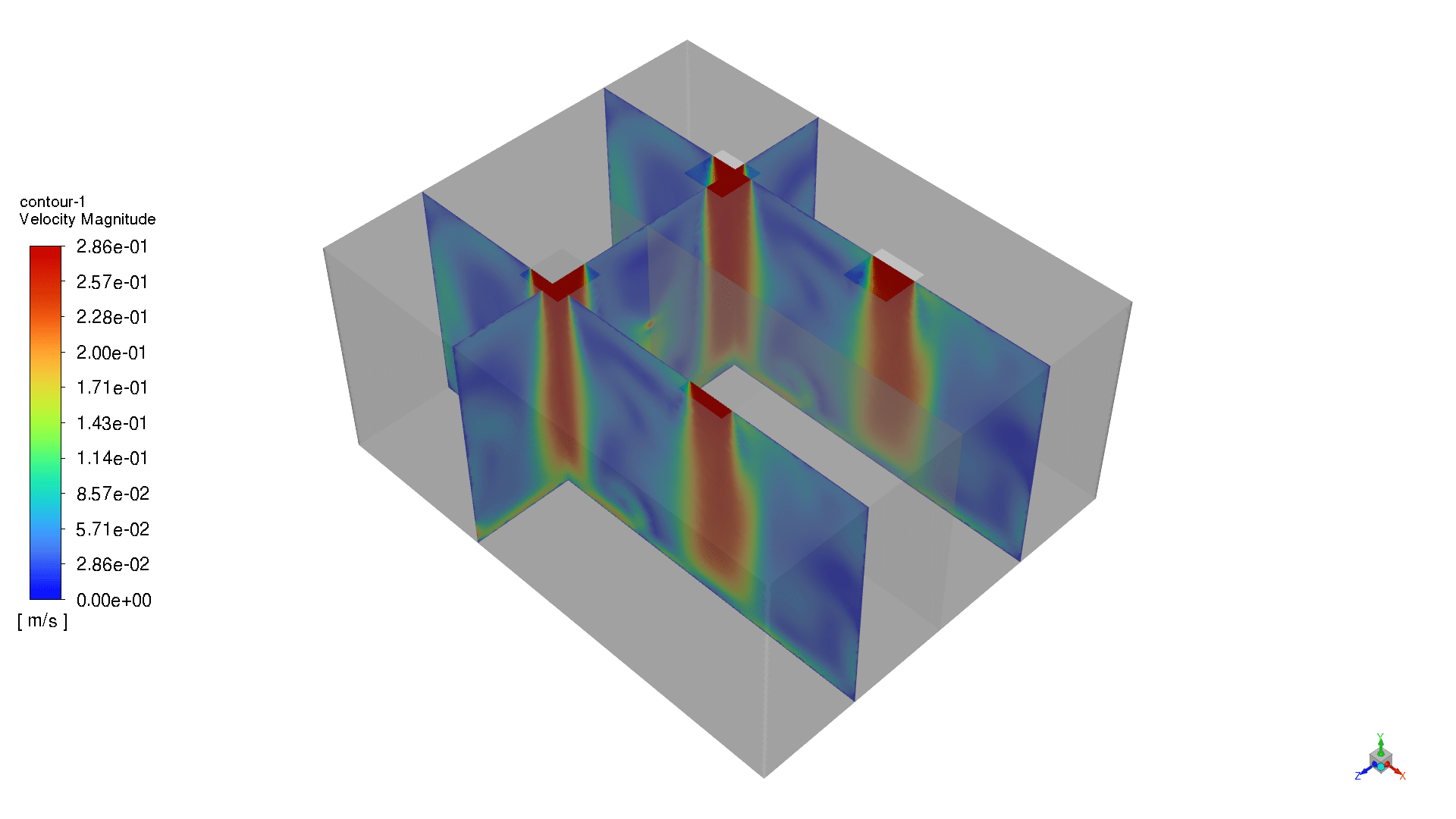
The inlet air velocity is 0.28 m/s and a 20 °C temperature (similar to case 2), and the exhaled air has a 1.5 m/s velocity magnitude. It should be mentioned that the walls’ DPM boundary condition is trapped so that the particle trajectory calculations will be terminated after the collision. Additionally, due to the particle’s diameter (2.5 micrometers), only the Saffman lift force and thermophoretic force are considered.
Results:
After the simulation, the particle’s residence time is exported, as shown in the figure below. The residence time is limited between 0.5 & 150 seconds.
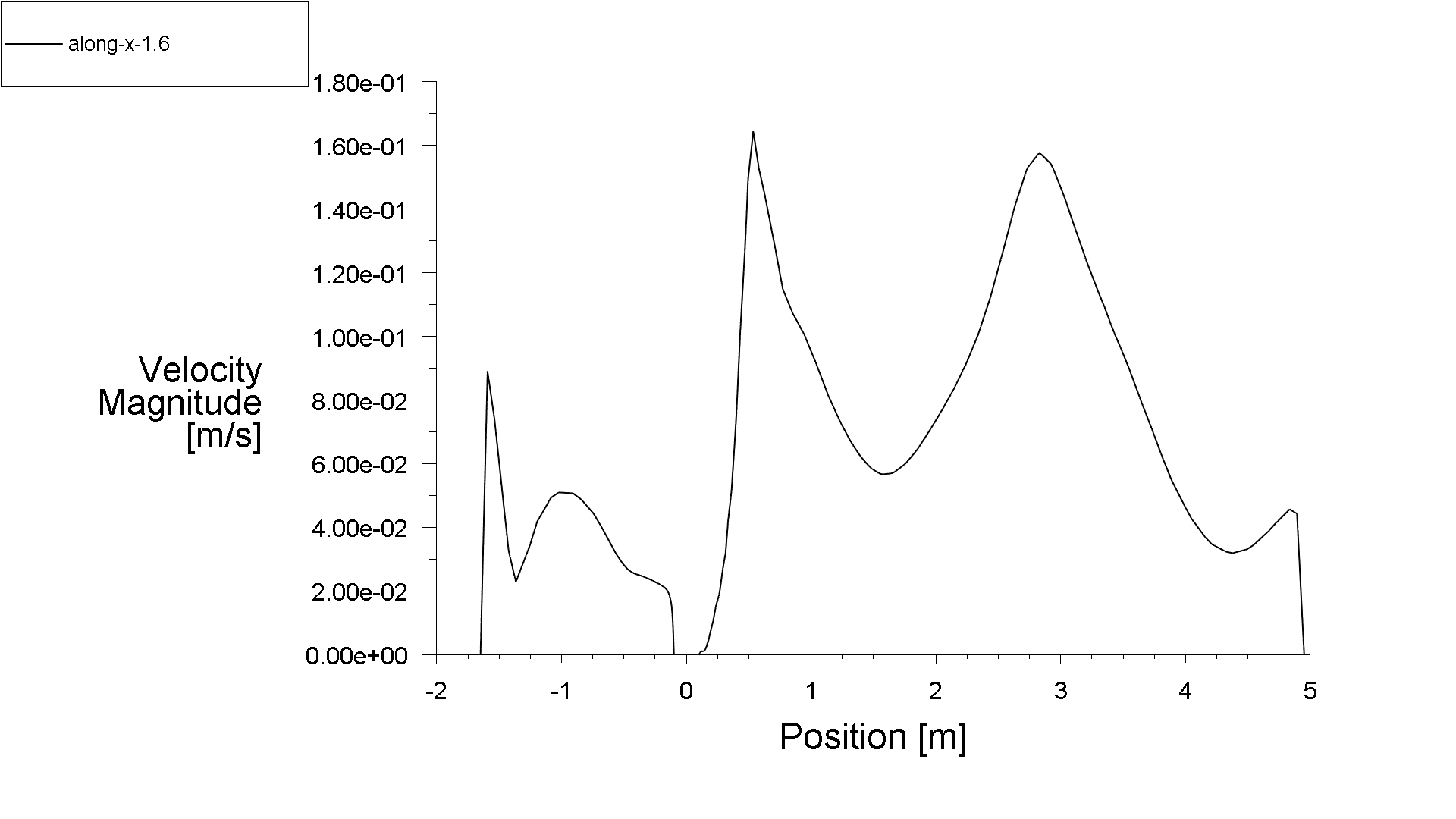
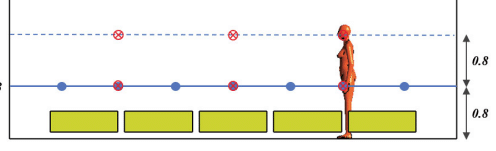
In the article, two lines are created with heights of 0.8 m and 1.6 m from the floor to plot the velocity of the continuous phase.
Figure 1- y=0.8m
Figure 2- y=1.6m
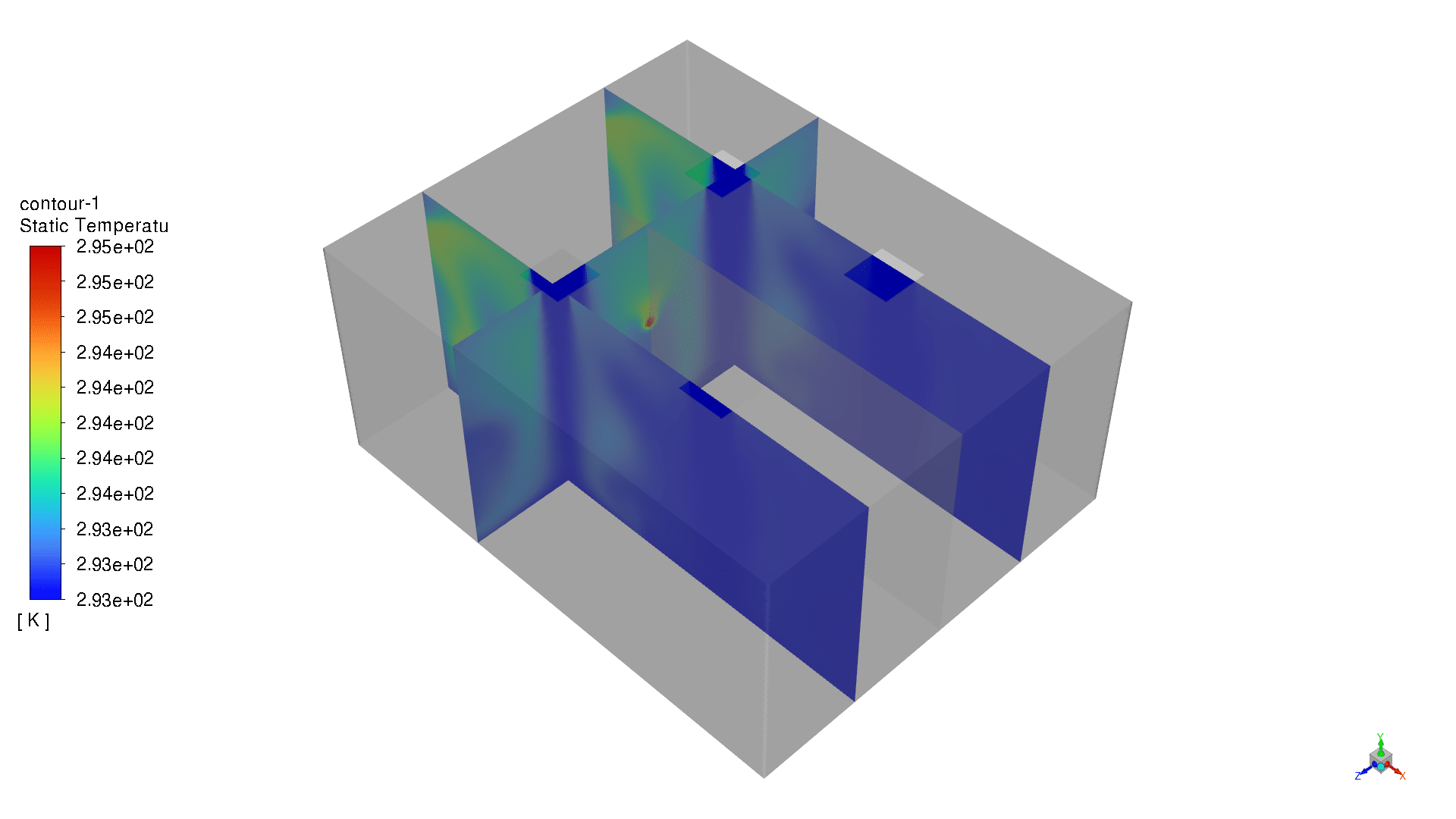
The difference between the velocity plot of the simulation and the article is because of the geometry. The mouth is positioned 1.6m above the floor in the article, whereas it is slightly different in the geometry. The contours below can give us a better understanding of the flow field:
You must be logged in to post a review.
 Talk On WhatsApp
 Talk On WeChat

Reviews
There are no reviews yet.