
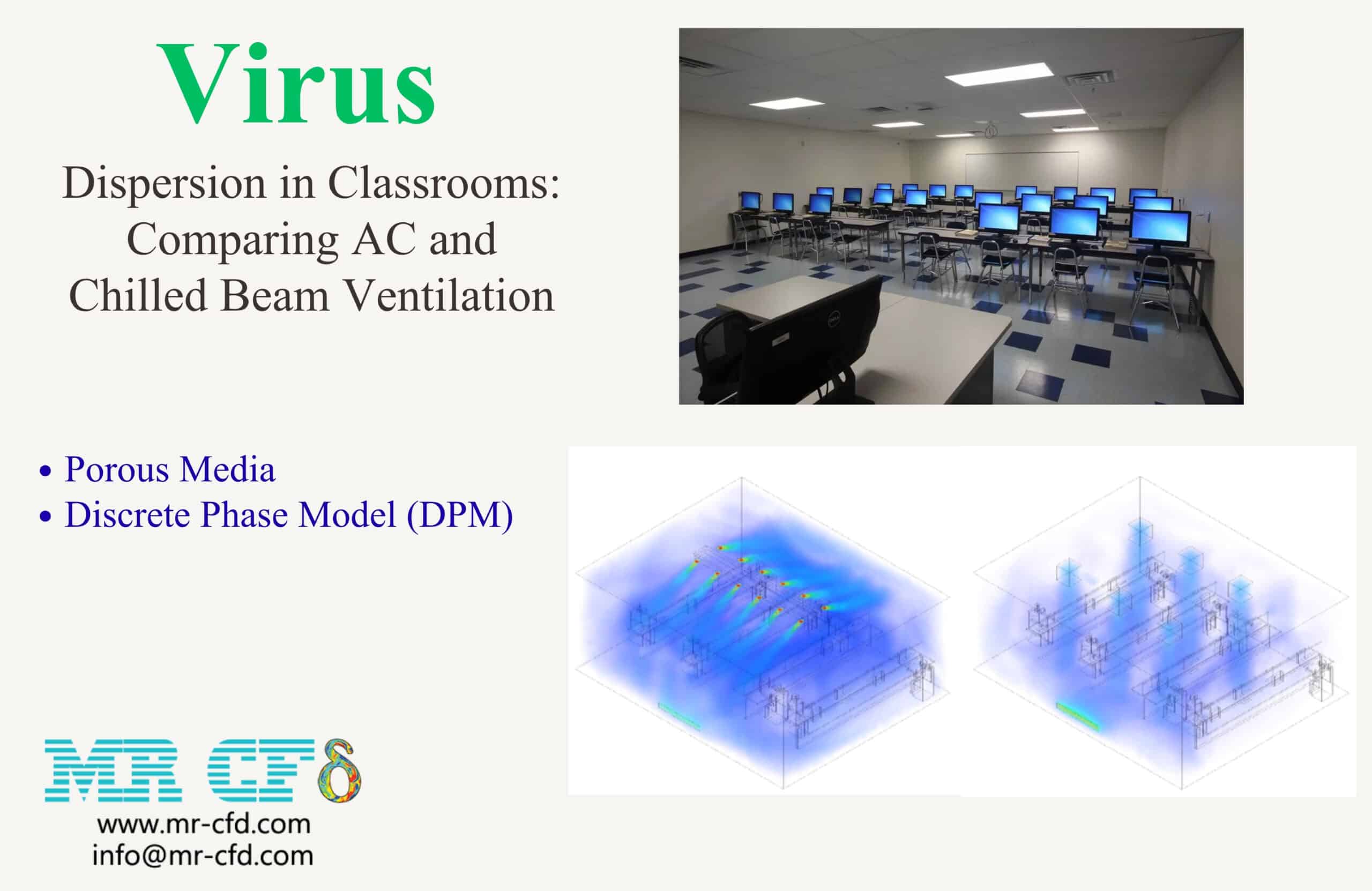
Virus dispersion in classrooms: CFD simulation comparing AC and chilled beam ventilation
$240.00 $144.00 HPC
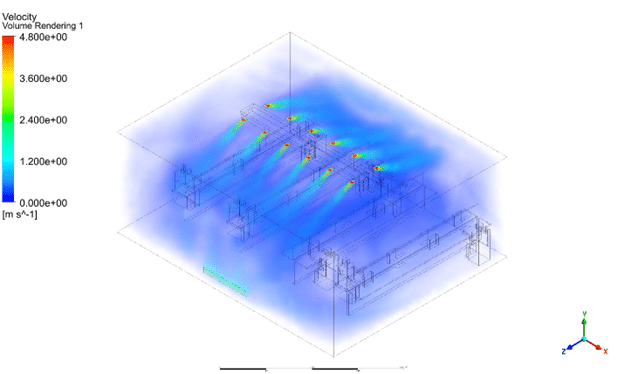
- ANSYS CFD study of virus transport and comfort in a 10×8 m classroom comparing AC and chilled beam ventilation.
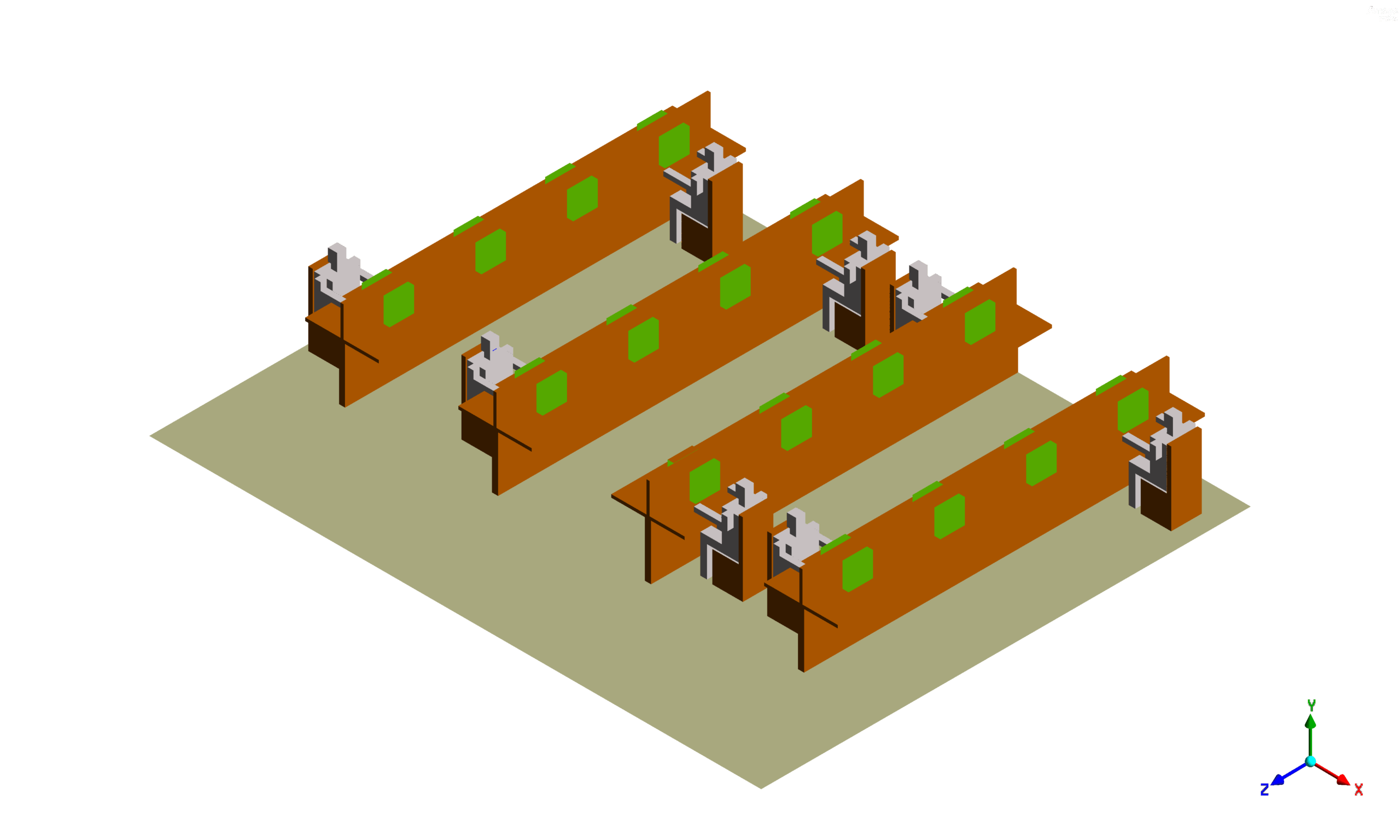
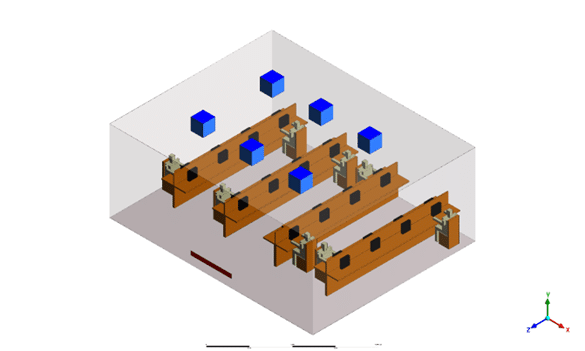
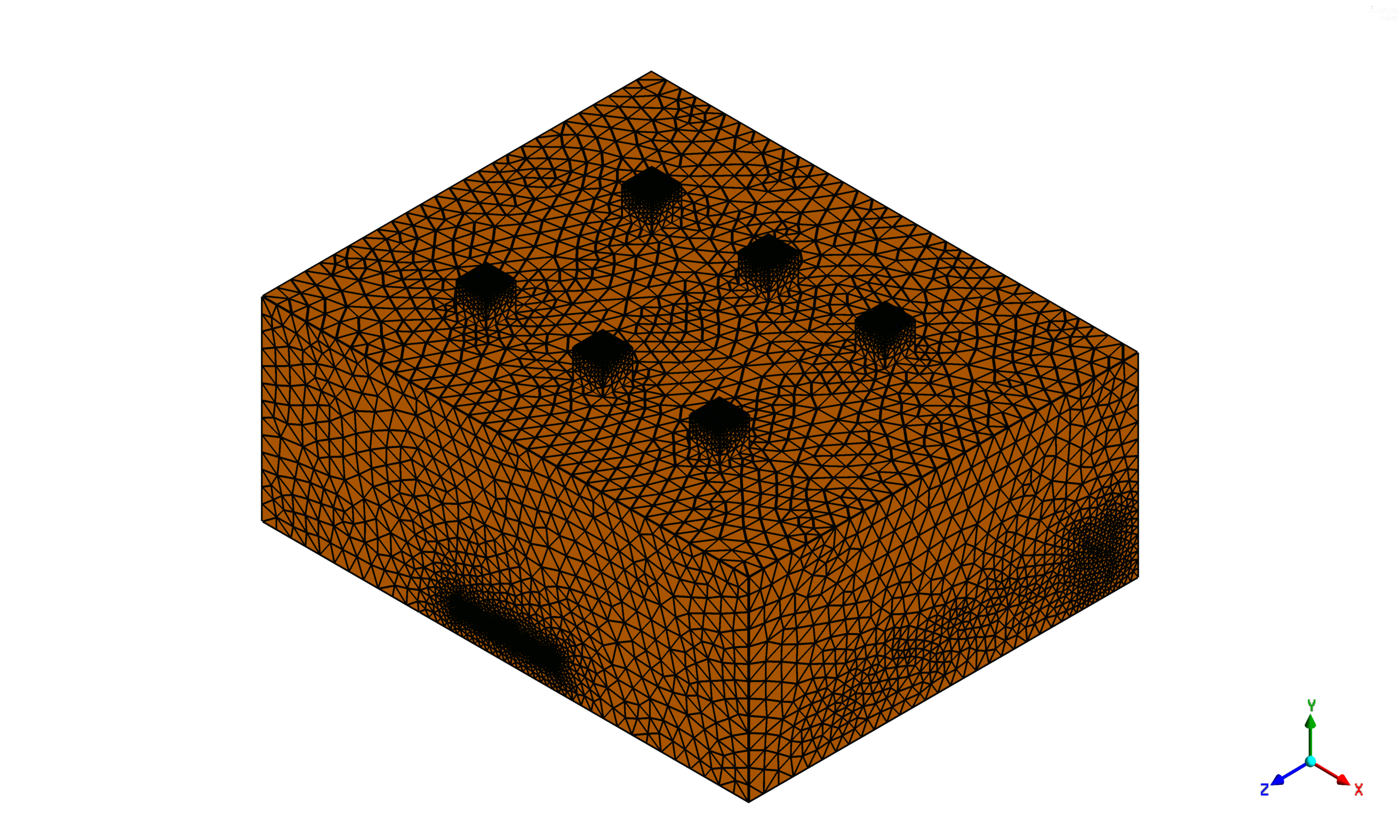
- Room with desks, eight occupants, AC louvers vs. chilled-beam inlets; unstructured mesh refined near jets, walls, and bodies.
- Steady pressure-based RANS (realizable k-ε), energy on with buoyancy; virus tracked via DPM; appropriate velocity-inlet and pressure-outlet BCs.
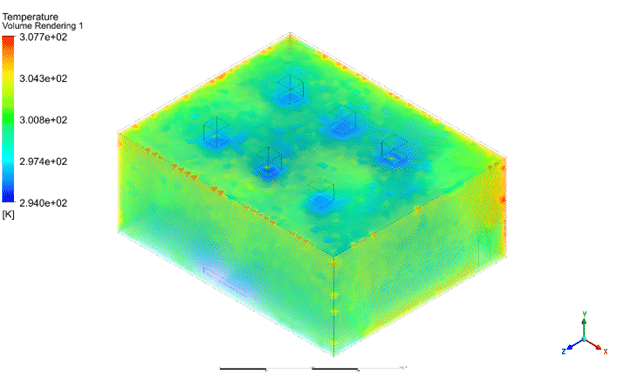
- AC removes particles faster but shows uneven temperatures, while chilled beams improve thermal uniformity with broader mixing that disperses particles more widely.
To Order Your Project or benefit from a CFD consultation, contact our experts via email (info@mr-cfd.com), online support tab, or WhatsApp at +44 7443 197273.
There are some Free Products to check our service quality.
If you want the training video in another language instead of English, ask it via info@mr-cfd.com after you buy the product.
Description
Virus transport analysis: CFD simulation of AC vs. chilled beam air distribution
Description
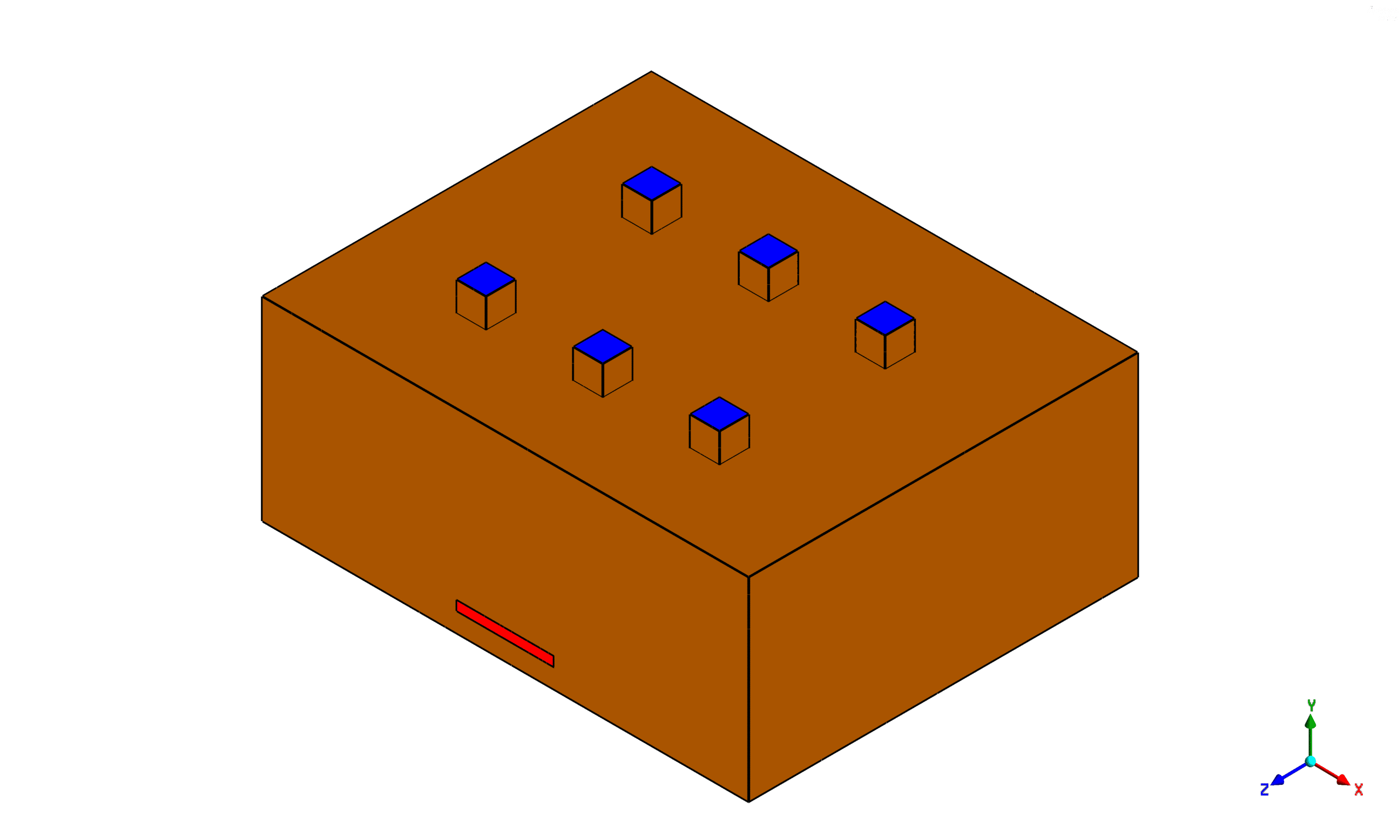
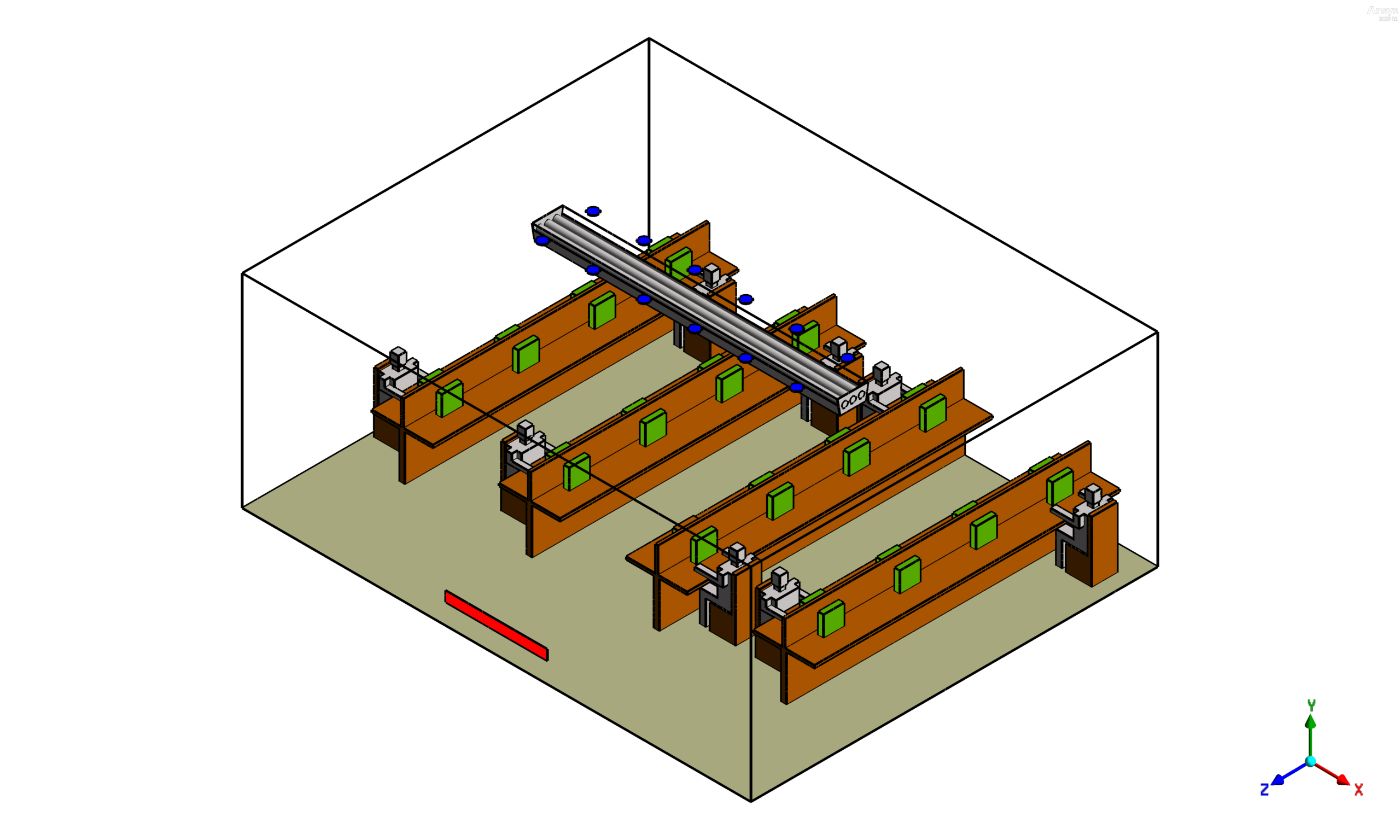
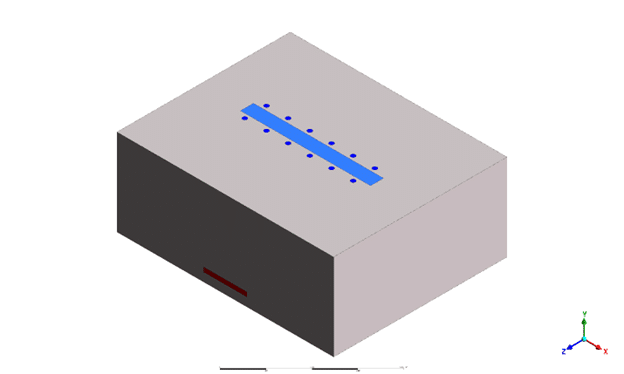
We simulated airflow, thermal comfort, and virus‐particle transport in a 10 m × 8 m classroom with eight occupants using ANSYS, comparing two HVAC concepts: a conventional AC layout and an active chilled-beam layout. The AC case used six 600 mm × 600 mm louvered inlets; the chilled-beam case used 12 circular inlets (Ø 100 mm) plus three chilled-water pipes at the ceiling. A virus source was located near the outlet, and particle trajectories were tracked to assess removal vs. mixing while also evaluating comfort via PMV/PPD.
Geometry and Mesh
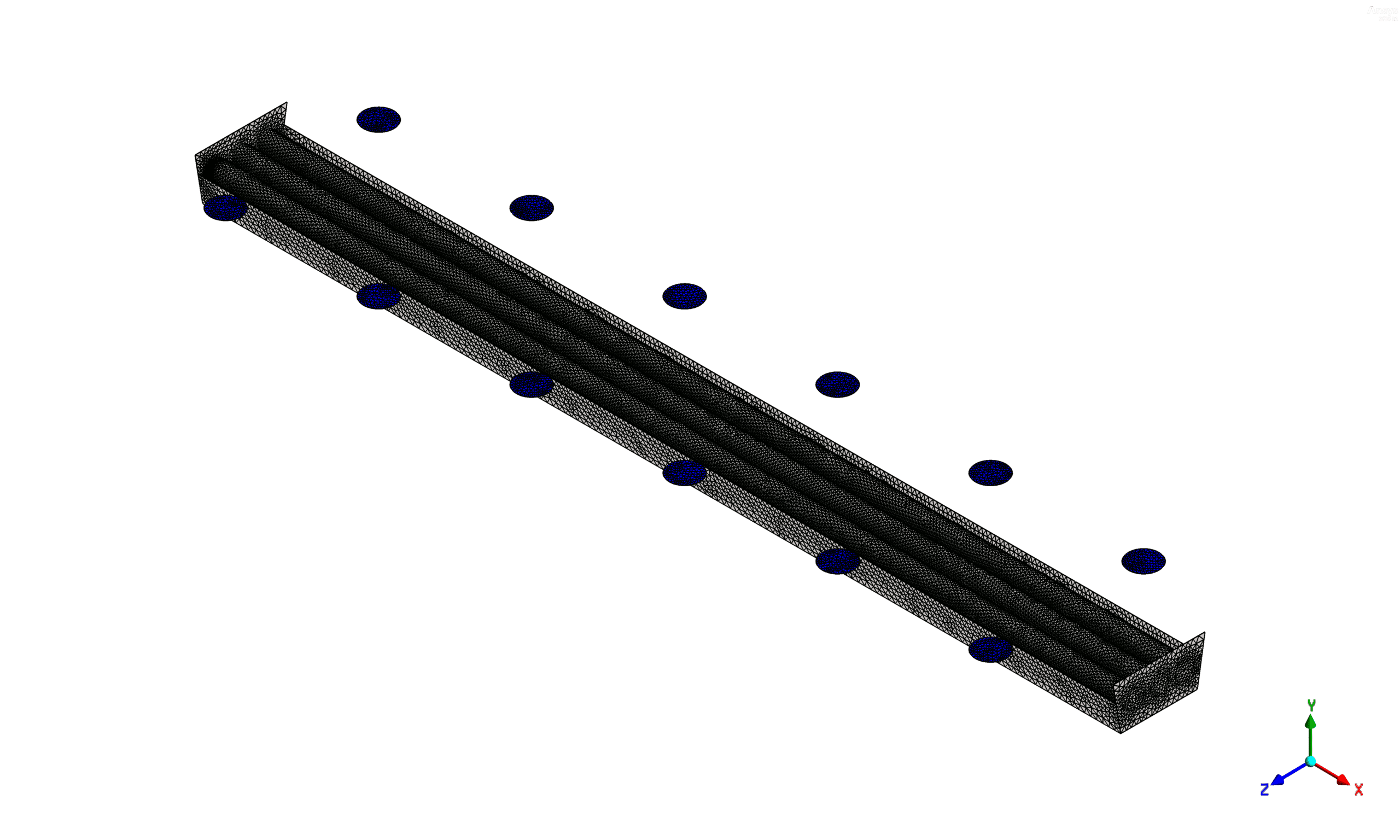
The geometry of the room envelope, four desk rows, 24 monitors, eight seated humans, inlets/outlets, and ceiling beams, was built in SpaceClaim; both HVAC layouts share the same classroom furniture, with only the supply arrangement differing (louvers for AC vs. distributed nozzles/beams for chilled beams). The model was discretized in ANSYS Meshing with an unstructured grid of ~5,000,000 elements, refined around supply openings, occupants, desks, and near-wall regions to capture jets, recirculation, and thermal boundary layers.
Model and Solver Settings
A pressure-based, steady RANS solution with gravity (−9.81 m/s² in y) and the realizable k–ε turbulence model was used; the energy equation was active, and buoyancy used the Boussinesq approximation. Virus was modeled with a DPM surface injection (inert spheres, diameter 1 µm, 308 K, 0.05 m/s, total 5×10⁻⁷ kg/s), while AC inlets applied 0.4 m/s at 294 K and walls used appropriate no-slip and thermal conditions; the chilled-beam case matched the AC mass flow (≈1.0584 kg/s total) but supplied at a 30° angle to induce room-scale circulation, with beam pipes held at 290 K.
Results
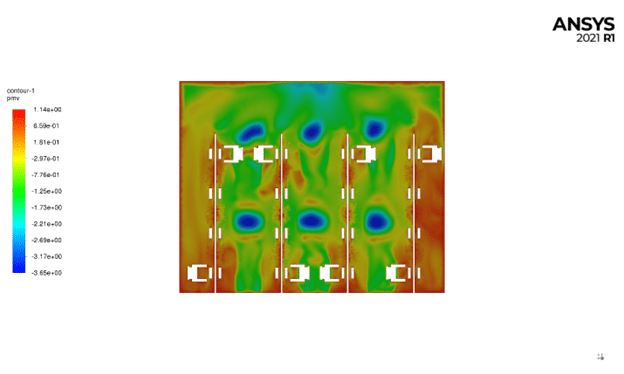
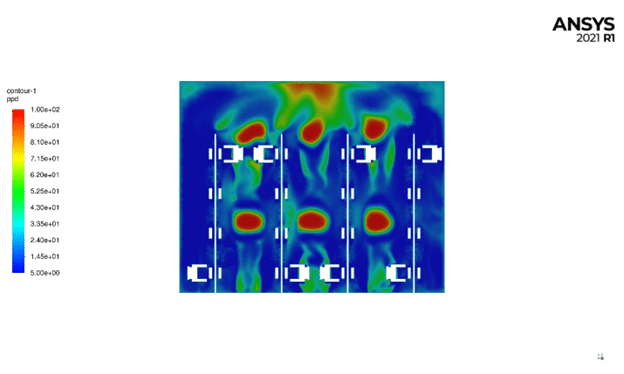
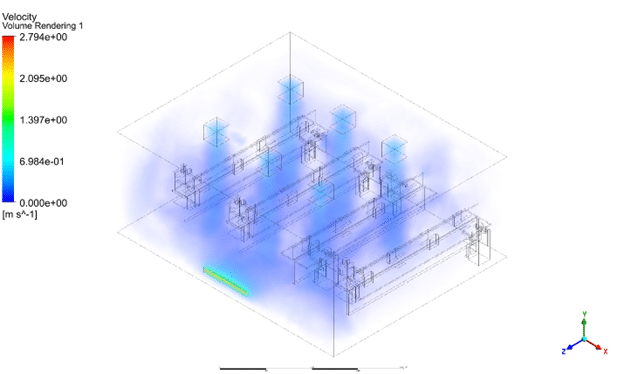
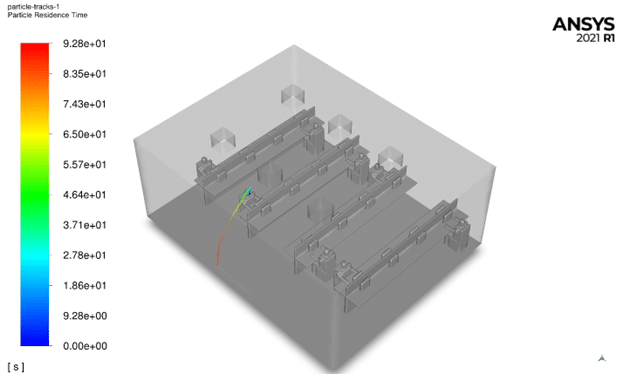
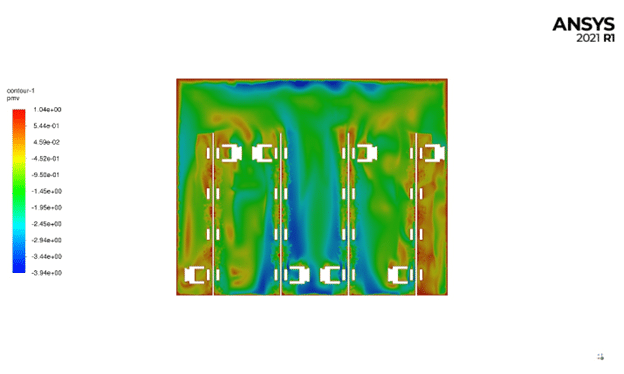
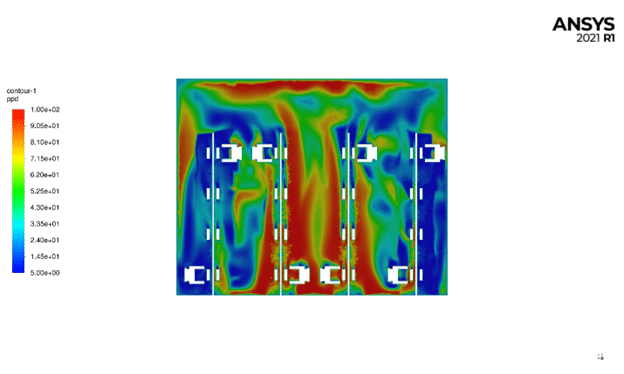
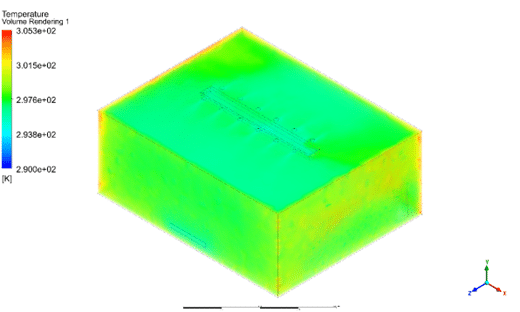
In the AC case, supply jets impinge and spread along the floor, sending colder air beneath desks. Near-wall regions are less well ventilated, leading to warmer zones and higher local PPD, despite acceptable average comfort. Meanwhile, virus-laden particles tend to travel directly toward the outlet with limited recirculation. In the chilled-beam case, angled supplies generate broader circulation, which improves temperature uniformity and PMV/PPD overall. However, the stronger mixing disperses particles throughout the room before extraction. Overall, AC favors faster removal of the virus source, while chilled beams favor thermal comfort at the cost of greater particle spread.
You must be logged in to post a review.
 Talk On WhatsApp
 Talk On WeChat

Reviews
There are no reviews yet.