
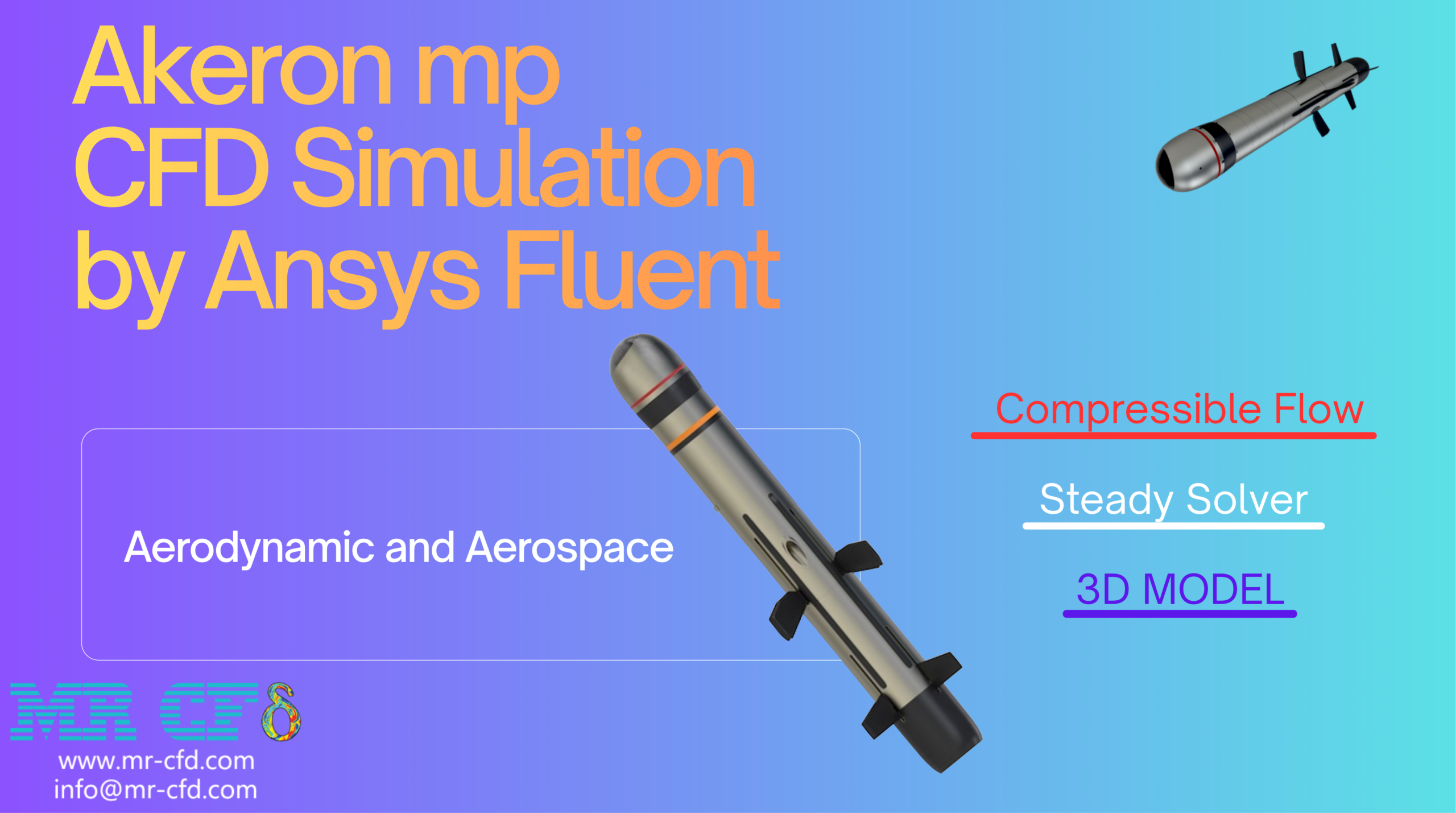
AKERON MP Simple Aerodynamic Analysis: CFD Simulation by ANSYS Fluent
$1,080.00 $648.00 HPC
- The problem numerically simulates a AKERON using ANSYS Fluent software.
- We design the 3-D model with the SpaceClaim software.
- We mesh the model with Ansys Meshing software. The element number equals 8,567,508 and their type is Tetrahedral.
To Order Your Project or benefit from a CFD consultation, contact our experts via email (info@mr-cfd.com), online support tab, or WhatsApp at +44 7443 197273.
There are some Free Products to check our service quality.
If you want the training video in another language instead of English, ask it via info@mr-cfd.com after you buy the product.
Description
Simple Aerodynamic Analysis: AKERON MP CFD Simulation Training
Introduction
The MP is a French fifth-generation, network-based, multi-role anti-tank missile developed by MBDA. The system is designed for man-portable use as well as installation on combat vehicles and land/sea platforms. The missile has three main firing modes: fire and forget, lock-on before firing with man in the loop, and lock-on after firing (LOAL) for NLOS scenarios.
The missile has a length of about 1.3 m in the tactical canister, a diameter of about 140 mm, and a mass of about 15 kg with the launch tube. The missile uses a two-stage solid-fuel engine with soft launch and low smoke. This feature reduces the strong jet and momentary smoke effects on the flow field during the launcher exit phase, but during the boost phase, the solid-fuel jet and plume effects are still significant.
The missile’s operational range is over 4,000 meters and operates in all guidance modes (fire and forget and MITL) within this range.
The geometry of the present model is three-dimensional and has been designed using SpaceClaim software. We do the meshing of the present model with Ansys Meshing software. The mesh type is Tetrahedral, and the element number is 8,567,508.
Methodology
This study used a steady-state, density-based CFD simulation in ANSYS Fluent software to analyze the compressible flow around a TOW. The flow physics was modeled using the k-ω SST turbulence model.
Results and Conclusion
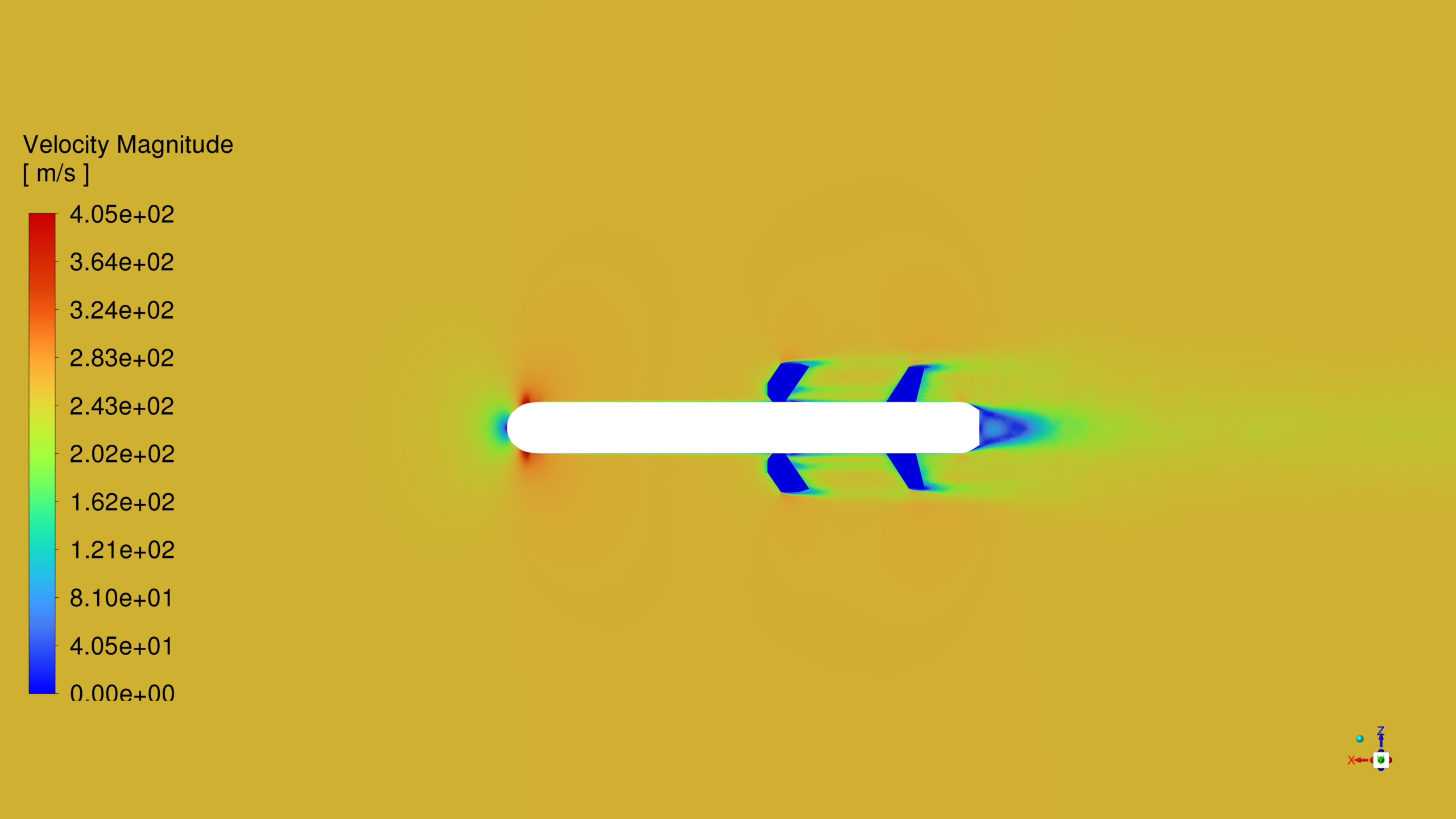
According to the contours below, the velocity and pressure in the areas around the TOW as well as the pressure on the TOW wall are clear. As can be seen, the velocity around it is higher, especially in the areas of the cap, and the pressure contours also confirm this.
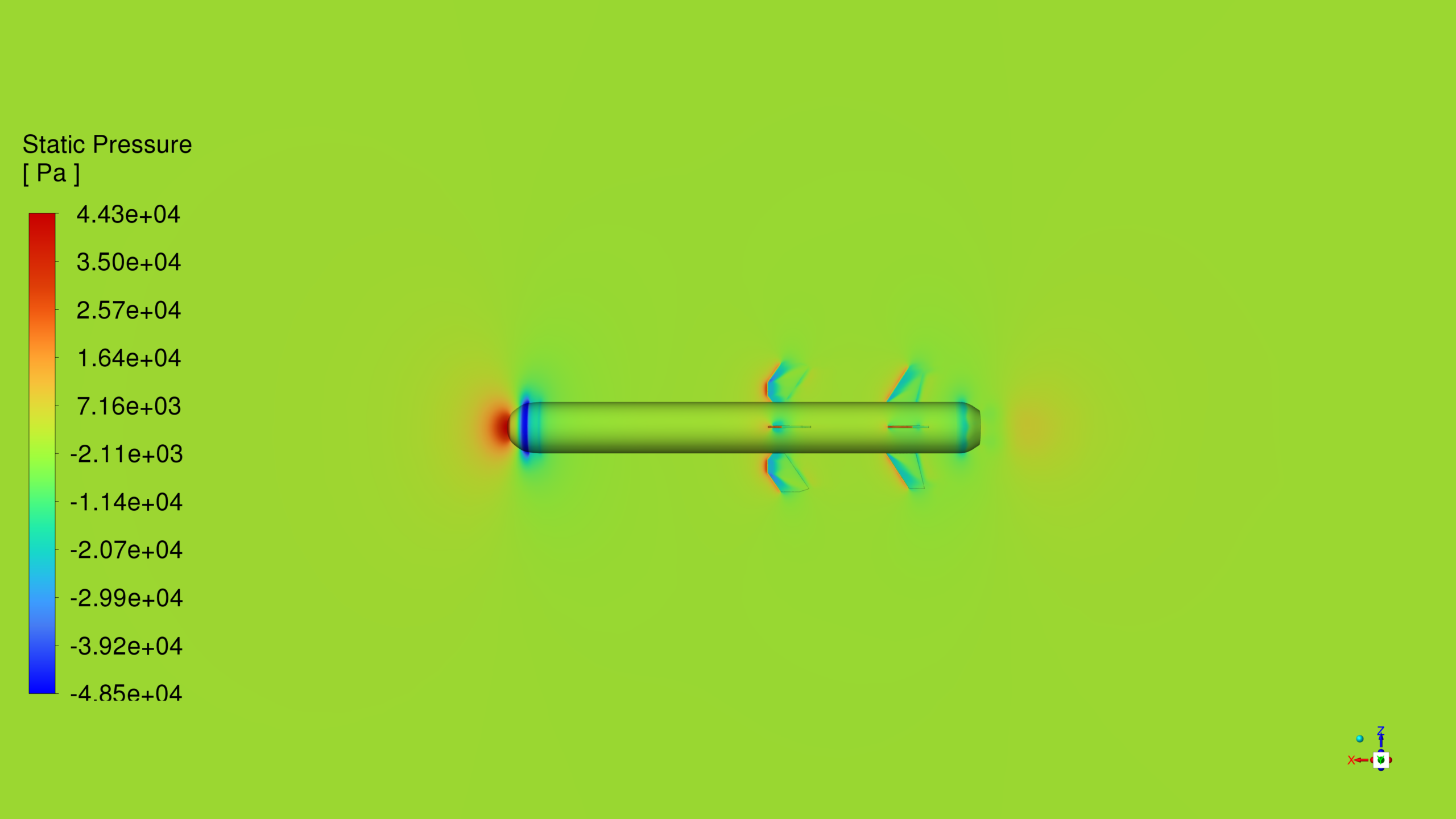
You can also see that the highest pressure is applied to the front of the cap.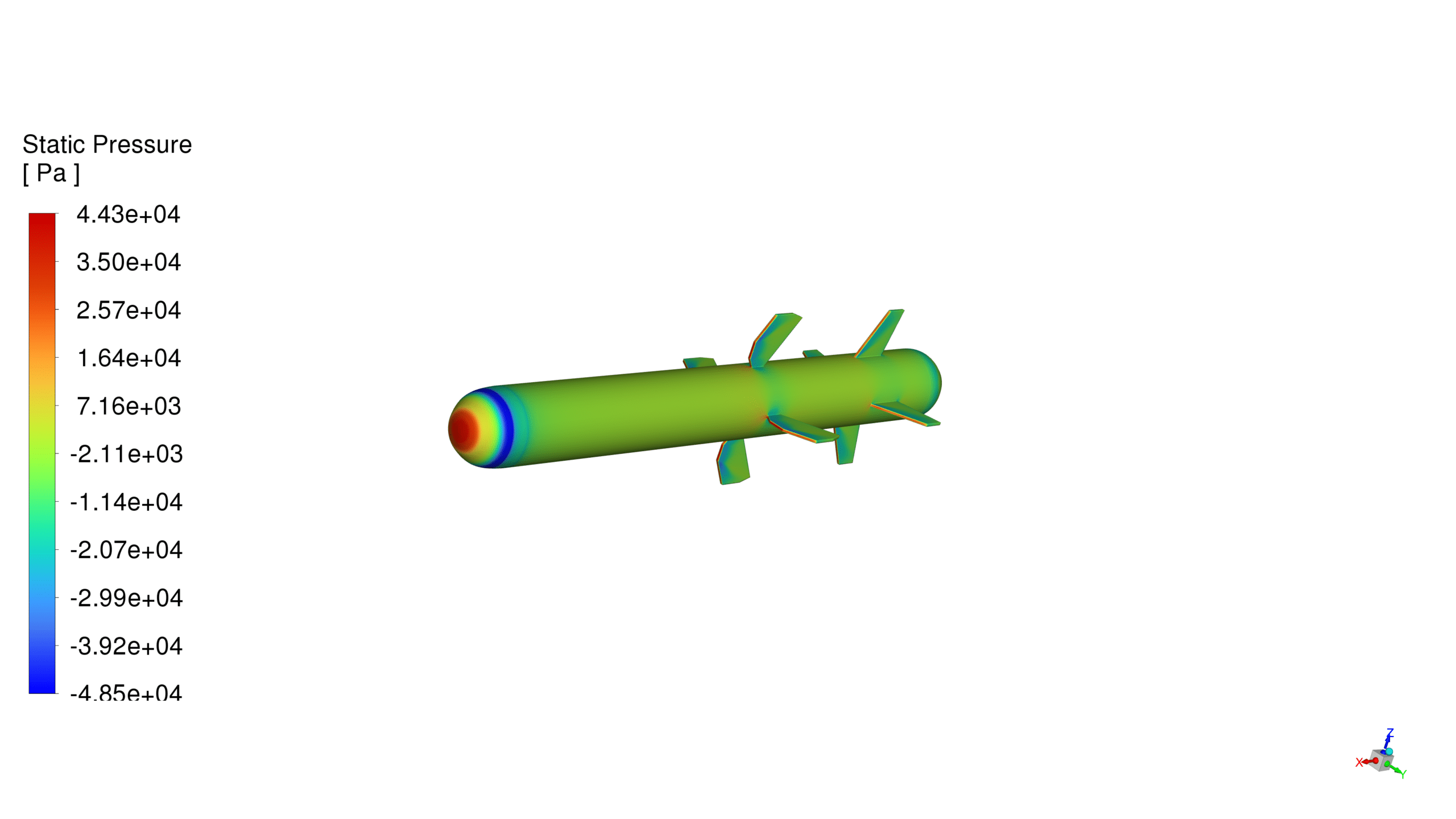
You must be logged in to post a review.
 Talk On WhatsApp
 Talk On WeChat

Reviews
There are no reviews yet.