
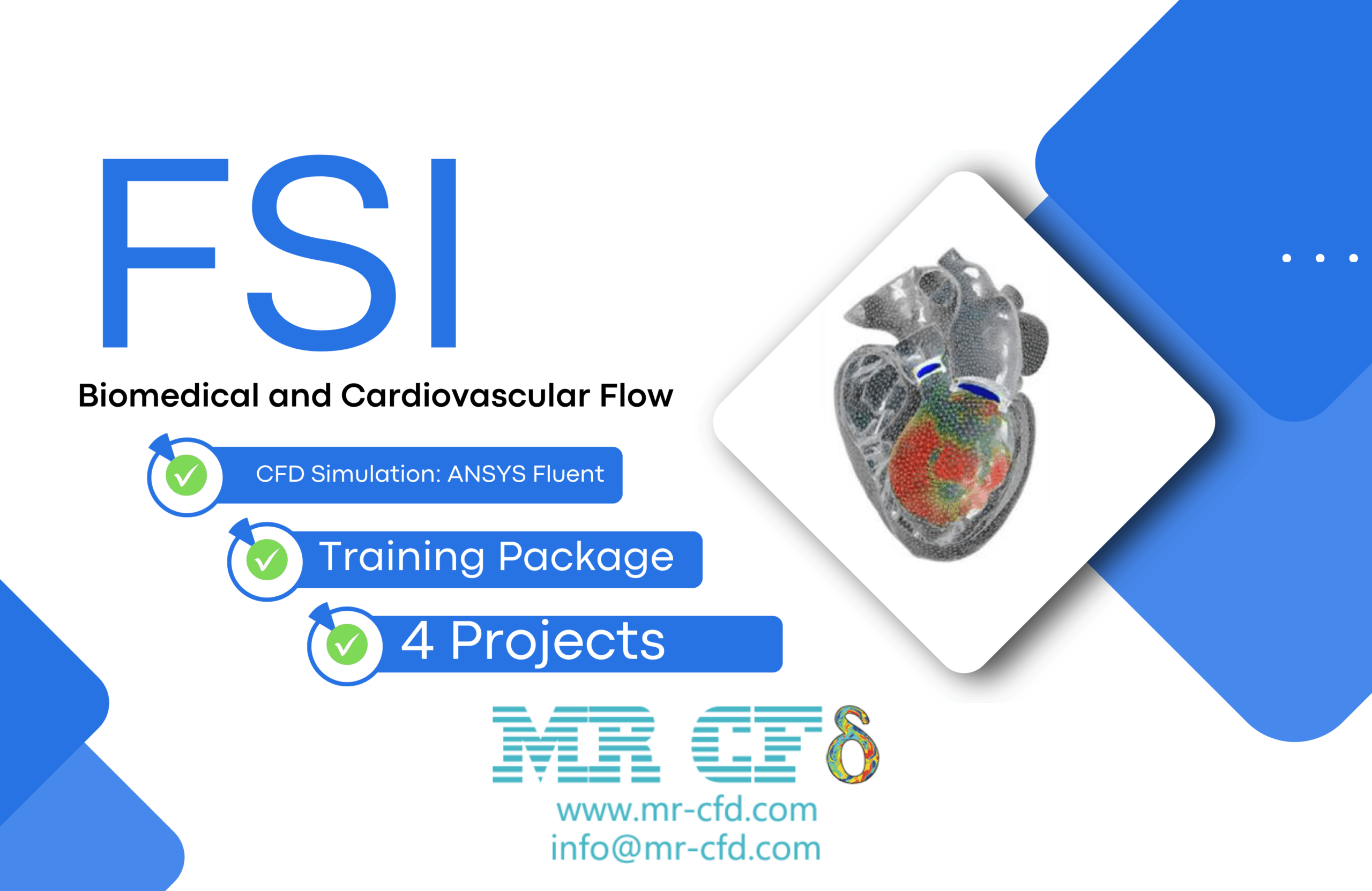
FSI for Biomedical and Cardiovascular Flow: CFD Simulation Training Package, 4 Projects by ANSYS Fluent
$349.00 $139.60 HPC
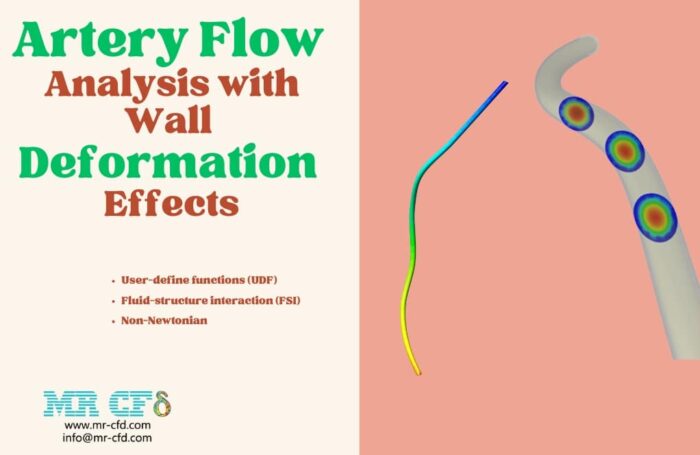
- Arterial Flow CFD with FSI – Master fundamental blood-vessel wall interactions and shear stress analysis
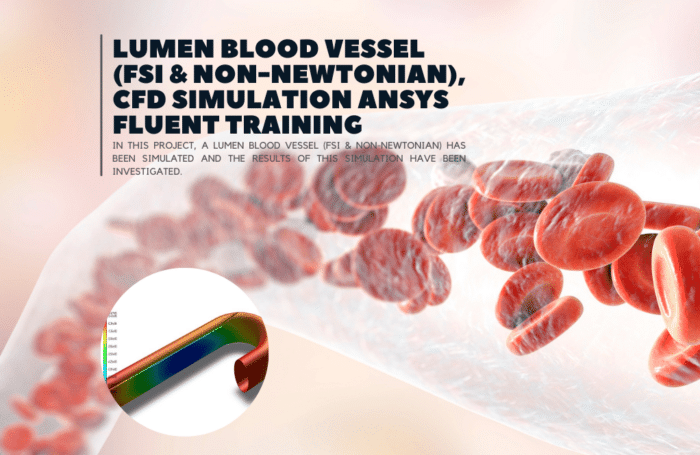
- Lumen Blood Vessel (Non-Newtonian FSI) – Implement complex blood rheology with deformable vessel modeling
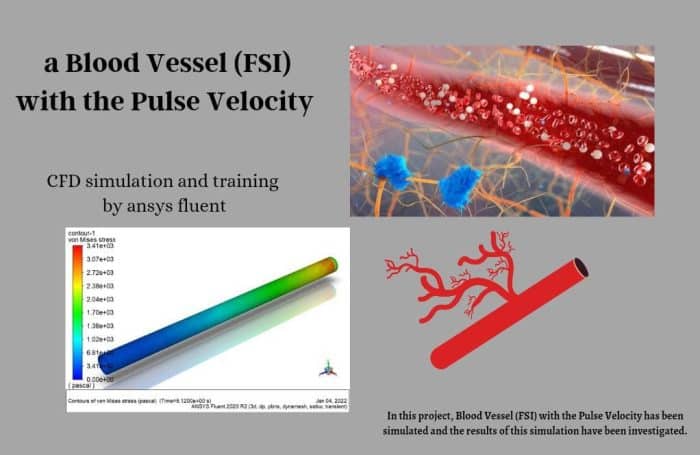
- Pulsatile Blood Vessel Flow – Simulate dynamic cardiac cycles and pulse wave propagation effects
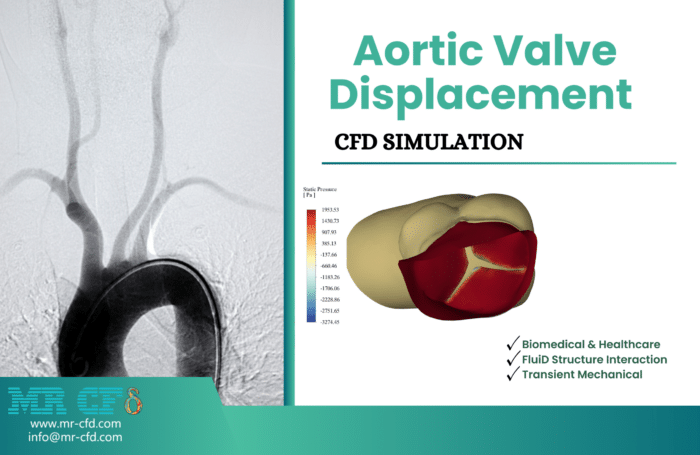
- Aortic Valve Displacement – Advanced heart valve mechanics with dynamic mesh and leaflet motion
To Order Your Project or benefit from a CFD consultation, contact our experts via email (info@mr-cfd.com), online support tab, or WhatsApp at +44 7443 197273.
There are some Free Products to check our service quality.
If you want the training video in another language instead of English, ask it via info@mr-cfd.com after you buy the product.
Description
Arterial Flow CFD with Fluid-Structure Interaction
Foundation of Cardiovascular CFD Modeling
Begin your journey into cardiovascular CFD with our comprehensive Arterial Flow simulation project. This foundational module introduces you to the critical concepts of hemodynamics modeling using ANSYS Fluent’s advanced FSI capabilities. You’ll learn to model realistic arterial geometries, implement proper blood flow physics, and analyze the crucial interaction between flowing blood and deformable vessel walls. Through detailed wall shear stress analysis and pressure distribution studies, you’ll understand how arterial flow patterns influence cardiovascular health and disease progression. This project establishes the essential skills needed for all biomedical CFD applications, covering mesh generation for complex vascular geometries, appropriate boundary condition selection, and the fundamentals of fluid-structure interaction that are critical for accurate cardiovascular simulations.
Lumen Blood Vessel with Non-Newtonian FSI Analysis
Advanced Blood Rheology and Vessel Mechanics
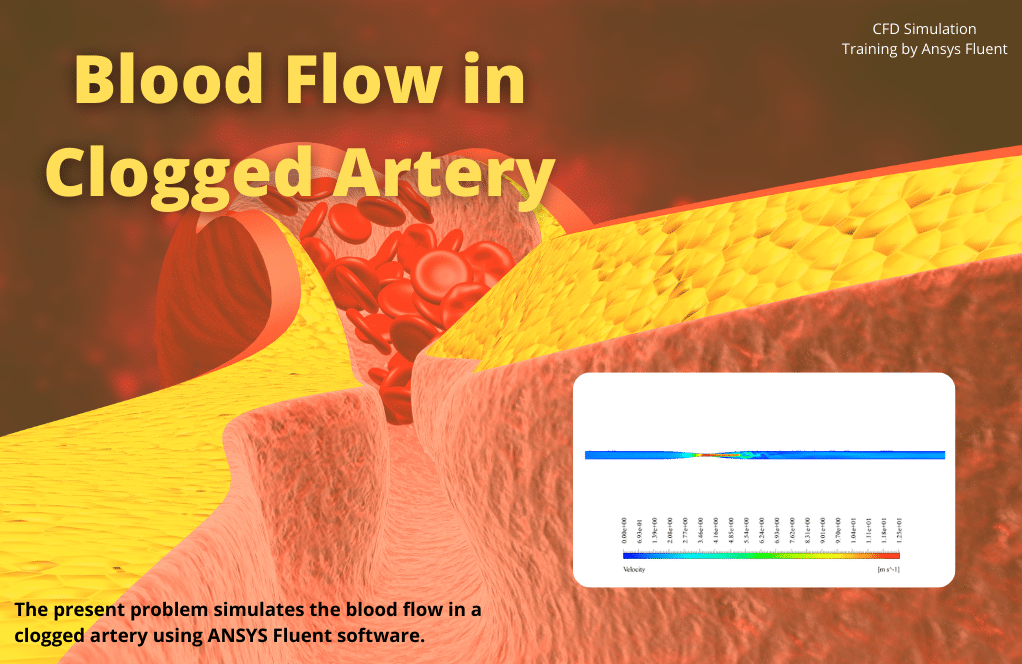
Advance your expertise with our sophisticated Lumen Blood Vessel project, where you’ll master the complexities of Non-Newtonian blood behavior combined with advanced FSI analysis. Unlike simple Newtonian fluids, blood exhibits shear-thinning properties that significantly impact flow patterns, especially in smaller vessels and pathological conditions. This project teaches you to implement realistic blood viscosity models, including Carreau and power-law formulations, while simultaneously capturing vessel wall deformation under physiological pressures. You’ll explore how the non-linear relationship between shear rate and viscosity affects flow profiles, pressure drops, and wall stress distributions. The comprehensive FSI coupling in this module demonstrates the intricate dance between blood rheology and vessel mechanics, providing insights crucial for understanding conditions like atherosclerosis, stenosis, and the performance of cardiovascular interventions.
Pulsatile Blood Vessel Flow Simulation
Dynamic Cardiac Cycle and Pulse Wave Analysis
Experience the dynamic nature of cardiovascular flow with our Pulsatile Blood Vessel project, featuring realistic cardiac cycle simulation and pulse velocity analysis. The human cardiovascular system is inherently unsteady, with complex wave propagation phenomena that cannot be captured through steady-state analysis. This advanced project introduces you to transient CFD simulation techniques, implementing physiologically accurate pulsatile inlet conditions that replicate the cardiac pumping cycle. You’ll learn to analyze pulse wave velocity, a critical clinical parameter for assessing arterial stiffness and cardiovascular risk. Through detailed time-dependent analysis, you’ll observe how pressure waves propagate through the arterial system, how vessel compliance affects flow patterns, and how pathological conditions alter these fundamental mechanisms. The project includes advanced post-processing techniques for extracting clinically relevant parameters and understanding the temporal evolution of hemodynamic forces.
Aortic Valve Displacement and Heart Valve Mechanics
Advanced Dynamic Mesh and Valve Leaflet Simulation
Culminate your learning with our most sophisticated Aortic Valve Displacement simulation, where you’ll master the complex dynamics of heart valve mechanics. This capstone project challenges you to model one of the most intricate fluid-structure interactions in the human body – the opening and closing of the aortic valve during the cardiac cycle. Using advanced dynamic mesh techniques and user-defined functions, you’ll simulate the valve leaflet motion, analyze the complex flow patterns during systole and diastole, and investigate the forces acting on valve structures. This project integrates all previous concepts while introducing new challenges such as contact mechanics, large deformation analysis, and the modeling of turbulent transitional flows through the valve orifice. You’ll gain insights into valve pathologies, prosthetic valve design considerations, and the hemodynamic factors that influence valve durability and performance, making this knowledge invaluable for cardiovascular device development and clinical research applications.
You must be logged in to post a review.
 Talk On WhatsApp
 Talk On WeChat

Reviews
There are no reviews yet.