
Laser Cladding CFD Simulation Using ANSYS Fluent
$510.00 $306.00 HPC
- In the Laser Cladding project, we simulated the deposition of nickel droplets under an argon gas stream using ANSYS Fluent software.
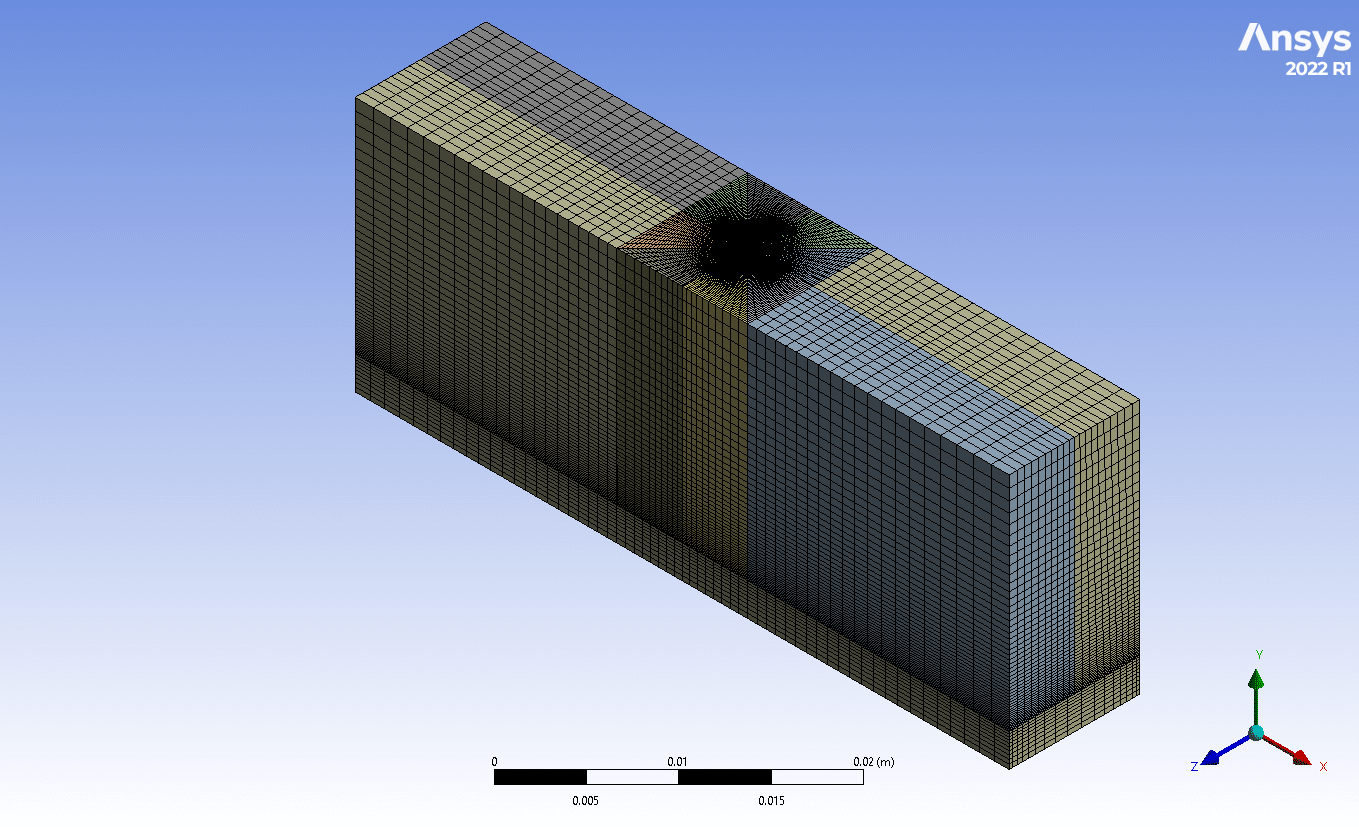
- The three-dimensional geometry was created in Design Modeler with a computational domain of 0.05 × 0.01 × 0.025 m. A structured non-conformal mesh was generated in ANSYS Meshing, consisting of approximately 798,400 computational cells with refined regions near the deposition zone.
- The transient simulation employed the VOF multiphase model, coupled with species transport and energy equations, while turbulence was modeled using the Realizable k-ε model.
- A User-Defined Function (UDF) implemented the moving Gaussian laser heat source, enabling realistic simulation of droplet injection, spreading, and weld layer formation.
To Order Your Project or benefit from a CFD consultation, contact our experts via email (info@mr-cfd.com), online support tab, or WhatsApp at +44 7443 197273.
There are some Free Products to check our service quality.
If you want the training video in another language instead of English, ask it via info@mr-cfd.com after you buy the product.
Description
Laser Cladding Modeling of Nickel Droplet Deposition and Weld Formation
Project description
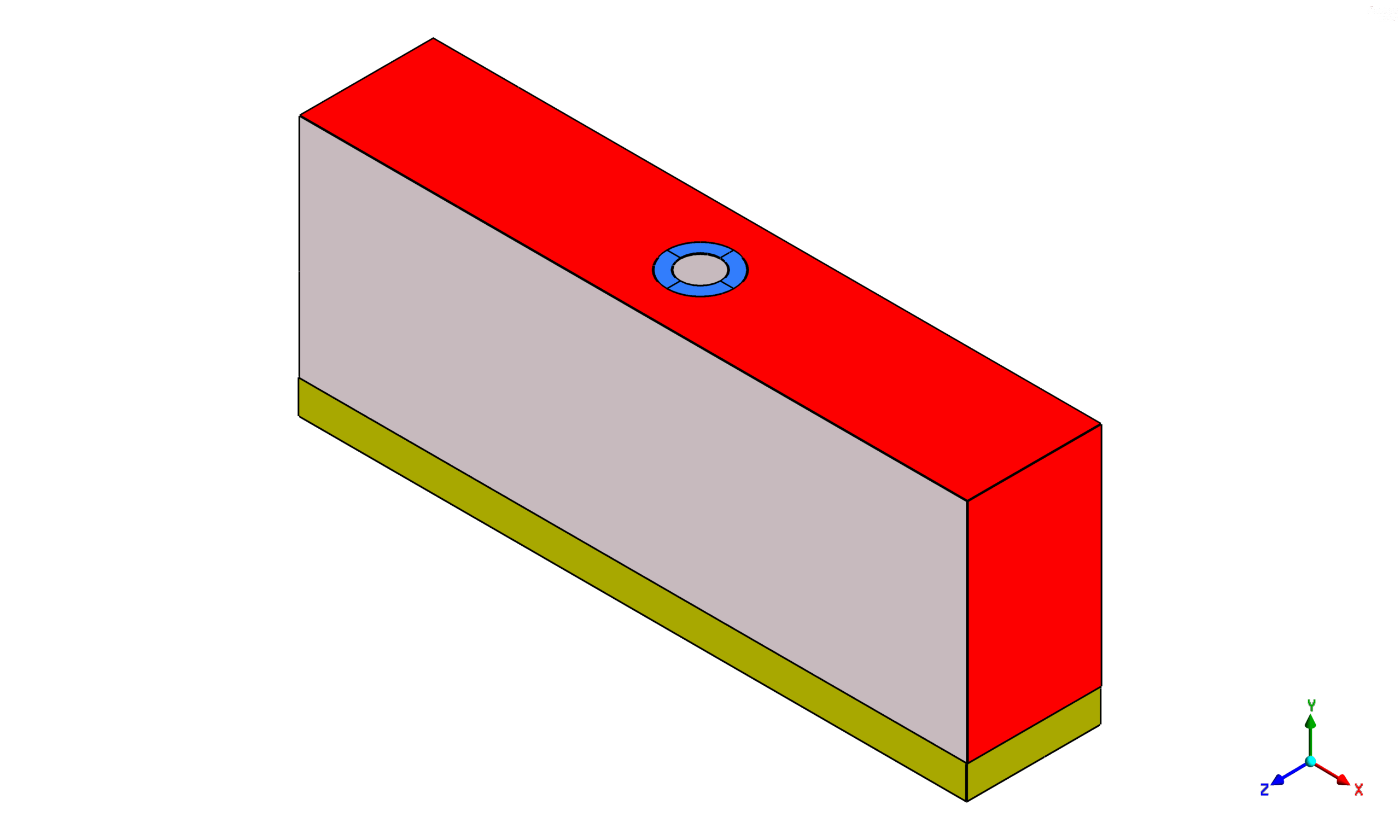
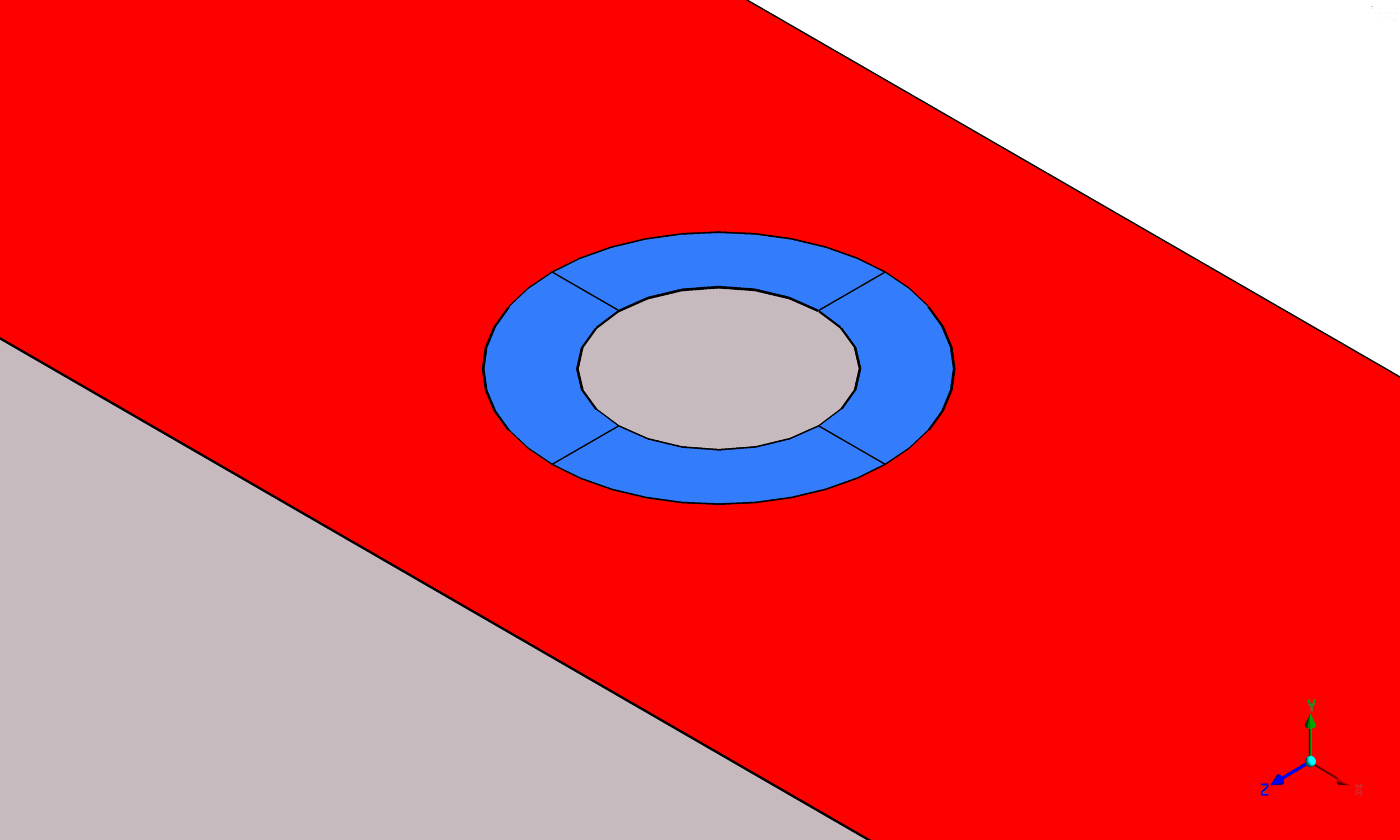
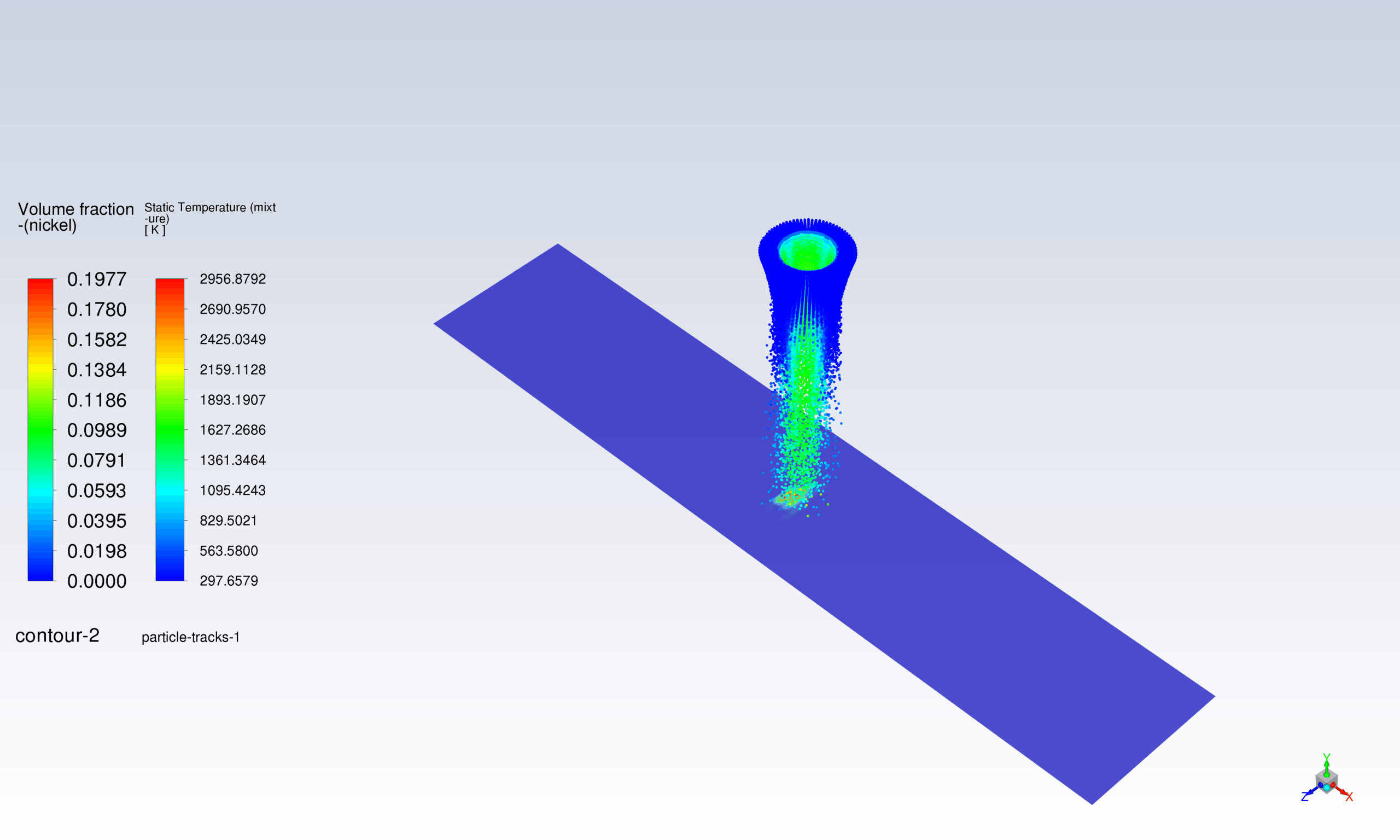
In the Laser Cladding project, the welding process is modeled using a discrete phase model (DPM) and a Gaussian distribution on a moving wall. The nicked droplets are injected from four rounded inlets while the 1800K Argon gas passes through a circular gate in the middle.
Geometry and Mesh
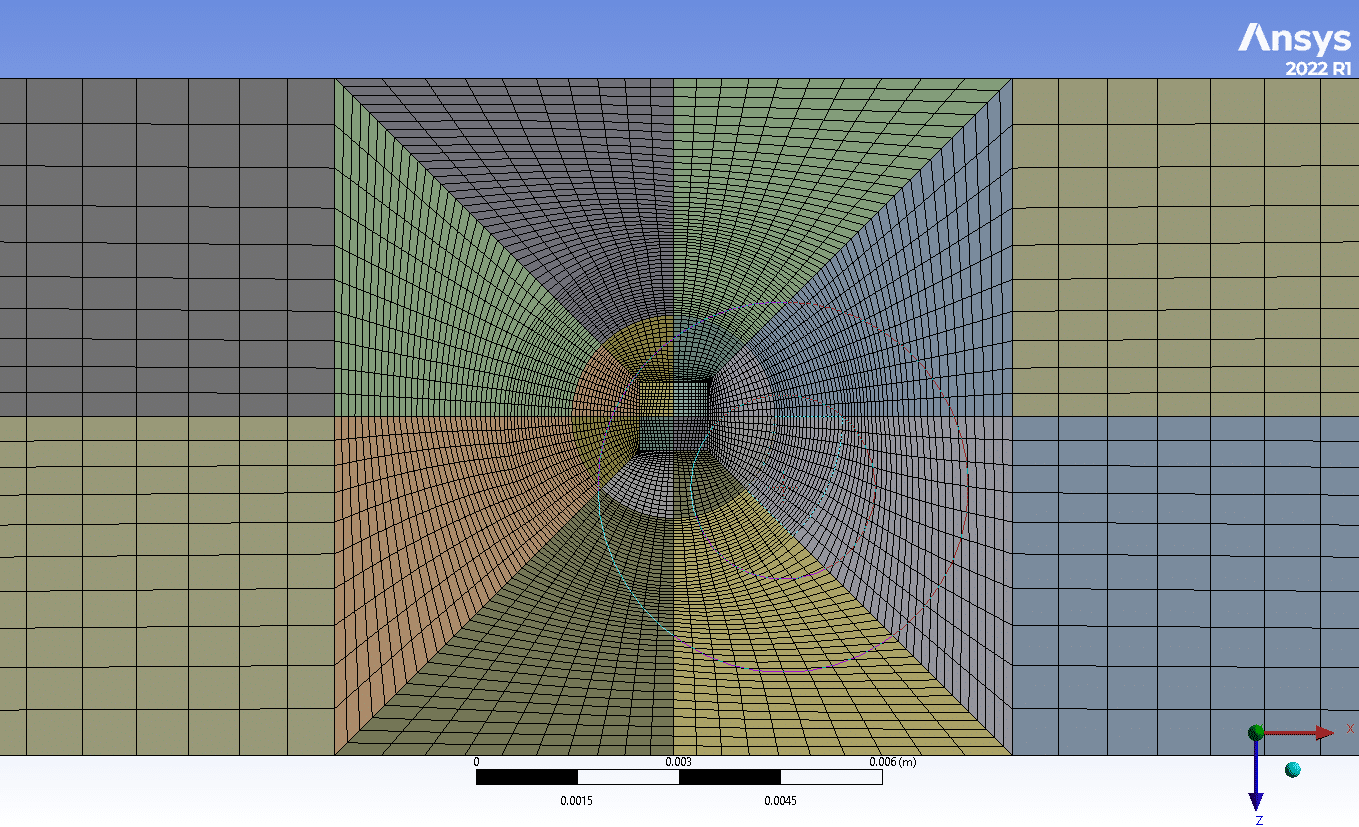
The geometry of the laser cladding is drawn using the Design Modeler. Three zones are drawn in this software; two are fluid zones, and the 3rd one is a solid zone based on the model. The geometry is divided into several blocks because we want to generate a structure mesh. Additionally, the size of the domain is 0.05*0.01*0.025. Then, the geometry is inserted into the ANSYS Meshing software to generate a non-conformal mesh, and a total of 798400 cells are generated in this software.
Setup
The governing equation was solved using Ansys Fluent, the pressure-based solver and transient used for Laser Cladding simulation. The Volume of Fluid(VOF) set for the multiphase model, and Mass transfer is enabled in this model. However, the k-epsilon Relaizable model is used for turbulence with the standard wall function. Additionally, the species transport model is active plus energy. The nickel droplet`s primary temperature is 300K, which is injected at a specific velocity. Plus, the diameters of the particles differ from 1.5e-5m to 4.5e-5m. In other words, the average diameter is 3e-5m. We use mesh motion for the fluid zone in the cell zone condition. The Gaussian distribution on the moving wall is applied using a user-defined function (UDF).
Results
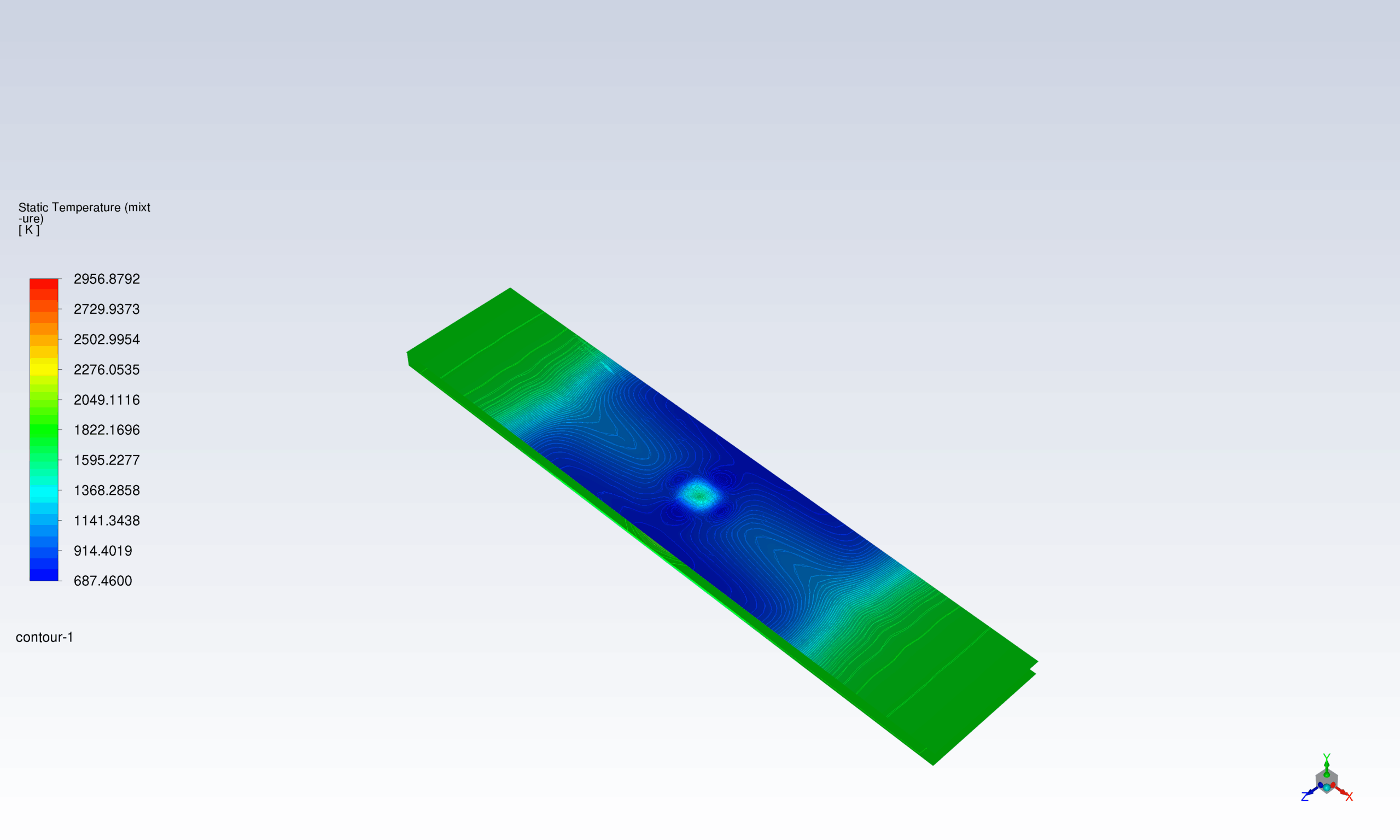
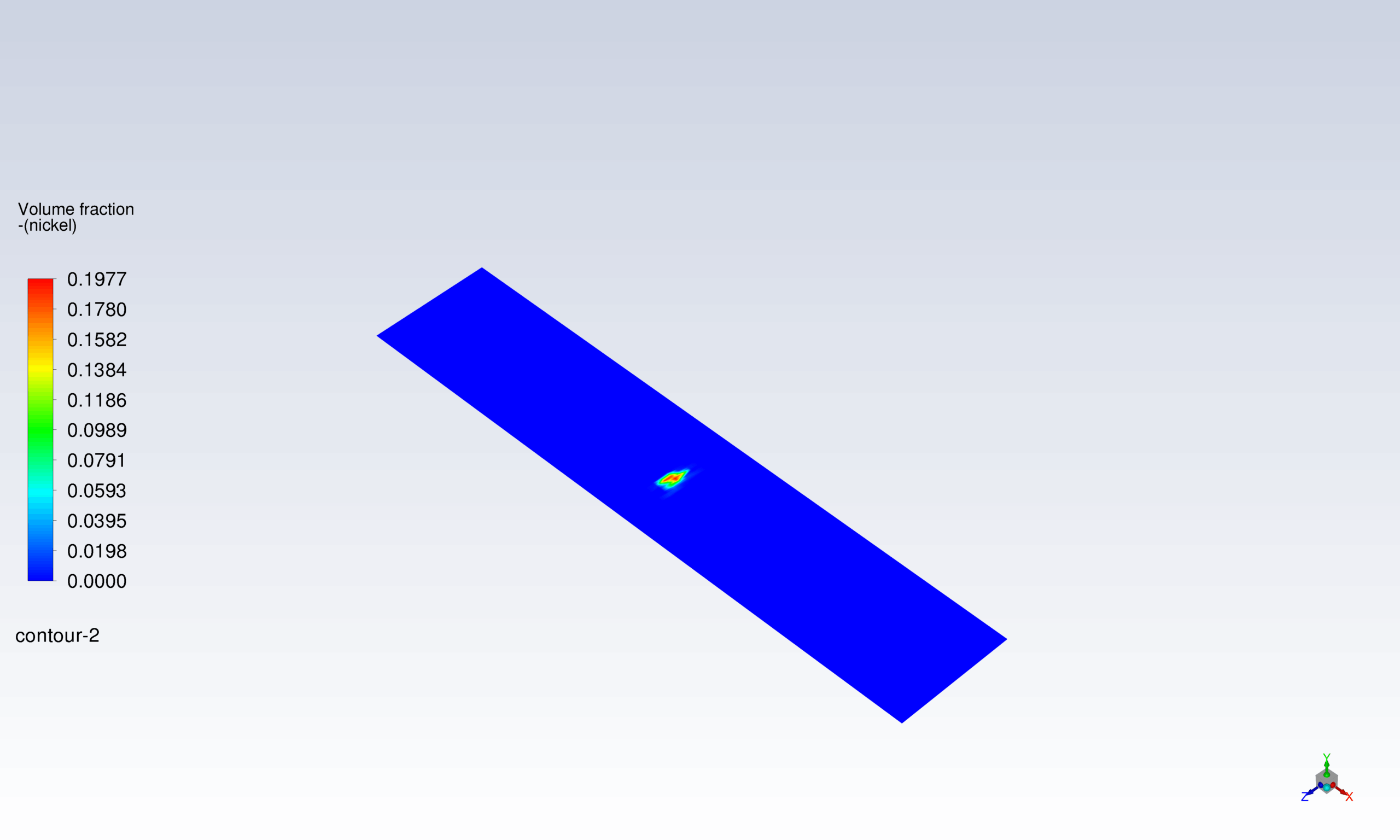
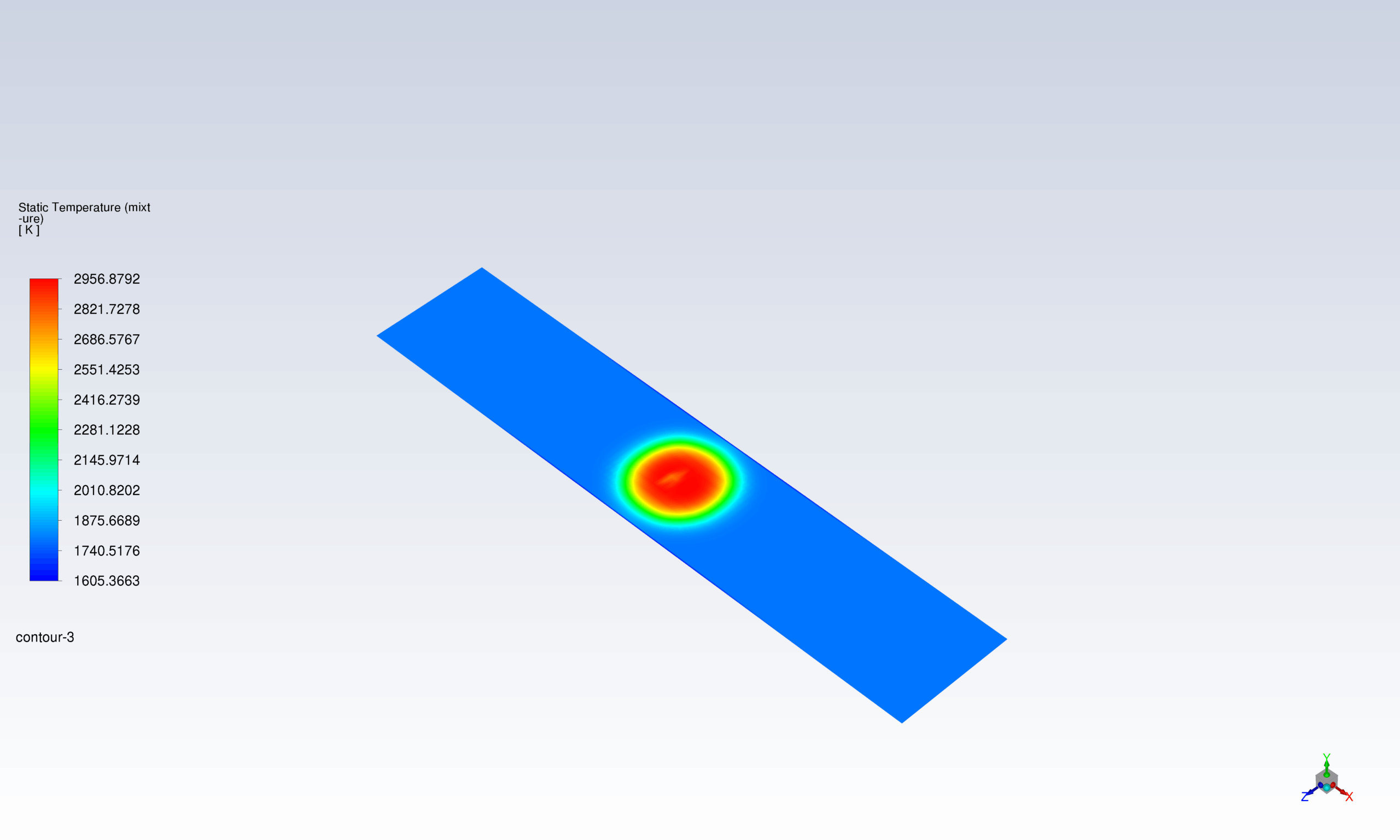
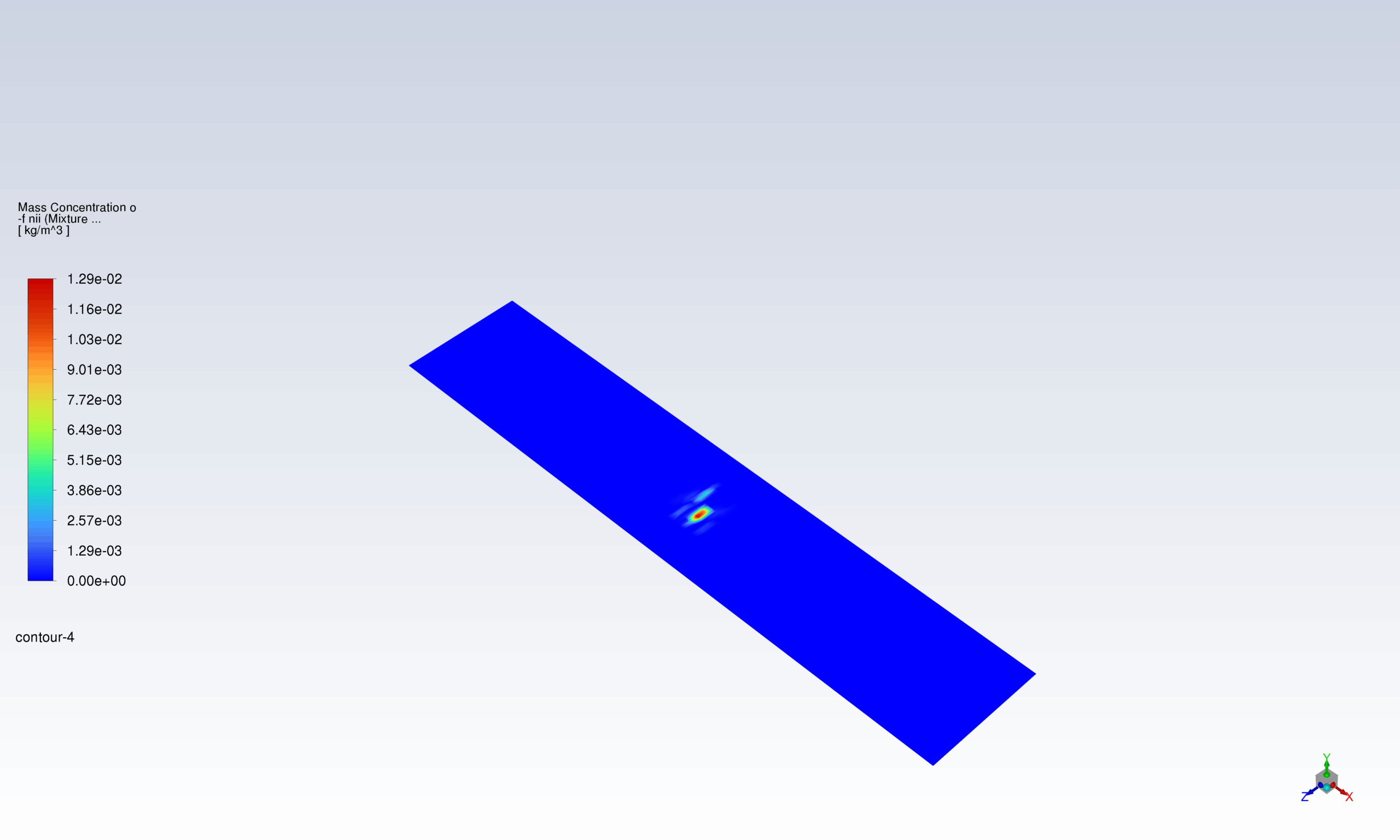
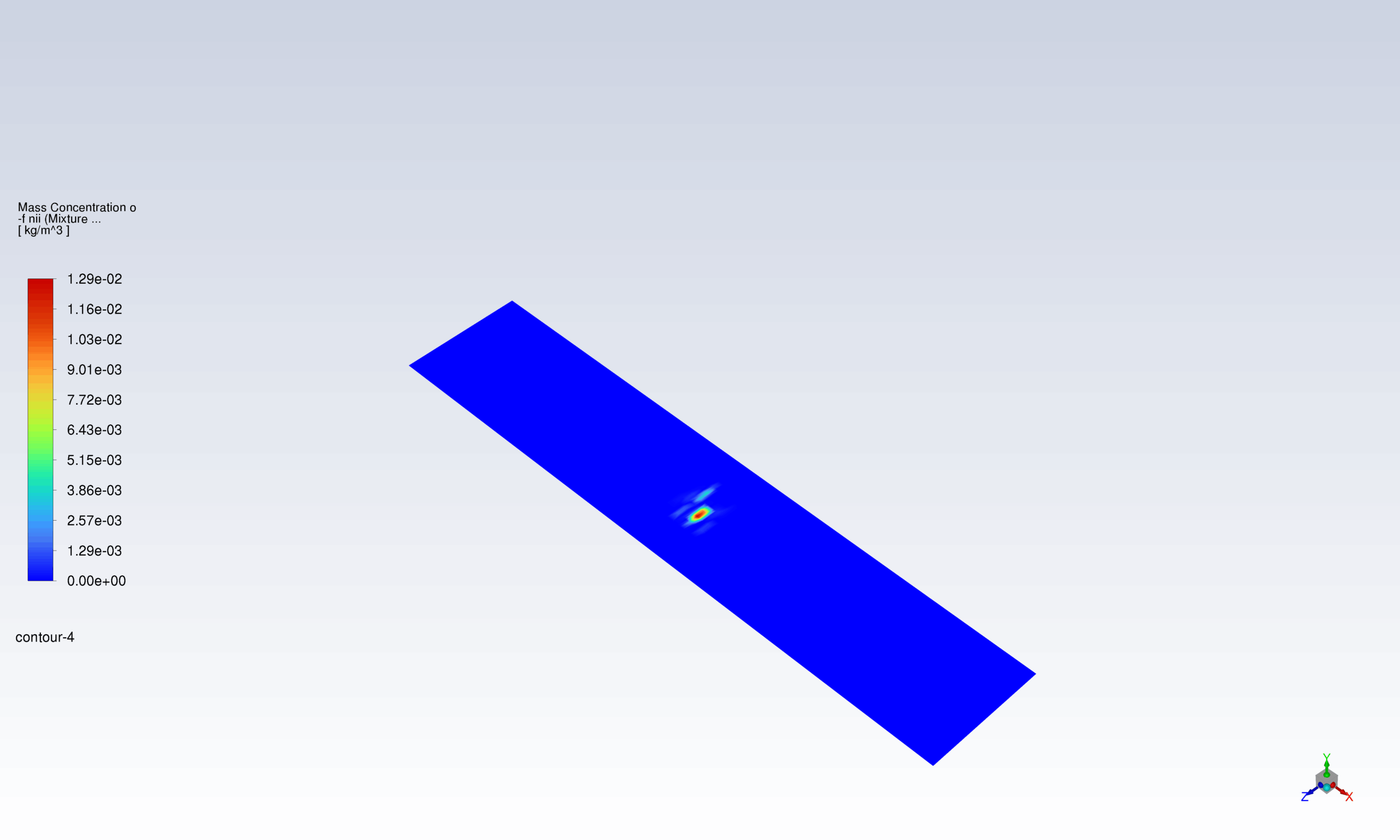
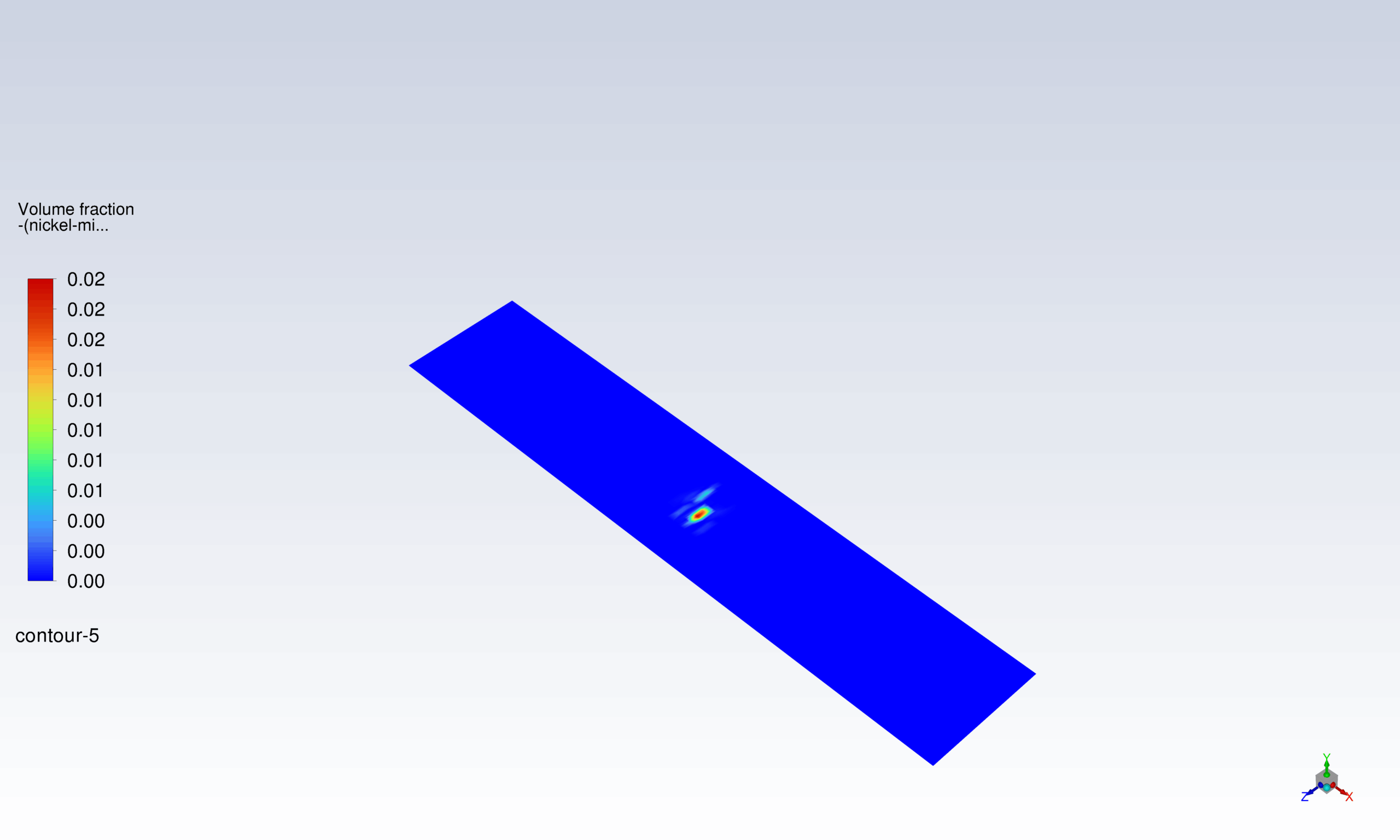
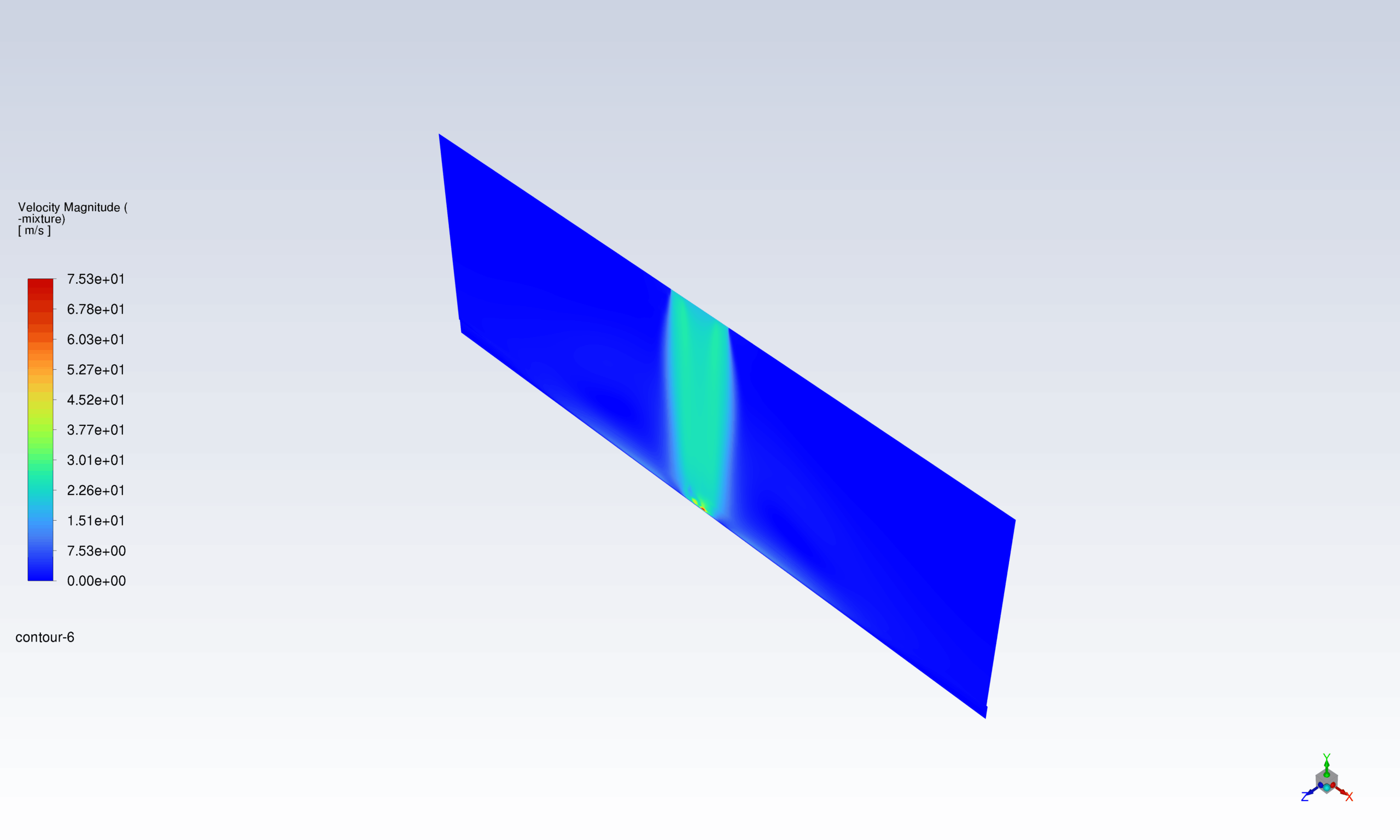
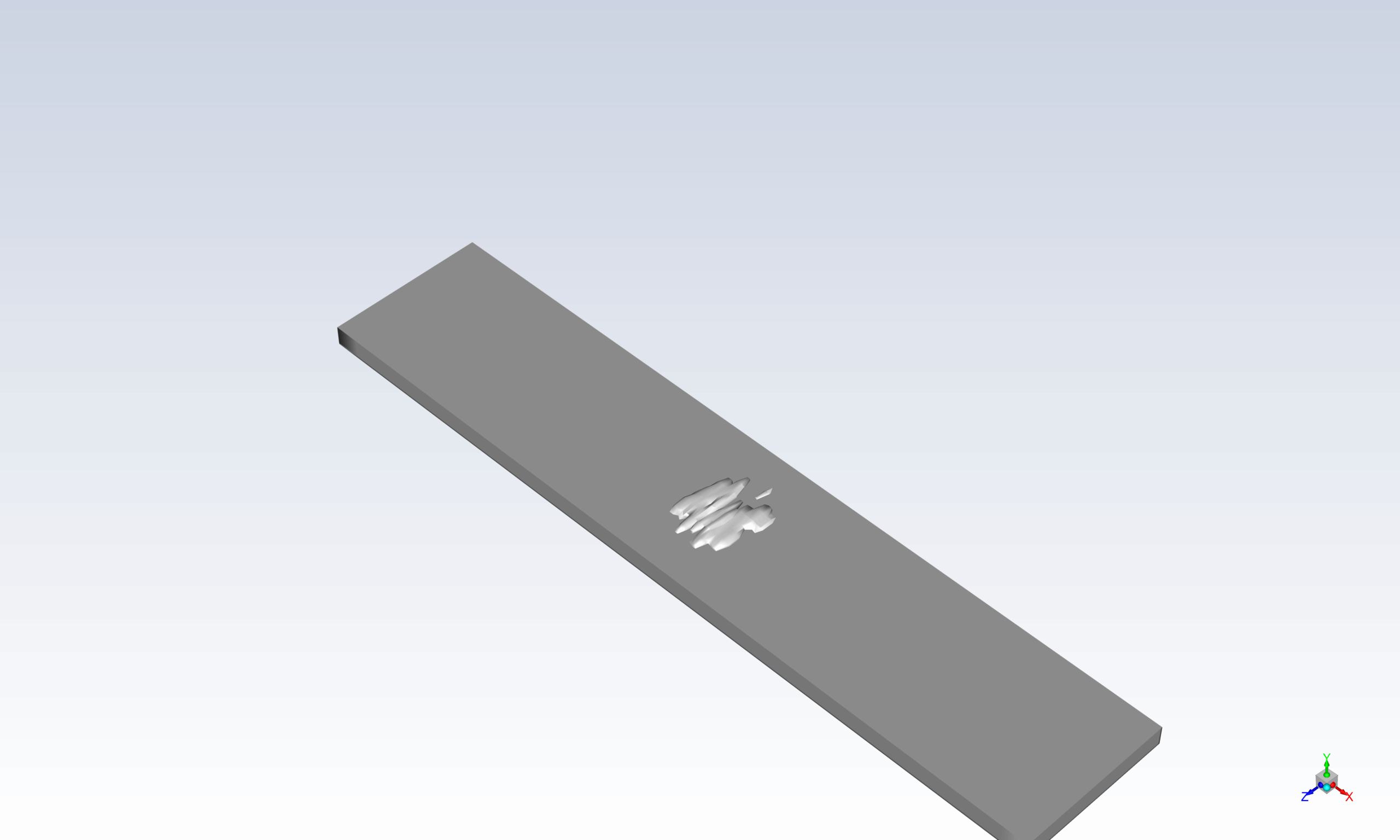
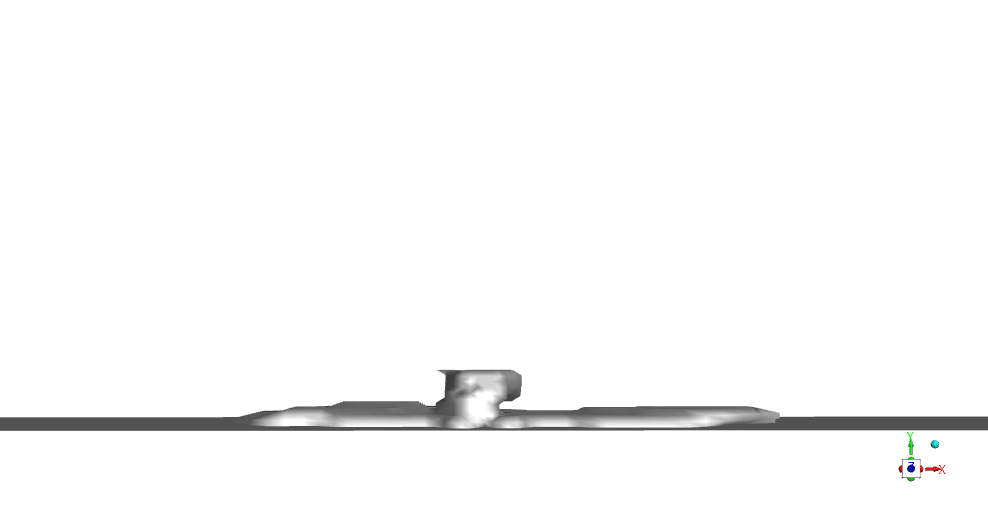
By observing the results, we notice that the speed in the model reaches a maximum of about 75 m/s. And as expected, the temperature around the weld is high. The first layer of weld covered the bottom surface and, as can be seen in the figure below, which shows the volume fraction of the nickel phase, new particles join it and spread over the first layer. In addition, animations are attached to the report that can clarify the welding process to date.
You must be logged in to post a review.
 Talk On WhatsApp
 Talk On WeChat

Reviews
There are no reviews yet.