
Porosity Effect in the Vessel Wall on the Flow by ANSYS Fluent
$140.00 $84.00 HPC
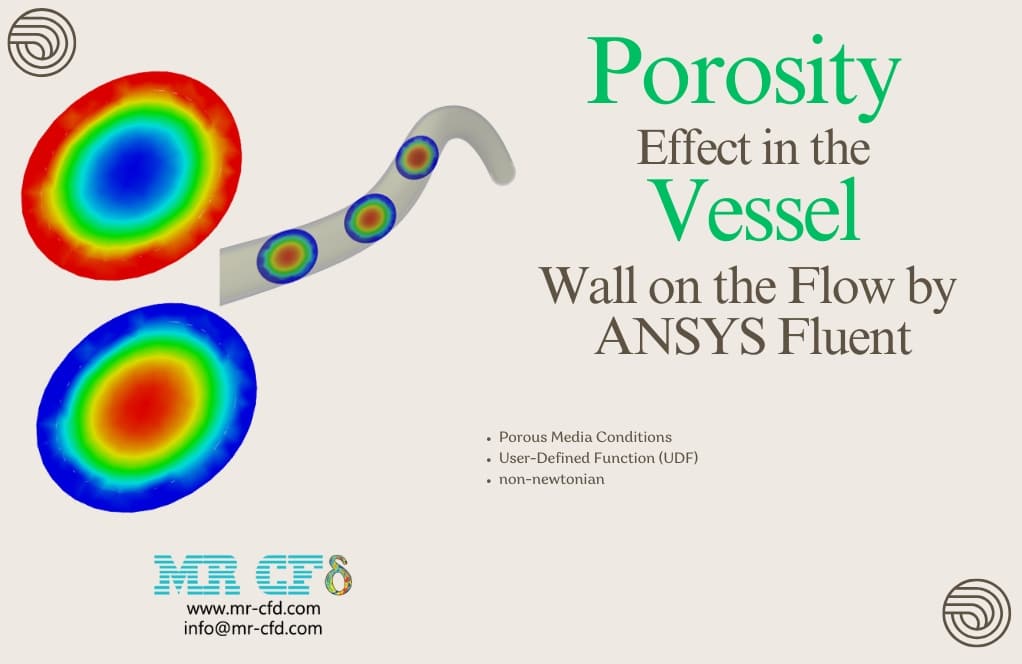
- This project simulates blood flow in a porous artery wall using CFD in ANSYS.
- The wall is modeled as a high-viscosity fluid to mimic porosity, with no actual flow through it.
- Geometry was simplified, meshed, and solved in Fluent under steady laminar conditions.
- The study includes validation, mesh independence, and analysis of velocity profiles.
To Order Your Project or benefit from a CFD consultation, contact our experts via email (info@mr-cfd.com), online support tab, or WhatsApp at +44 7443 197273.
There are some Free Products to check our service quality.
If you want the training video in another language instead of English, ask it via info@mr-cfd.com after you buy the product.
Description
Porosity Effect in the vessel wall on the flow
Project description:
In this project, the artery is simulated using ANSYS software. The vessel simulation aims to investigate the effect of porosity in the vessel wall on the flow. Although the simulation of the above case requires the presence of a fluid domain to create porosity, for the simulation, we considered the wall material to be a fluid with high viscosity and density and performed the simulation. It is worth noting that blood did not flow in the vessel wall.
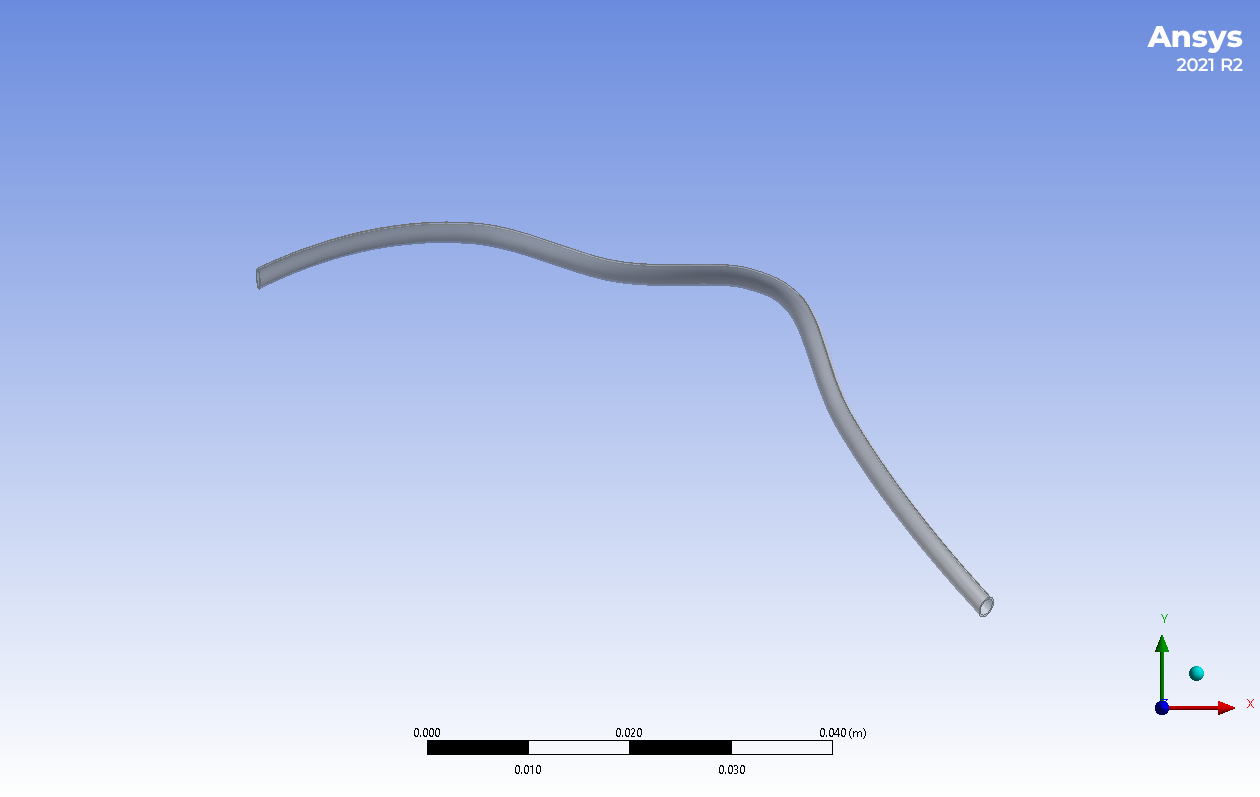
As mentioned, we have used a wall made of a fluid with high viscosity and density to create the porous area. Geometric edits were made in the Design Modeler software, then the geometry was imported into the ANSYS Meshing software to generate the mesh. Finally, the Fluent software was used to solve the governing equations. This project includes: validation, network study, and simulation of the artery with a porous medium.
Geometry and Meshing:
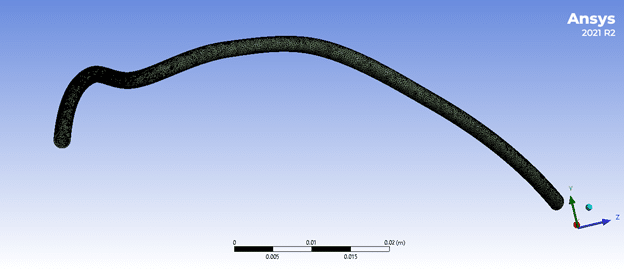
Due to the high complexity of the geometries obtained from the CT scan, the geometry was redrawn with a slight simplification and from a numerical solution perspective. Ansys Machining software was used to generate the mesh. It is worth noting that the geometry and mesh generated in the Artery Flow Simulation Using ANSYS Fluent: Investigating FSI project were used. That project has also been made mesh-independent.
Validation:
The paper “Numerical investigation of blood flow in a deformable coronary bifurcation and non-planar branch” deals with the numerical analysis of pulsatile blood flow in a coronary bifurcation with a non-planar branch. We used this paper to validate our project. If you want to see the project, click here.
CFD Simulation:
A pressure-based solver is used to simulate the vessel, and it is steady. A viscous laminar model is also used. The inlet velocity is 0.3 m/s. Also, velocity and pressure coupling use the coupled algorithm.
Results:
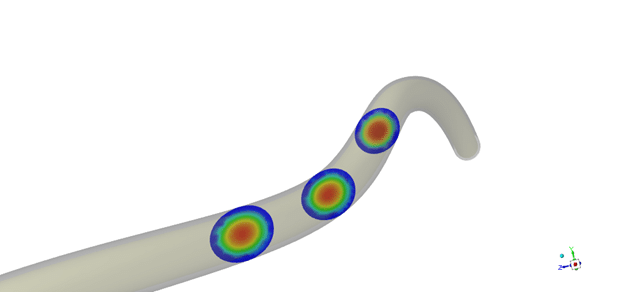
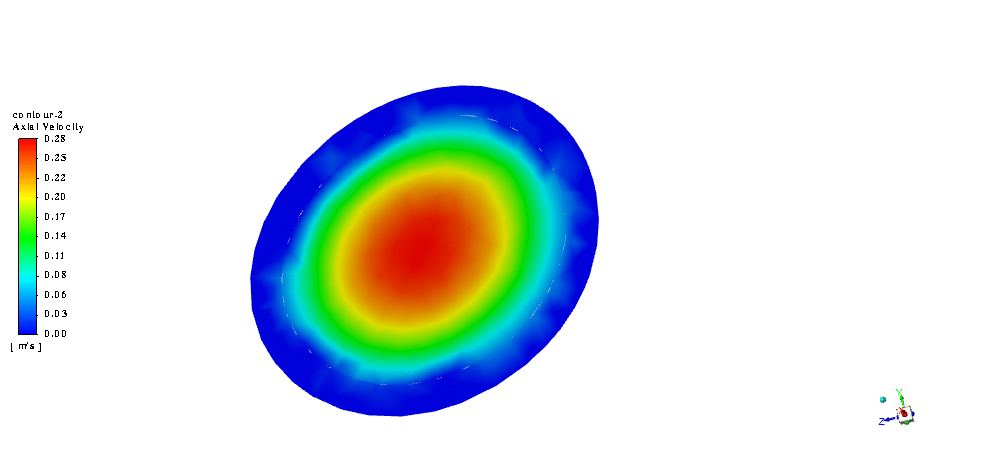
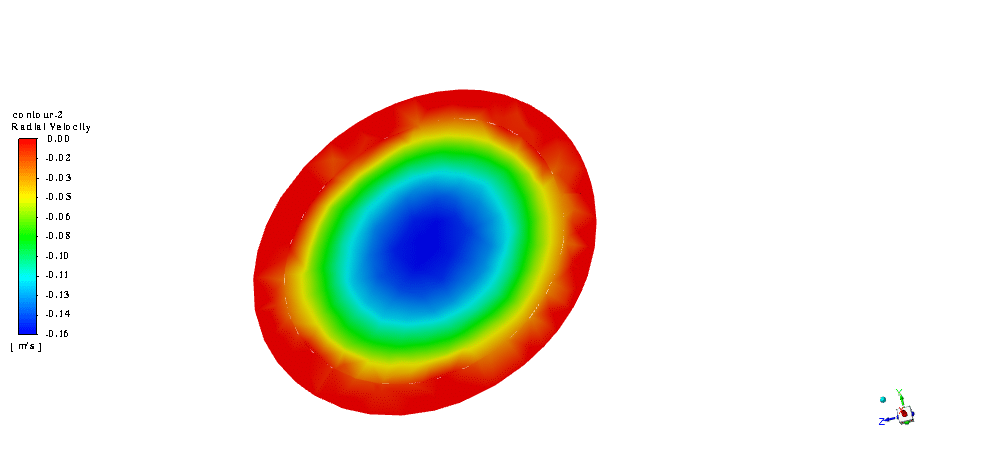
As mentioned earlier, expecting flow inside the vessel wall is unreasonable. Although the vessel wall is solid and its density is much higher than the applied values, the lack of blood flow to the wall is evident even under these conditions. The contours below show the velocity at three different sections and the velocity in the radial and longitudinal directions.
You must be logged in to post a review.

 Talk On WhatsApp
 Talk On WeChat

Reviews
There are no reviews yet.