
RQ-170 UAV FSI Analysis: CFD Simulation by Ansys Fluent
$2,160.00 $1,296.00 HPC
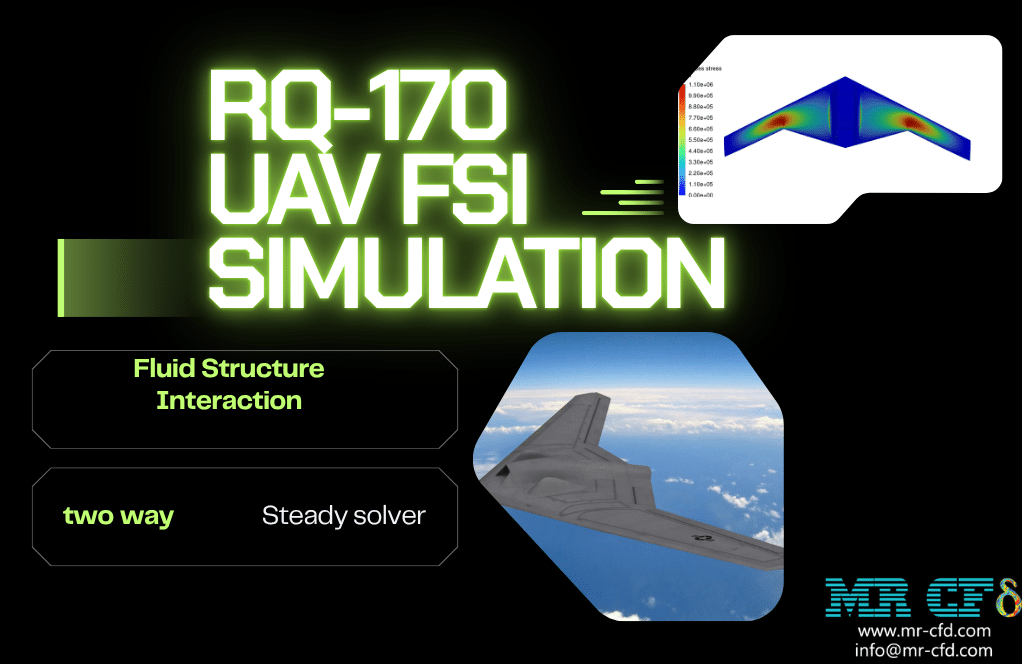
- The problem numerically simulates a RQ-170 UAV using ANSYS Fluent software.
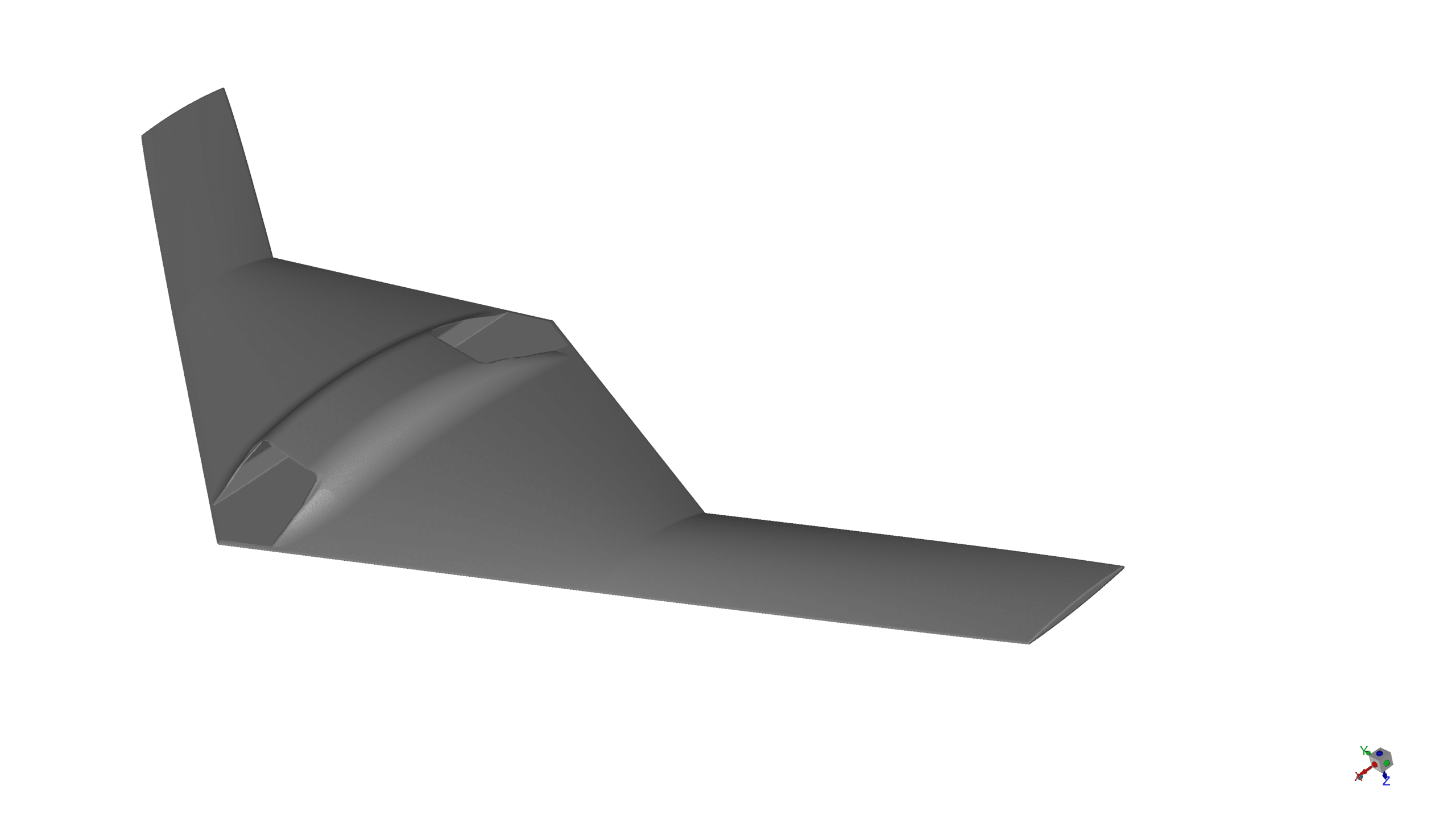
- We design the 3-D model with the SpaceClaim software.
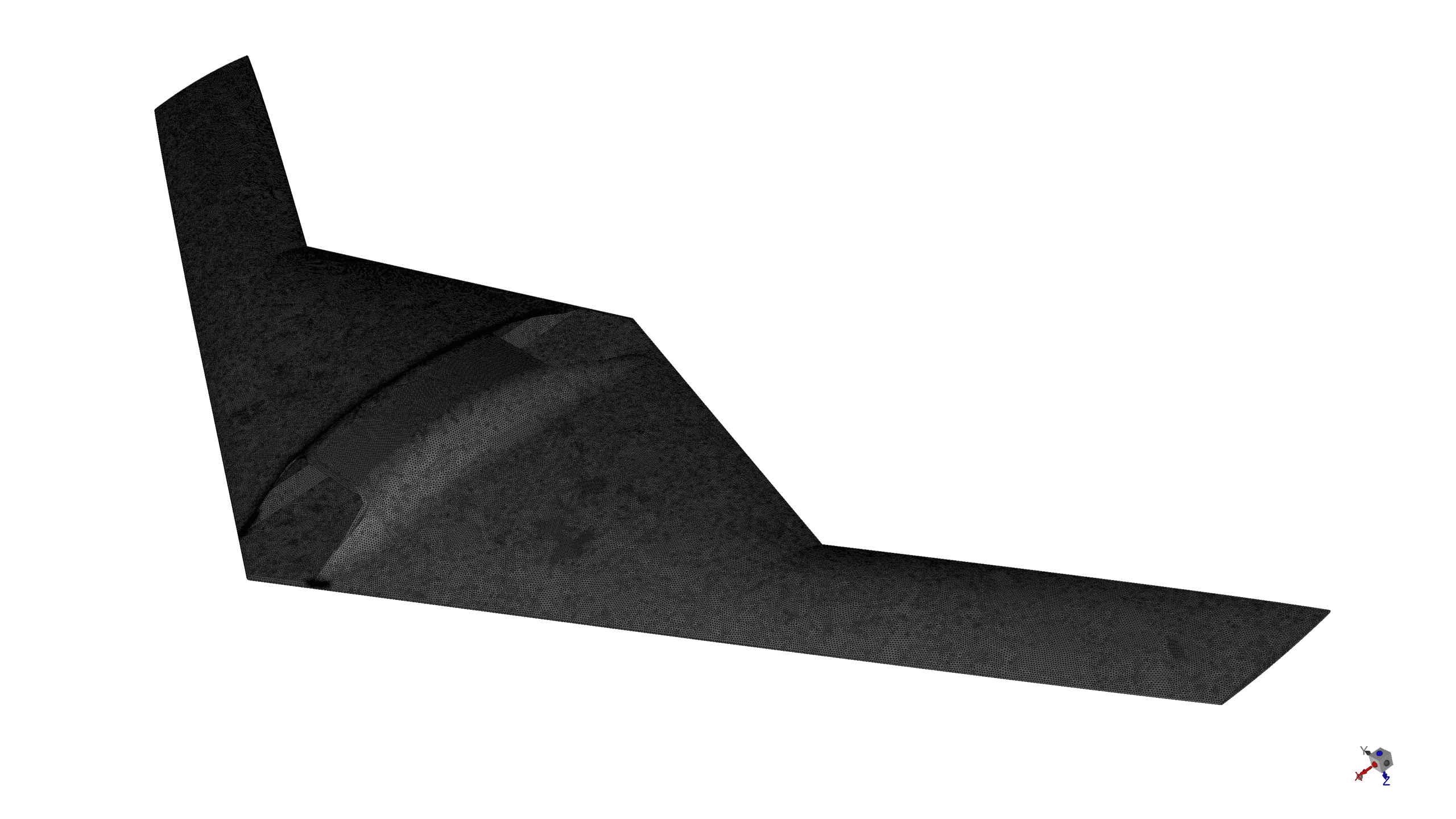
- We mesh the model with Ansys Meshing software. The element number equals 19,537,805 and their type is Tetrahedral.
- In this simulation, Dynamic Mesh is used for FSI modeling.
To Order Your Project or benefit from a CFD consultation, contact our experts via email (info@mr-cfd.com), online support tab, or WhatsApp at +44 7443 197273.
There are some Free Products to check our service quality.
If you want the training video in another language instead of English, ask it via info@mr-cfd.com after you buy the product.
Description
FSI Analysis: RQ-170 UAV CFD Simulation Training
Introduction
FSI simulation involves the interaction between the fluid and the structure. If we only want to consider the effects of the fluid on the structure, we use one-way method, and if we want to consider the effect of the structure on the fluid in addition to the effect of the fluid on the structure, we use two-way method. In this simulation, we have performed a two-way simulation. Previously, we could only run the two-way method in Workbench, but now Fluent software also has this capability. However, if our simulation involves large displacements, it is better to use Workbench because Fluent is not able to accurately analyze large displacements.
RQ-170 is an American stealth reconnaissance unmanned aerial vehicle developed by Lockheed Martin for intelligence, surveillance, and reconnaissance missions. The U.S. Air Force describes it as a low-observable aircraft system designed to support field commanders. This UAV was built for ISR missions—Intelligence, Surveillance, and Reconnaissance—and is recognized as a day-and-night tactical platform with low detectability.
The geometry of the present model is three-dimensional and has been designed using SpaceClaim software. We do the meshing of the present model with Ansys Meshing software. The mesh type is Tetrahedral, and the element number is 19,537,805.
Methodology
In this FSI study used a steady-state, pressure-based CFD simulation in ANSYS Fluent software to analyze the incompressible flow around a UAV and the fluid-structure interactions(FSI). The flow physics was modeled using the k-ω SST turbulence model and a dynamic mesh was also used.
Results and Conclusion
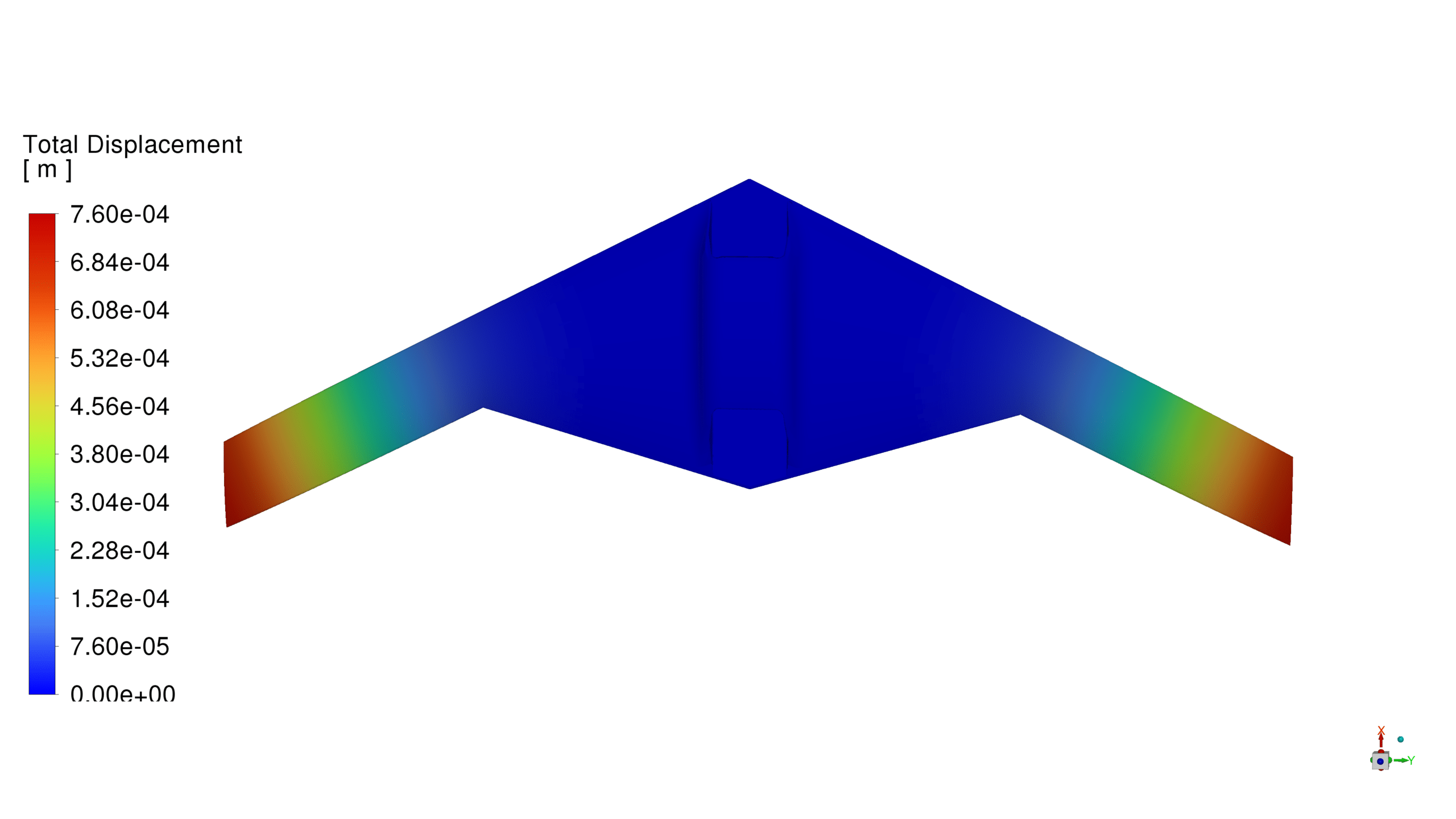
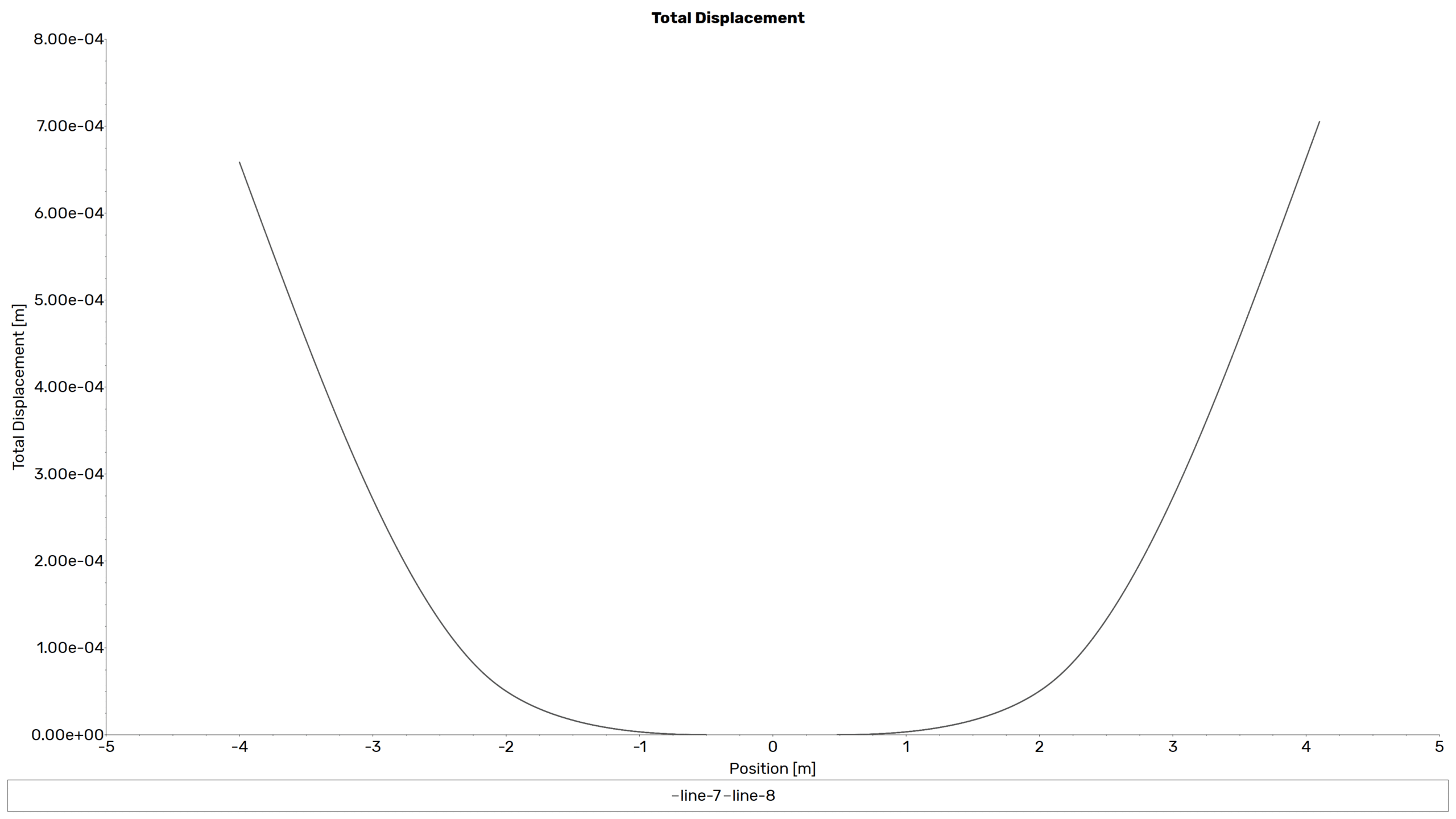
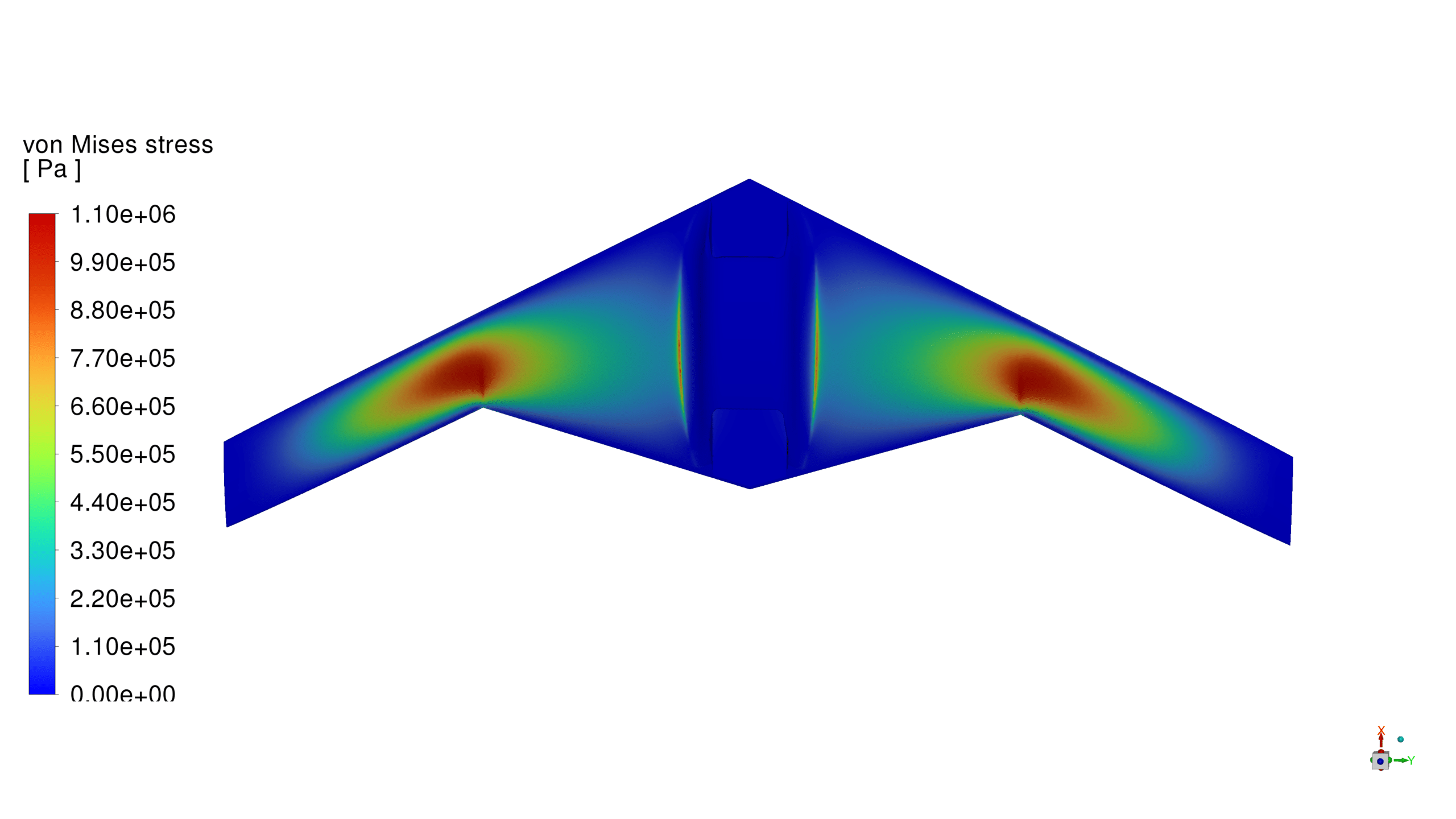
According to the extracted contours, it is observed that, as expected, the greatest displacement occurs at the wing tips of the UAV and the greatest stress is at the wing-body connection.
It is also seen in the diagrams that the amount of displacement decreases from the wingtips to the fuselage junction and reaches zero at the fuselage. Although the fuselage displacement may sometimes not be zero, its amount is very small and is usually ignored. The two diagrams below are for the front and rear airfoils.
You must be logged in to post a review.

 Talk On WhatsApp
 Talk On WeChat

Reviews
There are no reviews yet.