

Steam Turbine CFD Simulation, ANSYS Fluent Tutorial
$140.00 $84.00 HPC
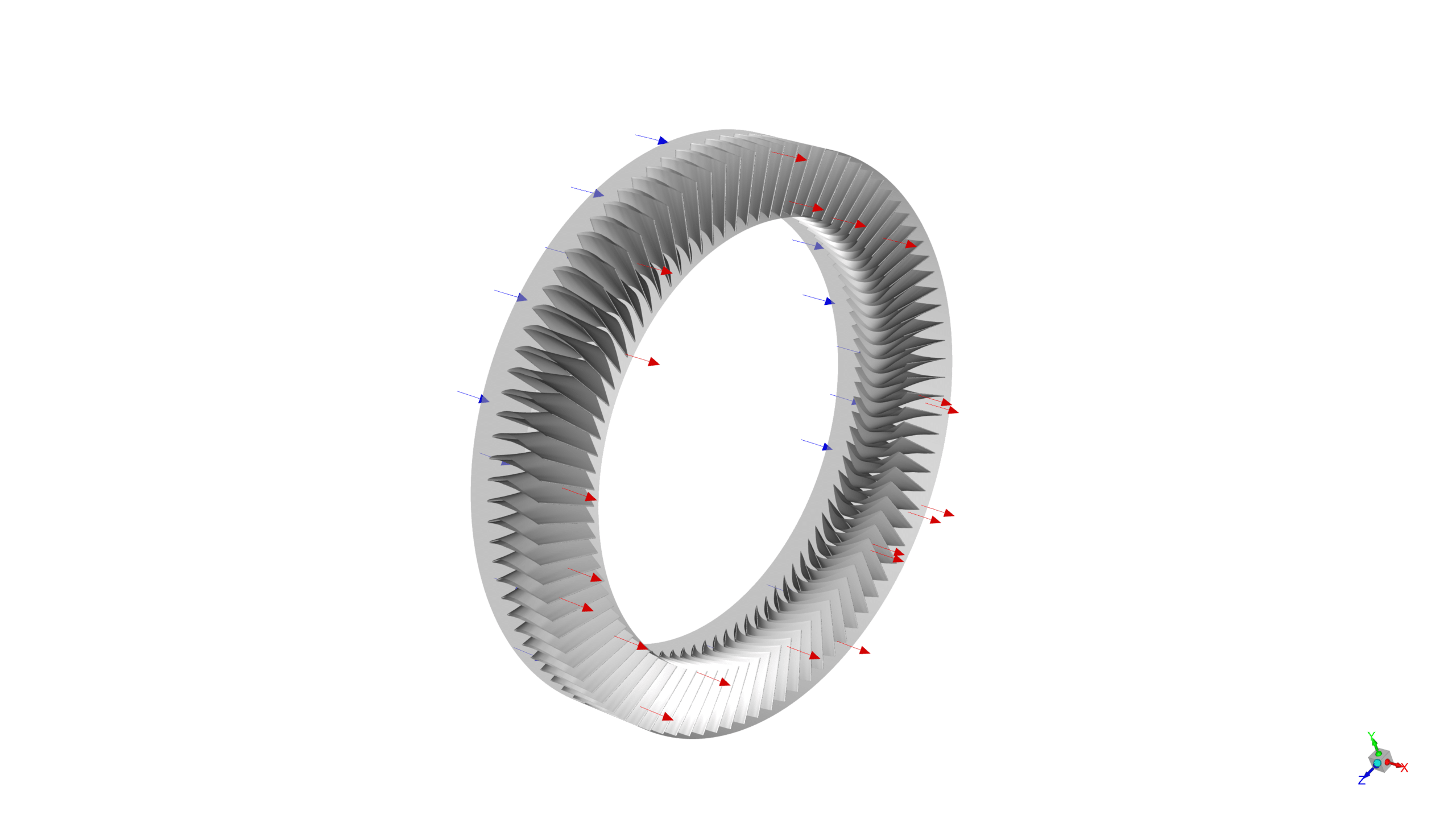
- This study investigates the flow dynamics in a steam turbine using CFD analysis in ANSYS Fluent.
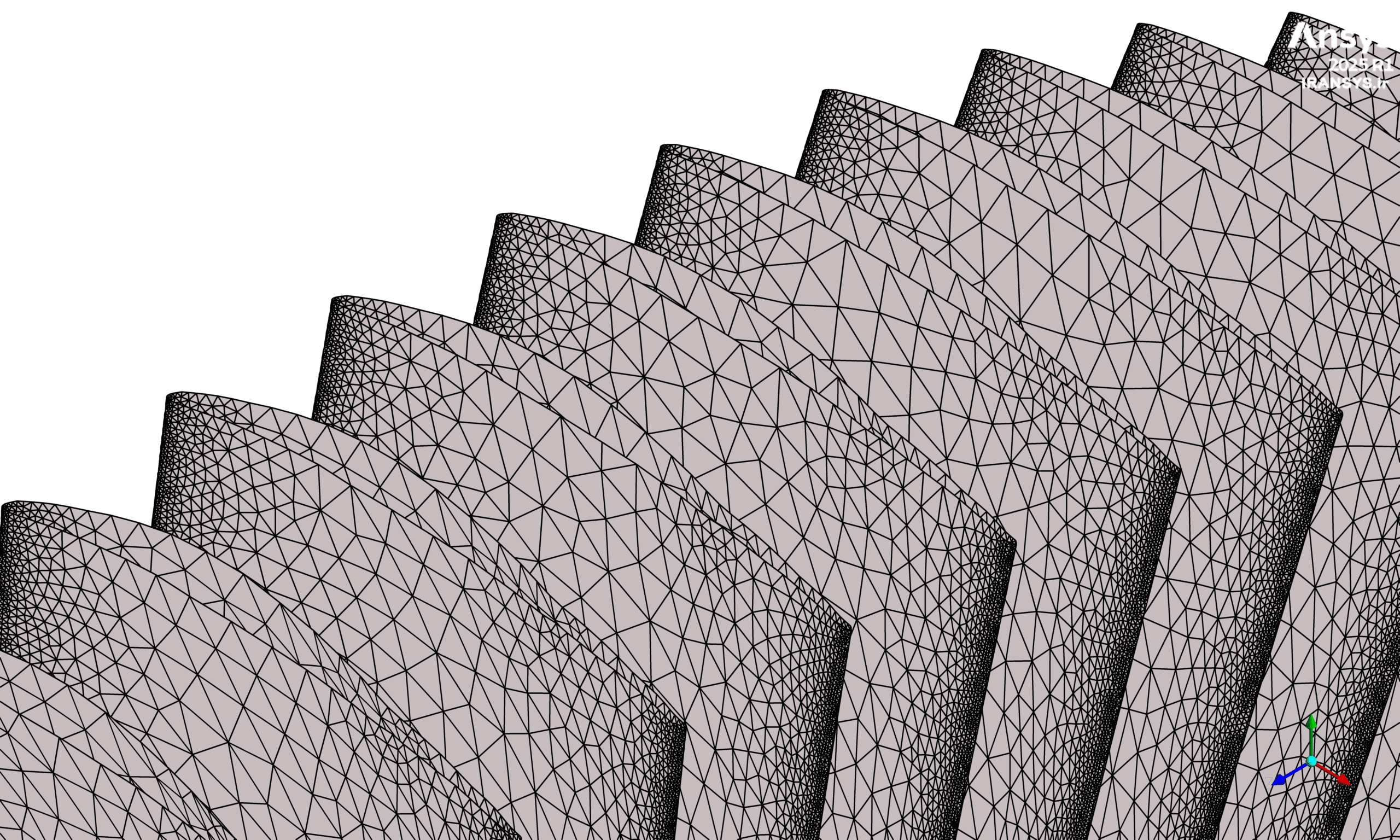
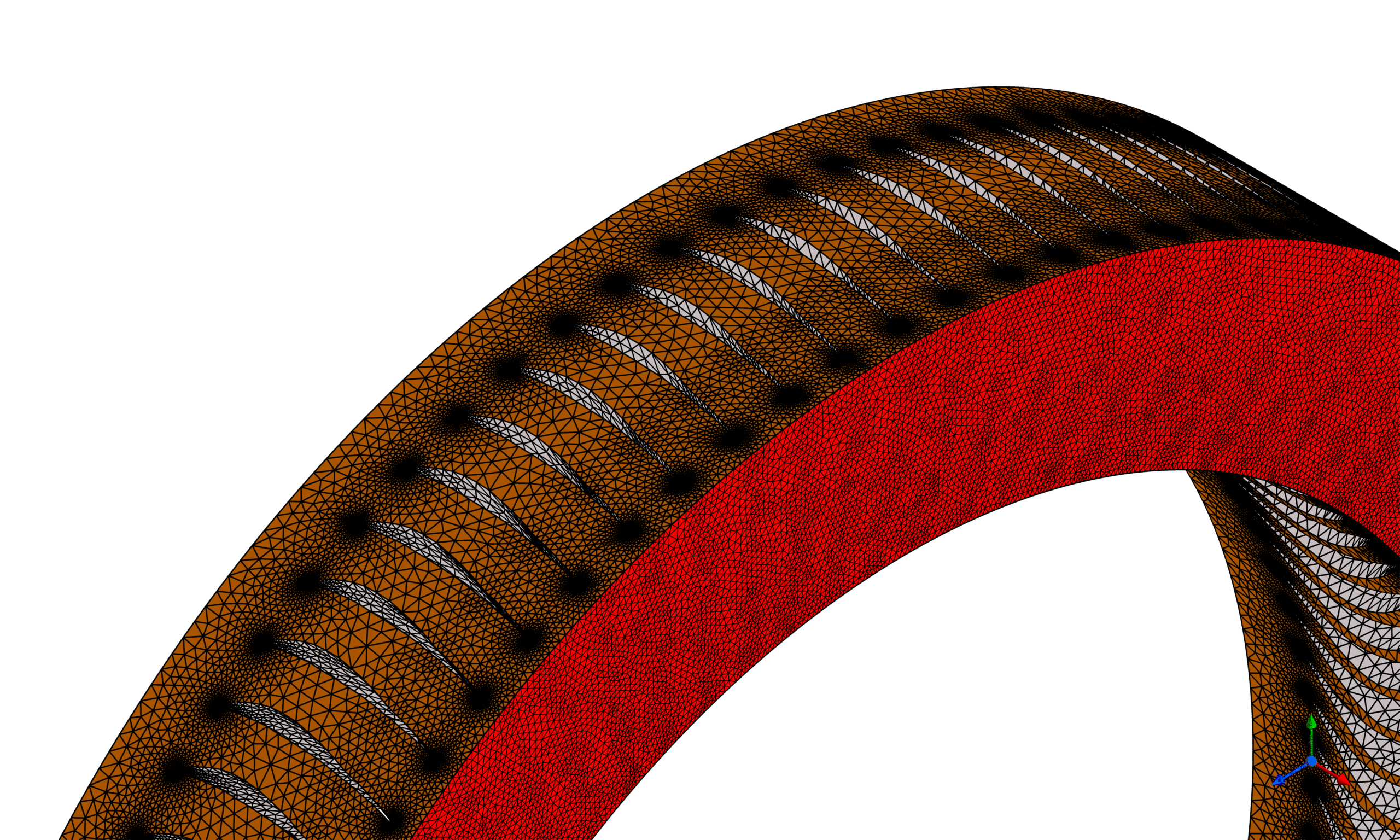
- The 3D geometry was created in SpaceClaim and meshed using ANSYS Meshing, resulting in about 19 million tetrahedral elements.
- The simulation utilizes the Realizable k-ε turbulence model with standard wall function and includes the energy equation for temperature analysis.
- A density-based solver with real-gas-peng-robinson model is employed for compressible flow.
To Order Your Project or benefit from a CFD consultation, contact our experts via email (info@mr-cfd.com), online support tab, or WhatsApp at +44 7443 197273.
There are some Free Products to check our service quality.
If you want the training video in another language instead of English, ask it via info@mr-cfd.com after you buy the product.
Description
Introduction
This study investigates the flow dynamics within a steam turbine configuration using Computational Fluid Dynamics (CFD) analysis. The simulation aims to understand the complex flow behavior, pressure distributions, temperature variations, and velocity profiles within the turbine. By employing advanced models for turbulence and real gas behavior, this research provides valuable insights into the performance and efficiency of steam turbines.
The CFD simulations were conducted using ANSYS Fluent software. The geometry, which is designed in Spaceclaim, represents a 3-dimensional steam turbine configuration, with the mesh generated in ANSYS Meshing. The mesh consists of about 19 million tetrahedral elements, providing a high-quality representation of the complex turbine geometry.
Methodology
A density-based solver is employed for the solution and is suitable for compressible flow simulations. For turbulence modeling, the Realizable k-ε model with standard wall function is utilized, known for its robustness in predicting complex turbulent flows. The energy equation is enabled to solve for temperature distributions and heat transfer effects. The working fluid is air, with real-gas-peng-robinson model is employed for compressible flow, and a moving reference frame is activated for the rotating zone at 100 rpm to capture rotational effects. We employ an implicit formulation for numerical stability and efficient convergence.
Results
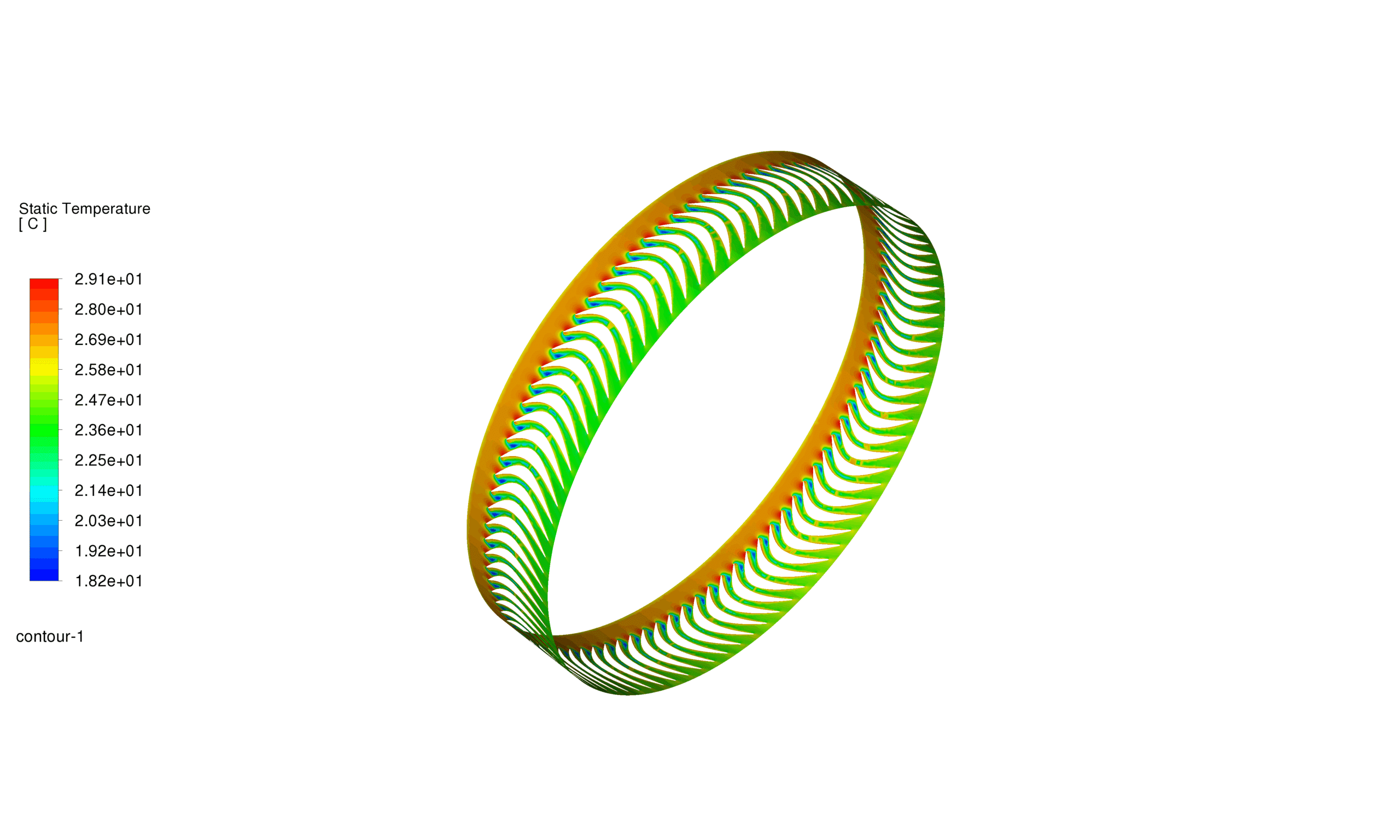
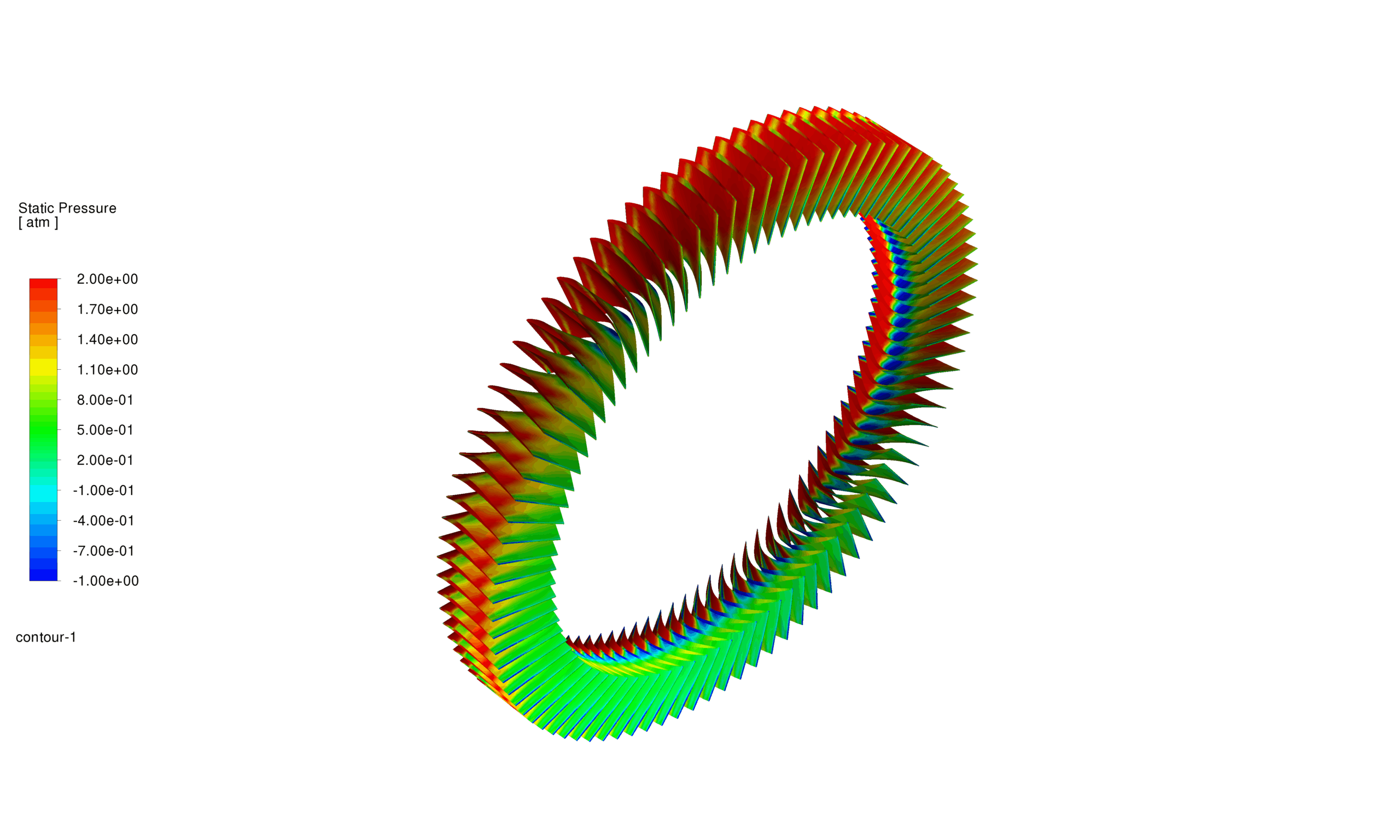
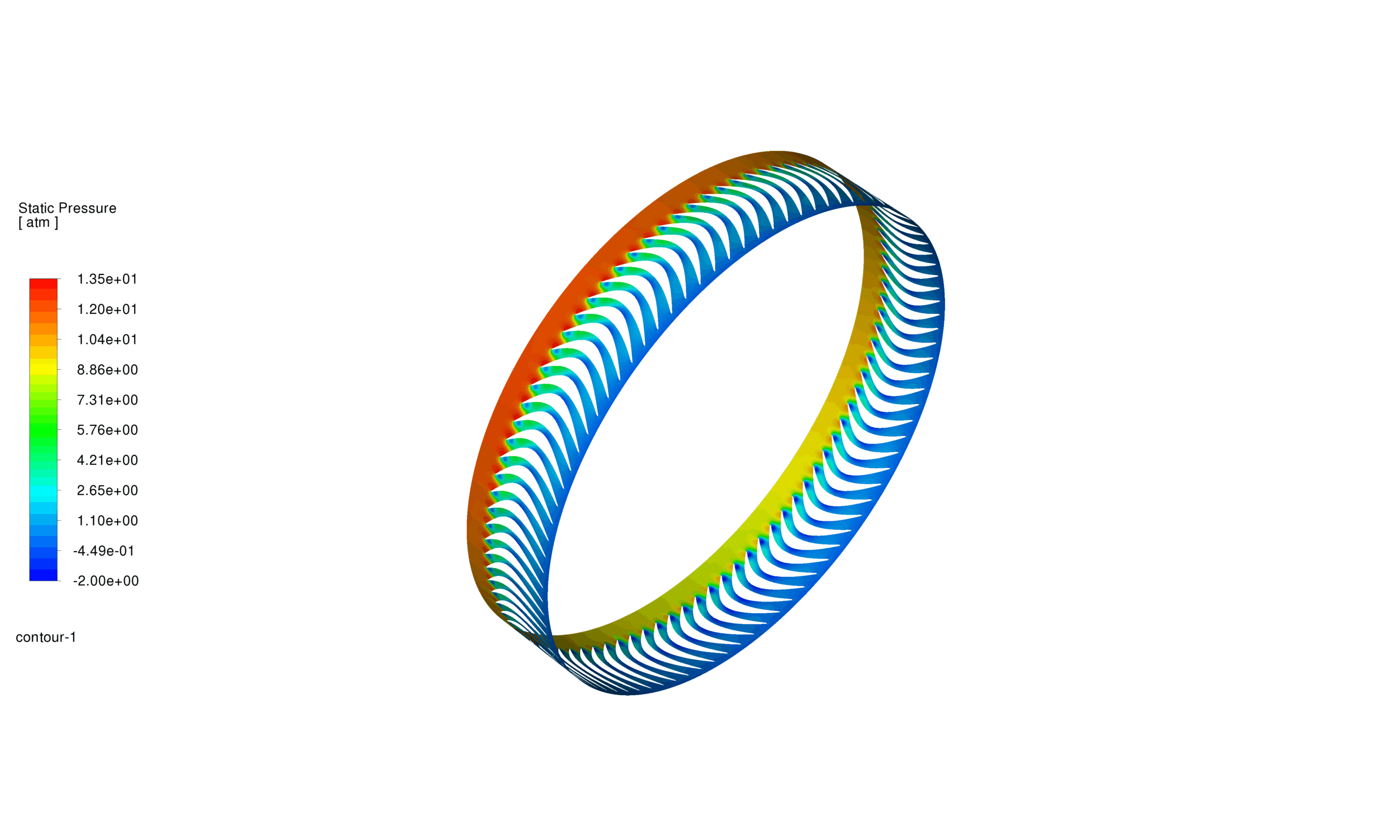
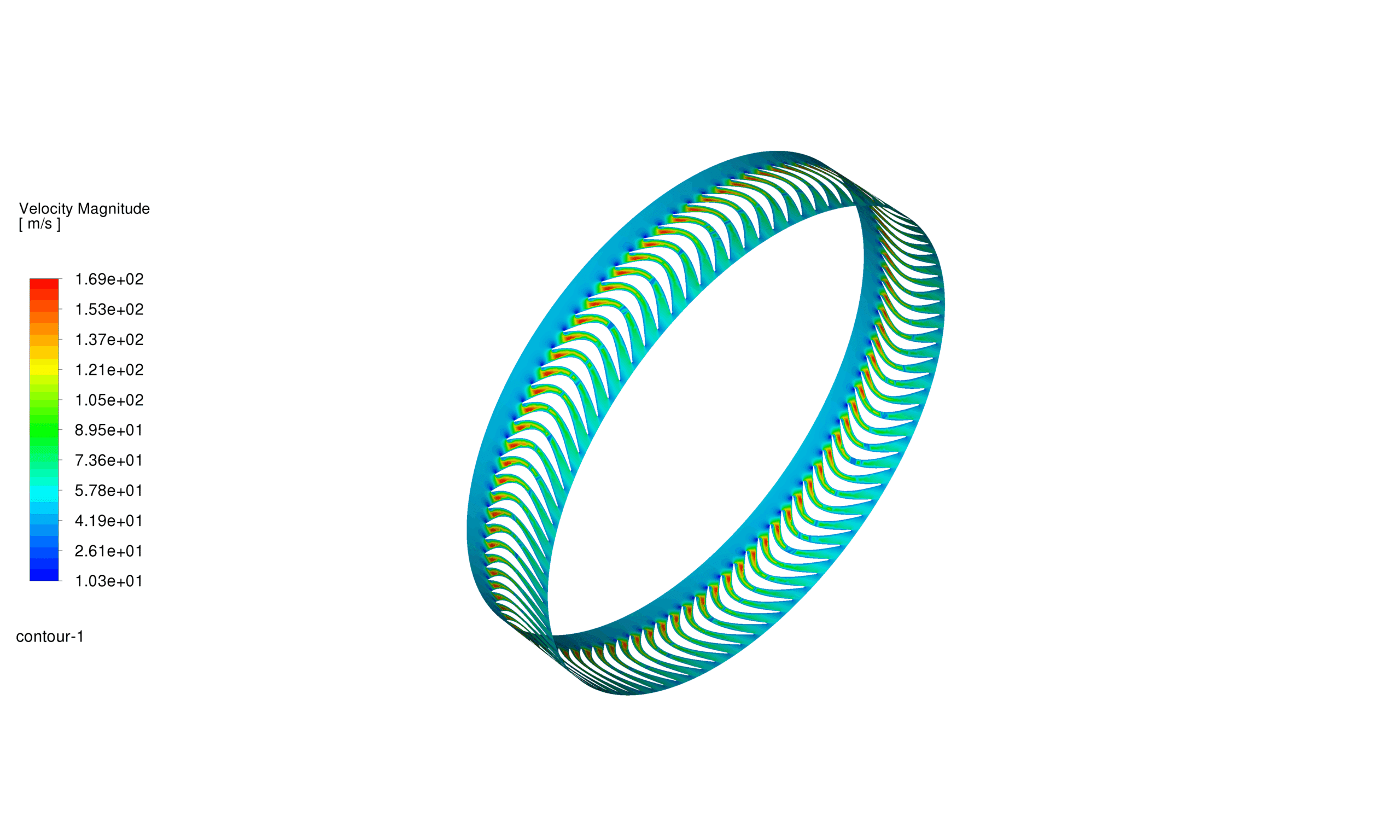
The simulation results demonstrate the intricate flow behavior within the steam turbine. The pressure and temperature distributions provide insights into the energy conversion process, while the velocity profiles reveal the flow acceleration through the blade passages. At the Inlet, the pressure is higher than in other regions, and it gradually decreases toward the outlet. In the temperature contour, you can see that the temperature is also highest near the Inlet. Between the blades, the temperature reaches its minimum, and in this region, the pressure is also low. For the velocity contour, you can see that in the same region where the pressure and temperature are lowest, the velocity is higher than in other areas. This behavior is consistent with the flow acceleration through the blade passages.
You must be logged in to post a review.

 Talk On WhatsApp
 Talk On WeChat

Reviews
There are no reviews yet.