
Stinger Simple Aerodynamic Analysis: CFD Simulation by ANSYS Fluent
$1,080.00 $648.00 HPC
- The problem numerically simulates a Stinger using ANSYS Fluent software.
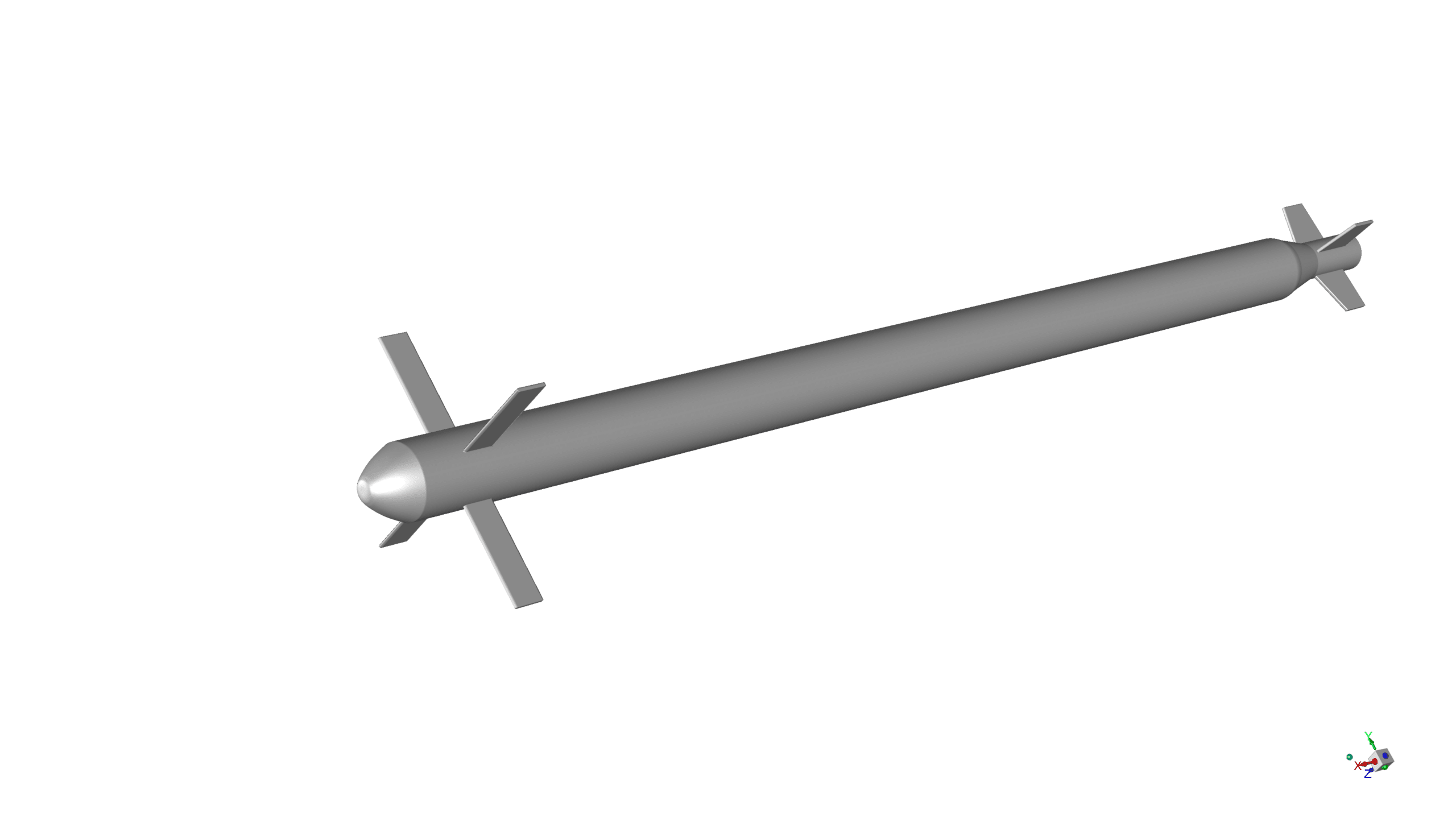
- We design the 3-D model with the SpaceClaim software.
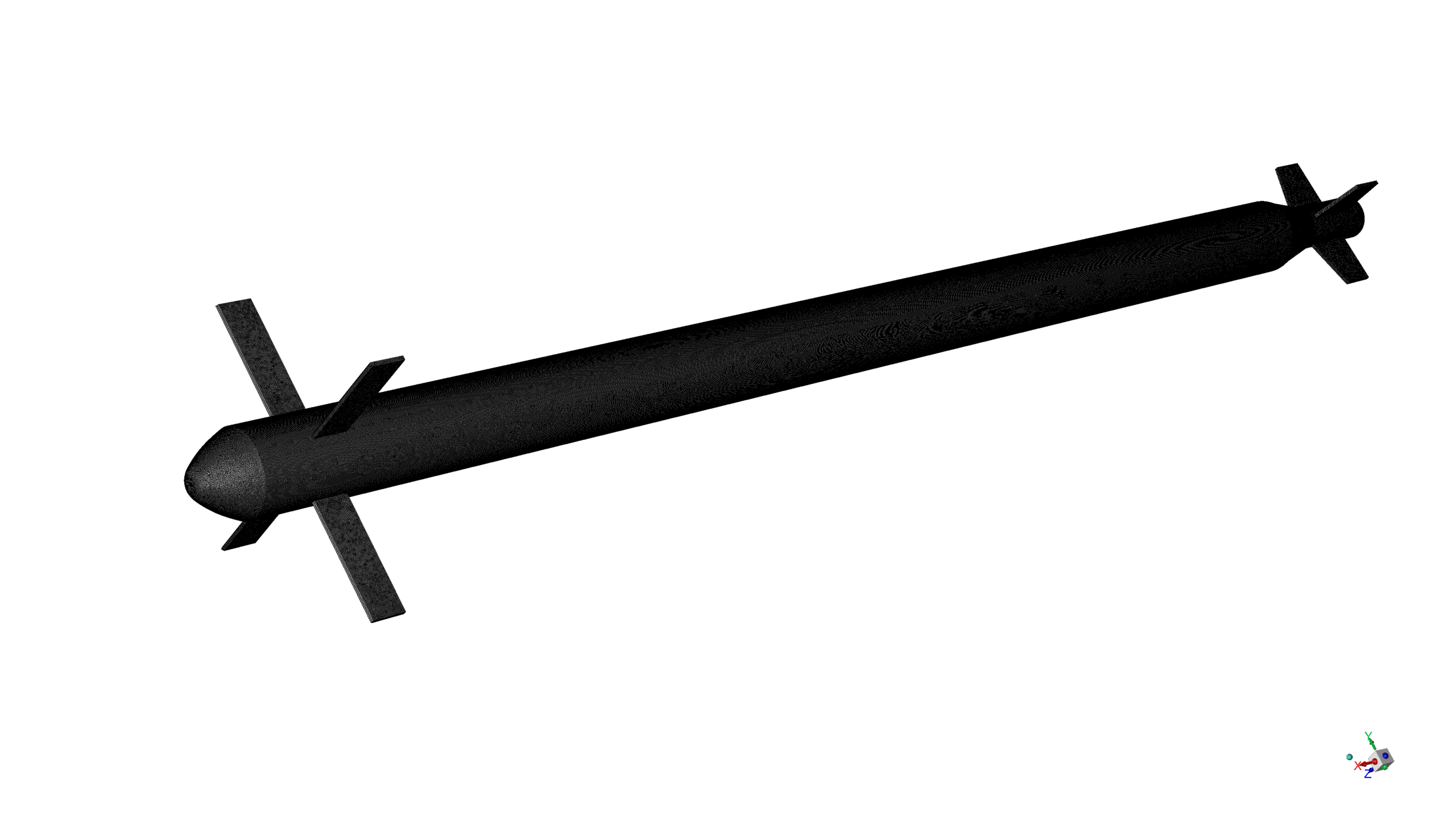
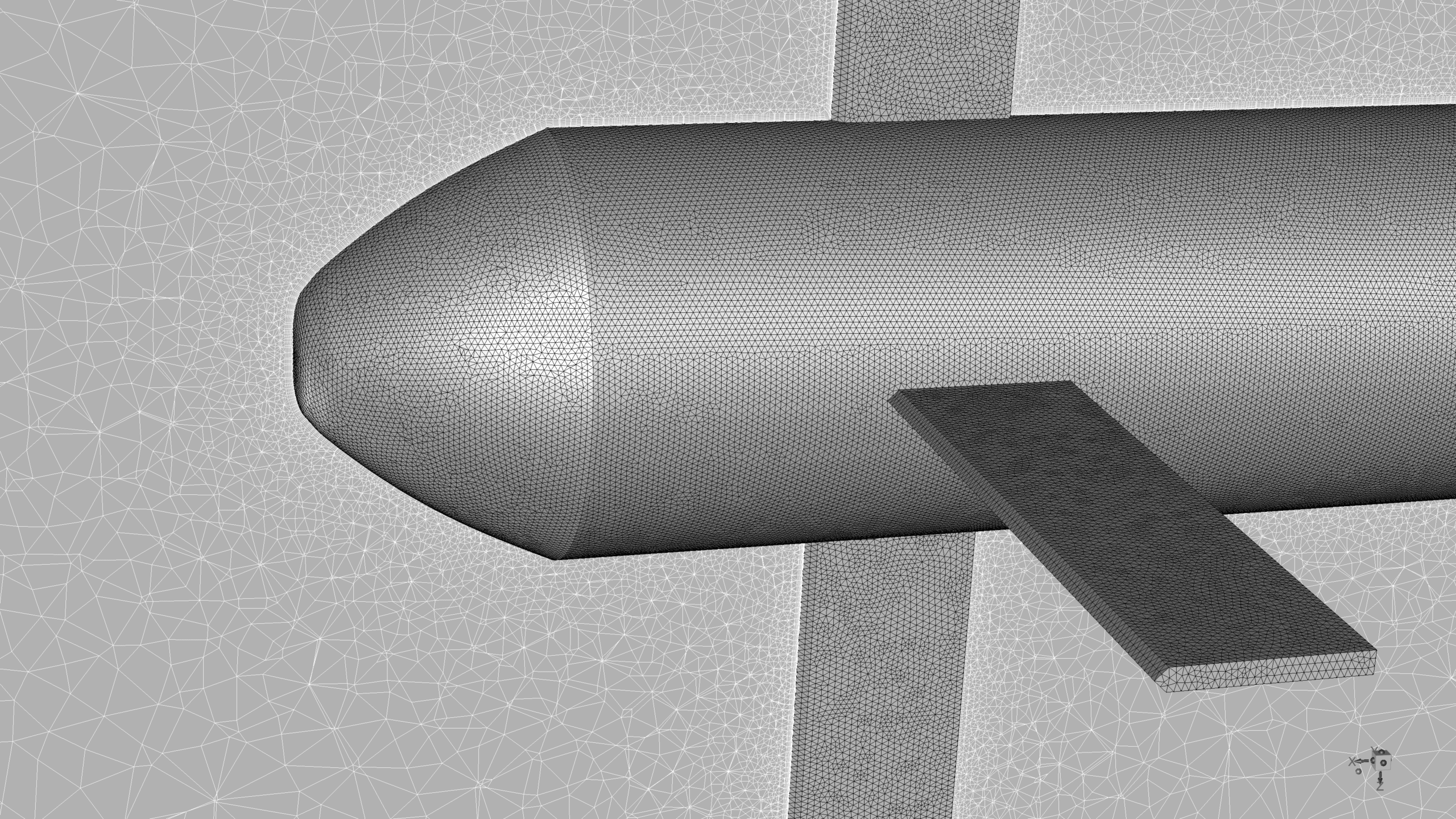
- We mesh the model with Ansys Meshing software. The element number equals 16,286,101 and their type is Tetrahedral.
To Order Your Project or benefit from a CFD consultation, contact our experts via email (info@mr-cfd.com), online support tab, or WhatsApp at +44 7443 197273.
There are some Free Products to check our service quality.
If you want the training video in another language instead of English, ask it via info@mr-cfd.com after you buy the product.
Description
Simple Aerodynamic Analysis: Stinger CFD Simulation Training
Introduction
The FIM-92 Stinger missile is a man-portable air-defense system (MANPADS) with an infrared seeker, designed for engaging low-altitude, short-range aerial targets. It employs a two-stage solid-fuel rocket motor (booster and sustainer), rapidly accelerating to supersonic speeds shortly after launch. Maximum speed is reported across sources as approximately Mach 2 to 2.2, equivalent to 700–750 m/s at sea-level standard conditions, making this range reliable for defining velocity boundary conditions in aerodynamic simulations. The missile’s length is about 1.52 meters, body diameter around 70 mm, and total mass near 10 kg, which are key for defining geometry and inertial properties in modeling.
From an aerodynamic perspective, the Stinger operates primarily in the mid-supersonic regime during cruise flight (high subsonic to low supersonic in the transient phase, and steady supersonic thereafter), resulting in critical phenomena such as shock waves on the nose, transition zones around the fins, and wave interference at the aft body. The cylindrical-conical fuselage, cruciform mid-body fins, and rear control surfaces create a complex pressure distribution on the missile surface, directly influencing lift, drag forces, and pitching/rolling moments.
The geometry of the present model is three-dimensional and has been designed using SpaceClaim software. We do the meshing of the present model with Ansys Meshing software. The mesh type is Tetrahedral, and the element number is 16,286,101.
Methodology
This study used a steady-state, Pressure-based CFD simulation in Ansys Fluent software to analyze the compressible flow around a Stinger. The flow physics was modeled using the k-ℇ Realizable turbulence model.
Results and Conclusion
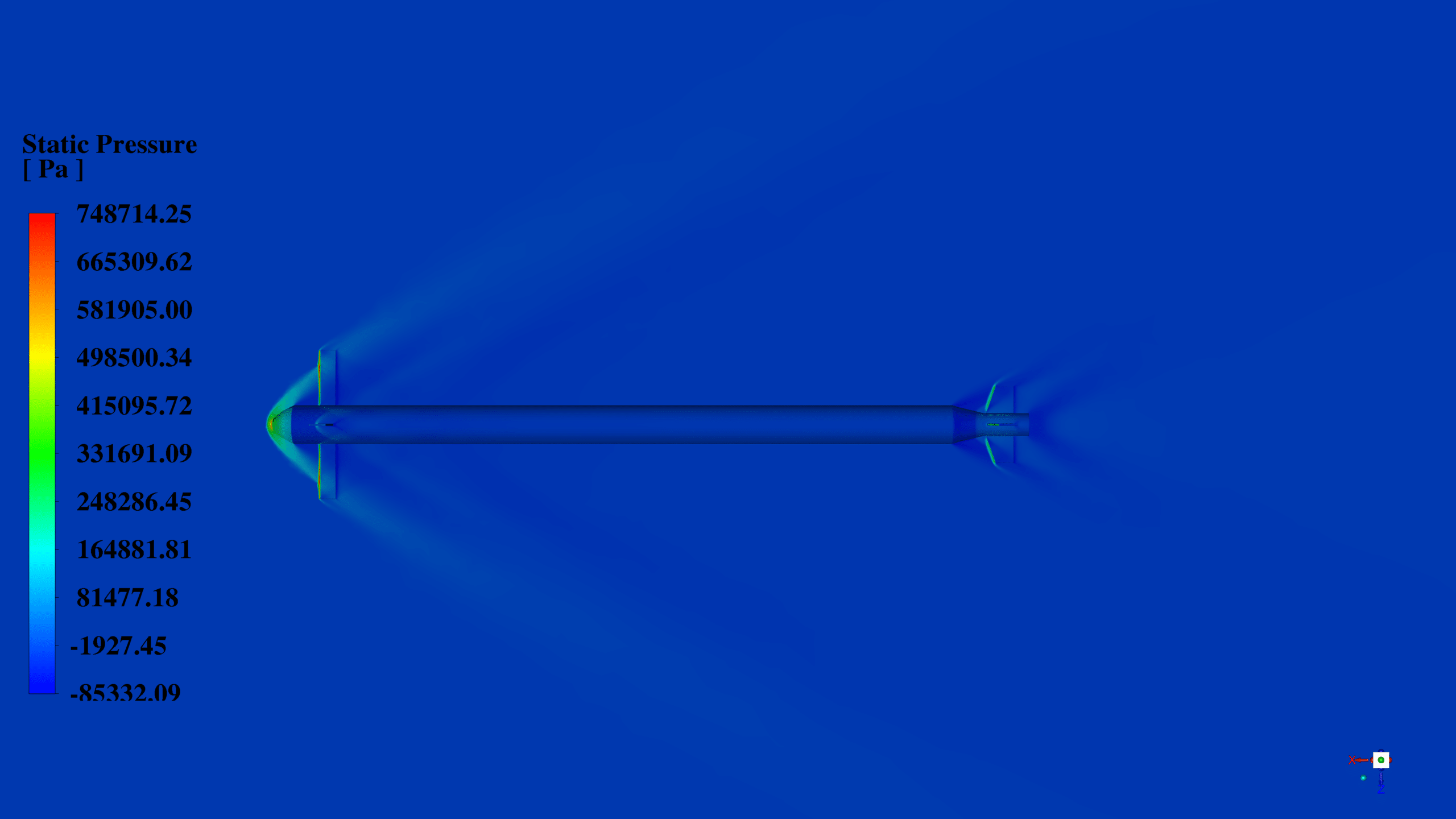
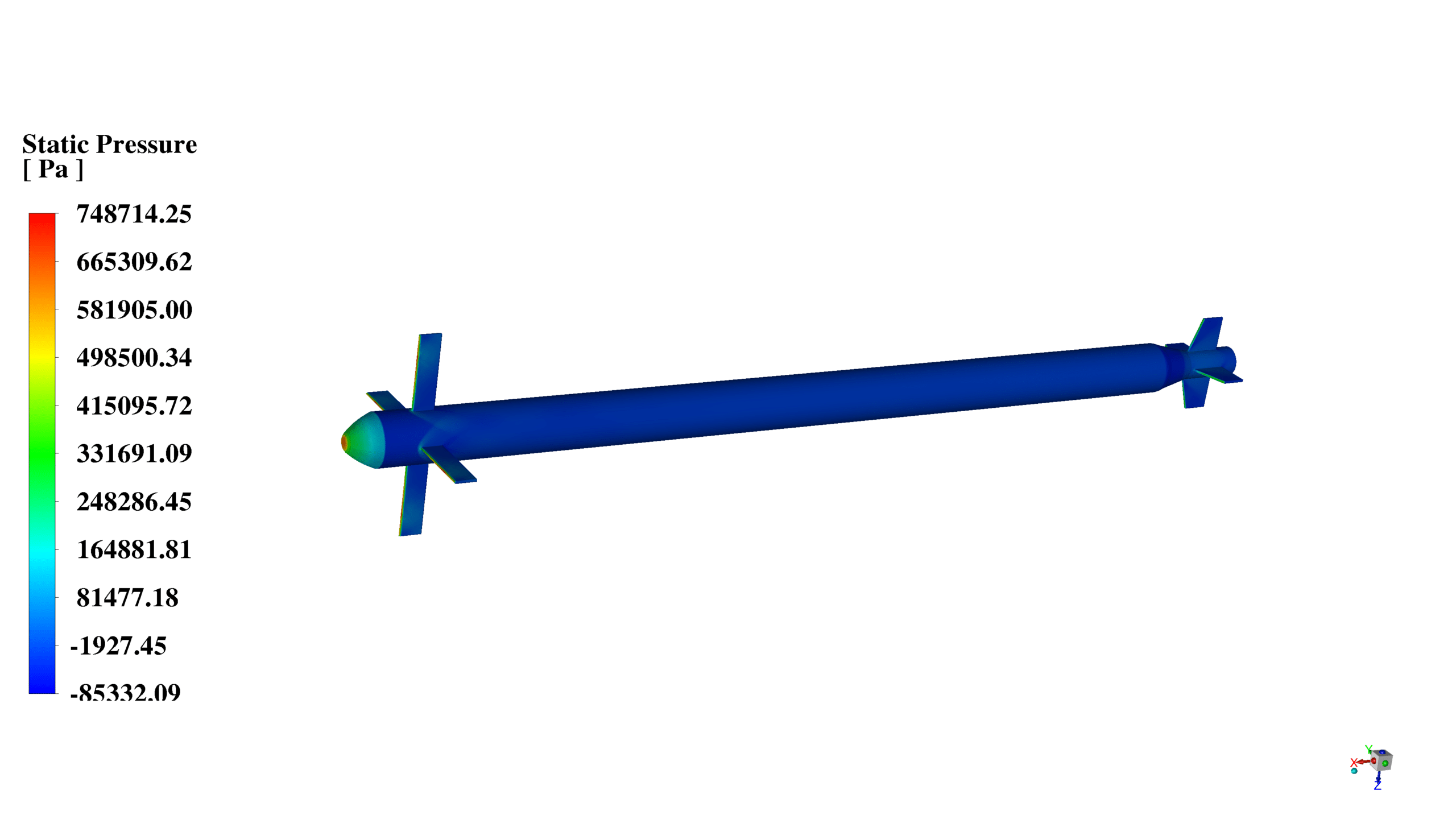
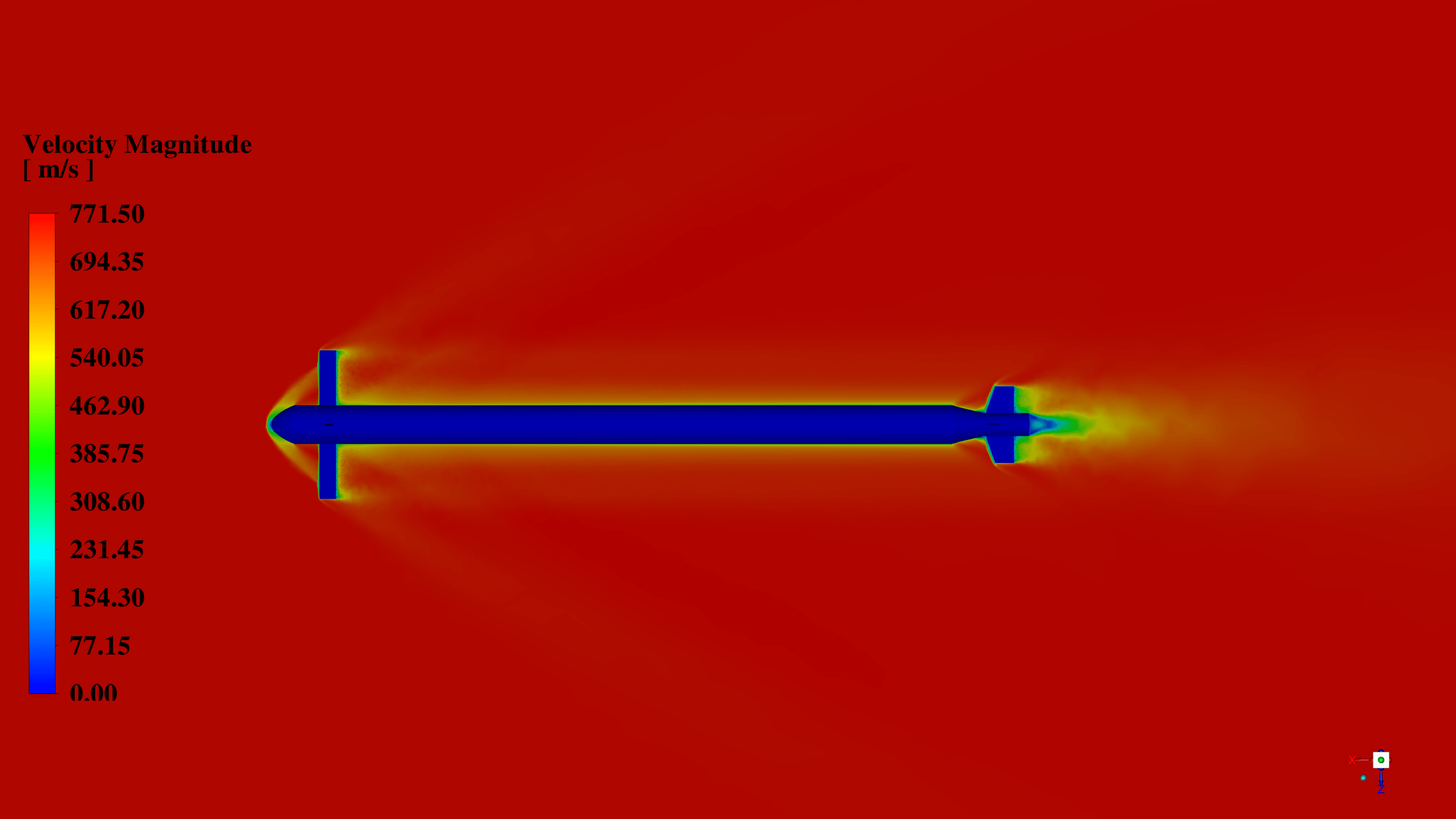
According to the contours below, the velocity and pressure in the areas around the Stinger as well as the pressure on the Stinger wall are clear. As can be seen, the velocity around it is higher, especially in the areas of the cap, and the pressure contours also confirm this.
You can also see that the highest pressure is applied to the front of the cap.
You must be logged in to post a review.

 Talk On WhatsApp
 Talk On WeChat

Reviews
There are no reviews yet.