




Artery Flow CFD Simulation Using ANSYS Fluent: Investigating FSI
$270.00 $162.00 HPC
- This artery flow project involves the simulation of blood flow in a compliant artery using CFD and FSI techniques in ANSYS.
- The primary objectives are to validate the simulation against a published study, analyze mesh independence, and investigate the effects of wall compliance and porosity on hemodynamic behavior.
- The artery geometry is simplified and reconstructed for numerical accuracy, with meshing performed in ANSYS Meshing and flow solved using Fluent.
- Wall deformation is modeled using the FSI module, while porosity effects are simulated by assigning high-viscosity fluid properties to the vessel wall.
- Simulations are performed under unsteady, incompressible flow conditions with non-Newtonian blood properties.
- Key results include time-dependent deformation, wall shear stress, and velocity distributions, with validation confirming a shear stress error below 1% in mesh studies.
To Order Your Project or benefit from a CFD consultation, contact our experts via email (info@mr-cfd.com), online support tab, or WhatsApp at +44 7443 197273.
There are some Free Products to check our service quality.
If you want the training video in another language instead of English, ask it via info@mr-cfd.com after you buy the product.
Description
Artery Flow Analysis with Wall Deformation
Project description:
In this project, the Artery flow is simulated in the ANSYS software. The geometry edits are made at the Design Modeler software, then the geometry is inserted into the ANSYS Meshing software to generate the mesh. Finally, the Fluent software is used for solving the governing equations. The process of this project is: Validation, grid study, and FSI simulation.
Geometry and Meshing:
Due to the high complexity of the geometries obtained from the CT scan, the geometry was redrawn with a slight simplification and from a numerical solution perspective, which can be seen in the figure below. Also, the meshing of the fluid region was performed using the second phase studies on the mesh. The solid wall of the vessel is also loosely meshed (Figure 2).
Figure 1: Geometry
Figure 2: Mesh
Validation:
The paper “Numerical investigation of blood flow in a deformable coronary bifurcation and non-planar branch” numerically investigates the pulsatile flow of blood in a coronary bifurcation with a non-planar branch. The wall is assumed to be compliant to create a more realistic analysis.
Identification and assessment of hemodynamic characteristics and other flow properties impact the behavior and prevention of cardiovascular diseases. Stenosis is highly dependent on the local hemodynamic characteristics of blood flow. Since coronary artery diseases are associated with a high mortality and morbidity rate, the hemodynamic characteristics of blood flow demand more attention.
For this purpose, the effects of wall compliance and non-Newtonian rheology of blood on flow characteristics have been simulated using Ansys Fluent software. If you want to see the project, click here.
Grid study of artery flow:
In this phase of the project, we are looking to investigate the independence of the solution from the vessel meshing. The conditions considered for comparing the generated meshes are that the difference in the solution is less than 1% in the shear stress on the vessel wall. As can be seen in the contour below, the shear stress distribution on the vessel wall is not uniform, and, given the complexity of the geometry, this can be an acceptable criterion.
The meshing was generated using a random mesh, and in the first case, approximately 666600 elements were used, and in the subsequent cases, the number of elements was approximately multiplied by 1.0. The results from the three cases are reported in the table below. The results clearly show that meshing 3 has very good accuracy, and we will use it.
| Number of Elements
|
Wall Shear Stress [Pa]
|
Error (%)
|
|
| Mesh 1 | 650k | 13.48165 | |
| Mesh 2 | 920k | 13.62463 | 1.060553 |
| Mesh 3 | 1.3mil | 13.65982 | 0.258282 |
The effect of blood flow on artery displacement:
In the third phase of the vessel simulation problem, we are looking at the effect of blood flow on the vessel wall and the resulting forces and displacements using the FSI module in ANSYS Fluent software. In the previous phases, solution validation and grid independence were examined; therefore, in this phase, the previously validated settings were used.
Results of the artery flow:
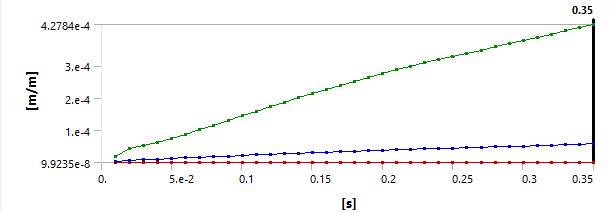
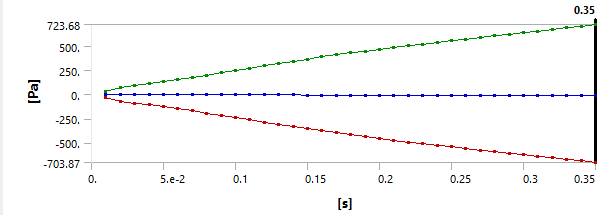
After solving the problem in the interval of zero to 0.35 seconds, the desired results have been extracted. As can be seen in the graphs below, the values of the deformation of the whole body, shear stress, and elastic strain of the vessel have been extracted in terms of time. In each graph, the green curve indicates the maximum values, the blue curve indicates the average value, and the red curve indicates the minimum values.
Figure 3: Shear stress
Figure 4: Elastic strain
Figure 5: Deformation of the entire object
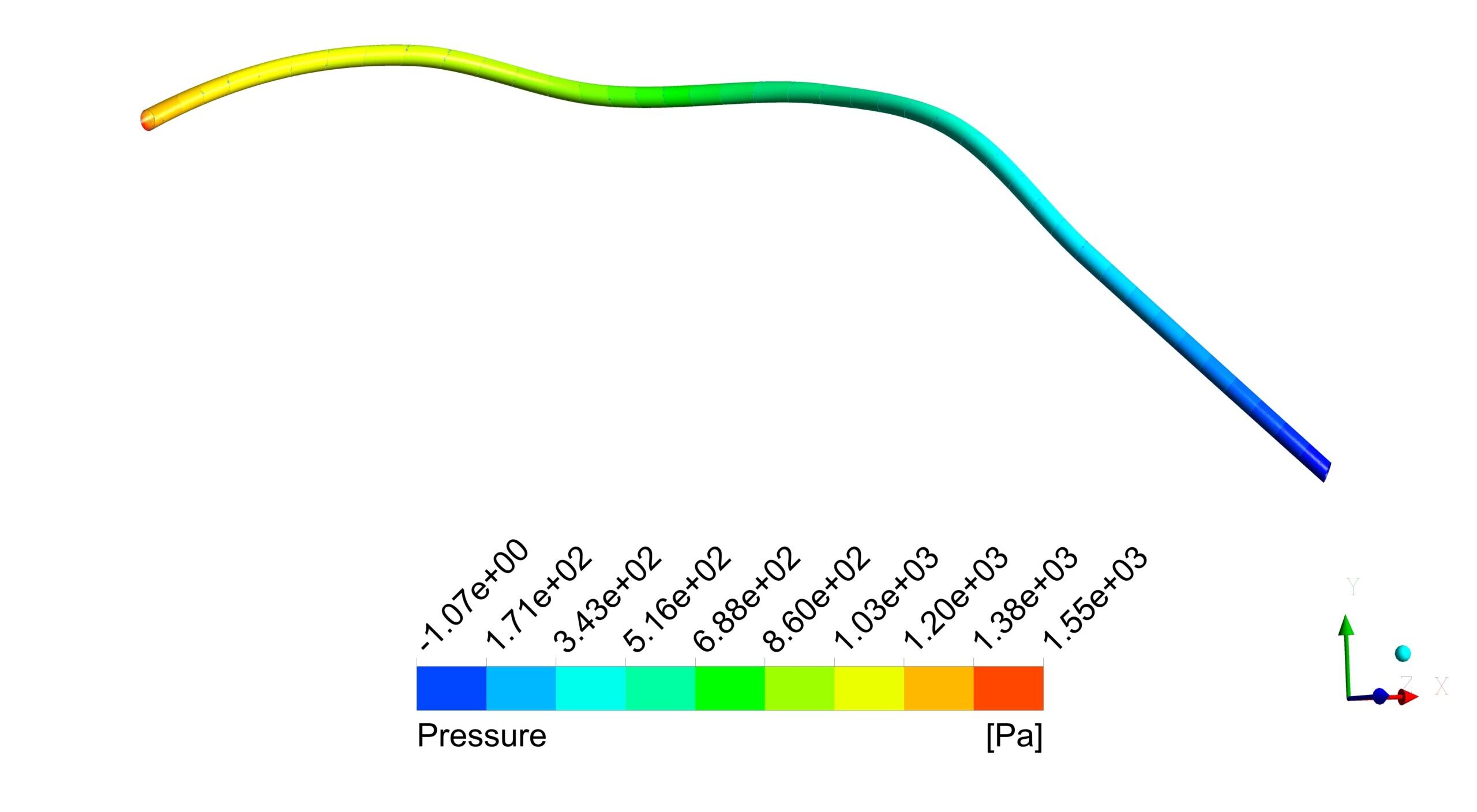
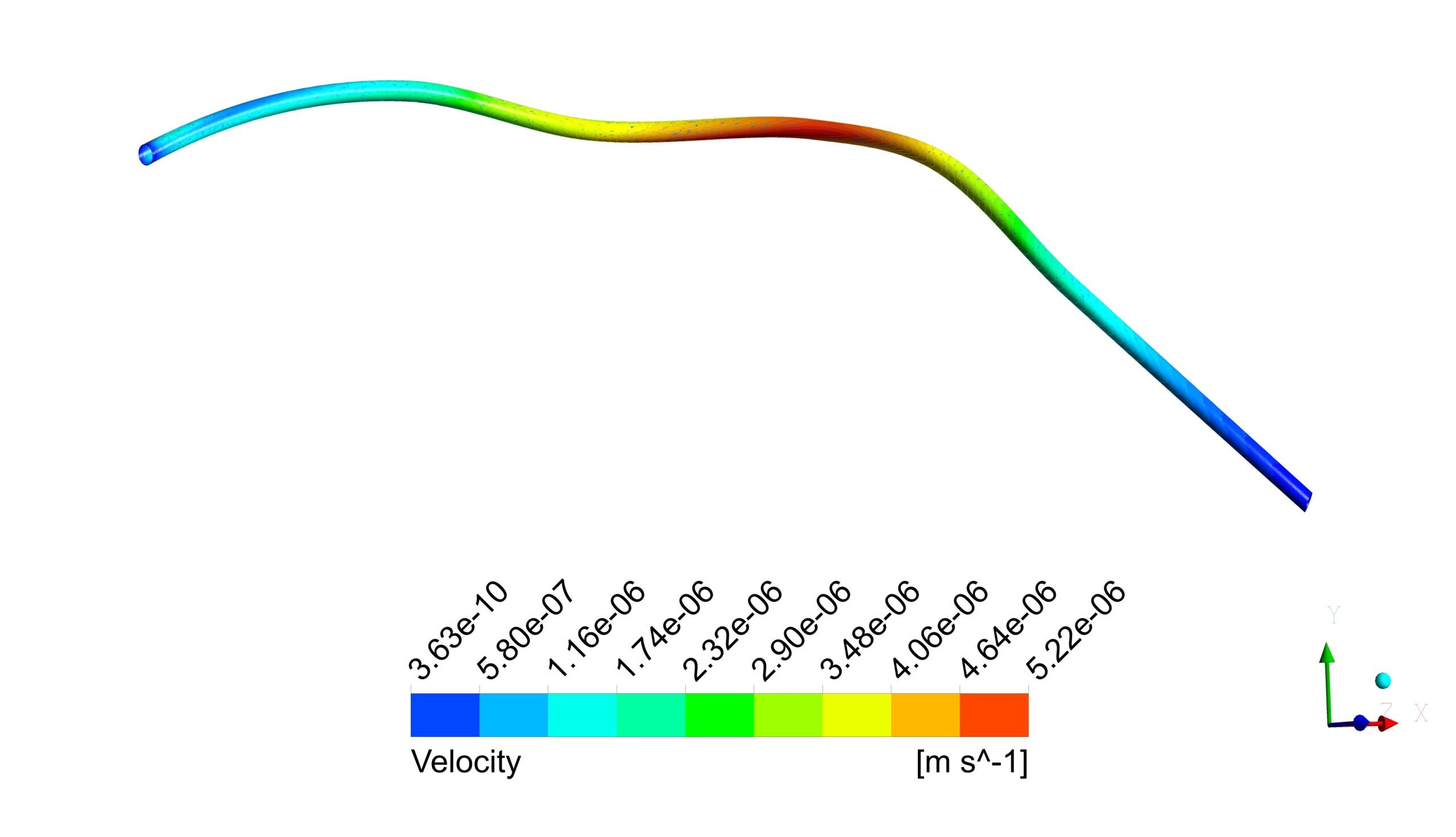
Figure 6: Pressure and Velocity Contours

 Talk On WhatsApp
 Talk On WeChat