
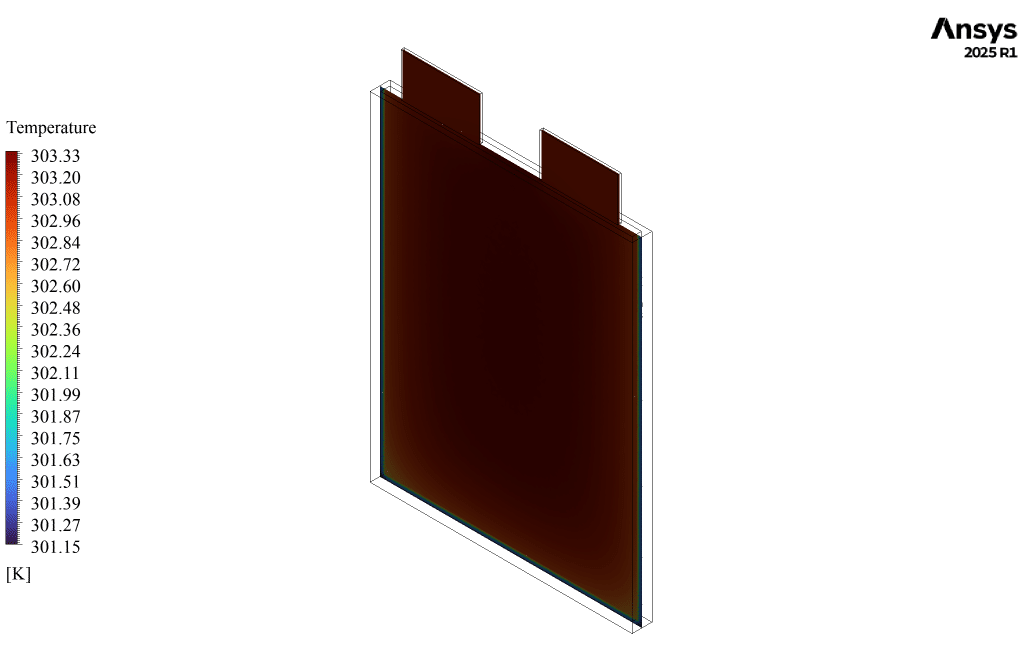
Battery 1P1S with PCM Cover, Paper Numerical Validation, ANSYS Fluent
$720.00 $432.00 HPC
- This product numerically simulates the Battery with PCM cover using ANSYS Fluent software.
- We design the 3-D model with the Design Modeler software.
- We mesh the model with ANSYS Meshing software.
- We use the Battery Model to define the discharge process of a battery.
- We use the Multi-Scale Multi-Domain (MSMD) solution method and the NTGK electrochemistry model.
- We used the Solidification and Melting Model to define phase change material (PCM).
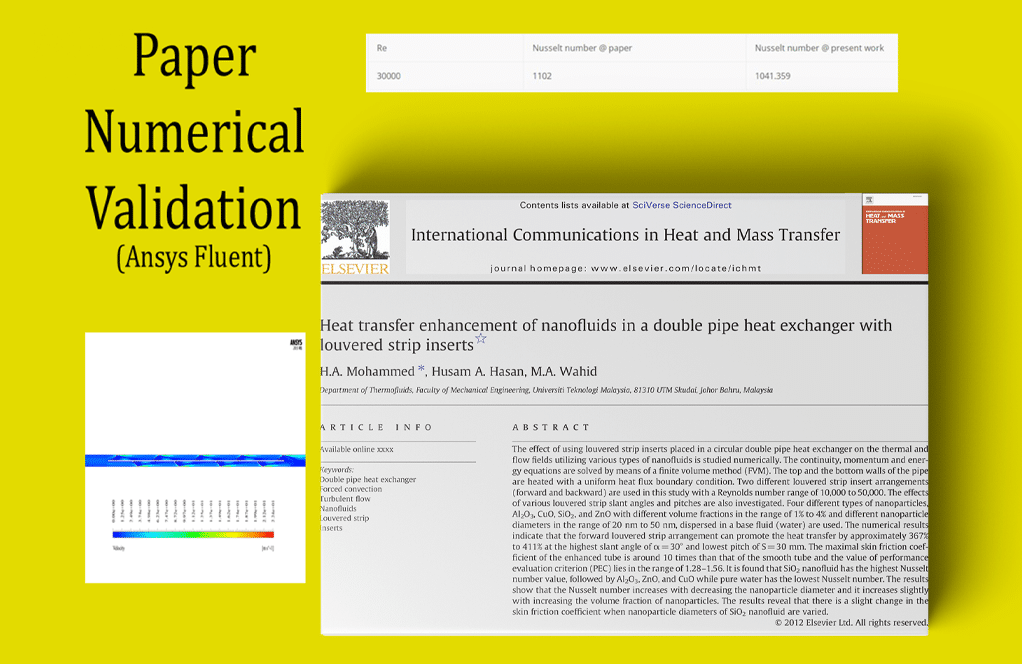
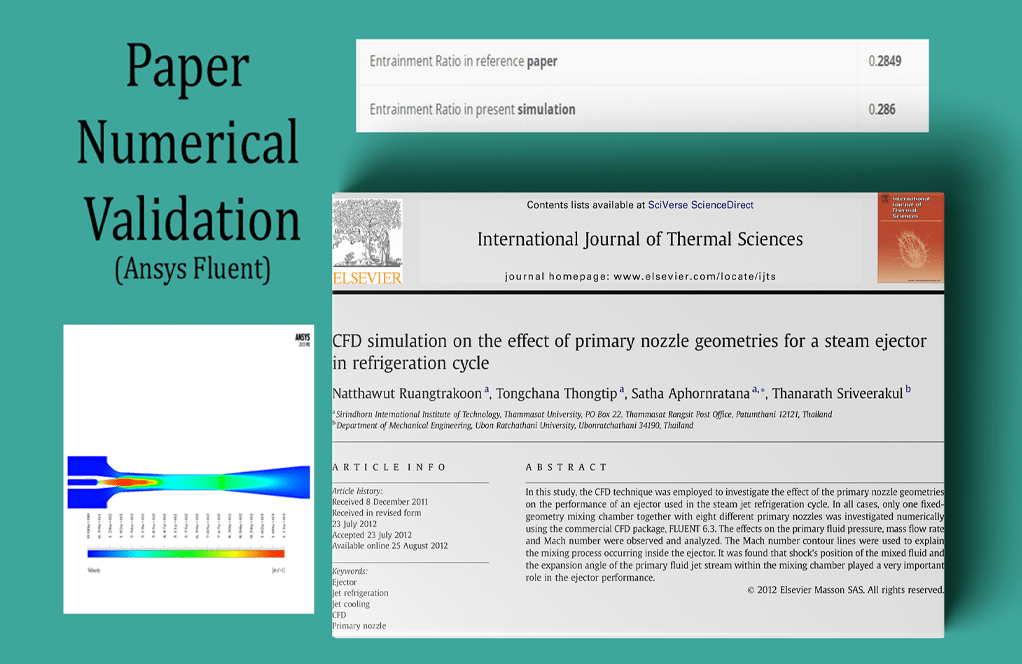
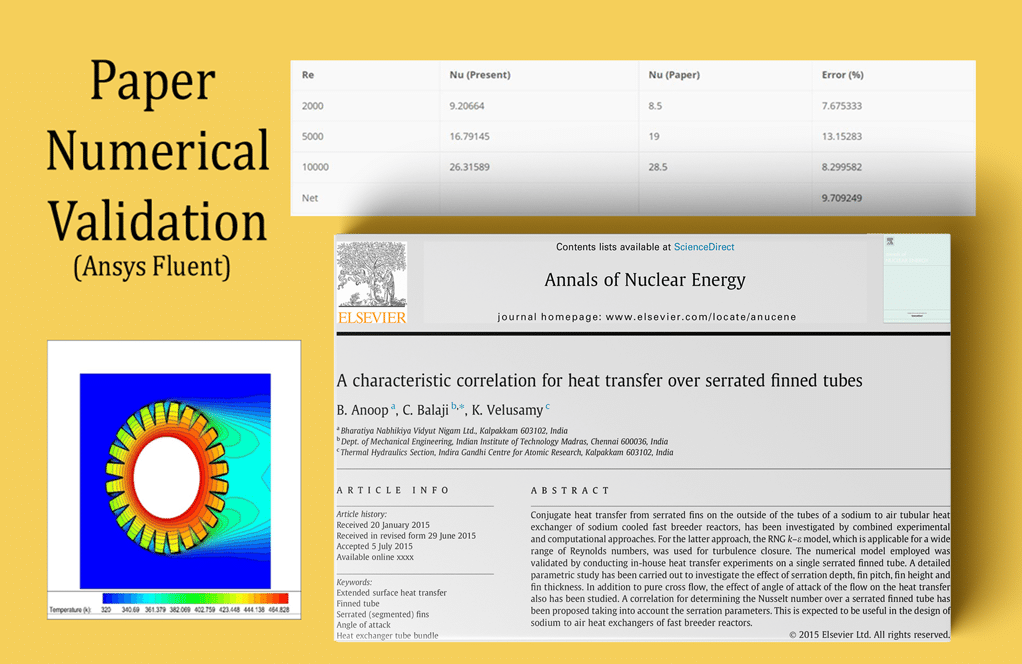
- The present CFD work is Validated with a reference Article.
To Order Your Project or benefit from a CFD consultation, contact our experts via email (info@mr-cfd.com), online support tab, or WhatsApp at +44 7443 197273.
There are some Free Products to check our service quality.
If you want the training video in another language instead of English, ask it via info@mr-cfd.com after you buy the product.
Description
Description
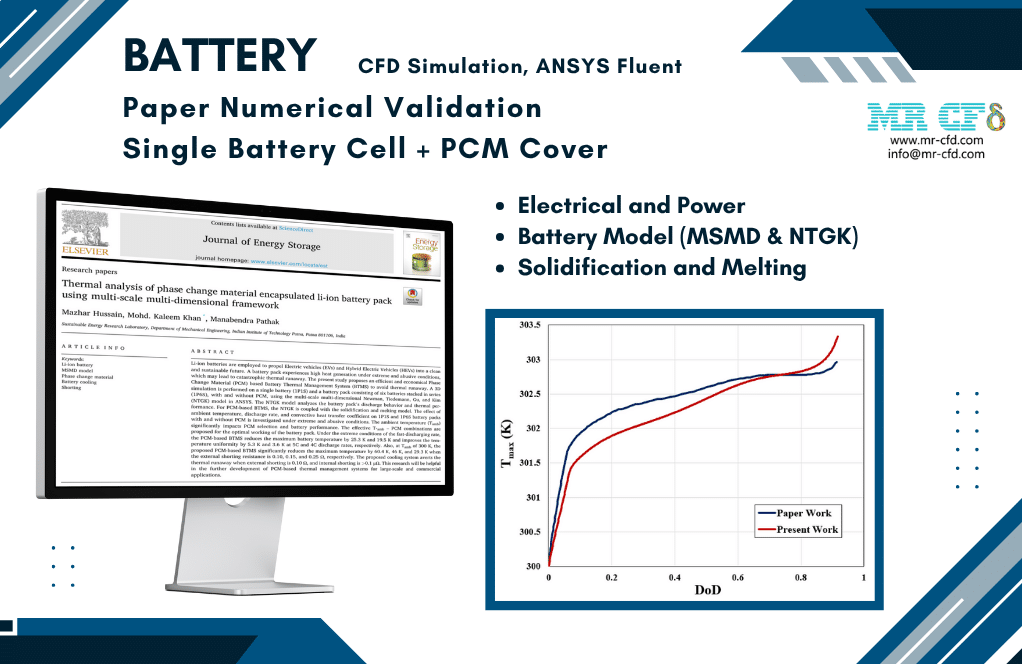
In this project, we perform the CFD simulation of a “Battery with PCM” in ANSYS Fluent software.
We present this CFD product based on the simulation of a reference article, “Thermal analysis of phase change material encapsulated Li-ion battery pack using multi-scale multi-dimensional framework.” So, we compare the results of the present work with the reference article to validate the paper.
According to the reference paper, we implement paper validation in Three steps. In other words, we analyze the performance of the battery system in 3 different cases:
- 1st part: a single battery
- 2nd part: a single battery with PCM cover
- 3rd part: a battery pack
The present product is related to the Second case of the battery system simulation: “a single Battery cell with a PCM cover”.
So, we analyze a pouch-type Li-ion battery, represented as “1P1S”. This battery contains the PCM (Phase Change Material) coating on both sides. PCMs can release or absorb sufficient energy at phase change to provide useful heat or cooling.
Methodology
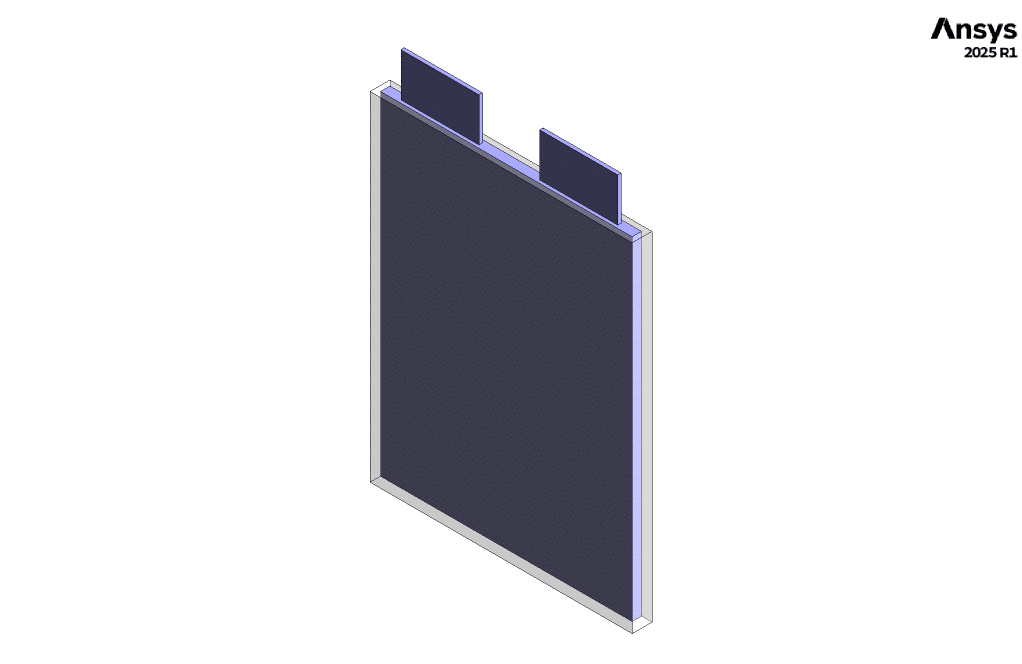
First, we model the computational domain geometry using “Design Modeler” software. So, we design a vertical pouch battery encapsulated with a PCM layer. The battery consists of an active cell with positive and negative tabs.
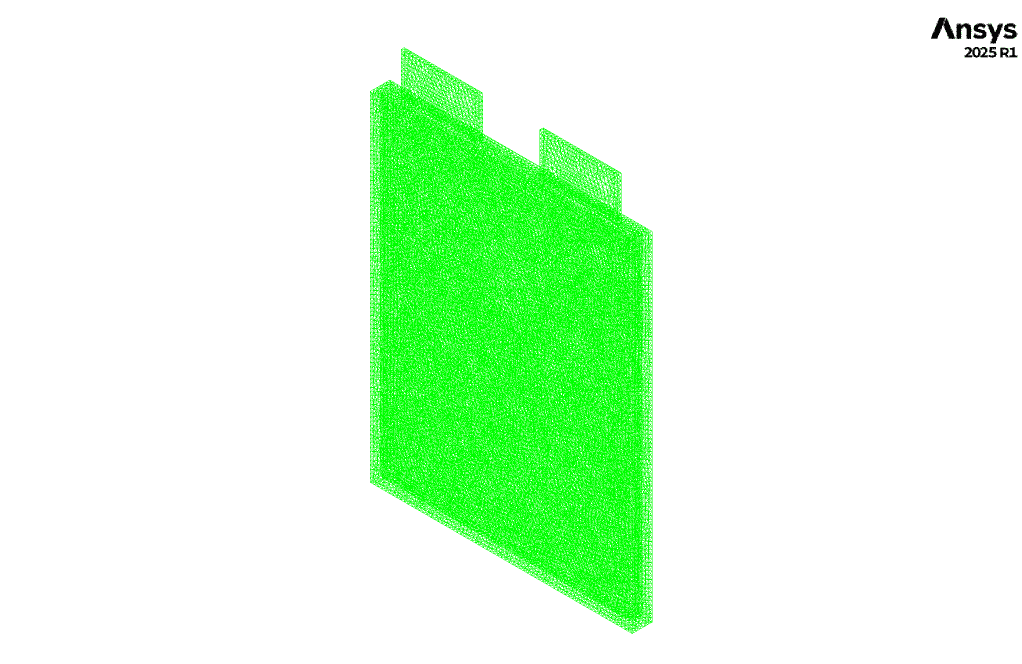
Next, we mesh the model using “Ansys Meshing” software, and 658,513 elements are generated.
Finally, we simulate the present battery system using the “Battery Model” in Ansys Fluent software.
So, we use the Multi-Scale Multi-Domain (MSMD) solution method. The MSMD is a comprehensive method for modeling lithium-ion batteries, because it involves a multi-scale and multi-physical nature.
Then, we use the NTGK (Newman, Tiedemann, Gu, and Kim) electrochemistry sub-model. The NTGK model is a semi-empirical method for electrochemical computations.
We intend to analyze the battery discharge process at a 5 C-rate. The C-rate is the charging/discharging current to the battery’s nominal capacity. We set up battery modeling information according to the reference article, including materials, boundary conditions, battery parameters, etc.
Since the charging/discharging process in the battery system occurs over time, we run the calculation in an unsteady state (transient).
As mentioned, we apply the phase change materials (PCMs). So, we use the Solidification and Melting Model to define phase transitions between solid and liquid phases over time.
Conclusion
For the post-processing, we analyze the present battery system for approximately 13 min.
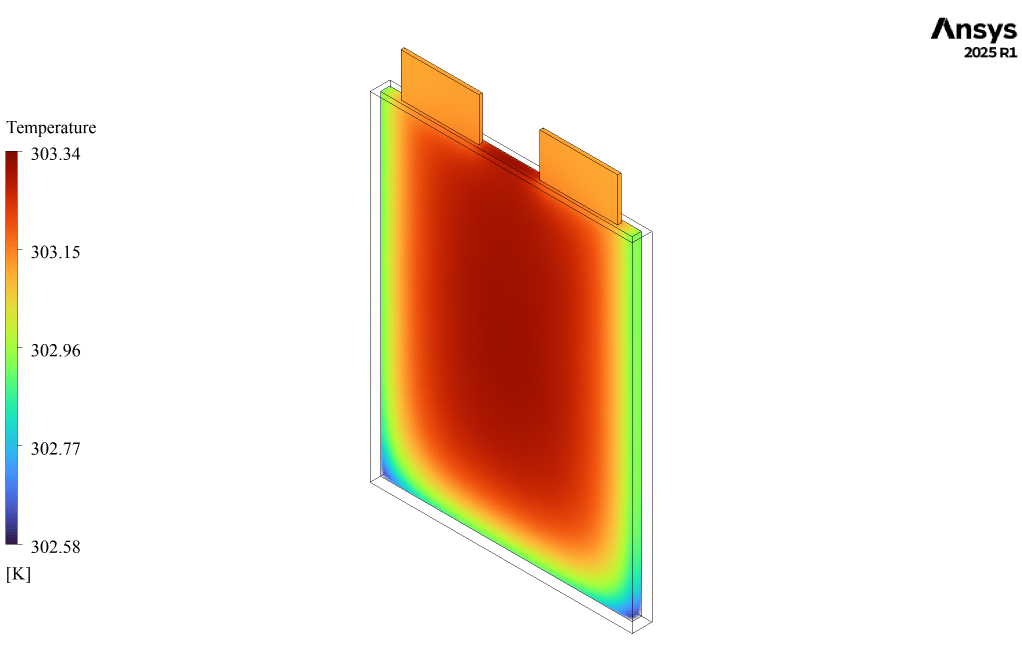
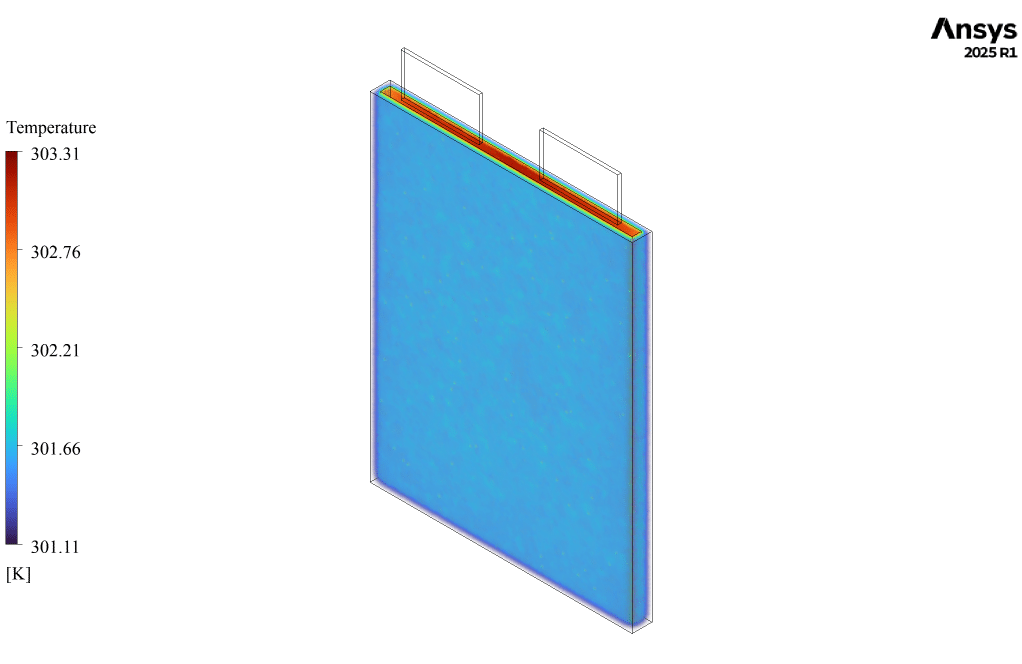
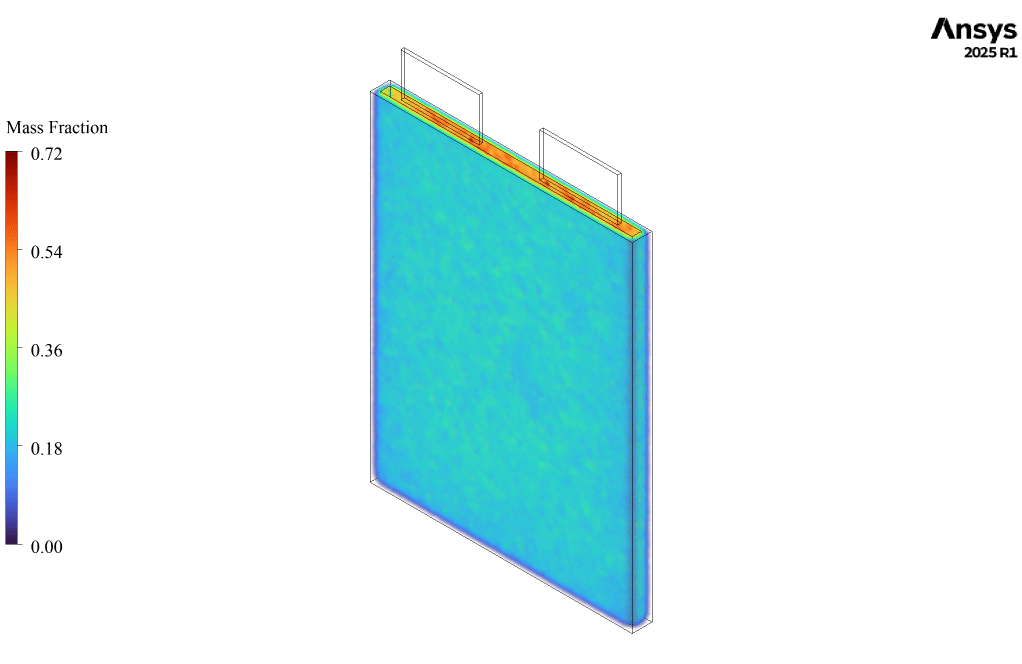
We obtain contours of the temperature distribution and the liquid fraction distribution at the last time. According to the results, battery temperature increases at a slow rate. In other words, the PCM absorbs the heat generated in the battery cell, which helps control temperature rise. So, PCMs change from solid to liquid phase by absorbing heat from the battery cell.
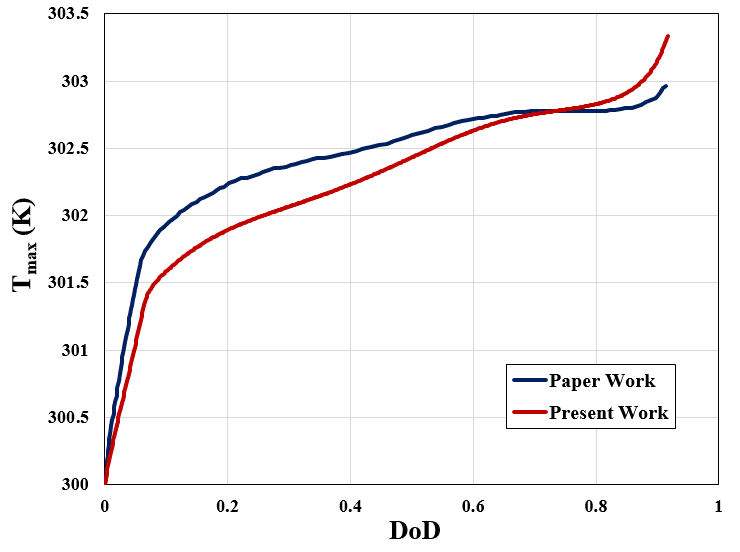
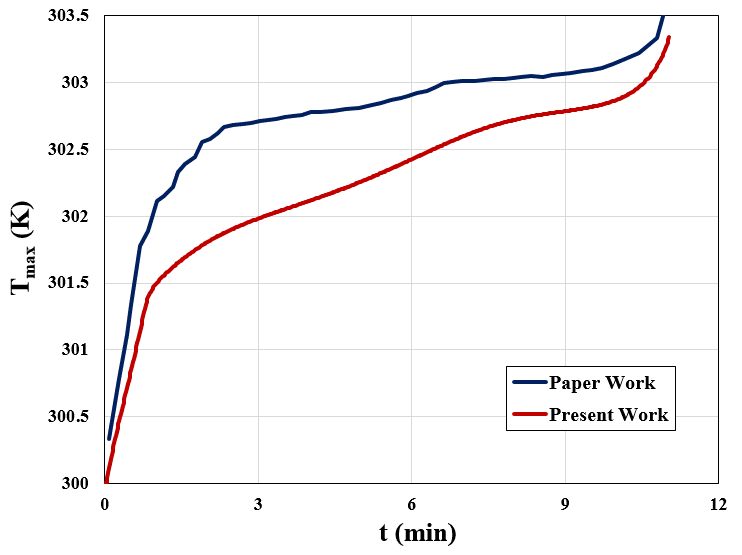
Finally, we compare the present results with the paper to reach paper validation. Therefore, we present the maximum temperature over time and the maximum temperature with respect to DoD (depth of discharge).
You must be logged in to post a review.
 Talk On WhatsApp
 Talk On WeChat

Reviews
There are no reviews yet.