
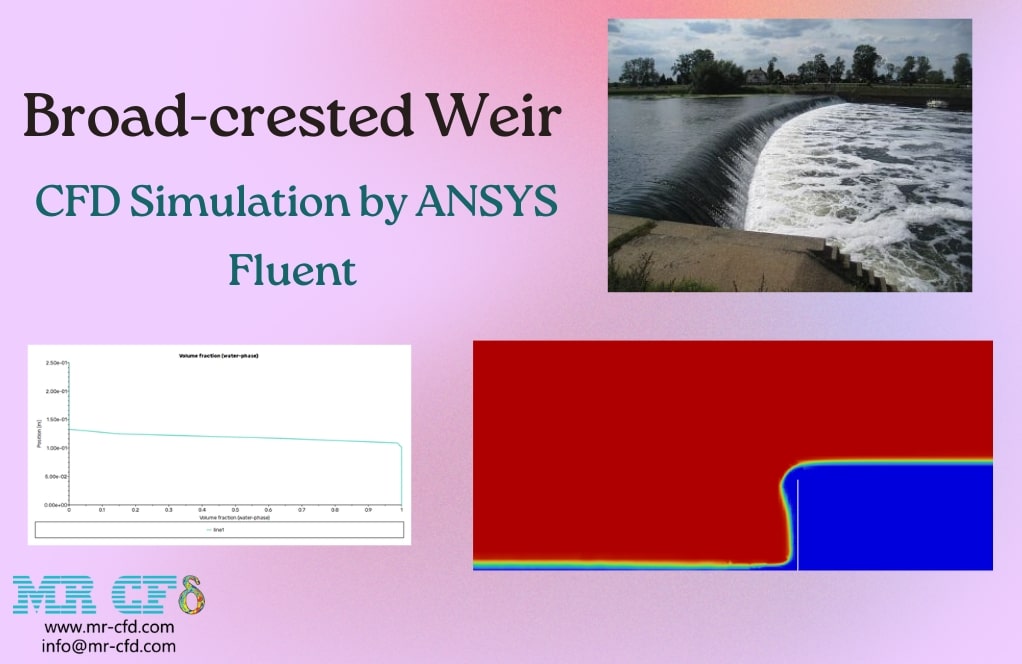
Broad-crested Weir CFD Simulation by ANSYS Fluent
$100.00 $60.00 HPC
- This project involves the simulation of a broad-crested weir using ANSYS Fluent to analyze fluid dynamics parameters.
- The primary goals are to assess the flow rate, drag force, and water level at various sections of the weir and compare these with experimental results.
- The geometry is created in SpaceClaim and meshed in ANSYS Meshing, resulting in a structured mesh with 1,222,021 elements for improved accuracy.
- The CFD simulation employs a pressure-based solver and a multiphase VOF model to address the incompressibility of fluids, with air as the primary phase and water as the secondary.
To Order Your Project or benefit from a CFD consultation, contact our experts via email (info@mr-cfd.com), online support tab, or WhatsApp at +44 7443 197273.
There are some Free Products to check our service quality.
If you want the training video in another language instead of English, ask it via info@mr-cfd.com after you buy the product.
Description
Broad-crested Weir CFD Simulation
Project Description:
In this project, a broad-crested weir is simulated. The study aims to investigate flow rate, drag force and water level in different sections . The inlet has 98.5+30.4 mm height.
Geometry and mesh:
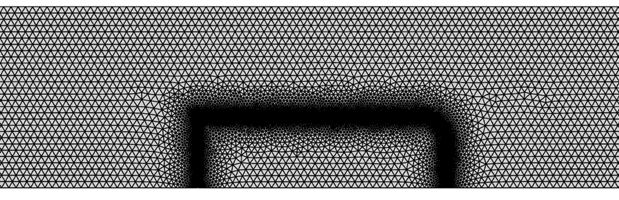
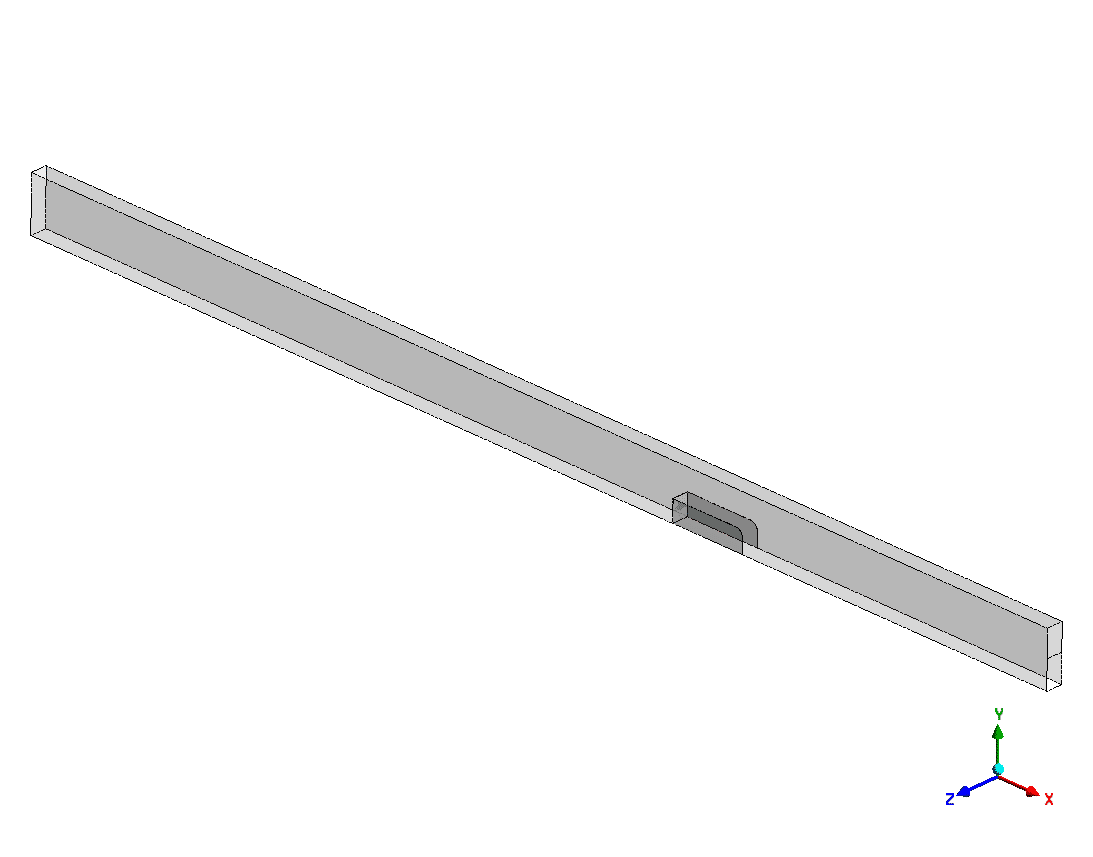
The geometry of the broad-crested weir is created using SpaceClaim software. The 0.075*0.25*5 m domain was made in this software. Additionally, the geometry has two inlets, one for water and the other for air. A weir is drawn in this domain at a distance of 1.5 meters from the Inlet. Then, the geometry is inserted into the Ansys Meshing for the generated mesh. For better visualization & simulation, especially around the water surface region, a structure mesh grid is generated, resulting in 1222021 Elements.
CFD Simulation:
The pressure-based solver is employed due to the incompressibility of the fluids. The gravitational acceleration is considered. Plus, the multiphase VOF model is enabled: the primary phase is air & the secondary phase is water. The k-epsilon RNG is used for turbulence models, and standard wall functions are used for near-wall treatment. The 0.058491 m/s is used for the boundary of the water Inlet, and the pressure Inlet boundary condition is used for the air Inlet. Also, the COUPLED algorithm is used for coupling between pressure and velocity.
Results:
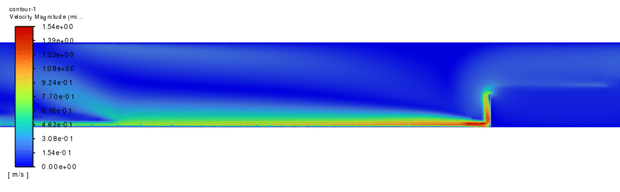
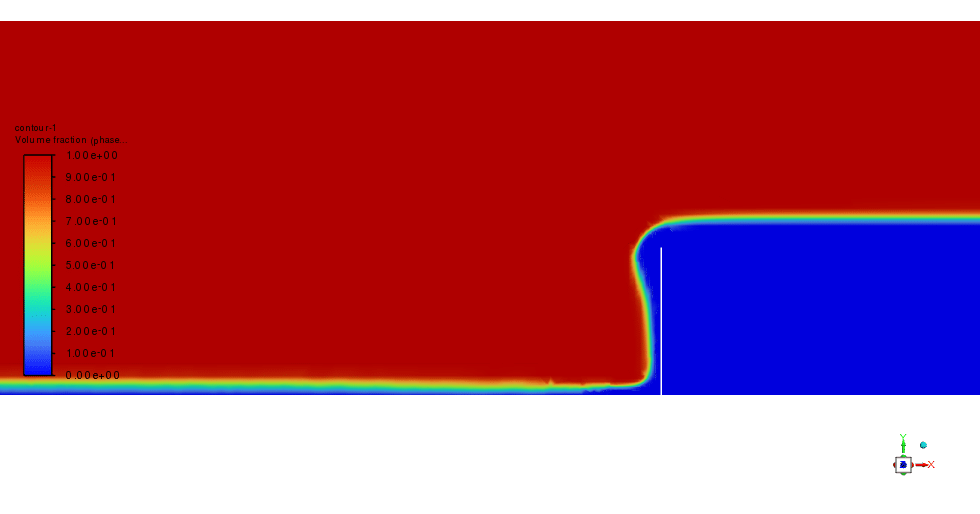
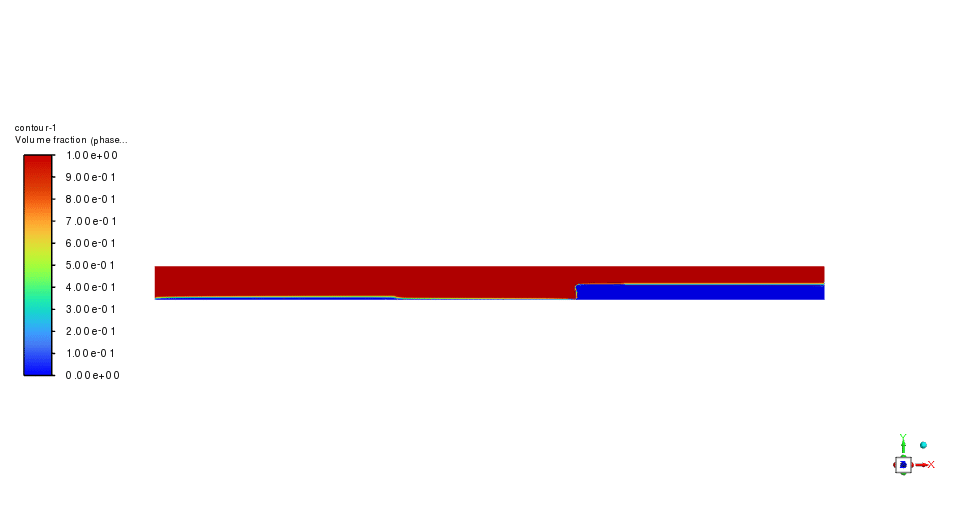
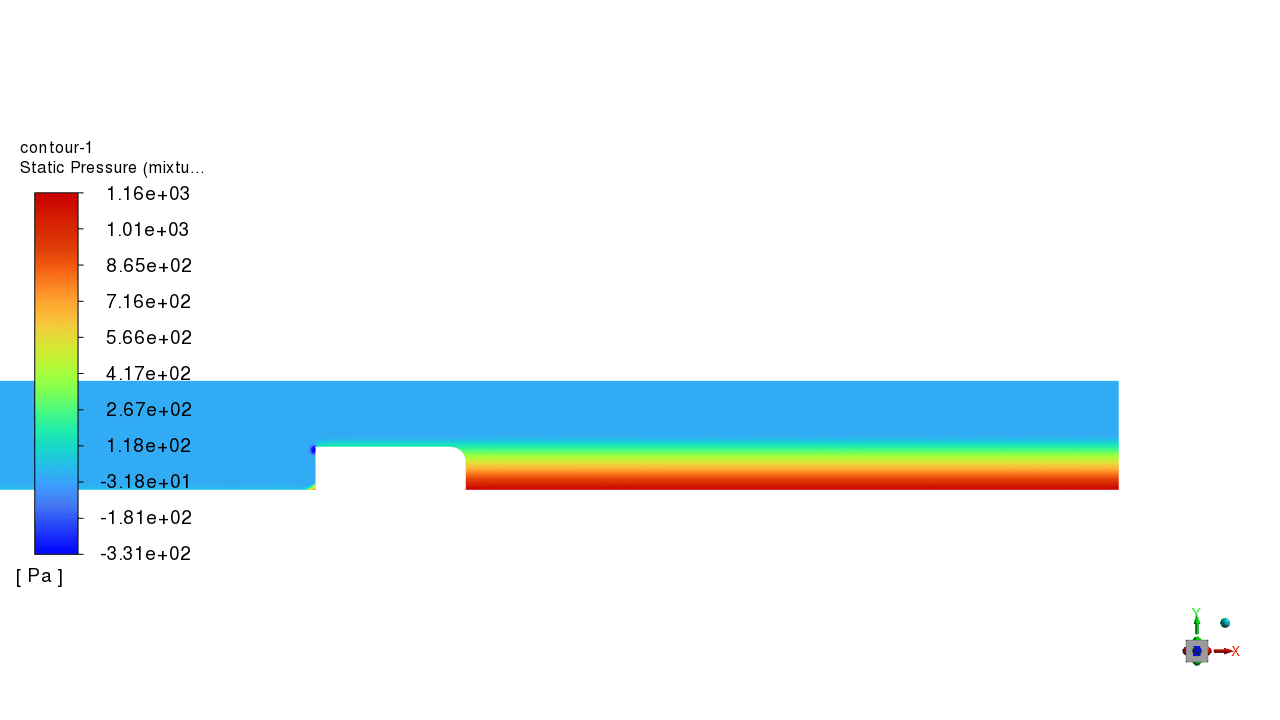
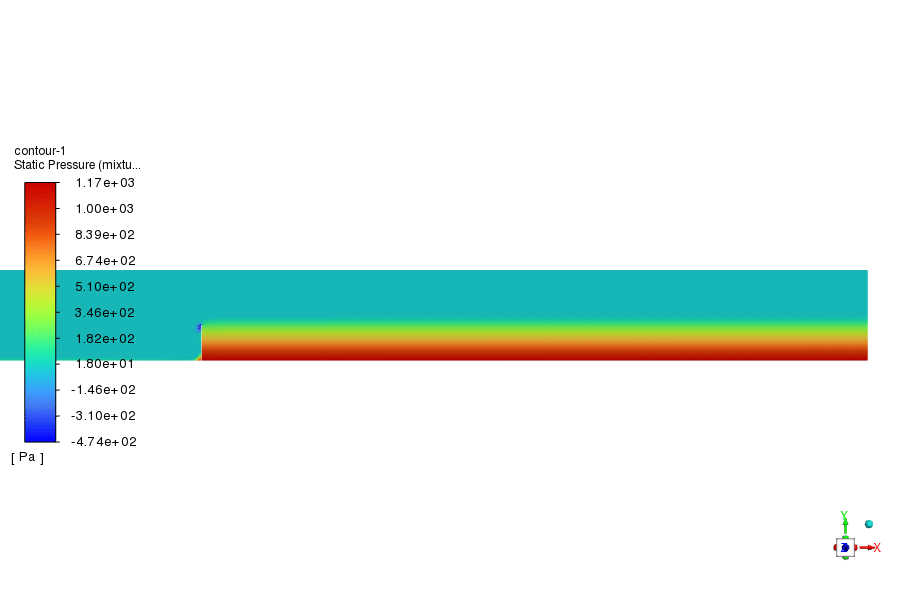
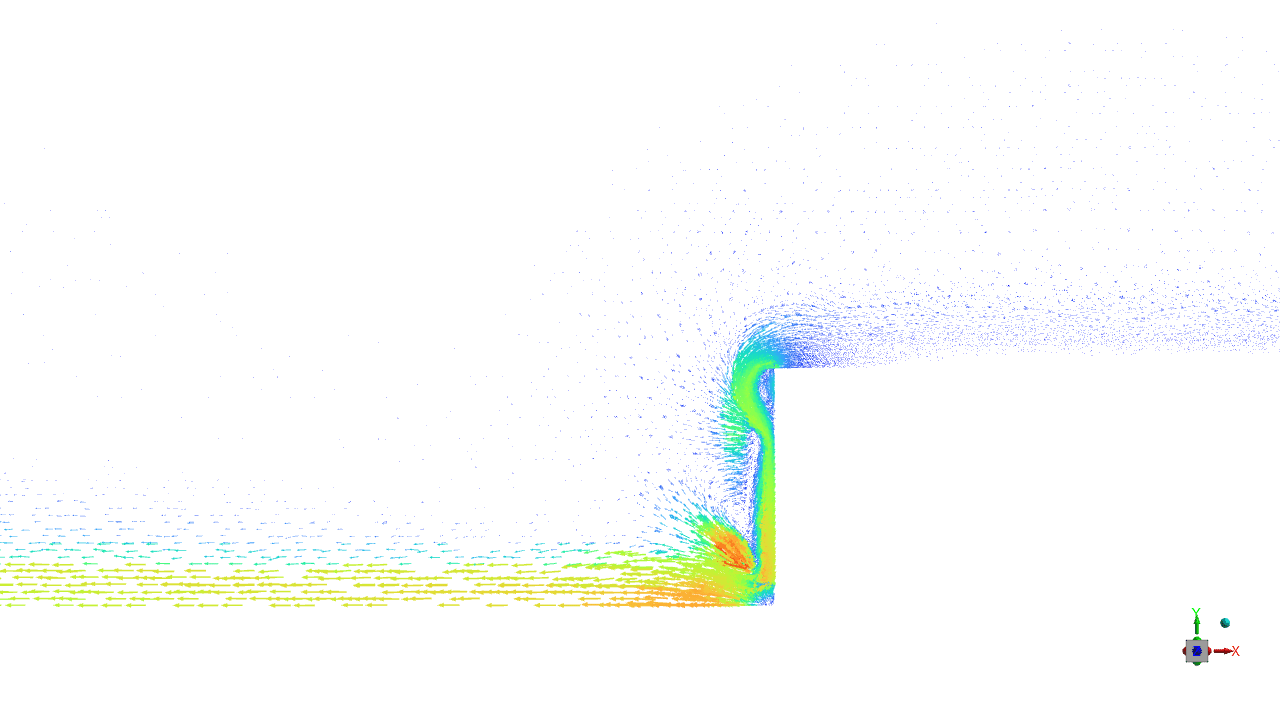
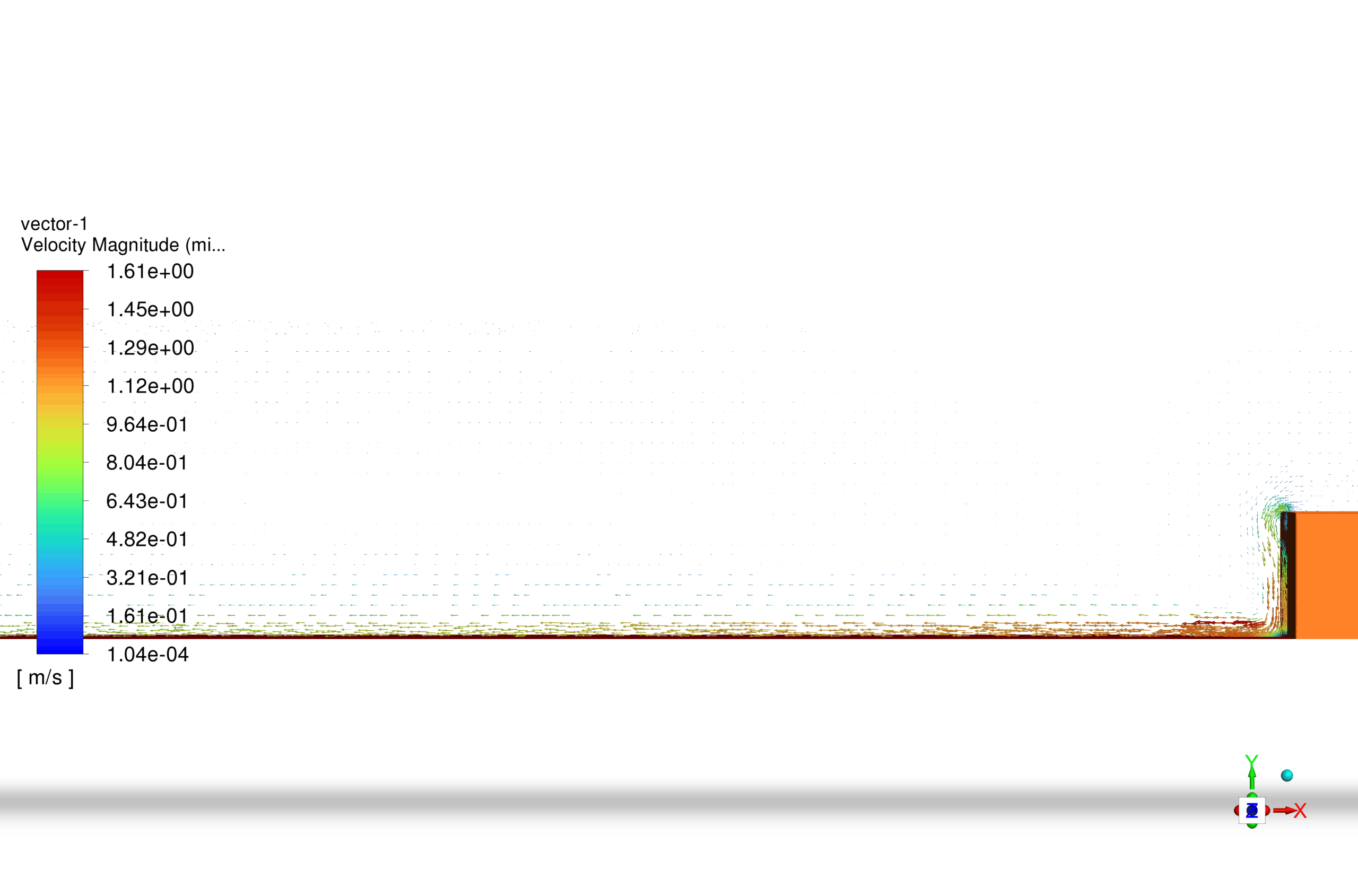
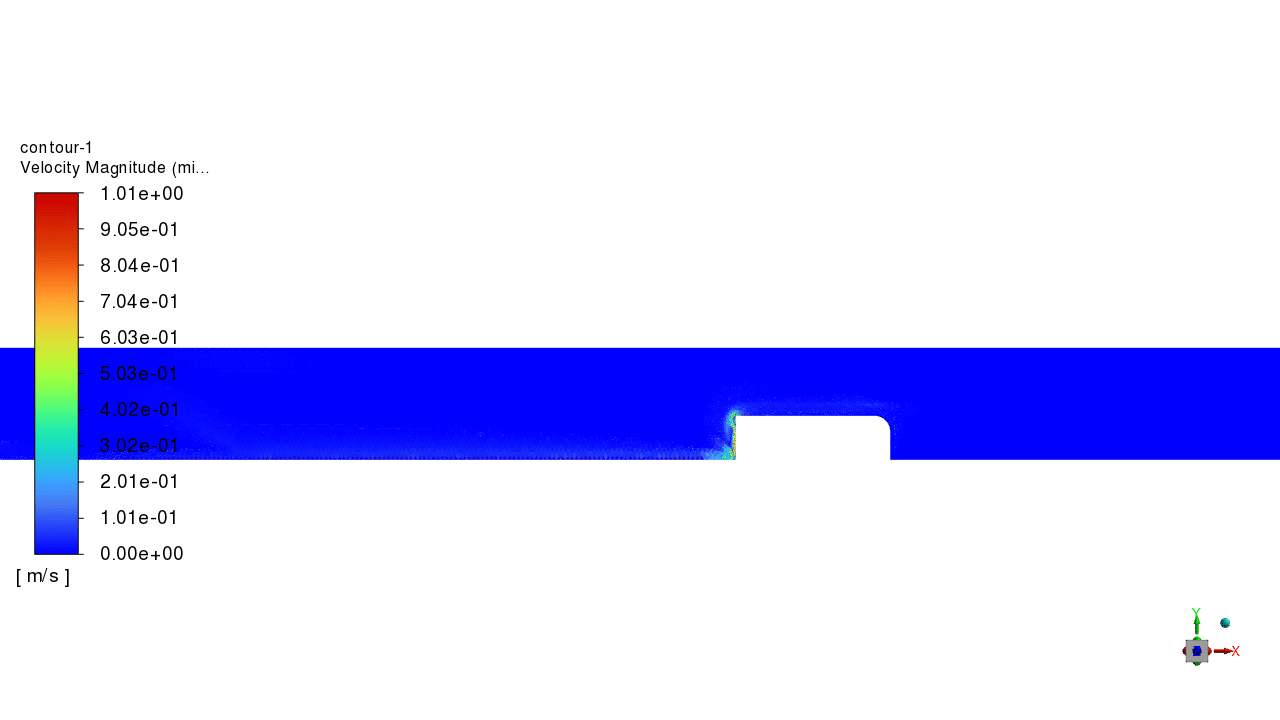
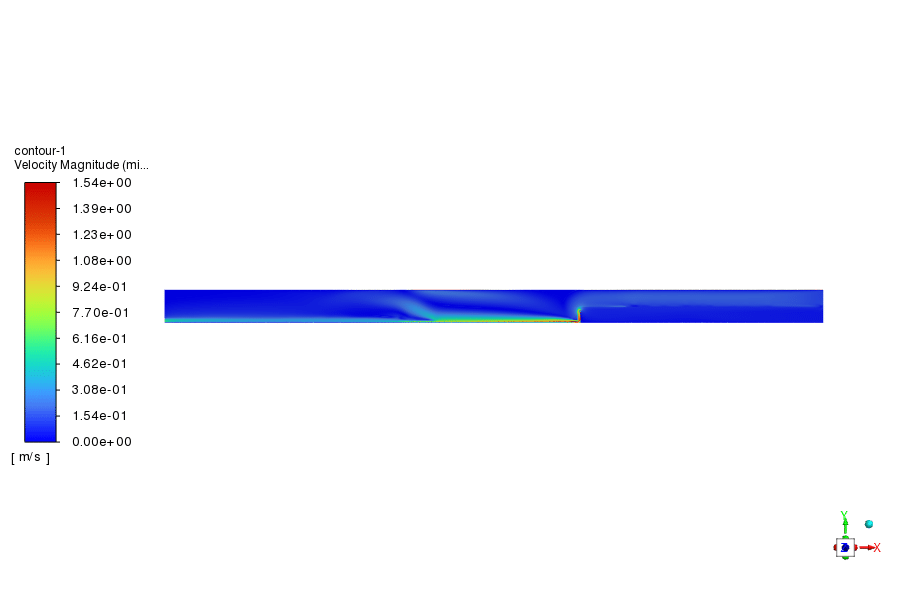
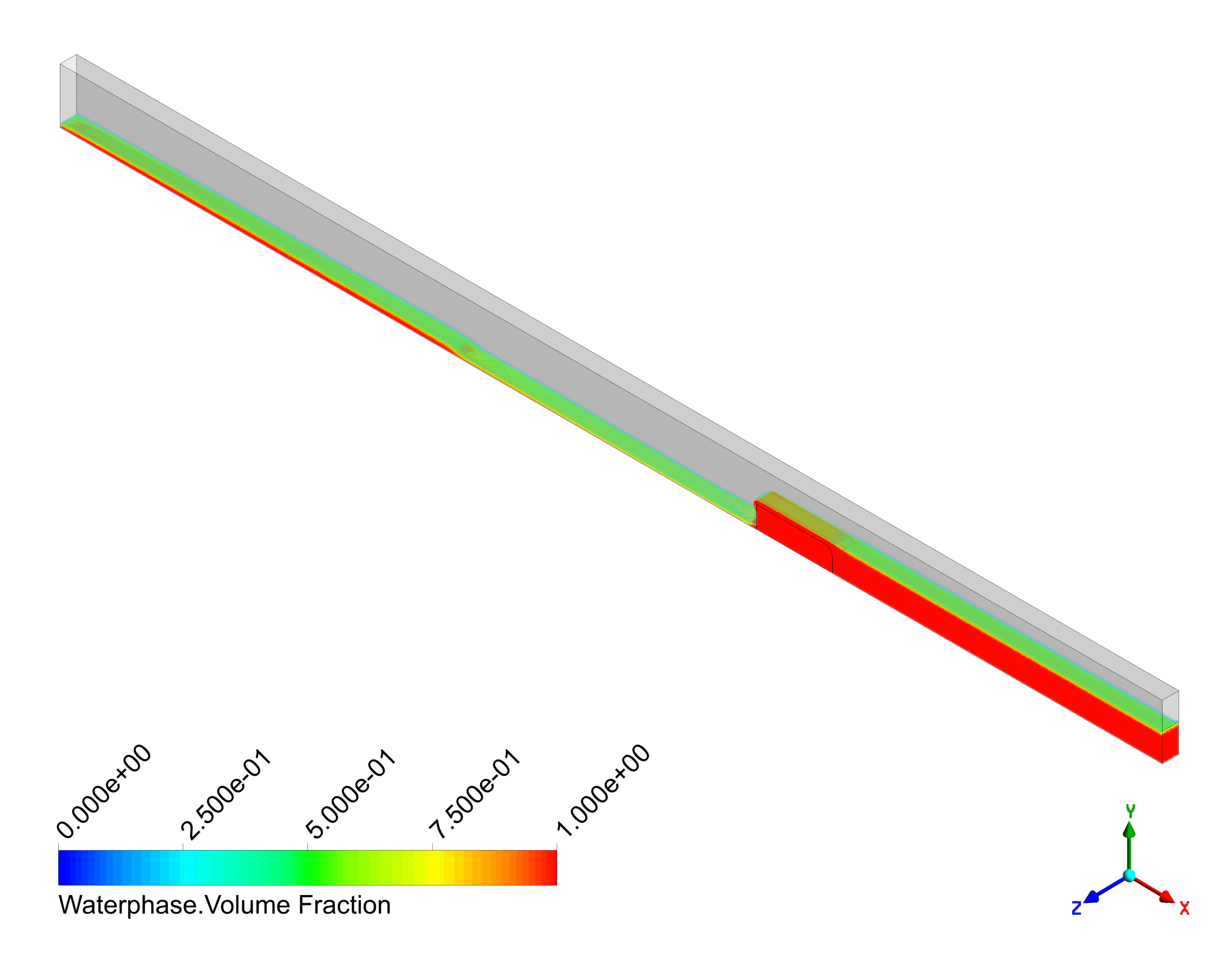
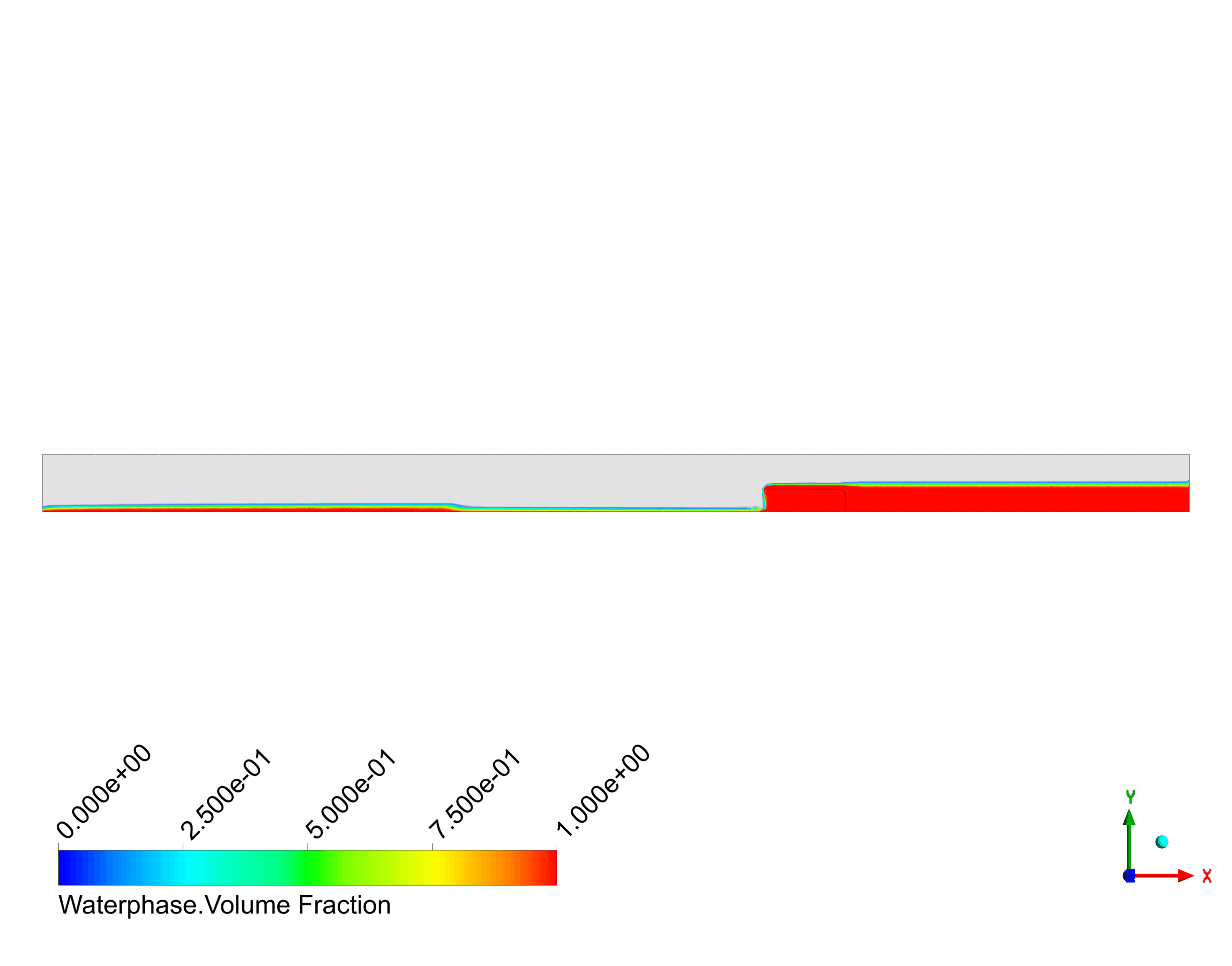
After the simulation, the broad-crested weir, 2D & 3D contours are extracted. In the steady-state condition, the results are reported. The important parameters were the drag force acting on the weir, the flow rate and the water level. Additionally, ANSYS Fluent reports drag force as 4.55N & outlet mass flow rate as 0.557 kg/s.
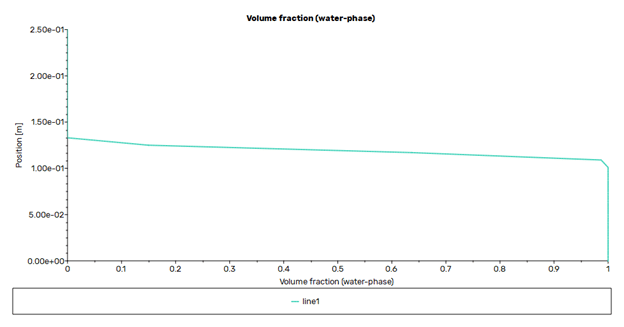
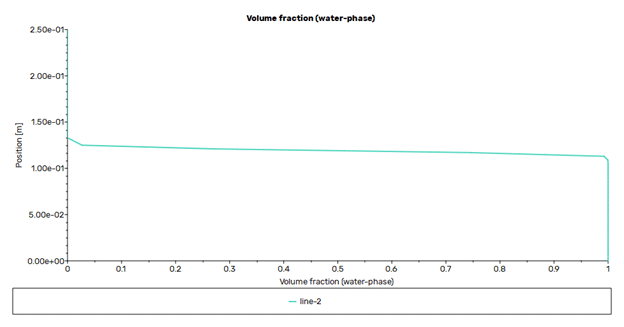
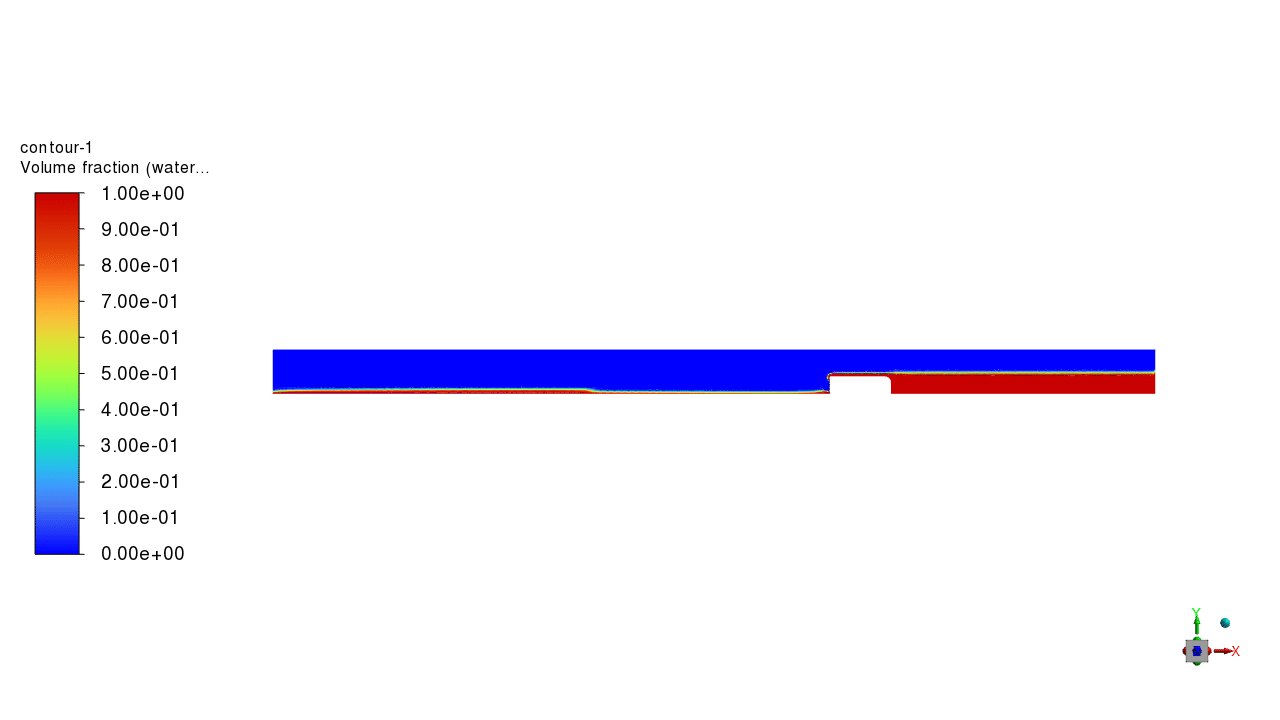
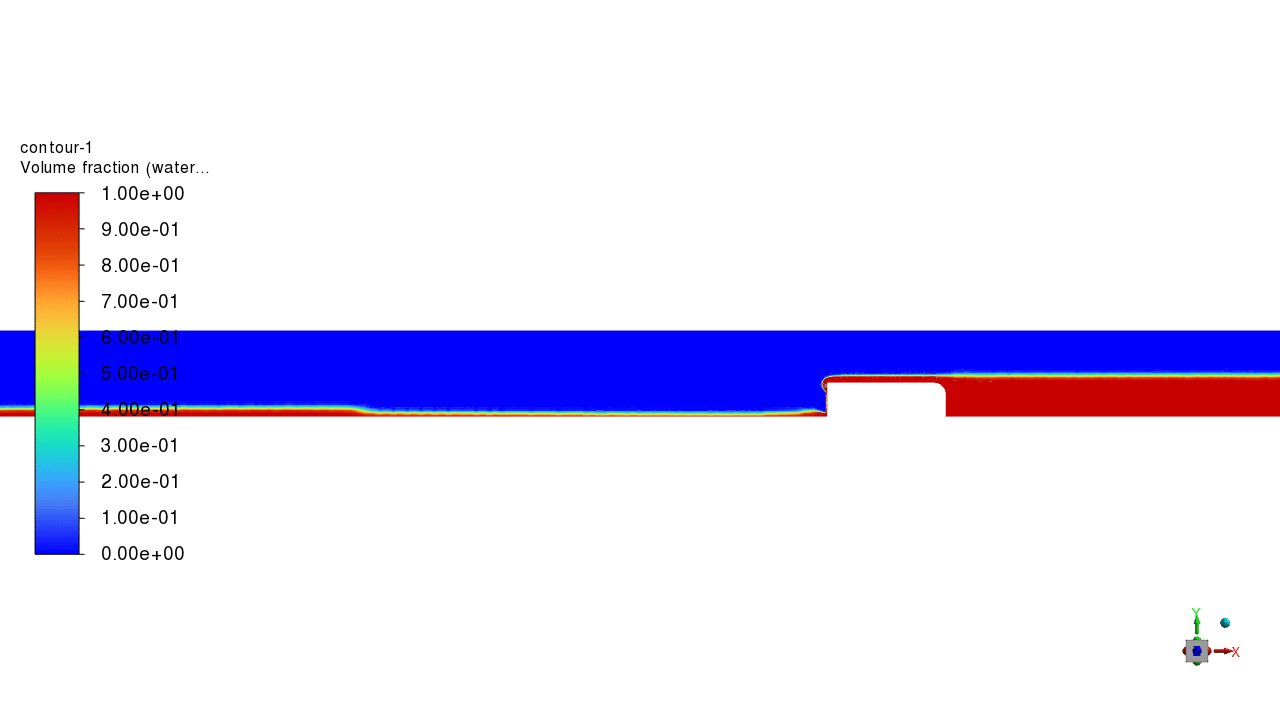
The plots below indicate the water level on the lines in the entrance zone (1 meter from the inlet) and at the middle of the weir (1.67m from the inlet).
Height-Volume Fraction of Water 1meter away from the inlet
Height-Volume Fraction of Water 1.67meter away from the inlet
Five lines drawn for getting information at them: line 1:0.5m away from the Inlet, line 2: 1.67m (middle of the weir), line 3: 2.5m, line 4: 3.5m, line 5: 4.5m. Also, you can see their locations below: (yellow lines)
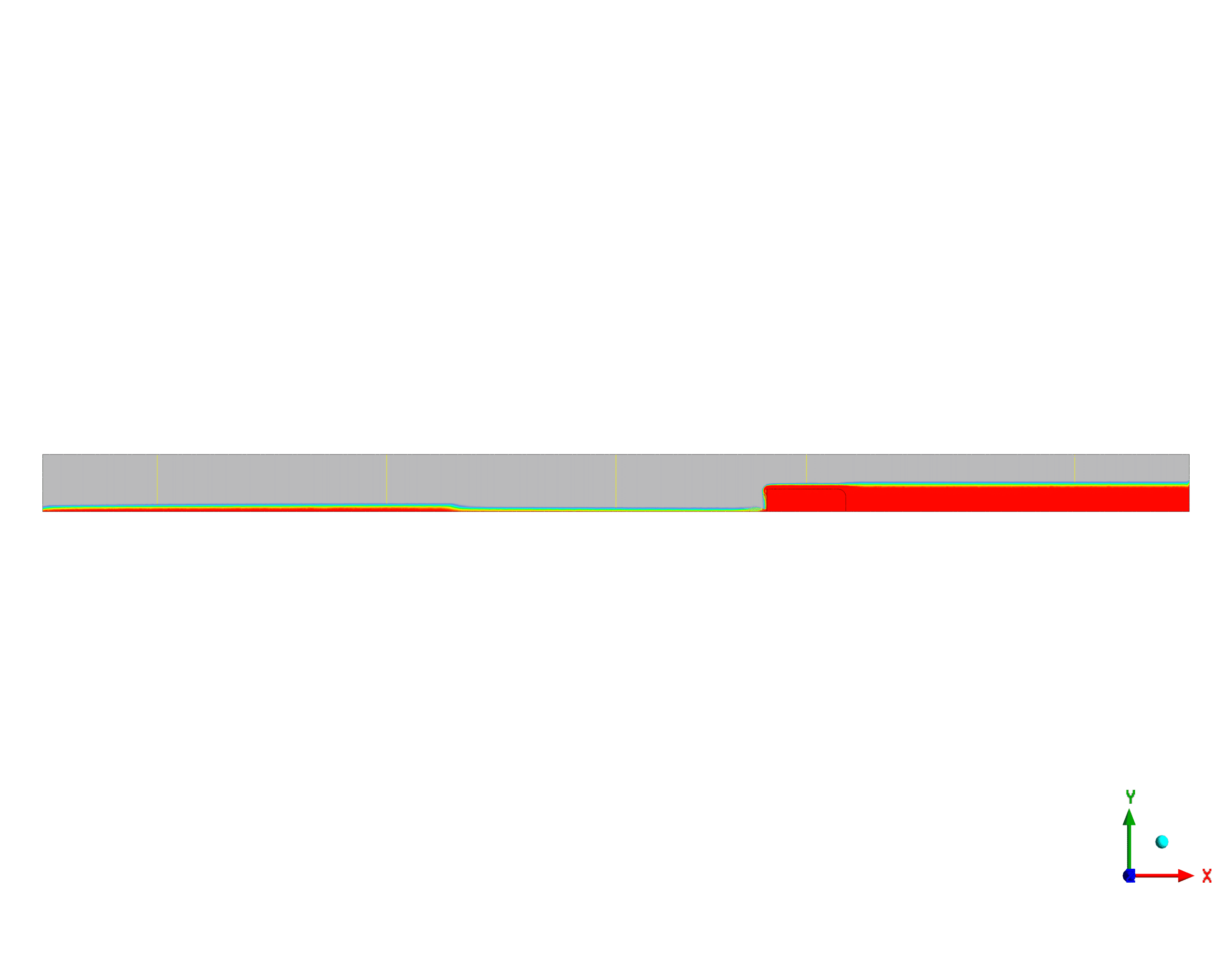
The next step plots the height(y)-water phase volume fraction on each. We gathered all the results in a single plot, so you can get to know the flow depth in each section of the channel, indicated below:
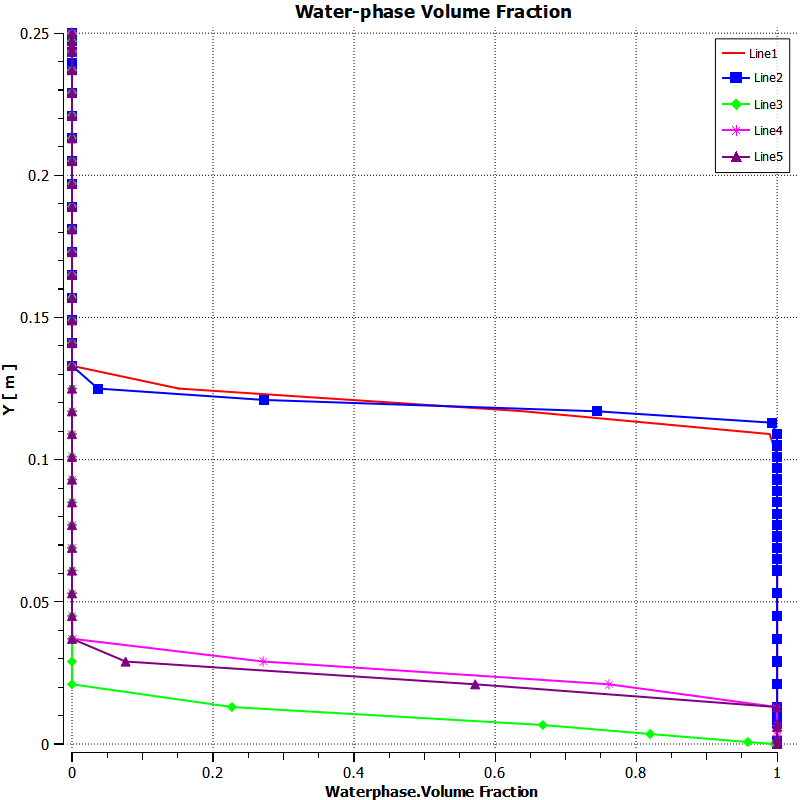
In another illustration, the table below summarizes the flow depth in terms of height:
| Distance From Inlet (m) | Flow Depth (mm) |
| 0.5 | 131 |
| 1.67 | 130 |
| 2.5 | 22 |
| 3.2 (Hydraulic Jump) | 38 |
| 3.5 | 38 |
| 4.5 | 38 |
The maximum flow depth is behind the weir, where the water has about 130mm depth. After the weir, there is less flow depth (22 mm). As we get to 3.2m from the Inlet, the hydraulic jump phenomenon takes place, and the depth rises to 38mm and continues till the end of the channel.
Moreover, Ansys Fluent reports the volume flow rate at the outlet as 0.0005570402 m3/s. The pressure gradient between the Inlet and outlet is 139.48 Pa.
You must be logged in to post a review.
 Talk On WhatsApp
 Talk On WeChat

Reviews
There are no reviews yet.