
Flow Probe, One-way FSI, ANSYS Fluent CFD Simulation
$150.00 Internship
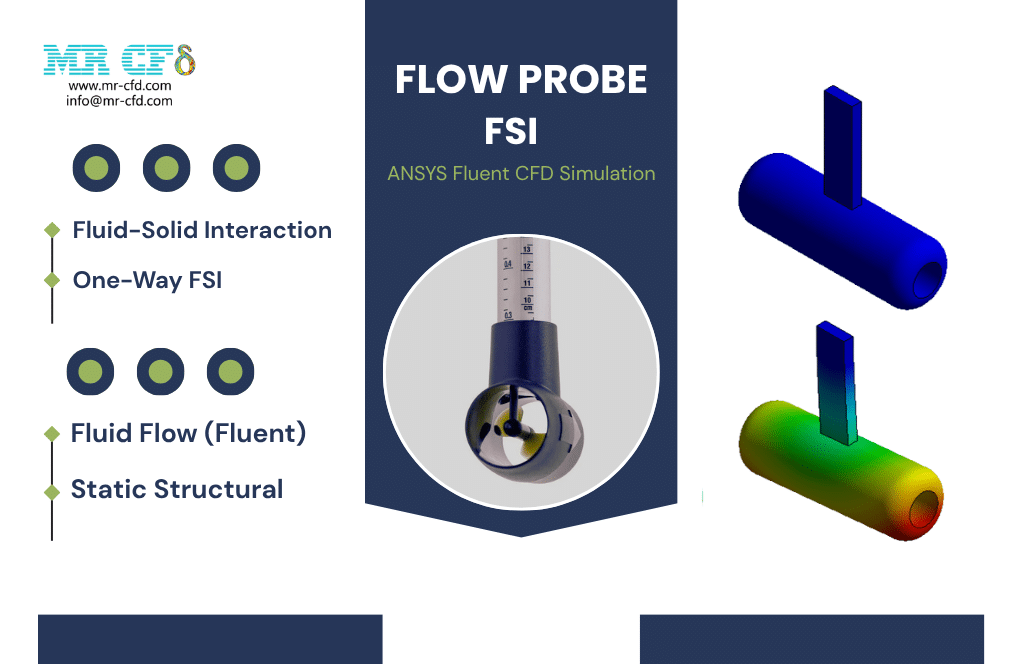
- This product numerically simulates a Flow Probe using ANSYS software.
- This project is implemented as a Fluid-Structure Interaction (FSI).
- We perform the Fluid simulation in ANSYS Fluent and the Solid simulation in ANSYS Static Structural.
- We use a One-Way FSI for data transfer from Fluent to Static Structural.
- We design the 3-D model in the Design Modeler software and mesh it in the ANSYS Meshing software.
To Order Your Project or benefit from a CFD consultation, contact our experts via email (info@mr-cfd.com), online support tab, or WhatsApp at +44 7443 197273.
There are some Free Products to check our service quality.
If you want the training video in another language instead of English, ask it via info@mr-cfd.com after you buy the product.
Description
Description
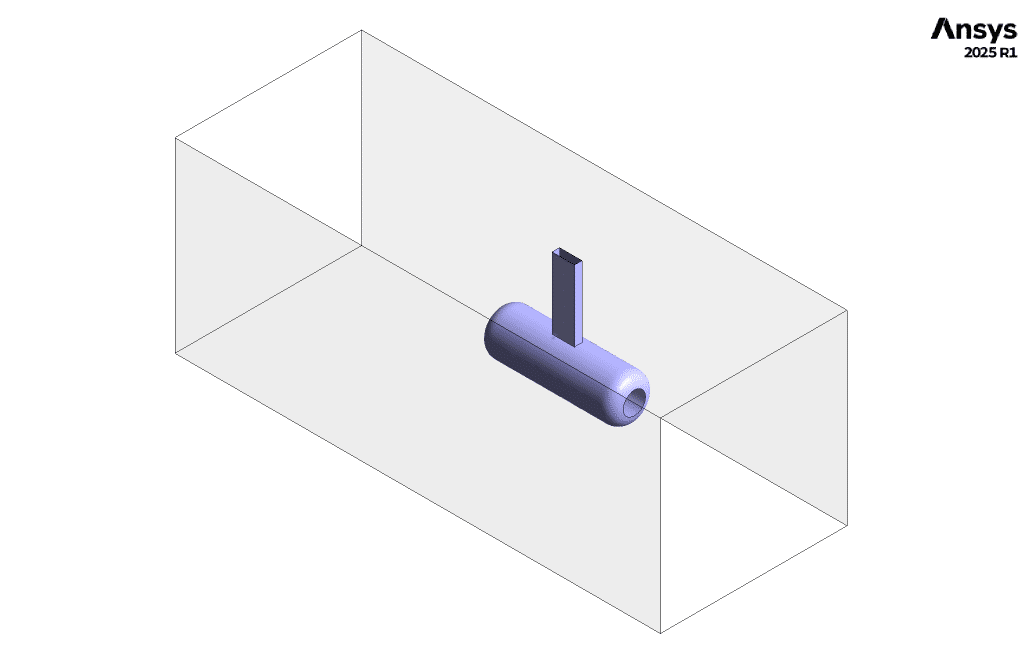
In this project, we present the CFD simulation of a Flow Probe under Fluid-Structure Interaction (FSI) in ANSYS software.
A flow probe is a device for hydrological flow measurements in streams, rivers, channels, wastewater, etc. We consider a simple flow probe placed inside a water flow. So, the high-velocity flow exposes forces on the probe body that can lead to structural deformation.
The motion of the high-pressure fluid and collision with the probe body generate the Pressure Loads on the probe body. So, we intend to analyze the Stresses caused by pressure loads on the probe body.
In such a condition, we need to implement coupled simulations of the fluid and structure. Therefore, we model a computational domain consisting of a fluid region for the water flow and a solid region for the probe body. For this, it is known as fluid-structure interaction (FSI).
We intend to evaluate the hydrodynamic motion around the probe and transfer it only into the probe structure, in the form of stress. Therefore, we utilize a One-Way FSI.
Methodology
For this project, we want to solve the fluid pressure from Fluent, and then connect to Static Structural in the form of loads.
In the first step, we model the computational domain in the Design Modeler software. We design a large-scale domain for fluid flow involving a probe as a solid body inside it.
We use the solid body for simulation in ANSYS Static Structural, and the fluid zone around it for simulation in ANSYS Fluent software.
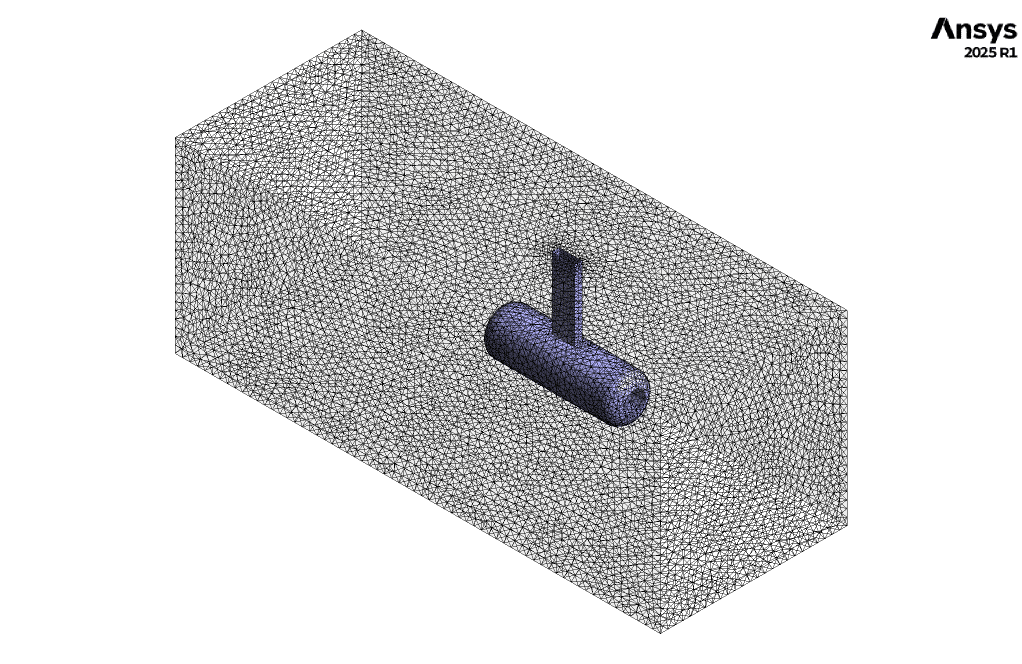
In the second step, we describe the simulation in Fluent software. Before that, we mesh the fluid domain in ANSYS Meshing software, so that about 128,000 elements are generated.
In the final step, we describe the simulation in Mechanical (Static Structural) software.
We define the top component of the probe body as a Fixed Support. So, except for this support, the probe body is capable of deformation or motion under pressure loads. Therefore, we define an Imported Body Pressure for the mechanical load.
Conclusion
After the calculation process, we represent both the Fluid analysis and the Structural analysis.
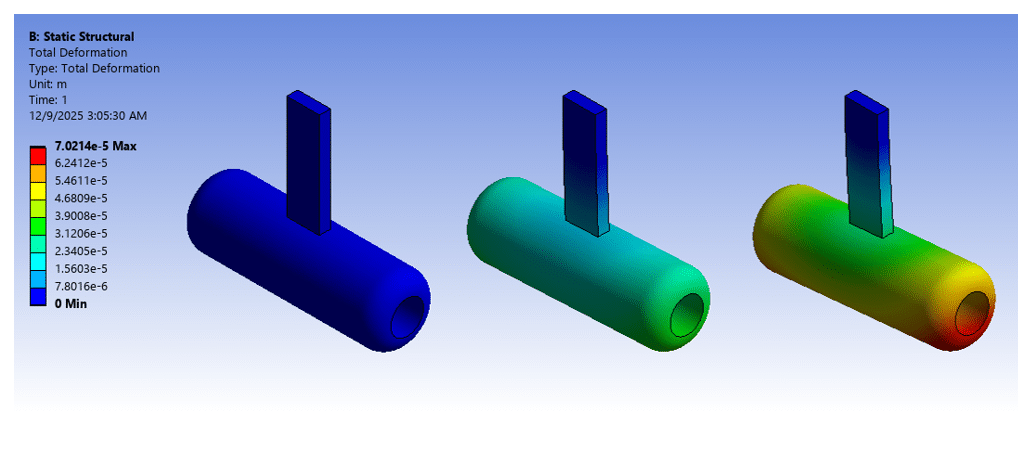
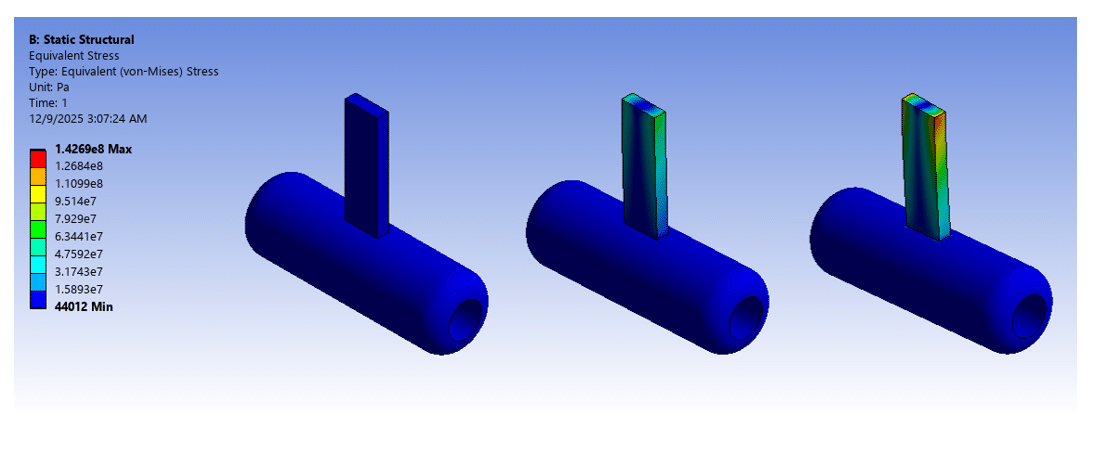
So, in Static Structural, we obtain the contours of Total Deformation and Von Mises Stress on the probe structure body. The behavior of the probe structure shows the deformation and movement of the probe body under the influence of the pressure loads.
In addition, the results demonstrate that the maximum deformation occurs in the lower part of the probe, which has the highest degree of freedom, while the maximum stress appears on the upper part of the probe, which is due to the fixed support.
Note that we provide the contours of the deformation and stress on the probe structure in a way that shows the procedure for reaching from the initial to the stable distribution.
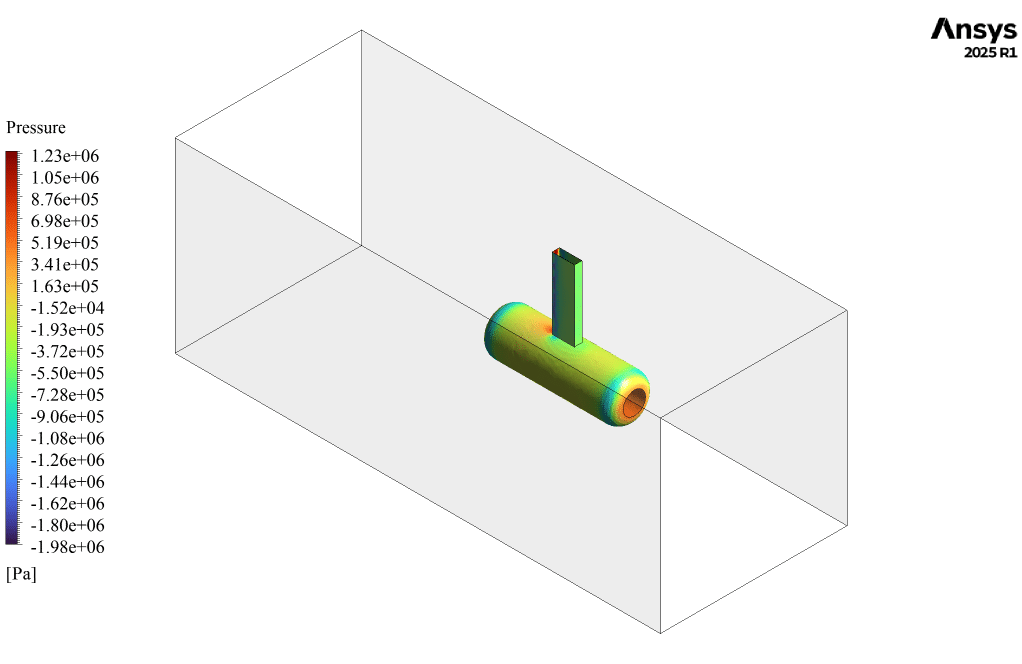
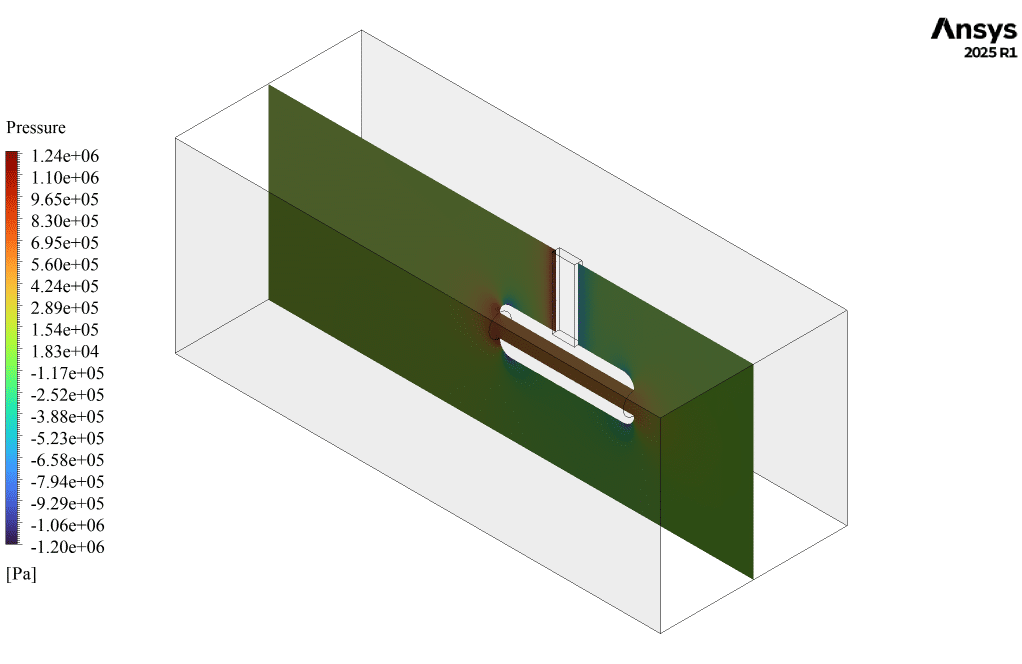
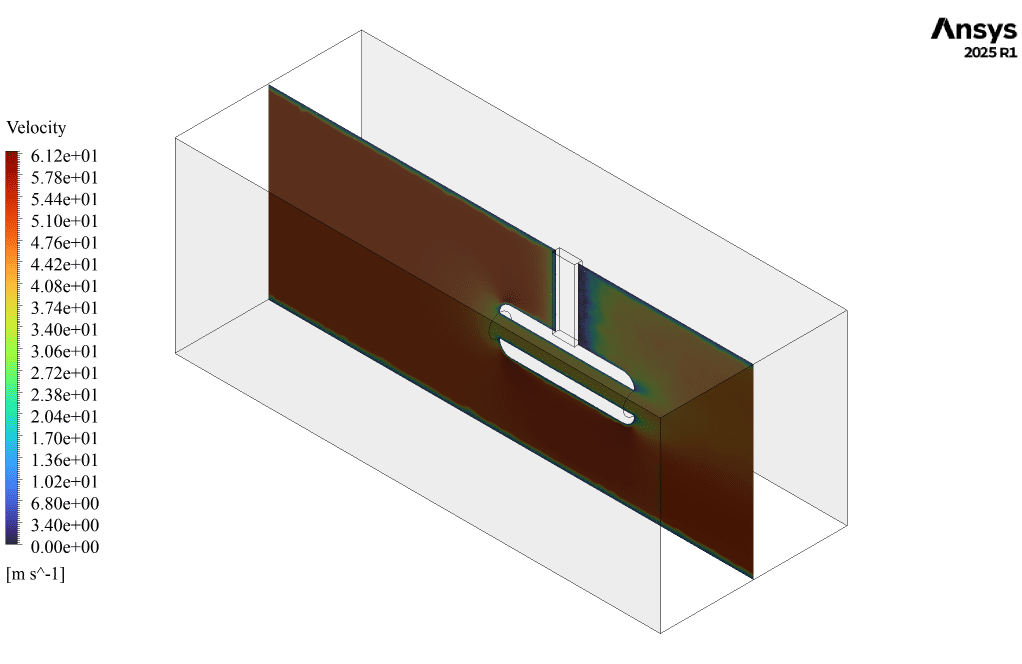
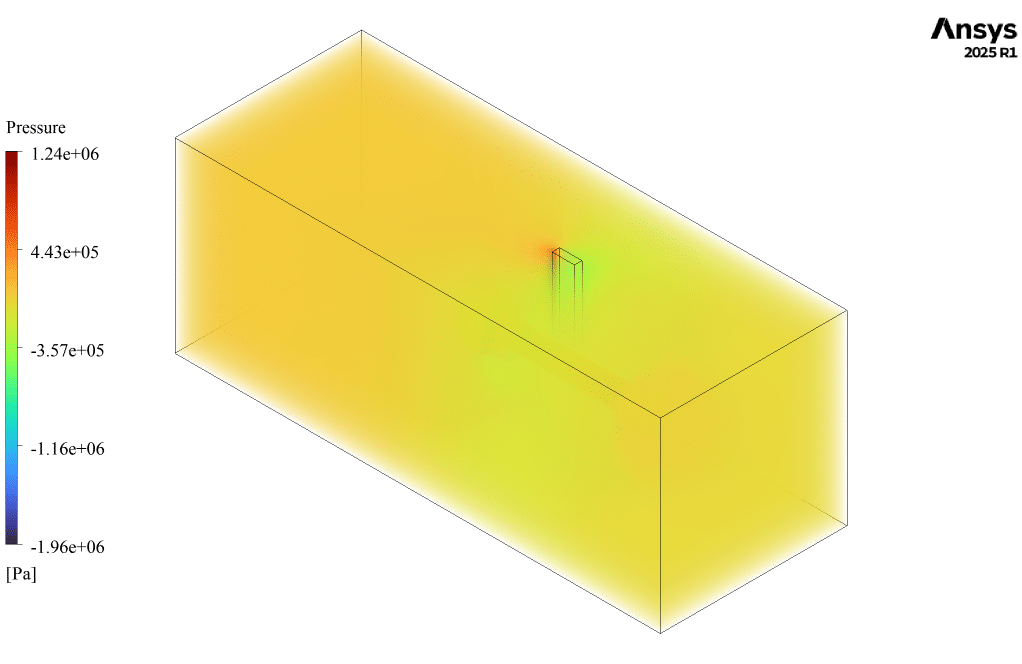
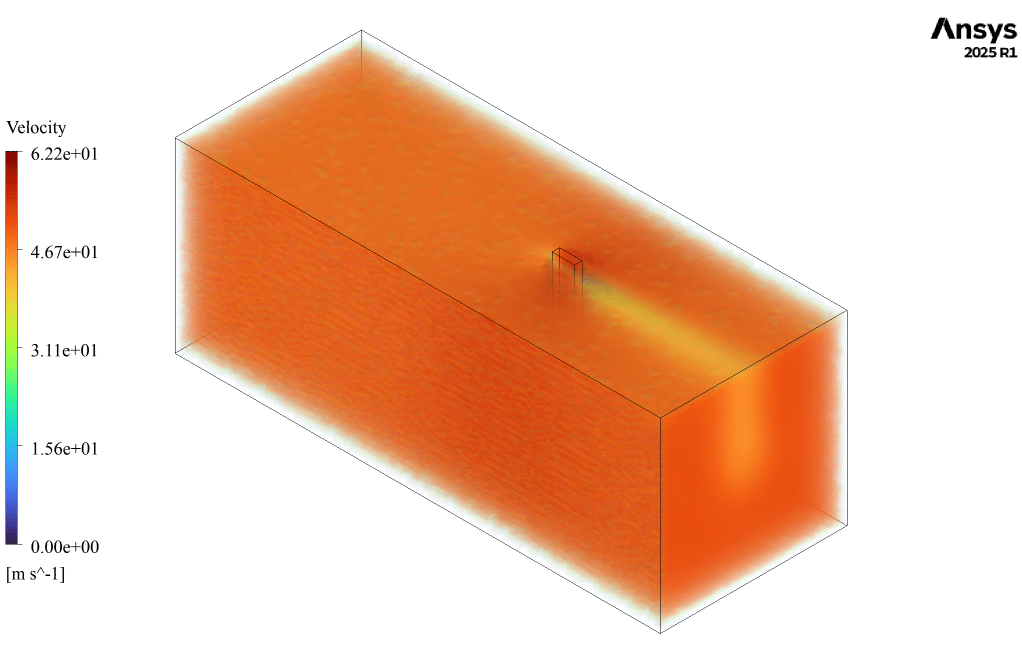
However, in Fluent, we obtain the Pressure and Velocity distribution of the water around the flow probe, as well as the surface pressure on the probe body.
You must be logged in to post a review.
Related products
-
Sale

Water Turbine (Tidal Turbine): ANSYS Fluent Training Package, 2 Expert CFD Simulations
Original price was: $800.00.$399.00Current price is: $399.00. Internship


 Talk On WhatsApp
Reviews
There are no reviews yet.