
Hydraulic Structure and Civil GOLDEN Training Course: +130 Simulations (All in One Course)
$1,299.00 Internship
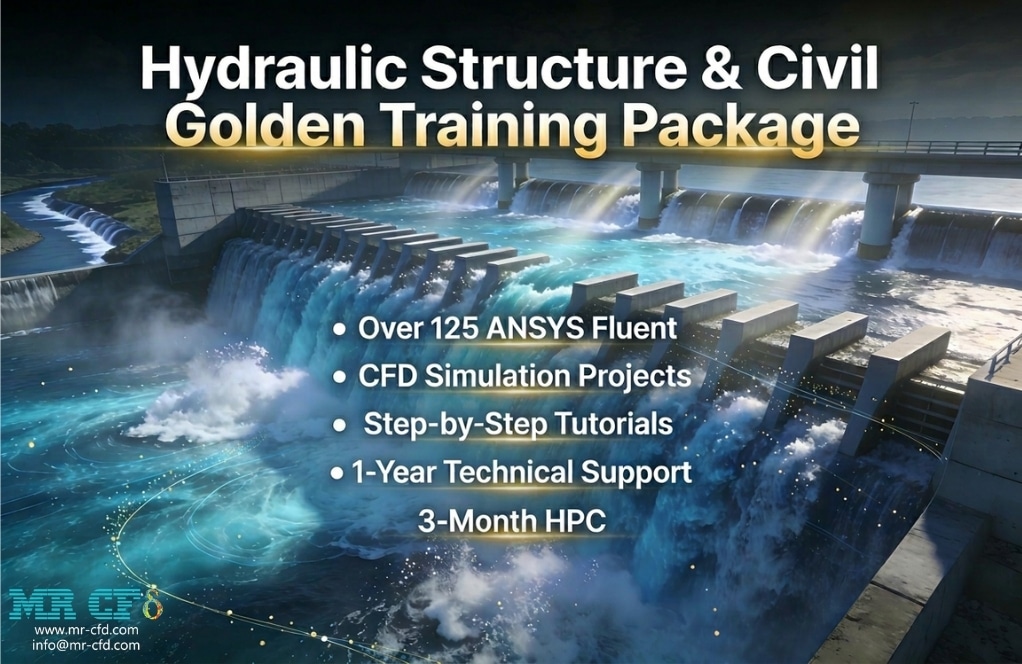
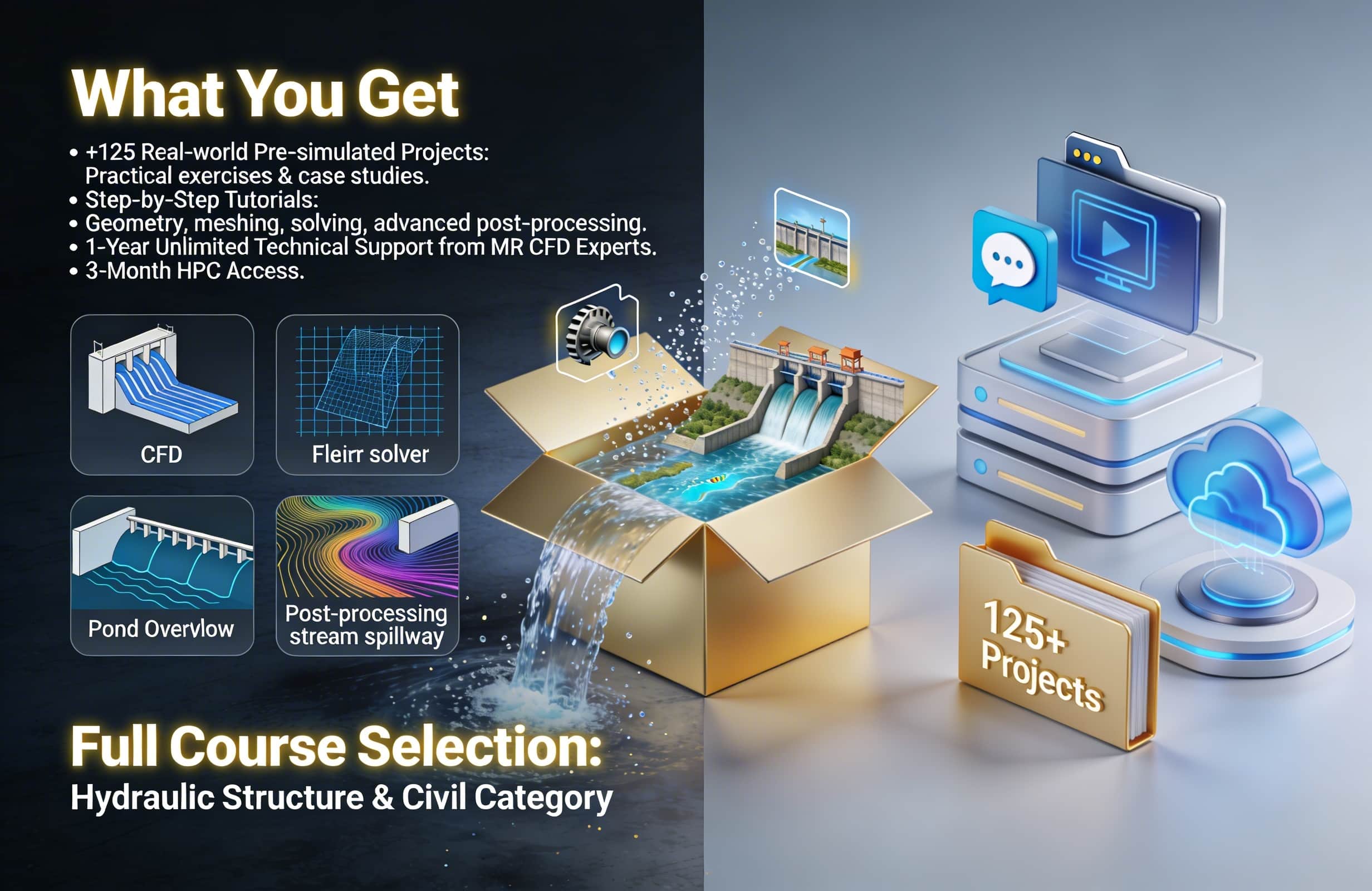
MR CFD’s Hydraulic Structure & Civil Engineering Golden Training Package offers over 125 pre-simulated ANSYS Fluent CFD tutorials for beginners to advanced users in hydraulic and civil engineering. It covers real-world projects like spillways, turbines, weirs, hydraulic jumps, cavitation, erosion, pumps, rivers, dams, and more, enabling quick team onboarding, academic teaching, and cost savings on training. Backed by 15 years of expertise, it includes step-by-step videos, geometry/mesh files, 1-year technical support, and 3-month HPC access.
To Order Your Project or benefit from a CFD consultation, contact our experts via email (info@mr-cfd.com), online support tab, or WhatsApp at +44 7443 197273.
There are some Free Products to check our service quality.
If you want the training video in another language instead of English, ask it via info@mr-cfd.com after you buy the product.
Description
Hydraulic Structure and Civil CFD Complete Course | 130+ ANSYS Fluent Simulations
Engineering water — in all its force, complexity, and industrial scale — demands more than theoretical knowledge. Hydraulic structure CFD simulation has become the definitive technical standard for designing, validating, and optimizing civil water infrastructure across the global engineering industry. Whether the challenge involves predicting energy dissipation across a stepped spillway, modeling cavitation inception in a hydrokinetic turbine, or simulating free surface dynamics in an open channel under flood conditions, computational fluid dynamics delivers the precision that physical testing alone cannot provide.
This is the Hydraulic Structure and Civil CFD Comprehensive Training Course by MR CFD — a production-grade, end-to-end simulation training program containing more than 130 fully pre-simulated ANSYS Fluent projects spanning every critical domain of hydraulic and civil engineering. Built for engineers, researchers, and educators who demand real technical depth, this course eliminates the gap between academic CFD theory and industrial simulation practice. Explore the full library of available CFD training courses to understand how this program fits within a structured engineering simulation curriculum.
Why Hydraulic Structure CFD Simulation Is a Non-Negotiable Engineering Competency
The global hydraulic infrastructure sector — encompassing hydropower, flood control, urban drainage, dam safety, and tidal energy — is undergoing a fundamental transformation driven by computational fluid dynamics. Traditional empirical design methods and scaled physical models are insufficient for the complexity of modern waterway infrastructure simulation, where multiphase flow modeling, sediment transport, and fluid-structure interaction must be evaluated simultaneously under dynamic loading conditions.
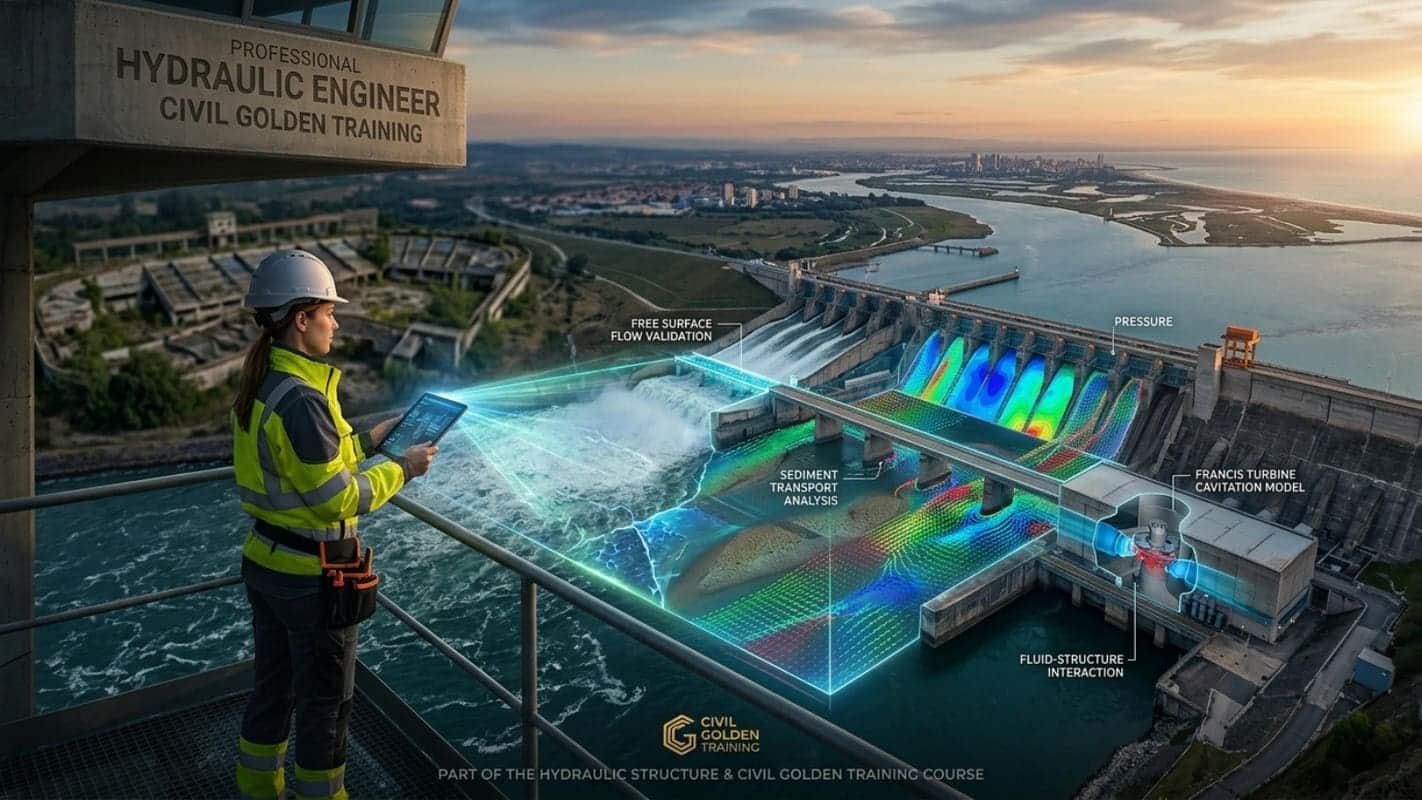
Open channel flow CFD simulation is now mandated in major infrastructure assessment frameworks. Dam safety regulators require validated free surface flow simulation for spillway capacity verification. Hydropower developers depend on Francis turbine and Kaplan turbine CFD for performance optimization and cavitation suppression. Environmental engineers use river pollution spread CFD to model contaminant dispersal under transient flow conditions.
The job market reflects this shift directly. Demand for engineers proficient in ANSYS Fluent hydraulic simulation has grown substantially across energy, civil, and environmental sectors. Professionals who can deliver validated hydraulic engineering simulation outputs — from weir discharge coefficient analysis to pump cavitation CFD — command measurably higher project value and career advancement. This course is the structured pathway to that proficiency.
Core Technical Competencies Delivered by This Hydraulic CFD Training Course
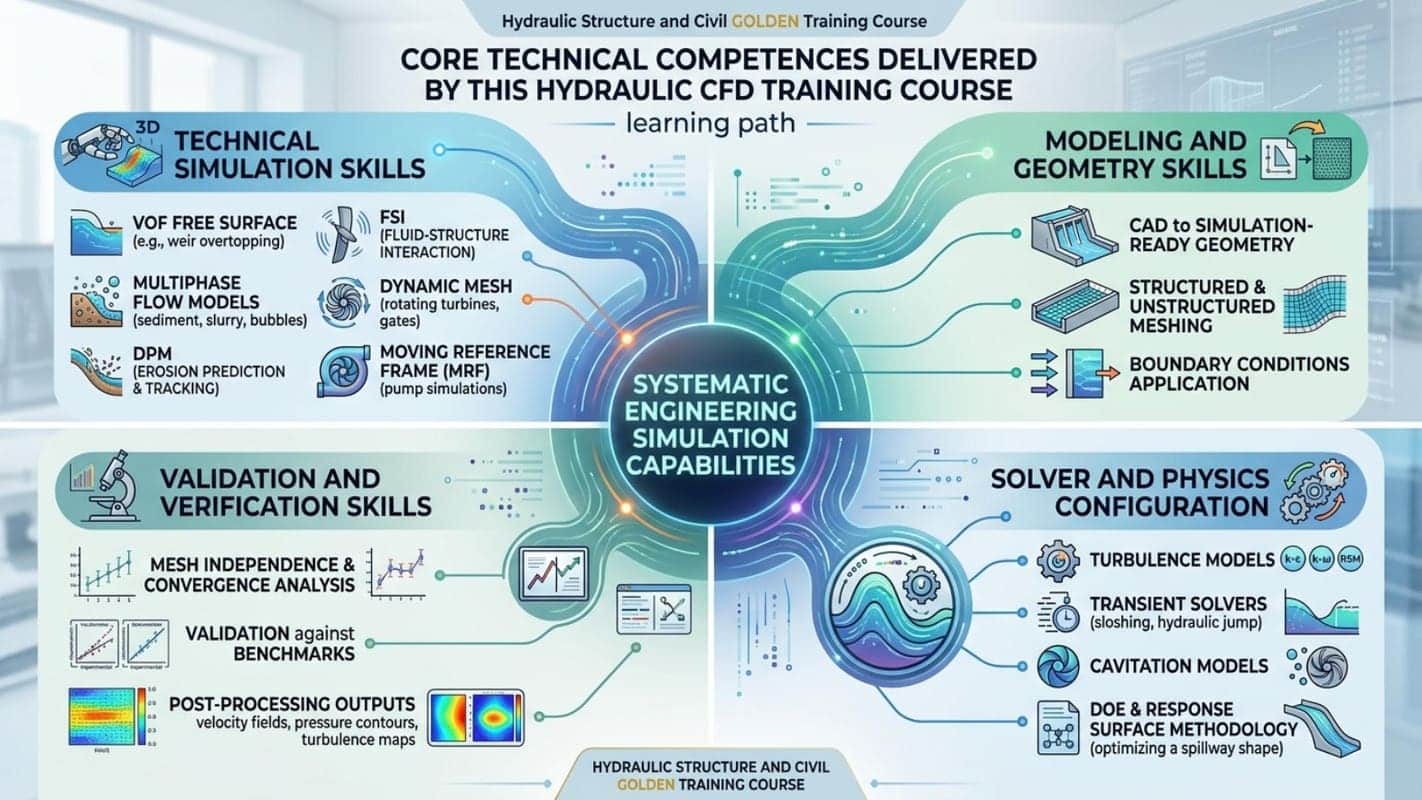
This program systematically builds the following engineering simulation capabilities:
Technical Simulation Skills:
- Setting up VOF (Volume of Fluid) free surface simulations for hydraulic structures
- Configuring Eulerian and Lagrangian multiphase models for sediment, slurry, and bubble flows
- Applying Discrete Phase Model (DPM) for erosion prediction and particle tracking
- Implementing Fluid-Structure Interaction (FSI) for turbine blade vibration and flexible hydraulic components
- Using Dynamic Mesh techniques for rotating turbines, oscillating gates, and check valves
- Configuring Moving Reference Frame (MRF) for pump and turbine rotational simulations
Modeling and Geometry Skills:
- Constructing hydraulic geometries from conceptual design to simulation-ready CAD
- Generating structured and unstructured meshes appropriate for open channel flow, pipe networks, and turbomachinery
- Applying boundary conditions for inflow, outflow, wall roughness, and free surface interfaces
Solver and Physics Configuration:
- Selecting and tuning turbulence models (k-ε Realizable, k-ω SST, RSM) for hydraulic flow regimes
- Configuring transient solvers for time-dependent phenomena including sloshing, slug flow, and hydraulic jump
- Implementing cavitation models (Schnerr-Sauer, Zwart-Gerber-Belamri) for turbomachinery applications
- Using Design of Experiments (DOE) and Response Surface Methodology (RSM) for hydraulic structure optimization
Validation and Verification Skills:
- Performing mesh independence studies and convergence analysis
- Validating simulation results against published experimental and numerical benchmarks
- Generating engineering-grade post-processing outputs including pressure contours, velocity fields, and turbulence intensity maps
Comprehensive Course Modules and Simulated Engineering Projects
Bridge Hydraulics: External Flow and Flood Interaction Simulation
This module addresses hydraulic CFD simulation around bridge infrastructure under extreme flow conditions. Projects include two-phase flow around bridge pillars and flood inundation over bridge decks, modeling the hydrodynamic drag forces, scour potential, and free surface behavior during high-discharge events. These simulations are directly applicable to bridge safety assessment, flood risk engineering, and infrastructure resilience planning — competencies demanded by civil and transportation engineering agencies worldwide.
Cavitation Phenomena in Hydraulic Machinery
Cavitation simulation is one of the most technically demanding areas of hydraulic CFD, and this module provides comprehensive coverage across multiple machine types. Projects include cavitation around triangular obstacles, radial flow pump cavitation, axial inducer cavitation flow, hydrokinetic turbine cavitation study, cross-flow turbine cavitation, and 2D Gerotor pump cavitation investigation. Engineers learn to identify low-pressure vapor formation zones, quantify cavitation erosion risk, and implement design modifications using ANSYS Fluent cavitation models — skills essential for hydropower plant maintenance and pump system reliability engineering.
Open Channel and Canal Flow Simulation
This module delivers in-depth training on open channel flow CFD simulation, covering counterflow within canals, three-phase flow in porous zigzag channels, side outlet open channels, two-phase open channel models, and flow through 180-degree bends. A particularly advanced project applies Coupled CFD-FEA (FSI) analysis to model the structural response of ropes and spheres under open channel water loading. These simulations are fundamental to irrigation system design, urban flood modeling, and waterway infrastructure assessment.
Dam Engineering and Seismic Response CFD
Dam safety is a critical civil engineering domain where CFD simulation provides irreplaceable analytical capability. This module covers lifting dam simulation and the earthquake effect on a dam — modeling the dynamic fluid response within the reservoir during seismic excitation. These projects develop skills in transient hydraulic simulation, dynamic loading analysis, and free surface behavior under structural motion, directly applicable to dam safety certification and seismic risk assessment for hydraulic infrastructure.
Erosion and Sediment Transport Modeling
Sediment transport modeling and hydro-abrasive erosion simulation are modeled across four distinct industrial scenarios: erosion in obstruction channels using DPM, slurry flow erosion in centrifugal pumps, sand erosion in bulb turbines, and hydro-abrasive erosion in Pelton turbines. Using the Discrete Phase Model (DPM) and Eulerian slurry approaches, engineers learn to predict material wear rates, identify erosion hotspots, and evaluate protective geometry modifications — capabilities with direct application in hydropower operations and dredging engineering.
Geothermal Reservoir and Subsurface Flow Simulation
This module introduces porous media flow simulation in geothermal contexts, covering both geothermal reservoir modeling and geothermal system simulation. Engineers learn to apply Darcy’s law and non-Darcy porous media models within ANSYS Fluent to simulate subsurface fluid migration, thermal stratification, and pressure drawdown in geothermal fields. These skills are increasingly valued in the clean energy sector for geothermal power plant development and reservoir management.
Hydraulic Jump and Energy Dissipation Structures
Hydraulic jump simulation is a cornerstone of hydraulic engineering, representing the transition from supercritical to subcritical flow with significant energy dissipation. This module covers hydraulic jump in stepped structures and hydraulic jump in rectangular channels, using VOF transient simulations to capture the turbulent roller zone, air entrainment, and pressure fluctuations. Results directly inform the design of stilling basins and energy dissipation blocks in dam spillway systems.
Wave Oscillation and Dynamic Multiphase Flow
This module addresses oscillatory wave simulation and its structural effects, including oscillatory wave impact on fin motion and oscillating multiphase flow with Dynamic Mesh. These projects develop expertise in transient free surface dynamics, wave-structure interaction, and dynamic boundary motion — skills applicable to coastal engineering, offshore structure design, and marine hydraulic systems.
Numerical Validation and Benchmark Studies
A dedicated validation module ensures engineers develop rigorous verification and validation (V&V) competencies. Projects include dimpled cylinder flow control, zigzag channel with flow pulsation, turbulent flow separation over a step, flow conditioner by perforated plate, turbine hydropower waterline optimization, horizontal axis tidal turbine simulation, compound channel with non-prismatic floodplain, and DDPM proppant transport in hydraulic fracturing. Each project is benchmarked against published experimental or numerical data, building the validation discipline required for engineering-grade simulation deliverables.
Pipeline and Offshore Hydraulic Systems
Pipeline hydraulics is covered through sludge flow settling simulation, offshore pipeline hydrodynamic force analysis, and slug flow simulation including a coupled FSI analysis of slug flow in a bent pipe. Engineers learn to model two-phase stratified and slug flow regimes, evaluate structural loading from fluid-induced vibration, and assess pipeline integrity — competencies critical for oil and gas infrastructure, offshore engineering, and water distribution networks.
Pond and Water Storage Simulation
This module covers pond overflow simulation in both ANSYS Fluent and ANSYS CFX environments, providing direct comparative experience with two industry-standard solvers. Engineers learn to model overflow dynamics, free surface behavior, and discharge characteristics for retention pond design — a practical competency for stormwater management and civil drainage engineering.
Pump CFD Simulation: Rotodynamic and Positive Displacement Types
The pump simulation module is one of the most comprehensive in the course, covering Single Reference Frame (SRF) axial pumps, twin screw pumps, ram pumps, screw pumps, sludge flow in centrifugal pumps, centrifugal pump FSI using mesh motion, diaphragm pumps, external gear pumps, internal gear pumps, Gerotor pumps, and lobe pumps. This breadth of coverage equips engineers with transferable turbomachinery CFD simulation skills applicable across industrial fluid systems, chemical processing, and hydraulic power transmission.
River Flow, Pollution Dispersion, and Environmental Hydraulics
Environmental hydraulics CFD is addressed through three river simulation projects: two-phase flow in rough rivers, pollution spread in stagnant rivers, and water pollution in meandering rivers. These simulations apply scalar transport, VOF free surface modeling, and turbulence-driven dispersion to model contaminant fate and transport — skills essential for environmental impact assessment, water quality engineering, and regulatory compliance modeling.
Sedimentation in Urban and Industrial Systems
Sedimentation simulation is covered at both particle and bulk scales: sand particle sedimentation using DPM tracking, and sedimentation in urban sewer conduits using Eulerian mixture models. Engineers learn to predict settling rates, identify accumulation zones, and evaluate flushing strategies — directly applicable to urban drainage design, wastewater treatment, and reservoir sedimentation management.
Sloshing Dynamics in Tanks and Transport Vehicles
Sloshing simulation addresses the dynamic behavior of liquid cargo in partially filled containers under motion. Projects include sloshing water in a cube with translational motion, sloshing in a tanker truck, and cube rotation with sloshing effects. Using VOF transient simulation with dynamic mesh motion, engineers learn to quantify impact pressures, resonance conditions, and stability risks — competencies applied in liquid cargo transport safety, LNG tank design, and spacecraft propellant management.
Spillway Design and Hydraulic Performance Optimization
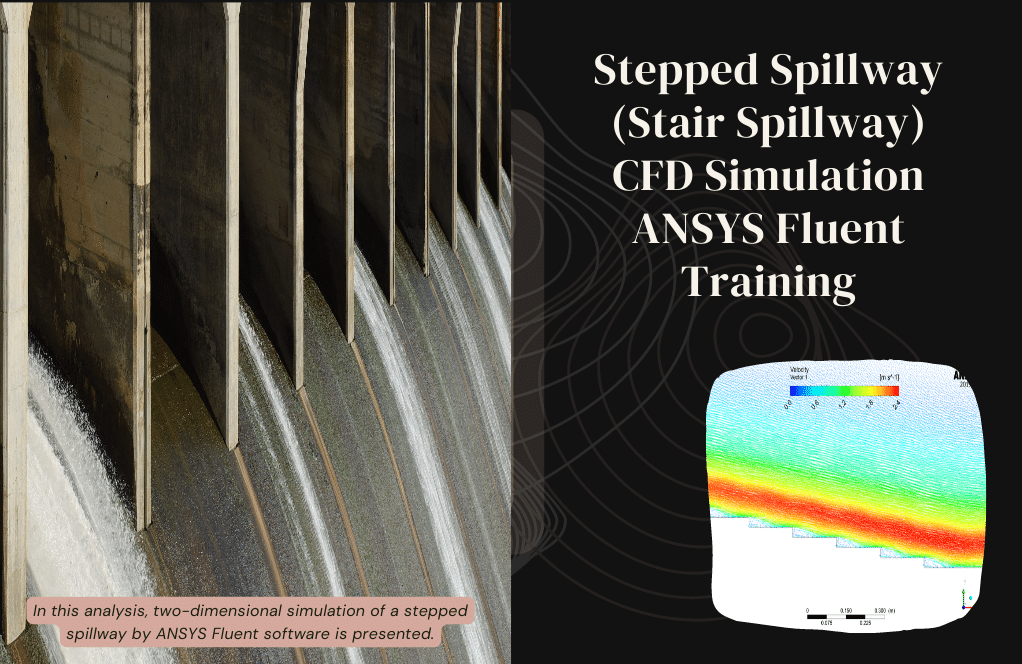
The spillway module is among the most industrially significant in the course, covering Ogee spillways, stepped stair spillways, 2D and 3D transient two-phase spillway flows, labyrinth spillways, energy dissipation on stepped spillways with blocks, and wide-edge spillways with lateral slope. These projects develop complete spillway CFD simulation competency — from geometry parameterization to discharge coefficient validation — directly applicable to dam design, flood routing, and hydraulic structure safety assessment.
Tank Thermal and Hydraulic Analysis
Tank simulation covers thermal analysis in storage tanks using ANSYS Fluent, storage tank CFD simulation in ANSYS CFX, water tank filling process with UDF time step control, and sloshing tanks. Engineers develop skills in conjugate heat transfer, transient filling dynamics, and free surface behavior in industrial storage systems — applicable to water treatment infrastructure, industrial process engineering, and thermal energy storage.
Hydraulic Turbine CFD: Complete Turbomachinery Training
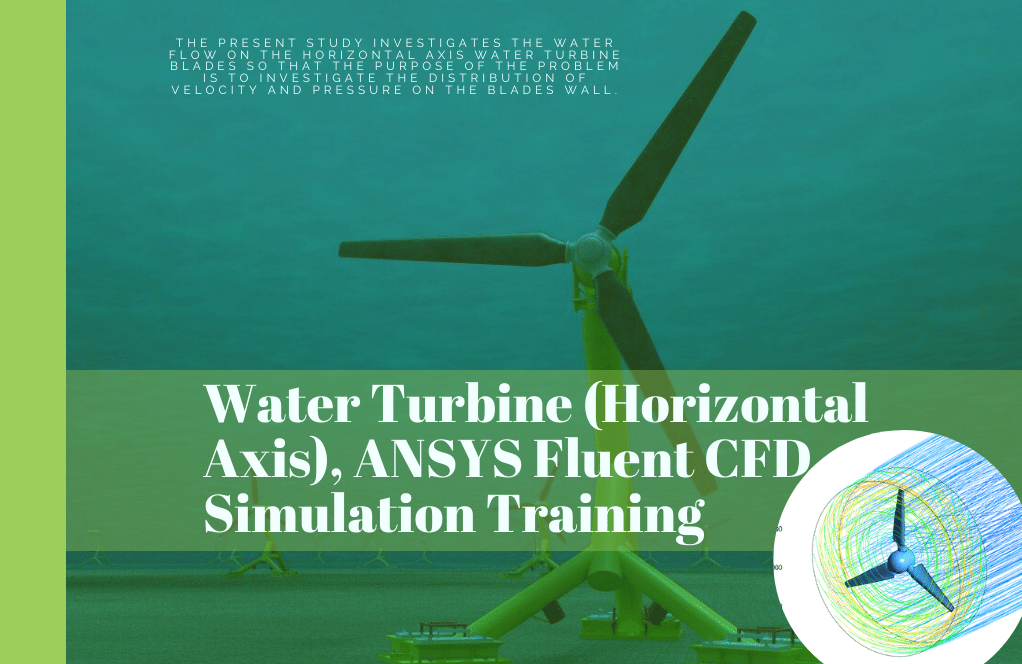
The turbine simulation module provides the most comprehensive hydraulic turbomachinery CFD training available in a single course. Projects cover Francis turbines, Kaplan turbines, Kaplan hydro turbine evaluation, Turgo turbines, horizontal axis water turbines, water wheels, Darrieus vertical axis water turbines with Dynamic Mesh, Archimedes Screw Turbines (AST), Francis turbine acoustics analysis, FSI method for water turbine vibration, Pelton Wheel turbine numerical study, and FSI in vertical axis water turbines using MRF. This module alone represents a complete hydropower CFD training program, covering every major turbine technology in operational use today.
Valve Hydraulics and Dynamic Flow Control
Valve simulation covers both thermal and hydraulic performance analysis and check valve dynamic mesh simulation, modeling the transient flow behavior, pressure drop characteristics, and thermal gradients across valve bodies. These skills are directly applicable to hydraulic system design, process plant engineering, and water distribution network optimization.
Weir and Waterfall Hydraulics
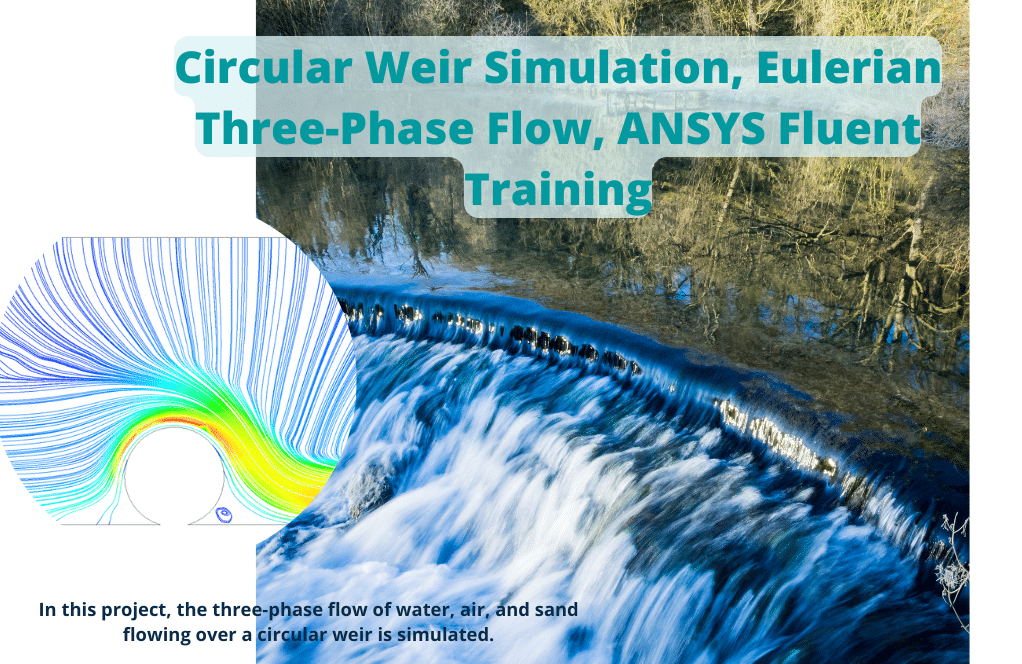
This module covers circular weir simulation using the Eulerian three-phase model (air, water, and sand), broad-crested weir simulation, and waterfall two-phase flow simulation. Engineers learn to model complex free surface geometries, air entrainment, and sediment interaction at hydraulic control structures — competencies applied in irrigation control, river management, and environmental flow assessment.
Wicking, Capillary Action, and Porous Media Flow
An advanced module addresses water infiltration into porous concrete blocks and wicking (capillary action) in porous media, applying porous media flow models within ANSYS Fluent. These simulations are applicable to civil materials engineering, groundwater infiltration modeling, and sustainable urban drainage system (SUDS) design.
Professional Engineering Skills Developed Through This Comprehensive CFD Program
| Skill Category | Competencies Developed |
|---|---|
| CFD Simulation Skills | VOF free surface modeling, multiphase Eulerian-Lagrangian simulation, DPM erosion and particle tracking, FSI coupling, Dynamic Mesh, MRF rotation |
| Core Engineering Competencies | Hydraulic structure design analysis, turbomachinery performance evaluation, sediment and erosion assessment, environmental hydraulics, pipeline integrity |
| Industry-Standard Workflows | ANSYS Fluent and ANSYS CFX solver configuration, mesh independence verification, results validation against benchmarks, DOE/RSM optimization |
| Post-Processing and Reporting | Pressure and velocity field visualization, turbulence intensity analysis, force and moment extraction, engineering report generation |
| Advanced Techniques | Cavitation modeling, acoustics analysis, UDF programming for custom boundary conditions, coupled CFD-FEA structural analysis |
Who Should Enroll in This Hydraulic Structure and Civil CFD Comprehensive Course
Engineering Students and Graduates: Undergraduate and postgraduate students in civil, hydraulic, environmental, and mechanical engineering who need to build validated ANSYS Fluent simulation competency for academic projects, thesis work, and job market readiness.
Researchers and PhD Candidates: Academic researchers requiring production-grade hydraulic CFD simulation benchmarks, validated numerical methodologies, and advanced modeling techniques for publication-quality research in hydraulic engineering, turbomachinery, and environmental fluid mechanics.
Industry Engineers and Project Teams: Practicing civil, hydraulic, and mechanical engineers in hydropower, infrastructure, oil and gas, and environmental sectors who need to accelerate CFD simulation capability without extended onboarding cycles.
Technical Educators and University Professors: Faculty members requiring ready-to-deploy simulation case libraries for undergraduate and postgraduate hydraulic engineering curricula, complete with pre-solved benchmarks and step-by-step instructional frameworks.
Engineering Managers and Technical Directors: Decision-makers seeking to evaluate and deploy hydraulic structure CFD simulation capability within their organizations, requiring a comprehensive understanding of what ANSYS Fluent can deliver for infrastructure and energy projects.
Why MR CFD Delivers Unmatched Hydraulic Simulation Training
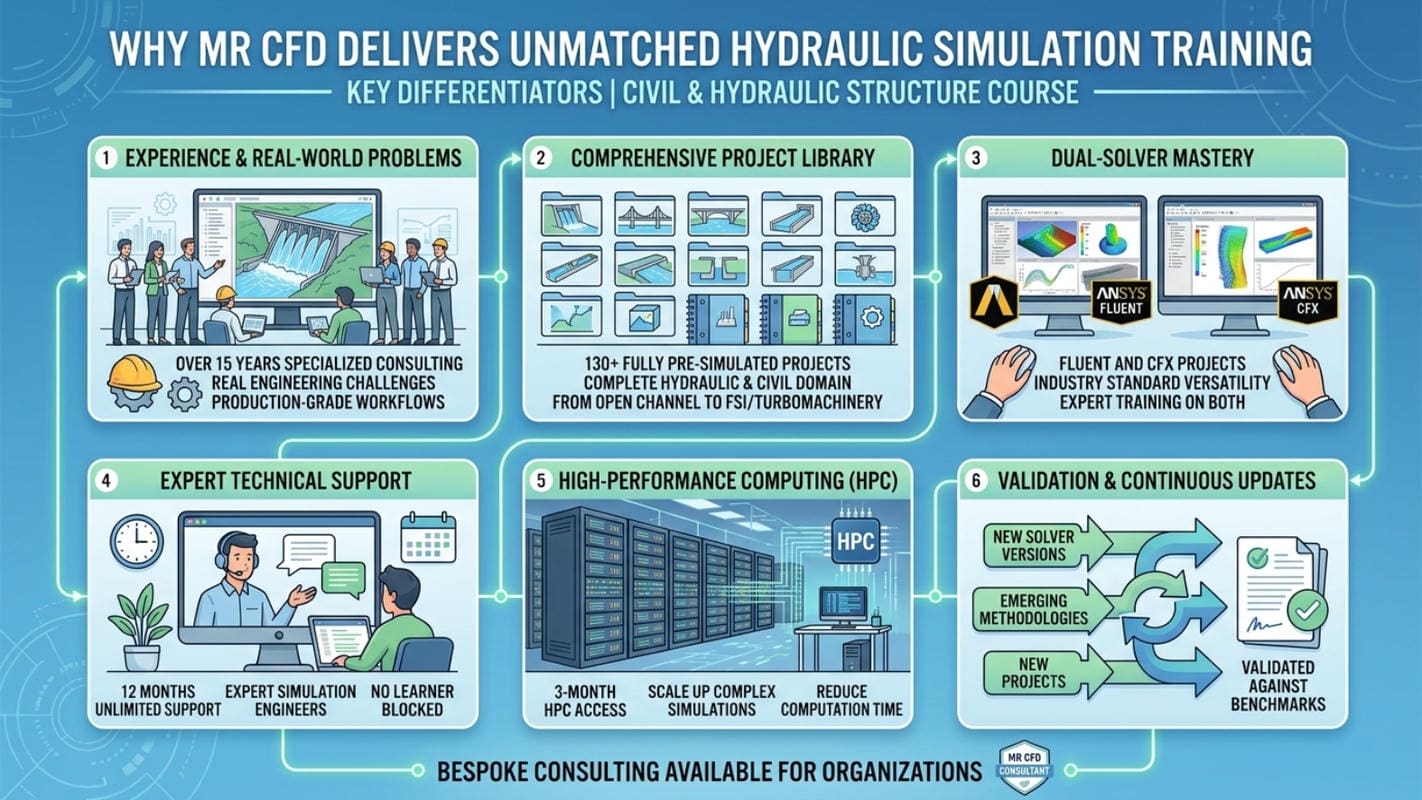
MR CFD brings over 15 years of specialized CFD simulation consulting and training experience to every course in its portfolio. The Hydraulic Structure and Civil CFD Comprehensive Training Course is not an academic exercise — every one of the 130+ projects reflects real engineering problems solved using production-grade ANSYS Fluent workflows applied in actual consulting engagements.
Key differentiators that set this program apart:
- 130+ fully pre-simulated projects covering the complete hydraulic and civil engineering simulation domain, from introductory open channel problems to advanced FSI turbomachinery analysis
- Dual-solver exposure with both ANSYS Fluent and ANSYS CFX projects, providing industry-standard versatility
- 12 months of unlimited technical support from MR CFD’s expert simulation engineers, ensuring no learner is blocked by technical challenges
- 3-month HPC (High-Performance Computing) access through HPC for ANSYS, enabling engineers to run computationally intensive simulations at scale
- Continuous course updates incorporating new project types, solver versions, and emerging simulation methodologies
- Validated against published benchmarks ensuring every simulation methodology meets engineering-grade accuracy standards
For organizations requiring bespoke simulation support beyond the course, CFD consultant provide project-specific expert engagement across all hydraulic and civil engineering domains.
Engineering Progression Path and Advanced Training Roadmap
This course is structured to support a clear beginner-to-expert progression in hydraulic structure CFD simulation:
| Level | Focus Area | Representative Projects |
|---|---|---|
| Beginner | Fundamental hydraulics, basic VOF setup, single-phase channel flow | Open channel flow, pond overflow, basic weir simulation |
| Intermediate | Multiphase flow, rotating machinery, erosion and sedimentation | Centrifugal pump CFD, spillway two-phase flow, sediment transport |
| Advanced | FSI coupling, cavitation, DOE optimization, acoustic analysis | Francis turbine FSI, Pelton turbine cavitation, labyrinth spillway optimization |
| Expert | Multi-physics coupling, UDF programming, benchmark validation | Coupled CFD-FEA dam analysis, hydraulic fracturing DPM, turbine acoustics |
Upon completing this course, engineers are positioned to advance into specialized training tracks including turbomachinery CFD optimization, environmental fluid mechanics simulation, and offshore pipeline multiphase flow analysis. The CFD internship program at MR CFD provides a structured career acceleration pathway for engineers ready to apply these skills in real consulting project environments.
Enroll in the Hydraulic Structure and Civil CFD Comprehensive Training Course
The infrastructure challenges of the next decade — from climate-resilient dam design to tidal energy harvesting and urban flood management — will be solved by engineers who command hydraulic structure CFD simulation at a professional level. This course provides the complete technical foundation: 130+ validated ANSYS Fluent projects, expert support, HPC access, and a structured progression from fundamental hydraulics to advanced multi-physics simulation.
Access the complete course catalog and begin your enrollment through the MR CFD learning hub. Build the CFD simulation competency that hydraulic and civil engineering demands — with the technical depth, industrial validation, and expert guidance that only MR CFD delivers.
You must be logged in to post a review.
 Talk On WhatsApp
Reviews
There are no reviews yet.