
Marine GOLDEN Training Package: +50 Simulations (All in One Course)
$999.00 Internship
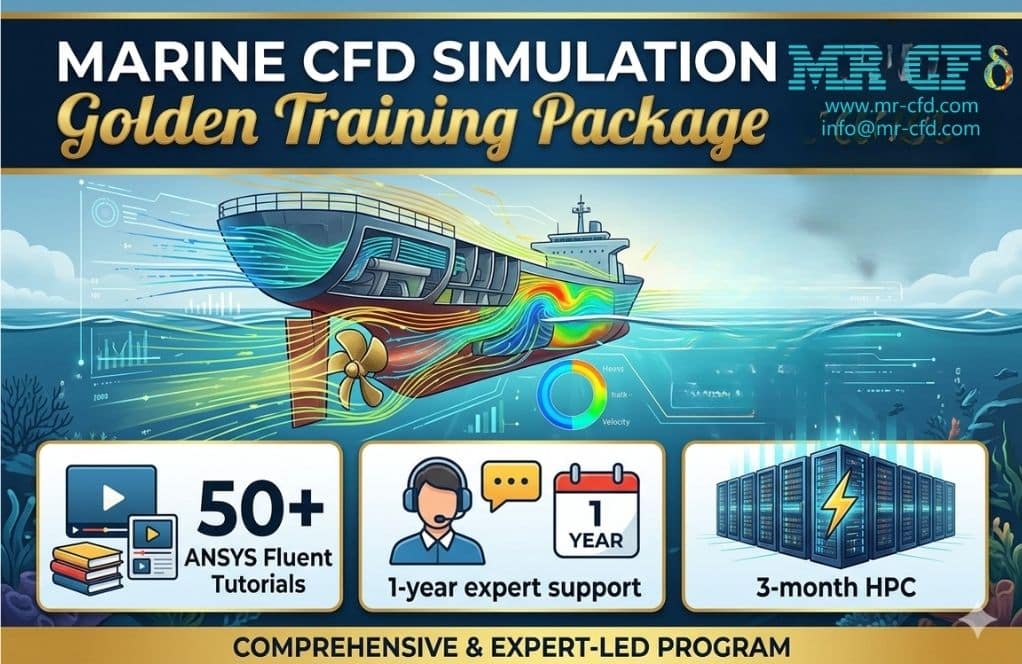
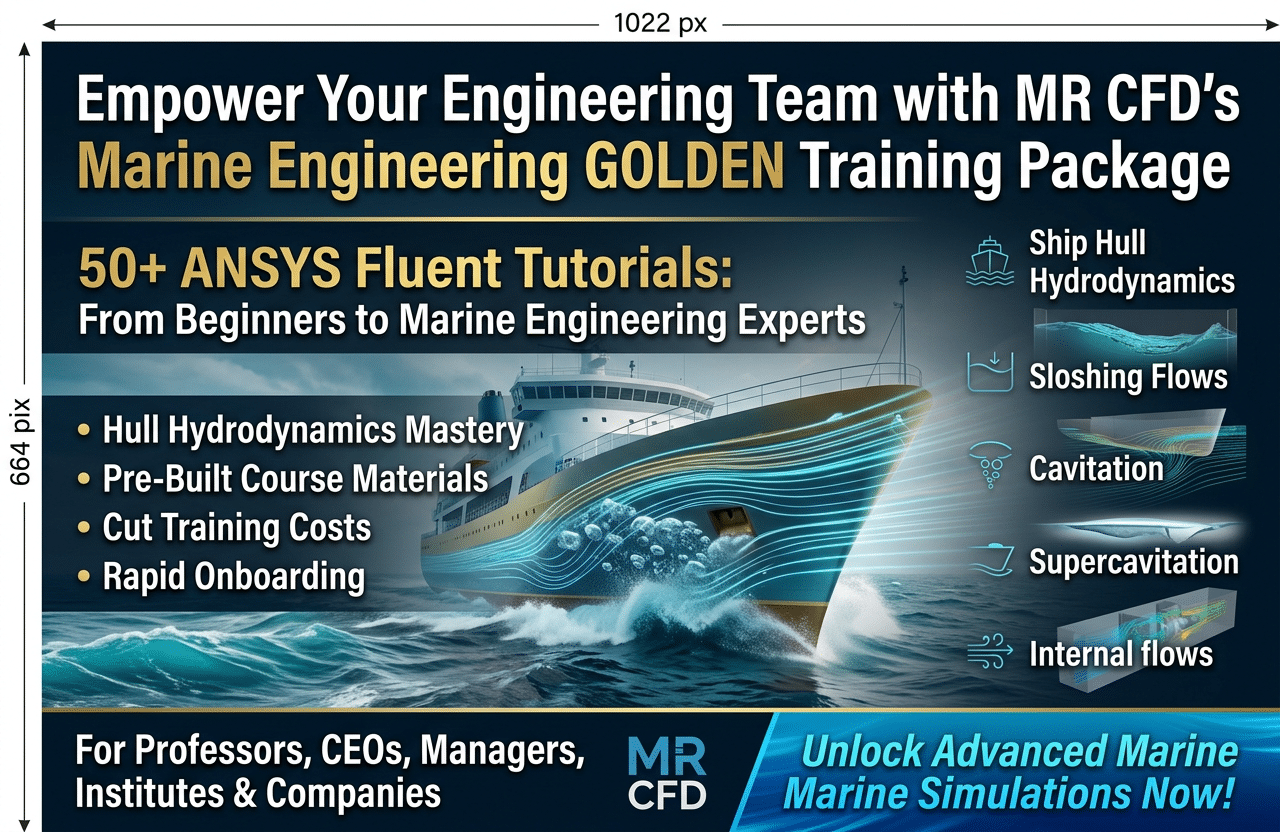
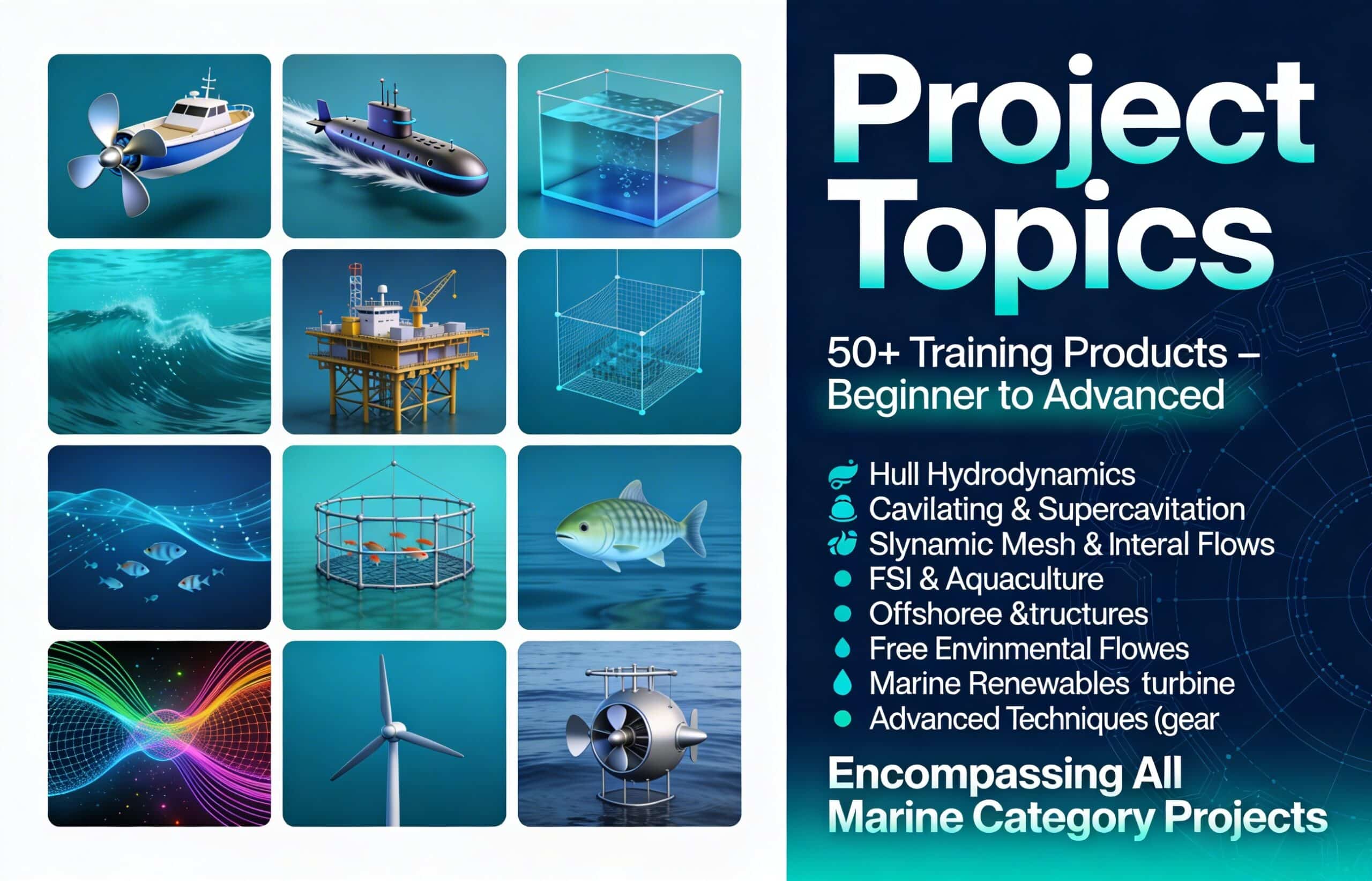
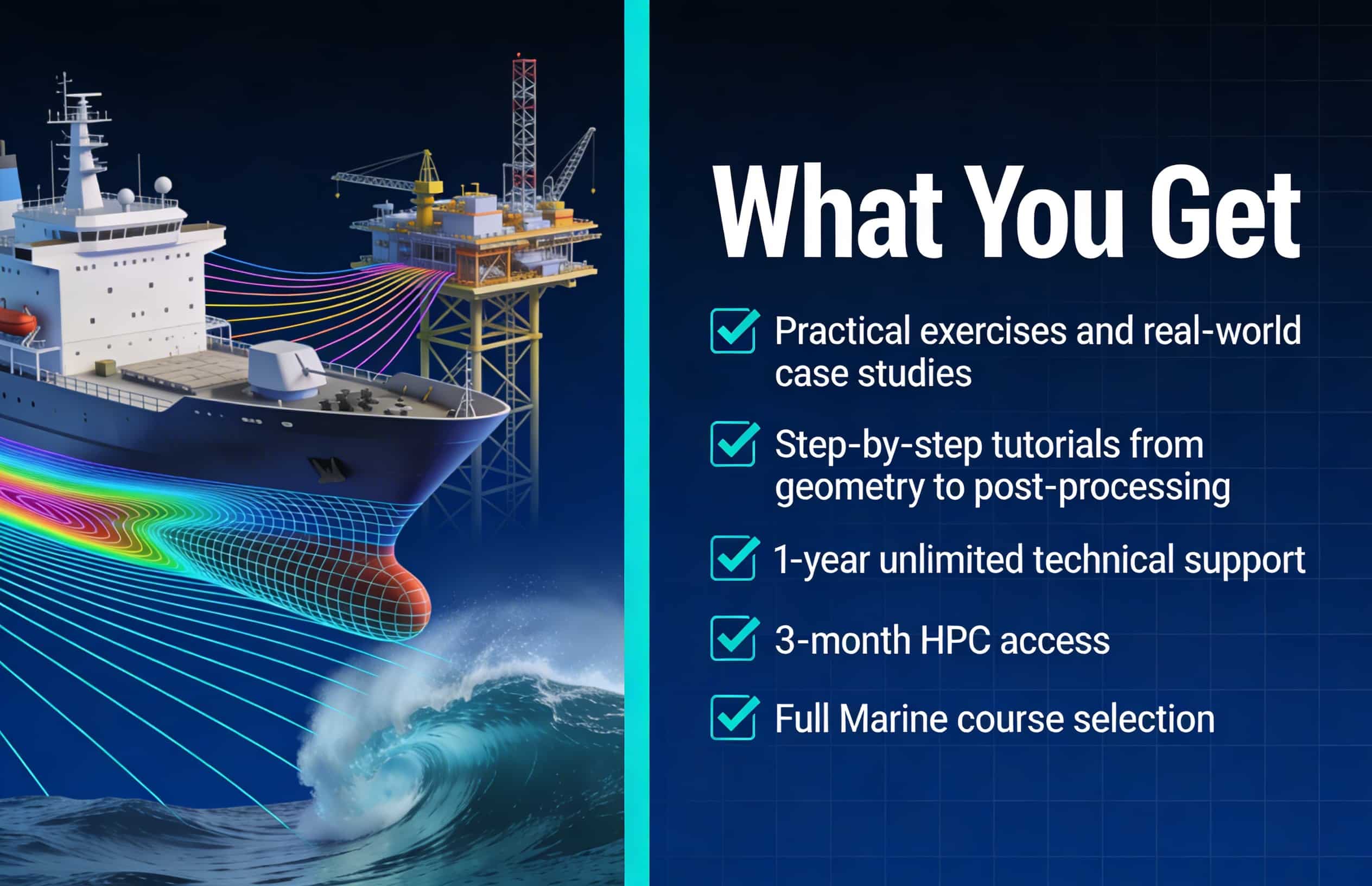
Master Marine CFD simulation with MR-CFD’s Golden Training Package—50+ ANSYS Fluent Tutorials! Empower teams, professors, and institutes with pre-simulated projects on hull hydrodynamics, cavitation, sloshing, 6DOF motion, FSI, offshore structures, waves, and renewables. From boat propellers to tidal turbines, get step-by-step geometry-to-post-processing, 1-year expert support, 3-month HPC, and 15+ years of proven expertise—rapid onboarding, cost savings, and industry-ready skills.
Click on Add To Cart and obtain the Geometry file, Mesh file, and a Comprehensive ANSYS Fluent Training Video.To Order Your Project or benefit from a CFD consultation, contact our experts via email (info@mr-cfd.com), online support tab, or WhatsApp at +44 7443 197273.
There are some Free Products to check our service quality.
If you want the training video in another language instead of English, ask it via info@mr-cfd.com after you buy the product.
Description
Marine Engineering CFD Complete Course | 50+ ANSYS Fluent Simulation Projects
The marine and naval engineering sector is undergoing a profound computational transformation. From the hydrodynamic optimization of deep-sea submarines to the structural integrity of offshore renewable energy platforms, marine CFD simulation has become the indispensable engineering tool separating competitive organizations from those falling behind. The Marine Engineering CFD Comprehensive Training Course by MR CFD delivers an unmatched portfolio of 50+ fully pre-simulated ANSYS Fluent projects, spanning every critical subdiscipline of modern marine engineering — from hull hydrodynamics and cavitation modeling to 6DOF dynamic mesh submarine motion and tidal energy CFD optimization.
This is not a collection of disconnected tutorials. It is a structured, industrially validated learning system engineered to transform engineering students, researchers, and simulation professionals into production-ready marine CFD specialists. Explore the full library of available CFD Online courses to understand how this marine program integrates within MR CFD’s broader simulation education ecosystem. Whether your goal is to accelerate academic research, onboard engineering teams faster, or deliver client-grade simulation results, this course provides the technical depth, verified workflows, and real-world project exposure to make it happen.
Why Marine Hydrodynamics and Offshore CFD Simulation Are Critical Engineering Disciplines
The global marine industry — encompassing naval architecture, offshore oil and gas infrastructure, tidal and wave energy conversion, aquaculture systems, and submarine defense technology — is increasingly dependent on high-fidelity computational fluid dynamics to reduce physical prototyping costs, accelerate design iteration cycles, and meet stringent environmental and safety standards.
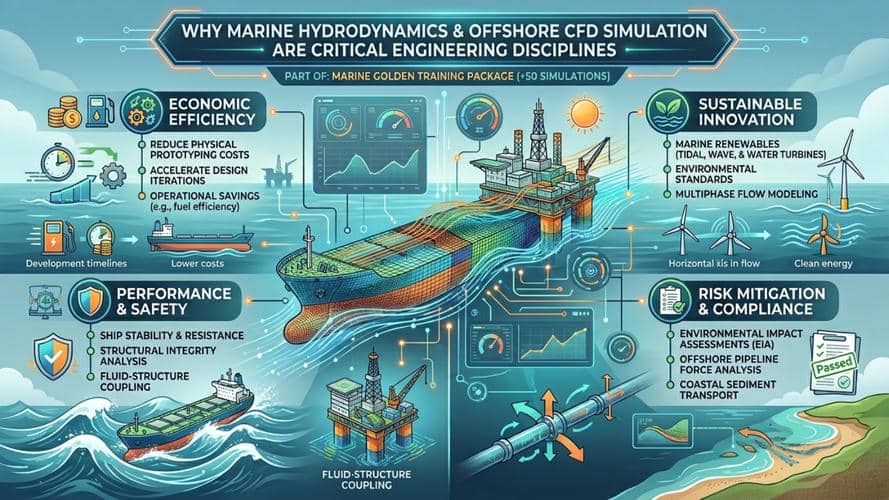
Hull hydrodynamics CFD simulation directly informs vessel resistance, stability, and fuel efficiency — factors that translate to millions of dollars in operational savings at scale. The rise of marine renewable energy, including horizontal axis tidal turbines and vertical axis water turbines, has created urgent demand for engineers who can model complex multiphase flow environments, free surface wave interactions, and fluid-structure coupling with precision. Meanwhile, offshore pipeline hydrodynamic force analysis and coastal sediment transport modeling are now regulatory requirements for environmental impact assessments in many jurisdictions.
The job market reflects this demand directly. Simulation engineers with validated ANSYS Fluent marine engineering skills command premium salaries in sectors ranging from offshore energy to naval defense. Academic institutions are integrating CFD-based marine curricula at both undergraduate and postgraduate levels, and research funding in ocean engineering consistently prioritizes computational modeling as a primary methodology. This course positions you precisely at the intersection of these converging trends.
Core Technical Competencies Developed in This Marine CFD Training Course
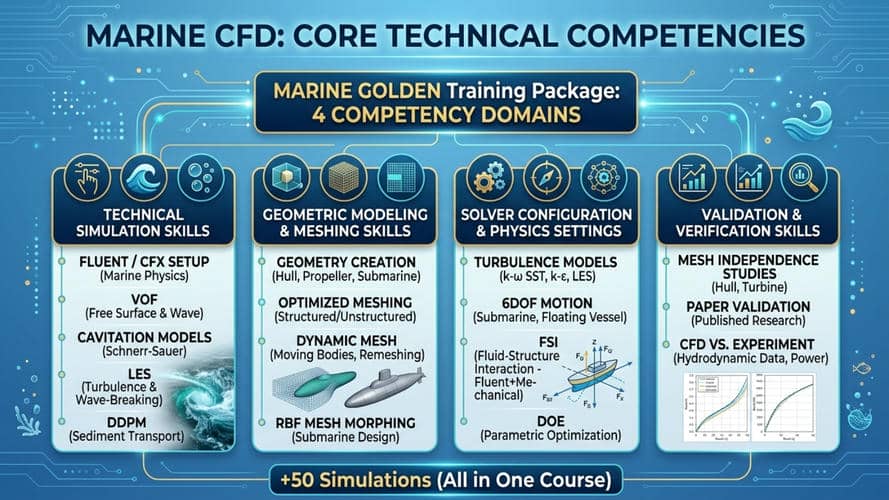
This marine engineering CFD comprehensive training course delivers a rigorously structured technical skillset across four distinct competency domains:
Technical Simulation Skills:
- Configuring ANSYS Fluent and ANSYS CFX solvers for marine-specific physics environments
- Setting up VOF (Volume of Fluid) models for free surface flow and wave propagation
- Implementing cavitation mass transfer models including Schnerr-Sauer and Zwart-Gerber-Belamri
- Running Large Eddy Simulation (LES) for turbulent open-channel flow and wave-breaking scenarios
- Applying Discrete Dense Phase Model (DDPM) for sediment transport and water-sand multiphase flows
Geometric Modeling & Meshing Skills:
- Creating and importing marine geometries including hull forms, propeller blades, submarine hulls, and turbine rotors
- Generating structured and unstructured meshes optimized for boundary layer resolution in hydrodynamic flows
- Implementing dynamic mesh zones with smoothing, layering, and remeshing strategies for moving body simulations
- Applying RBF (Radial Basis Function) mesh morphing for submarine design optimization
Solver Configuration & Physics Settings:
- Selecting appropriate turbulence models (k-ω SST, k-ε Realizable, LES) for marine flow regimes
- Configuring 6DOF motion equations for self-propelled submarine simulation and floating vessel dynamics
- Setting up FSI (Fluid-Structure Interaction) coupling between ANSYS Fluent and ANSYS Mechanical
- Implementing Design of Experiment (DOE) and Response Surface Methodology (RSM) for parametric optimization
Validation & Verification Skills:
- Performing mesh independence studies for tidal turbine and hull resistance simulations
- Replicating published research results through paper validation workflows (e.g., horizontal axis tidal turbine, turbine hydropower optimization)
- Comparing CFD predictions against experimental hydrodynamic force coefficients and power output data
Comprehensive Course Modules and Simulated Marine Engineering Projects
Hull Hydrodynamics and Naval Propulsion Simulation
This module addresses the foundational discipline of naval hydrodynamics — the quantitative analysis of forces, moments, and flow structures acting on marine vessels moving through water. Learners simulate boat propeller performance under both steady-state and transient conditions using ANSYS CFX, gaining direct exposure to propeller efficiency curves, thrust coefficients, and wake field distributions. A dedicated jet ski two-phase flow study introduces the complexity of air-water interface dynamics at high-speed planing hull conditions. The boat propeller cavitation project provides a critical bridge between propulsion efficiency and structural integrity, demonstrating how vapor bubble formation and collapse generate erosive pressure pulses on blade surfaces — a phenomenon with direct implications for naval vessel maintenance and underwater acoustic signature management.
Cavitation Modeling and Supercavitation Physics
Among the most technically demanding subjects in marine CFD simulation, cavitation and supercavitation modeling requires precise configuration of mass transfer source terms, multiphase solver settings, and near-wall mesh resolution. This module includes a rigorous comparative study of the VA-111 Shkval underwater rocket — one of the fastest underwater projectiles ever developed — analyzing its hydrodynamic performance both with and without supercavitation injection. Learners configure Schnerr-Sauer cavitation models within ANSYS Fluent’s mixture multiphase framework, study the formation of vapor cavity envelopes, and quantify drag reduction coefficients. A projectile cavitation case further extends these skills to ballistic underwater applications, providing rare, defense-relevant simulation experience directly applicable to submarine weapons systems research.
Sloshing Dynamics and Marine Internal Flow Systems
Sloshing flow simulation is critical for the safe design of LNG tanker cargo tanks, ballast water management systems, and fuel tanks aboard naval vessels. This module teaches learners to model free surface sloshing within enclosed tanks under excitation loading using VOF multiphase methods and dynamic mesh boundary motion. The engine room ventilation system of a ship project extends these skills into HVAC and thermal management for marine vessels, covering turbulent internal flow, pressure drop analysis, and thermal comfort indices — skills directly transferable to offshore platform habitability and naval vessel air quality engineering.
Dynamic Mesh Methodology and 6DOF Marine Motion Simulation
This is one of the most technically sophisticated modules in the course, directly addressing the simulation of freely moving marine bodies in realistic fluid environments. Learners progress systematically from 1-DOF submarine motion in a water channel through to fully self-propelled 6DOF submarine dynamics — a simulation configuration that demands advanced understanding of rigid body motion equations, overset mesh or dynamic mesh remeshing, and hydrodynamic force-moment coupling. Additional projects include floating vessel motion under wave loading, sea robot navigation in submerged environments, falling objects entering water (critical for offshore equipment deployment analysis), and the Darrieus vertical axis water turbine under dynamic mesh rotation. The submarine design optimization using RBF mesh morphing project introduces gradient-free shape optimization — a methodology increasingly adopted in naval design bureaus and defense research institutions worldwide.
FSI Analysis and Aquaculture Engineering Simulation
Fluid-Structure Interaction (FSI) simulation bridges the disciplines of computational fluid dynamics and structural finite element analysis, enabling engineers to model systems where fluid forces cause significant structural deformation — and where that deformation, in turn, alters the fluid flow field. This module covers FSI analysis for a ball in water flow, FSI for water turbine blade vibration, and a dedicated vertical axis water turbine FSI using the MRF method — providing learners with both one-way and two-way coupling strategies. The aquaculture engineering projects — including fish cage floating on seawater and net panel displacement under current loading — represent a growing niche within marine environmental engineering, directly relevant to sustainable offshore fish farming operations expanding globally in response to food security demands.
Offshore and Coastal Structure Hydrodynamic Analysis
This module addresses the structural and hydrodynamic challenges facing fixed and floating offshore infrastructure. The offshore pipeline hydrodynamic force project simulates vortex-induced vibration (VIV) precursors and drag force quantification on subsea pipeline sections — a critical input for pipeline fatigue life assessment and seabed stability analysis. The floating solar panel simulation extends the course into the emerging field of floating photovoltaic (FPV) systems, analyzing wave-induced motion, mooring load distribution, and aerodynamic wind loading — a topic of increasing relevance as offshore solar energy projects proliferate across coastal regions in Asia, Europe, and the Middle East.
Free Surface Flow, Wave Mechanics, and Multiphase Marine Simulation
Understanding how ocean waves interact with marine structures is foundational to coastal engineering, offshore platform design, and wave energy converter development. This module covers oscillatory wave effects on fin motion, oscillating multiphase flow with dynamic mesh, and short wave propagation in open sea conditions. A particularly advanced project applies Large Eddy Simulation (LES) within an open-channel VOF framework to model turbulent multiphase flow in a U-shaped channel — a configuration representative of tidal inlet hydrodynamics and estuarine mixing processes. These projects collectively develop the learner’s ability to configure wave boundary conditions, inlet velocity profiles, and turbulence inlet specifications for realistic marine flow environments.
Environmental CFD and Marine Sediment Transport Modeling
This module addresses the intersection of marine engineering and environmental science — an area of growing regulatory and commercial importance. The T-shape slot water-sand multiphase flow using DDPM project introduces the Discrete Dense Phase Model for simulating sediment-laden flows in confined geometries, directly applicable to dredging operations and harbor siltation studies. Pollution spread in stagnant and meandering river simulations develop skills in passive scalar transport modeling and dispersion coefficient analysis — essential for environmental impact assessments and spill response planning. The CO2 plume dynamics in a seabed environment project addresses carbon capture and storage (CCS) technology — a rapidly growing field where subsea CO2 injection monitoring requires precisely the kind of density-driven multiphase flow modeling taught here.
Marine Renewable Energy CFD Simulation
The global transition to clean energy has positioned marine renewable energy — including tidal stream energy, wave energy conversion, and hydropower — as a critical engineering frontier. This module delivers three validated turbine simulation projects: a horizontal axis water turbine performance analysis, a horizontal axis tidal turbine paper validation replicating published experimental data, and a turbine hydropower optimization study using RSM-based response surface analysis. Learners develop the ability to model rotor-stator interaction, torque and power coefficient curves, blade tip vortex shedding, and turbine wake recovery — skills directly applicable to roles in tidal energy project development, hydropower plant optimization, and marine current energy research.
Advanced CFD Techniques, Optimization, and Coupled Analysis
The final module consolidates advanced methodologies applicable across all marine simulation disciplines. A structured Design of Experiment (DOE) module teaches learners to design efficient parametric studies, reducing computational cost while maximizing information yield. RSM optimization workflows in ANSYS Fluent are applied to real marine engineering geometries. A dimpled cylinder flow control paper validation project develops critical thinking around drag reduction surface modifications — relevant to both submarine hull design and offshore riser engineering. The capstone project — rope and sphere structural response to open-channel water flow using coupled CFD-FEA (FSI) — integrates the full simulation workflow from fluid domain setup through structural deformation analysis, representing the highest level of multi-physics competency developed throughout the course.
Professional Engineering Skills Developed Through This Marine Simulation Training
| Skill Category | Specific Competencies Developed |
|---|---|
| CFD Solver Proficiency | ANSYS Fluent, ANSYS CFX, multiphase setup, turbulence model selection, transient solver configuration |
| Marine Physics Modeling | VOF free surface, cavitation, wave propagation, 6DOF motion, sloshing, sediment transport |
| Structural Coupling | One-way and two-way FSI, CFD-FEA coupled analysis, RBF mesh morphing |
| Optimization Methods | DOE, RSM, parametric sensitivity analysis, design space exploration |
| Validation & Verification | Paper replication, mesh independence studies, experimental data comparison |
| Post-Processing | Force/moment extraction, pressure coefficient mapping, velocity field visualization, turbine performance curves |
| Industry Workflows | Geometry import, meshing strategy, solver convergence monitoring, technical report generation |
Real-World Industrial Applications of Marine CFD Simulation Expertise
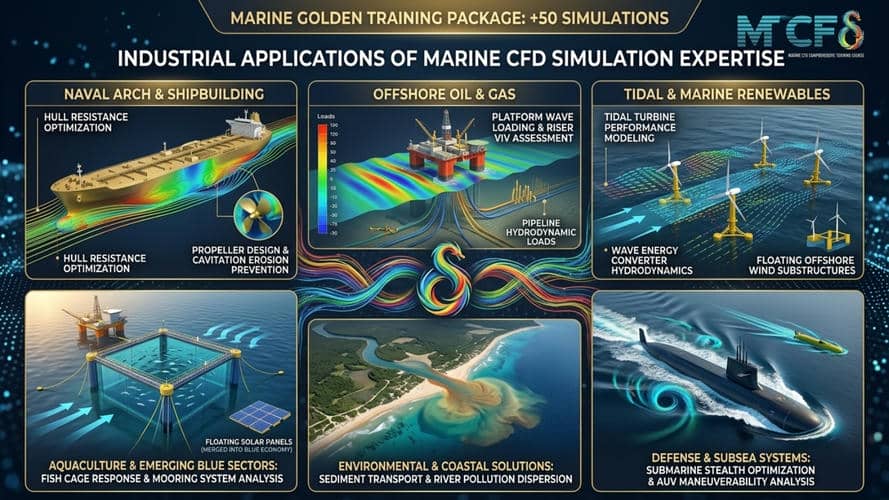
The skills developed in this marine CFD comprehensive training course map directly to the following high-value industrial sectors:
- Naval Architecture & Shipbuilding: Hull resistance optimization, propeller design, cavitation erosion prevention, and vessel stability analysis for commercial and military vessels
- Offshore Oil & Gas: Pipeline hydrodynamic load analysis, riser VIV assessment, subsea equipment deployment simulation, and offshore platform wave loading studies
- Tidal & Marine Renewable Energy: Tidal turbine performance modeling, wave energy converter hydrodynamics, floating offshore wind substructure analysis, and hydropower optimization
- Aquaculture & Blue Economy: Fish cage structural response to ocean currents, net deformation modeling, and mooring system load analysis for offshore fish farming operations
- Environmental & Coastal Engineering: Sediment transport modeling, river pollution dispersion, coastal erosion simulation, and CO2 subsea storage monitoring
- Submarine & Defense Systems: Submarine hydrodynamic stealth optimization, supercavitating weapon system simulation, and autonomous underwater vehicle (AUV) maneuverability analysis
- Floating Infrastructure: Floating solar panel motion analysis, floating LNG terminal sloshing, and offshore platform deck green water loading
Who Should Enroll in This Marine Engineering CFD Complete Course
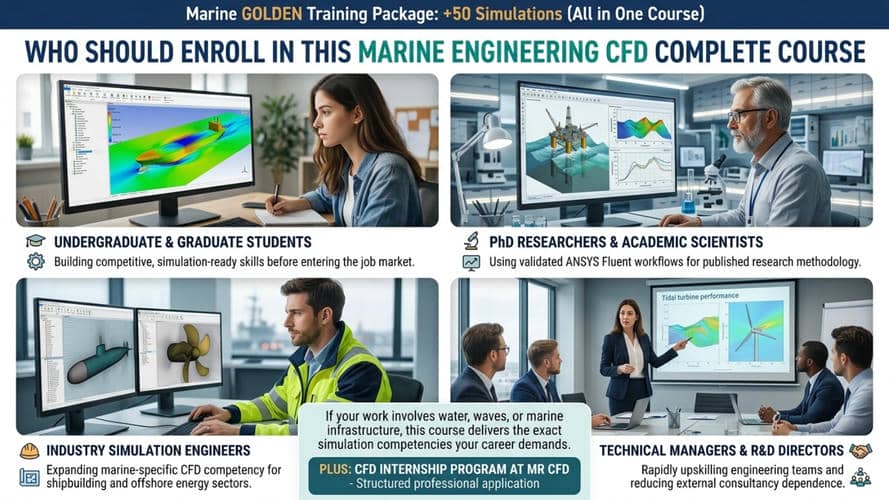
This marine CFD comprehensive training course is precisely calibrated for the following professional and academic profiles:
- Undergraduate and Graduate Engineering Students in naval architecture, ocean engineering, mechanical engineering, or environmental engineering seeking to build a competitive, simulation-ready skill portfolio before entering the job market
- PhD Researchers and Academic Scientists working on hydrodynamics, marine renewable energy, offshore structures, or environmental fluid mechanics who need validated ANSYS Fluent workflows to support their research methodology
- Industry Simulation Engineers employed in shipbuilding companies, offshore energy developers, submarine manufacturers, or environmental consultancies who need to expand their marine-specific CFD competency
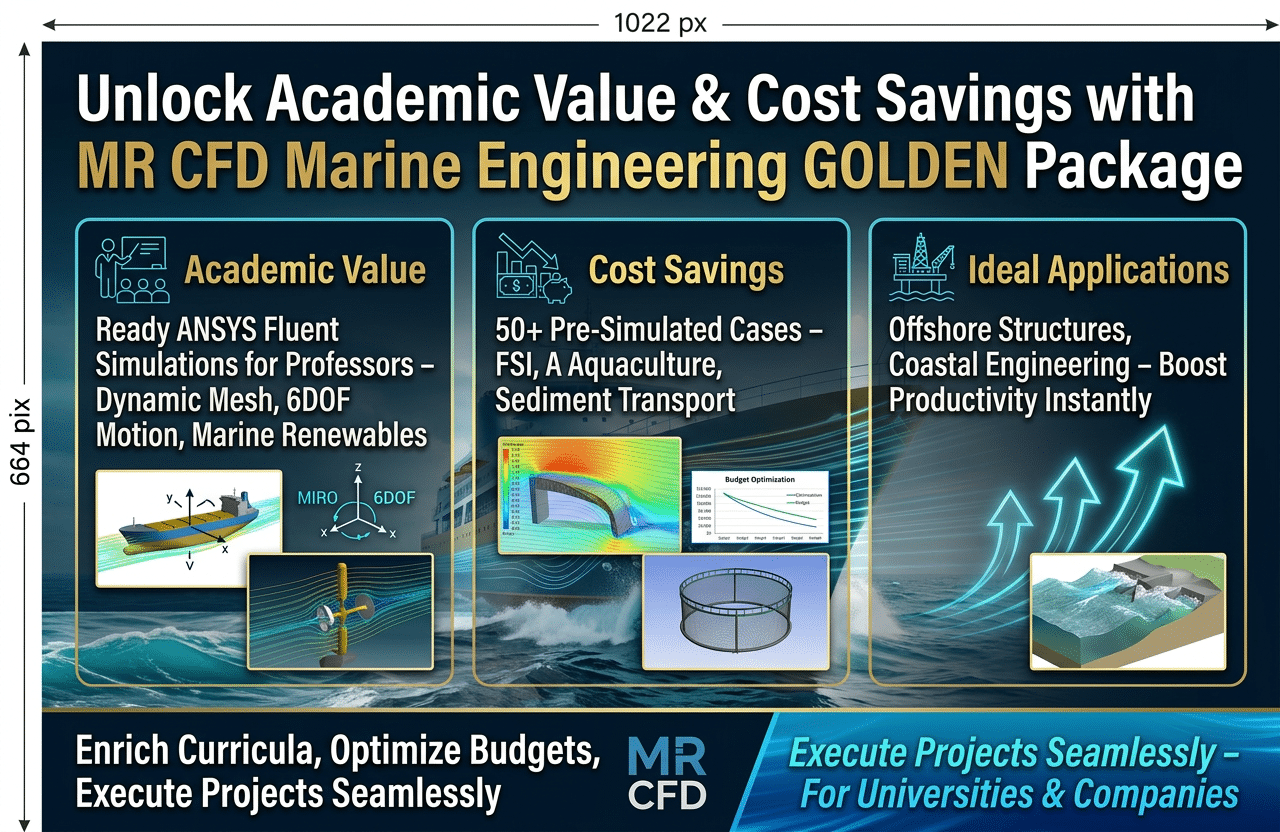
- University Professors and Technical Educators seeking a complete, pre-validated library of marine simulation case studies to enrich their CFD curricula without investing months in project development
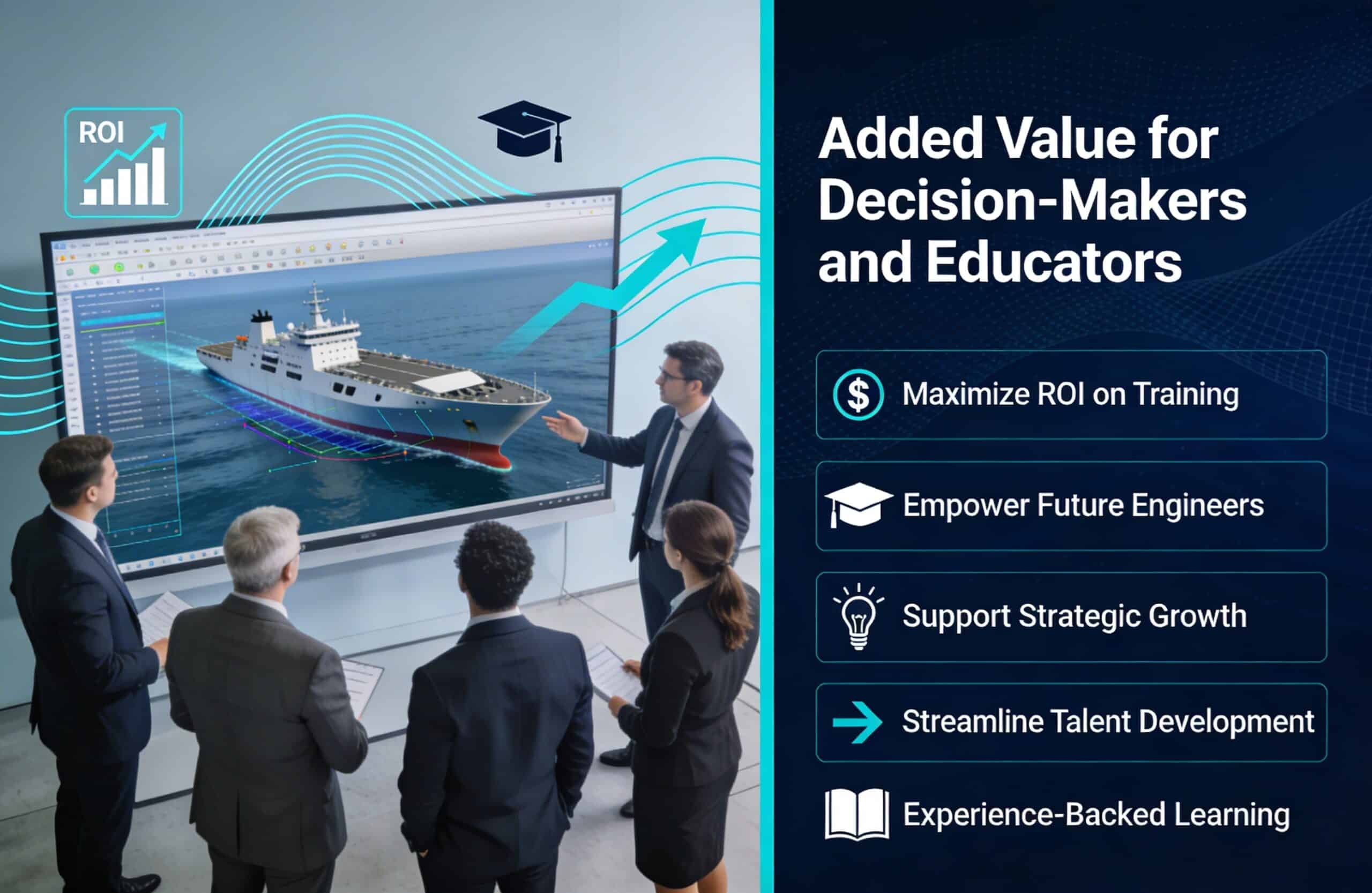
- Technical Managers and R&D Directors in marine and offshore organizations who need to rapidly upskill engineering teams and reduce dependence on external simulation consultancies
If your work touches water, waves, offshore infrastructure, or marine propulsion, this course delivers the exact simulation competencies your career demands. For engineers seeking to complement simulation skills with real project experience, the CFD Internship Program at MR CFD provides a structured pathway to apply these skills in a professional context.
Why MR CFD Delivers Unmatched Marine Simulation Training
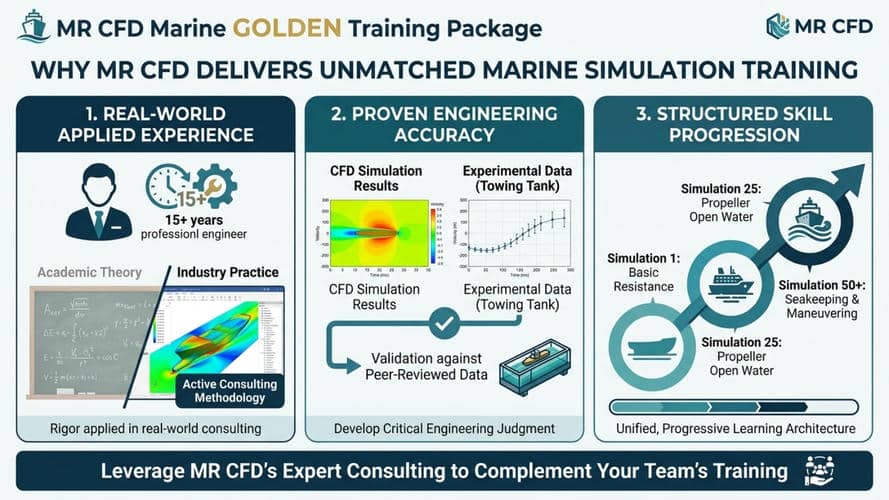
MR CFD brings over 15 years of deep, applied CFD consulting and engineering education experience to every course in its catalog. This is not academic theory delivered by instructors without industry exposure — every simulation project in this course reflects the same methodology, rigor, and quality standard applied in MR CFD’s active CFD consulting engagements with industrial and institutional clients worldwide.
The Marine Engineering CFD Comprehensive Training Course is built on three non-negotiable quality pillars:
- Production-Grade Project Standards: Every one of the 50+ simulations is built to the same specification as a client-deliverable engineering analysis — with verified boundary conditions, documented solver settings, converged residuals, and professionally structured post-processing outputs
- Industry-Standard Verification Workflows: Multiple projects include paper validation against peer-reviewed experimental data, ensuring learners develop not just simulation execution skills, but the critical engineering judgment needed to trust and defend their results
- Unified, Progressive Learning Architecture: Projects are sequenced to build competency systematically — each new simulation introduces one or two additional complexity layers, preventing cognitive overload while ensuring continuous technical progression
Organizations investing in team training can additionally leverage MR CFD’s CFD consulting services to complement internal capability development with expert external simulation support on live projects.
Learning Progression Path and Recommended Next Steps in CFD Training
This course is designed to function as a complete marine CFD mastery pathway from foundational to expert level. The internal progression follows a structured three-stage architecture:
| Stage | Focus Area | Representative Projects |
|---|---|---|
| Beginner | Solver fundamentals, single-phase flows, basic mesh setup | Engine room ventilation, offshore pipeline, horizontal axis water turbine |
| Intermediate | Multiphase flows, dynamic mesh, FSI, turbulence modeling | Sloshing tank, 1-DOF submarine motion, VOF wave simulation, fish cage FSI |
| Advanced | 6DOF self-propulsion, supercavitation, LES, RSM optimization, coupled CFD-FEA | Self-propelled submarine 6DOF, VA-111 Shkval supercavitation, RSM tidal turbine, rope-sphere FSI |
Upon completing this course, learners are equipped to pursue:
- Advanced ANSYS HPC training for scaling marine simulations to high-performance computing environments — accessible through MR CFD’s dedicated ANSYS HPC training module
- Specialist courses in multiphase flow modeling, turbomachinery CFD, or structural FSI analysis available through the full MR CFD course catalog
- CFD consulting project participation where acquired marine simulation skills are applied to real engineering challenges under expert mentorship
Begin Your Marine CFD Mastery — Enroll in the Complete Course Today
The engineering problems defining the next decade of marine industry development — from tidal energy grid integration to autonomous submarine navigation to offshore carbon storage monitoring — will be solved by engineers who can model, analyze, and optimize complex fluid systems with computational precision. This Marine Engineering CFD Comprehensive Training Course is the most complete, industrially validated, and technically rigorous marine simulation training program available online.
With 50+ ANSYS Fluent simulation projects, step-by-step solver workflows, paper-validated methodologies, 12 months of expert technical support, and the full weight of MR CFD’s 15-year consulting heritage behind every lesson, this course is not a training expense — it is a career-defining engineering investment.
Secure your enrollment today and join the community of simulation engineers who are building the future of marine technology — one validated CFD project at a time.
You must be logged in to post a review.
 Talk On WhatsApp
Reviews
There are no reviews yet.