
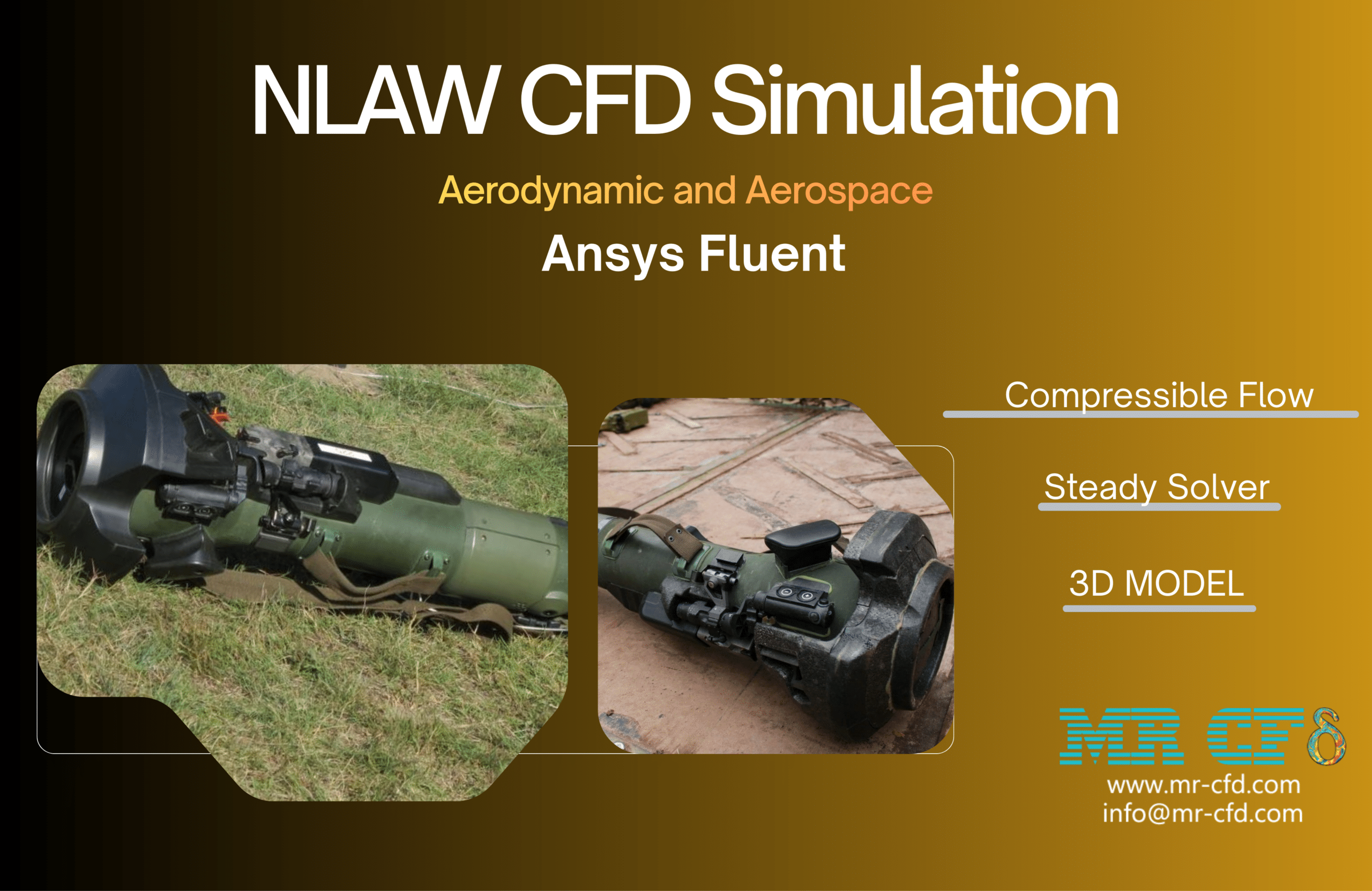
NLAW Simple Aerodynamic Analysis: CFD Simulation by ANSYS Fluent
$1,080.00 $648.00 HPC
- The problem numerically simulates a NLAW using ANSYS Fluent software.
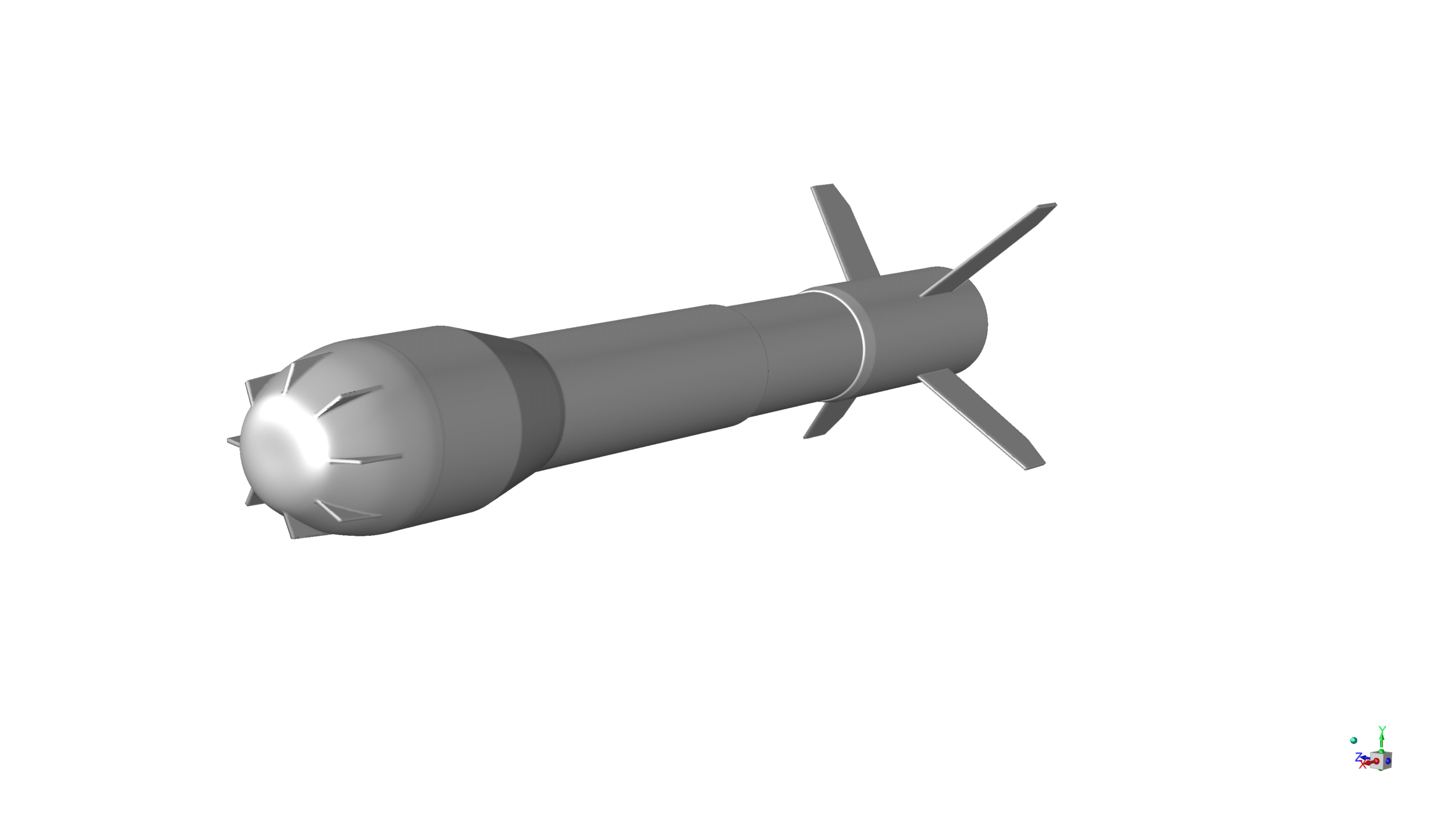
- We design the 3-D model with the SpaceClaim software.
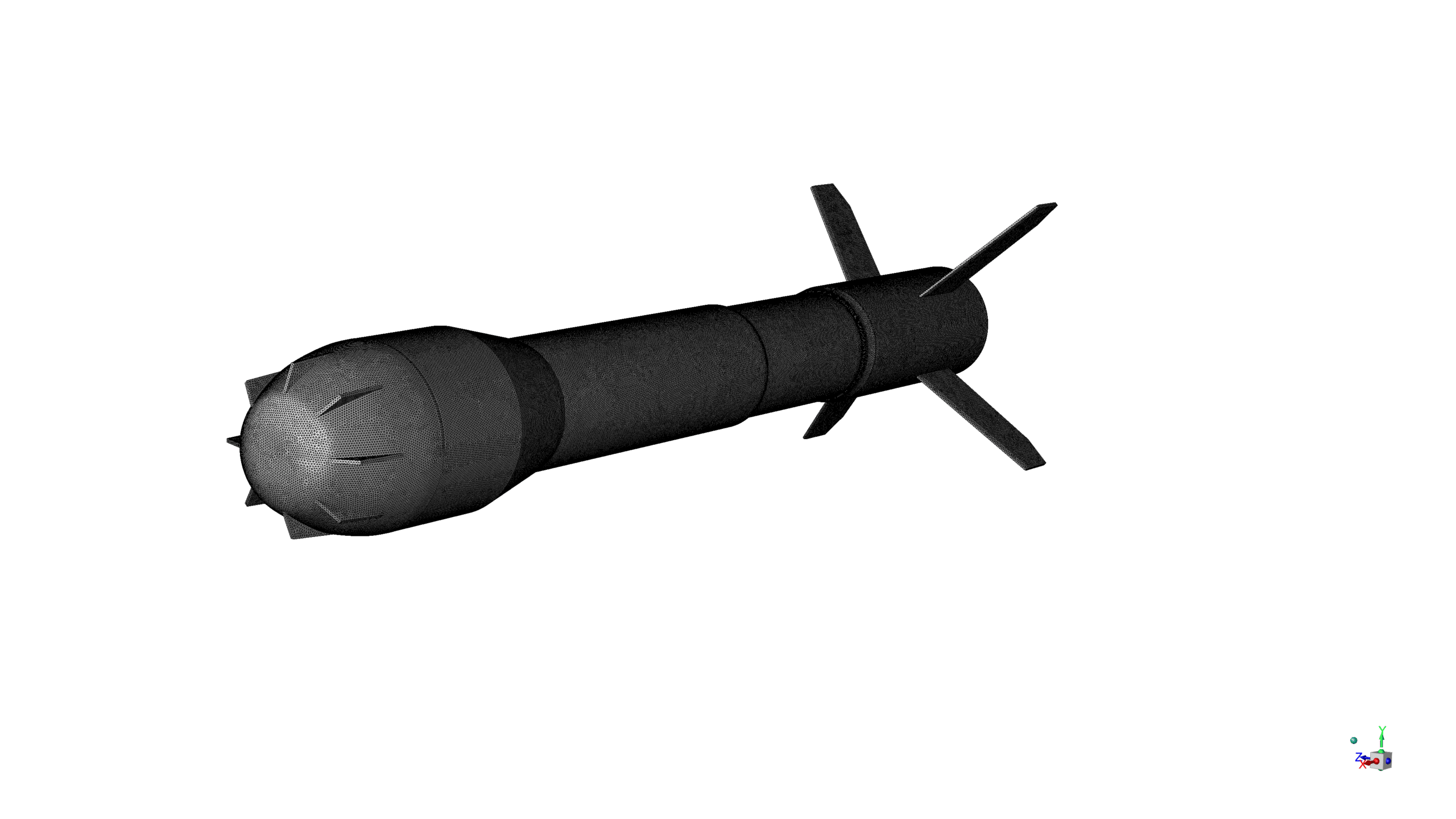
- We mesh the model with Ansys Meshing software. The element number equals 11,635,990 and their type is Tetrahedral.
To Order Your Project or benefit from a CFD consultation, contact our experts via email (info@mr-cfd.com), online support tab, or WhatsApp at +44 7443 197273.
There are some Free Products to check our service quality.
If you want the training video in another language instead of English, ask it via info@mr-cfd.com after you buy the product.
Description
Simple Aerodynamic Analysis: NLAW CFD Simulation Training
Introduction
The NLAW (Next Generation Light Anti-Tank Weapon) is a modern infantry-portable anti-tank weapon developed by Saab Bofors Dynamics in Sweden in collaboration with the United Kingdom. It is a short-range guided missile designed to engage heavily armored targets, such as tanks equipped with reactive armor, with high accuracy. The NLAW’s distinctive feature is its fire and forget capability, which allows the user to guide the missile to a predicted target without continuous guidance after firing.
From an aerodynamic perspective, the NLAW combines a compact design with high flight stability, making it ideal for launching from confined spaces and for use in urban battlefields. The missile is typically about one meter long and has a total mass of about 12.5 kilograms. Using a soft launch system and a solid rocket motor, the missile’s initial acceleration is adjusted to both protect the shooter’s safety and maintain stability and trajectory during the flight phase after the main engine is activated.
The results of this simulation can be used to optimize the design of the wings, the location of the center of mass, and improve flight performance. Such analyses help engineers predict the actual performance of the system under different launch conditions, temperatures, and wind speeds with greater accuracy.
The geometry of the present model is three-dimensional and has been designed using SpaceClaim software. We do the meshing of the present model with Ansys Meshing software. The mesh type is Tetrahedral, and the element number is 11,635,990.
Methodology
This study used a steady-state, density-based CFD simulation in ANSYS Fluent software to analyze the compressible flow around a NLAW. The flow physics was modeled using the k-ω SST turbulence model.
Results and Conclusion
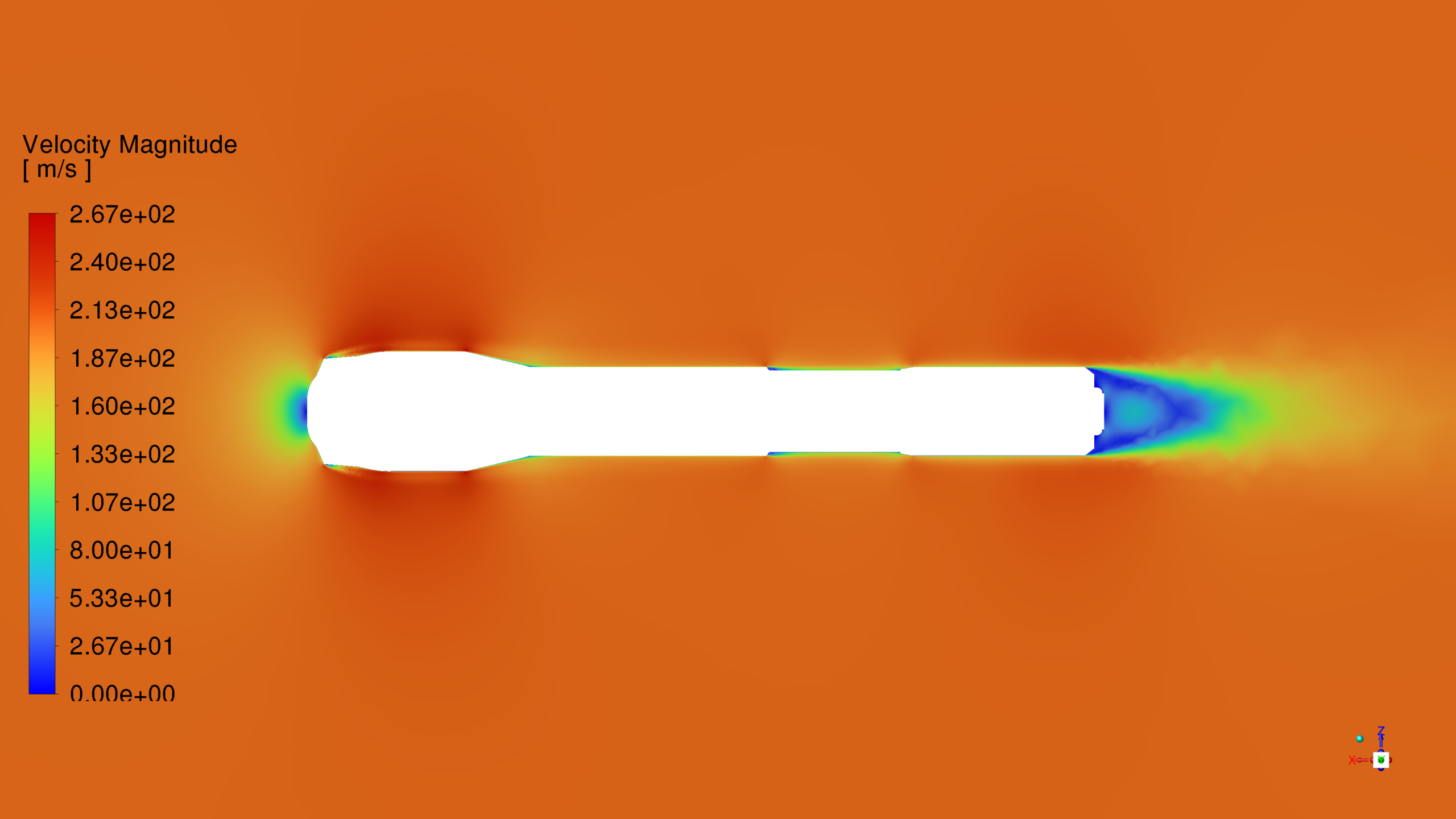
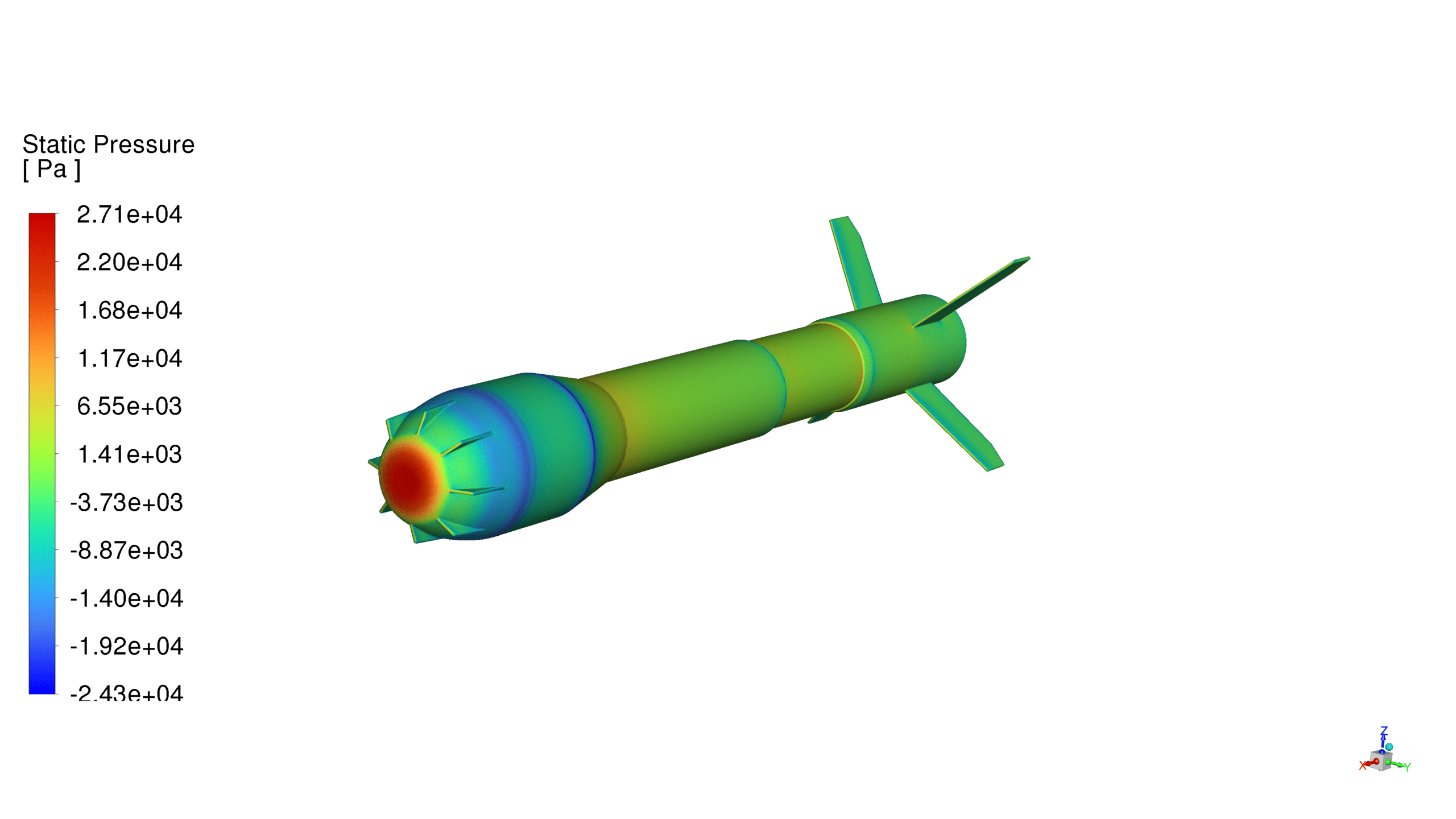
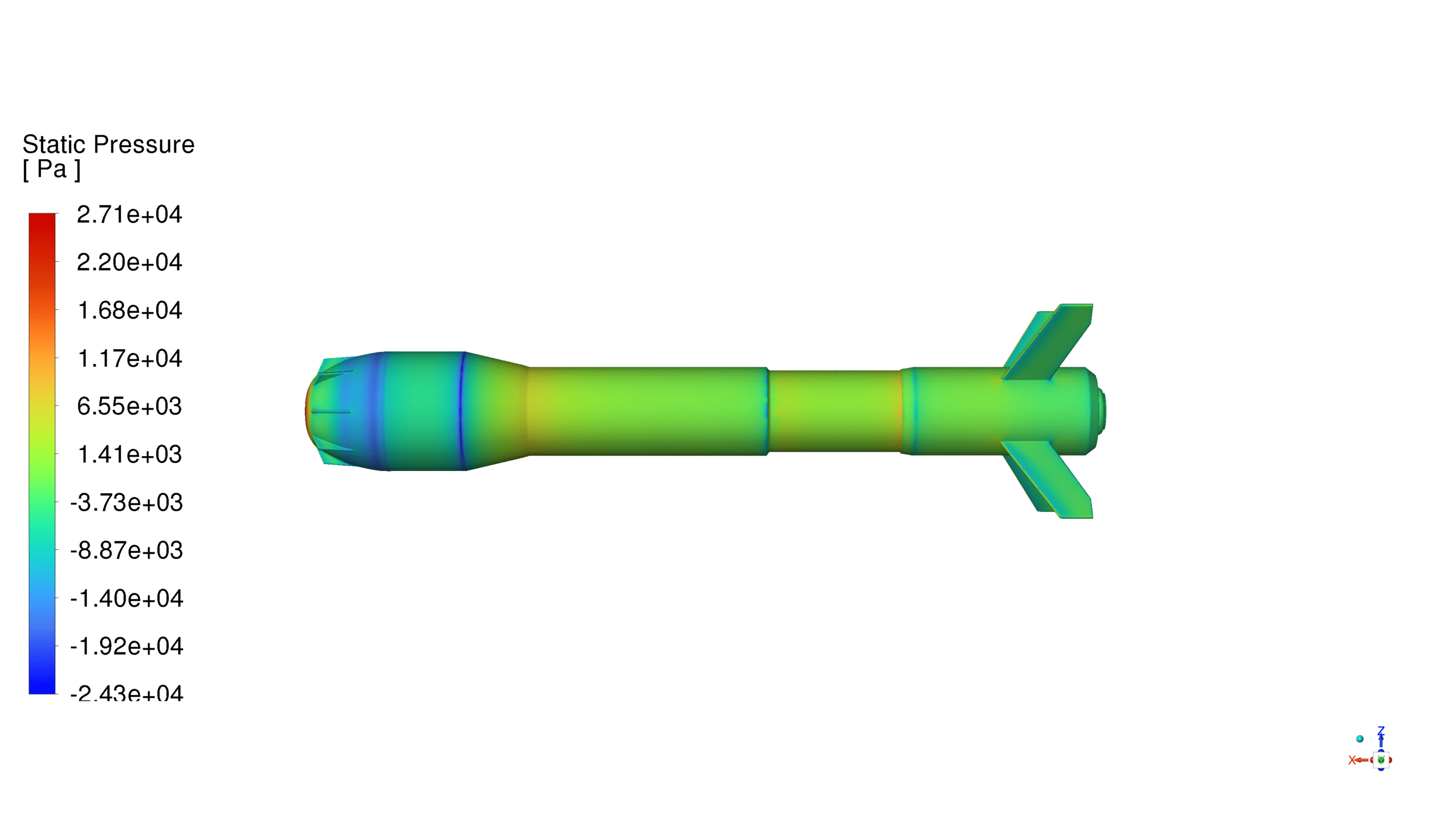
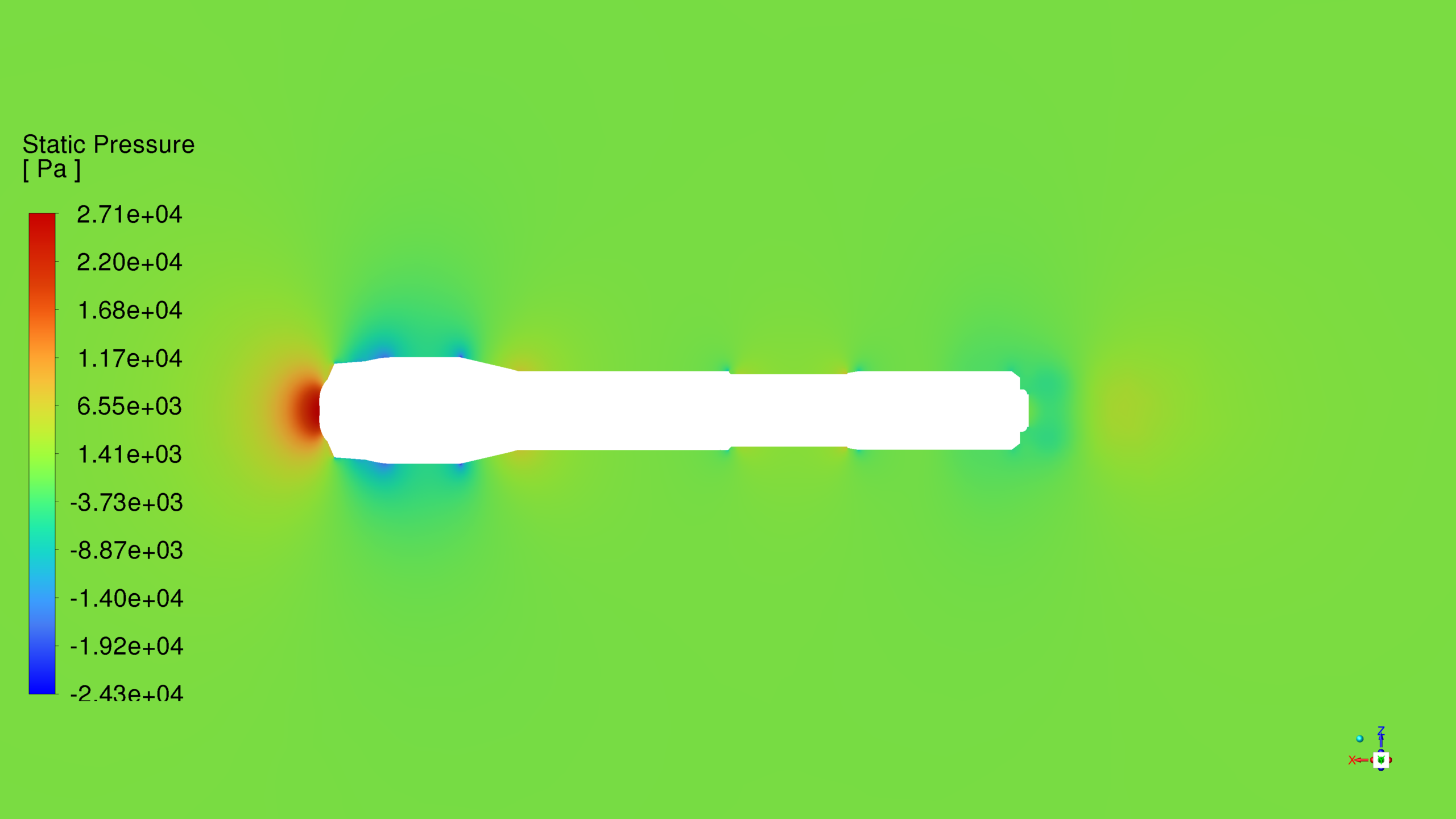
According to the contours below, the velocity and pressure in the areas around the NLAW as well as the pressure on the NLAW wall are clear. As can be seen, the velocity around it is higher, especially in the areas of the cap, and the pressure contours also confirm this.
You can also see that the highest pressure is applied to the front of the cap.
You must be logged in to post a review.
 Talk On WhatsApp
 Talk On WeChat

Reviews
There are no reviews yet.