
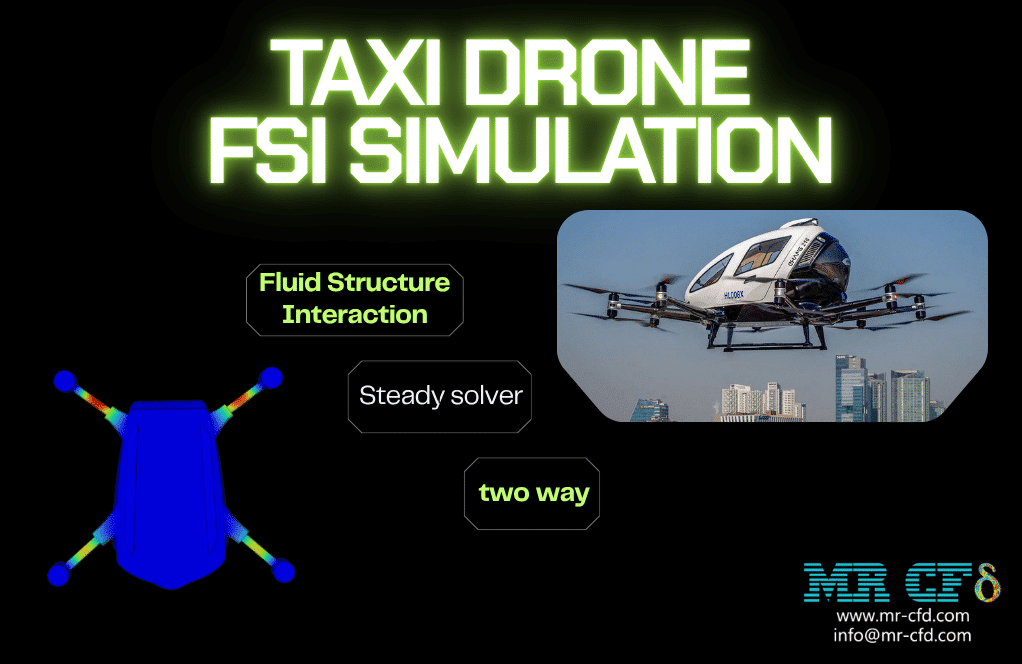
Taxi-Drone: CFD Simulation Training Package
$3,999.00 Internship
- Aerodynamic analysis is the most fundamental evaluation any UAV requires.
- For any UAV, maneuverability, balance, and stability aren’t optional and stability derivative analysis gives you the exact tools to evaluate them.
- Acoustic analysis reveals not only how much noise a source produces, but also how that noise travels through the surrounding environment knowledge that translates directly into better UAV design.
- With FSI analysis, drone designers and manufacturers can examine high-stress regions in much greater detail.
To Order Your Project or benefit from a CFD consultation, contact our experts via email (info@mr-cfd.com), online support tab, or WhatsApp at +44 7443 197273.
There are some Free Products to check our service quality.
If you want the training video in another language instead of English, ask it via info@mr-cfd.com after you buy the product.
Description
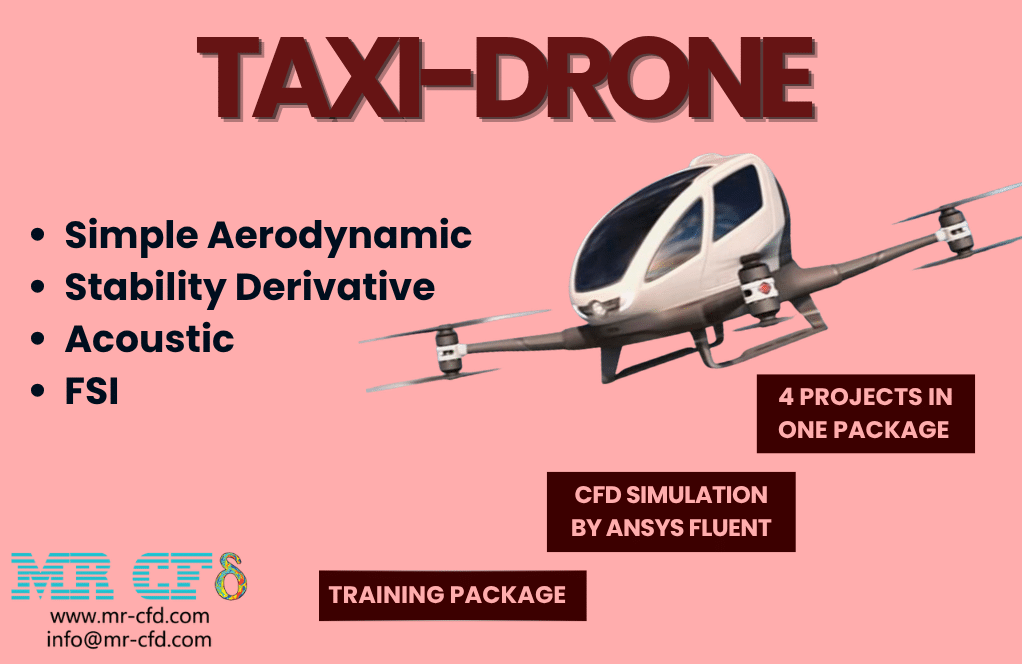
Taxi-Drone CFD Simulation: 4 Projects In One Package
Master Urban Air Mobility Aerodynamics with Professional CFD Techniques
Step into the future of passenger flight with our complete Taxi-Drone CFD Simulation Training Package. Built around four in-depth ANSYS Fluent projects, this collection walks you through the essential pillars of air taxi engineering: fundamental aerodynamic evaluation, dynamic stability derivatives, fluid-structure interaction, and Acoustic assessment. If you are an engineer, a researcher, or an urban air mobility (UAM) professional who wants to build genuine simulation expertise for electric vertical take-off vehicles, this package delivers the professional-grade methods used across the industry.
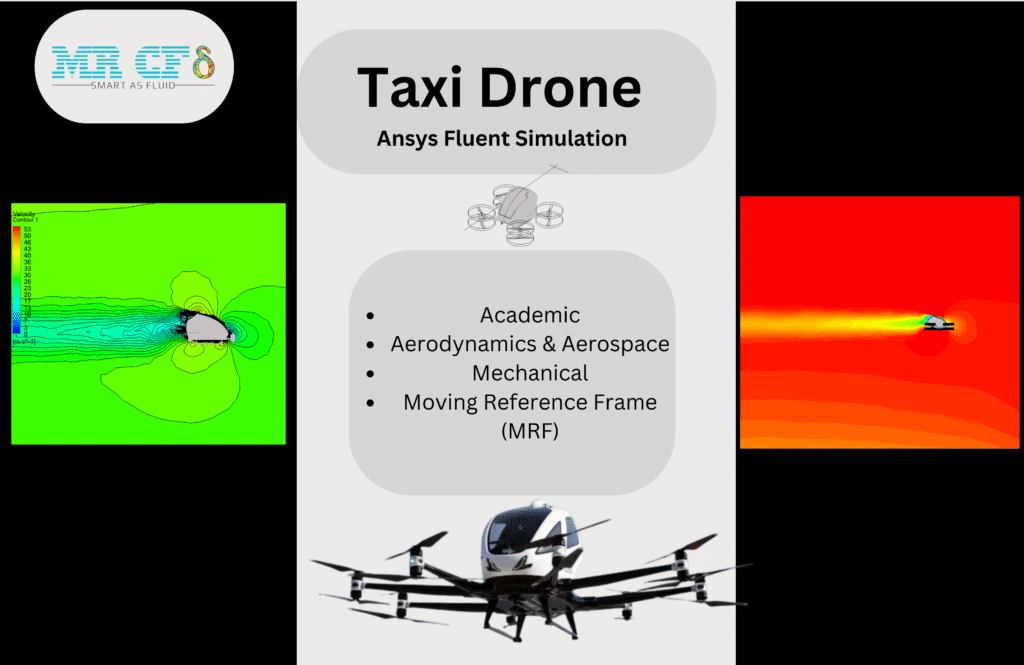
Taxi-Drone Aerodynamic Analysis
- Discover how to define rotating cell zone conditions for multi-rotor blade systems
- Practice extracting lift and drag data across a range of operating scenarios
- Gain hands-on experience configuring inlet, outlet, and wall boundary conditions for a full vehicle
Every advanced study of an air Taxi-Drone begins with a solid aerodynamic foundation. This opening project establishes that foundation, giving you the workflow needed before moving on to stability, structural, or acoustic investigations.
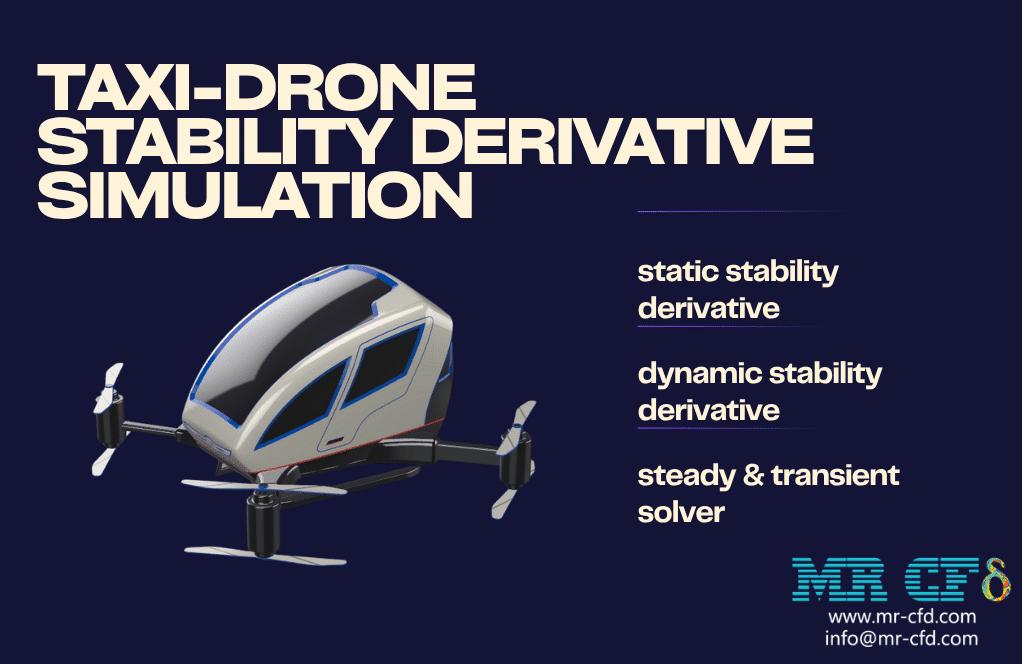
Taxi-Drone Stability Derivatives
Explore the aerodynamic mechanisms that govern how a passenger drone responds to disturbances and pilot or autopilot commands:
- Compute the pitch, roll, and yaw moment derivatives that define vehicle stability
- Build meshing approaches tailored to rotating machinery and intricate flow regions
- Generate aerodynamic datasets that feed directly into flight control law development
Because a Taxi-Drone carries people rather than payloads, stability requirements are far stricter than for conventional UAVs. This project connects CFD results to flight dynamics, showing you how to convert raw simulation output into stability parameters that certification teams and control engineers can act on.
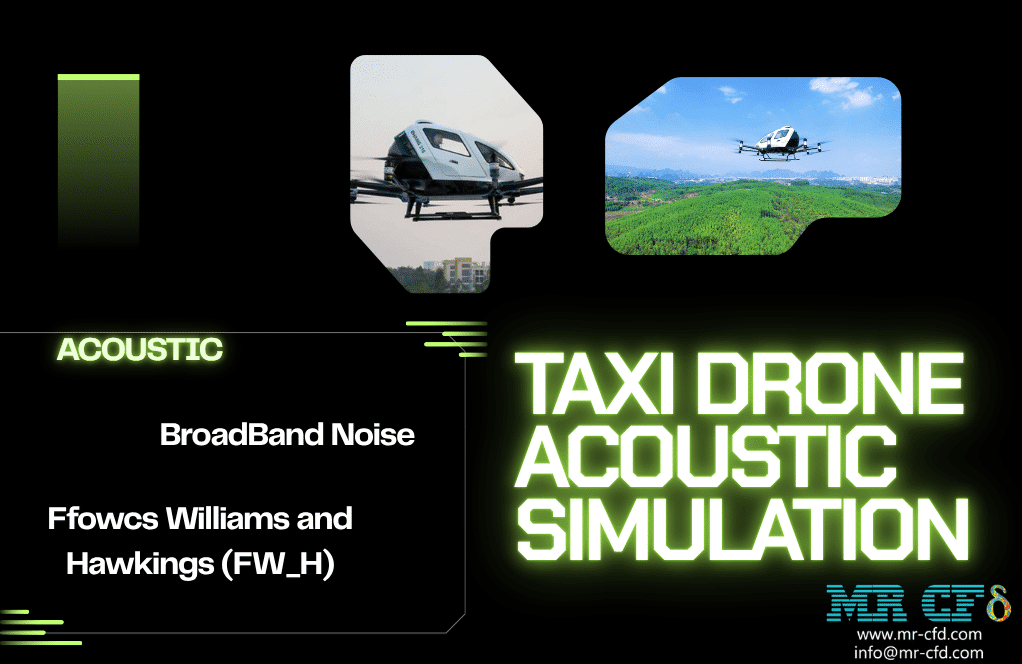
Taxi-Drone Acoustic Analysis
Tackle the single biggest barrier to operating air Taxi-Drone over populated areas noise:
- Apply modern Acoustic modeling methods inside ANSYS Fluent
- Study how sound propagates under different flight phases and atmospheric conditions
Public acceptance of urban air mobility depends heavily on acoustic performance. This project equips you to design quieter vehicles fit for vertiports, dense city corridors, and other noise-sensitive routes, while keeping aerodynamic and structural targets intact.
Taxi-Drone Fluid-Structure Interaction (FSI)
Move beyond rigid-body assumptions and capture how the airframe actually behaves under flight loads:
- Configure two-way coupled FSI cases linking the flow solver with structural mechanics
- Predict rotor blade deflection across different rotational speeds
- Detect vibration modes and resonance risks within the fuselage and support arms
- Quantify how structural flexibility feeds back into aerodynamic efficiency
For a vehicle intended to transport passengers, structural confidence is non-negotiable. This project shows you how to anticipate failure modes computationally, cutting prototype iterations and strengthening the safety case long before flight testing.
You must be logged in to post a review.
Related products
-
Sale

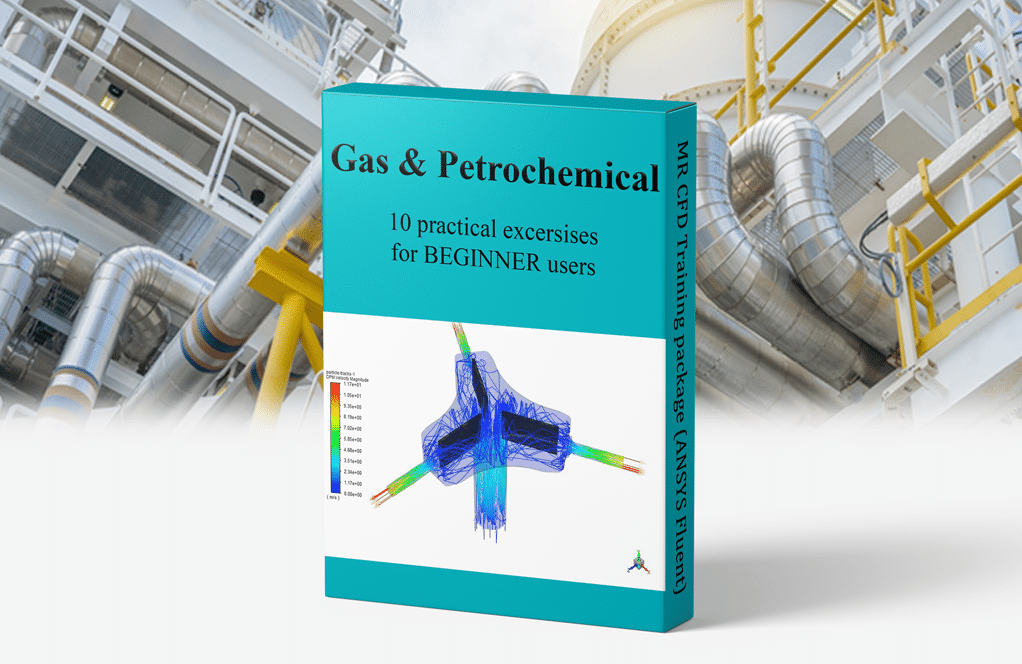
Gas and Petrochemical CFD Training Package for Beginners, 10 Practical Exercises
Original price was: $1,000.00.$299.00Current price is: $299.00. Internship -
Sale
Electrical and Power Training Package for Beginners, 10 Practical Exercises
Original price was: $1,080.00.$299.00Current price is: $299.00. Internship

 Talk On WhatsApp
Reviews
There are no reviews yet.