
TOW Simple Aerodynamic Analysis: CFD Simulation by ANSYS Fluent
$1,720.00 $688.00 HPC
- The problem numerically simulates a TOW using ANSYS Fluent software.
- We design the 3-D model with the SpaceClaim software.
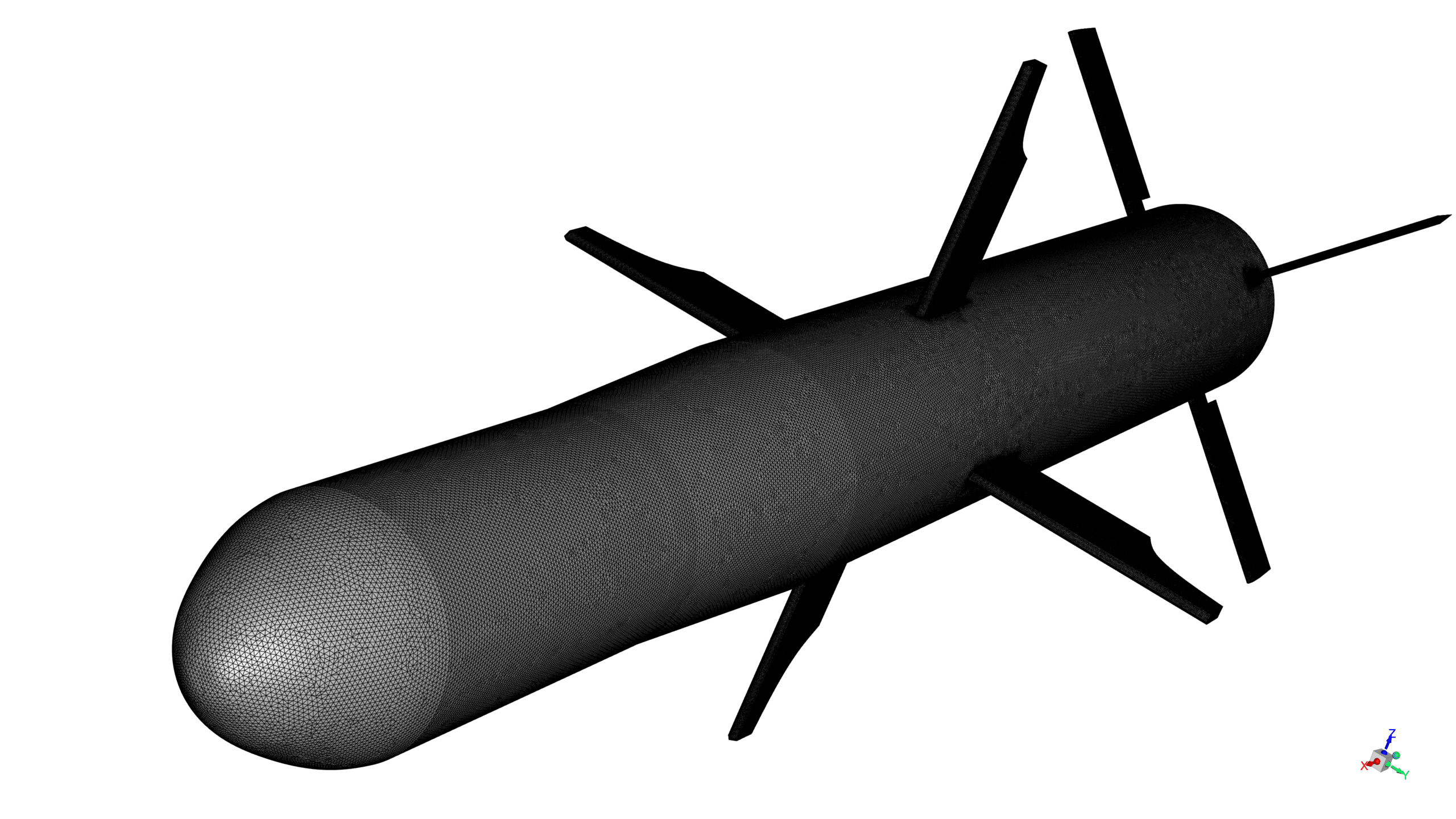
- We mesh the model with Ansys Meshing software. The element number equals 14,652,402 and their type is Tetrahedral.
To Order Your Project or benefit from a CFD consultation, contact our experts via email (info@mr-cfd.com), online support tab, or WhatsApp at +44 7443 197273.
There are some Free Products to check our service quality.
If you want the training video in another language instead of English, ask it via info@mr-cfd.com after you buy the product.
Description
Simple Aerodynamic Analysis: NLAW CFD Simulation Training
Introduction
The TOW missile (Tube-launched, Optically tracked, Wire-guided) is an American anti-armor guided missile that has been widely used on armored vehicles, helicopters, and ground platforms since the 1970s. The missile typically weighs about 19 to 22 kilograms and has an effective range of about 3 to 3.75 kilometers. The use of a tubular launcher and the ability to be installed on various platforms have made the TOW a flexible system for engaging ground threats day and night and in various weather conditions.
In terms of combat performance, the main mission of this system is to destroy tanks and heavy armored vehicles, as well as strong fortifications such as concrete bunkers and gun emplacements. In early models, the warhead penetration power was about 600 mm of homogeneous armor, which in upgraded versions has reached about 700 to 800 mm, and in some variants even more.
The TOW’s distinctive feature is the use of semi-automatic command-to-line-of-sight (SACLOS) guidance with a wire-guided link, in which the operator guides the missile by simply holding the target in the camera’s field of view. The missile’s position is tracked by an infrared or xenon light at the end of the missile, and the guidance computer sends trajectory correction commands to the control surfaces via thin wires that extend during flight, which is resistant to electronic warfare. The presence of thermal and optical tracking systems in the launcher allows for night combat and limited visibility conditions, and a set of aerodynamic optimizations and two-stage propulsion ensure that the missile reaches speeds of nearly 300 meters per second and maintains flight stability to the final range.
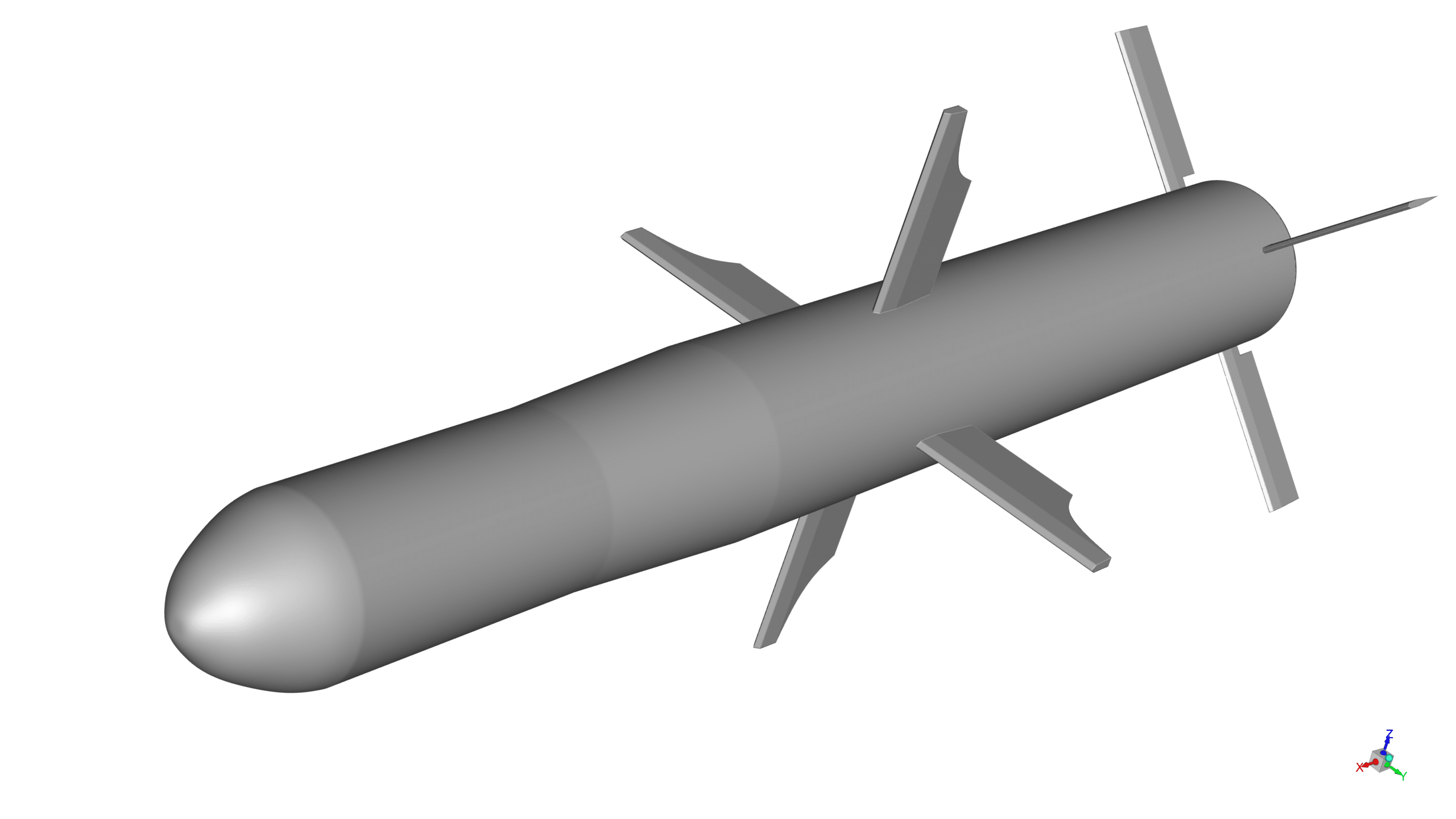
The geometry of the present model is three-dimensional and has been designed using SpaceClaim software. We do the meshing of the present model with Ansys Meshing software. The mesh type is Tetrahedral, and the element number is 14,652,402.
Methodology
This study used a steady-state, density-based CFD simulation in ANSYS Fluent software to analyze the compressible flow around a TOW. The flow physics was modeled using the k-ω SST turbulence model.
Results and Conclusion
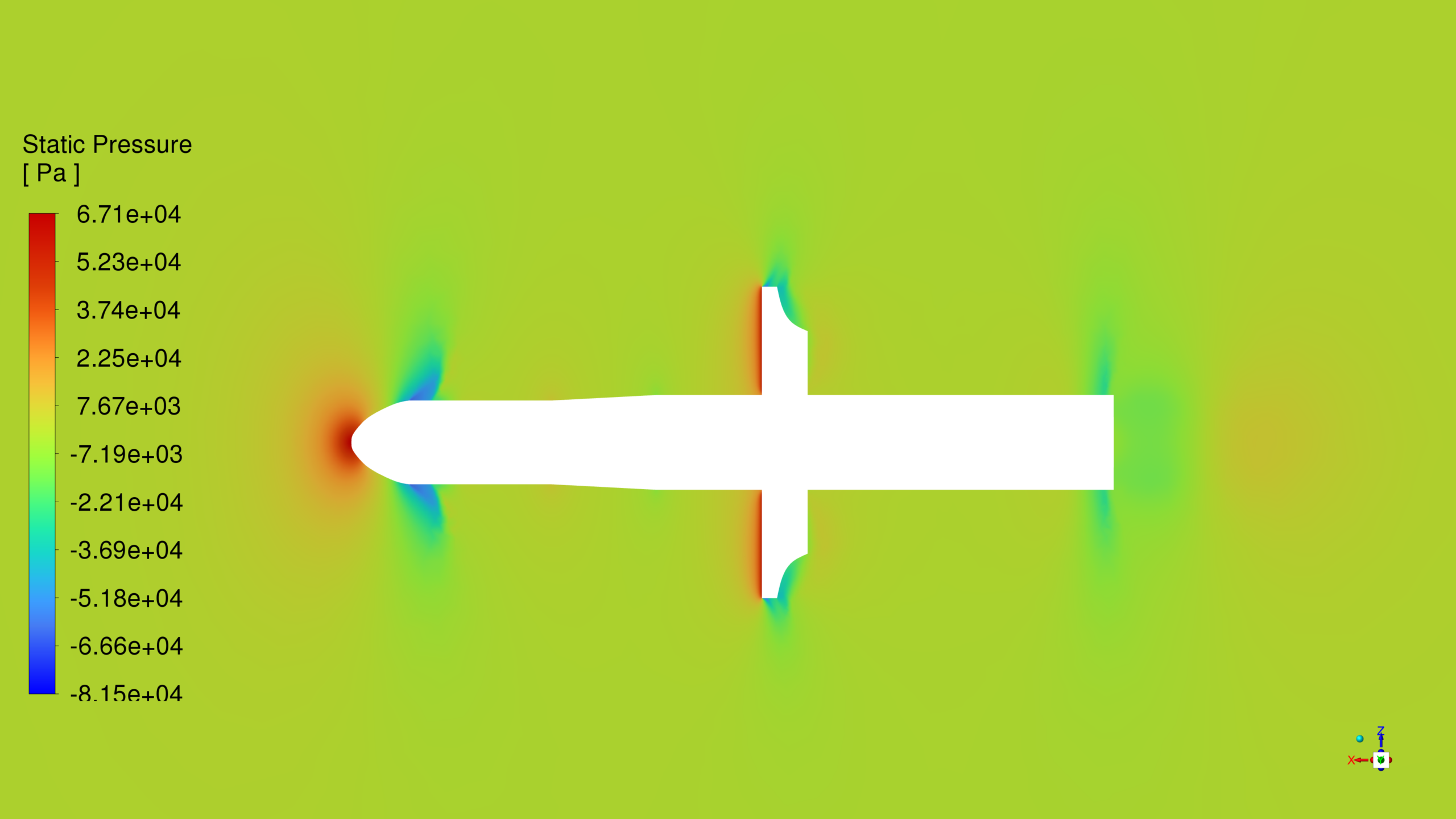
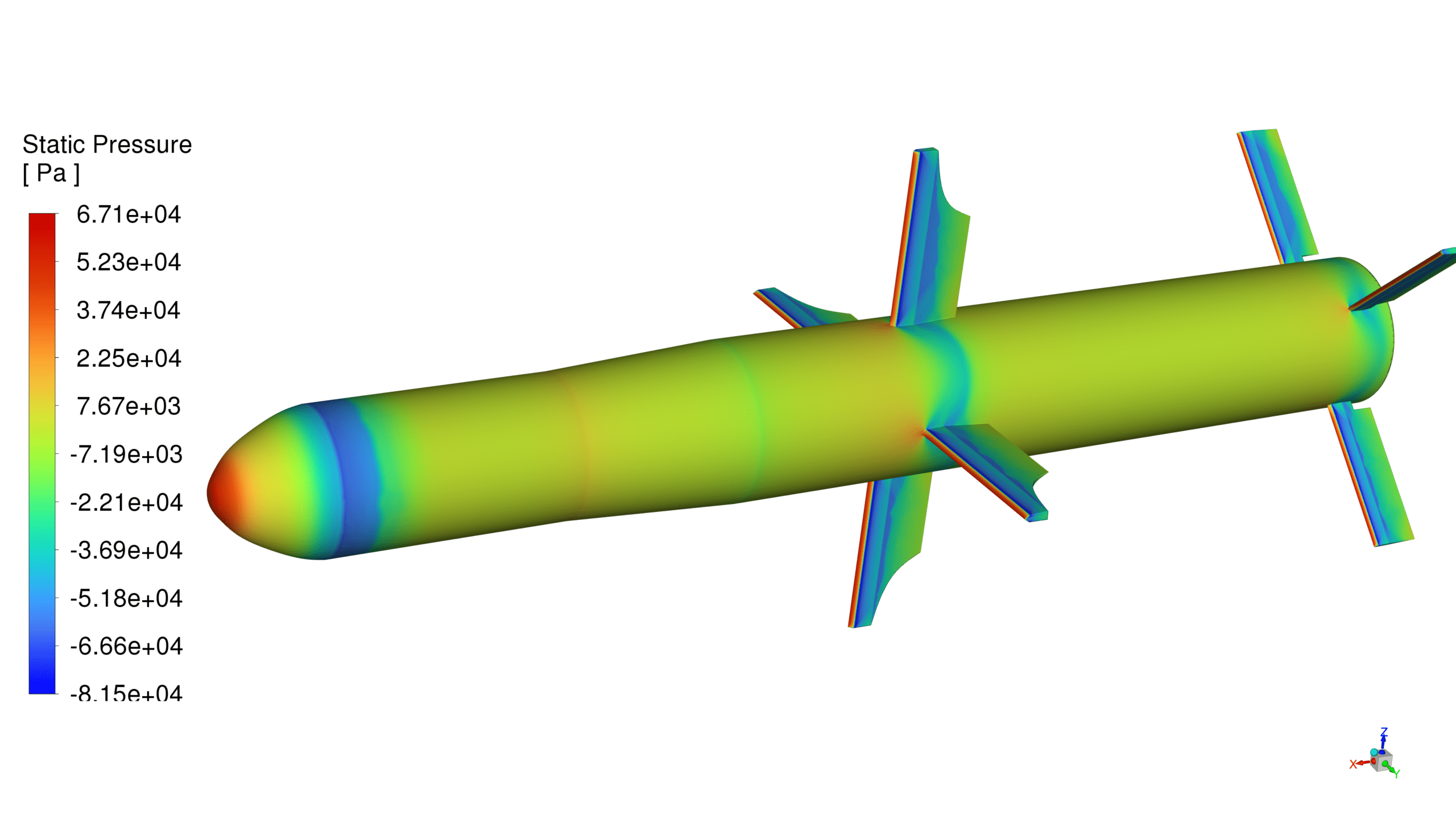
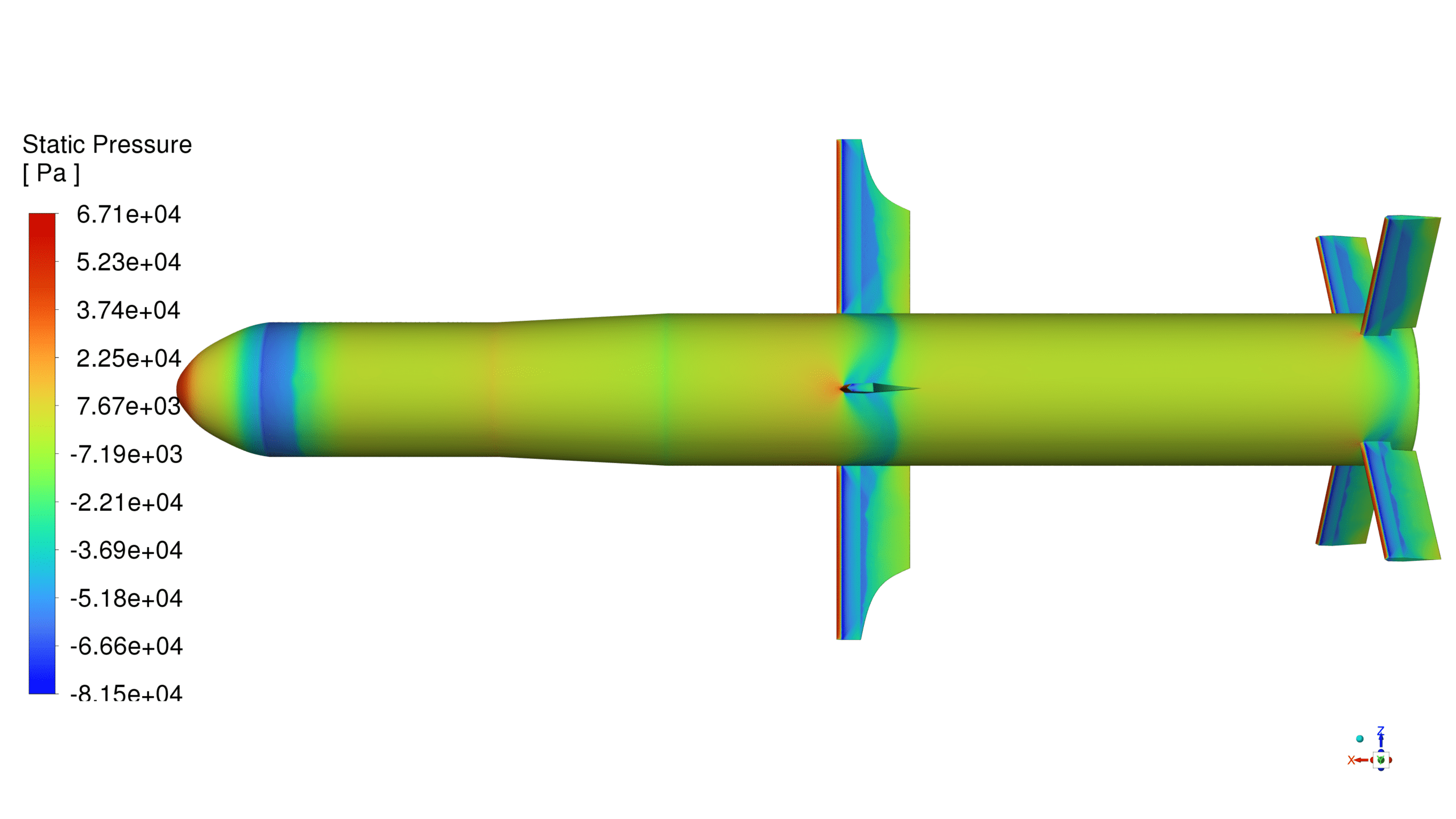
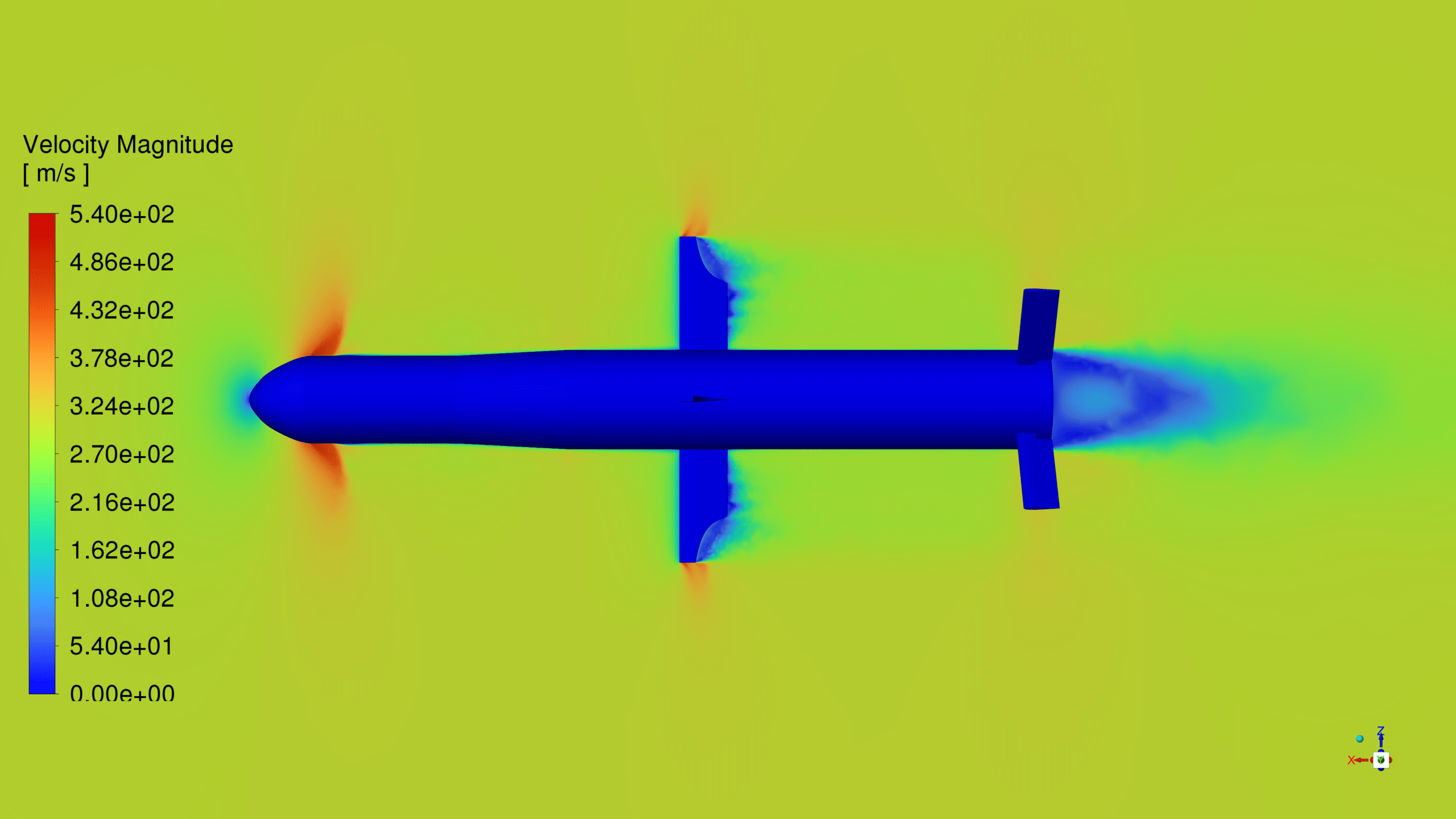
According to the contours below, the velocity and pressure in the areas around the TOW as well as the pressure on the TOW wall are clear. As can be seen, the velocity around it is higher, especially in the areas of the cap, and the pressure contours also confirm this.
You can also see that the highest pressure is applied to the front of the cap.
You must be logged in to post a review.

 Talk On WhatsApp
 Talk On WeChat

Reviews
There are no reviews yet.