
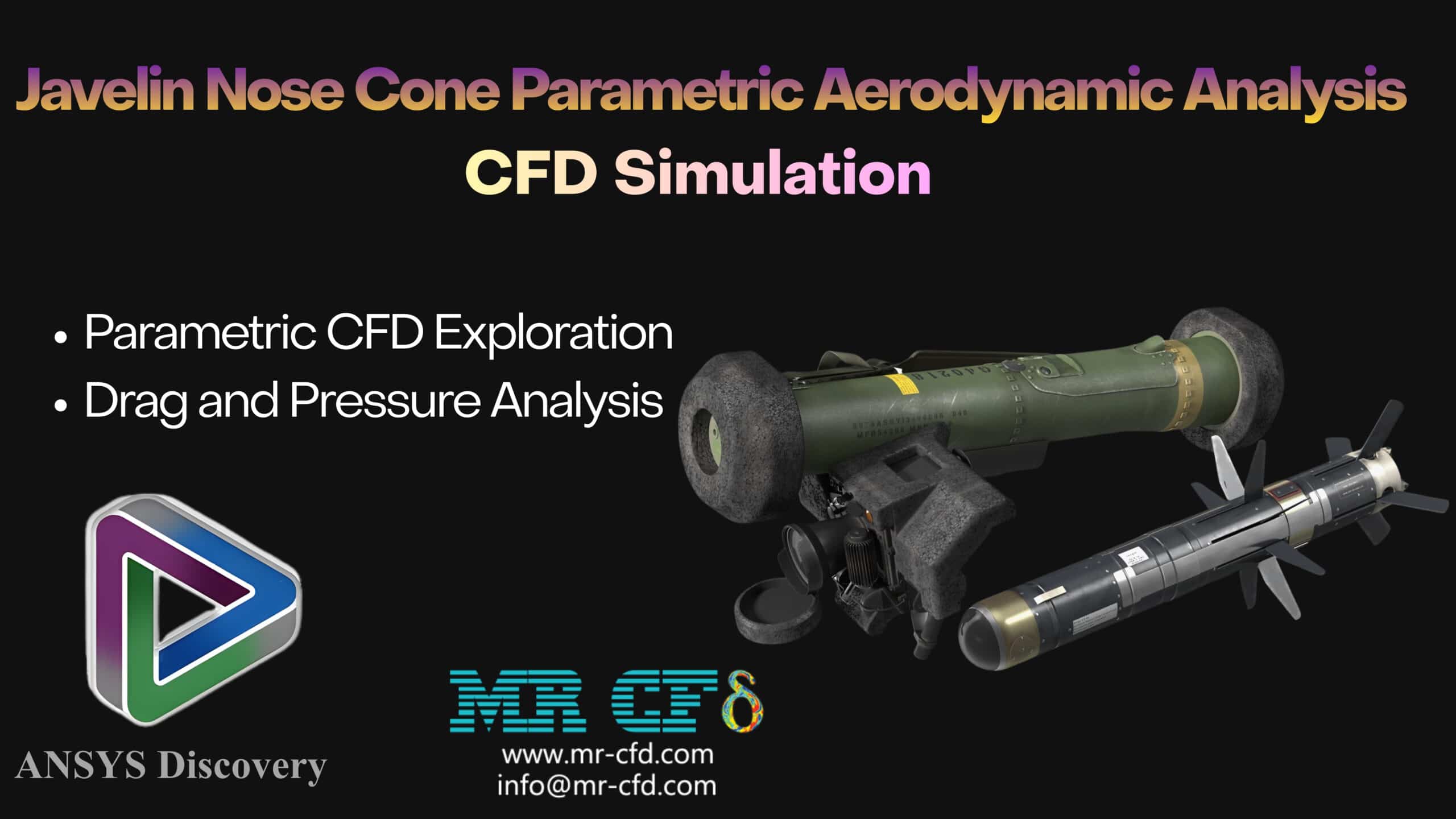
ANSYS Discovery: Javelin Nose Cone Parametric Aerodynamic Analysis, CFD Simulation
$1,350.00 $540.00 HPC
-
Real-time parametric CFD exploration of Javelin missile nose cone geometry using ANSYS Discovery
-
Instantaneous drag and pressure analysis across multiple nose profiles of Javelin via History Tracking
-
GPU-accelerated aerodynamic screening of Javelin missile without manual remeshing or solver restarts
To Order Your Project or benefit from a CFD consultation, contact our experts via email (info@mr-cfd.com), online support tab, or WhatsApp at +44 7443 197273.
There are some Free Products to check our service quality.
If you want the training video in another language instead of English, ask it via info@mr-cfd.com after you buy the product.
Description
Project Description
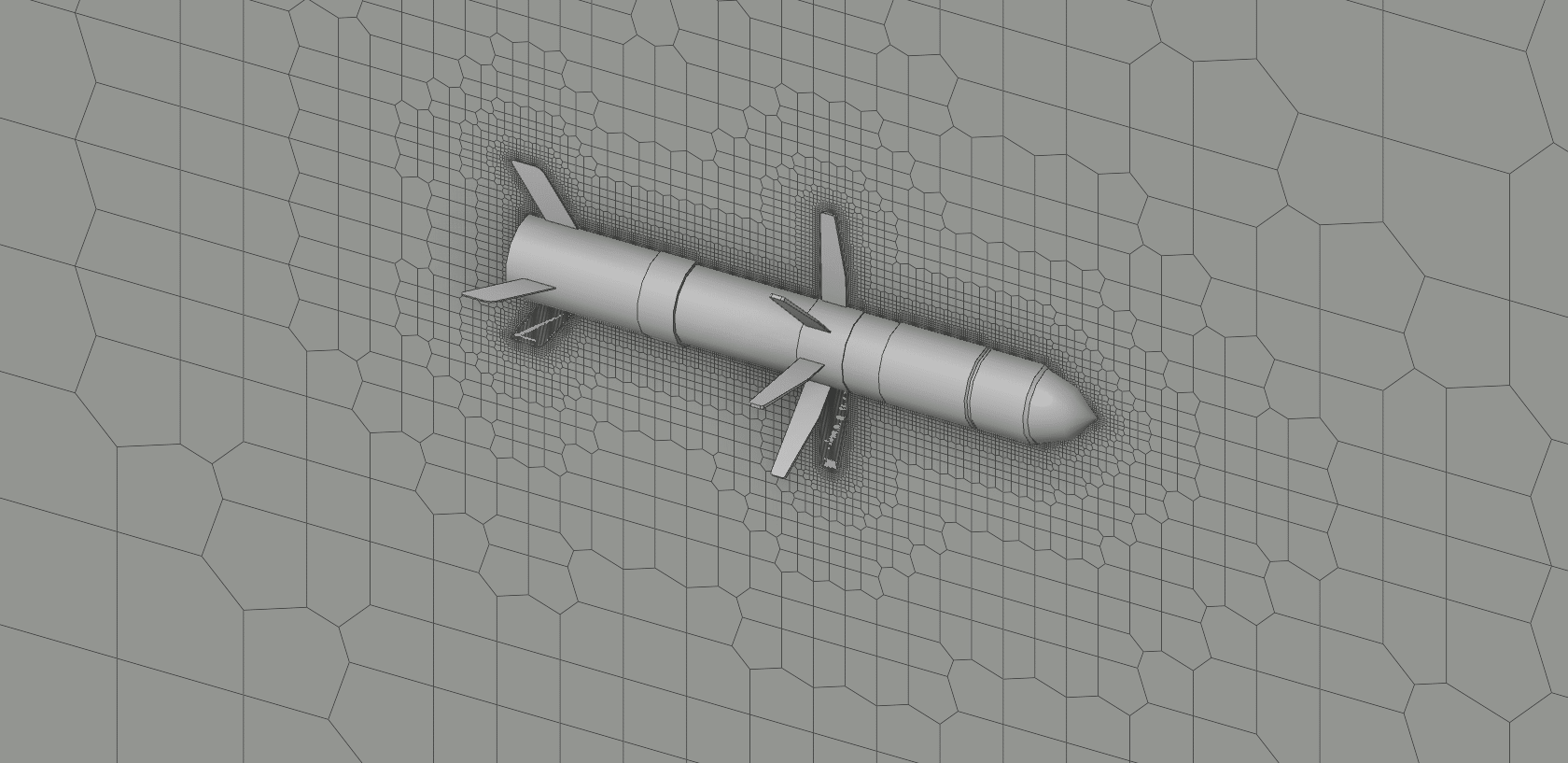
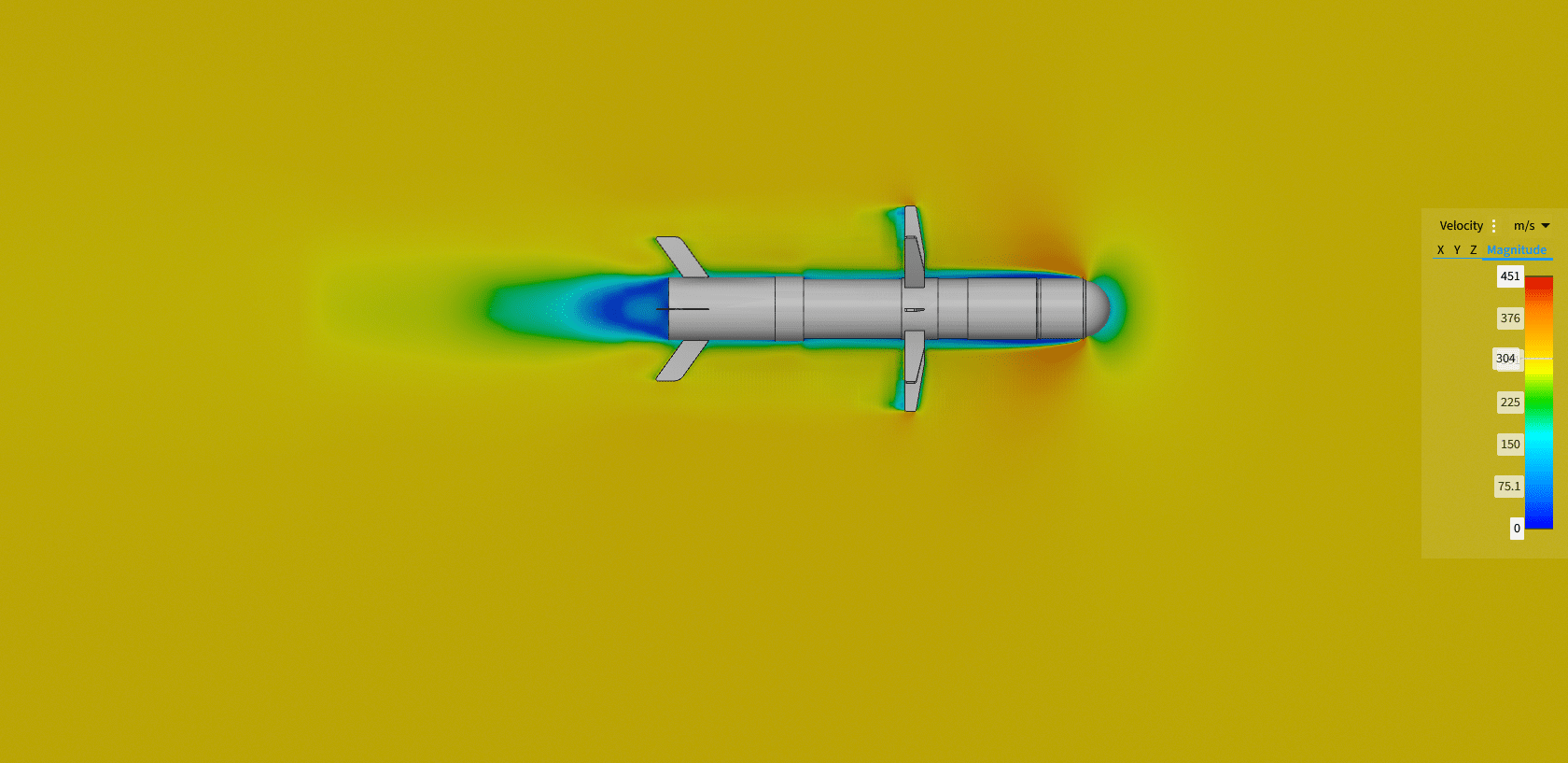
This project investigates the aerodynamic performance of the Javelin missile nose cone using ANSYS Discovery’s real-time GPU-based CFD solver, with parametric geometry tracking applied to nose length and base radius as live design variables. By leveraging Discovery’s History Tracking feature, instantaneous updates to pressure distribution and drag force are observed as geometric parameters are continuously varied, enabling rapid design space exploration without manual re-meshing.
Objectives
The goal of this project is to systematically explore how nose cone geometry influences the external aerodynamics of the Javelin missile by parameterizing key design variables specifically nose length and base radius within ANSYS Discovery’s real time simulation environment. Through continuous geometric variation, the study captures instantaneous changes in drag force and surface pressure contours, enabling a data-driven comparison across multiple nose profiles without the time overhead of conventional CFD preprocessing.
Result and Discussion
The real time CFD simulations conducted in ANSYS Discovery revealed a clear and progressive relationship between nose cone geometry and aerodynamic drag across all tested configurations of the Javelin missile. Blunter nose profiles generated broader high-pressure zones at the tip, resulting in significantly higher drag coefficients, while elongated ogive geometries redistributed surface pressure more gradually along the body, reducing flow separation and improving overall streamlining at supersonic conditions.

You must be logged in to post a review.
 Talk On WhatsApp
 Talk On WeChat

Reviews
There are no reviews yet.