
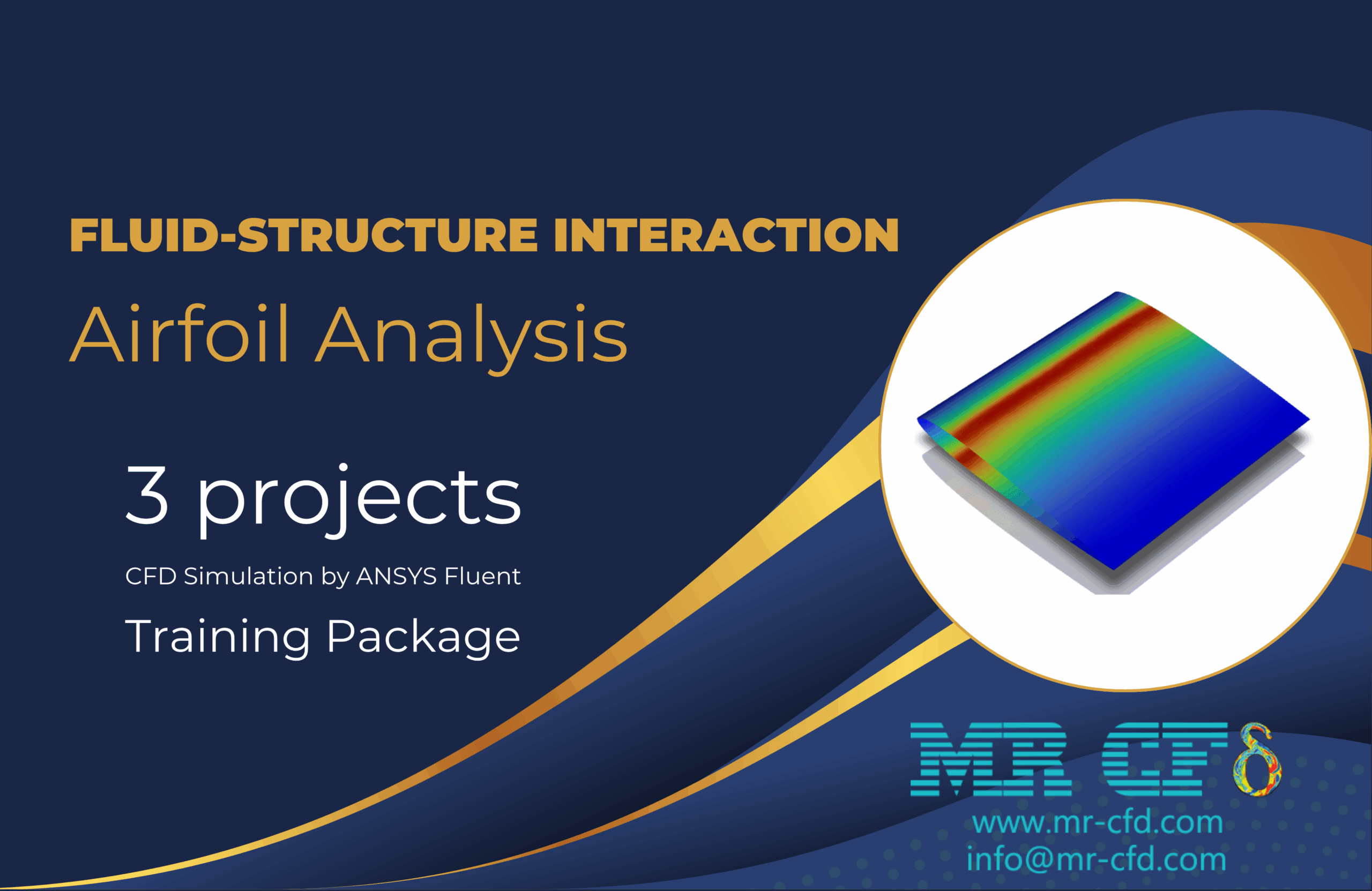
Fluid-Structure Interaction Analysis of Airfoils: CFD Simulation Training Package, 3 Projects by ANSYS Fluent
$349.00 $139.60 HPC
- NACA 0014 Airfoil FSI: Aerodynamic Loading and Structural Deformation
- Oscillating Airfoil Analysis: FSI Study of Vibration Effects
- Compressible Flow FSI Analysis for High-Speed Airfoil Applications
To Order Your Project or benefit from a CFD consultation, contact our experts via email (info@mr-cfd.com), online support tab, or WhatsApp at +44 7443 197273.
There are some Free Products to check our service quality.
If you want the training video in another language instead of English, ask it via info@mr-cfd.com after you buy the product.
Description
Fluid-Structure Interaction in Airfoil Systems: CFD Training with ANSYS Fluent
Course Description
This specialized training package delivers comprehensive hands-on experience in Fluid-Structure Interaction (FSI) analysis applied to airfoil systems using ANSYS Fluent. Through three carefully designed projects, you’ll master the techniques to analyze aerodynamic forces, structural responses, and vibration behavior in airfoils across different flow regimes—from standard subsonic conditions to high-speed applications.
What You’ll Learn:
This course focuses on the critical intersection of aerodynamics and structural mechanics in airfoil design. You’ll explore how aerodynamic loads induce structural deformations and vibrations, and how these deformations feedback to alter flow patterns and aerodynamic performance. Key learning areas include:
- Aerodynamic Force Analysis: Calculate and analyze lift, drag, and pressure distributions on airfoils under FSI conditions
- Structural Response Prediction: Evaluate stress distributions, deformations, and material behavior under aerodynamic loading
- Vibration Dynamics: Investigate flutter, forced vibrations, and frequency response in airfoil structures
- FSI Coupling Techniques: Master both one-way and two-way coupling methodologies for different application scenarios
- High-Speed Aerodynamics: Analyze compressibility effects and shock-structure interactions in high-speed airfoils
- Solution Convergence: Implement strategies for stable and accurate FSI simulations with proper mesh deformation handling
Course Projects:
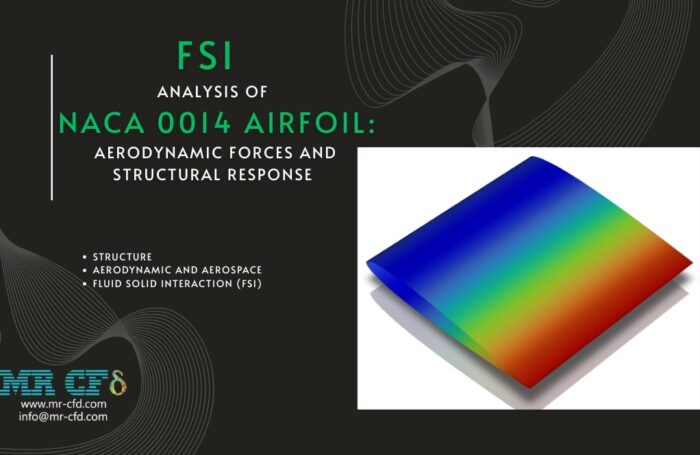
- FSI Analysis of NACA 0014 Airfoil: Aerodynamic Forces and Structural Response
- Complete FSI setup for the symmetric NACA 0014 profile
- Detailed analysis of pressure-induced structural deformations
- Quantification of aerodynamic coefficient variations due to structural flexibility
- Validation against experimental and numerical benchmarks
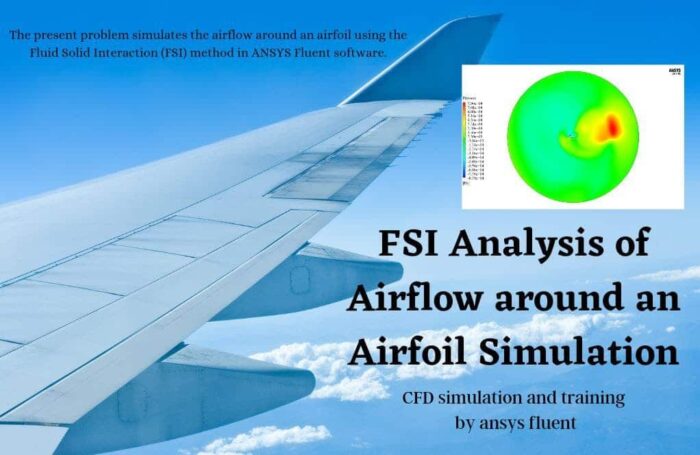
- FSI Analysis of Airflow around an Airfoil Vibration
- Investigation of forced and self-induced vibration phenomena
- Time-dependent FSI simulation of oscillating airfoils
- Frequency analysis and resonance prediction
- Damping effects and energy transfer between fluid and structure
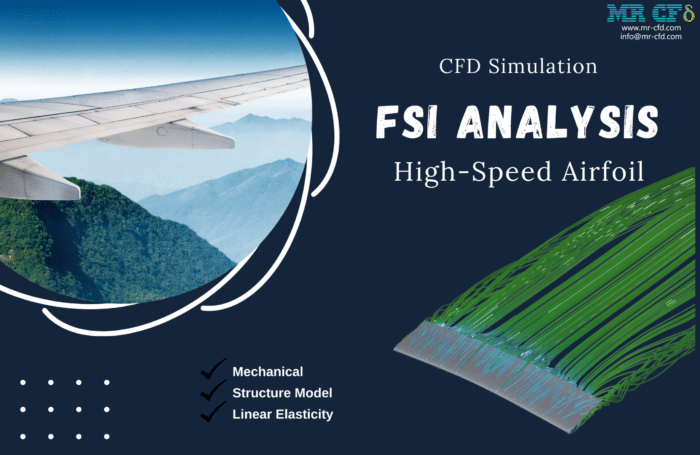
- Fluid-Structure Interaction Analysis of a High-Speed Airfoil
- Compressible flow FSI simulation techniques
- Shock wave and boundary layer interaction with structural dynamics
- Material response under high dynamic pressure loads
- Performance optimization considering aeroelastic effects
Who Should Take This Course:
- Aerospace engineers working on aircraft wing and blade design
- CFD analysts specializing in aeroelasticity and structural dynamics
- Mechanical engineers in turbomachinery and propulsion systems
- Graduate students and researchers in aerodynamics and structural mechanics
- Design engineers in UAV, helicopter rotor, and propeller development
- Professionals in wind energy sector working on blade optimization
Prerequisites:
- Working knowledge of ANSYS Fluent and basic CFD principles
- Understanding of aerodynamics fundamentals (airfoil theory, boundary layers)
- Basic structural mechanics background (stress, strain, vibration concepts)
- Familiarity with ANSYS Workbench environment (helpful)
What’s Included:
✓ Complete airfoil geometry files (NACA 0014 and high-speed profiles) ✓ Step-by-step video tutorials with detailed theoretical explanations ✓ Pre-configured mesh files with optimized settings ✓ Complete case setup files for all three projects ✓ Post-processing templates for aerodynamic and structural results ✓ Validation data and reference materials ✓ FSI coupling parameter optimization guides ✓ Troubleshooting documentation for common convergence issues ✓ Lifetime access with free updates
Learning Outcomes:
By completing this course, you will be able to:
- Set up and execute FSI simulations for airfoil configurations in ANSYS Fluent
- Analyze aerodynamic forces and their structural impact on airfoil performance
- Predict and evaluate vibration behavior in airfoil structures
- Apply appropriate turbulence models and structural material properties
- Handle mesh deformation and remeshing in FSI applications
- Interpret and validate FSI results for engineering decision-making
- Optimize airfoil designs considering fluid-structure coupling effects
- Extend FSI methodology to wings, blades, and other aerodynamic surfaces
Technical Highlights:
- Two-way FSI coupling implementation
- Dynamic mesh techniques for moving boundaries
- Unsteady aerodynamic analysis with structural feedback
- Compressible flow effects in high-speed regimes
- Modal analysis integration with CFD
- Time-accurate solution strategies
Software Requirements: ANSYS Fluent 2020 or newer with Structural Mechanics module (Student, Academic, or Commercial license)
Skill Level: Intermediate to Advanced
You must be logged in to post a review.
 Talk On WhatsApp
 Talk On WeChat

Reviews
There are no reviews yet.