
Gas and Petrochemical GOLDEN Training Course: +110 Simulations (All in One Course)
$1,099.00 Internship
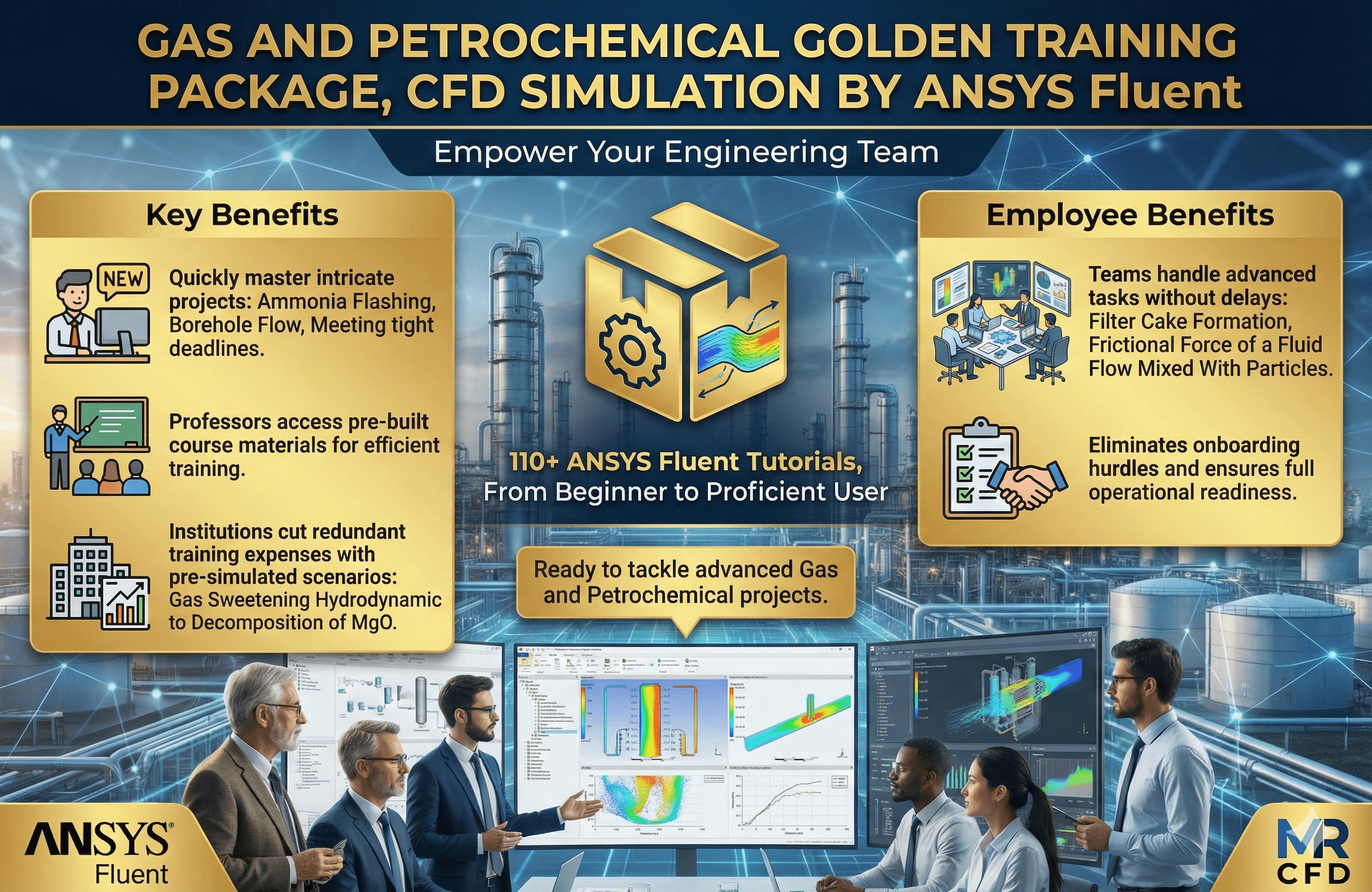
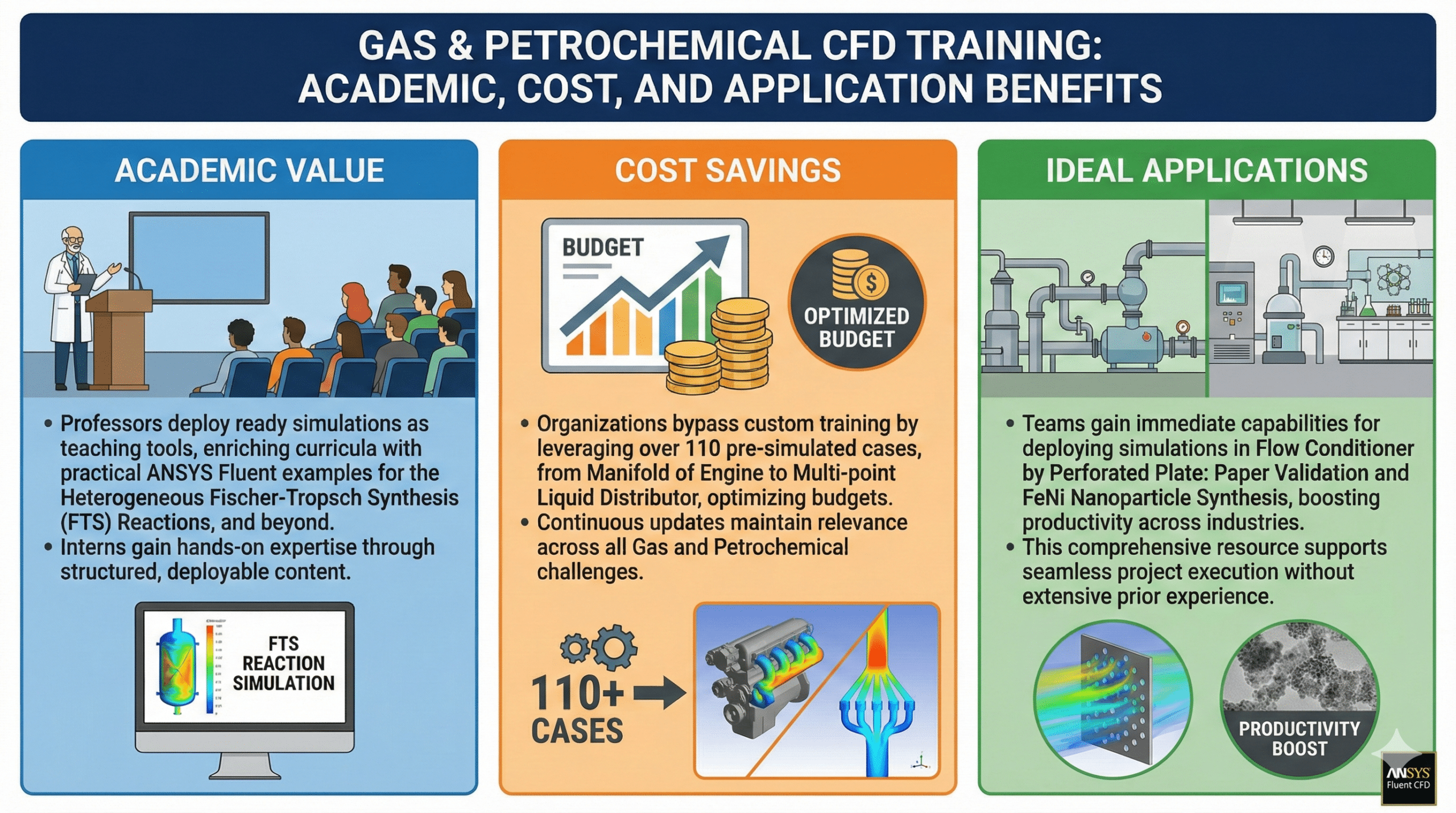
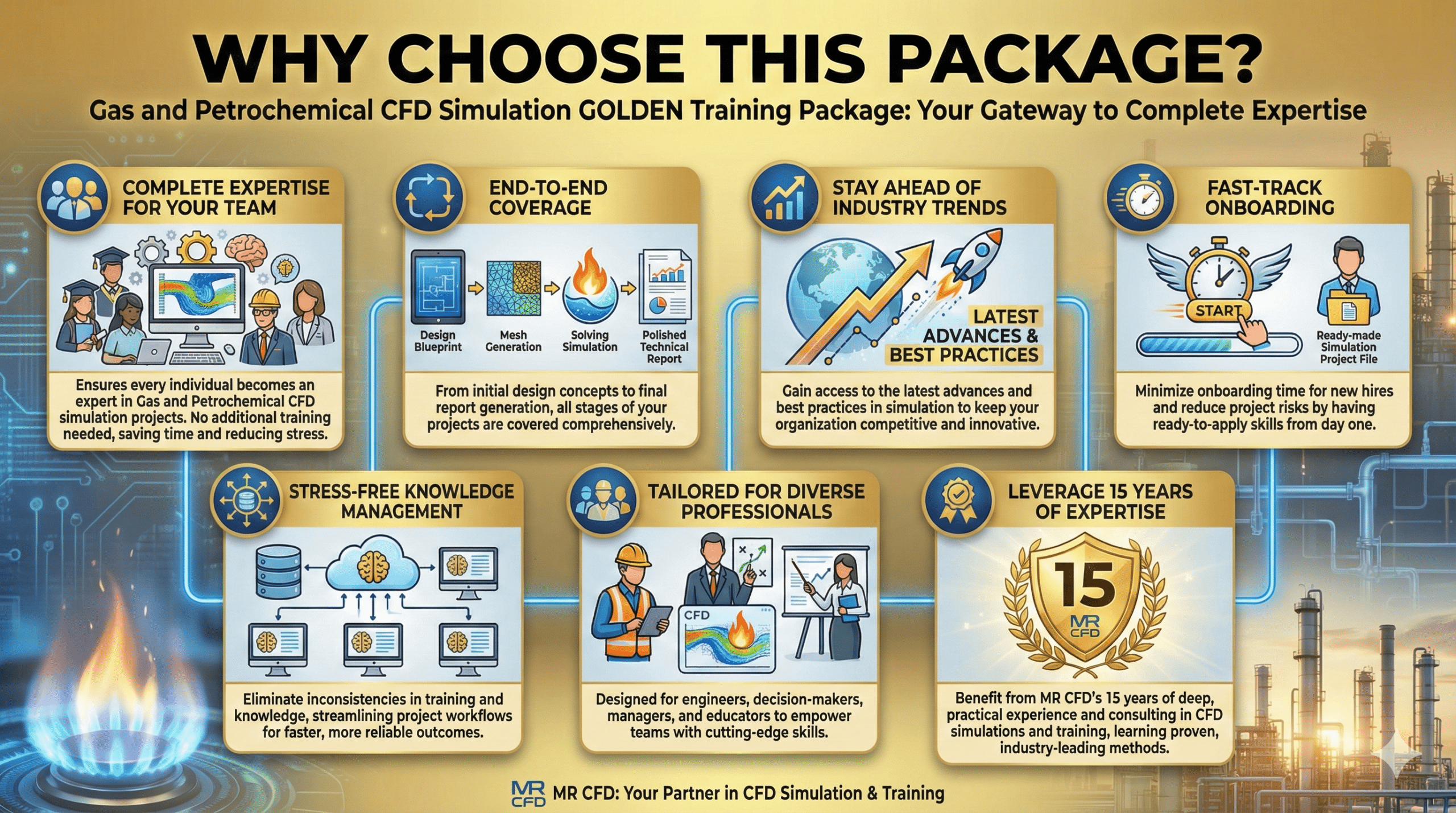
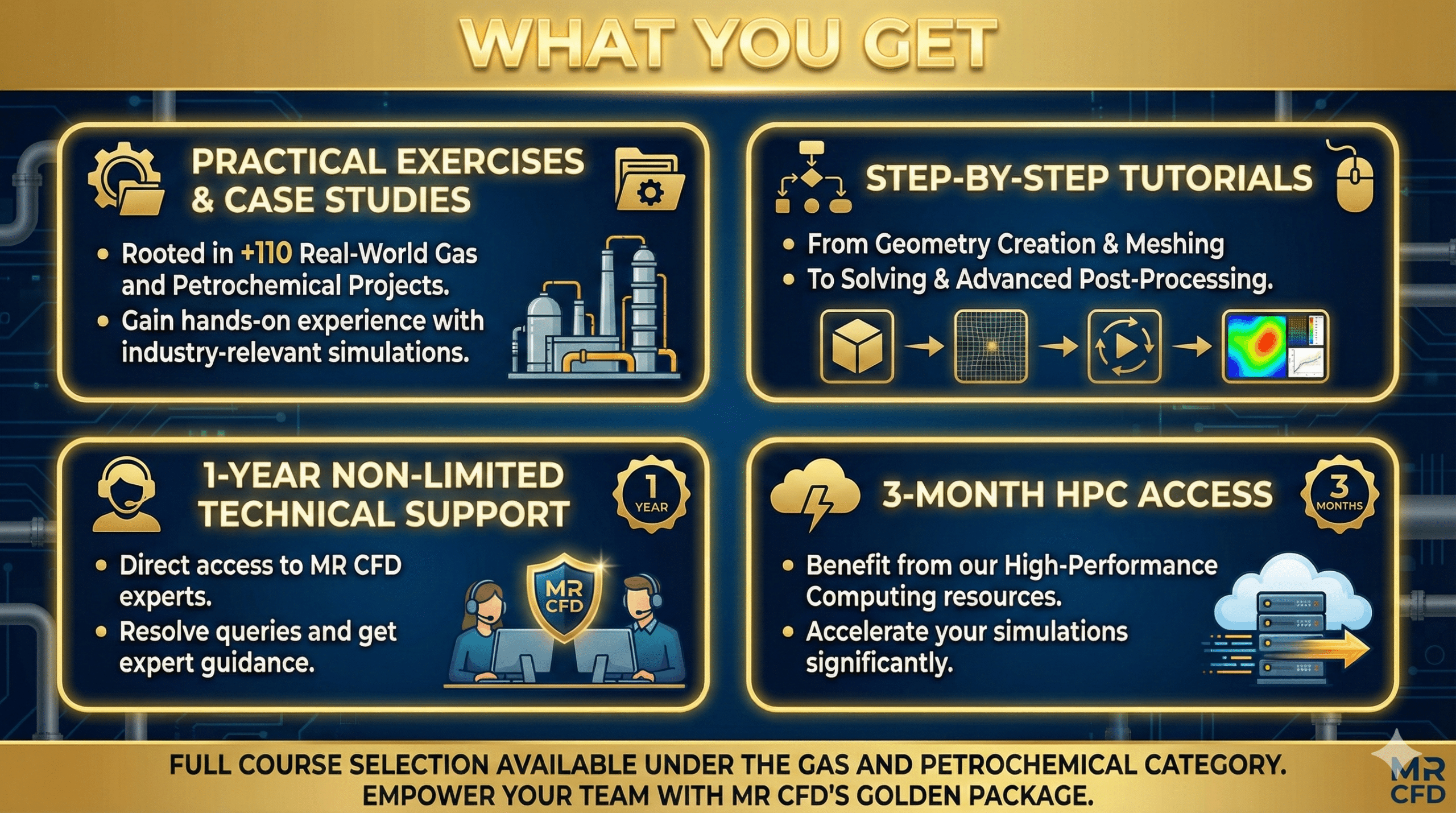
MR CFD’s Gas & Petrochemical CFD Simulation GOLDEN Training Package delivers 110+ ANSYS Fluent tutorials covering nozzles, manifolds, cyclones, reactors, pigging, erosion, FCC regenerators, fluidized beds, and etc—ideal for professors, managers, and companies upskilling teams in oil/gas processing. Real-world cases like ammonia flashing, borehole flow, engine manifolds, and Fischer-Tropsch synthesis include 1-year technical expert support and 3 months HPC access backed by 15 years’ expertise.
Click on Add To Cart and obtain the Geometry file, Mesh file, and a Comprehensive ANSYS Fluent Training Video.To Order Your Project or benefit from a CFD consultation, contact our experts via email (info@mr-cfd.com), online support tab, or WhatsApp at +44 7443 197273.
There are some Free Products to check our service quality.
If you want the training video in another language instead of English, ask it via info@mr-cfd.com after you buy the product.
Description
Complete Gas and Petrochemical CFD Course with ANSYS Fluent for Industrial Process Simulation
The Complete Gas and Petrochemical CFD Course from MR CFD is built for engineers, researchers, and technical teams who need practical simulation capability across real process-industry equipment and operating conditions. Rather than relying on outdated branded packaging, this training reframes the learning path around what professionals actually search for and need: a rigorous, application-focused program in gas and petrochemical CFD course workflows, based on industrial case diversity, solver realism, and transferable engineering methodology.
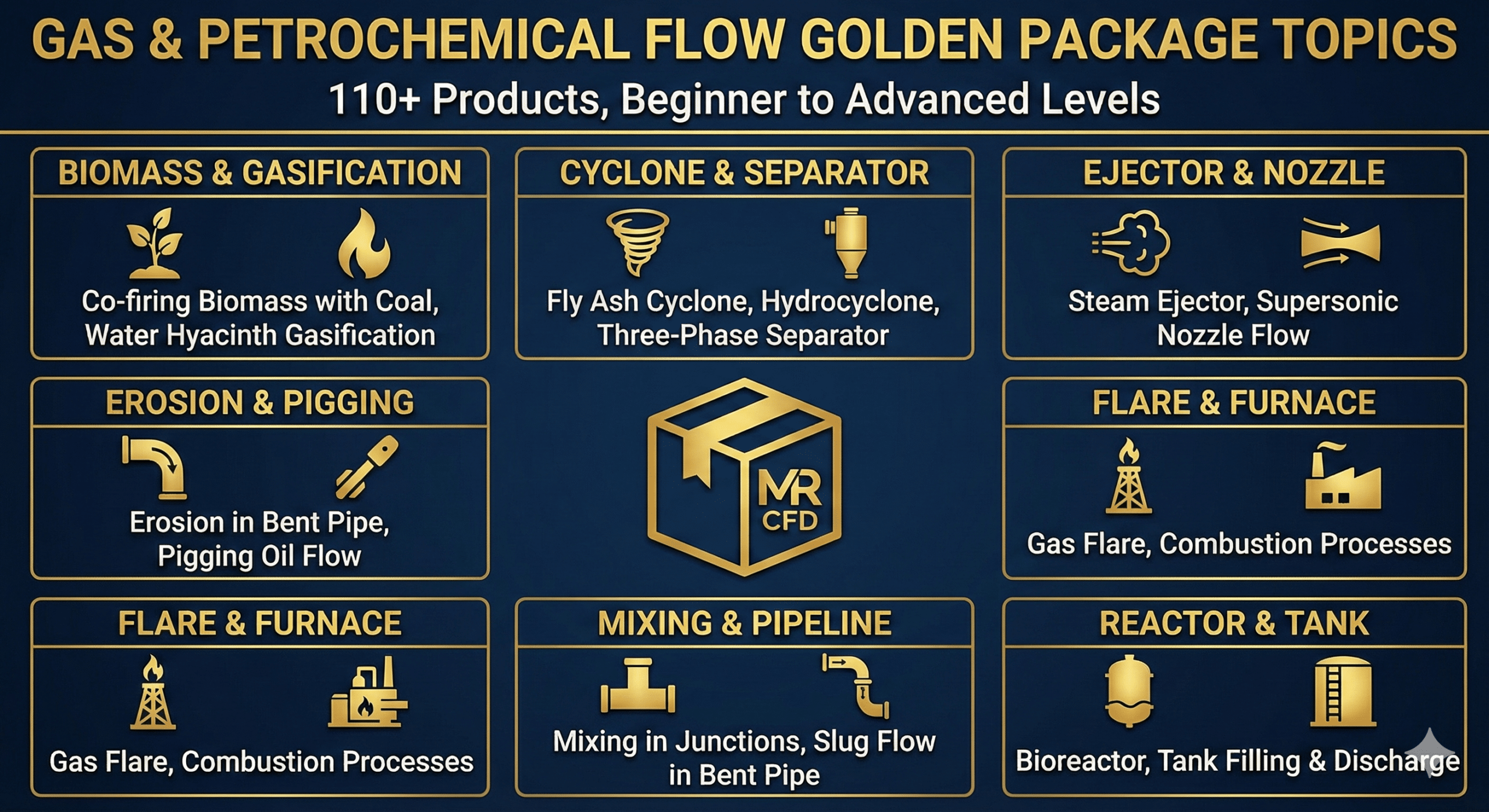
As one of the most expansive topic collections within CFD Online Courses, this training spans more than 110 simulation-driven lessons across pipelines, separators, reactors, combustion systems, cyclones, tanks, nozzles, heat exchangers, fluidized beds, and more. The goal is not simply to teach software clicks in ANSYS Fluent, but to develop decision-making ability in multiphase flow, heat transfer, particle tracking, erosion prediction, compressible flow, and combustion modeling. For engineers seeking career growth, faster onboarding, or stronger industrial problem-solving skills, this course creates clear technical ROI.
Why Gas and Petrochemical CFD Training Matters in Modern Process Engineering
The gas and petrochemical sector faces increasingly complex transport phenomena: reacting flows, particulate loading, phase interaction, pressure-drop constraints, thermal nonuniformity, and emissions control. Conventional design correlations are often insufficient when systems include recirculation zones, non-Newtonian behavior, gas-solid interaction, transient filling, or localized erosion risk. That is why demand for engineers with petrochemical CFD training continues to grow across operations, design, troubleshooting, and R&D teams.
In real industrial environments, simulation is no longer optional for many critical units. Engineers must assess separator performance, flare combustion stability, reactor mixing quality, cyclone efficiency, pipeline solids transport, and heat exchanger flow distribution before changes are implemented in the field. A specialized process industry CFD course helps bridge the gap between academic fluid mechanics and production-grade engineering workflows. It also supports faster root-cause analysis and more defensible design decisions backed by numerical evidence.
Core ANSYS Fluent, Multiphase Flow, and Combustion Modeling Skills You Will Build
By the end of this training, learners will gain structured exposure to the following capabilities:
- Technical Skills
- Setup of industrial cases in ANSYS Fluent
- Selection of turbulence, energy, and species transport models
- Use of combustion modeling methods for reactive systems
- Simulation of heat transfer, internal flow, and process equipment performance
- Modeling Skills
- Application of multiphase flow approaches including VOF, Eulerian model, DPM, and DDPM
- Representation of gas-liquid, gas-solid, and three-phase process behavior
- Modeling of compressible flow and shock wave phenomena in nozzles
- Setup of moving and rotating domains using MRF, mesh motion, and dynamic mesh
- Solver Settings
- Boundary condition development for industrial operating ranges
- Convergence monitoring and residual interpretation
- Pressure-velocity coupling and discretization strategy selection
- Sensitivity awareness for mesh density, timestep, and model stability
- Validation and Verification Skills
- Engineering interpretation of contour, vector, and streamline data
- Pressure-drop and thermal trend comparison against expected physics
- Exposure to paper validation workflows
- Better understanding of result credibility, limitations, and reporting practice
Industrial Gas and Petrochemical CFD Course Modules Across Equipment, Reactors, and Process Systems
Biomass Gasification, Combustion CFD, and Energy Conversion Simulations
This module group covers gasification-oriented cases such as co-firing, water hyacinth gasification, plasma gasification reactors, and related thermal conversion systems. Learners explore how species transport, reaction environments, and thermal fields influence conversion performance. These topics are valuable for engineers working in alternative fuels, syngas development, and waste-to-energy process analysis.
Cyclone, Hydrocyclone, and Particle Tracking Performance Analysis
Cyclone-focused lessons examine particulate separation behavior using DPM and related methods. Cases such as fly ash cyclones, hydrocyclones, and particle-laden swirling devices help learners understand vortex structure, separation efficiency, and solids handling performance. These applications are highly relevant in dust control, upstream separation, and solids classification systems.
Steam Ejector, Venturi, and Compressible Flow Equipment Simulation
Ejector and venturi modules introduce pressure-driven flow acceleration, entrainment, and two-phase behavior under industrial conditions. Learners analyze refrigeration ejectors, methane steam ejectors, and venturi scrubber behavior while strengthening their understanding of compressible flow, pressure recovery, and multiphase interaction.
Erosion Prediction, Particle Tracking, and Pipeline Integrity Studies
These chapters focus on elbows, bent pipes, obstruction channels, and particulate wear scenarios. By applying erosion prediction, DPM, and particle transport methods, learners see how geometry and flow conditions affect wall damage risk. This is especially important in oil and gas transport systems where solids can significantly reduce equipment life.
FCC Regenerator, Flare System, and Industrial Combustion Modeling
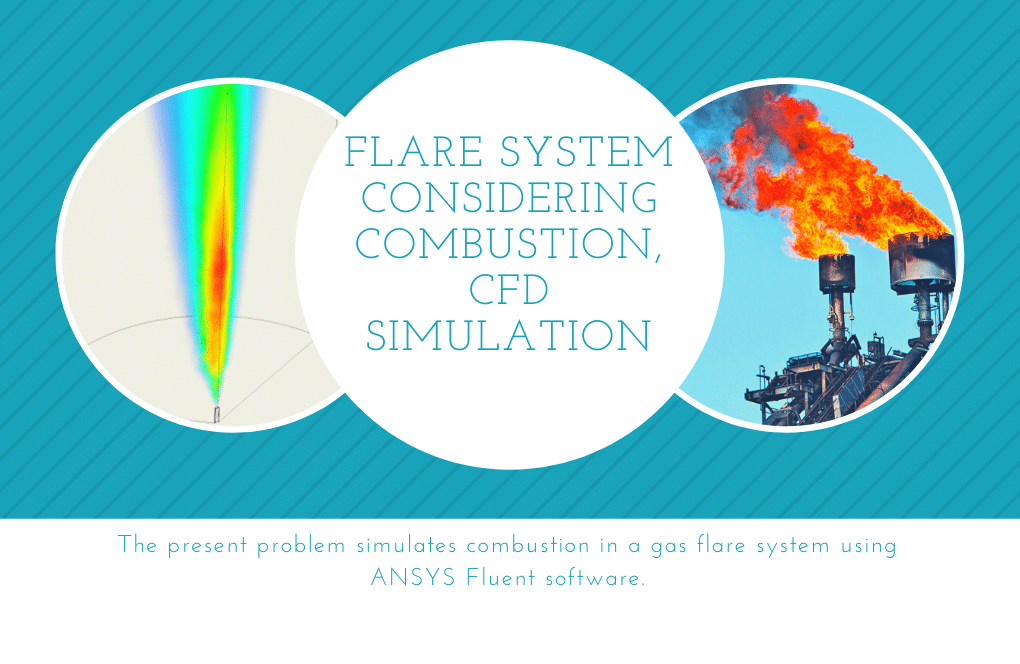
Reacting-flow cases include FCC regeneration, gas flare combustion, and pollutant formation analysis such as NO and soot behavior. These simulations develop practical exposure to combustion modeling, thermal field prediction, and emissions-relevant engineering interpretation for process safety and environmental performance.
Fluidized Bed, Eulerian Model, and Gas-Solid Reactor Behavior
Fluidized bed and related reactor cases help learners understand dense particulate flow, phase interaction, and gas-solid hydrodynamics. Industrial examples such as CFB boilers and polymerization reactors demonstrate where the Eulerian model becomes essential for realistic process simulation.
Heat Exchanger CFD, Flow Distribution, and Thermal Performance
Heat exchanger modules address shell-and-tube systems, rotary units, and air bubble injection effects. These lessons strengthen capability in heat transfer, maldistribution assessment, and thermal-hydraulic optimization, which are central to plant efficiency and equipment sizing.
Mixing Simulation, Junction Flow, and Process Uniformity Control
Mixing-related chapters cover T-junctions, Y-junctions, ethanol-gasoline pipelines, and baffle-enhanced mixing systems. The engineering focus is on scalar uniformity, pressure loss, and residence effects, supporting applications in blending, fuel preparation, and process conditioning.
Nozzle CFD, Shock Wave Analysis, and Supersonic Internal Flow
Nozzle lessons include convergent-divergent flow, inviscid configurations, and particle transport through accelerating passages. These topics are important for engineers dealing with compressible flow, shock wave location, and gas expansion performance in process or propulsion-adjacent systems.
Dynamic Mesh Pigging, Pump Rotation, and Moving Boundary Workflows
Pigging simulations and centrifugal pump modules introduce moving reference frames, transient interfaces, and rotating machinery techniques using MRF, mesh motion, and dynamic mesh. These workflows are essential for anyone handling operational transients or rotating process equipment.
Chemical Reactor CFD, Bubble Columns, and Catalytic Process Simulation
Reactor chapters cover bioreactors, catalytic combustion, CHEMKIN-based reaction systems, and bubble columns. Learners build deeper understanding of mixing, conversion, reaction zones, and thermal coupling in process-intensified units.
Separator, VOF, and Multiphase Process Equipment Performance
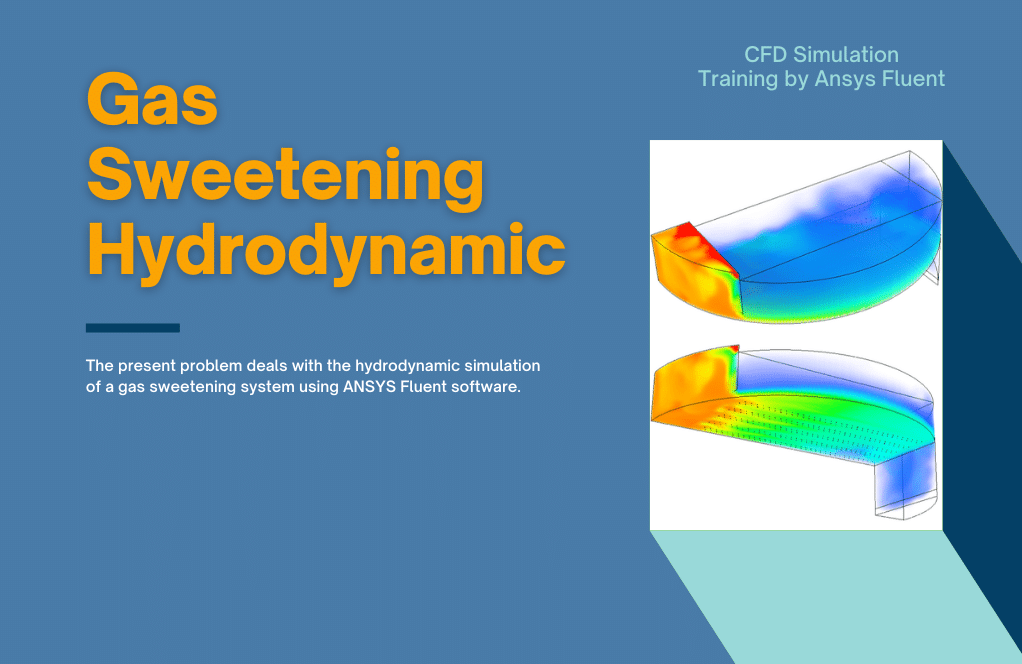
Two-phase, three-phase, gas-liquid, and drilling-mud separator lessons show how multiphase flow modeling supports phase disengagement analysis. These are core applications for petroleum processing, produced-fluid handling, and upstream treatment systems.
Tank Filling, Explosion Dispersion, and Thermal Storage Analysis
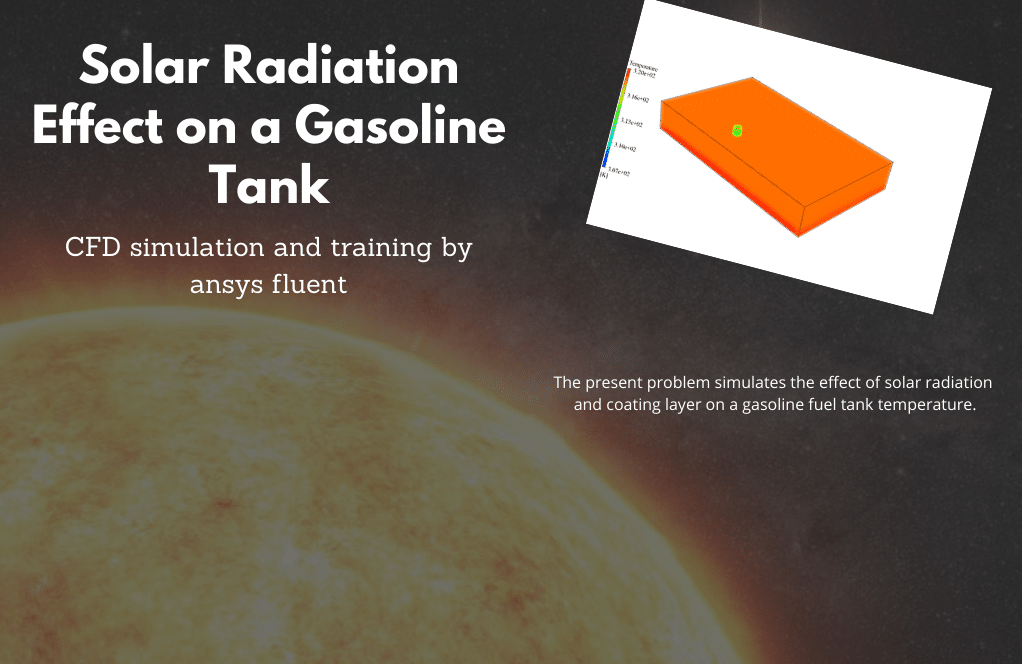
Tank simulations include charging, discharge, three-phase filling, pollutant dispersion, solar loading, and solidification/melting effects. These cases connect VOF, thermal analysis, and transient process behavior to storage safety and operational management.
Professional CFD Skills and Simulation Workflows You Will Develop
| Area | Skills Developed |
| CFD Skills | Meshing strategy, solver setup, post-processing, multiphase flow modeling, combustion modeling, particle tracking |
| Core Engineering Competencies | Pressure-drop interpretation, thermal performance analysis, separator efficiency insight, equipment troubleshooting, design sensitivity awareness |
| Industry-Standard Simulation Workflows | Geometry to mesh to solve to validate, benchmark comparison, paper validation, reporting for industrial decision support |
This structure also creates natural pathways toward advanced Related Courses, deeper solver assistance through AI Assistant tools, and infrastructure expansion for large models using HPC Services.
Real-World Oil Gas CFD Simulation Training Applications Across Industry
This course directly supports use cases in:
- Oil and gas transport systems
- Petrochemical process plants
- Gas treatment and separation facilities
- Combustion and flare performance studies
- Chemical and catalytic reactor design
- Heat exchanger optimization
- Fluidized bed and gasification systems
- Storage tank safety and pollutant dispersion analysis
Because the course spans broad equipment classes, it is also useful for engineering teams that later require Consulting Services or production-scale computational deployment.
Who Should Enroll in This Complete CFD Course for Process Industries
This training is designed for:
- Engineering students seeking industrially relevant simulation capability
- MSc and PhD researchers working on process, energy, or reacting-flow topics
- Industry engineers handling troubleshooting, optimization, or design validation
- CFD specialists expanding into gas, petrochemical, and multiphase applications
- Organizations building onboarding pathways or technical upskilling plans
- Early-career learners considering an Internship Program aligned with applied simulation work
Why MR CFD Stands Out for Industrial CFD Training for Petrochemical Applications
MR CFD combines broad application coverage with practical engineering orientation. Instead of limiting the learner to simplified academic examples, the training emphasizes diverse industrial equipment classes, realistic physics, and transferable workflows. The value is not just volume, but technical range: from erosion prediction and dynamic mesh to CHEMKIN, separators, and combustion systems.
For teams and individuals alike, this creates a unified route through the wider ecosystem of CFD Courses, while preserving the option to scale into advanced projects, expert review, and compute-heavy studies.
Learning Progression from Fundamentals to Advanced Process Industry CFD Course Practice
A strong learning path for this course looks like:
- Beginner: internal flow, meshing basics, simple thermal cases
- Intermediate: multiphase flow, mixing, separators, pumps, and heat exchangers
- Advanced: reactors, flare combustion, shock wave analysis, fluidized beds, and validated industrial studies
After completing this course, learners can continue into specialized validation tracks, sector-specific Related Courses, or larger industrial workflows supported by HPC Services.
Start Your Gas and Petrochemical CFD Course Journey with MR CFD
If your goal is to build credible engineering capability in process-equipment simulation, this course offers one of the most complete application libraries available in a single training path. The emphasis on industrial breadth, practical solver exposure, and real engineering relevance makes it suitable for both rapid onboarding and long-term professional growth.
Choose MR CFD to strengthen your modeling judgment, expand your applied ANSYS Fluent skills, and develop simulation workflows that translate into real plant, product, and research outcomes.
FAQ
1. What is covered in a gas and petrochemical CFD course?
A gas and petrochemical CFD course typically covers internal flow, multiphase flow, combustion modeling, heat transfer, particle tracking, and process equipment simulation.
It also includes practical workflows in ANSYS Fluent for meshing, solver setup, convergence control, and post-processing.
2. Is this petrochemical CFD training suitable for beginners?
Yes, the course can support beginners if they want a structured path from basic meshing and boundary conditions to advanced industrial cases.
It is also useful for intermediate users who need exposure to validated petrochemical applications.
3. Which software is used in this ANSYS Fluent gas industry course?
The main software focus is ANSYS Fluent, with selected references to related workflows such as CFX where relevant.
Learners typically practice geometry preparation, meshing, physics setup, numerical solution, and engineering interpretation.
4. Will I learn multiphase flow simulation for oil and gas applications?
Yes, multiphase flow is central to many petrochemical problems such as separators, tank filling, slurry transport, hydrocyclones, and gas-liquid devices.
You will encounter models like VOF, Eulerian model, DPM, and DDPM depending on the case.
5. Does the course include combustion CFD course topics?
Yes, combustion-related modules often include flare systems, furnaces, FCC regeneration, emissions prediction, and reacting flow simulations.
These topics may involve species transport, CHEMKIN, soot/NO analysis, and thermal performance evaluation.
6. Can this course help with pipeline CFD simulation projects?
Absolutely. Pipeline-related modules commonly address pressure loss, particle transport, erosion, slug flow, and bend optimization.
These are highly relevant for troubleshooting and design work in process plants and transport systems.
7. Are reactor simulations included in the training?
Yes, reactor topics may include catalytic reactors, bubble columns, bioreactors, polymerization systems, and gasification reactors.
These cases help learners understand residence time, species conversion, heat transfer, and reacting multiphase behavior.
8. Is there any focus on industrial validation?
Yes, strong courses include paper validation and comparison against known benchmarks or published studies.
This is important for building confidence in mesh quality, model selection, and engineering credibility.
9. Who should enroll in an industrial CFD training for petrochemical applications?
The course is suitable for chemical, mechanical, energy, and process engineers, along with graduate students and R&D teams.
It is especially valuable for professionals working on industrial equipment, process optimization, and simulation-driven design.
10. What job skills can I gain from this process industry CFD course?
You can develop skills in preprocessing, solver setup, turbulence and reacting-flow modeling, verification, and technical reporting.
These competencies support careers in energy, process engineering, equipment design, consulting, and simulation services.
You must be logged in to post a review.
 Talk On WhatsApp
Reviews
There are no reviews yet.