


Oscillating Multiphase Flow with Dynamic Mesh
$300.00 $180.00 HPC
- In the oscillating multiphase CFD study, the interaction of water and air inside a narrow rectangular channel is investigated using ANSYS Fluent.
- The geometry is created in ANSYS Design Modeler and meshed with a structured grid of 480,760 cells in ANSYS Meshing.
- The Volume of Fluid (VOF) method is applied for tracking the water and air interface, with water defined as the primary phase and air as the secondary phase.
- A dynamic mesh technique with smoothing and re-meshing options is enabled, along with a moving wall defined by a User-Defined Function (UDF).
To Order Your Project or benefit from a CFD consultation, contact our experts via email (info@mr-cfd.com), online support tab, or WhatsApp at +44 7443 197273.
There are some Free Products to check our service quality.
If you want the training video in another language instead of English, ask it via info@mr-cfd.com after you buy the product.
Description
Oscillating Multiphase Flow with Dynamic Mesh Simulation in ANSYS Fluent
Description
The Oscillating project focuses on the numerical simulation of a two-phase flow using ANSYS Fluent. The study models the interaction between water and air inside a narrow rectangular channel under the effect of gravity. The objective of this simulation was to observe the fluid interface dynamics, velocity distribution, and mesh performance in resolving multiphase flow using the Volume of Fluid (VOF) method combined with dynamic mesh techniques. Such simulations are essential in understanding engineering systems’ free-surface instabilities, wave formation, and multiphase interactions.
Geometry and Mesh
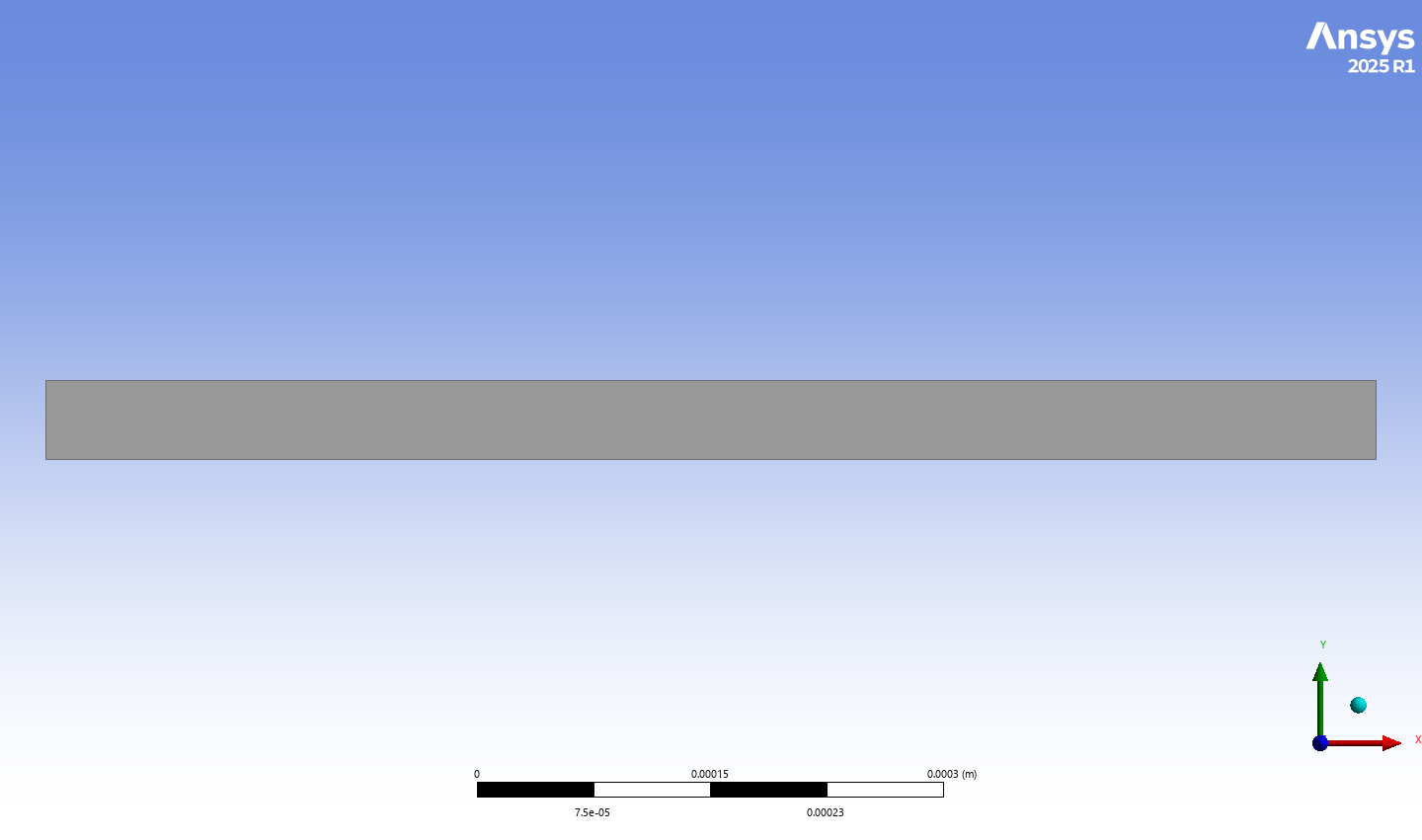
The computational domain of the Oscillating project is designed as a two-dimensional rectangle with dimensions of 0.000856081 m × 0.0000513648 m. This narrow channel represents the fluid region in which water and air interact. A structured mesh was generated in ANSYS Meshing, ensuring higher resolution across the interface region to capture free-surface deformations. The final mesh comprised 480,760 cells, allowing good spatial accuracy while balancing computational cost. The mesh quality was verified to ensure smooth cell distribution, preventing numerical instabilities during the transient simulation.
Setup
The numerical setup of the Oscillating project was performed using the ANSYS Fluent solver. A pressure-based, transient solver was chosen to capture time-dependent flow characteristics properly. Gravity was enabled in the Y-direction (–9.81 m/s²) to simulate realistic fluid behavior. A multiphase VOF model was applied, with water as the primary phase and air as the secondary phase. A dynamic mesh model with smoothing and re-meshing options was enabled to account for moving boundaries.
Additionally, the top moving wall was controlled by a User-Defined Function (UDF) to introduce desired motion for the testing phase interface effects. For numerical schemes, SIMPLE was used for pressure-velocity coupling, and standard initialization was carried out. A patch condition was applied to half of the domain to initialize it with water, creating a clear air–water interface.
Results
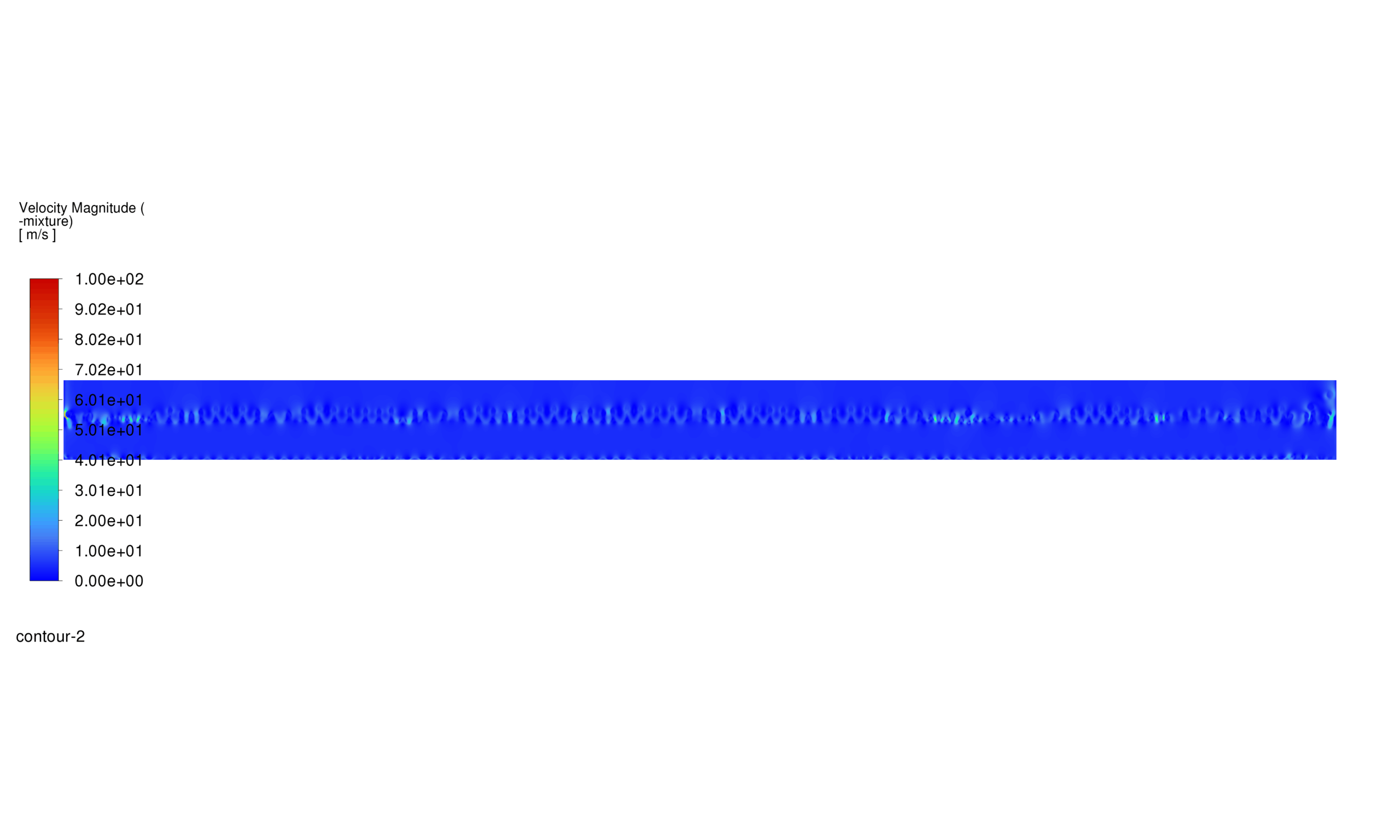
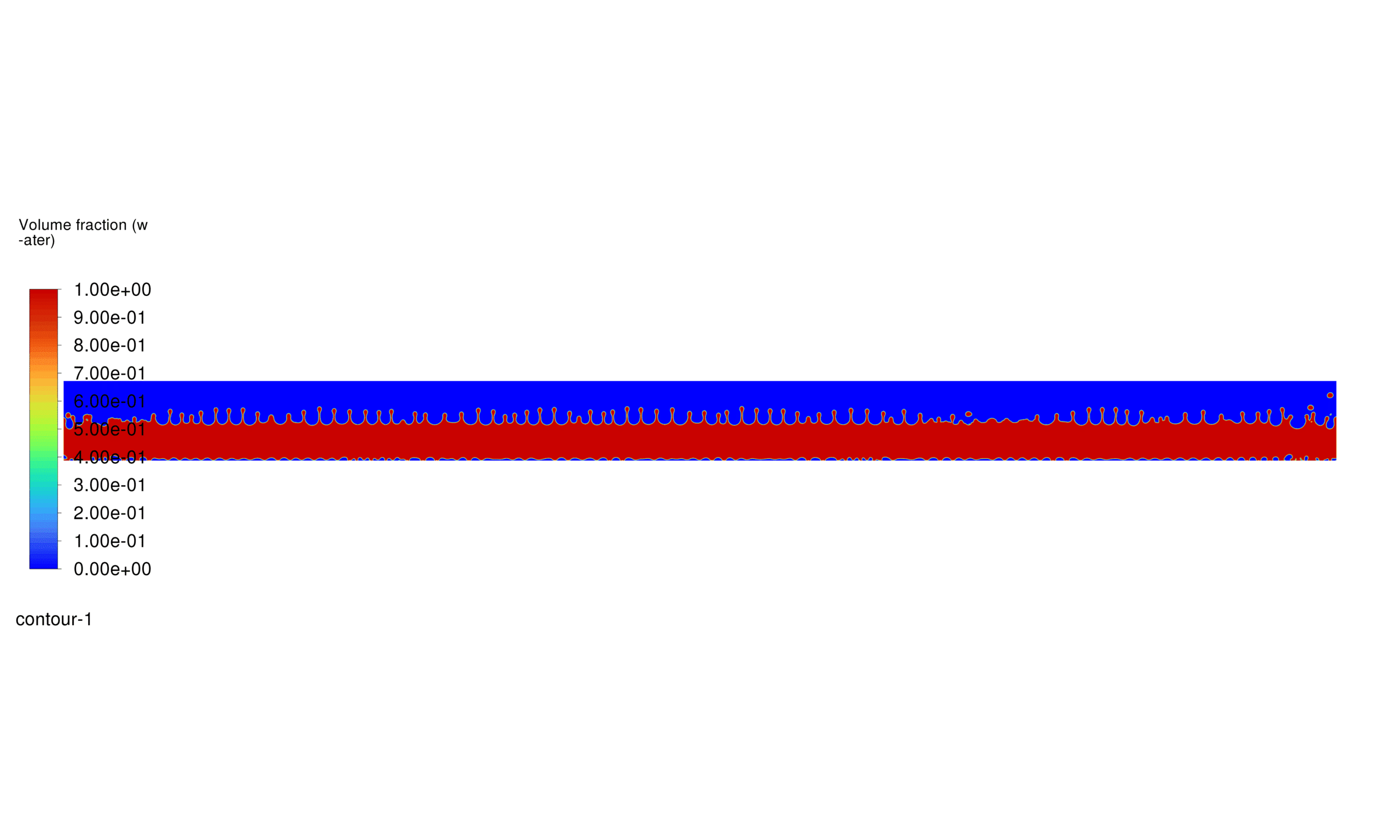
The simulation produced detailed insights into the flow dynamics. The volume fraction contour clearly showed the evolution of the water–air interface, where instabilities and surface waves developed due to the effect of gravity and wall movement. The velocity magnitude contour indicated regions of high-speed flow near the interface, with velocity values above 60 m/s in localized regions. The results confirmed that the mesh was able to capture fine surface deformation patterns, as shown in the detailed contour plots. Overall, the simulation successfully demonstrated multiphase flow behavior in a confined domain, providing a basis for further parametric studies, such as the effect of wall velocity, geometry scaling, or mesh refinement.
You must be logged in to post a review.

 Talk On WhatsApp
 Talk On WeChat

Reviews
There are no reviews yet.