

Projectile Cavitation (3D) CFD Simulation
$140.00 $84.00 HPC
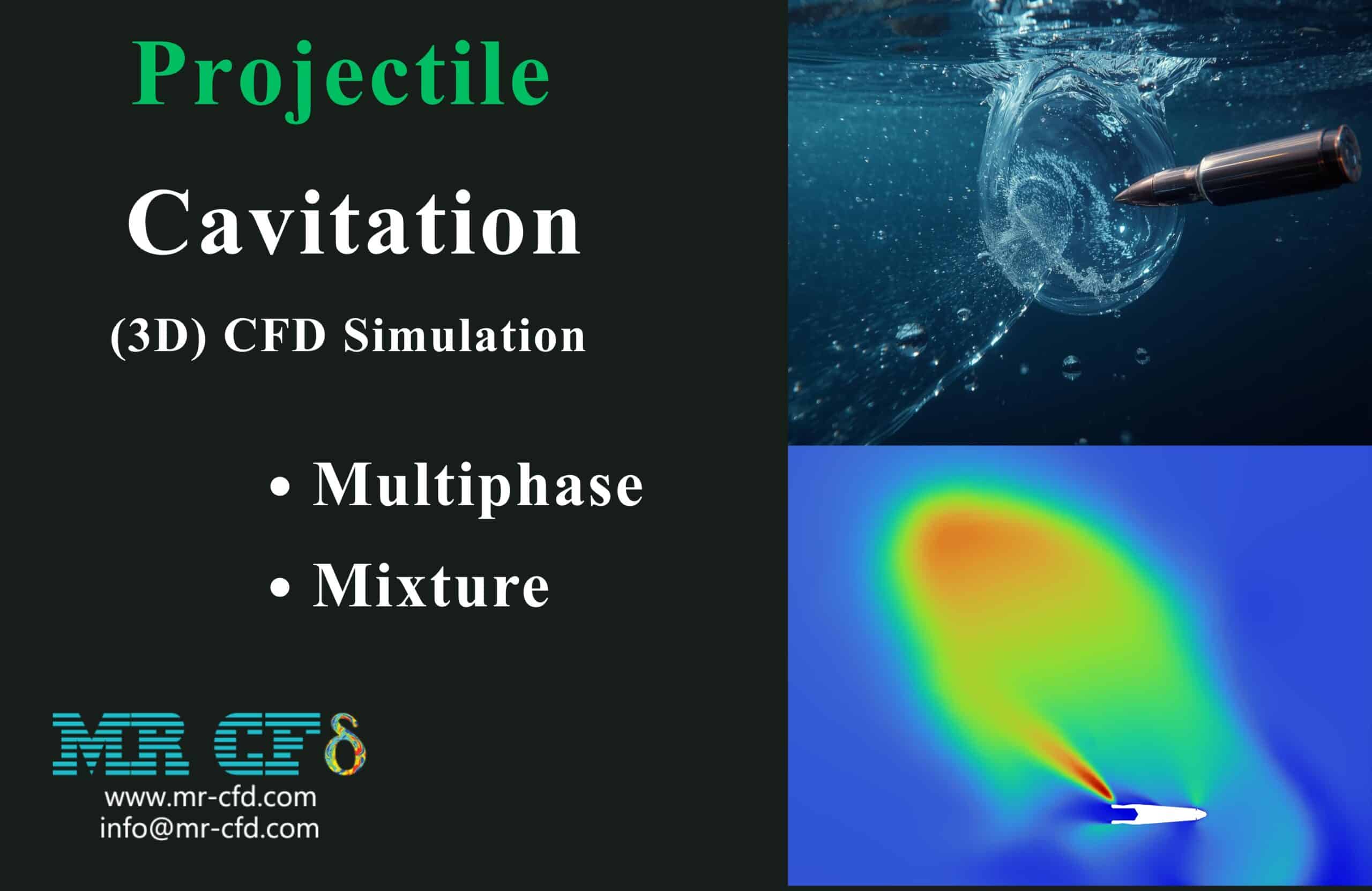
- The projectile cavitation study investigates the formation and development of a vapor cavity around a projectile
- 3D transient CFD of a projectile moving obliquely in water using ANSYS Fluent, with mixture cavitation and realizable
- Two inlet velocities (10 and 20 m/s) are applied to study cavitation inception and development.
- At 10 m/s the vapor cavity forms only locally and collapses quickly, so cavitation disappears.
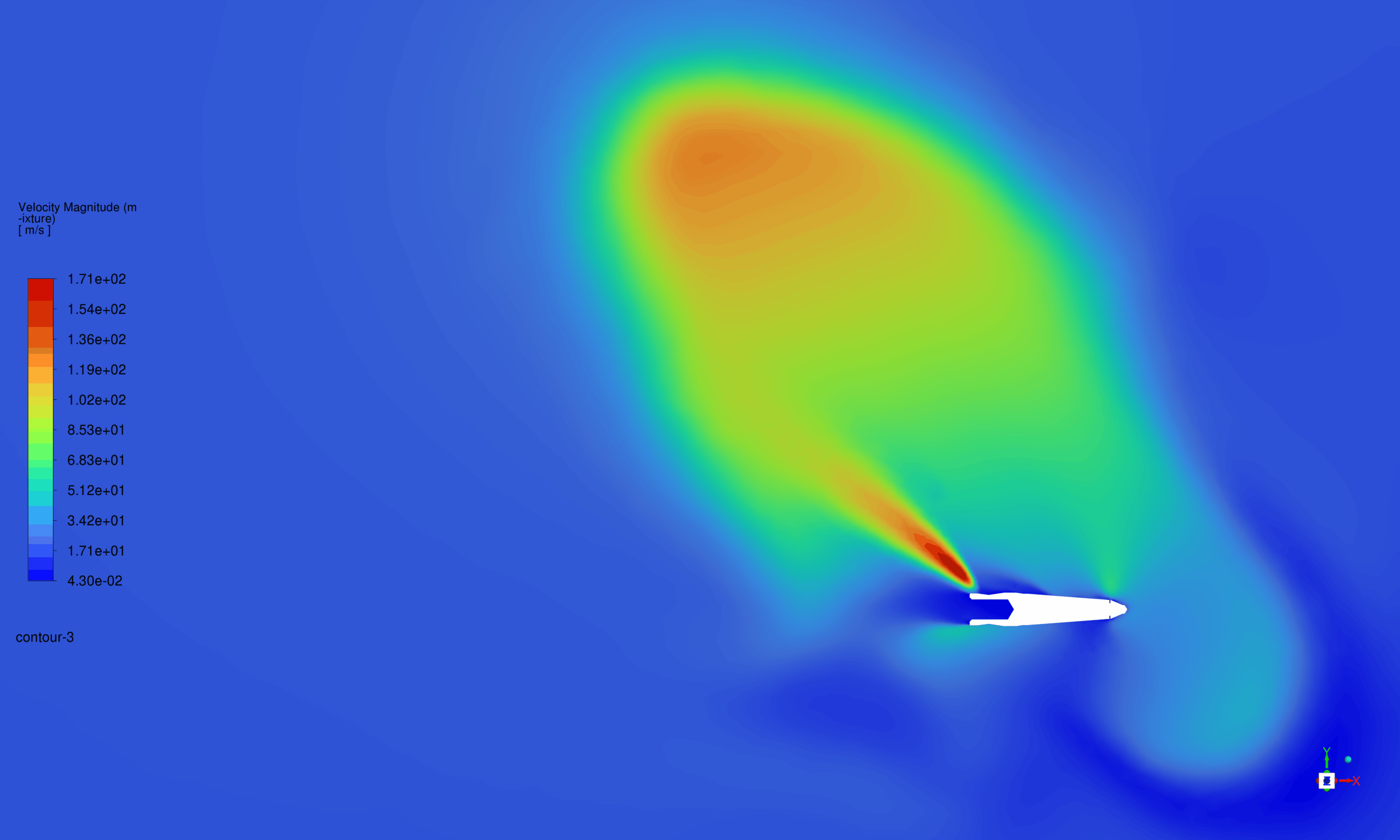
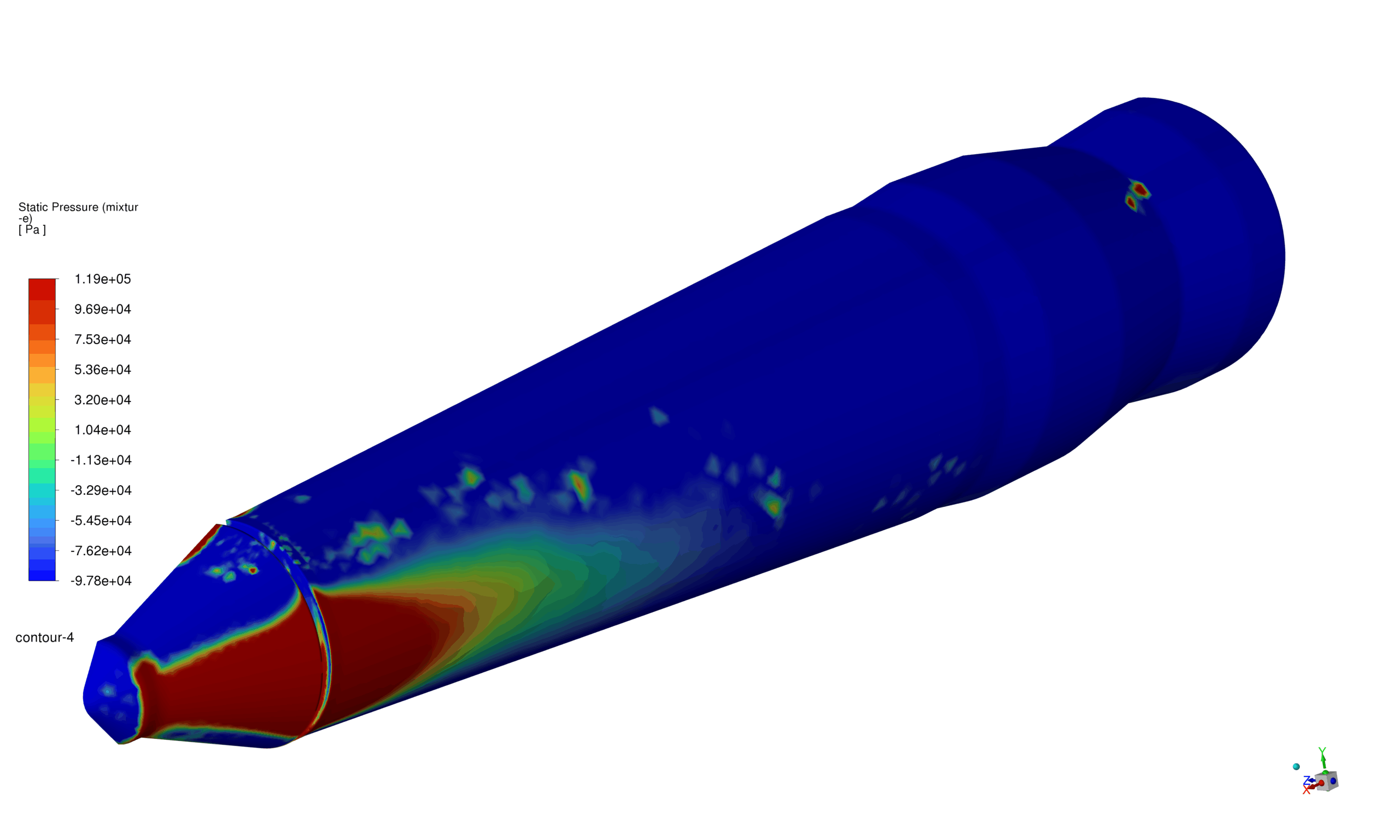
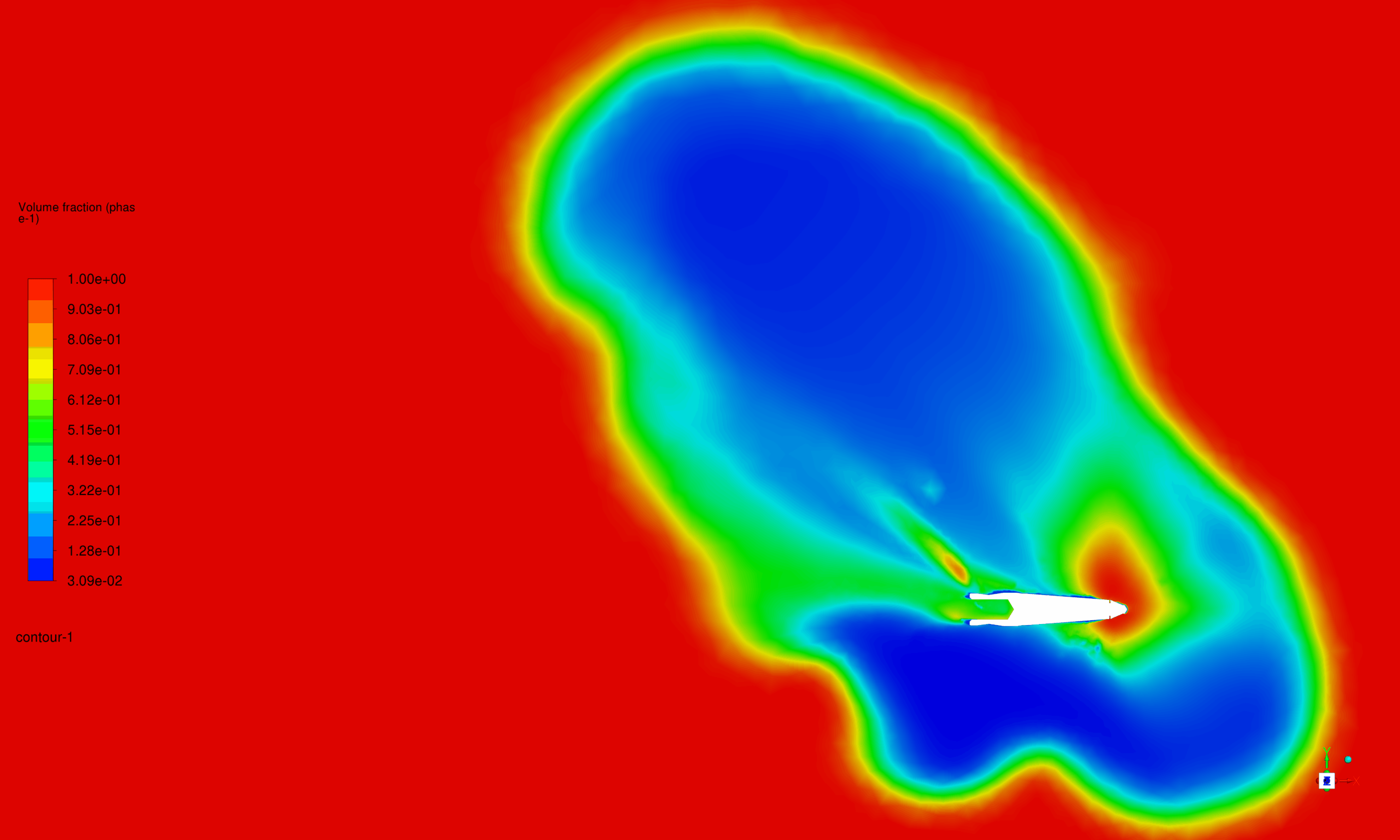
- At 20 m/s a large, stable cavity develops around the projectile and extends into the wake.
To Order Your Project or benefit from a CFD consultation, contact our experts via email (info@mr-cfd.com), online support tab, or WhatsApp at +44 7443 197273.
There are some Free Products to check our service quality.
If you want the training video in another language instead of English, ask it via info@mr-cfd.com after you buy the product.
Description
Projectile Cavitation (3D) CFD Simulation, Using ANSYS Fluent
Description
The projectile cavitation study investigates the formation and development of a vapor cavity around a rigid axisymmetric projectile entering a quiescent water domain at an oblique angle, using a numerical setup extended from an existing 2D projectile cavitation template. The flow is modeled as incompressible, gravity-driven, and turbulent, with a special focus on how the inflow velocity affects the inception, growth, and collapse of cavitation structures in the projectile wake.
Geometry and mesh
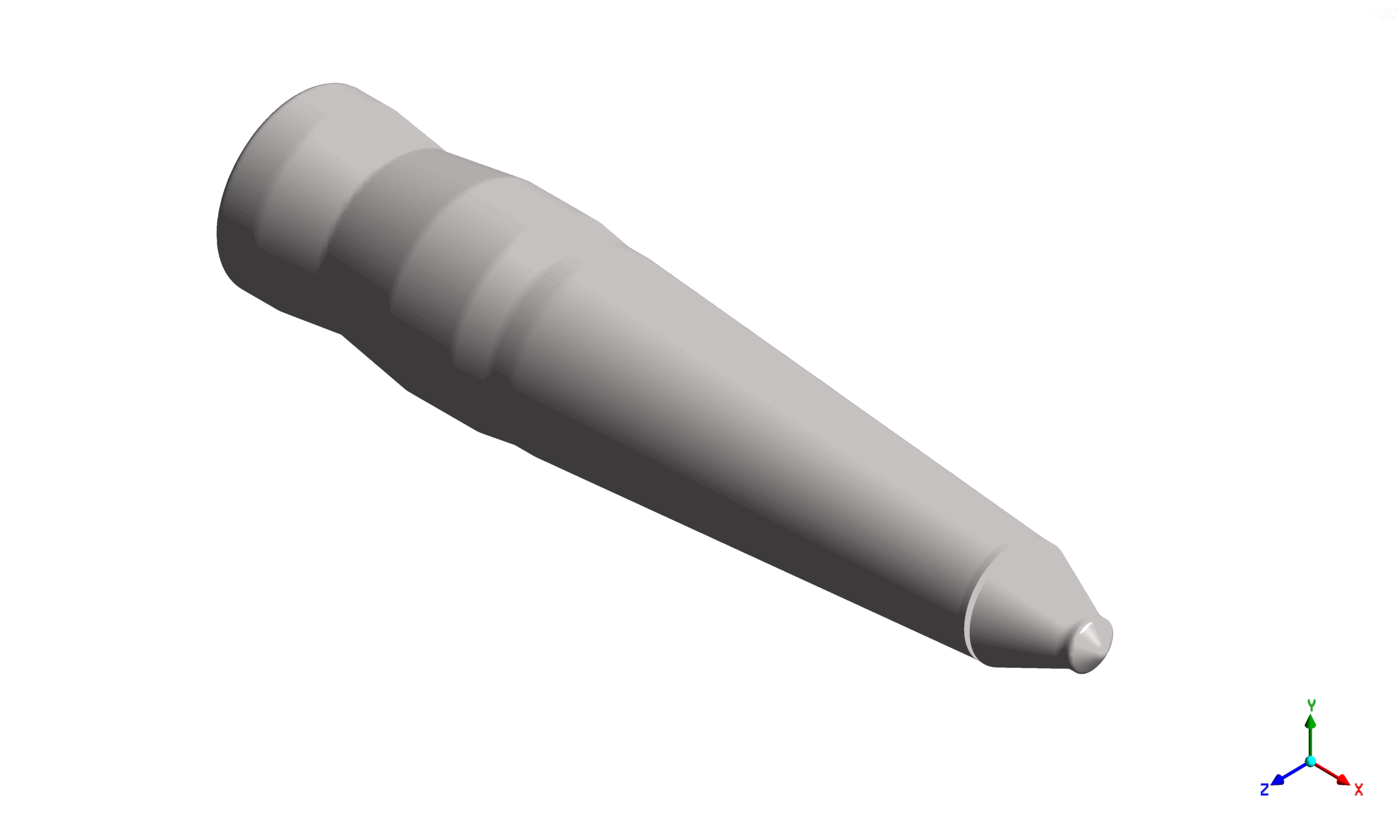
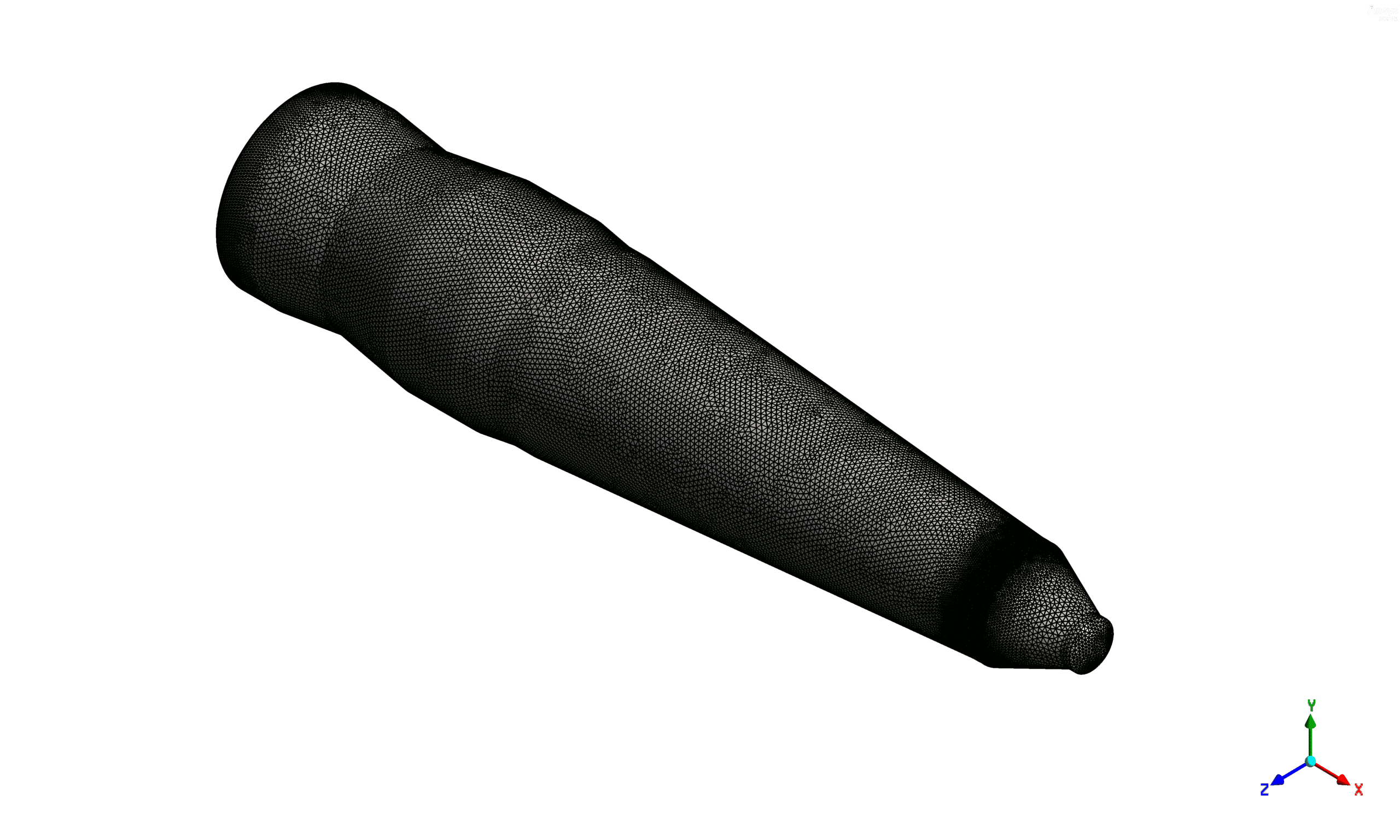
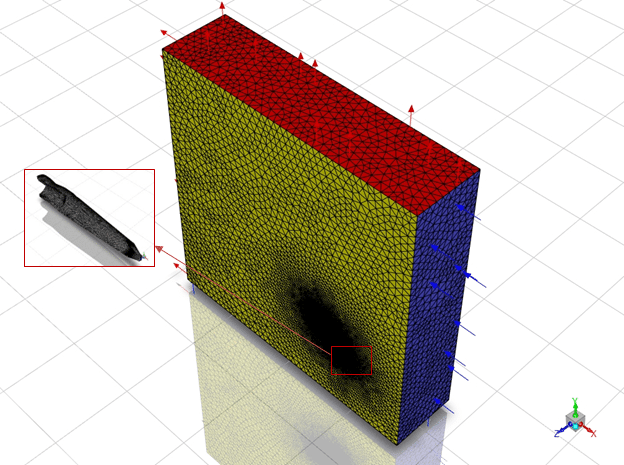
The computational domain comprises a large water region surrounding a streamlined projectile with multiple shoulder steps, designed to reproduce the hydrodynamic conditions of the reference 2D case while allowing for full 3D cavitation development. A tetrahedral unstructured mesh with approximately 3.8 million cells is generated in ANSYS Meshing, with local refinement in the projectile boundary layer and wake to resolve steep pressure gradients and the liquid–vapor interface.
Solver model and settings
The simulation of projectile cavitation is carried out in ANSYS Fluent using a pressure-based transient solver, with gravity activated to account for body forces. The Mixture multiphase model is employed, featuring liquid water as the primary phase and water vapor as the secondary phase; cavitation is enabled through the built-in mass-transfer model. Turbulence is modeled by the realizable model, which provides robust performance for separated shear flows around bluff bodies, and pressure–velocity coupling uses the SIMPLE algorithm with standard initialization. Two inflow conditions are imposed at the velocity inlet: 10 m/s and 20 m/s, both oriented by specifying velocity components , while pressure outlet and no‑slip wall conditions are applied downstream and on the projectile surface, respectively.
For more information on the underlying 2D methodology and training resources, please refer to the “Projectile Cavitation (2D) CFD Simulation Using ANSYS Fluent” project, available on the MR CFD website: https://www.mr-cfd.com/shop/projectile-cavitation-2d-cfd-simulation-using-ansys-fluent/.
Results
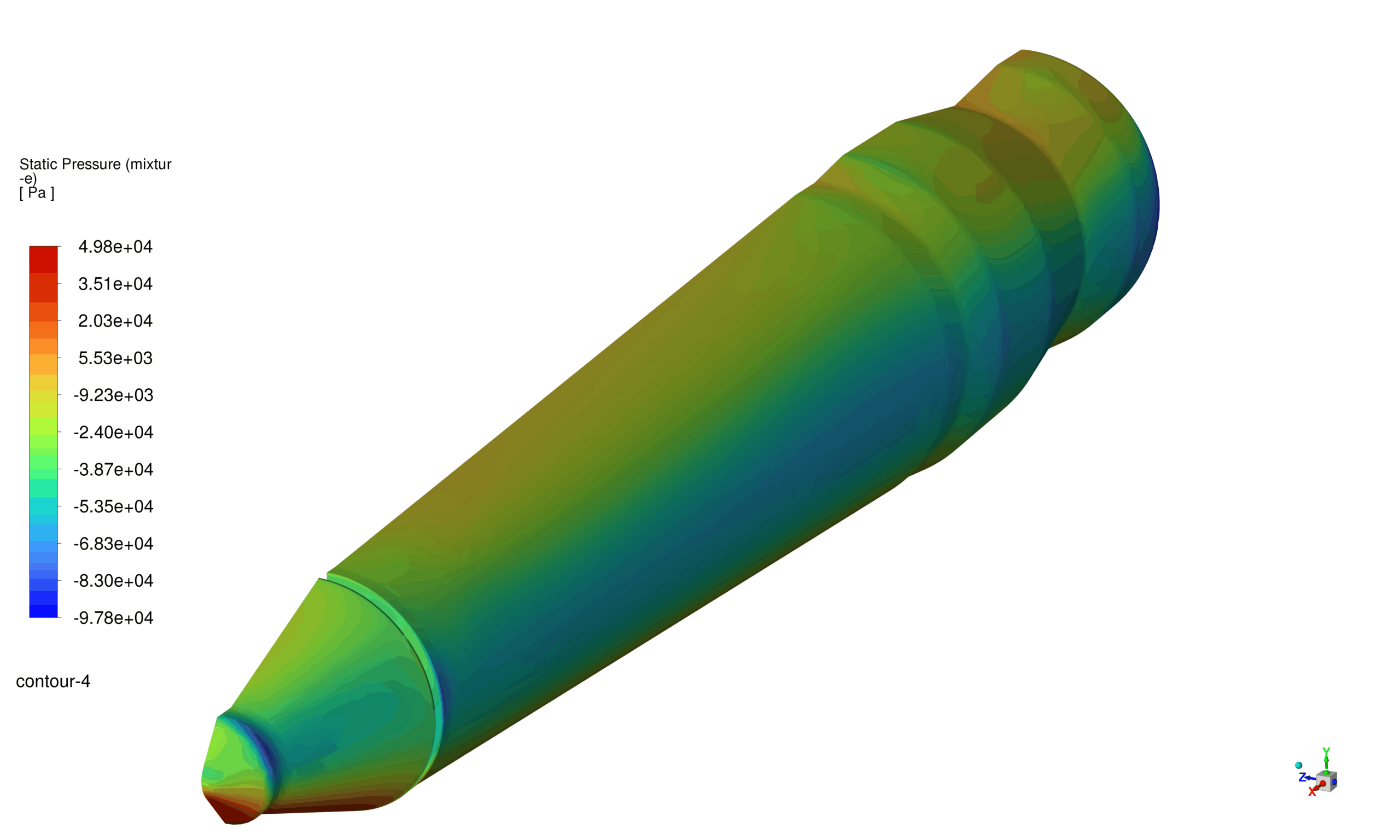
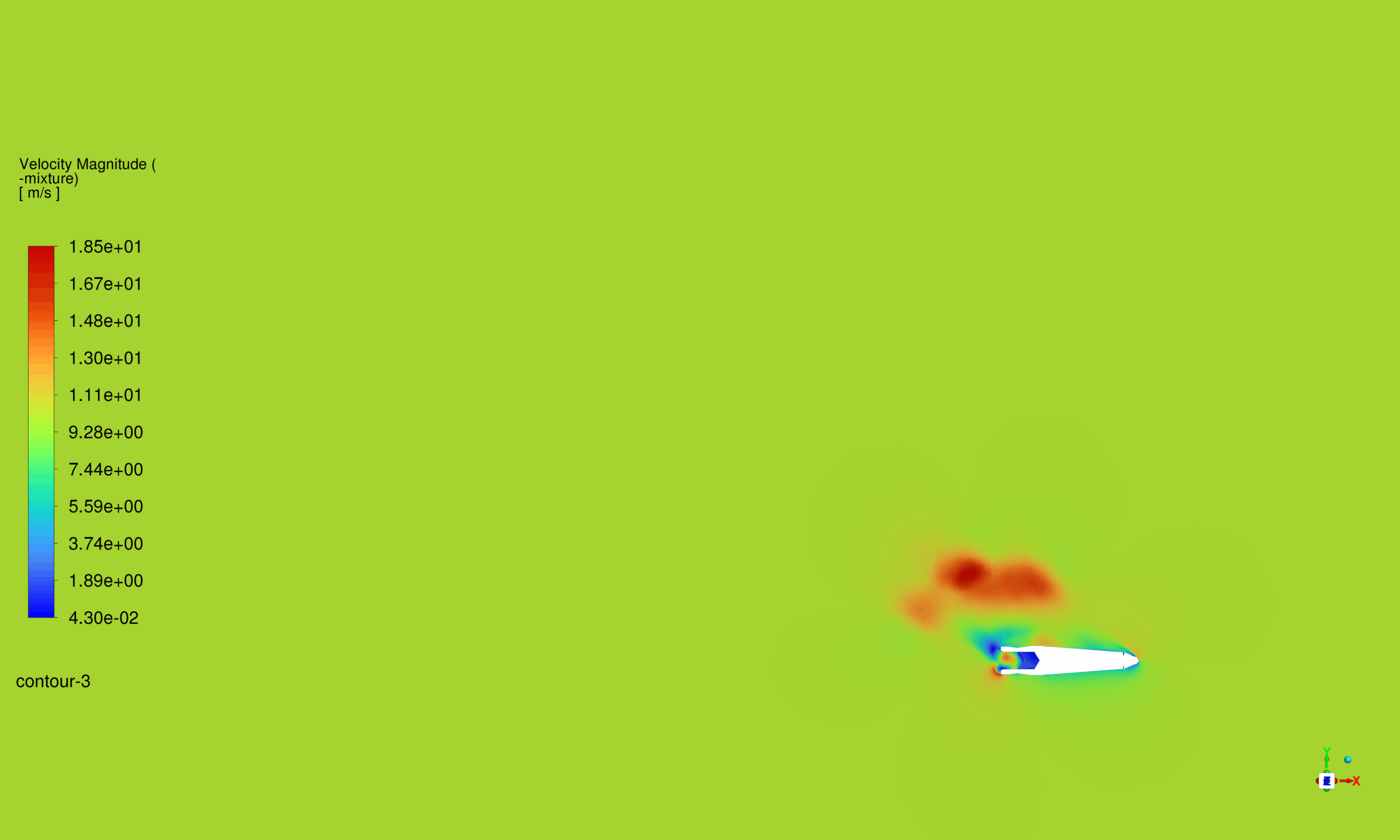
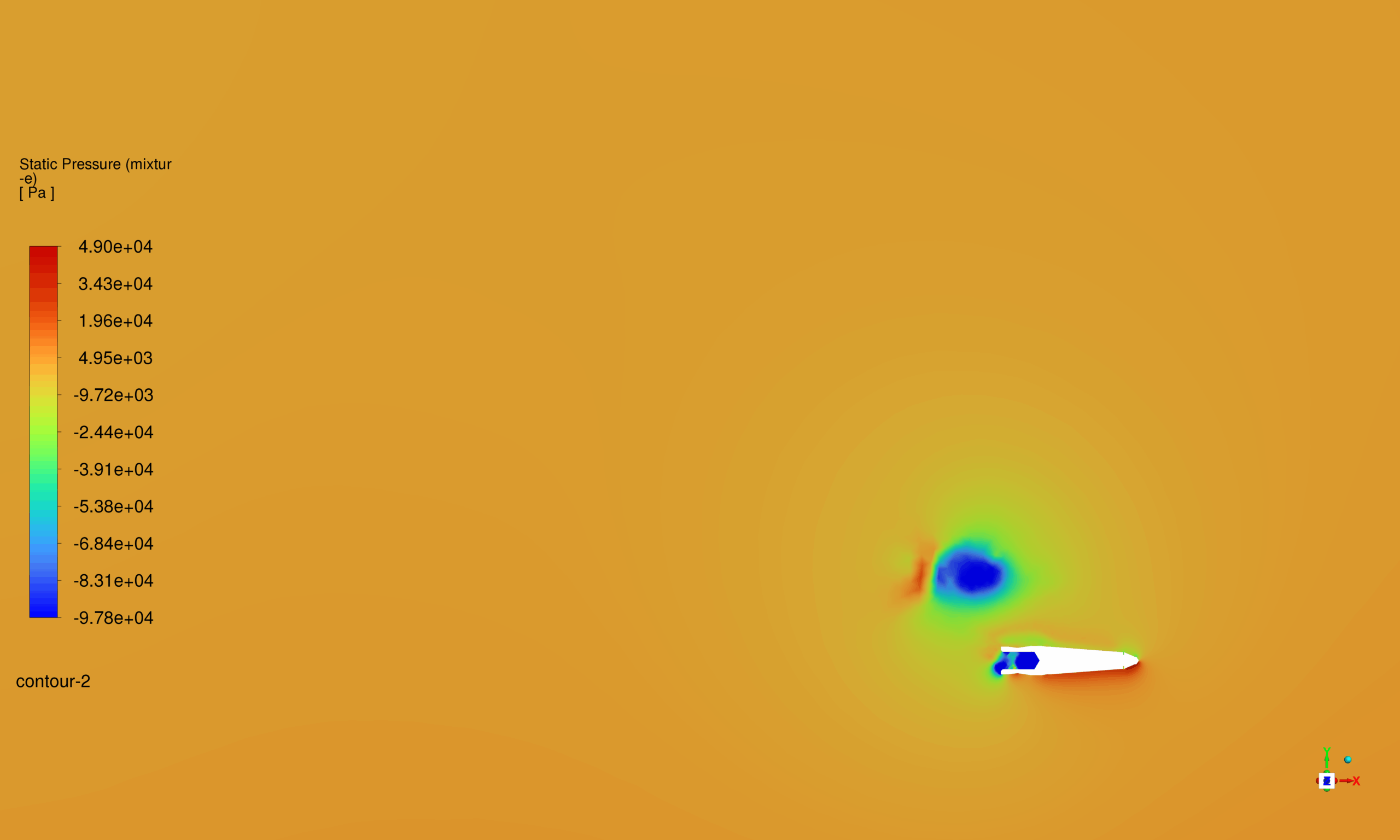
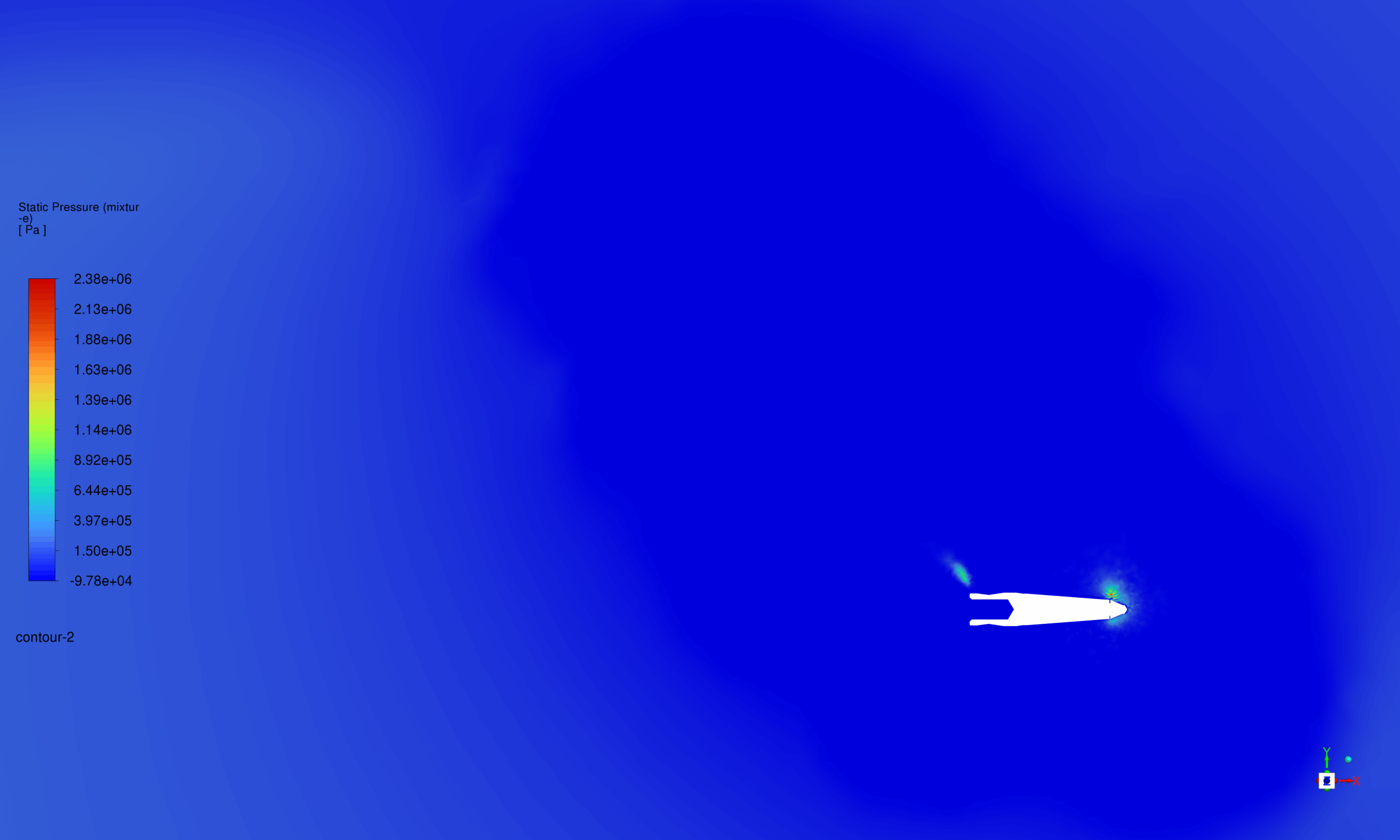
For the 10 m/s case, a small vapor region briefly appears near the projectile nose and shoulder, where local pressure drops below the vapor pressure. However, the low inertia and rapid repressurization cause the cavity to collapse quickly, so that cavitation effectively disappears downstream.
In contrast, at 20 m/s, the higher dynamic pressure and stronger adverse pressure gradients produce a large, continuous vapor cavity that envelops the projectile and extends far into the wake, accompanied by low static pressure zones and increased velocity in the shear layer. These observations are consistent with published studies on supercavitating projectiles, which report that increasing entry velocity lengthens the cavity and delays its closure, explaining why stable cavitation persists only at 20 m/s in this configuration.
You must be logged in to post a review.
 Talk On WhatsApp
 Talk On WeChat

Reviews
There are no reviews yet.