
RQ-4 UAV Dynamic Stability Derivatives: CFD Simulation by Ansys Fluent
$2,700.00 Internship
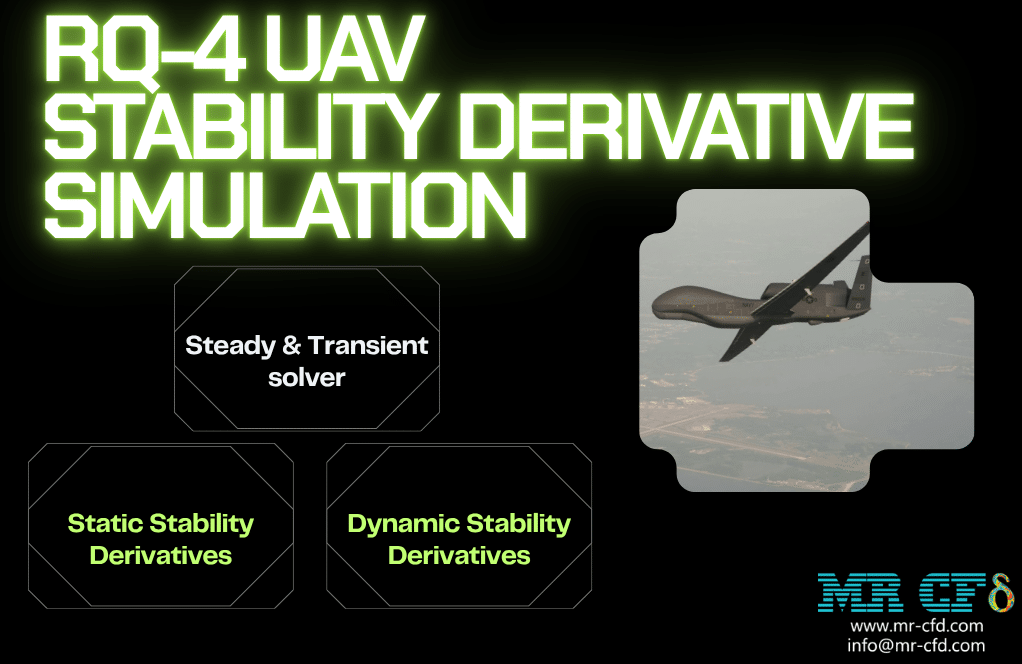
- The problem numerically simulates a RQ-4 UAV using ANSYS Fluent software.
- We design the 3-D model with the SpaceClaim software.
- We mesh the model with Ansys Meshing software. The element number equals 9,730,964 and their type is Tetrahedral.
- In this simulation, Forced oscillation are used for Stability Derivative modeling.
To Order Your Project or benefit from a CFD consultation, contact our experts via email (info@mr-cfd.com), online support tab, or WhatsApp at +44 7443 197273.
There are some Free Products to check our service quality.
If you want the training video in another language instead of English, ask it via info@mr-cfd.com after you buy the product.
Description
Static and Dynamic Stability Derivatives: RQ-4 UAV CFD Simulation Training
Introduction
The determination of an UAV’s dynamic stability and control derivatives is vital for the development of accurate flight models and control system design. These coefficients, which relate aerodynamic moments to angular motion, are traditionally obtained through costly and time-consuming wind tunnel tests.
In RQ-4 UAV dynamic stability derivatives project, a numerical approach based on computational fluid dynamics (CFD) combined with the forced oscillation technique is proposed to efficiently extract the derivatives of the dynamic stability of an UAV in the subsonic flight regime.
For more information on stability derivatives, click here.
Northrop Grumman’s RQ-4 Global Hawk is one of the world’s most advanced reconnaissance drones, designed and manufactured by Northrop Grumman. This unmanned aircraft belongs to the high-altitude, long-endurance (HALE) class, and its primary mission is to conduct intelligence, surveillance, and reconnaissance (ISR) operations.
The Global Hawk is capable of transmitting comprehensive information to military commanders around the world in near real time and in all weather conditions. The Global Hawk is equipped with a suite of advanced sensors that allows it to scan an area of approximately 40,000 square miles in less than 24 hours. It is also fitted with a synthetic aperture radar (SAR) capable of producing two-dimensional imagery, with an error margin of less than 1.6 meters at a range of 37 kilometers.
The geometry of the present model is three-dimensional and has been designed using SpaceClaim software. We do the meshing of the present model with ANSYS Meshing software. The mesh type is Tetrahedral, and the element number is 9,730,964.
The computational domain is specifically structured with two fluid regions to facilitate the motion: an oscillating internal fluid region that completely encloses the drone and an external fluid region that does not oscillate. This research focuses on applying a specific cosine oscillation to the UAV and analyzing the resulting aerodynamic moments to quantify the dynamic stability derivatives.
Methodology
This study used a transient, density-based CFD simulation in ANSYS Fluent to analyze the compressible flow around a UAV to derive dynamic derivatives. The flow physics was modeled using the k-ω SST turbulence model. The key method involved the oscillatory region technique, in which an inner fluid region, containing the UAV, was forced into a simple harmonic oscillation via a UDF, while the outer domain was set with inlet and outlet boundary conditions. This setup, with good time resolution, was designed to capture the aerodynamic response necessary to calculate dynamic stability derivatives.
Results and Conclusion
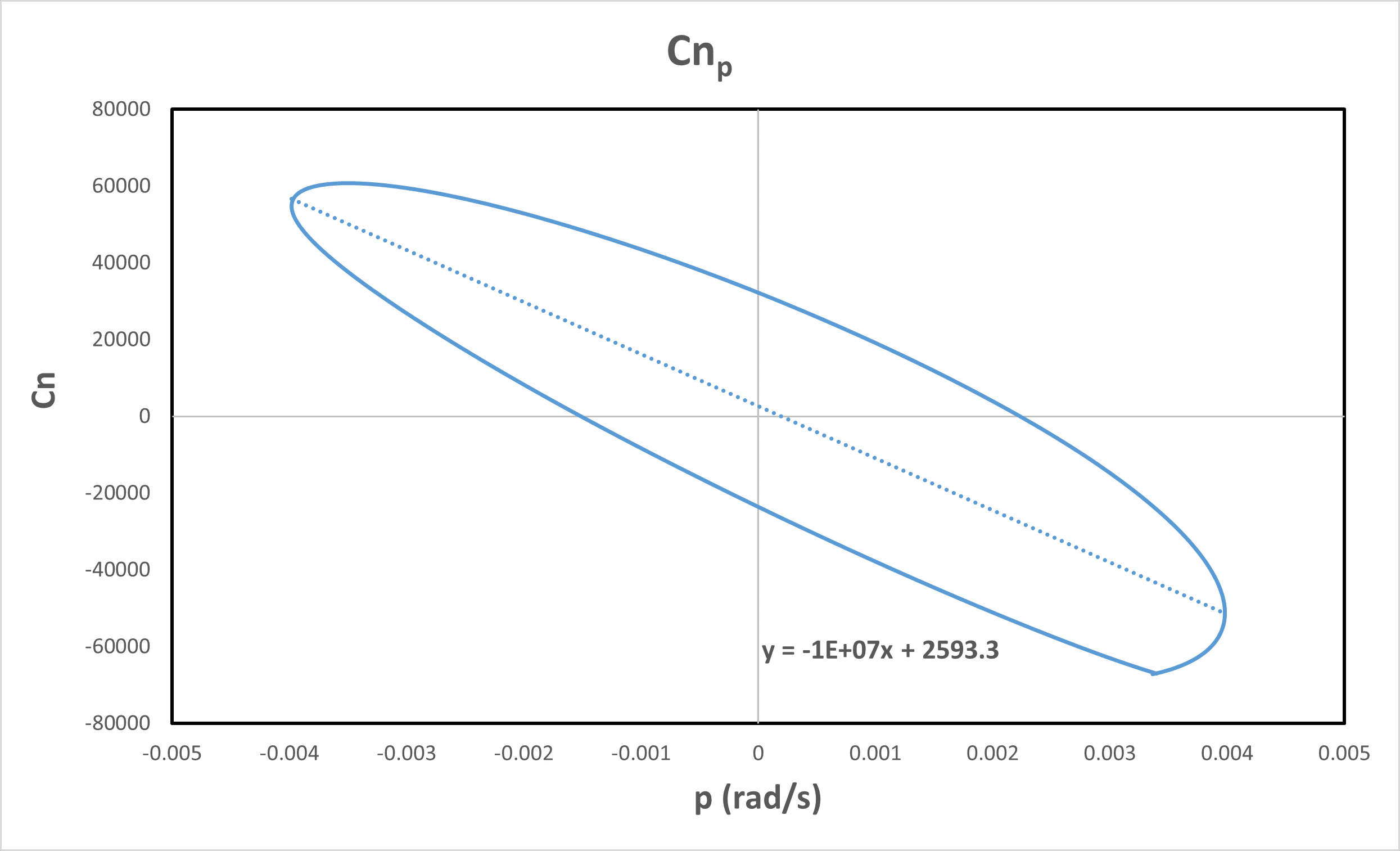
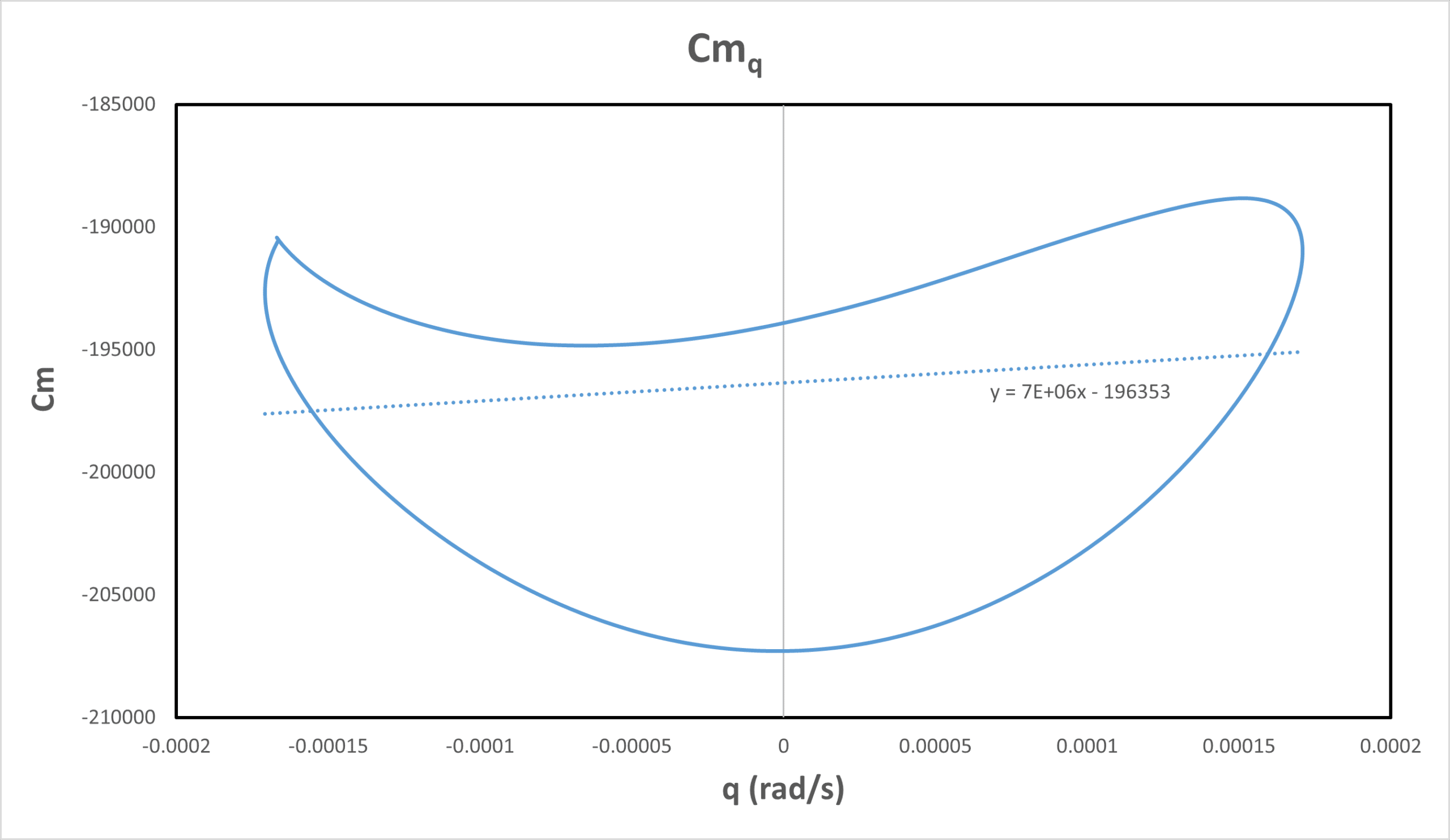
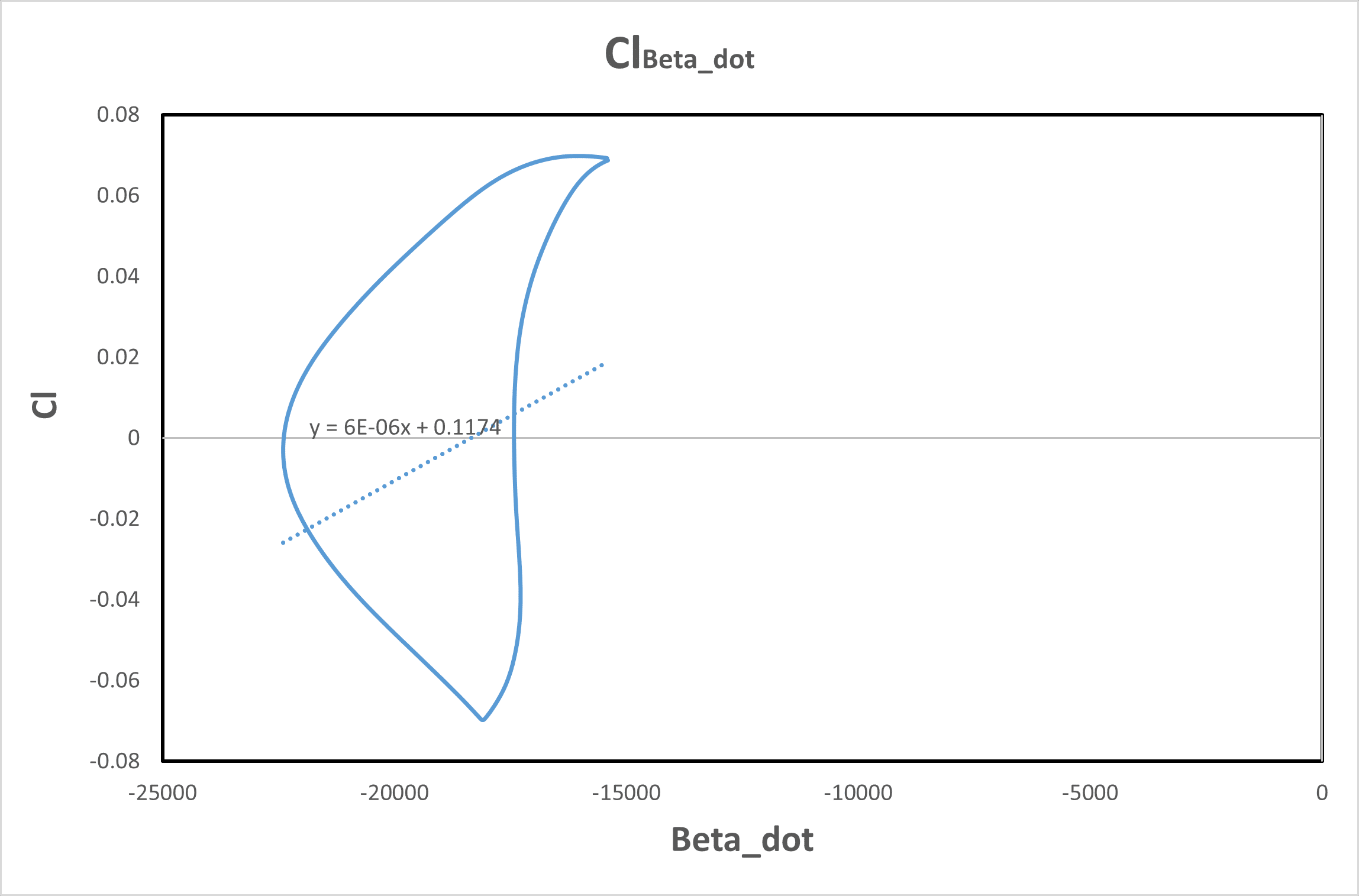
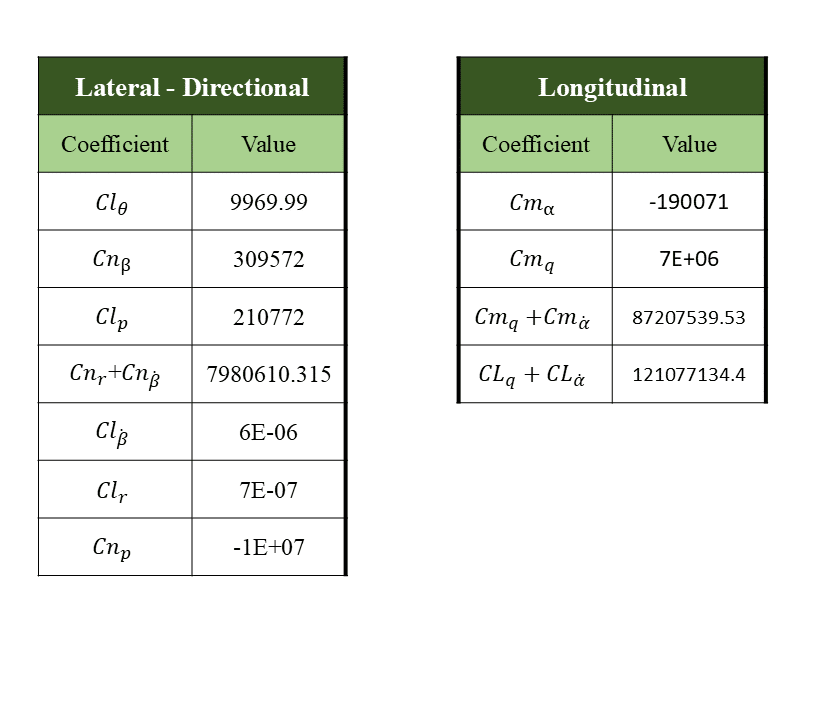
The most commonly used and important coefficients in the discussion of stability have been extracted after simulation and are given in the table below. Using these coefficients, it is possible to comment on whether a drone is stable or not in terms of static and dynamic. Also, using the extracted data, hysteresis diagrams have been drawn, which can be understood by considering the shape and direction of rotation of these rings, whether the drone is stable or not.
You must be logged in to post a review.

 Talk On WhatsApp
Reviews
There are no reviews yet.