
Skywalker-X5 UAV: CFD Simulation Training Package
$3,999.00 Internship
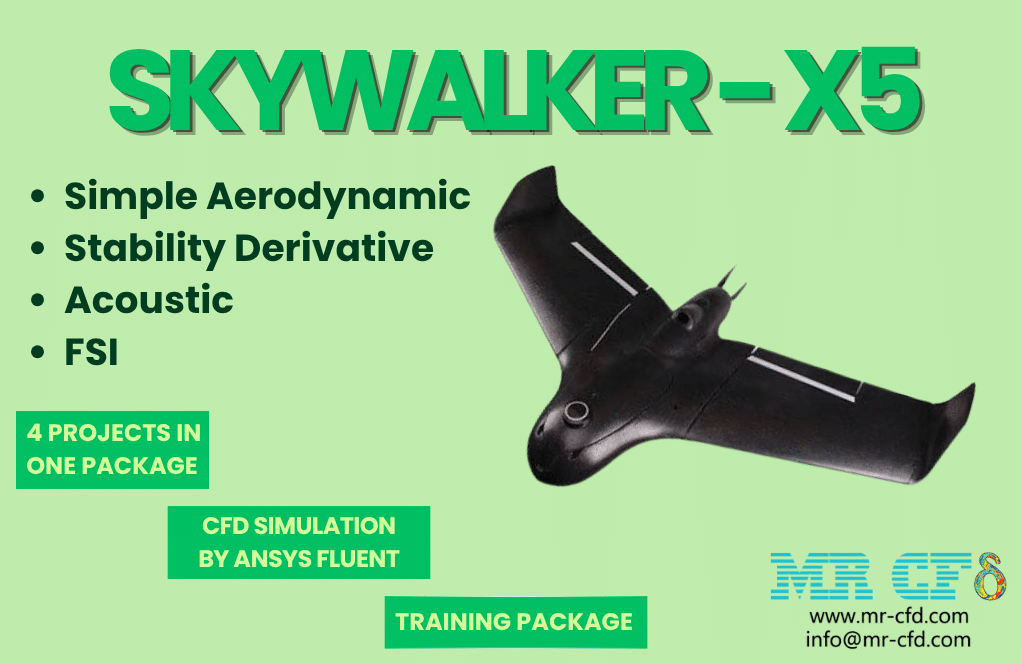
- Aerodynamic force and moment data sit at the top of the dependency tree every structural margin, every control law, and every noise estimate inherits whatever errors you introduce at this stage.
- Stability derivative analysis answers the most basic flight question: when something pushes this vehicle off course, does it recover or diverge? The derivatives give that answer in quantitative form across the full speed and altitude range.
- Acoustic modeling does more than produce a decibel number it reconstructs the directional sound field so engineers know exactly which geometry changes will actually make the vehicle quieter.
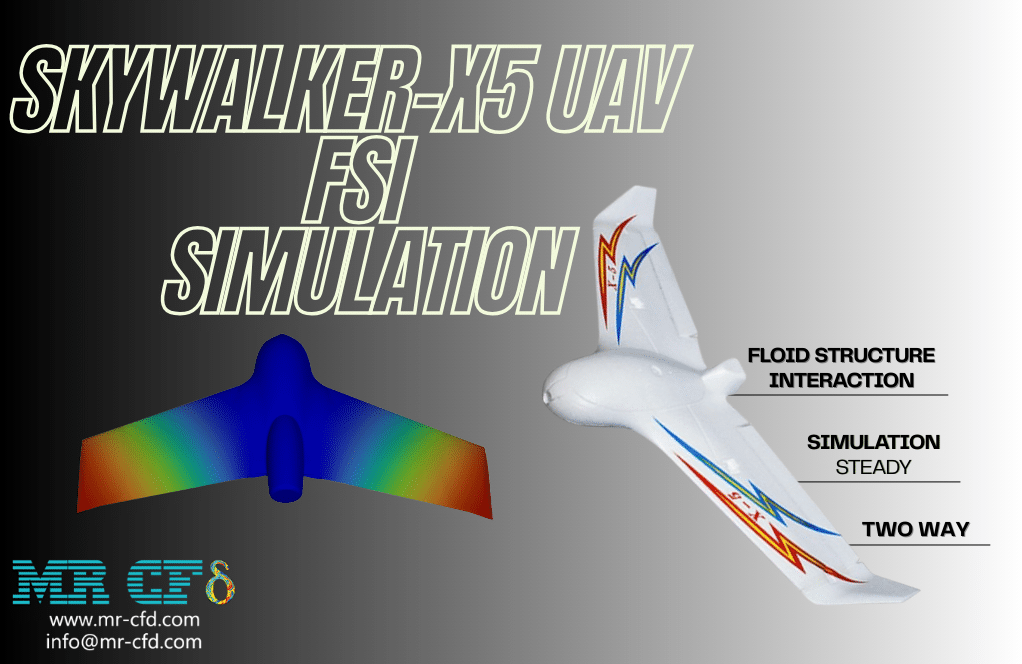
- FSI captures what happens when the airframe bends under load and the altered shape changes the load itself a feedback loop that neither a standalone CFD run nor a standalone structural analysis can reproduce.
To Order Your Project or benefit from a CFD consultation, contact our experts via email (info@mr-cfd.com), online support tab, or WhatsApp at +44 7443 197273.
There are some Free Products to check our service quality.
If you want the training video in another language instead of English, ask it via info@mr-cfd.com after you buy the product.
Description
Skywalker-X5 CFD Simulation: 4 Projects In One Package
End-to-End UAV Simulation Training From Basic Aerodynamics to Aeroelastic Verification
Flying-wing platforms like the Skywalker-X5 pack long endurance and payload flexibility into a simple airframe, but that simplicity hides real aerodynamic complexity. This package brings together four focused ANSYS Fluent projects that walk you through external flow analysis, stability derivative computation, acoustic footprint characterization, and two-way fluid-structure coupling the same analysis stack used by UAV development teams working toward flight clearance.
Skywalker-X5 Aerodynamic Analysis
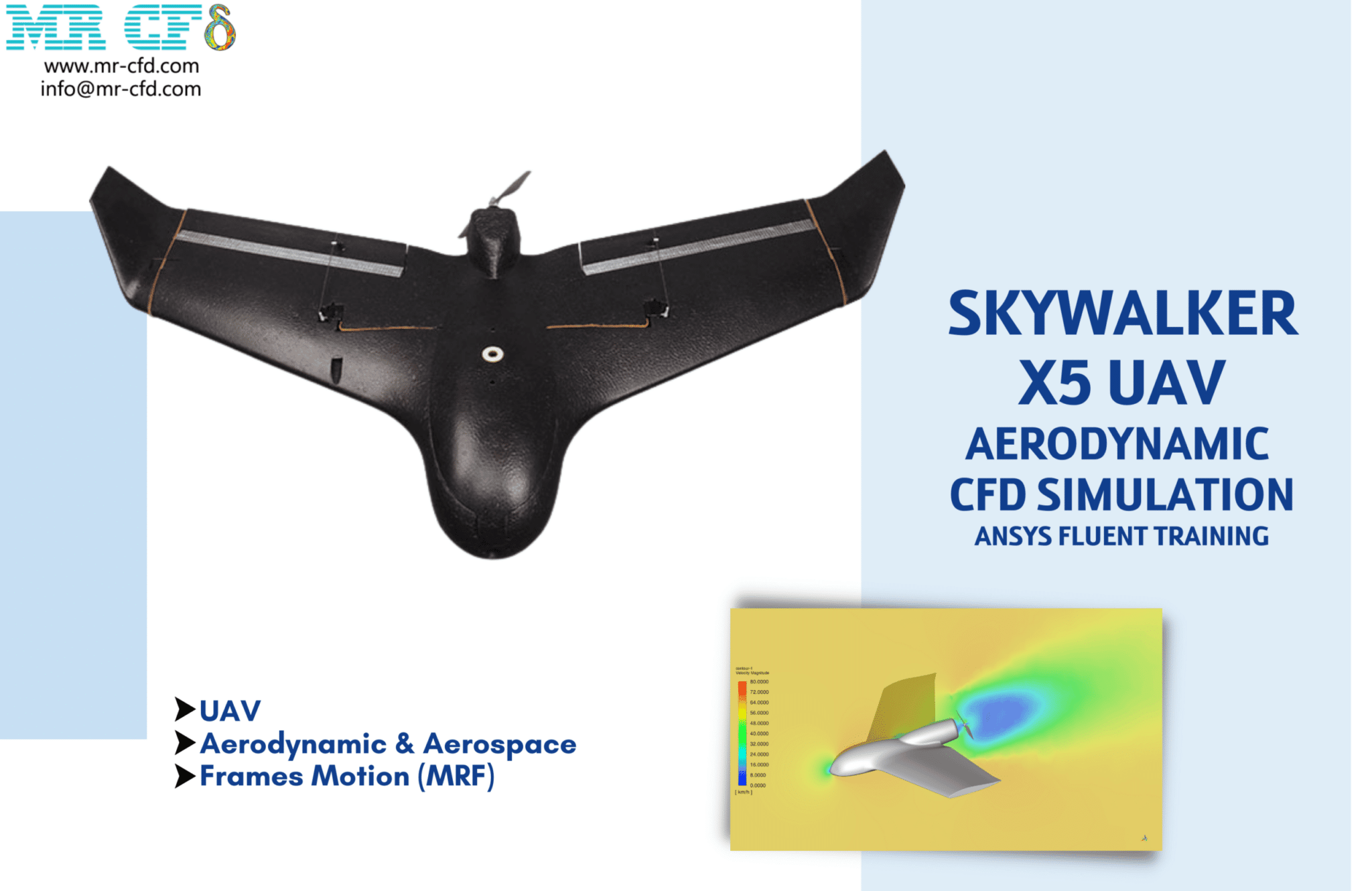
Nothing else in the simulation pipeline works if the aerodynamic numbers are off. This project starts with geometry import and domain setup in ANSYS Fluent, moves through propeller zone configuration and boundary condition assignment freestream velocity, exit pressure planes, viscous walls and finishes with a structured sweep through incidence and sideslip angles. What you walk away with is a clean, tabulated set of lift, drag, and moment data ready to feed stability models, structural load cases, and acoustic source definitions in the Skywalker-X5 projects.
Skywalker-X5 Stability Derivatives
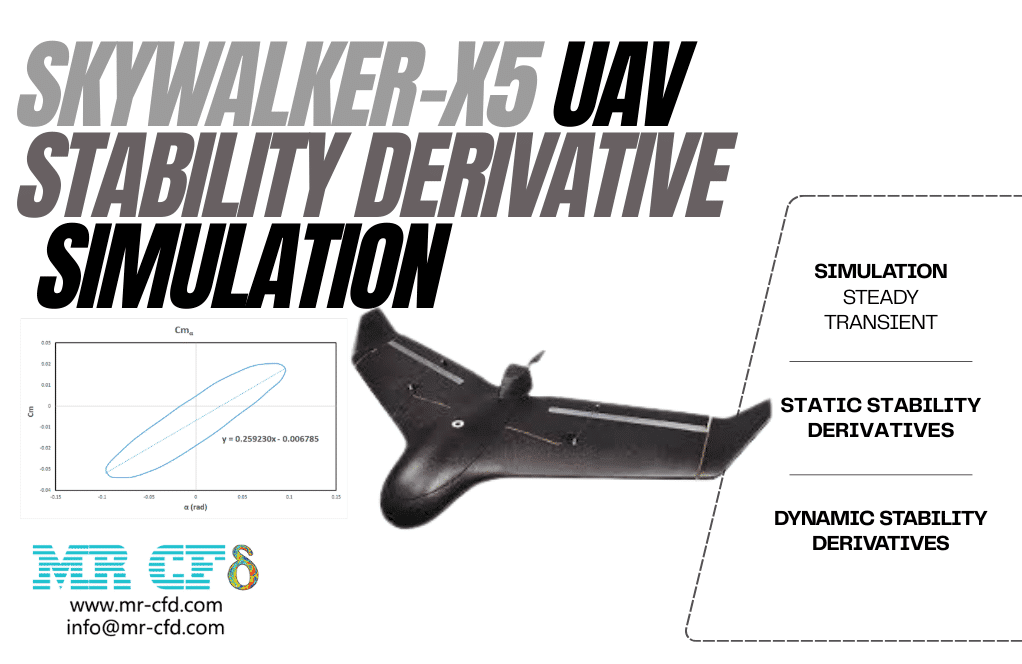
A flying wing without a conventional tail relies heavily on sweep, twist, and elevon authority for pitch and yaw control making stability margins tighter and derivative accuracy more critical. You will perturb the trimmed solution by small, controlled increments in angle of attack, bank, and yaw rate, log the force and moment deltas, and compile a derivative table that covers both longitudinal and lateral-directional channels. Mesh refinement focuses on the trailing-edge wake and wingtip regions where small cell-size changes can swing derivative values noticeably. The output feeds six-DOF simulators, autopilot tuning workflows, and airworthiness evidence packages.
Skywalker-X5 CFD Acoustic Analysis
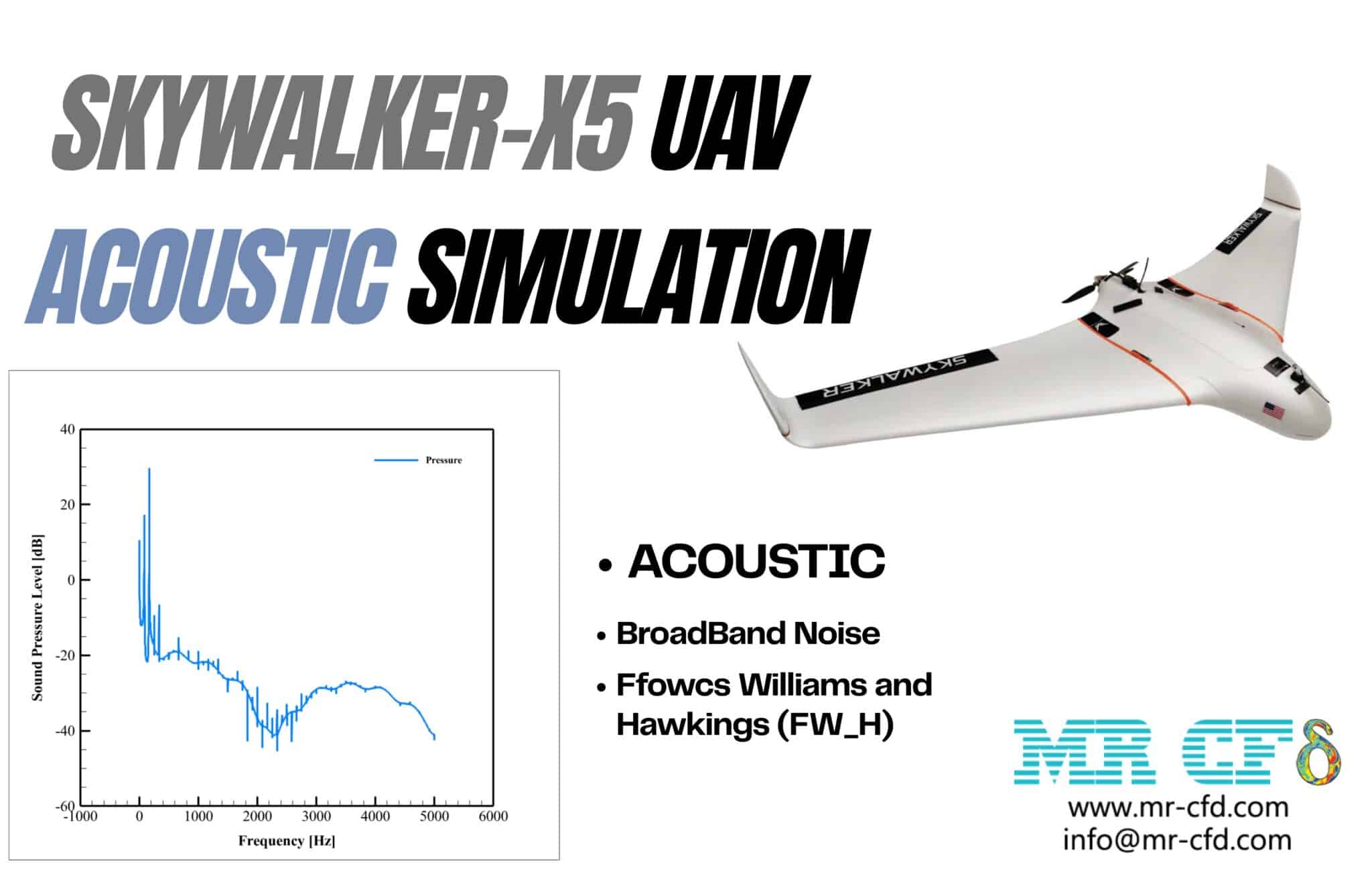
Whether you need a quiet survey platform that does not alert ground observers or a vehicle that meets noise limits at a shared airfield, the acoustic signature matters. This project introduces ANSYS Fluent’s transient acoustic toolset: you will resolve unsteady pressure on the propeller disk and airframe skin, propagate sound to observer arrays using integral methods, and break the spectrum apart by flight phase launch, cruise, and loiter. The deliverable is a directional noise map that supports design decisions on propeller diameter, blade pitch schedule, and cruise altitude all anchored to the aerodynamic baseline you built in the first project.
Skywalker-X5 Fluid-Structure Interaction (FSI) Simulation
Lightweight airframes built from composite materials and featuring high-aspect-ratio wings inevitably flex under aerodynamic loading a reality that rigid-geometry simulations simply cannot account for. This project employs a two-way coupled FSI approach in ANSYS Fluent: pressure distributions on the wing surface drive structural deformation, and the reshaped geometry feeds directly back into the flow solver for the next iteration cycle. This back-and-forth exchange repeats until the aerodynamic and structural solutions reach a stable equilibrium. Throughout the process, you will extract bend and twist profiles along the wingspan at multiple operating speeds, track shifts in structural natural frequencies relative to propeller-driven excitation harmonics, and measure how elastic deformation influences overall drag and trim characteristics.
You must be logged in to post a review.
Related products
-
Sale

Heat Transfer CFD Training Package for Beginners, 10 Practical Exercises
Original price was: $960.00.$399.00Current price is: $399.00. Internship -
Sale
Chemical Engineering Training Package, Intermediates, 10 Practical Exercises
Original price was: $1,300.00.$299.00Current price is: $299.00. Internship -
Sale
Gas and Petrochemical CFD Training Package for Beginners, 10 Practical Exercises
Original price was: $1,000.00.$299.00Current price is: $299.00. Internship
 Talk On WhatsApp
Reviews
There are no reviews yet.