



Turbocharger Performance CFD Simulation, ANSYS Fluent Training: (BladeGen+TurboGrid)
$160.00 Internship
To Order Your Project or benefit from a CFD consultation, contact our experts via email (info@mr-cfd.com), online support tab, or WhatsApp at +44 7443 197273.
There are some Free Products to check our service quality.
If you want the training video in another language instead of English, ask it via info@mr-cfd.com after you buy the product.
Description
Turbocharger Performance CFD Simulation, ANSYS Fluent Training
Introduction
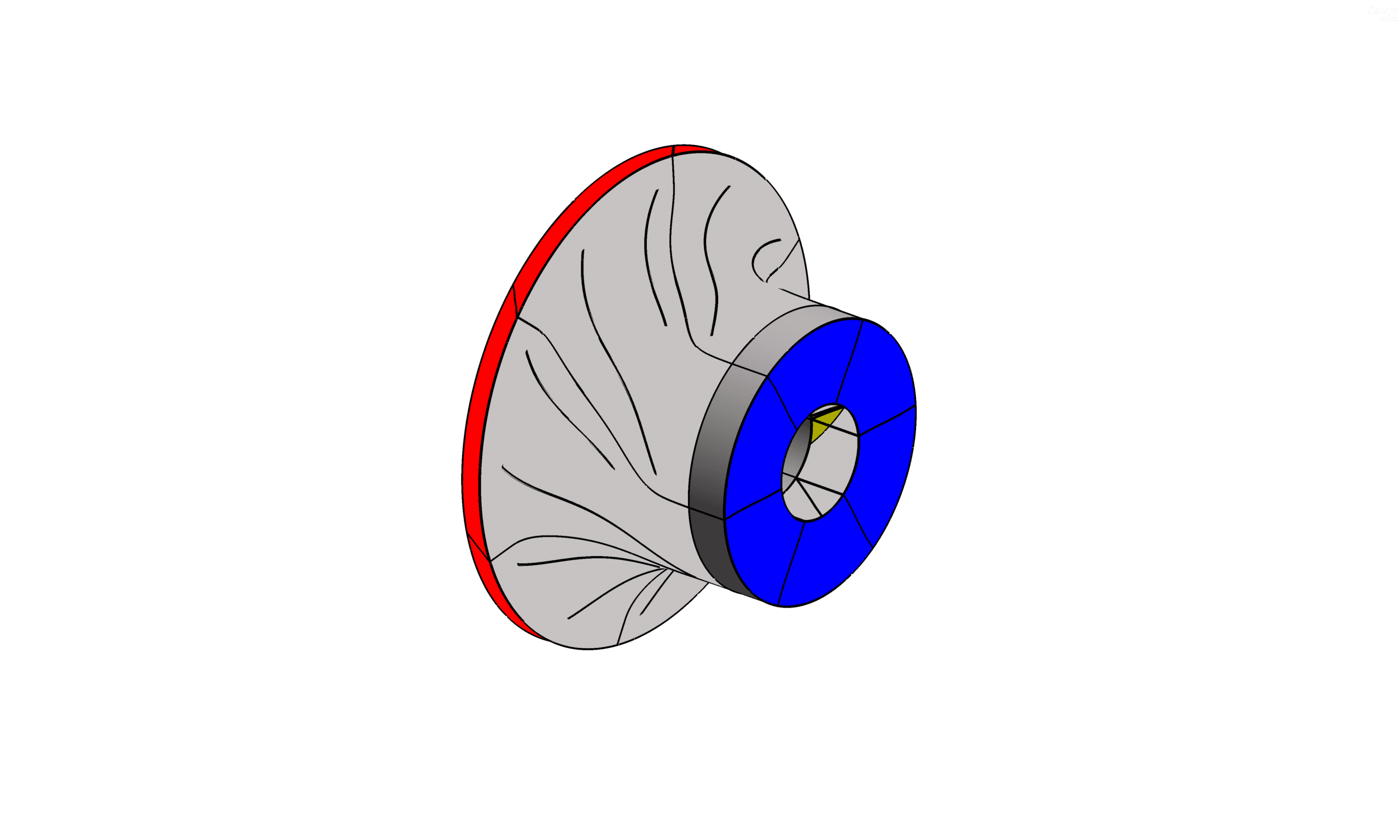
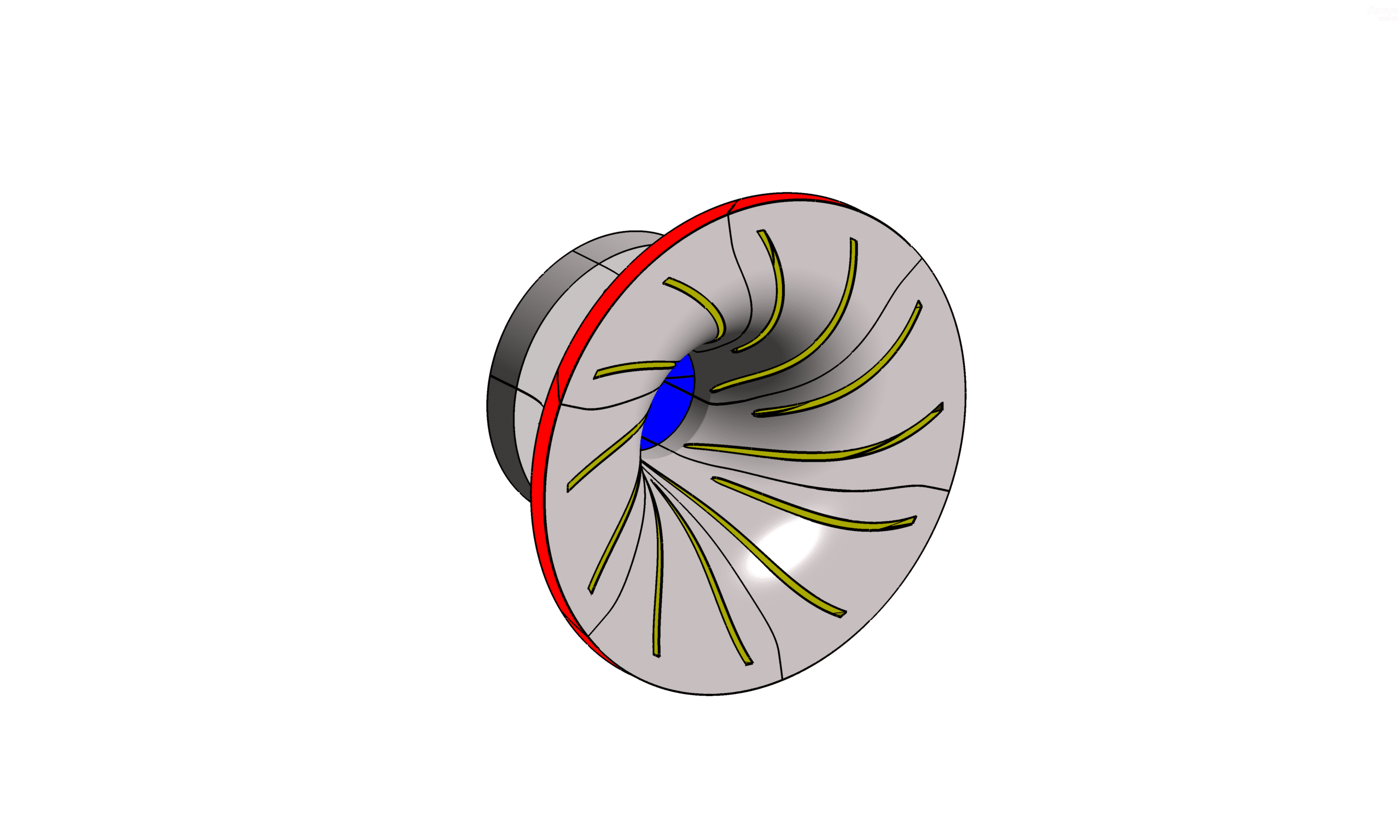
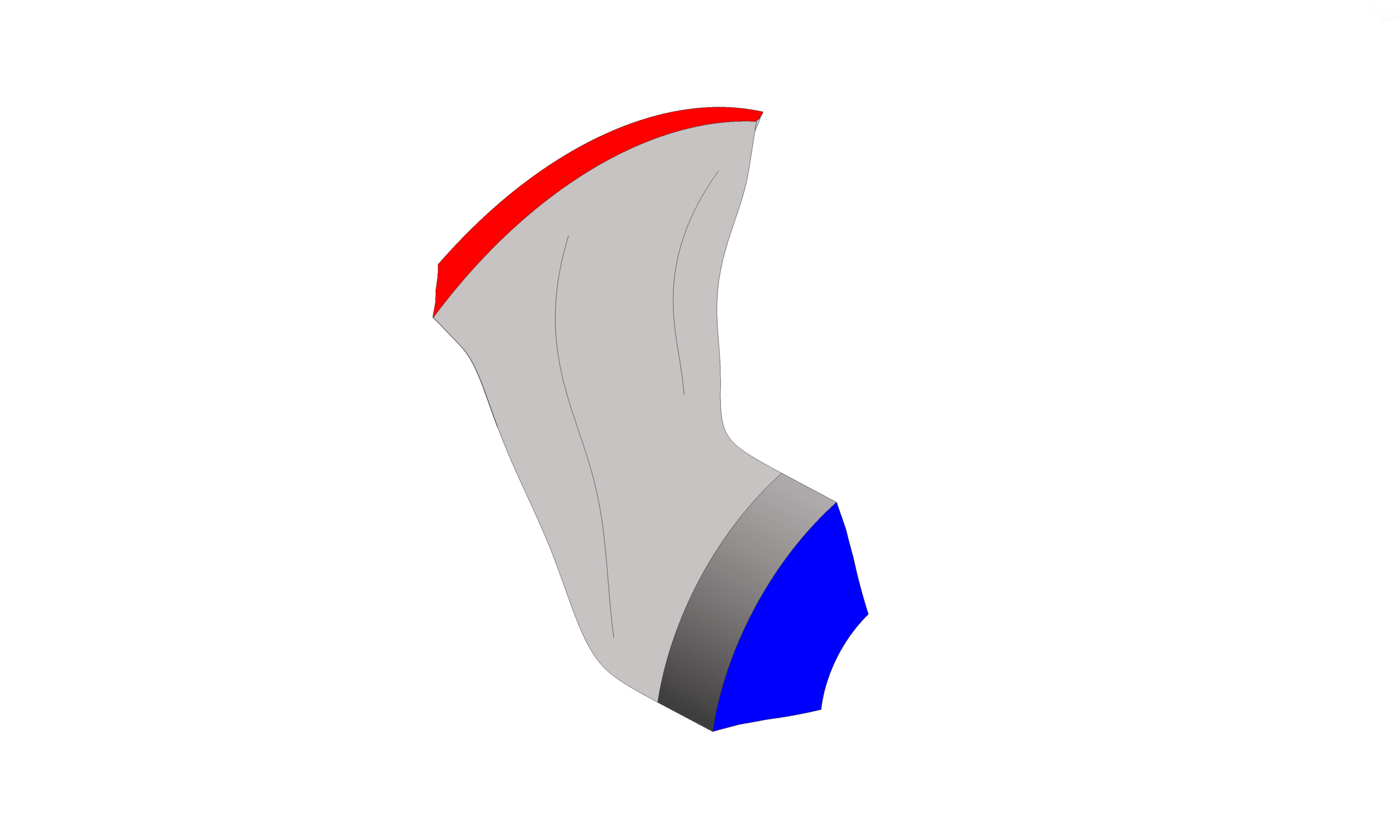
Turbochargers play a crucial role in improving engine performance and efficiency in various applications. This study explores the fluid dynamic behavior and thermal characteristics of a turbocharger using Computational Fluid Dynamics (CFD) analysis. The simulation focuses on a one-sixth periodic section of the turbocharger, capturing the complex flow patterns and temperature distributions within the device.
The primary objective of this research is to analyze the effects of the turbocharger’s geometry on flow patterns, pressure distribution, and temperature gradients. By simulating the airflow through the turbocharger under specified pressure conditions, we aim to understand the device’s performance and its impact on overall engine efficiency.
Geometry and Mesh
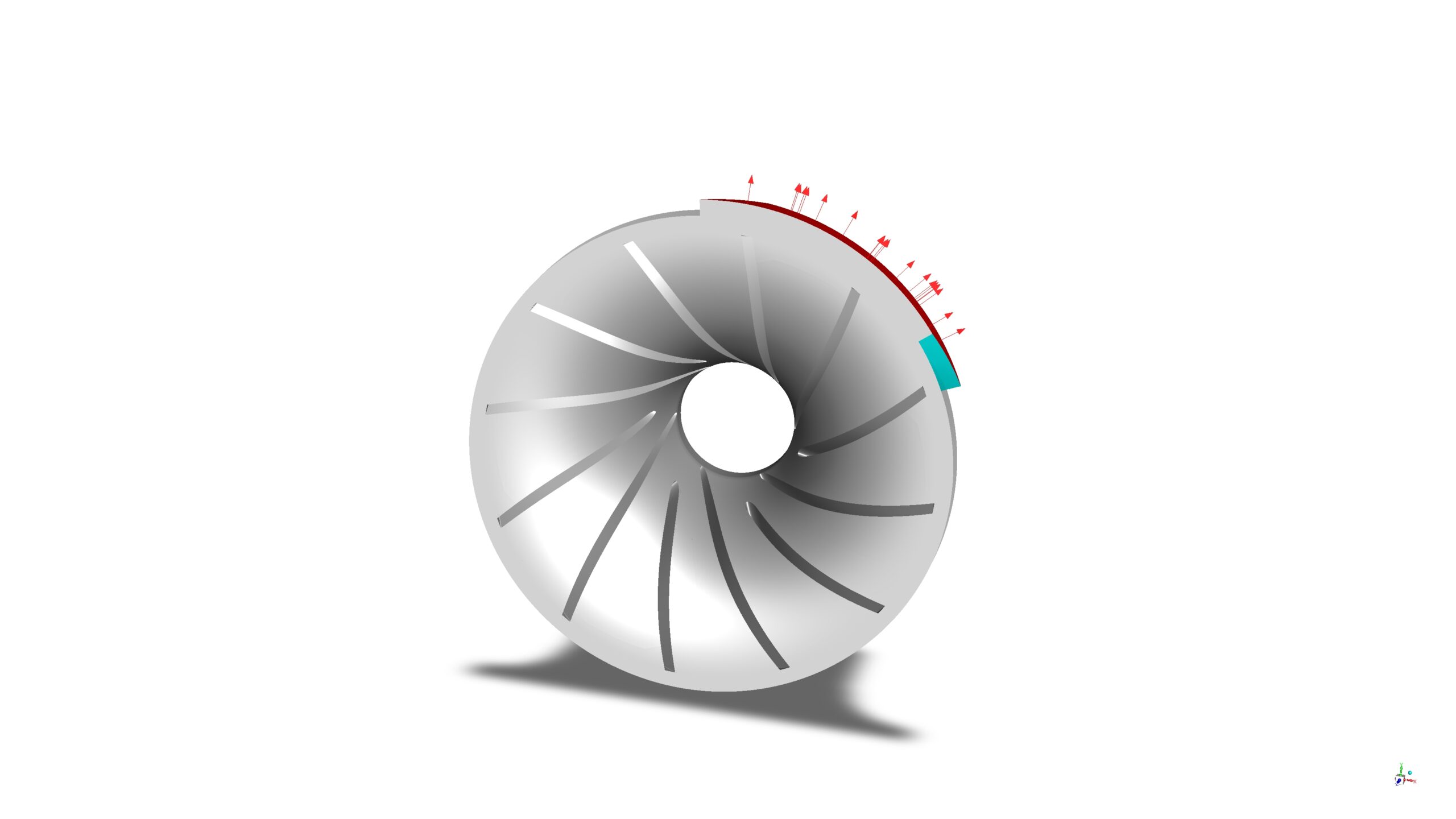
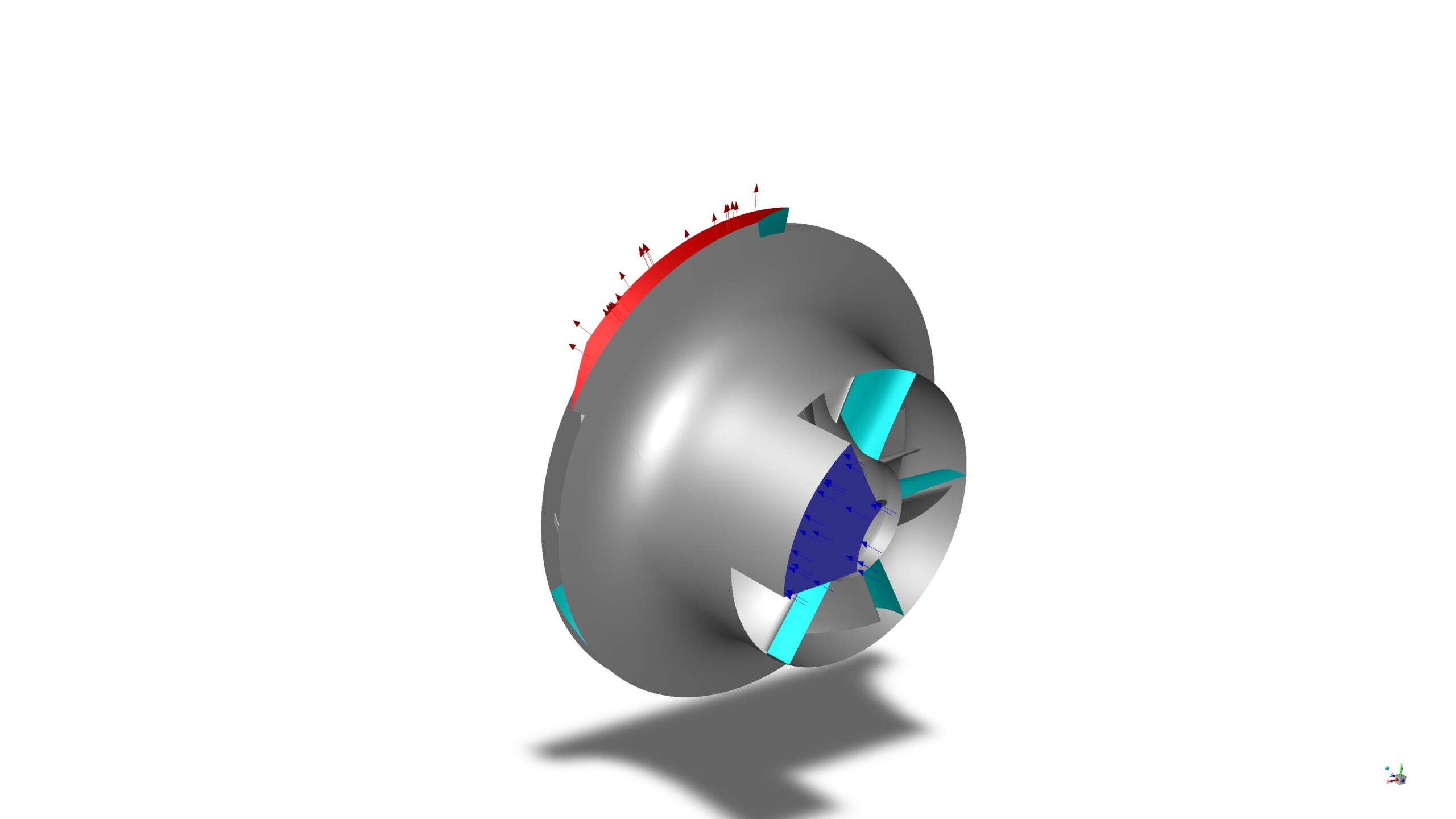
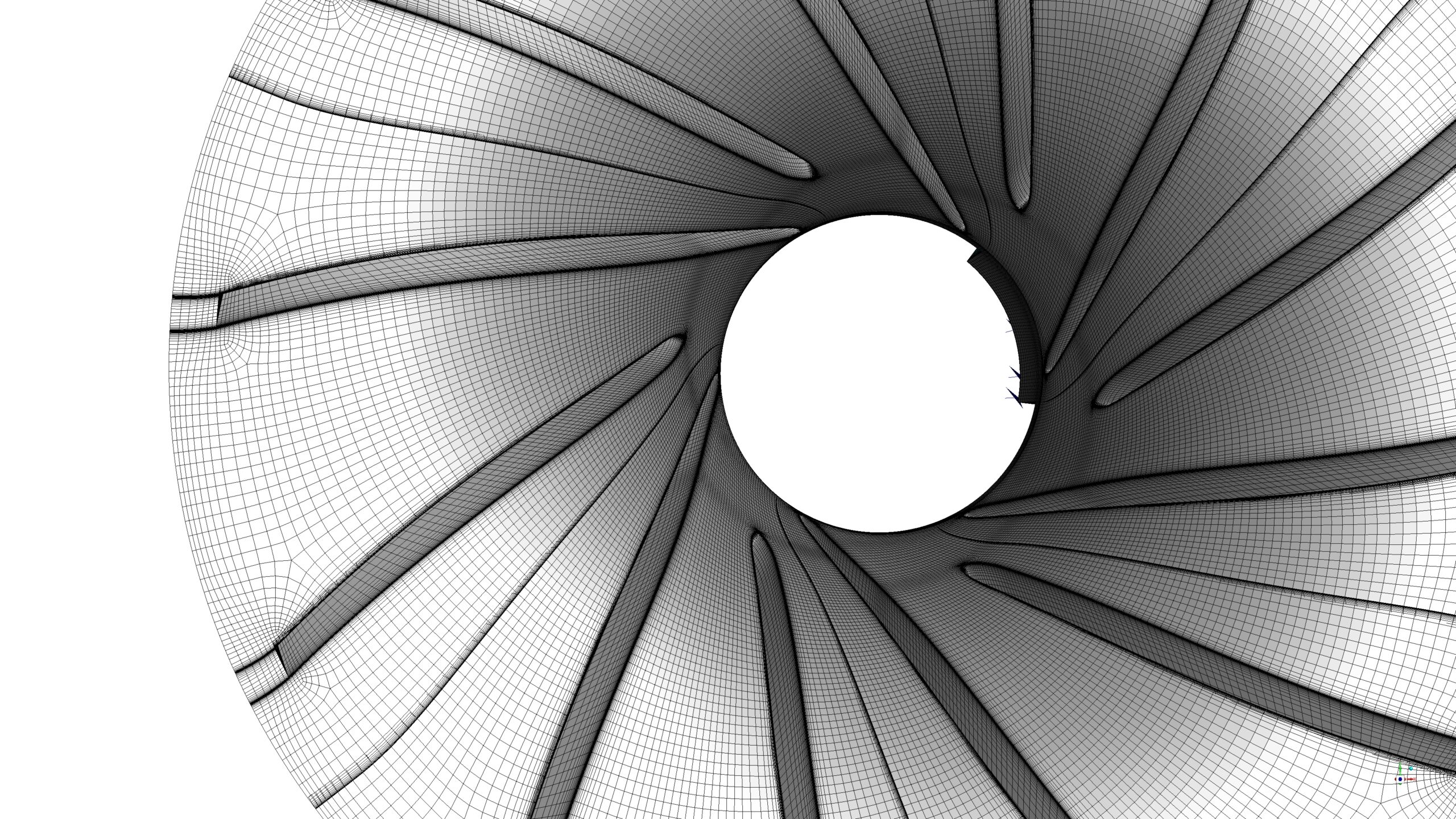
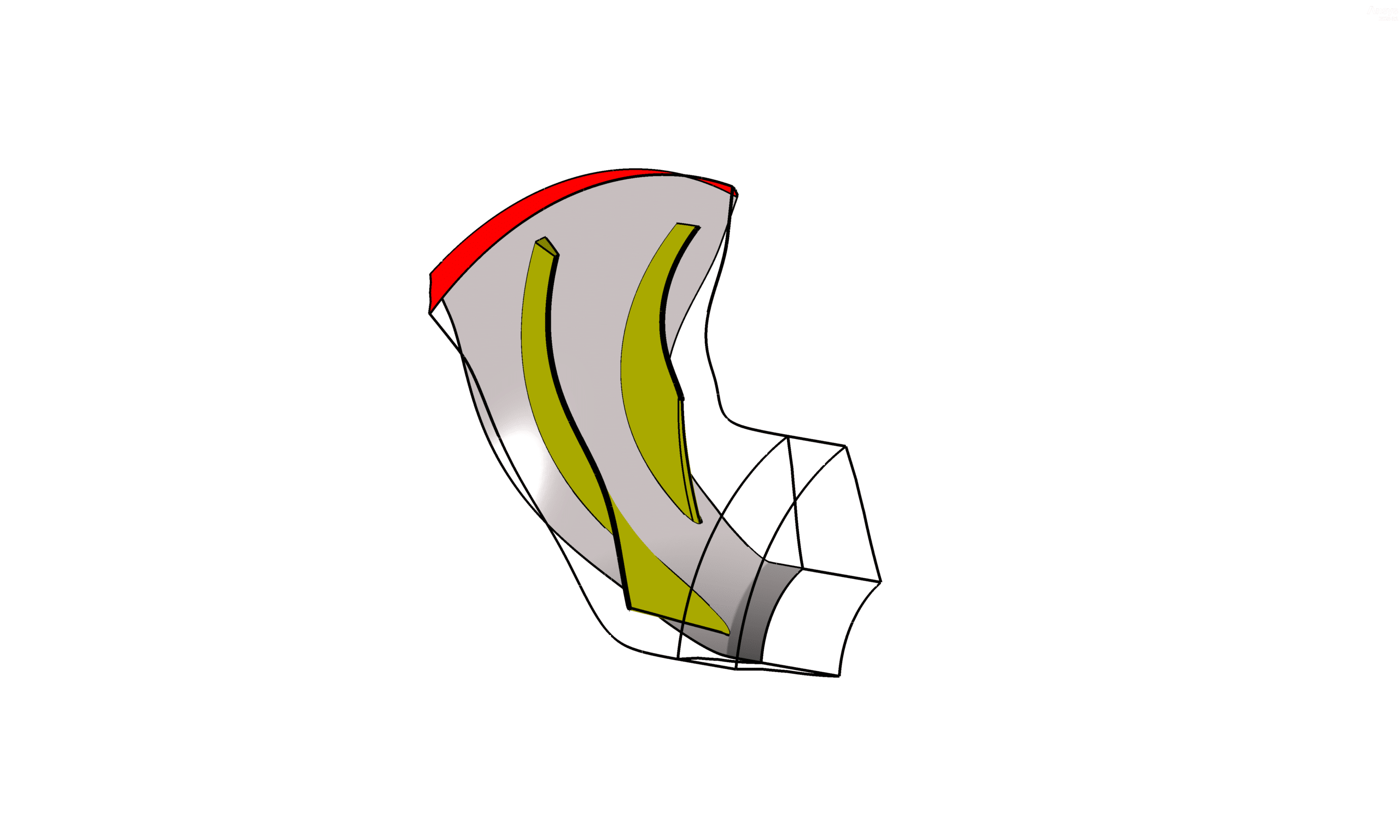
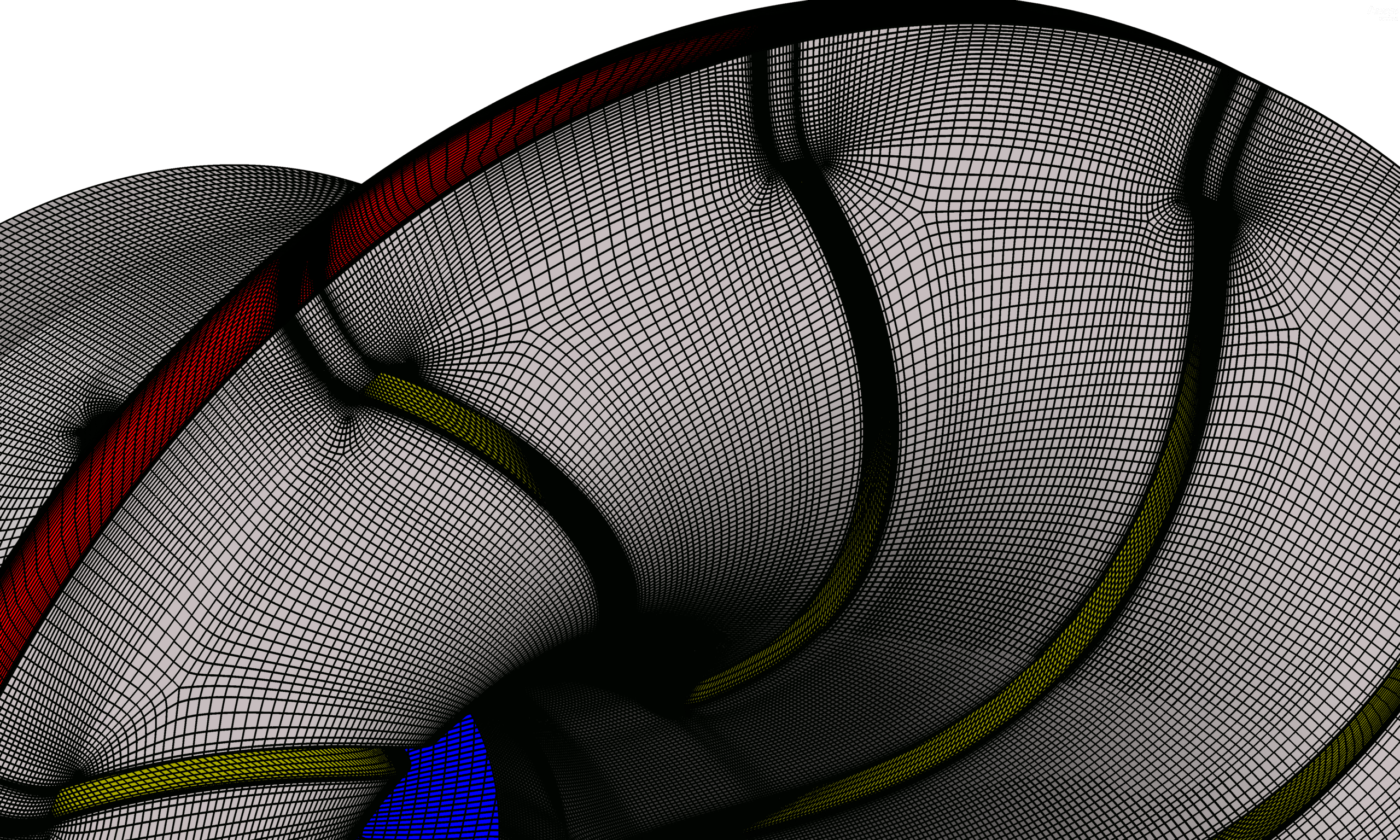
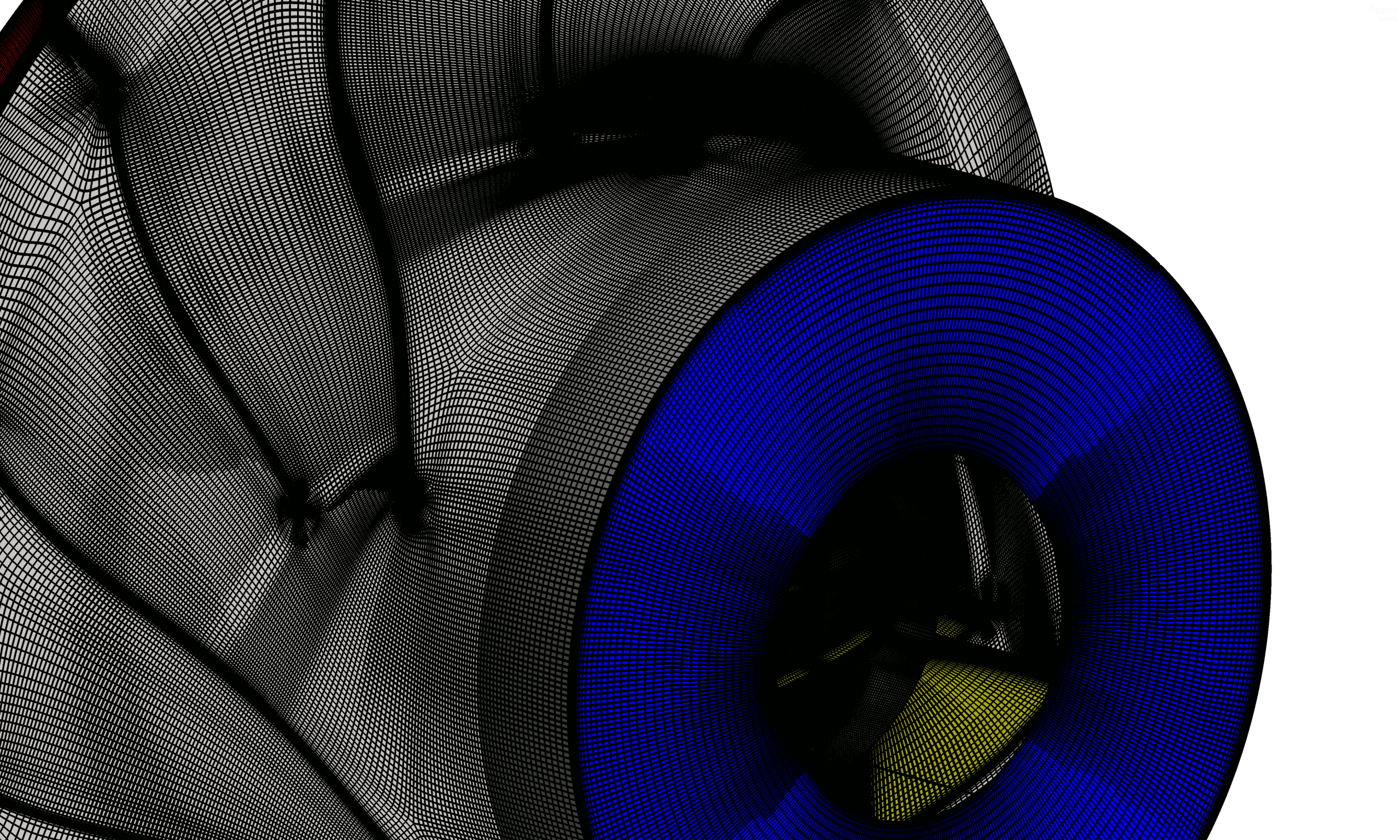
The geometry of the turbocharger was generated using ANSYS Vista CCD in combination with BladeGen, enabling accurate definition of the turbomachinery components. For mesh generation, ANSYS TurboGrid was employed to create a high-quality structured mesh suitable for rotating machinery simulations. The resulting mesh consists of 972,176 cells, providing sufficient resolution to capture the flow features while maintaining computational efficiency.
Methodology
The simulation employs a pressure-based solver, with air modeled as an ideal gas to capture compressible flow behavior typical of turbocharger applications. A steady-state approach is adopted to represent continuous operation under constant inlet conditions. The SST k-ω turbulence model is used to accurately resolve the complex flow structures within the turbocharger, while the energy equation is enabled to account for temperature distribution and heat transfer. To reduce computational cost without sacrificing accuracy, periodic boundary conditions are applied, allowing simulation of only one-sixth of the geometry; accordingly, the total mass flow rate of 0.1 kg/s is scaled to 0.01666666 kg/s. The inlet temperature is set to 350 K. Additionally, the Frame Motion model is employed to simulate blade rotation at 92,000 rpm, ensuring accurate representation of the turbocharger’s high-speed operation.
Results
The CFD simulations reveal significant insights into the fluid dynamic and thermal behavior of the turbocharger:
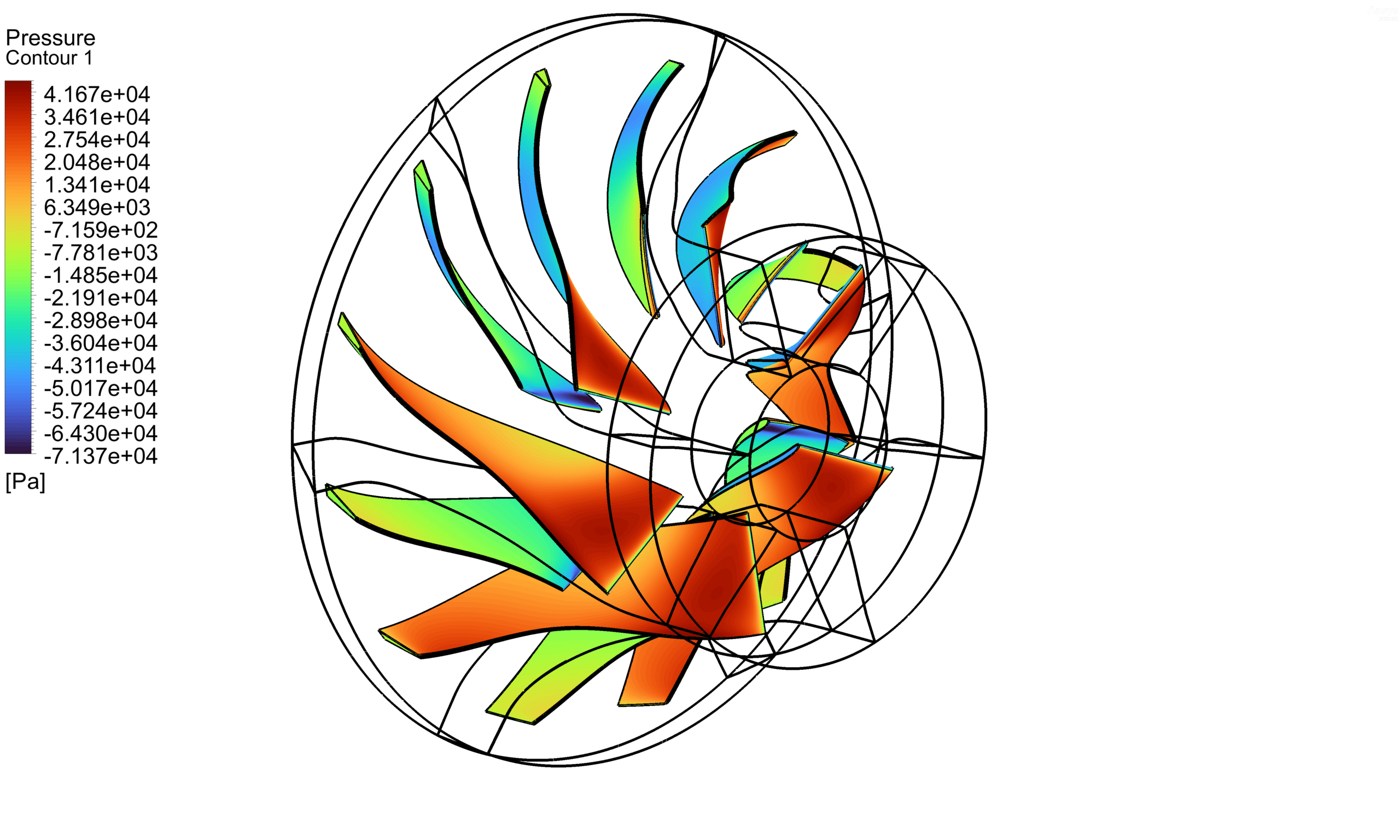
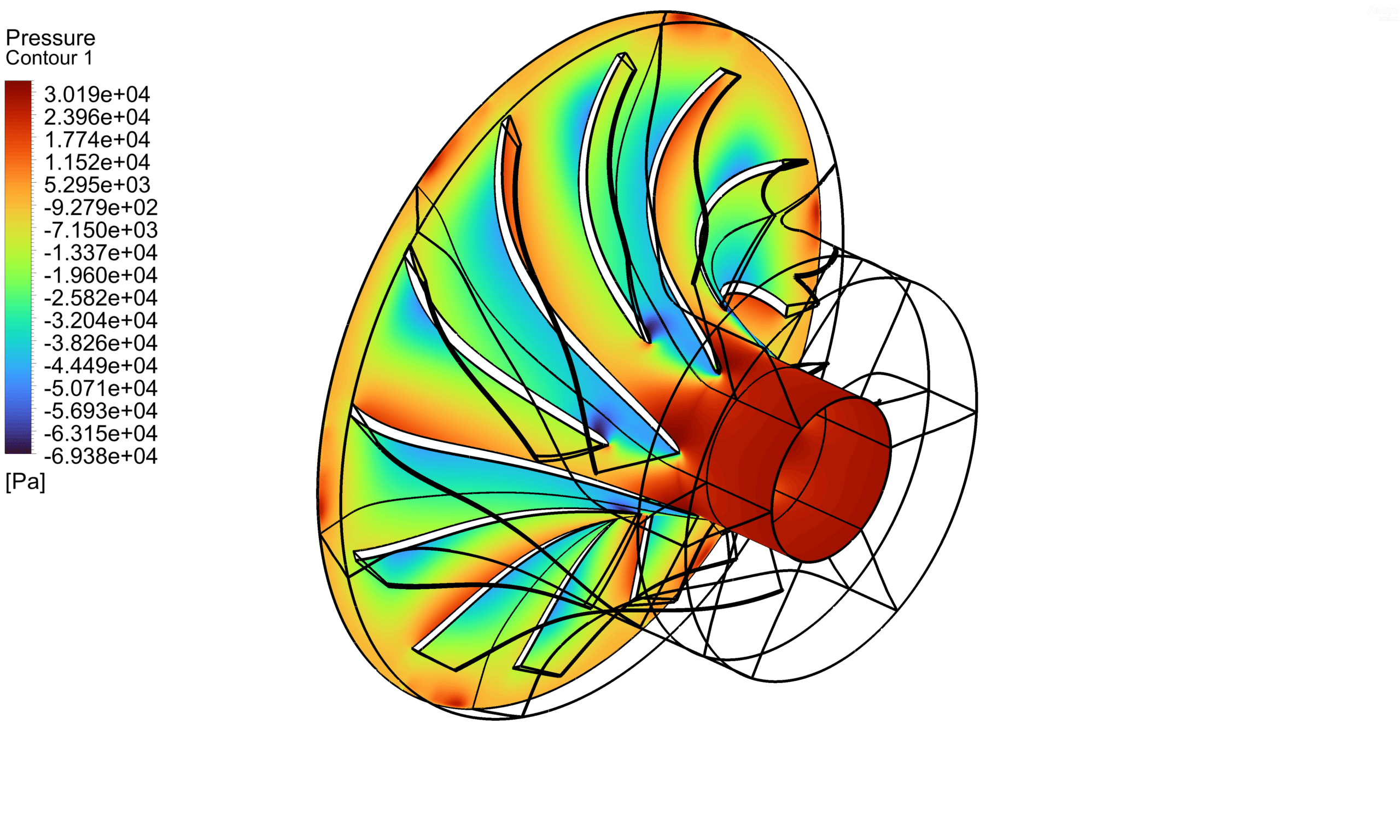
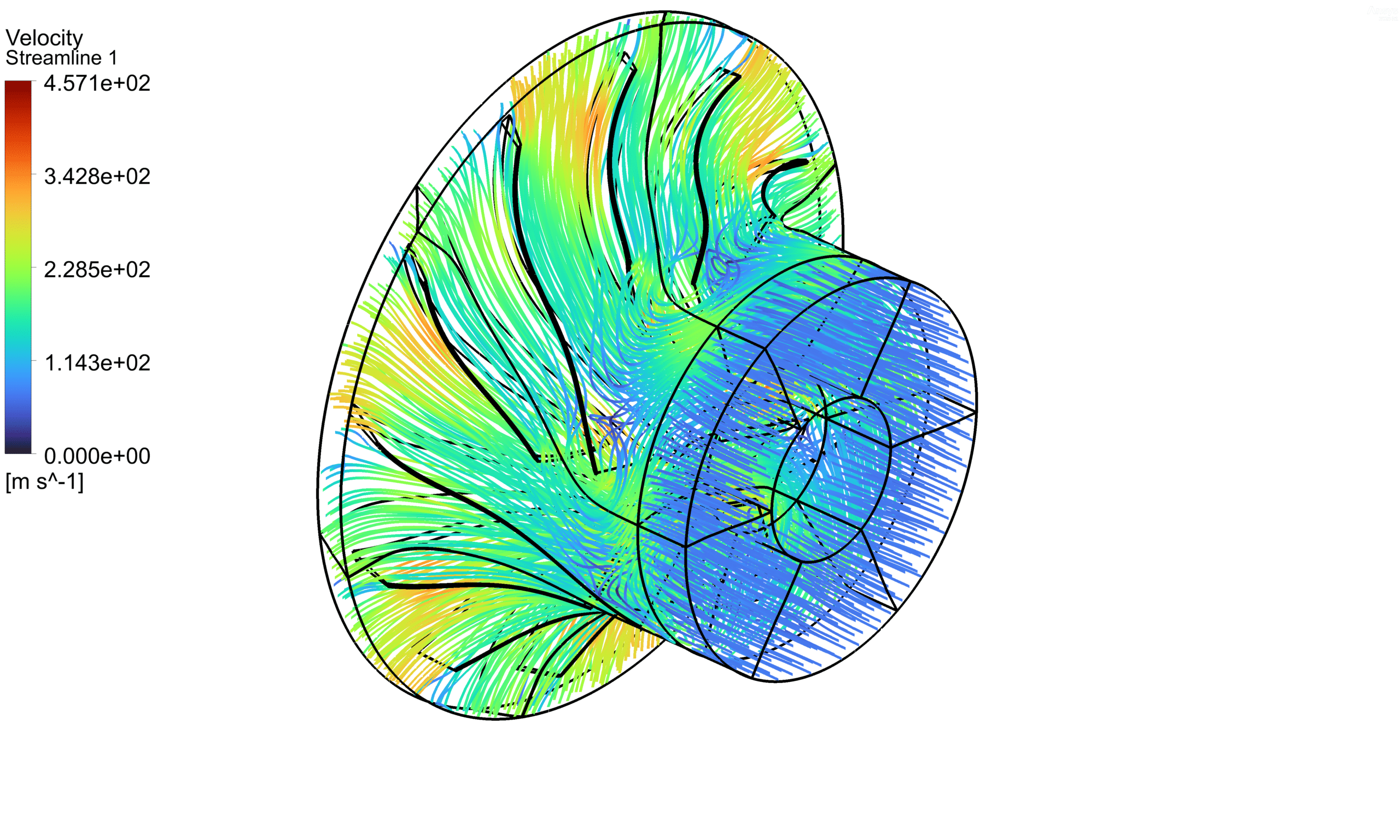
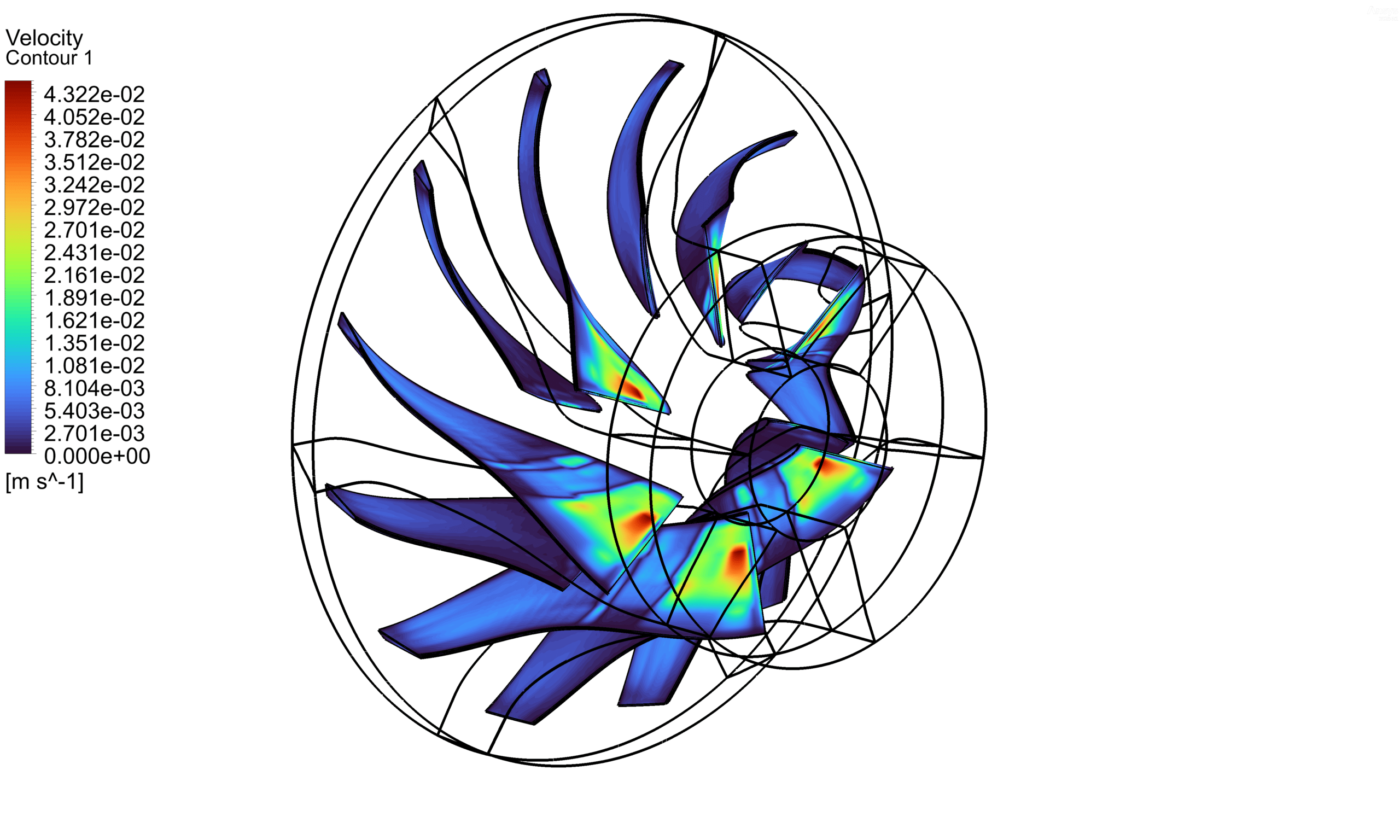
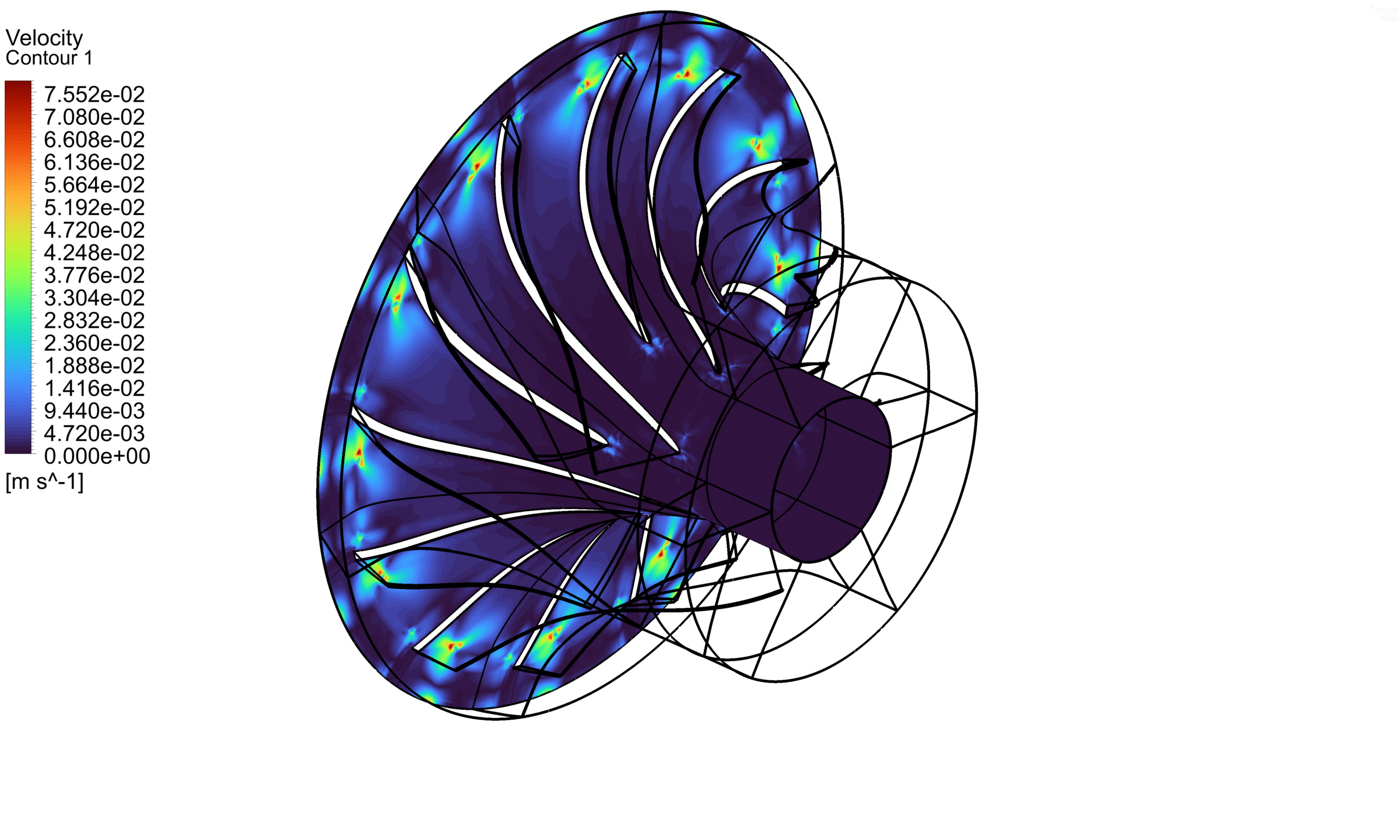
The results show that the turbocharger impeller accelerates the flow through the blade passages, creating localized high-velocity regions near the blade leading edges and flow channels, while lower velocities remain near the hub and blade surfaces. The pressure contours indicate a clear pressure rise across the impeller, with higher pressure on the pressure side and outlet region and lower pressure near the inlet and suction side, confirming effective energy transfer and compression of the fluid.
You must be logged in to post a review.
 Talk On WhatsApp
Reviews
There are no reviews yet.