
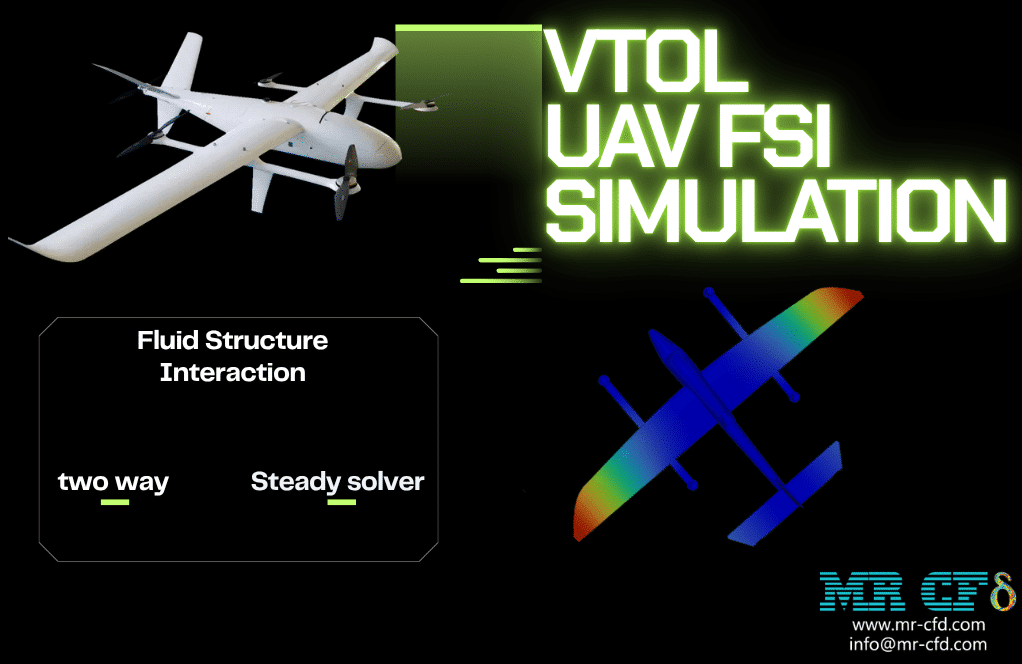
VTOL UAV: CFD Simulation Training Package
$3,999.00 Internship
- The aerodynamic dataset is the input every other discipline consumes get the forces and moments wrong at this stage, and stability coefficients lose their meaning, structural load envelopes shift off target, and acoustic source terms start from a corrupted flow field.
- Gusty skies expose any gap in directional or longitudinal control authority; stability derivative analysis distills the full CFD solution into the handful of coefficients damping, stiffness, coupling that decide whether the autopilot can keep the vehicle where it needs to be.
- Acoustic evaluation reaches past simple loudness metrics into the spatial and spectral structure of the sound field, showing exactly where noise concentrates and how it fades with distance the kind of detail that drives meaningful geometry and operational changes.
- FSI simulation forces aerodynamic and structural disciplines to solve the same problem at the same time, so load-driven deformation, twist-induced performance loss, and frequency migration toward resonance all appear in the results instead of surfacing as surprises during ground testing.
To Order Your Project or benefit from a CFD consultation, contact our experts via email (info@mr-cfd.com), online support tab, or WhatsApp at +44 7443 197273.
There are some Free Products to check our service quality.
If you want the training video in another language instead of English, ask it via info@mr-cfd.com after you buy the product.
Description
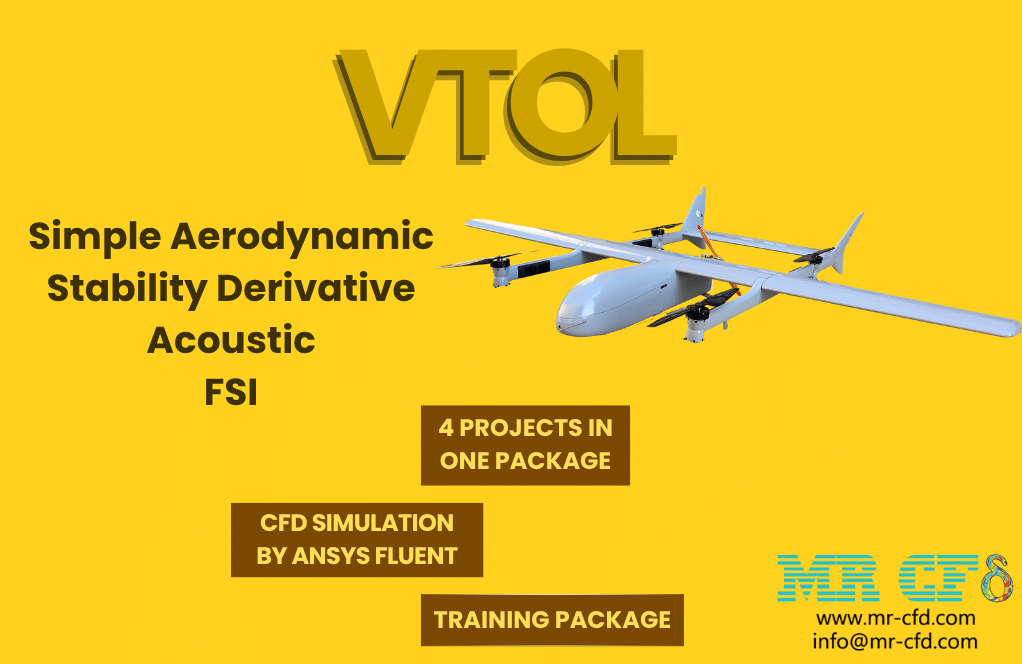
VTOL CFD Simulation: 4 Projects In One Package
Tackle the Core Simulation Challenges Behind Vertical Take-Off and Landing Aircraft
VTOL platforms sit at the intersection of rotorcraft complexity and fixed-wing efficiency a combination that makes computational simulation not just useful but essential for any serious development effort. This package bundles four ANSYS Fluent projects that address the aerodynamic, stability, acoustic, and structural questions every VTOL engineer must answer. Each project stands alone as a practical exercise, but together they form a connected analysis pipeline that mirrors how industry teams bring a VTOL concept from early feasibility through to pre-flight verification.
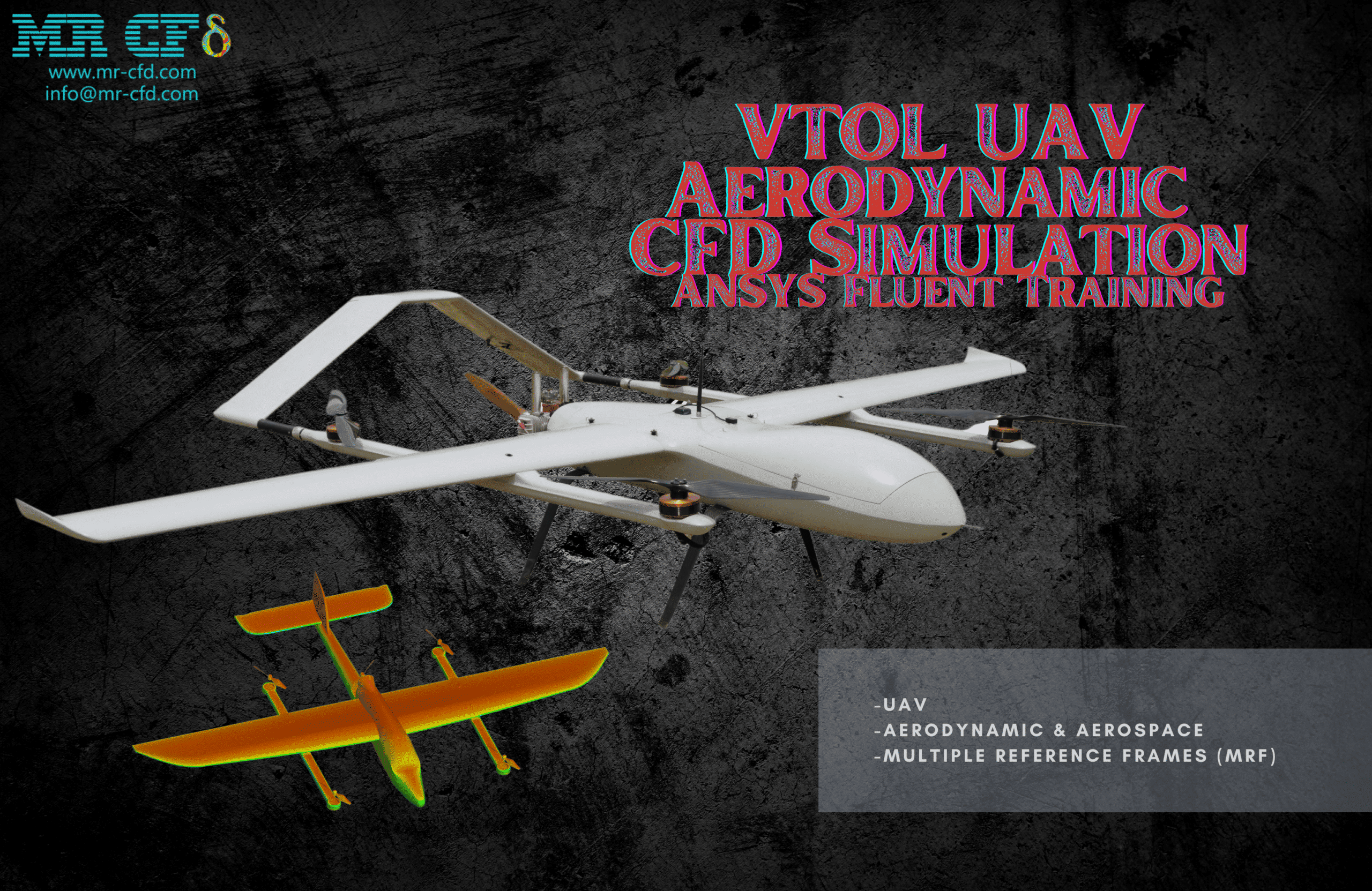
Rotor and Airframe Aerodynamic Characterization of VTOL
A VTOL vehicle transitions between hover, climb, and wing-borne cruise and each phase loads the airframe differently. This project has you build the complete VTOL geometry in ANSYS Fluent, assign rotating domains to each rotor disk, define freestream inflow and pressure exit boundaries, and apply wall treatments suited to the vehicle’s complex surfaces. You will then run organized sweeps through thrust settings, forward speeds, and vehicle attitudes to compile a force and moment database covering the full operational envelope. That database is not an academic exercise it is the starting input the stability, acoustic, and FSI projects all depend on to produce credible results.
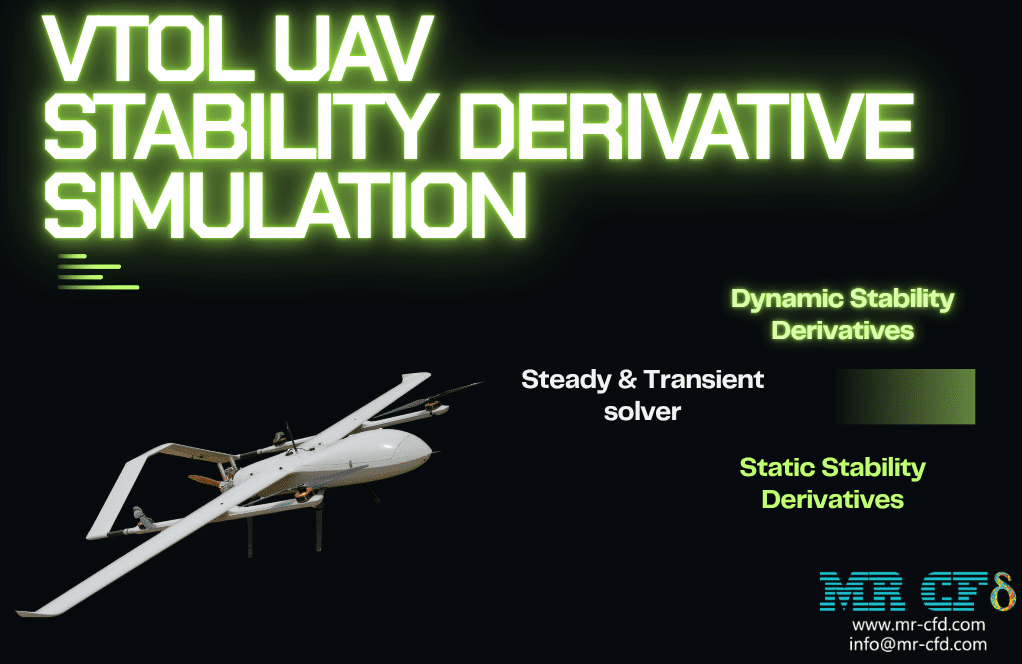
Dynamic Response Characterization and Control Derivative Mapping of VTOL
Transitioning from rotor-borne hover to wing-borne cruise introduces handling characteristics that shift continuously with airspeed and any blind spot in the derivative data can mean a control law that works at one speed but fails at another. In this project you will apply small, measured disturbances in pitch, roll, and yaw at multiple points across the transition corridor, record the resulting force and moment increments, and compile a derivative set that captures how vehicle response evolves from low-speed rotor authority to high-speed aerodynamic control. Mesh resolution is tightened around rotor wake interaction zones and wing-rotor interference regions where gradient accuracy matters most. The resulting derivative tables feed directly into flight control synthesis, simulation-based testing, and certification evidence.
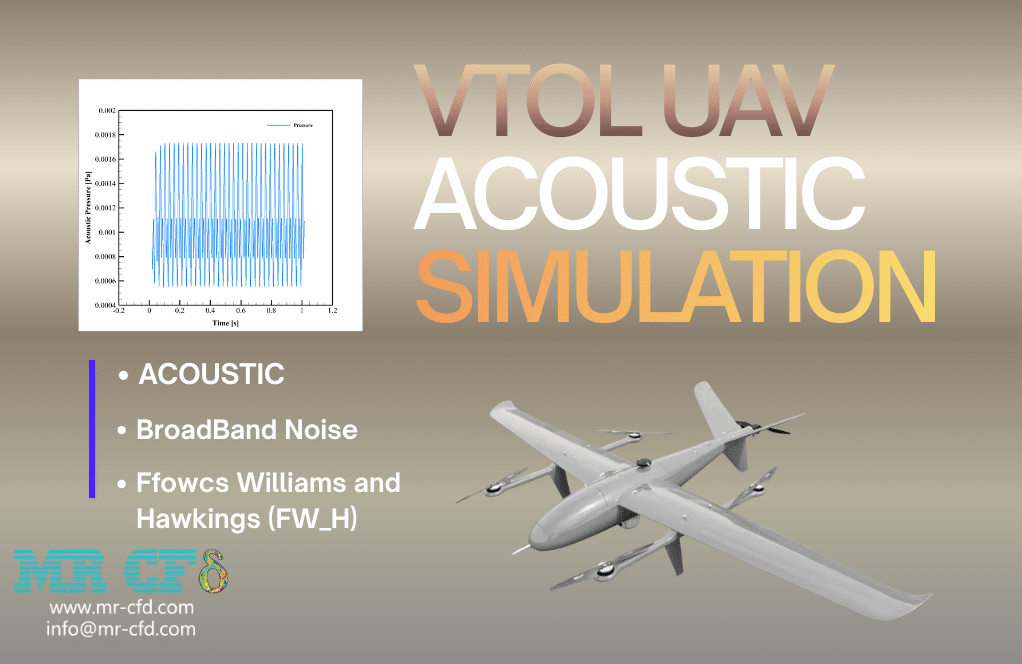
Noise Radiation Mapping for Urban and Tactical Deployment of VTOL
Noise is arguably the single largest obstacle standing between VTOL technology and routine operation over populated areas or near forward positions. This project takes you through ANSYS Fluent’s time-resolved acoustic framework: you will capture unsteady pressure fluctuations across rotor surfaces and airframe panels, propagate the resulting acoustic energy to far-field observer arrays using integral analogy methods, and decompose the frequency spectrum across hover, transition, and cruise segments. The deliverable is a directional noise map tied to each flight phase a tool that lets you weigh rotor speed adjustments, nacelle tilt schedules, and approach trajectory changes against noise targets without giving back the aerodynamic performance locked in during the first project.
Coupled Structural Response and Aeroelastic Stability Tracking of VTOL
Tilt mechanisms, cantilevered rotor arms, and thin wing skins all introduce structural flexibility that a rigid-body CFD model cannot represent and on a VTOL platform the loading changes character dramatically between hover and cruise, exciting different modes at different flight speeds. This project implements a two-way coupled loop inside ANSYS Fluent: aerodynamic surface pressures deflect the structure, the deflected geometry updates the flow domain, and iterations cycle until the two solutions converge. You will track deflection in rotor support arms and wing panels across the speed range, monitor natural-frequency shifts against rotor harmonic excitation, and quantify how elastic deformation modifies thrust vectors, trim angles, and overall vehicle drag. The entire assessment runs computationally, providing structural confidence well ahead of any physical prototype or flight-test commitment.
You must be logged in to post a review.
Related products
-
Sale

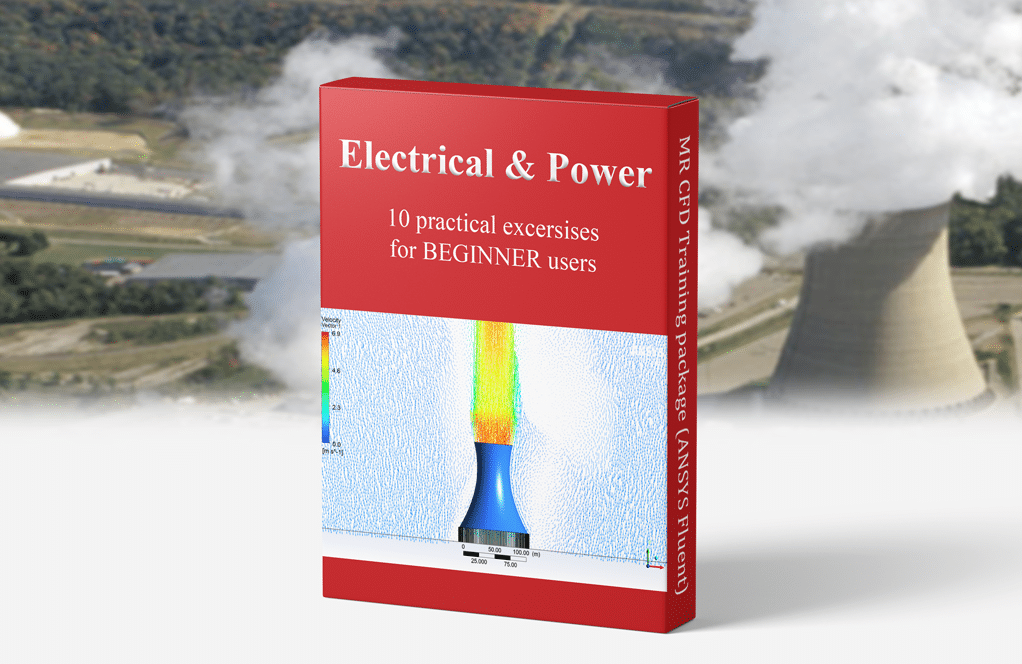
Electrical and Power Training Package for Beginners, 10 Practical Exercises
Original price was: $1,080.00.$299.00Current price is: $299.00. Internship -
Sale
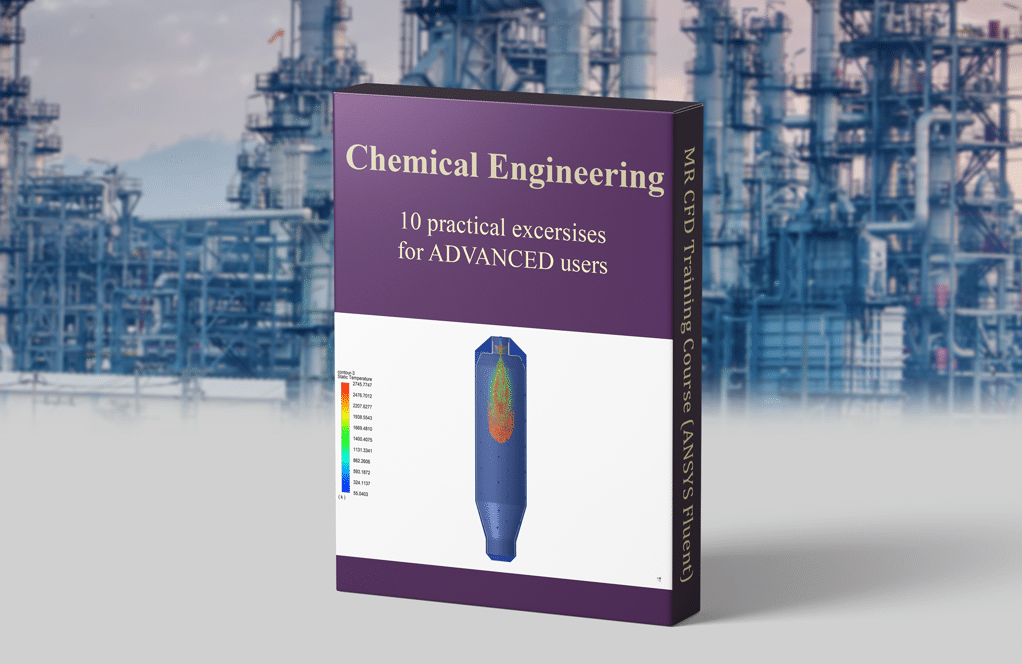
Chemical Engineering Training Package, Advanced Users, 10 Practical Exercises
Original price was: $1,660.00.$399.00Current price is: $399.00. Internship -
Sale
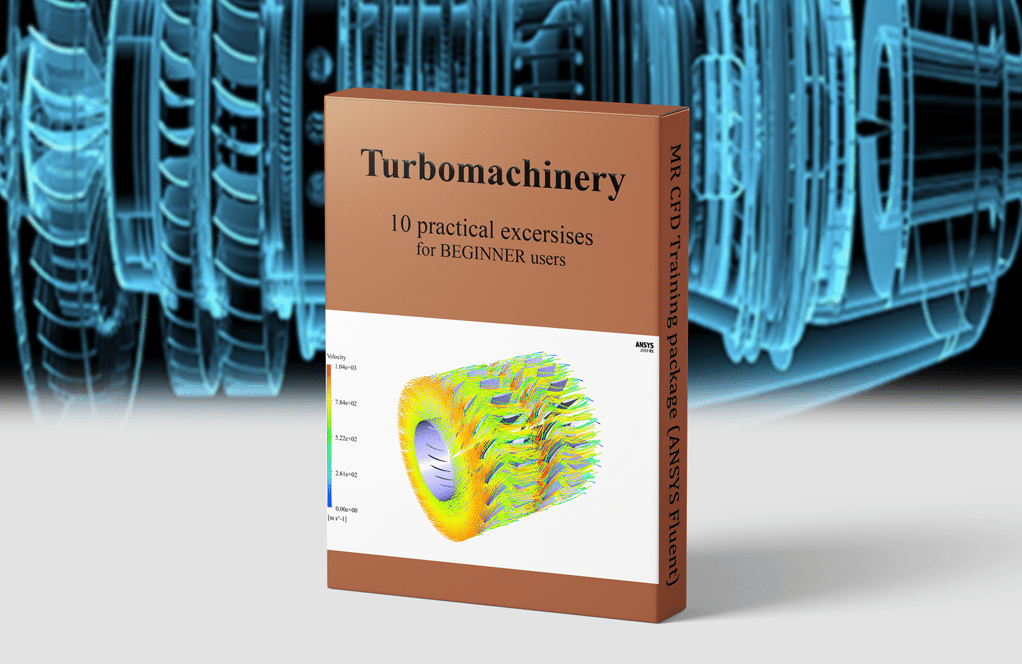
Turbomachinery CFD Training Package for Beginners, 10 Learning Products
Original price was: $1,200.00.$299.00Current price is: $299.00. Internship
 Talk On WhatsApp
Reviews
There are no reviews yet.