
Battery Module, Parameter Estimation, ANSYS Fluent CFD Simulation
$630.00 Internship
- This product numerically simulates a Battery Module using ANSYS Fluent software.
- We design the 3-D models with the Design Modeler software.
- We mesh the models with ANSYS Meshing software.
- We use the Circuit Network Battery model to define the discharge.
- We use the ECM (Equivalent Circuit Model) sub-model to determine the electrochemical computations.
- We use the Parameter Estimation tool and HPPC files to fit the equivalent circuit equations.
- The run calculation is in an unsteady state (transient).
To Order Your Project or benefit from a CFD consultation, contact our experts via email (info@mr-cfd.com), online support tab, or WhatsApp at +44 7443 197273.
There are some Free Products to check our service quality.
If you want the training video in another language instead of English, ask it via info@mr-cfd.com after you buy the product.
Description
Description
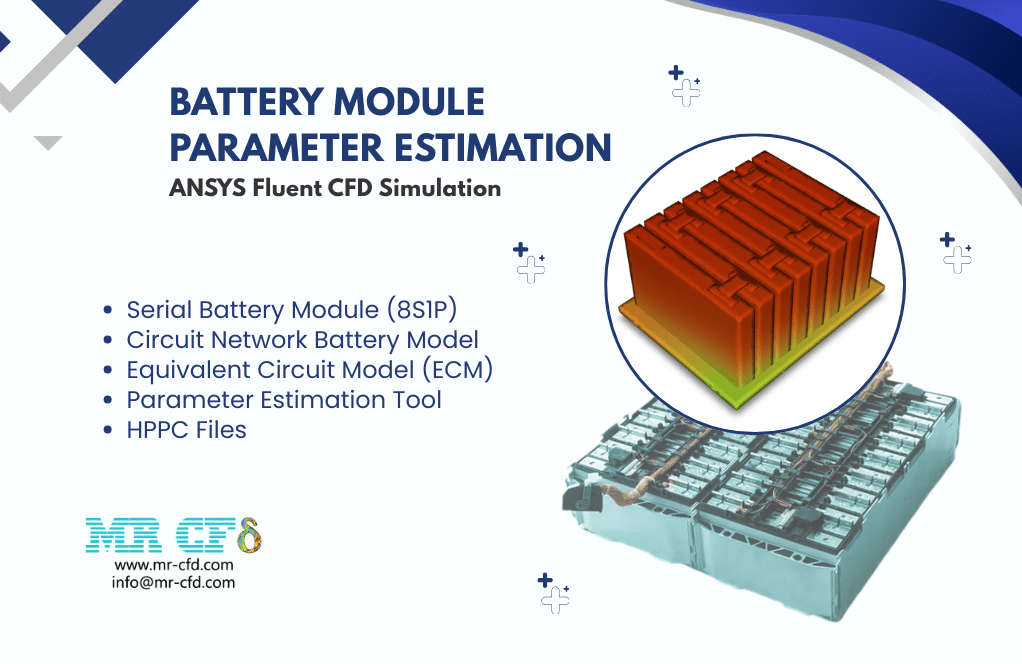
In this project, we present the CFD simulation of a battery module using the parameter estimation tool in ANSYS Fluent software.
A battery is a device that converts chemical energy into electric energy through chemical reactions. Several single battery cells are connected to create a battery module.
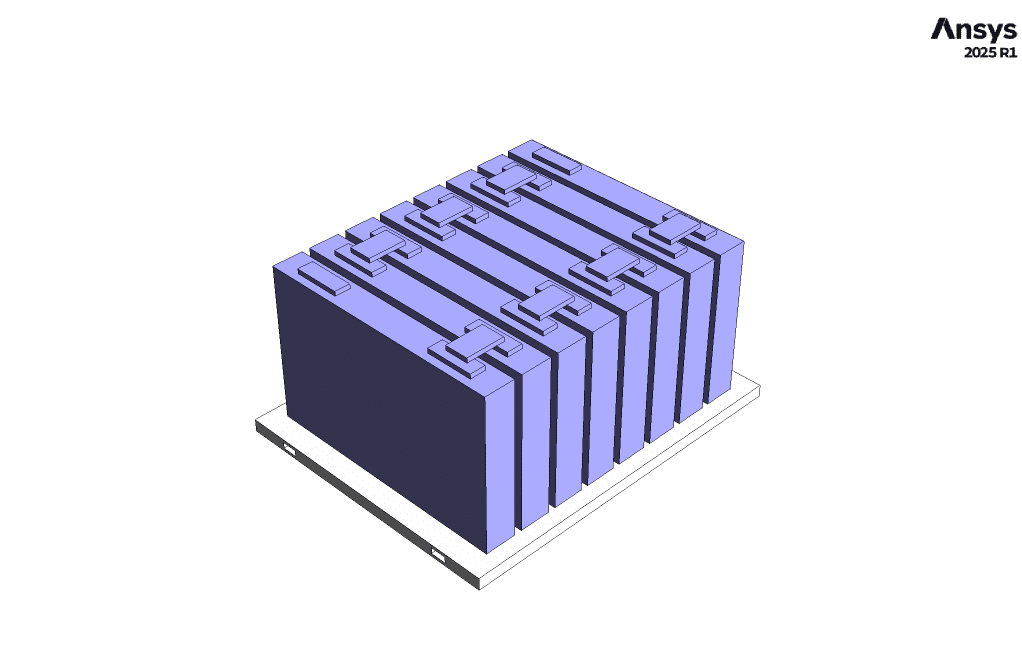
In this project, we designed a battery module consisting of 8 battery cells in a serial configuration. So, it is called the 8S1P arrangement.
In conventional, the operation of battery cells results in significant heat generation. So, the battery module is mounted on a cold plate to effectively control the temperature rise.
Methodology
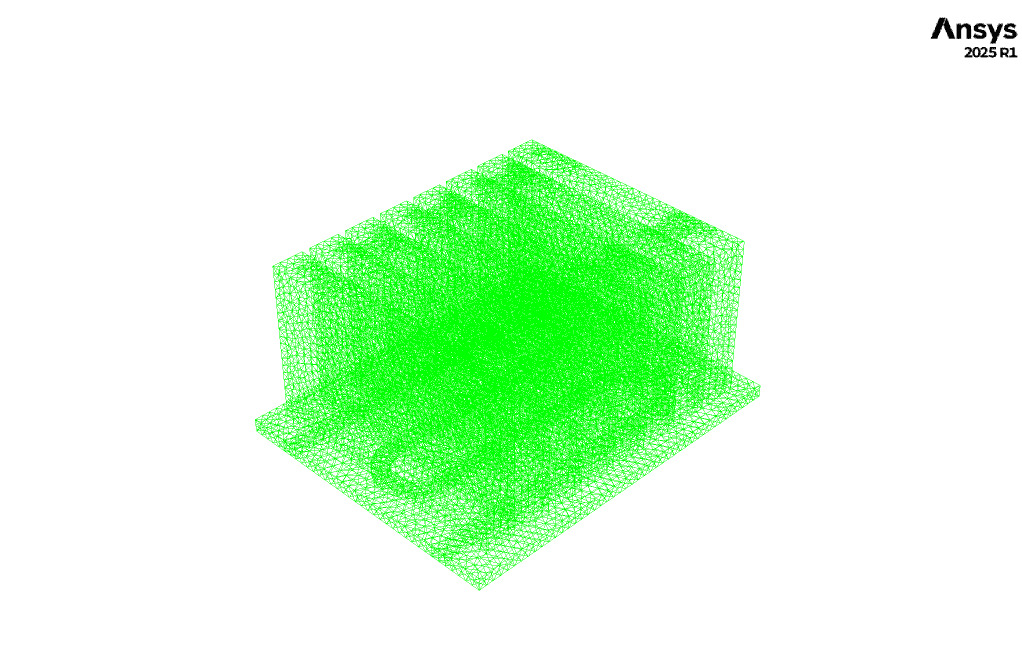
We modeled the geometry of a battery module with a cooling plate using Design Modeler software. Next, we meshed the model using ANSYS Meshing software, and 183,781 elements were generated.
Finally, we set up this battery module using the Battery model in ANSYS Fluent software.
We used the Circuit Network model for battery modeling. Then, we used the ECM (Equivalent Circuit Model) sub-model to specify the electrochemical computations. We intend to discharge the battery pack at a 3 C-rate.
According to the ECM method, the electrical behavior of the battery system is assumed as an electrical circuit, with equations in terms of resistances and capacitors.
Therefore, the parameter estimation tool was used to fit the coefficients values in the equations based on the testing data. For this purpose, a set of HPPC files (hybrid pulse power characterization) was loaded with different levels of the SOC and temperatures.
Since the discharging process in the battery system occurs over time, we run the calculation in an unsteady state (transient).
Conclusion
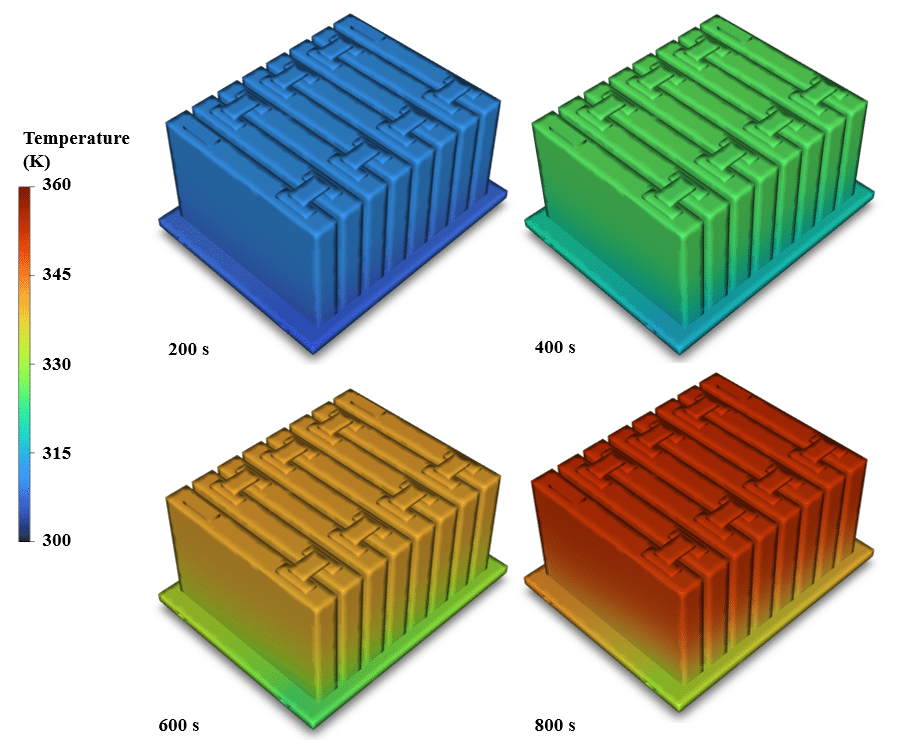
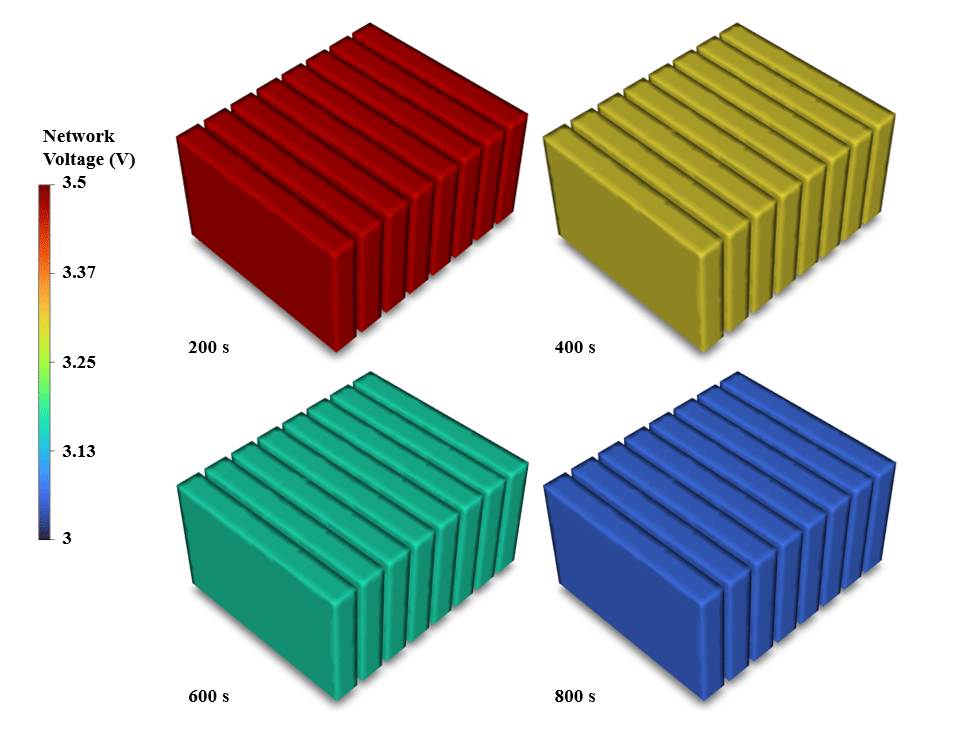
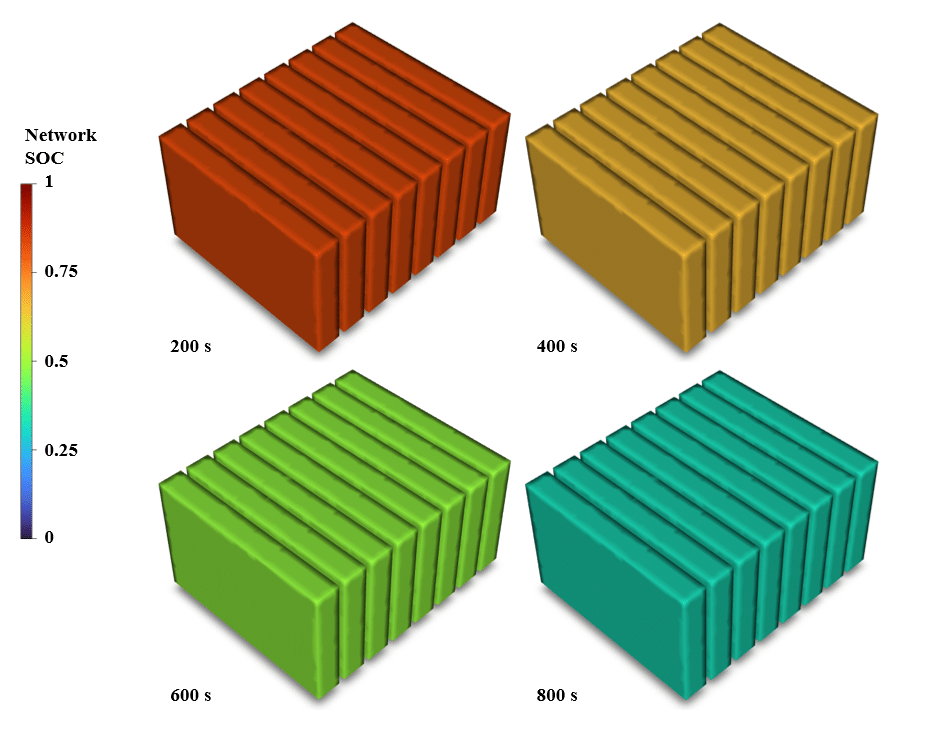
We intend to analyze the battery module’s behavior during the discharging process. Therefore, we obtained the contours of temperature, potential (network voltage), and SOC (state of charge).
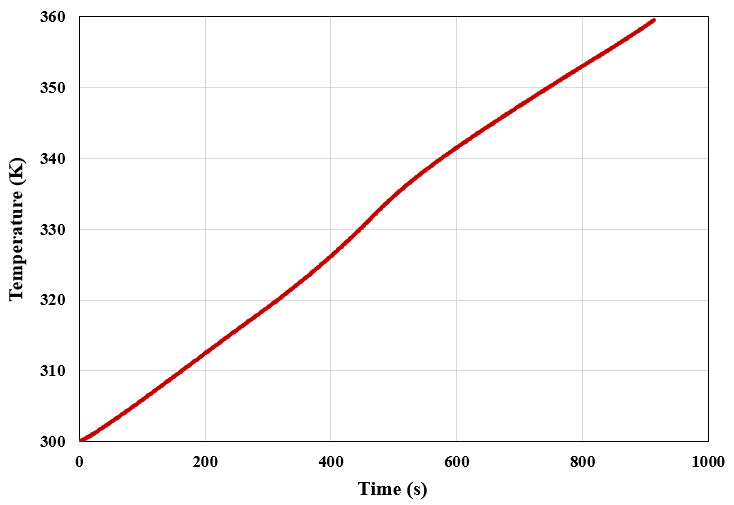
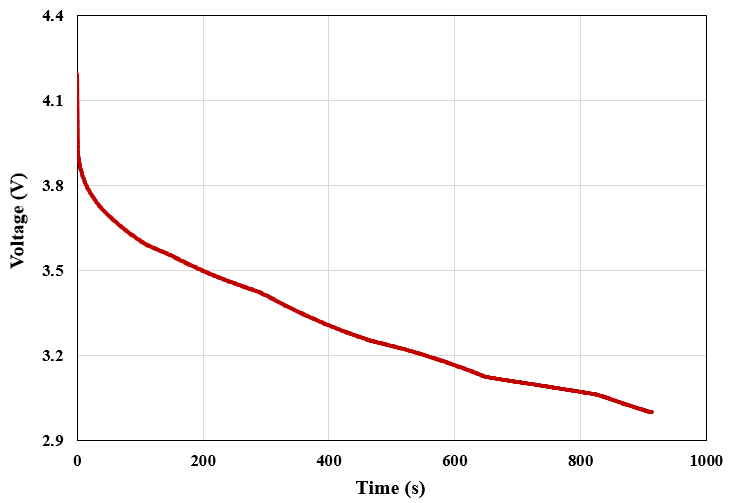
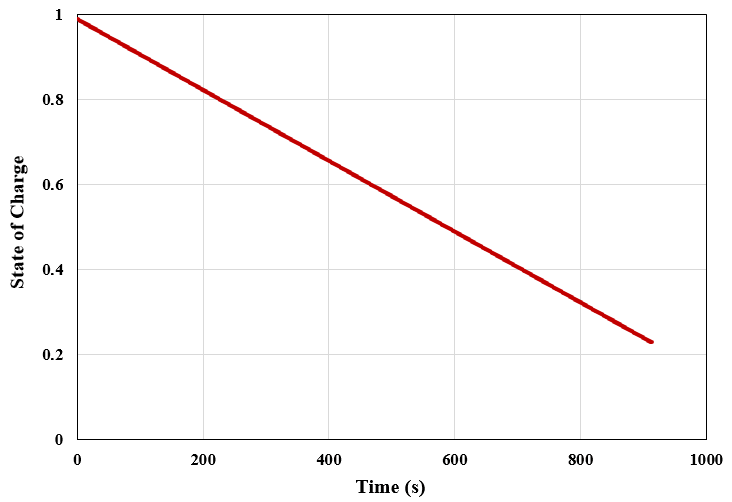
Next, we presented a plot of variations in the maximum temperature of the cells of the battery module with respect to time, and then a graph showing voltage discharge and SOC changes over time.
The results show that the network voltage and SOC level decrease during the discharge process, and instead, the temperature of the battery cells increases due to heat generation.
You must be logged in to post a review.



 Talk On WhatsApp
Reviews
There are no reviews yet.