


Pelton Turbine, CFD Simulation Training Package: 5 Projects by ANSYS Fluent
$399.00 Internship
Simulation Pelton Wheel Turbine, Industrial Application
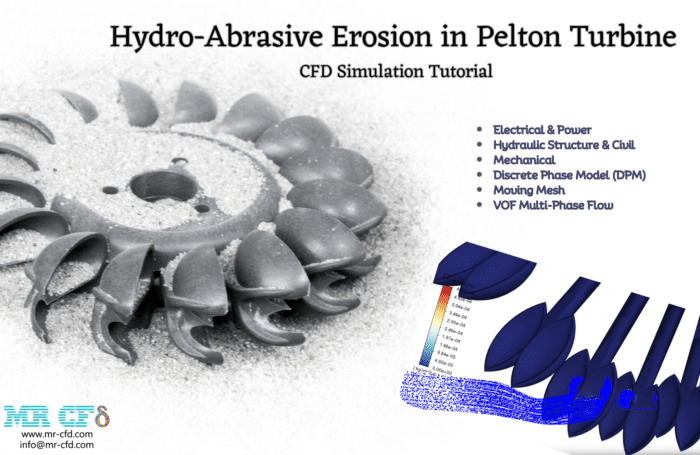
Simulation of Hydro-Abrasive Erosion in Pelton Turbine
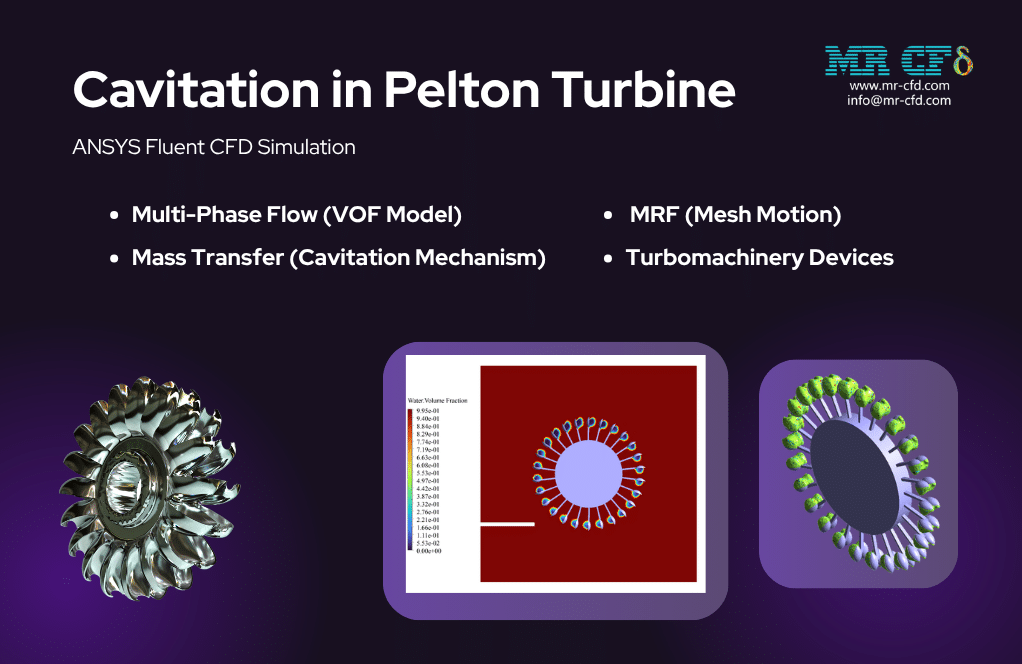
Simulation of Cavitation in Pelton Turbine
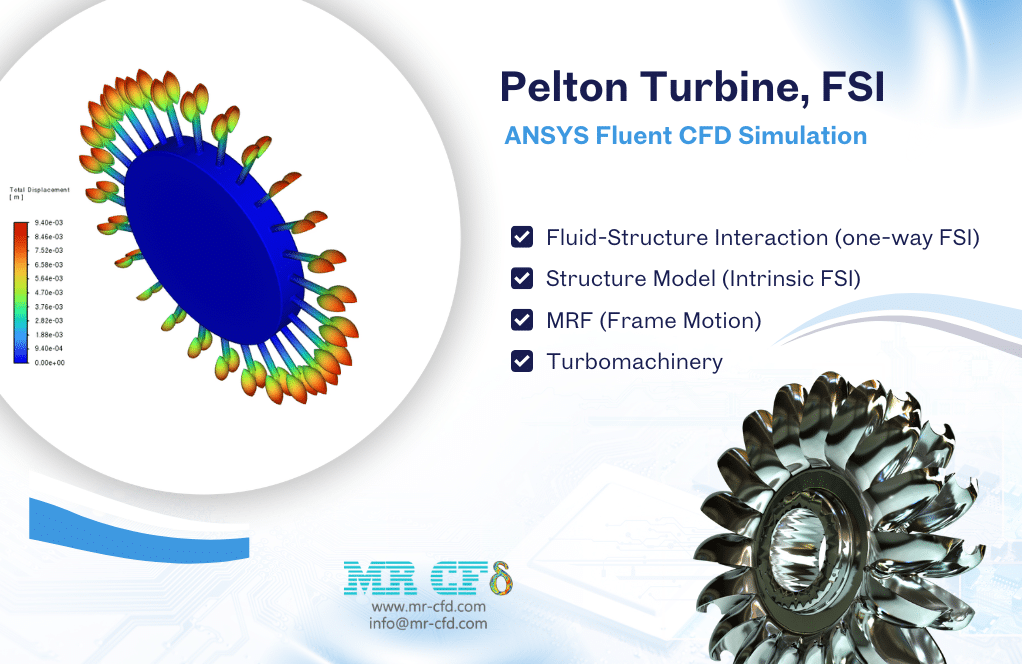
Simulation of Pelton Turbine, FSI Analysis
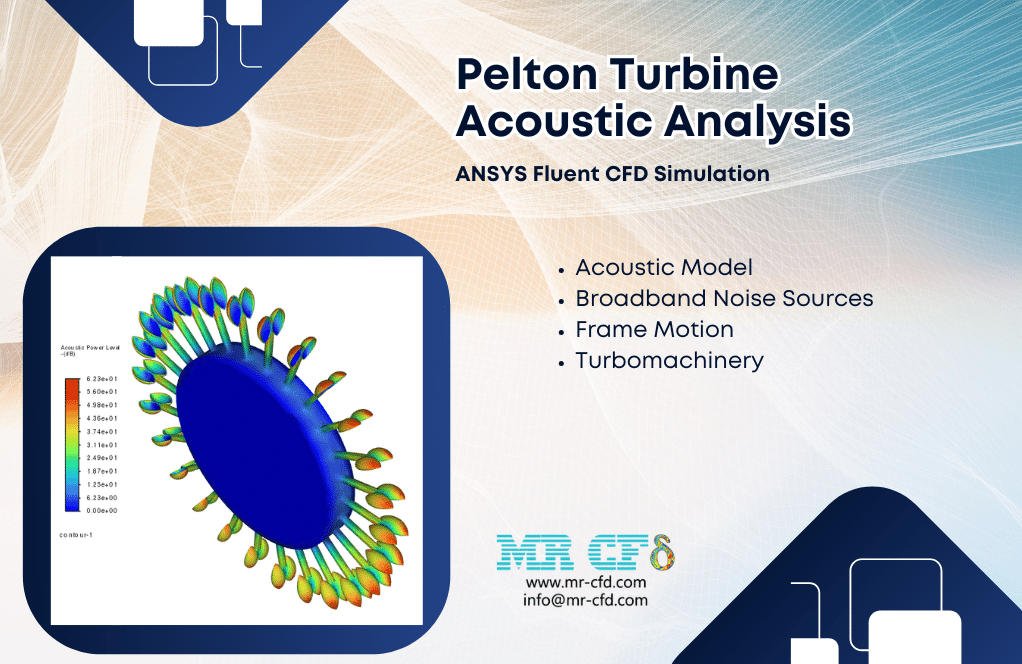
Simulation of Pelton Turbine, Acoustic Analysis
Click on Add To Cart and obtain the Geometry file, Mesh file, and a Comprehensive ANSYS Fluent Training Video.To Order Your Project or benefit from a CFD consultation, contact our experts via email (info@mr-cfd.com), online support tab, or WhatsApp at +44 7443 197273.
There are some Free Products to check our service quality.
If you want the training video in another language instead of English, ask it via info@mr-cfd.com after you buy the product.
Description
Overview of Pelton Turbine, CFD Simulation, Training Package
Pelton Wheel Turbine, Industrial Application
This CFD project simulates a simple Pelton wheel turbine numerically using ANSYS Fluent software. This hydraulic equipment has many industrial applications in turbomachinery fields.
In this simulation, the moving-reference frame (MRF) technique is used to define the rotation flow. So, a rotational speed is defined for the turbine using the mesh motion method in an unsteady state. In addition, the multiphase model is used to describe two-phase flow. So, the air and water are defined as the primary and secondary phases using the volume of fluid (VOF) method.
Hydro-Abrasive Erosion in Pelton Turbine
This CFD project simulates the erosion phenomenon in a Pelton turbine numerically using ANSYS Fluent software. The erosion is considered a destructive phenomenon in turbomachinery systems, which is due to water droplets or sand particles.
In this simulation, the moving-reference frame (MRF) technique is used to define the rotation flow. So, a rotational speed is defined for the turbine using the mesh motion method in an unsteady state. In addition, the multiphase model is used to describe two-phase flow. So, the air and water are defined as the primary and secondary phases using the volume of fluid (VOF) method. Note that for applying erosion, the discrete phase model (DPM) is used to define an injection, creating a two-way continuous-discrete interaction.
Cavitation in Pelton Turbine
This CFD project simulates the cavitation phenomenon in a Pelton turbine numerically using ANSYS Fluent software. The cavitation is considered a destructive phenomenon in turbomachinery systems, which is due to sudden pressure changes and consequently the generation and destruction of vapor bubbles.
In this simulation, the moving-reference frame (MRF) technique is used to define the rotation flow. So, a rotational speed is defined for the turbine using the mesh motion method in an unsteady state. In addition, the multiphase model is used to describe two-phase flow. So, the water-liquid and water-vapor are defined as the primary and secondary phases using the volume of fluid (VOF) method. Note that for the cavitation definition, a mass transfer between the water and vapor phases is defined. This mass transfer is according to the cavitation mechanism based on vaporization pressure.
Pelton Turbine, FSI Analysis
This CFD project simulates a Pelton turbine under FSI numerically using ANSYS Fluent software. The high-pressure fluid flow can impact the turbine body and blades, leading to displacement or deformation in the turbine’s solid body. Therefore, fluid-structure interaction (FSI) analysis will be important in research.
In this simulation, the moving-reference frame (MRF) technique is used to define the rotation flow. So, a rotational speed is defined for the turbine using the frame motion method in a steady state. In addition, the domain consists of both the solid zone (corresponding to the turbine body) and the fluid zone (around the turbine). Therefore, the Structure model is used to analyze the interaction between the fluid and the structure. Since this calculation approach is only in the Fluent solver, this is known as intrinsic FSI. Also, the linear elasticity method is used, which represents the proportionality between force and displacement in a solid body.
Pelton Turbine, Acoustic Analysis
This CFD project simulates a Pelton turbine under acoustic analysis numerically using ANSYS Fluent software. One of the serious problems in hydraulic equipment, such as turbines, is the noise generation due to sound waves caused by the impingement of fluid flow with the turbine body. Therefore, acoustic analysis is an important topic in research.
In this simulation, the moving-reference frame (MRF) technique is used to define the rotation flow. So, a rotational speed is defined for the turbine using the frame motion method in a steady state. In addition, the acoustic model is utilized to analyze the sound power levels in the turbine system. For this purpose, the Broadband noise source method is used.
You must be logged in to post a review.


 Talk On WhatsApp
Reviews
There are no reviews yet.