
Friction welding Simulation of Stainless-Steel Rods in Ansys Workbench
$210.00 $126.00 HPC
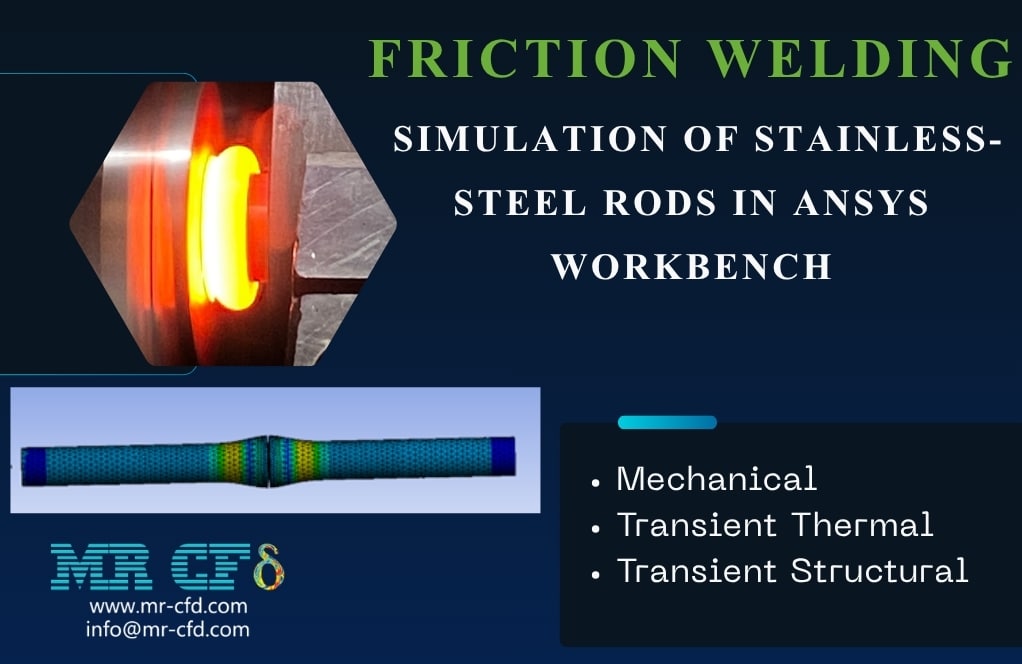
- This project studies friction welding of two stainless-steel rods using Ansys Workbench.
- A coupled transient thermal and structural analysis was used to simulate heating, upsetting, and deformation.
- The model includes frictional contact, temperature-dependent material properties, and staged loading conditions.
- The results show strong temperature and stress concentration at the welding interface.
To Order Your Project or benefit from a CFD consultation, contact our experts via email (info@mr-cfd.com), online support tab, or WhatsApp at +44 7443 197273.
There are some Free Products to check our service quality.
If you want the training video in another language instead of English, ask it via info@mr-cfd.com after you buy the product.
Description
Friction welding Simulation of Stainless-Steel Rods
Introduction
This report presents a finite element simulation of friction welding for two stainless-steel rods using Ansys Workbench. The main purpose of the study is to investigate the thermal and mechanical behavior of the joint during the welding process. To achieve this, a coupled transient thermal and transient structural analysis is used, so the temperature history from the thermal step can be transferred directly into the structural step.
Geometry and Mesh
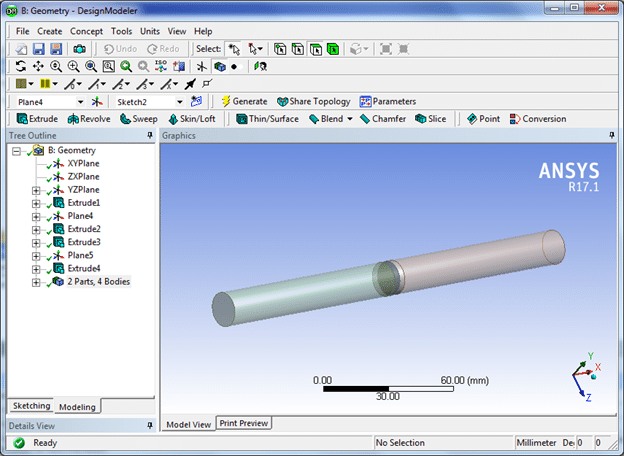
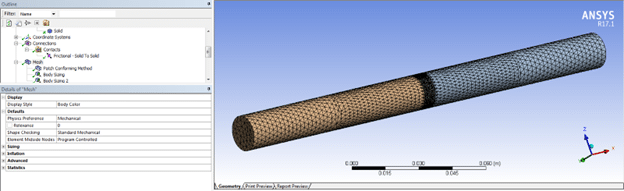
The model geometry consists of two cylindrical rods that are brought into contact at the welding interface. Each rod is divided into two regions, one with a fine mesh near the contact zone and another with a coarser mesh away from the joint. This approach improves accuracy in the critical region while reducing the overall computational cost. The geometry was built in the Ansys design environment, and the final assembly reflects the actual friction welding configuration.
Setup
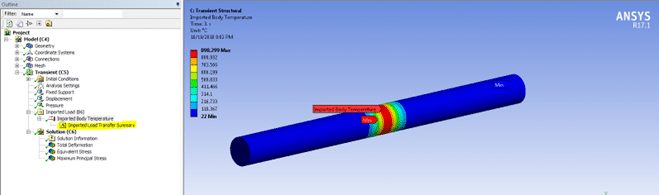
In the setup stage, stainless steel was selected as the material and its properties were defined in the Engineering Data section. These properties include temperature-dependent elastic modulus, bilinear isotropic hardening, Johnson-Cook failure parameters, specific heat, and thermal conductivity. The contact between the rods was defined as frictional, with a typical coefficient of 0.2, which is suitable for stainless steel in this type of analysis.
Results
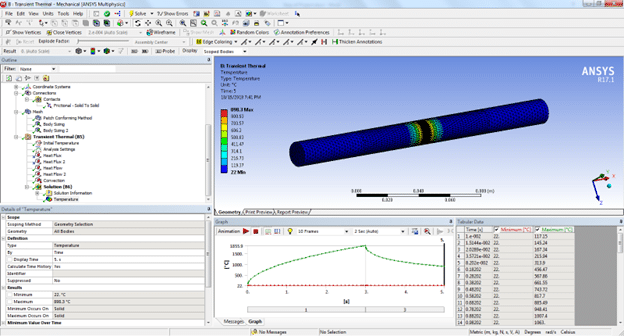
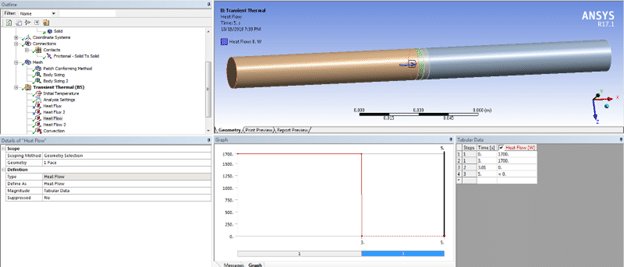
The analysis was divided into three time steps. The first step represents the heating stage, the second step is a short transition stage, and the third step corresponds to the upsetting stage. In the thermal model, heat flow is applied only during the first step and removed afterward. For the first level of simulation, the heating pressure is 30 MPa for 3 seconds, and the upsetting pressure is 60 MPa for 2 seconds. After solving the thermal analysis, the resulting temperature field is imported into the structural model as a thermal load.
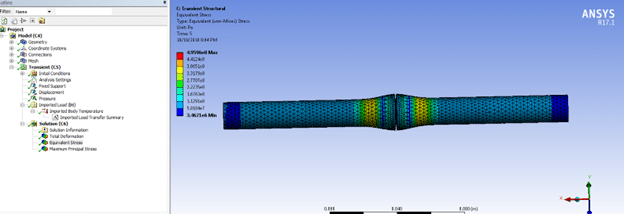
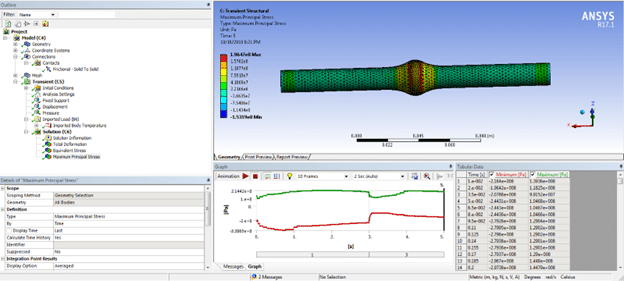
The results show a strong temperature concentration at the welding interface, which is the expected behavior in friction welding. This hot zone indicates where softening and bonding occur during the process. In the structural analysis, high stress and deformation are observed near the same interface region, confirming that this area experiences the most severe mechanical loading. Overall, the simulation demonstrates how Ansys Workbench can be used to study friction welding in a realistic and systematic way.
You must be logged in to post a review.


 Talk On WhatsApp
 Talk On WeChat

Reviews
There are no reviews yet.