
MQ-9 UAV Simple Aerodynamic Analysis: CFD Simulation by ANSYS Fluent
$720.00 $432.00 HPC
- The problem numerically simulates a MQ-9 using ANSYS Fluent software.
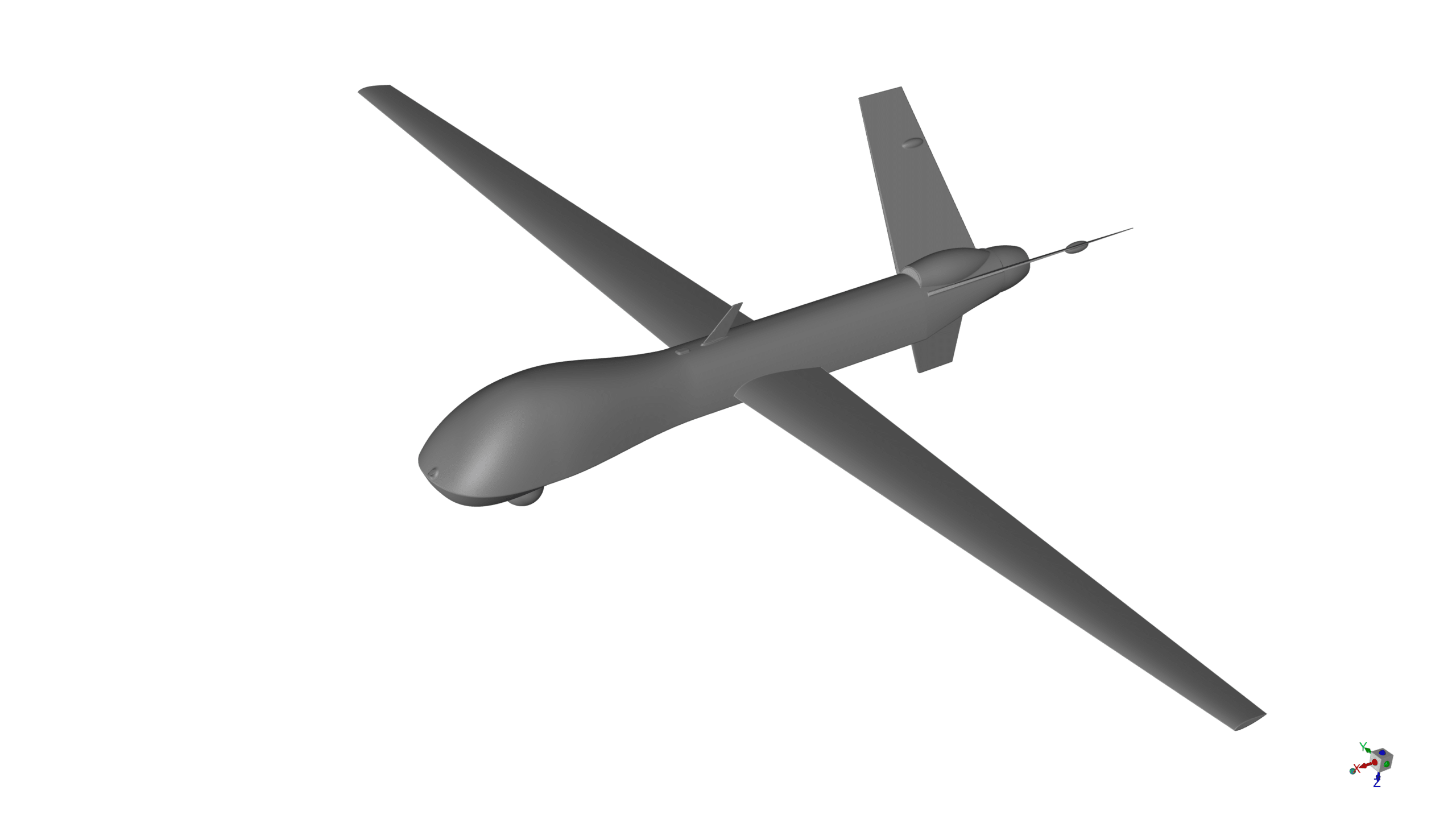
- We design the 3-D model with the SpaceClaim software.
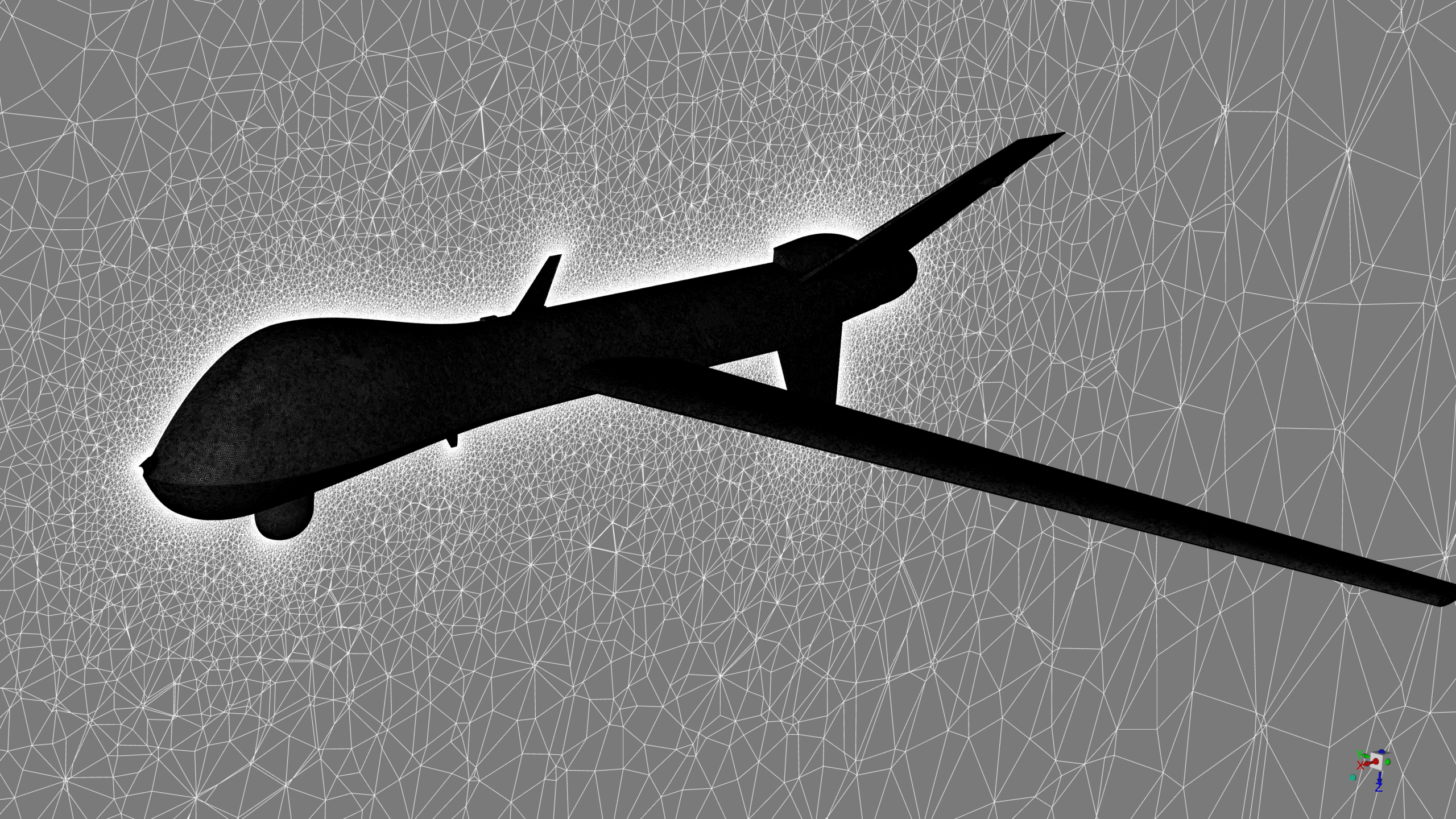
- We mesh the model with Fluent Meshing software. The element number equals 17,759,647 and their type is Tetrahedral.
To Order Your Project or benefit from a CFD consultation, contact our experts via email (info@mr-cfd.com), online support tab, or WhatsApp at +44 7443 197273.
There are some Free Products to check our service quality.
If you want the training video in another language instead of English, ask it via info@mr-cfd.com after you buy the product.
Description
Simple Aerodynamic Analysis: MQ-9 UAV CFD Simulation Training
Introduction
The MQ-9 Reaper is one of the most advanced unmanned combat reconnaissance aircraft manufactured by General Atomics Aeronautical Systems, which has been in service with the US Air Force since 2007 and plays a key role in modern military operations. This drone is capable of long-duration flights of up to 27 hours at altitudes above 15,000 meters with a cruising speed of about 370 km/h. Equipped with precision-guided weapons such as Hellfire missiles and GBU-12 bombs, the MQ-9 is capable of carrying a 1,700 kg warhead and, with advanced electro-optical and radar sensors, allows it to identify, track and attack targets in various weather conditions.
The importance of the MQ-9 Reaper in today’s world, beyond a mere weapon, stands out as a symbol of technological superiority in asymmetric warfare and counter-terrorism operations. By reducing human risk and operational costs compared to manned aircraft, the UAV has played a vital role in conflicts such as the Middle East, Ukraine and the Red Sea, logging over 2 million combat flight hours. Its ability to conduct ISR (Intelligence, Surveillance and Reconnaissance) missions and precision strikes has shifted the balance of power on the modern battlefield in favor of advanced UAV-equipped forces and is considered a model for the next generation of unmanned aircraft.
The geometry of the present model is three-dimensional and has been designed using SpaceClaim software. We do the meshing of the present model with Ansys Meshing software. The mesh type is Tetrahedral, and the element number is 17,759,647.
Methodology
This study used a steady-state, pressure-based CFD simulation in ANSYS Fluent software to analyze the incompressible flow around a MQ-9. The flow physics was modeled using the k-Ԑ Realizable turbulence model.
Results and Conclusion
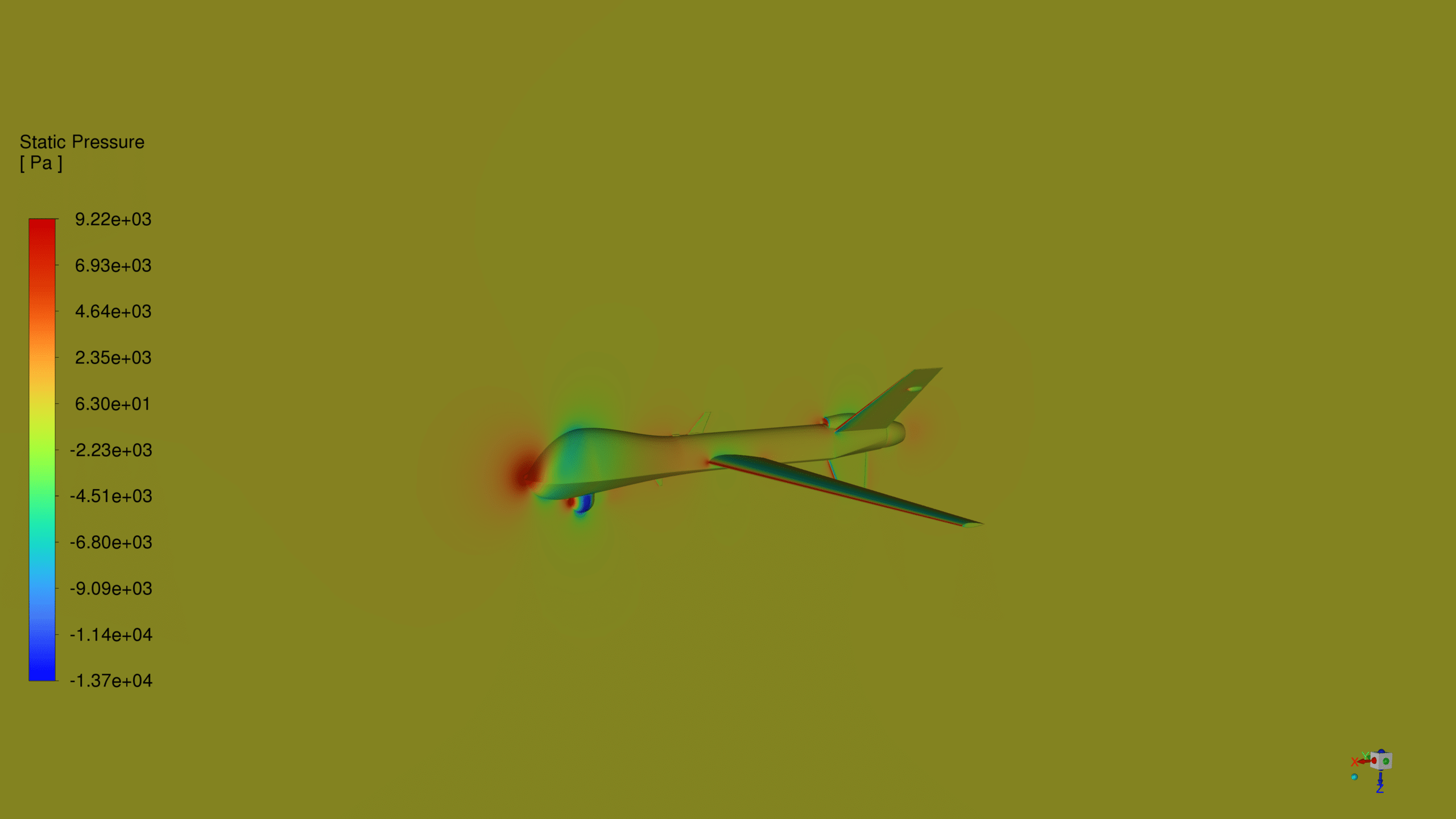
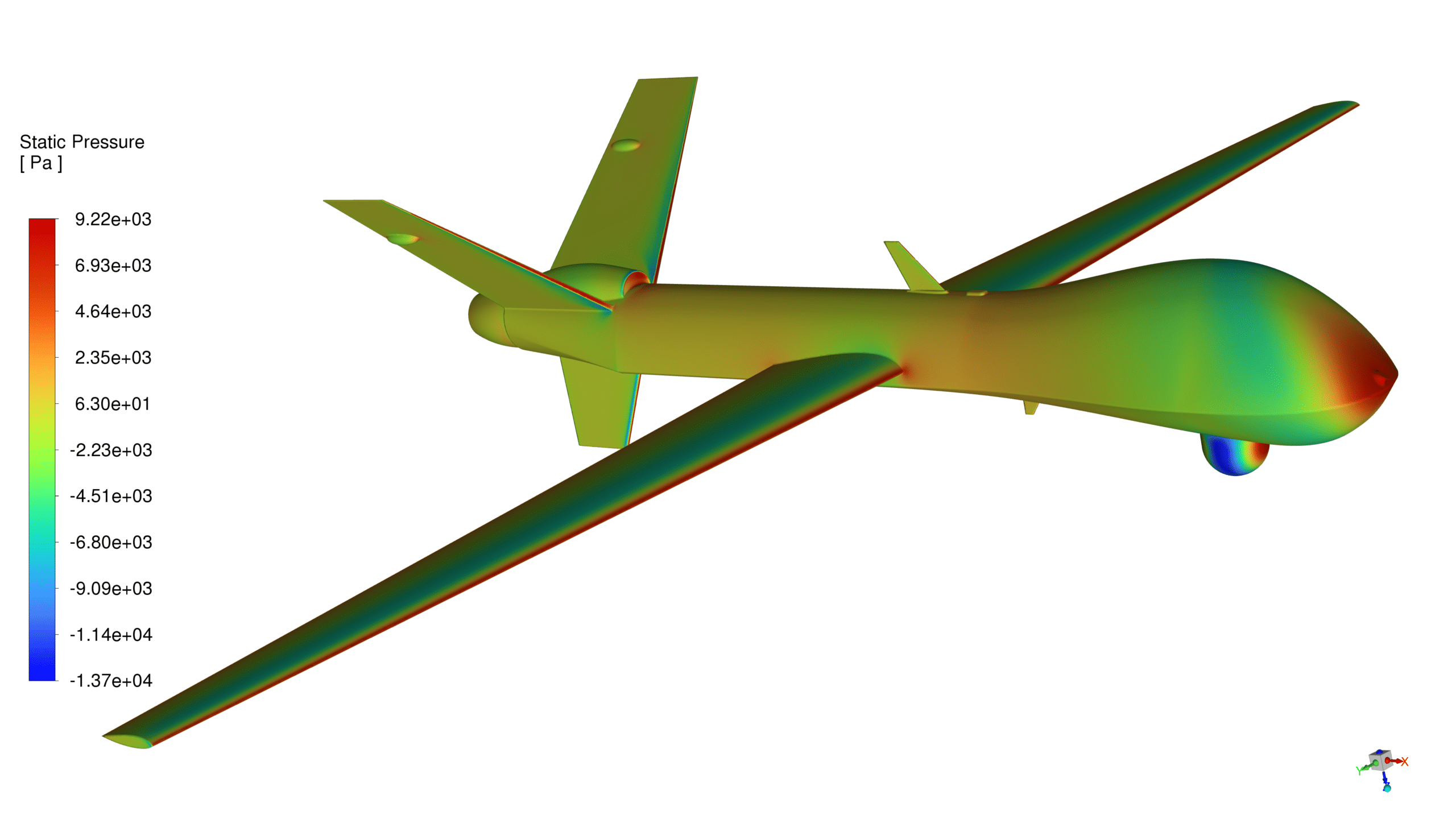
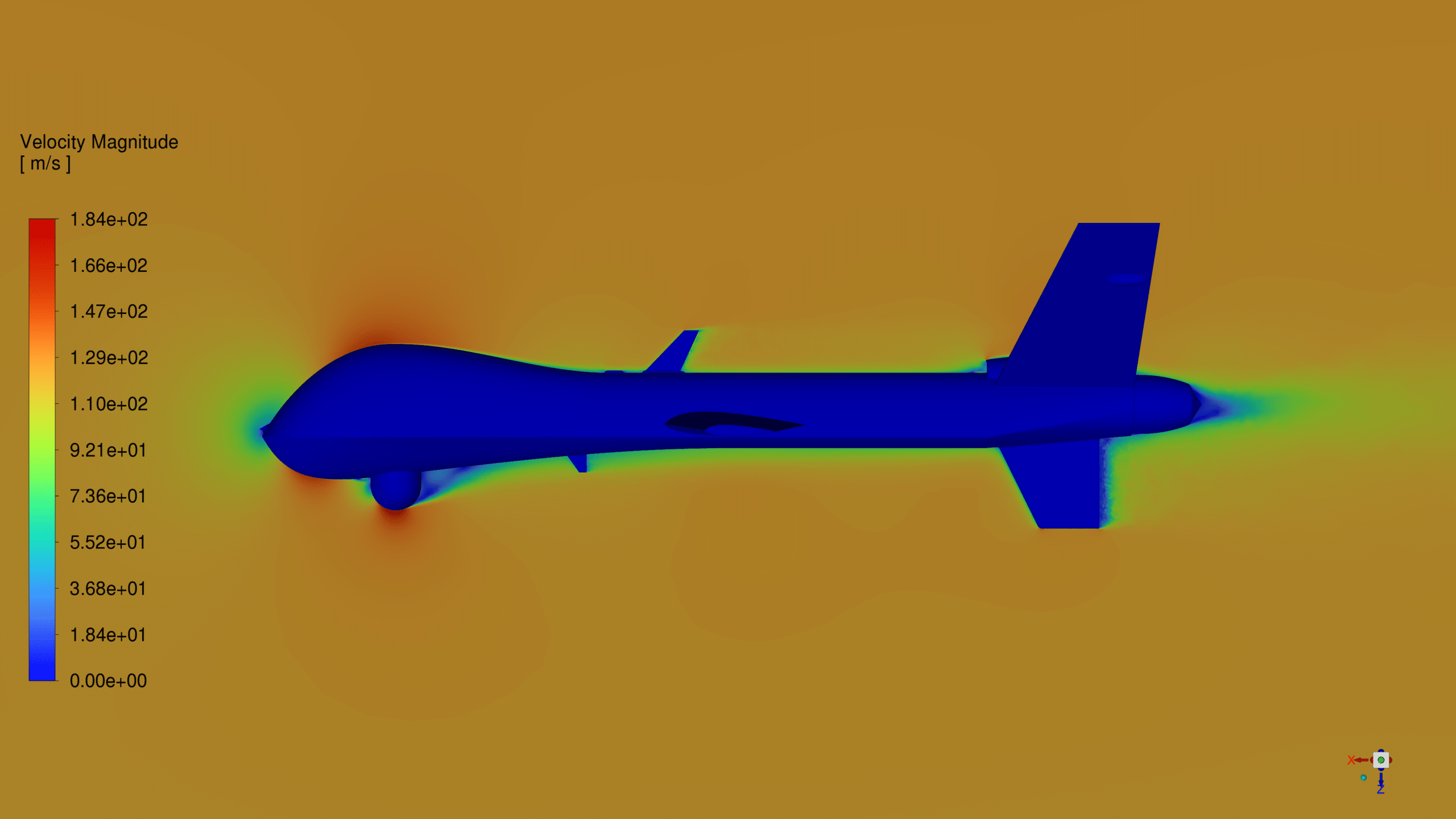
According to the velocity and pressure contours we extracted, it can be seen that the pressure is maximum in front of the nose of the drone and several other areas, and is shown in red.
Also, as expected and visible in the contour below, in areas where the pressure is higher the velocity is lower and vice versa.
You must be logged in to post a review.

 Talk On WhatsApp
 Talk On WeChat

Reviews
There are no reviews yet.