
Pelton Turbine, FSI, ANSYS Fluent CFD Simulation
$54.00 Internship
- This product numerically simulates the Pelton Turbine under FSI using ANSYS Fluent software.
- We design the 3D model with Design Modeler software.
- We mesh the model with ANSYS Meshing software.
- We analyze the Fluid-Structure Interaction (FSI).
- We use the Structure Model to define the Intrinsic FSI.
- We use the Frame Motion to define a rotational flow.
To Order Your Project or benefit from a CFD consultation, contact our experts via email (info@mr-cfd.com), online support tab, or WhatsApp at +44 7443 197273.
There are some Free Products to check our service quality.
If you want the training video in another language instead of English, ask it via info@mr-cfd.com after you buy the product.
Description
Description
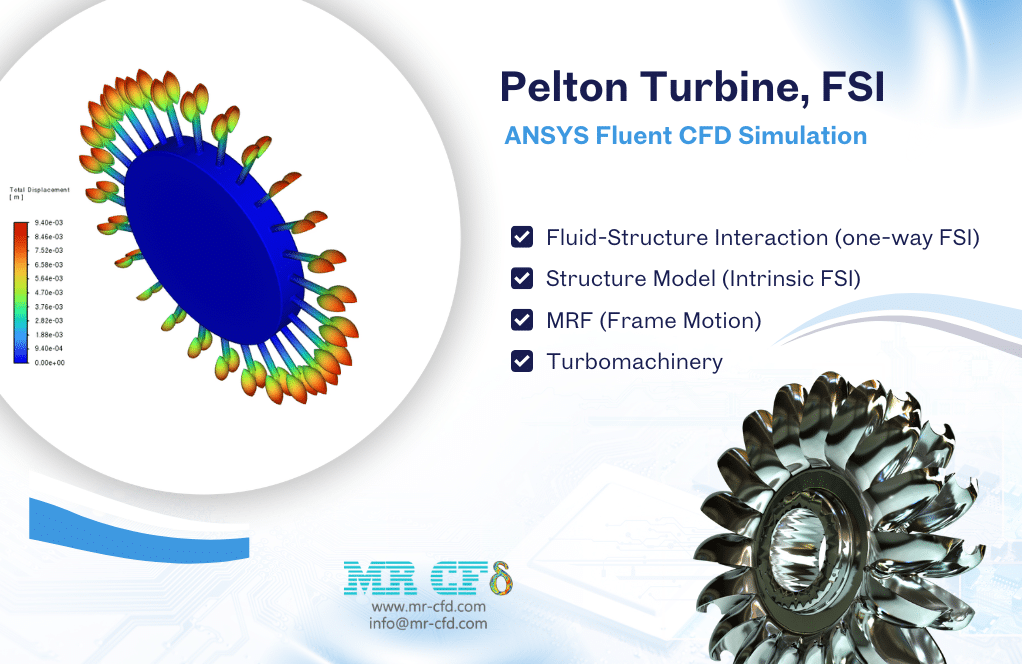
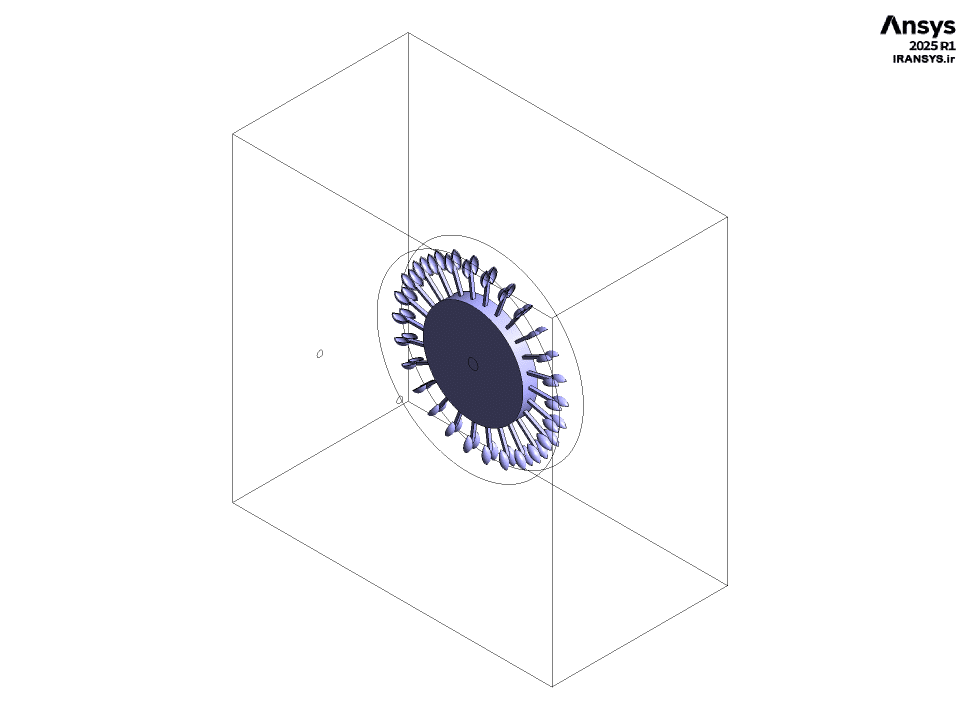
In this project, we perform the numerical simulation of a Pelton Turbine under FSI in ANSYS Fluent software.
A Pelton turbine is a type of hydraulic turbine that uses the energy of water pressure to rotate a wheel with cup-shaped blades and subsequently produce the required mechanical energy.
When a high-pressure fluid flow hits the turbine body and blades, it can cause displacement or deformation of the solid body. Therefore, in such case studies, we analyze the interaction between the fluid and the solid zones, which is known as Fluid-Structure Interaction (FSI).
Methodology
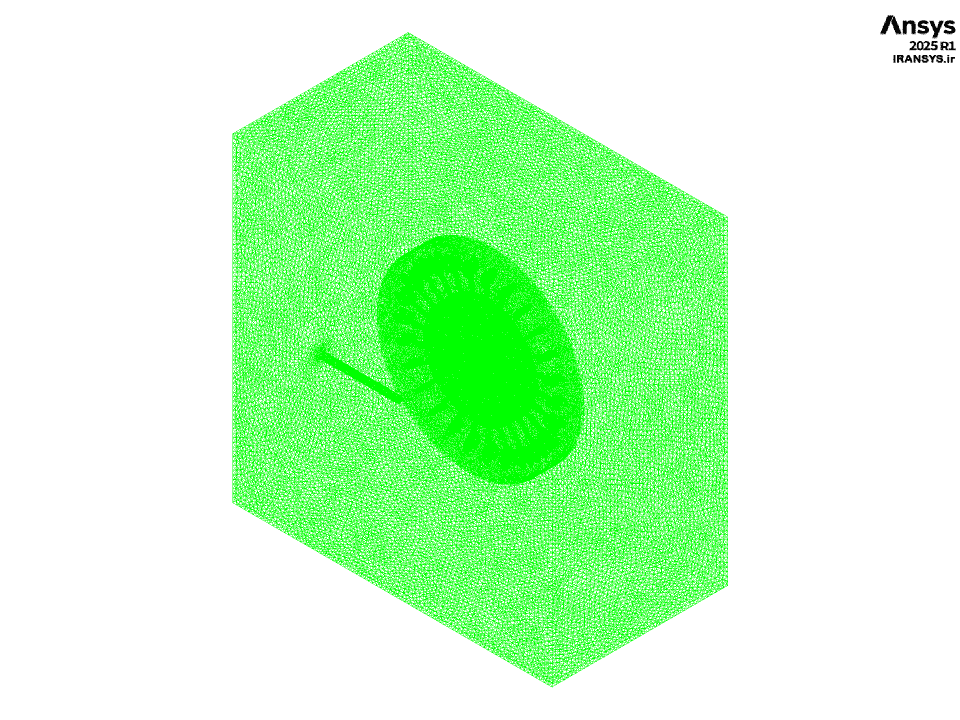
First, we model the geometry in 3D using Design Modeler software. The computational domain includes both the solid region of the turbine body and the fluid region of the surrounding space. Then, we mesh the model using ANSYS Meshing software, and about 6,000,000 cells are generated. Finally, we simulate the flow around the Pelton turbine in ANSYS Fluent software.
In general, an external solver, such as a system coupling, is used to transfer data between the fluid flow and structural solvers. However, in this project, without using an external solver, we perform the fluid and structural calculations only in Fluent software, which is known as the Intrinsic FSI. For this purpose, we use the Structure Model and then select a linear elasticity model to determine the deformation type.
We utilize the Moving Reference Frame (MRF) to define a rotation flow zone. In other words, we apply rotation to the fluid region adjacent to the turbine body. Since the run calculation is in a steady state, we use the Frame Motion tool with a specified rotational speed.
Conclusion
After calculations, we analyze the interaction between the water flow and the turbine body. For this purpose, we study both structural and fluid variables.
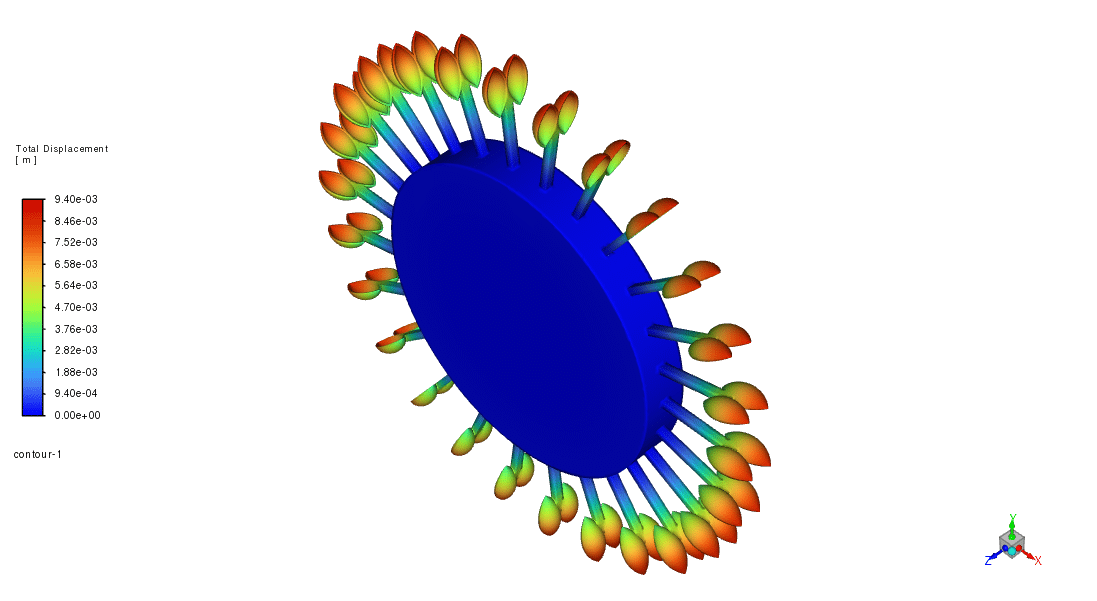
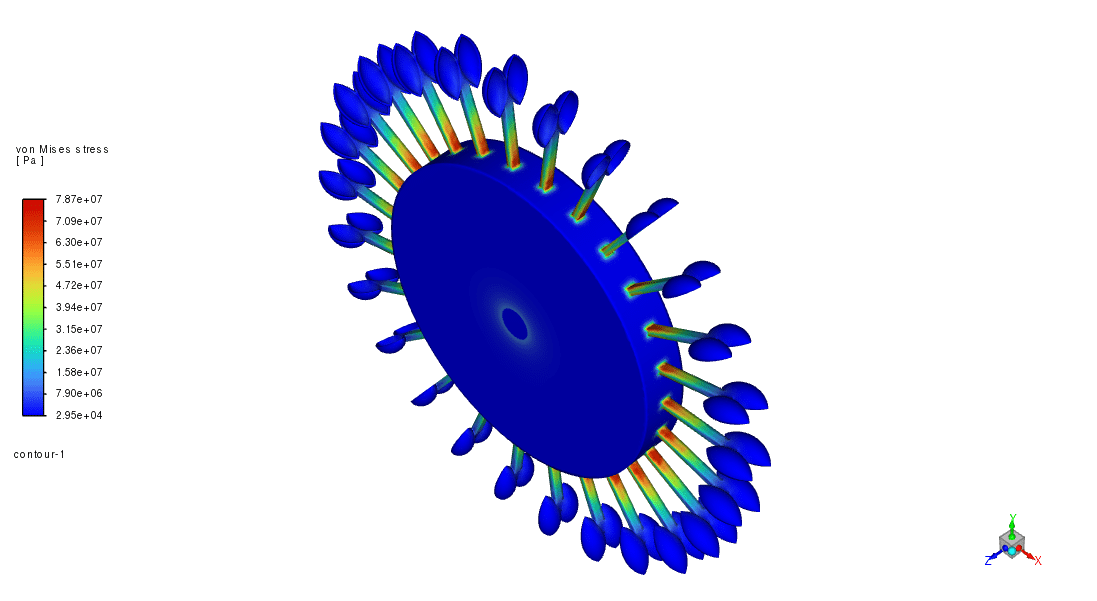
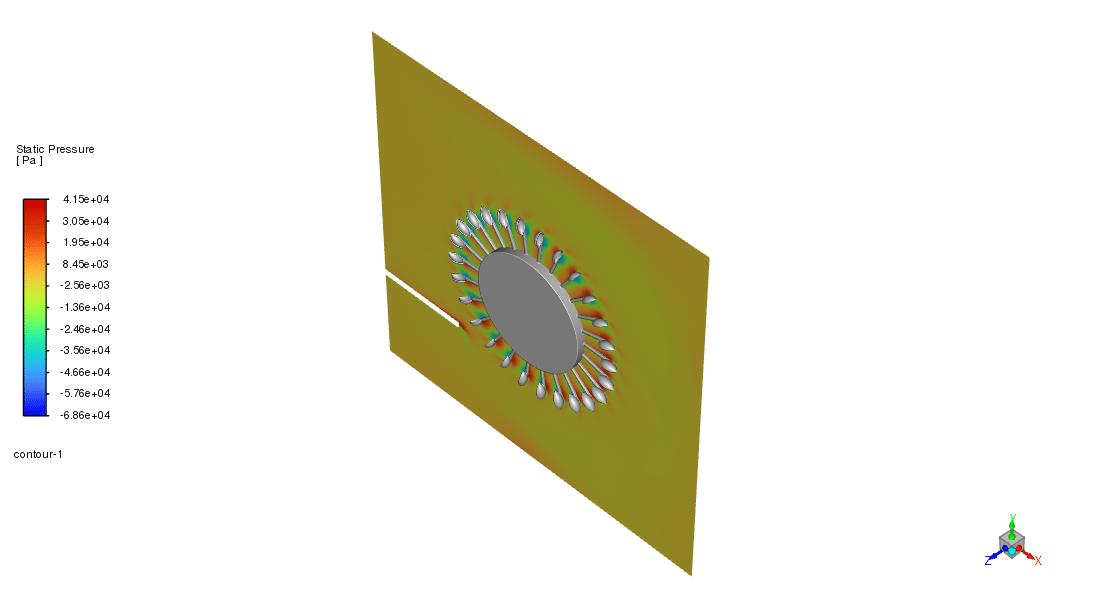
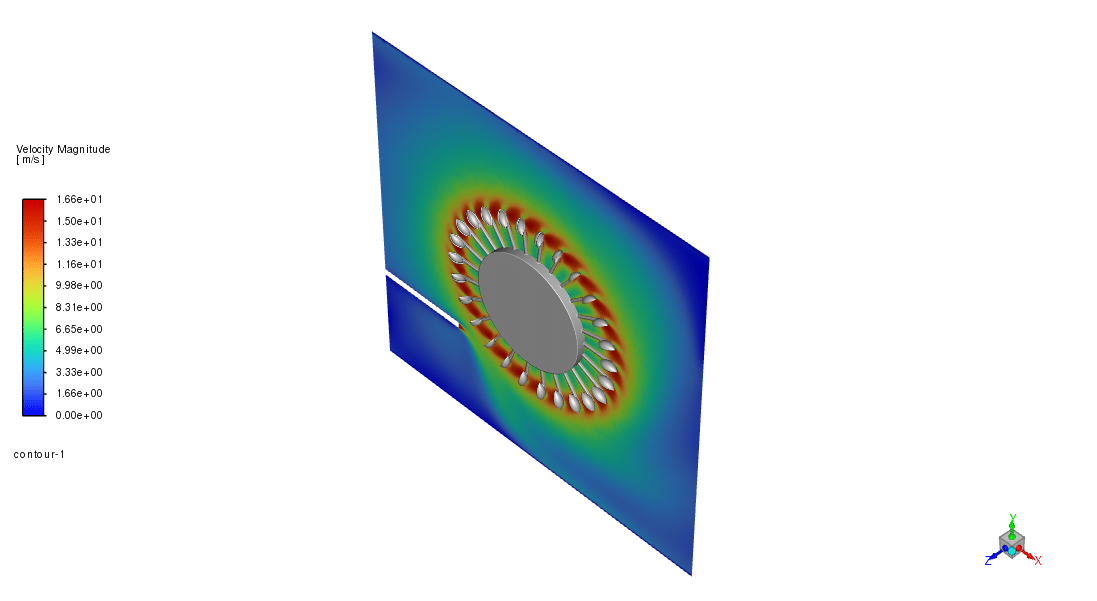
Therefore, we obtain the distribution of total displacement and von Mises stress on the turbine body as the structural variables. Meanwhile, we obtain the distribution of the water pressure and velocity around the turbine body as fluid variables.
The results show that the high-pressure rotating water flow significantly affects the turbine’s solid body, and noticeable deformation is observed, especially on the turbine blades.
So, we can conclude that our simulation has been performed correctly.
You must be logged in to post a review.



 Talk On WhatsApp
Reviews
There are no reviews yet.