
RQ-11 UAV: CFD Simulation Training Package
$3,999.00 Internship
- No UAV analysis holds value without a aerodynamic foundation force and moment accuracy drives everything downstream.
- Stability derivative extraction tells engineers precisely how the vehicle responds to gusts and commands across its flight envelope.
- Acoustic modeling maps how sound radiates and decays around the vehicle, informing noise reduction strategies from the earliest design stage.
- FSI bridges aerodynamic loads and structural response in a single loop, catching deformation and resonance hazards that separate solvers overlook.
To Order Your Project or benefit from a CFD consultation, contact our experts via email (info@mr-cfd.com), online support tab, or WhatsApp at +44 7443 197273.
There are some Free Products to check our service quality.
If you want the training video in another language instead of English, ask it via info@mr-cfd.com after you buy the product.
Description
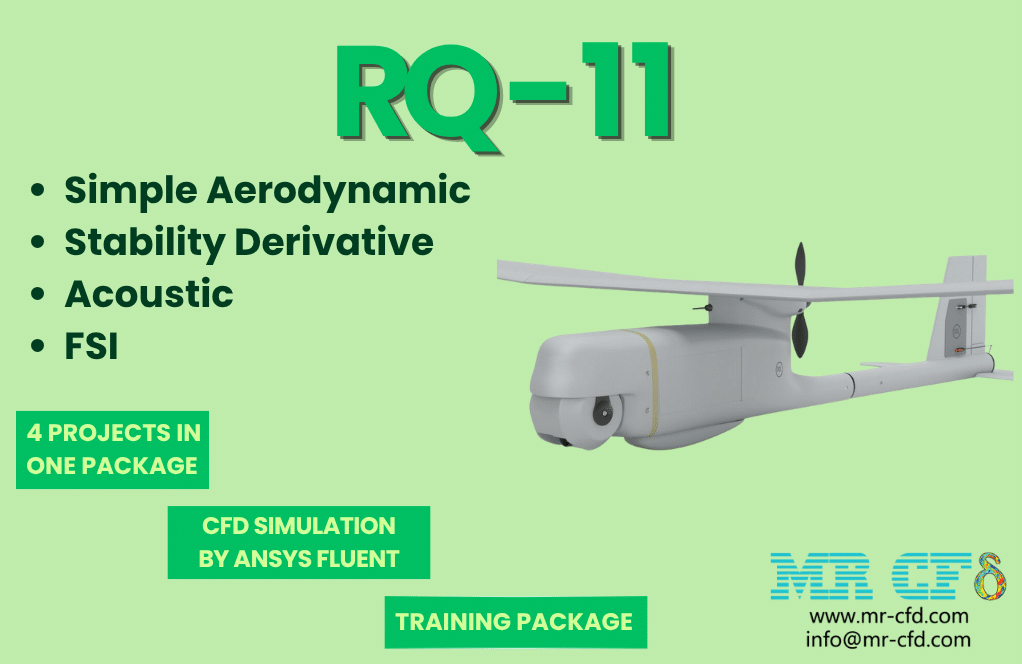
RQ-11 CFD Simulation: 4 Projects In One Package
Complete Mastery of Aerodynamic Analysis
Compact battlefield UAVs like the RQ-11 operate in demanding flight regimes where aerodynamic precision, structural resilience, and acoustic discretion determine mission success. This package groups four independent ANSYS Fluent projects into a single progressive curriculum covering force and moment extraction, stability parameter identification, sound radiation analysis, and coupled aeroelastic simulation.
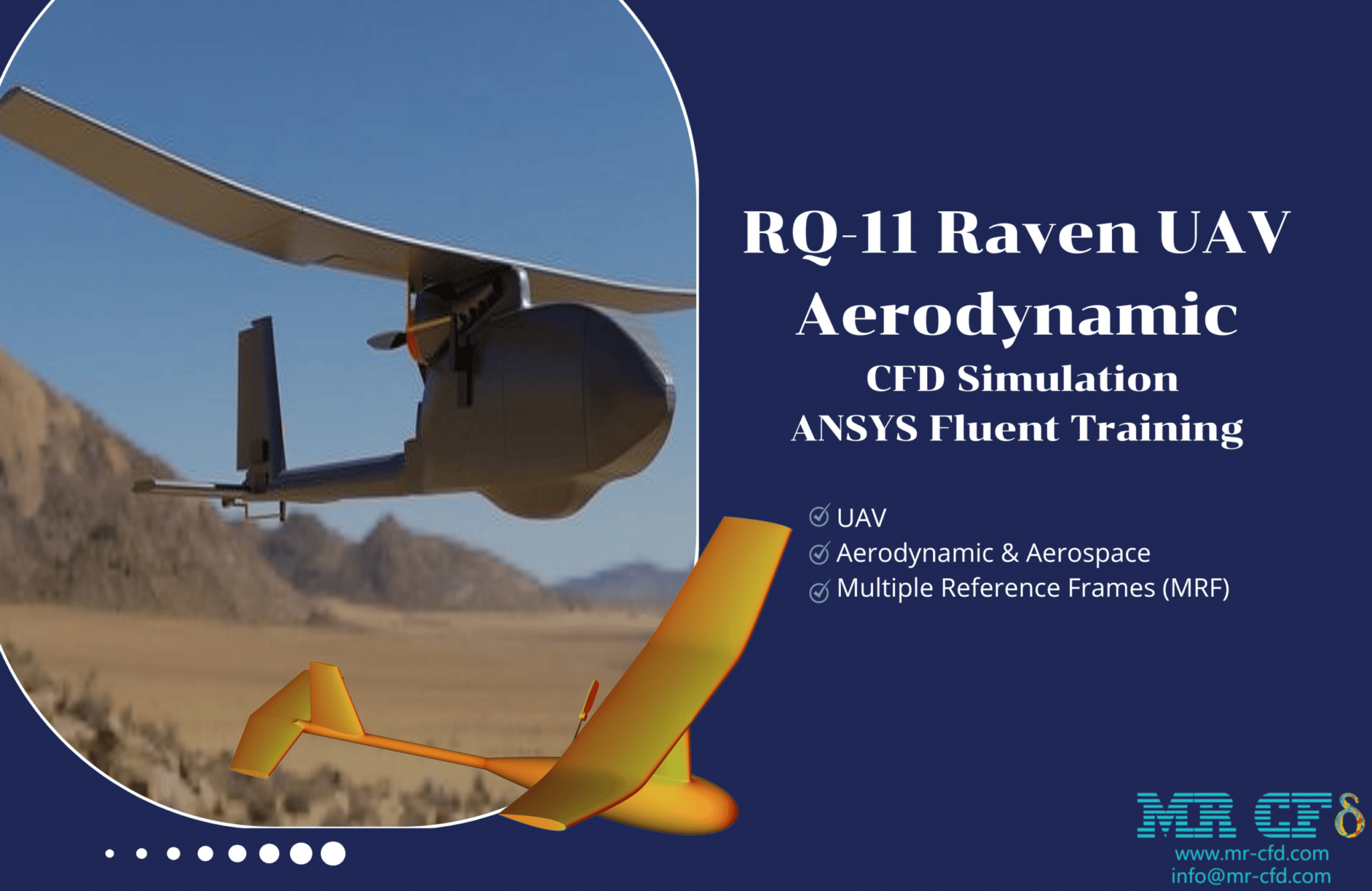
Force and Moment Extraction Across the Flight Envelope RQ-11 Aerodynamic Analysis
Every structural sizing decision, every control gain, and every noise source model traces back to the quality of the underlying aerodynamic dataset. This opening project guides you through full-vehicle setup in ANSYS Fluent from propeller rotation zone definition to systematic angle-of-attack and sideslip sweeps that yield complete lift, drag, and moment polars. You will implement freestream inflow conditions, outflow pressure specifications, and wall boundary treatments tuned for stable convergence. The polished aerodynamic dataset you produce here becomes the reference baseline that all three remaining projects draw upon.
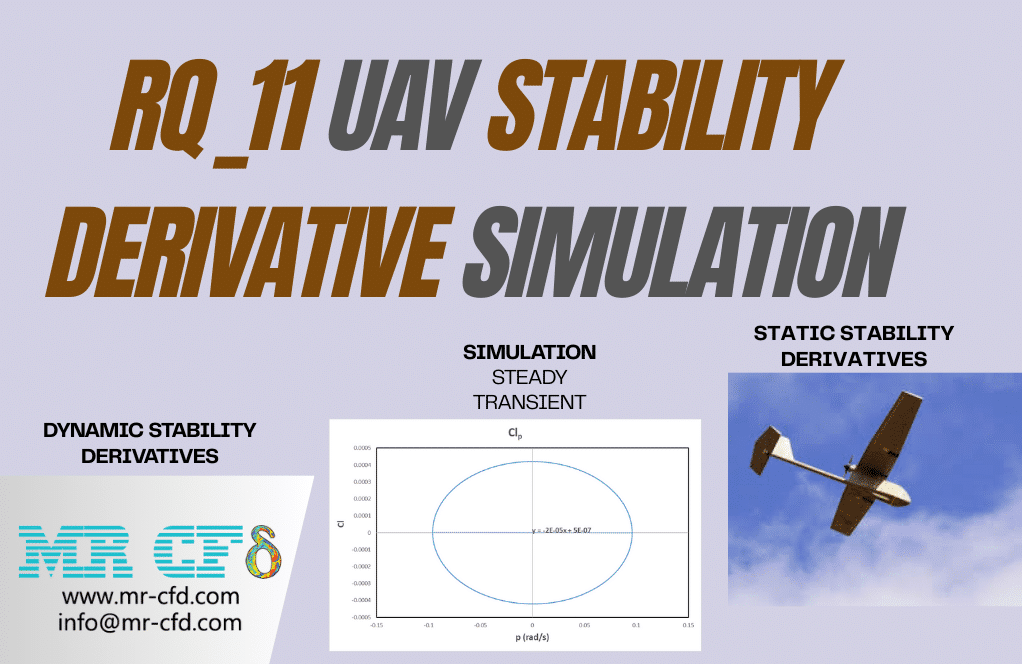
Stability Parameter Identification for Flight Control Integration RQ-11 Stability Derivatives
A hand-launched reconnaissance platform faces turbulent boundary layers, sudden crosswinds, and rapid maneuvering demands conditions that expose any weakness in directional or longitudinal stability. In this project you will introduce precise incremental disturbances in attitude and angular velocity around the trimmed state, measure the corresponding force and moment variations, and organize the results into a complete stability derivative catalogue spanning both symmetric and asymmetric modes. Grid adaptation concentrates resolution where propeller wake and wingtip vortices interact, keeping derivative fidelity high. The finished dataset slots directly into linear stability models, gain-scheduling algorithms, and flight clearance reports.
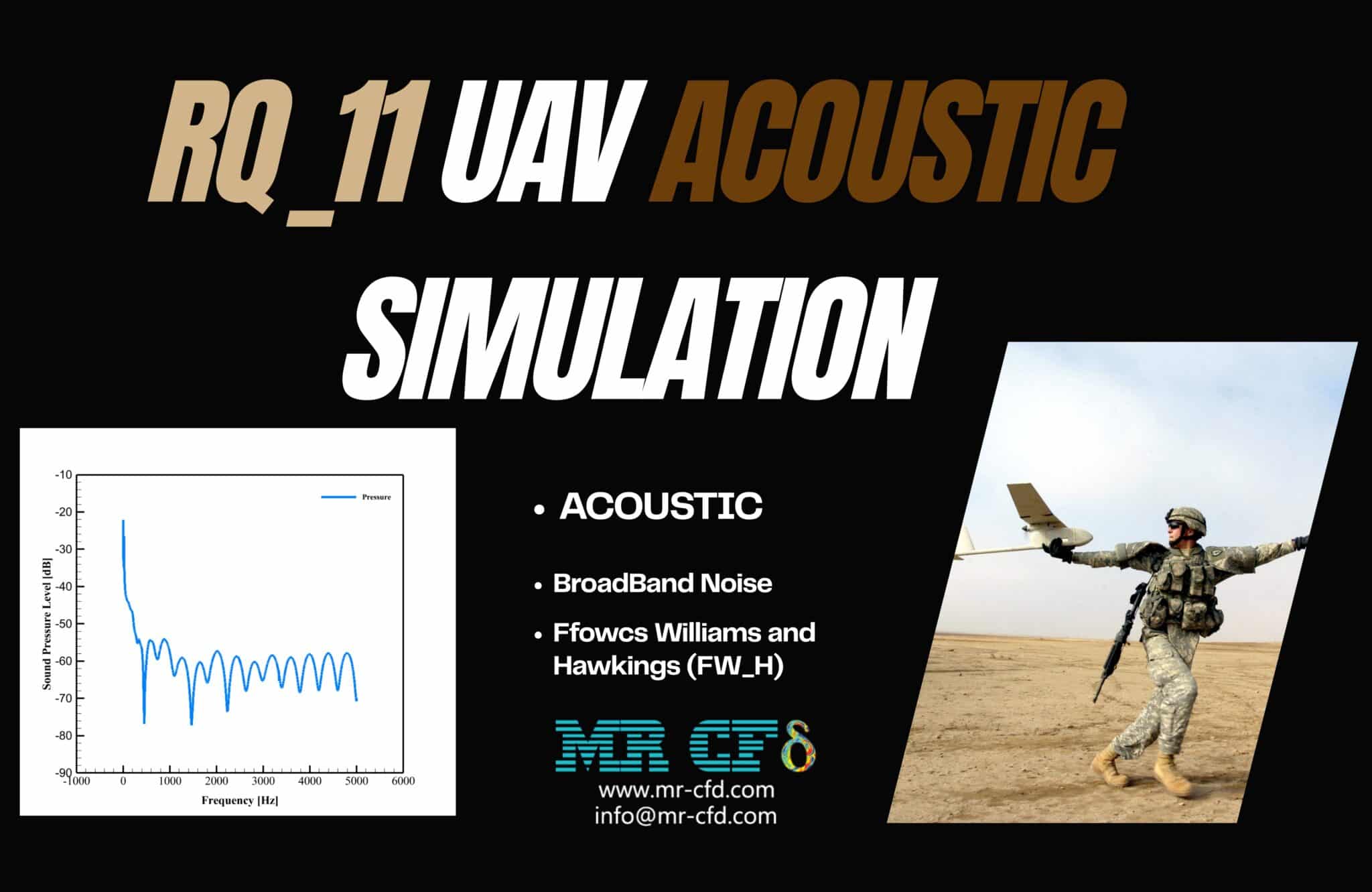
Acoustic Analysis for Tactical and Regulatory Scenarios RQ-11
Acoustic stealth over hostile terrain and noise compliance at operating bases represent two sides of the same engineering challenge. This project immerses you in ANSYS Fluent’s unsteady acoustic pipeline: you will extract time-varying pressure signatures from propeller surfaces and fuselage panels, employ surface-integral propagation techniques to project sound to far-field microphone positions, and decompose the frequency content across takeoff, transit, and surveillance phases. The end product is a spatially resolved noise profile you can cross-reference with detection envelopes or community noise limits enabling informed trade-offs on blade geometry, rotational speed, and mission altitude without undermining the aerodynamic benchmarks set in the first project.
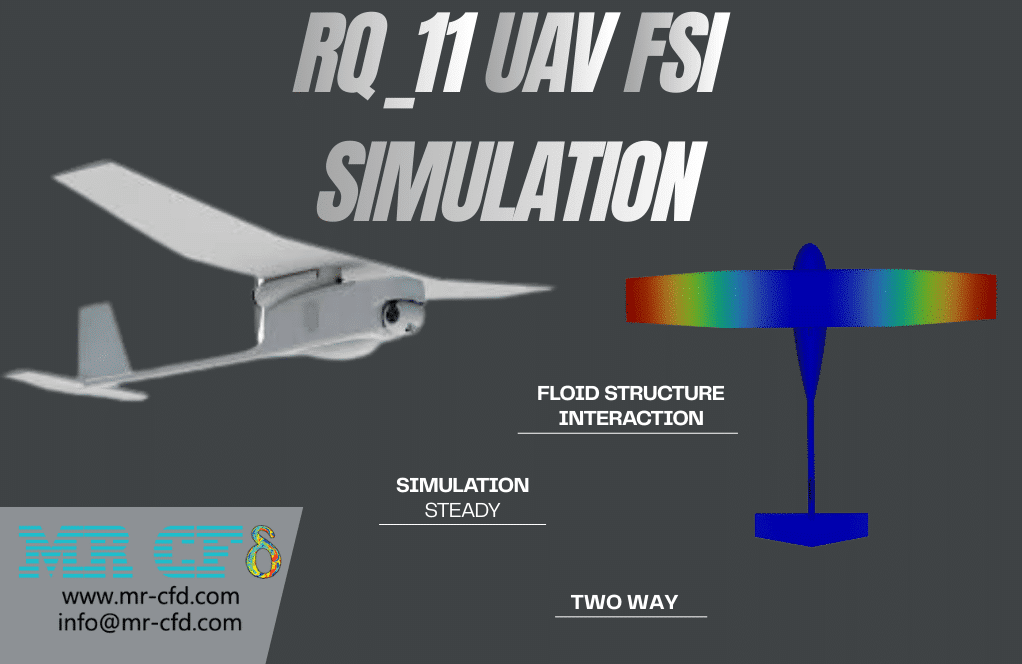
Coupled Aeroelastic Simulation and RQ-11 Fluid-Structure Interaction (FSI)
Small-scale UAV airframes prioritize minimum weight, which inevitably introduces structural flexibility that rigid-body simulations ignore. This project employs a two-way coupled FSI approach in ANSYS Fluent: flow-induced pressures bend and twist the airframe, and the updated geometry immediately alters the surrounding flow field. Iteration continues until the solution stabilizes. You will document wing deflection profiles at representative airspeeds, track how modal frequencies migrate relative to propeller excitation harmonics, and measure the aerodynamic performance penalty imposed by elastic deformation. The result is a computational proof of structural adequacy that can compress the path to flight readiness by months.
You must be logged in to post a review.
Related products
-
Sale

Heat Transfer CFD Training Package for Advanced Users, 10 Practical Exercises
Original price was: $2,140.00.$699.00Current price is: $699.00. Internship -
Sale
Chemical Engineering Training Package for Beginners, 10 Practical Exercises
Original price was: $1,120.00.$299.00Current price is: $299.00. Internship -
Sale
HVAC Training Package for Beginners, 10 Practical Exercises
Original price was: $780.00.$199.00Current price is: $199.00. Internship



 Talk On WhatsApp
Reviews
There are no reviews yet.