
Water infiltration into a porous concrete block, ANSYS Fluent Simulation Training
$120.00 $72.00 HPC
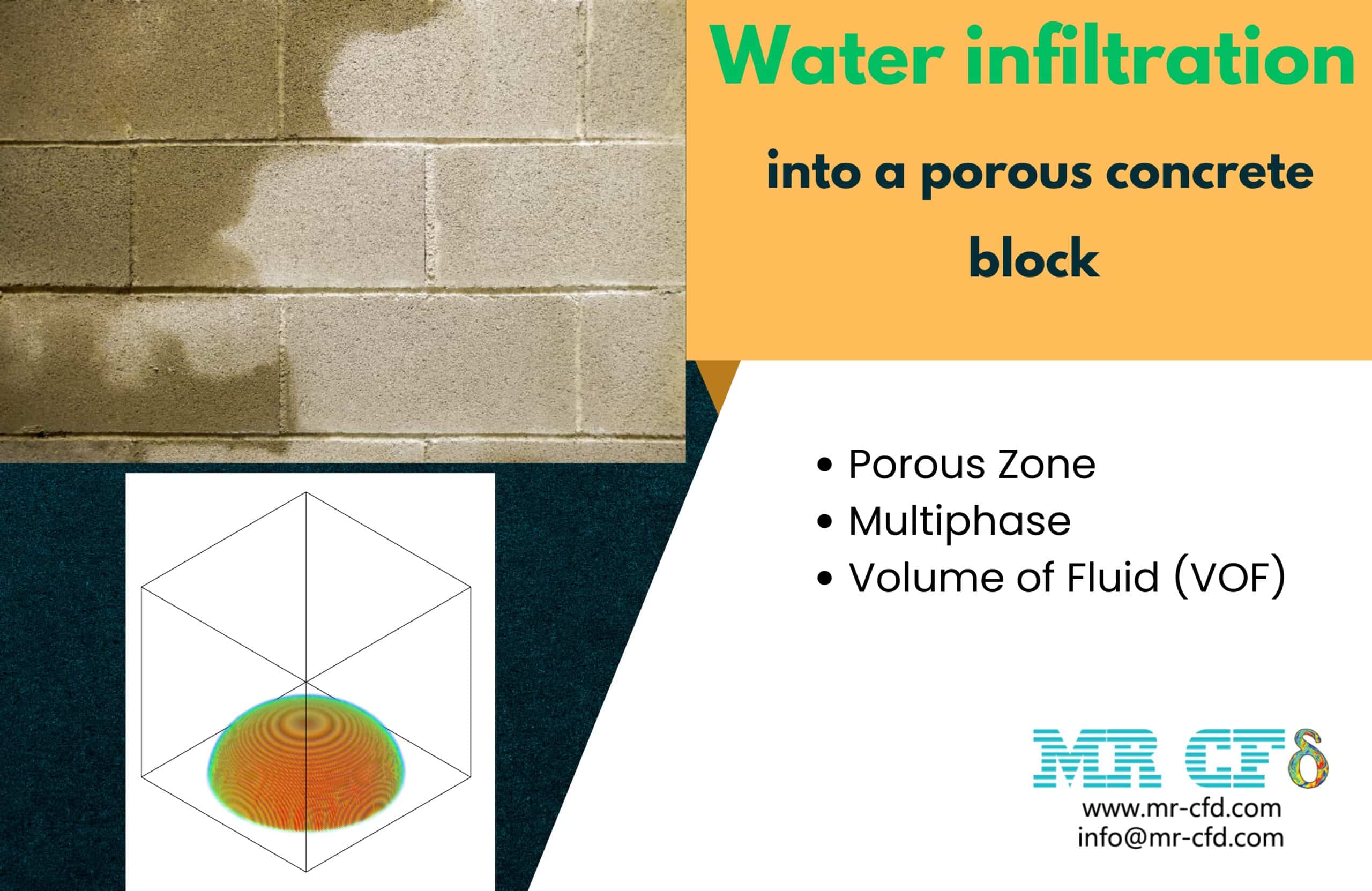
- The problem numerically simulates Water infiltration into a porous concrete block using ANSYS Fluent software.
- We design the 3-D model by the Design Modeler software.
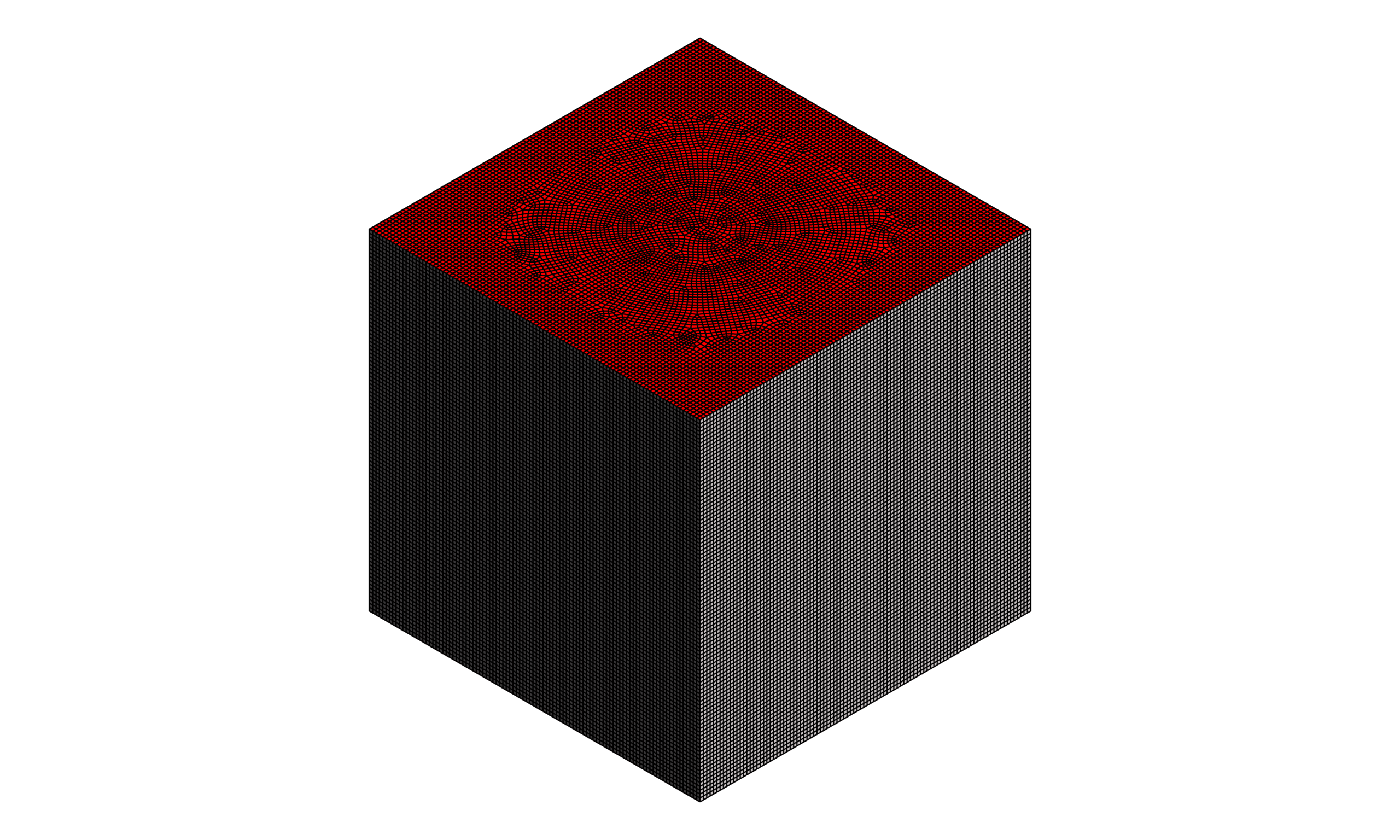
- We Mesh the model by ANSYS Meshing software, and the element number about 1million.
- We perform this simulation as unsteady (Transient).
- We use the Porous medium to study water infiltration into a porous concrete block.
- We use the VOF Multi-Phase model to define two-phase flow inside a concrete block.
To Order Your Project or benefit from a CFD consultation, contact our experts via email (info@mr-cfd.com), online support tab, or WhatsApp at +44 7443 197273.
There are some Free Products to check our service quality.
If you want the training video in another language instead of English, ask it via info@mr-cfd.com after you buy the product.
Description
Water infiltration into a porous concrete block
Description
In this project, I performed a simulation using ANSYS software to study a multiphase flow inside a porous cube. The main objective was to analyze the behavior of air and water within a porous medium using the Volume of Fluid (VOF) model. The simulation considered transient and pressure-based conditions to observe how water interacts with air under a specified inlet pressure. The project involved four main stages: geometry creation, meshing, solver setup, and post-processing to visualize flow and pressure distributions.
Geometry and Mesh
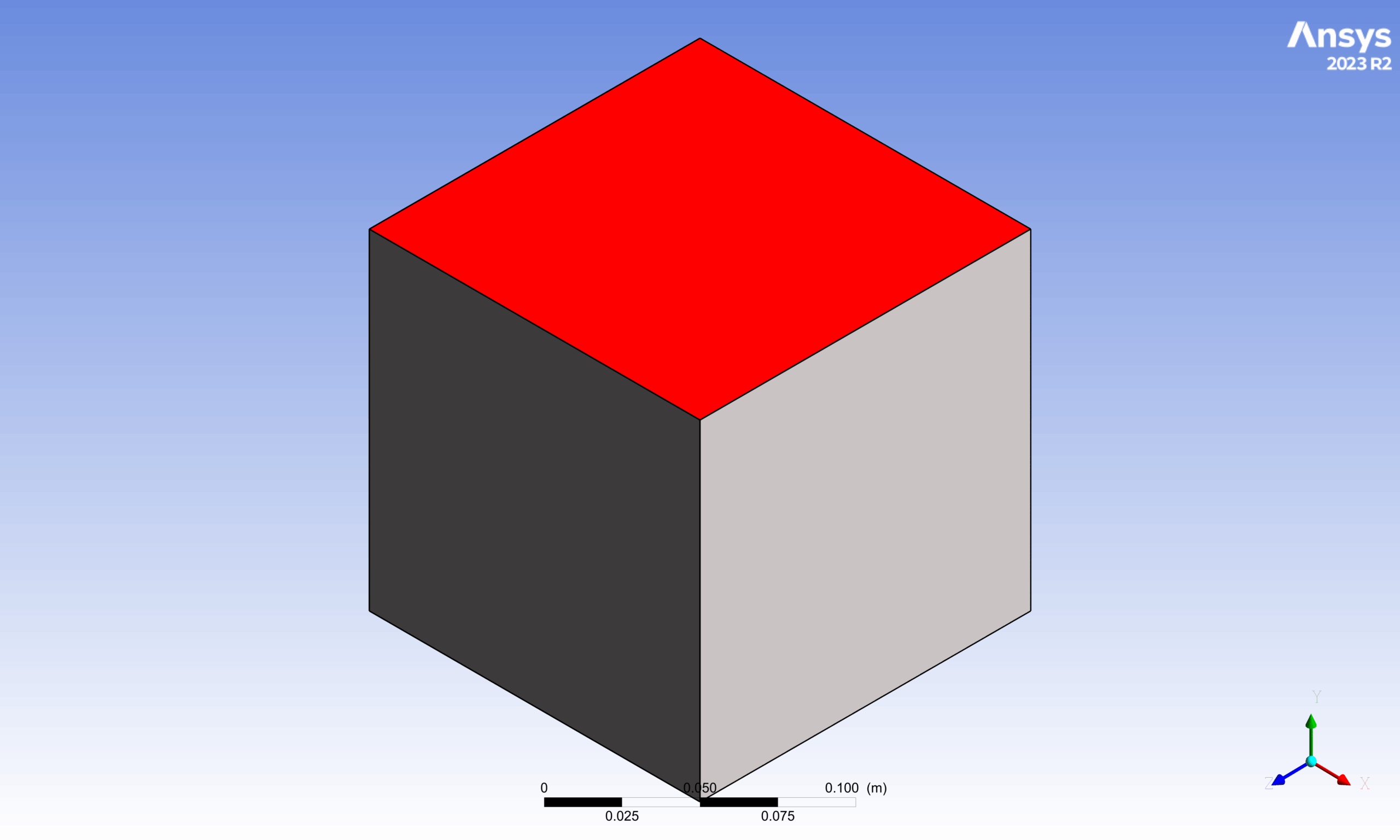
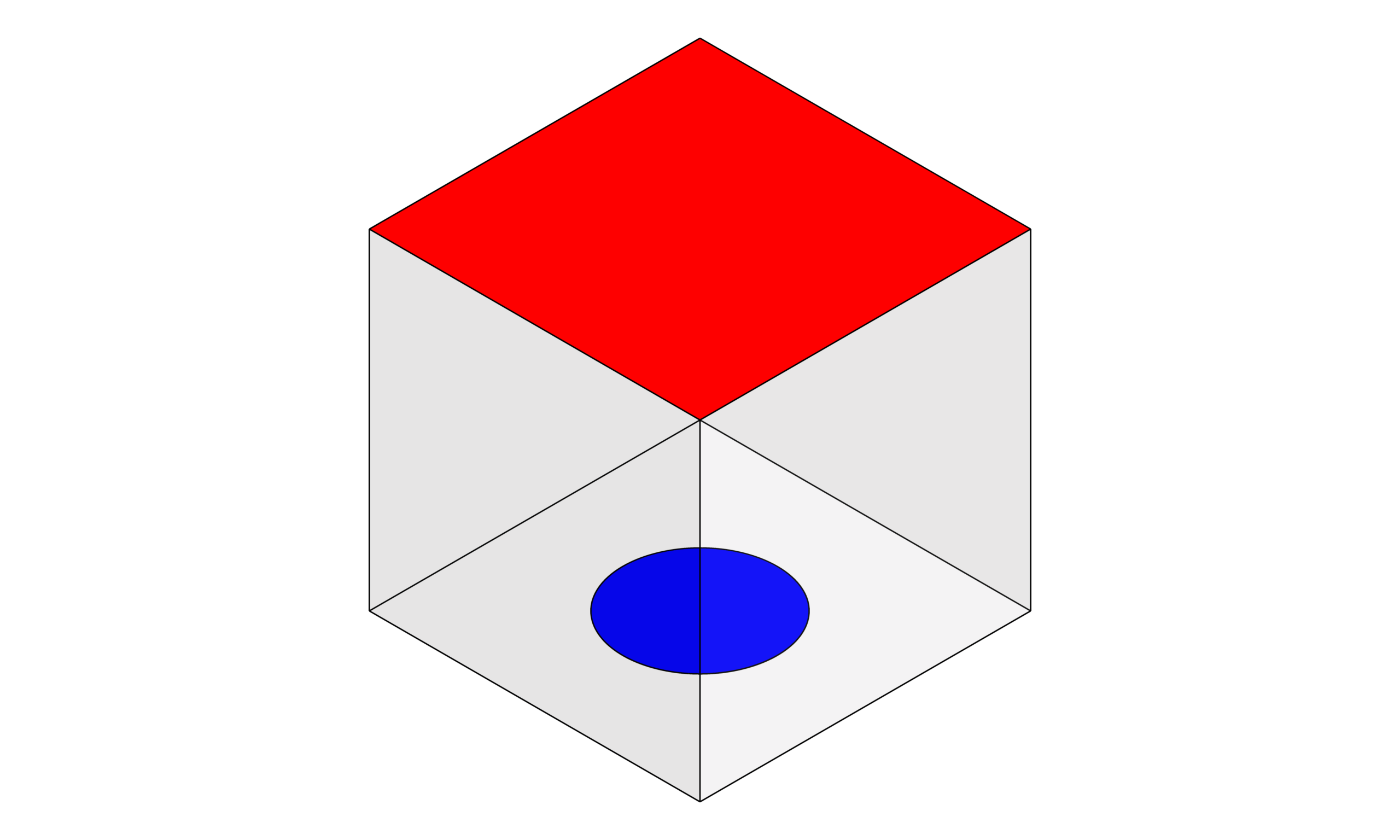
The geometry was created in ANSYS DesignModeler as a cube with dimensions of 0.15 m × 0.15 m × 0.15 m. The inlet area was defined as 0.0038472951 m². After completion, the geometry was imported into ANSYS Meshing, generating a structured hexahedral mesh with approximately 1 million elements. This mesh type was selected for its accuracy and numerical stability in capturing multiphase interactions. The generated mesh is shown in the figure above, effectively representing the cube and maintaining an adequate cell density near the boundaries.
Model and Solver Settings
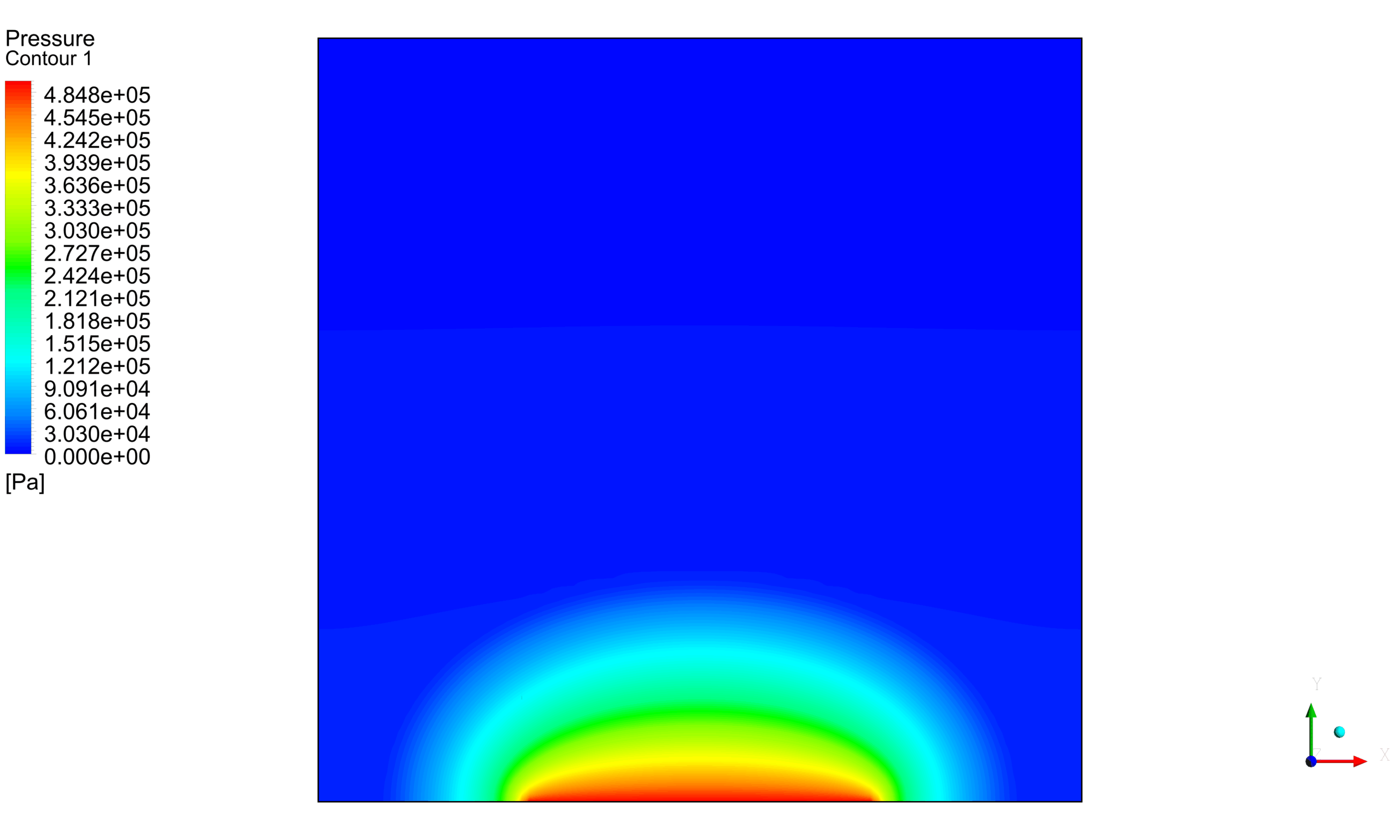
The simulation was carried out in ANSYS Fluent using a pressure-based and transient solver. The Standard k–ε turbulence model was chosen to account for turbulent effects. A multiphase flow model based on the Volume of Fluid (VOF) approach was used, where air was defined as the primary phase and water as the secondary phase. A porous zone was included in the domain, with an assumed particle diameter (Dp) of 0.0005 m. The pressure inlet boundary condition was set to 500,000 Pa, allowing water to enter the cube. The SIMPLE algorithm was applied for pressure–velocity coupling to ensure solution stability and convergence during the 15-second simulation period.
Results
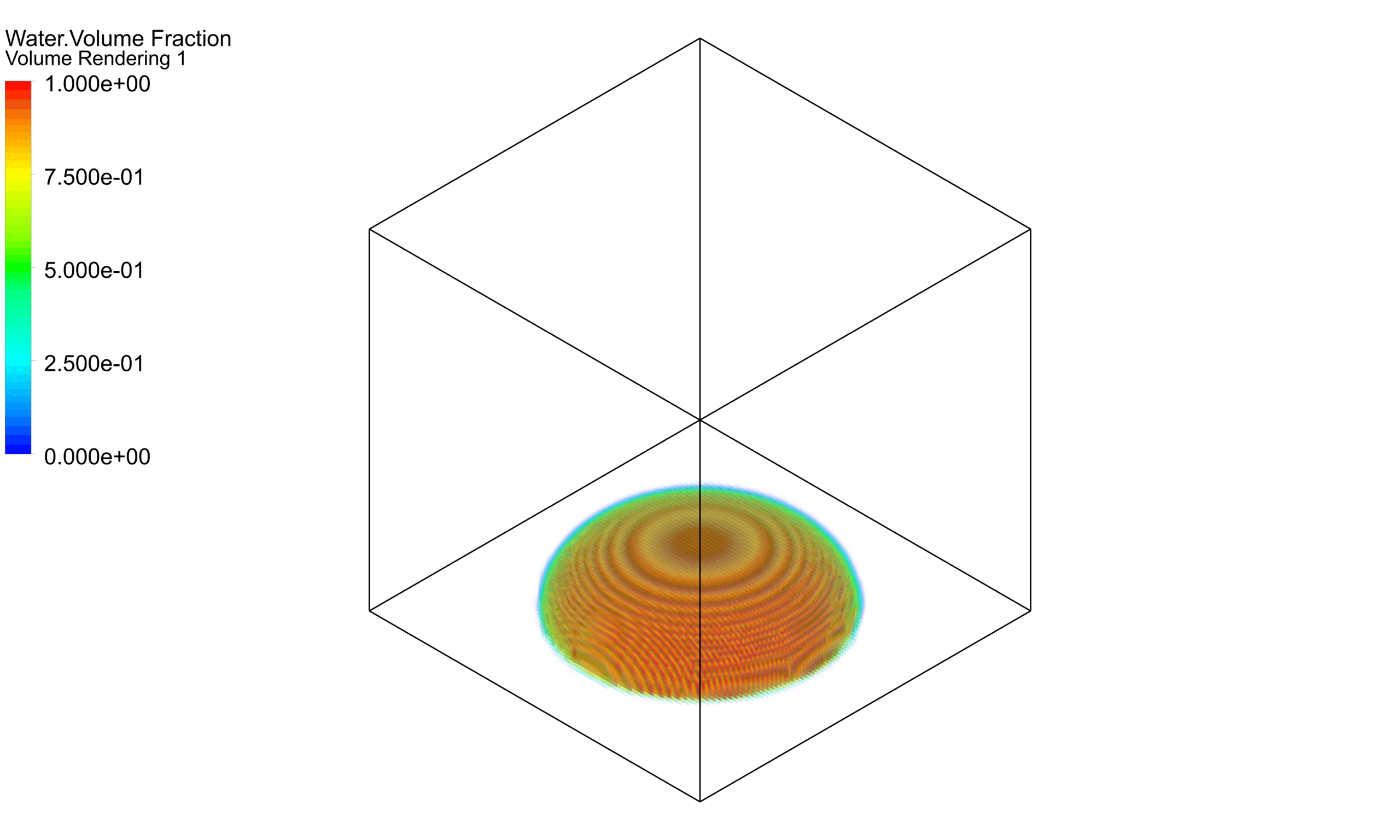
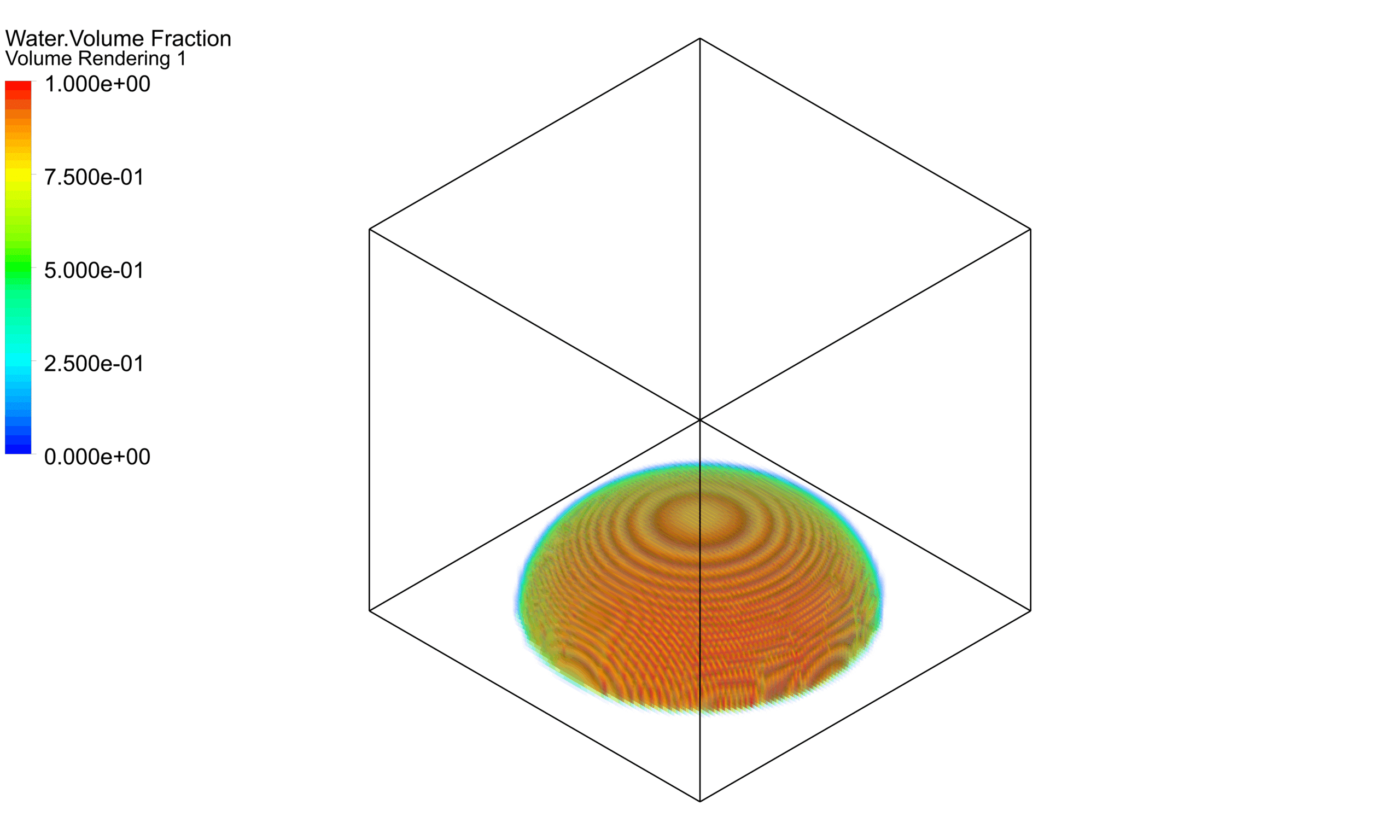
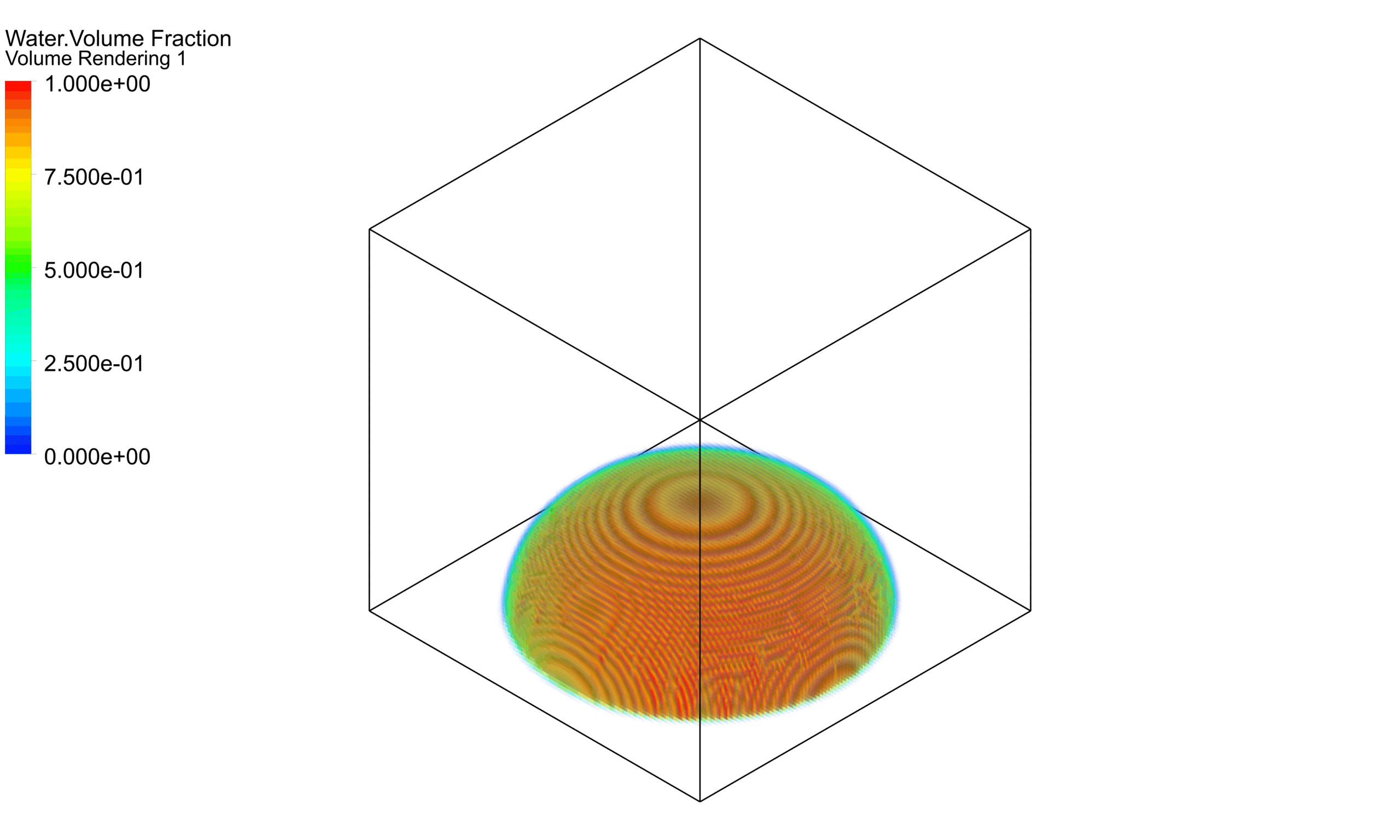
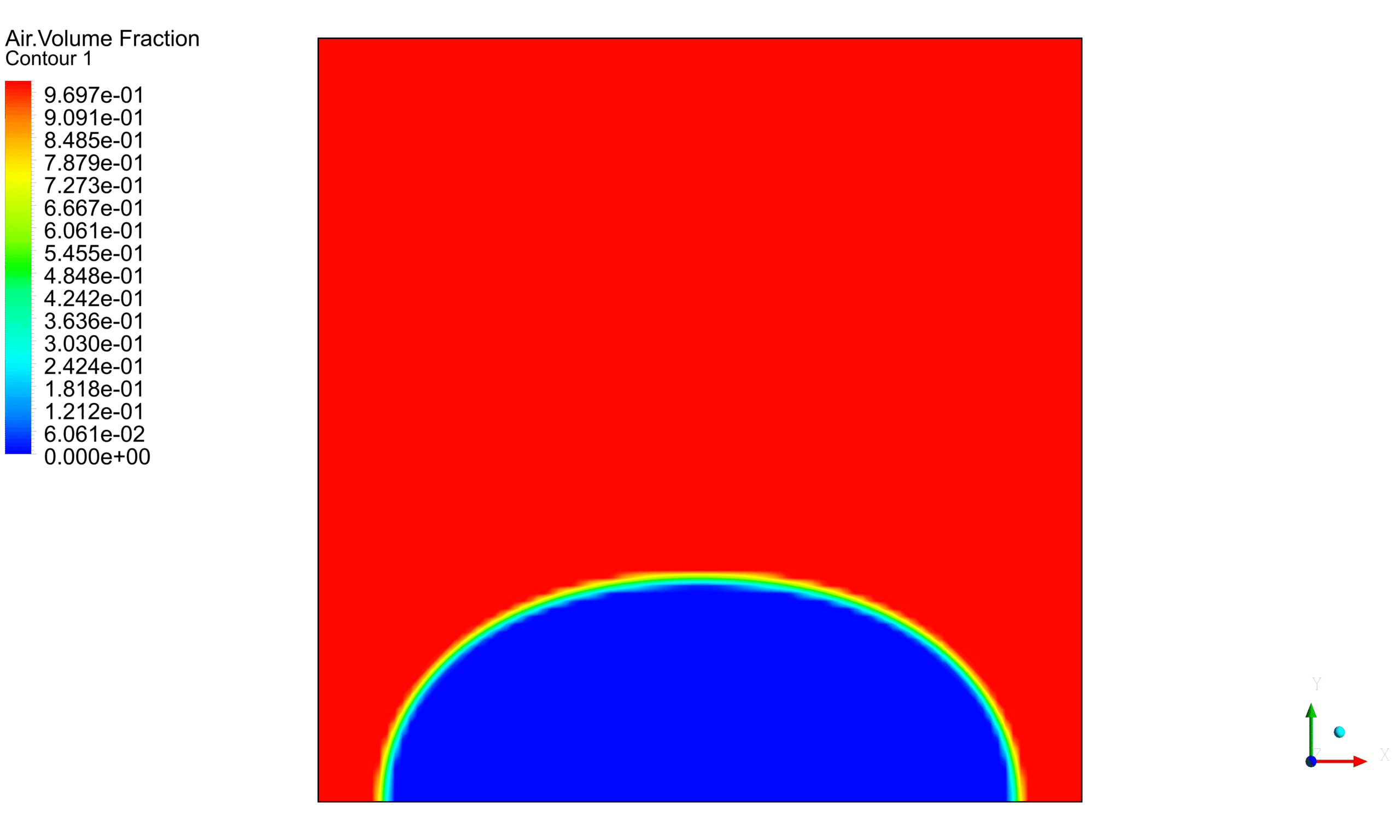
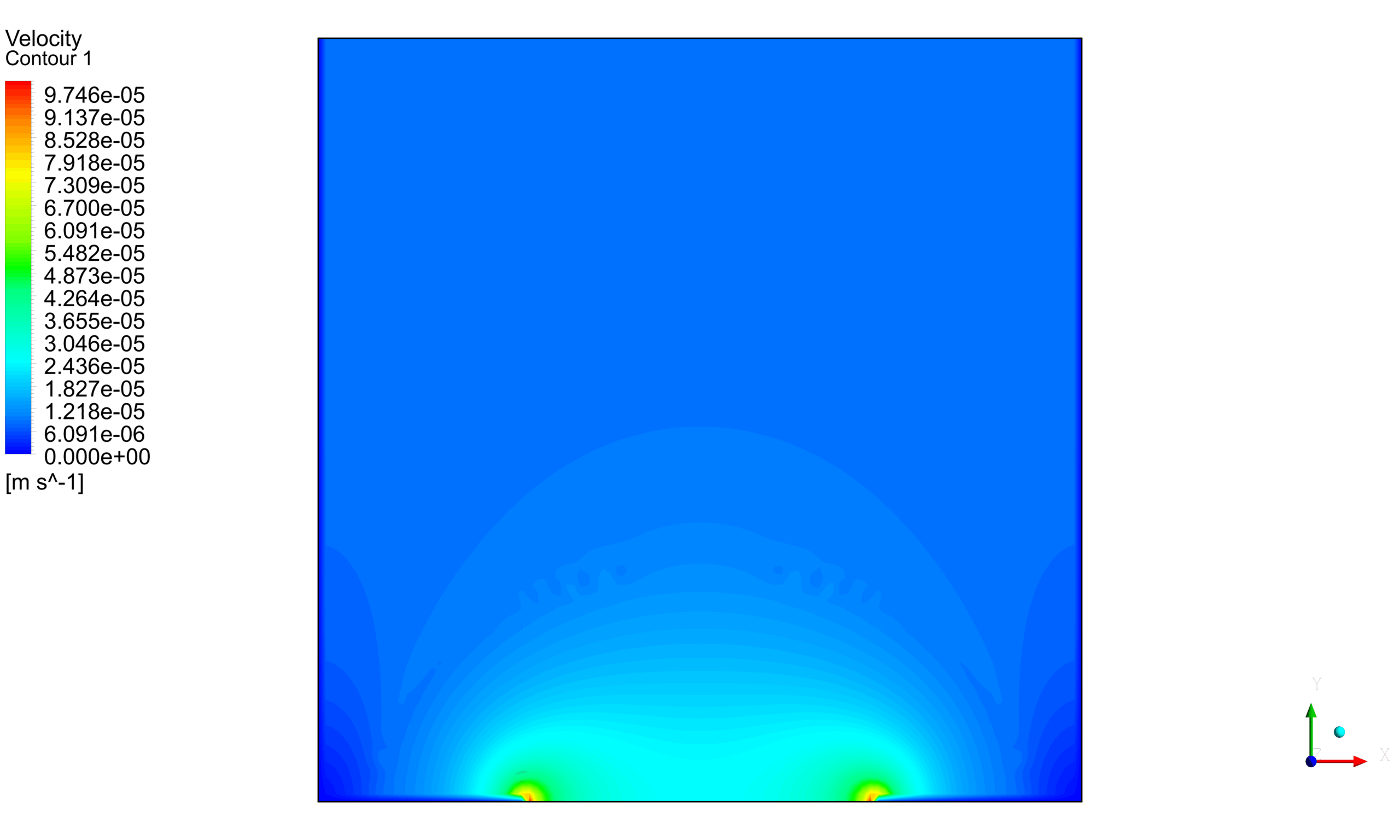
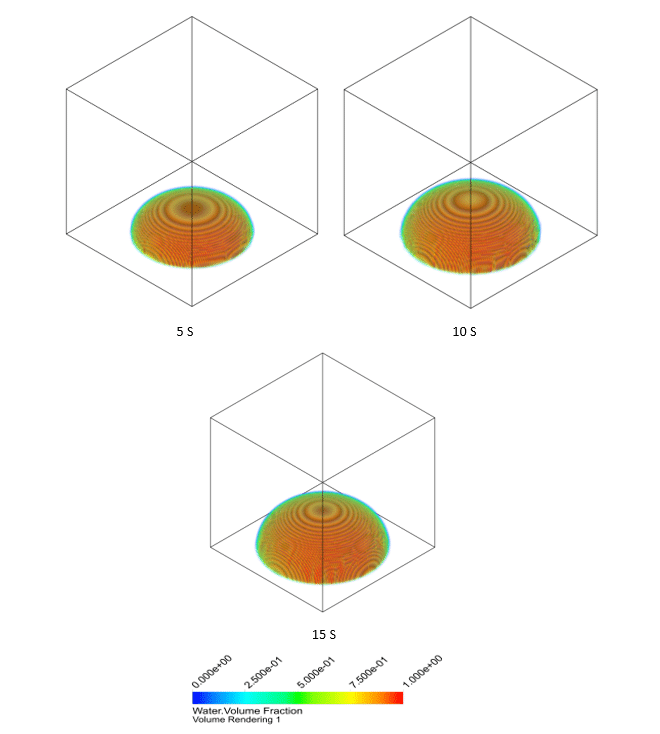
The results show the formation and interaction of air and water phases within the cube over time. The VOF contours indicate the water volume fraction distribution, where water gradually rises inside the porous region while displacing air. The air volume fraction plots highlight the separation interface between the two phases. The velocity contours reveal that the maximum velocity occurs near the inlet region, while the upper area of the cube remains mostly stationary. The pressure distribution results show a gradual decrease from the inlet to the outlet region, confirming the expected fluid behavior through the porous medium. The simulation successfully demonstrates multiphase fluid interaction under transient conditions in a porous cube domain.
Reviews
You must be logged in to post a review.

 Talk On WhatsApp
 Talk On WeChat

Miss Violette Wolf DVM –
Can the simulation model the effect of different block geometries?
MR CFD Support –
Yes, the simulation can model different block geometries. We can adjust the geometry based on the specific dimensions of your concrete block.
Lonzo Toy –
Can the simulation handle different types of fluids?
MR CFD Support –
Absolutely! The simulation can be adjusted to handle different types of fluids. We can modify the fluid properties, such as viscosity and density, based on your specific requirements.
Kamron Steuber –
How does the simulation handle the multiphase flow in the block?
MR CFD Support –
The simulation uses the Volume of Fluid (VOF) model to handle the multiphase flow in the block. This model can accurately capture the interface between the water and air.
Drake Gislason MD –
I’m impressed by the capabilities of simulating multiphase flow through porous media! Can you tell me if buoyancy effects were considered in this simulation, and how they would impact the results?
MR CFD Support –
In this CFD project, the VOF (volume of fluid) model is primarily focusing on tracking the interface between the water and air phases in the porous concrete block. Buoyancy effects can indeed impact such a simulation. They typically cause water to rise through the porous medium and can create a more realistic pattern of infiltration. If buoyancy effects were considered in this simulation, it can cause the water to disperse in a less uniform manner, potentially leading to more realistic modeling of the behavior of fluid within the porous block. The changes in pressure contours and volume fraction over time would then also be influenced by these buoyancy effects. If they were considered, it would be indicated under the gravity settings or within the body force terms in the simulation setup.
Prof. Jack Mante DDS –
Can the simulation handle different types of fluids?
MR CFD Support –
Absolutely! The simulation can be adjusted to handle different types of fluids. We can modify the fluid properties, such as viscosity and density, based on your specific requirements.
Ms. Magnolia Lueilwitz –
The explanation on the porosity coefficient was particularly insightful. It helped me understand the significance of the ratio of empty space in the model. Fantastic work on detailing the processes!
MR CFD Support –
Thank you for your positive feedback! We’re delighted to hear that you found the information on porosity coefficient helpful. If you have any more questions or need further clarification, we’re always here to help. We sincerely appreciate your review and are glad you are satisfied with our simulation training product.
Pauline Schaden –
I was so impressed with how realistic the infiltration rate of the CFD simulation was for this porous concrete block. It truly highlighted the effectiveness of ANSYS Fluent in showcasing the interaction between water and the porous material.
MR CFD Support –
Thank you for your kind words! We’re thrilled to hear that our simulation effectively demonstrated the capabilities of ANSYS Fluent and provided a realistic depiction of water infiltration into a porous concrete block. Your feedback is greatly appreciated!
Marian Mitchell –
The CFD simulation training product for water infiltration into a porous concrete block has been fantastic for visualizing the process and understanding how pressure and porosity affect fluid movement. The detailed explanation helped to grasp the concept of the VOF model, and the structured mesh creation with ANSYS Meshing software was particularly impressive.
MR CFD Support –
We’re delighted to hear that you found the training product useful and informative. It’s great to know that our detailed approach and the simulation’s visualizations were helpful in understanding the complex processes of fluid dynamics in porous materials. Thank you for the positive feedback!
Liliane Bartell –
I found the simulation quite insightful. The water and air volume fraction contours demonstrated the temporal evolution of infiltration effectively. Could you provide more detail on how the porosity coefficient impacts the infiltration rate in your simulation?
MR CFD Support –
Thank you for your positive feedback. In our simulation, the porosity coefficient impacts the infiltration rate by defining how much of the block volume is empty space that can be filled with water. A lower porosity coefficient means less available space for the fluid, which generally translates to a slower infiltration rate due to the increased resistance against the fluid flow within the pores. As you pointed out, this effect is clearly observable in the simulation as the pressure drops across the porous medium, indicating resistance to flow propagated by its structure.
Connie Herzog –
I am particularly interested in how the VOF model represents the interface between water and air accurately in this porous media scenario. Could you elaborate on how the sharp interface technique in the VOF model contributes to the fidelity of the simulation?
MR CFD Support –
The sharp interface technique in the VOF model is designed to capture the interface between two immiscible fluids, like water and air in this case, with high accuracy. It uses a specific algorithm that ensures minimal smearing of the interface. This means the boundary between the water and air phases is calculated with a higher resolution, which allows for a detailed and realistic representation of the phases as they infiltrate and interact within the porous concrete block. In this simulation, the sharp technique contributes to the fidelity of the results by ensuring that the phase distribution is depicted with clarity, allowing for accurate observation and analysis of the water infiltration process over time.
Miss Yoshiko Becker –
The training materials were very detailed, and the simulation data gave a clear picture of the infiltration process. Loved how the porous concrete block’s behavior was illustrated as the water penetrated over time.
MR CFD Support –
Thank you for your positive feedback! We’re very happy to hear that our simulation training materials were helpful and that the visualizations of the water infiltration process met your expectations.
Nya Reichert I –
I appreciated the detailed explanation in your simulation training for ‘Water infiltration into a porous concrete block’. The use of porosity coefficient and structured mesh to emulate the water movement within the block was enlightening. I could follow along with the setup and understand why certain conditions were chosen, which greatly enhanced my learning experience!
MR CFD Support –
Thank you for your positive feedback on the ‘Water infiltration into a porous concrete block’ simulation training. We’re glad to hear that the detailed explanations of the simulation’s setup and the choices of various parameters were beneficial to your understanding. Your success with our training program is our top priority, and we appreciate you taking the time to share your learning experience with us.
Roselyn Stiedemann –
Can this type of simulation be extended to simulate oil infiltration in porous media, like in oil reservoir scenarios?
MR CFD Support –
Yes, this simulation approach for water infiltration in porous concrete can be adapted to model oil infiltration in similar porous media, such as oil reservoirs. The same basic principles and methodology apply, but the fluid properties would need to be adjusted to reflect those of oil, and possibly the porosity and permeability characteristics of the medium could be different to reflect a reservoir’s geological properties.
Dr. Barton McLaughlin –
I had such a great time working through the simulation for ‘Water infiltration into a porous concrete block’ using ANSYS Fluent. The methodology was clear, and the prescribed steps were easy to follow. It was fascinating to watch the water penetrate the porous block over time, and the presentation of results via two-dimensional and three-dimensional pressure contours, alongside water and air volume fraction contours, helped solidify my understanding of the complex phenomena modeled.
MR CFD Support –
We are pleased to hear that your experience with our ‘Water infiltration into a porous concrete block’ ANSYS Fluent simulation training was positive. It’s great to know that the clarity of the methodology and results helped you gain a thorough understanding of the water infiltration process. We thank you for your kind words and hope that you will find our other simulation trainings equally beneficial!
Mr. Erling Beer –
Really impressed by how detailed the simulation of water infiltration into a porous concrete block is. The ability to track the water movement over time and see the effect of the porous medium on the water pressure provides valuable insights for real-world applications.
MR CFD Support –
Thank you for taking the time to share your experience. We are thrilled to hear that our ANSYS Fluent simulation for water infiltration into a porous concrete block met your expectations and provided the detailed insights you were looking for. Your feedback is greatly appreciated!
Isaac O’Reilly –
Can you please explain how the simulation accommodates changes in water infiltration over time?
MR CFD Support –
In this simulation, changes in water infiltration over time are accommodated by solving the problem as unsteady and time-dependent. The Multiphase VOF (volume of fluid) model within ANSYS Fluent tracks the interface between the water and air, allowing the simulation to capture the advancing water front as it moves through the porous block. The porous medium’s properties, such as porosity and permeability, influence the flow behavior, and this is factored into the calculations at each time step.