

HPC Solutions in Healthcare: How It’s Accelerating Medical Breakthroughs
High-Performance Computing (HPC) is no longer just a tool for astrophysicists; it has become the digital backbone of modern medicine. As clinical research generates massive, multi-terabyte datasets—from full-genome sequences to real-time cardiovascular scans—standard computing reaches its bottleneck. Today, HPC solutions in healthcare supply the immense processing power required to turn raw medical data into life-saving therapies, predictive models, and hyper-personalized treatment plans.

ANSYS Fluent Beginner Course for Less Than the Cost of a Lunch!
No prior experience needed. Start Learning ANSYS Fluent step-by-step with 16 hands-on, real-world projects across multiple engineering fields.

💡 Executive Summary: What You Will Learn
- The Compute Shift: Why standard clinical IT is failing under the weight of modern medical data.
- The Big Three: How HPC is actively driving Genomics, Molecular Drug Discovery, and Bio-Simulation.
- The CFD Advantage: How researchers are using ANSYS Fluent to create living “digital twins” of the human circulatory and respiratory systems.
Ready to Accelerate Medical Breakthroughs with ANSYS HPC?
You’ve seen how High-Performance Computing is driving the future of healthcare, enabling complex simulations and analyses previously out of reach. If your work in medical research, device development, or clinical applications relies on ANSYS Fluent or other ANSYS solvers, leveraging this power is no longer optional – it’s essential for accelerating discovery. Don’t let computational bottlenecks impede your progress. Our ANSYS HPC service offers seamless, on-demand access to computing resources specifically optimized for ANSYS software, perfectly suited for the demanding simulations required in healthcare.
Explore HPC for Faster ANSYS Solves

Premier CFD Consulting Services Using ANSYS Fluent
ANSYS Fluent simulations, validation, and defensible engineering reports across 30+ fields. Registered in 🇺🇸 USA (Delaware), 🇬🇧 UK & 🇴🇲 Oman
The Evolution of Healthcare Computing: From Mainframes to Exascale
The journey of computing in healthcare represents one of the most profound technological transformations in modern medicine. What began with simple electronic record-keeping has evolved into computational systems capable of modeling the human body at the molecular level and processing vast datasets to uncover patterns invisible to human researchers.
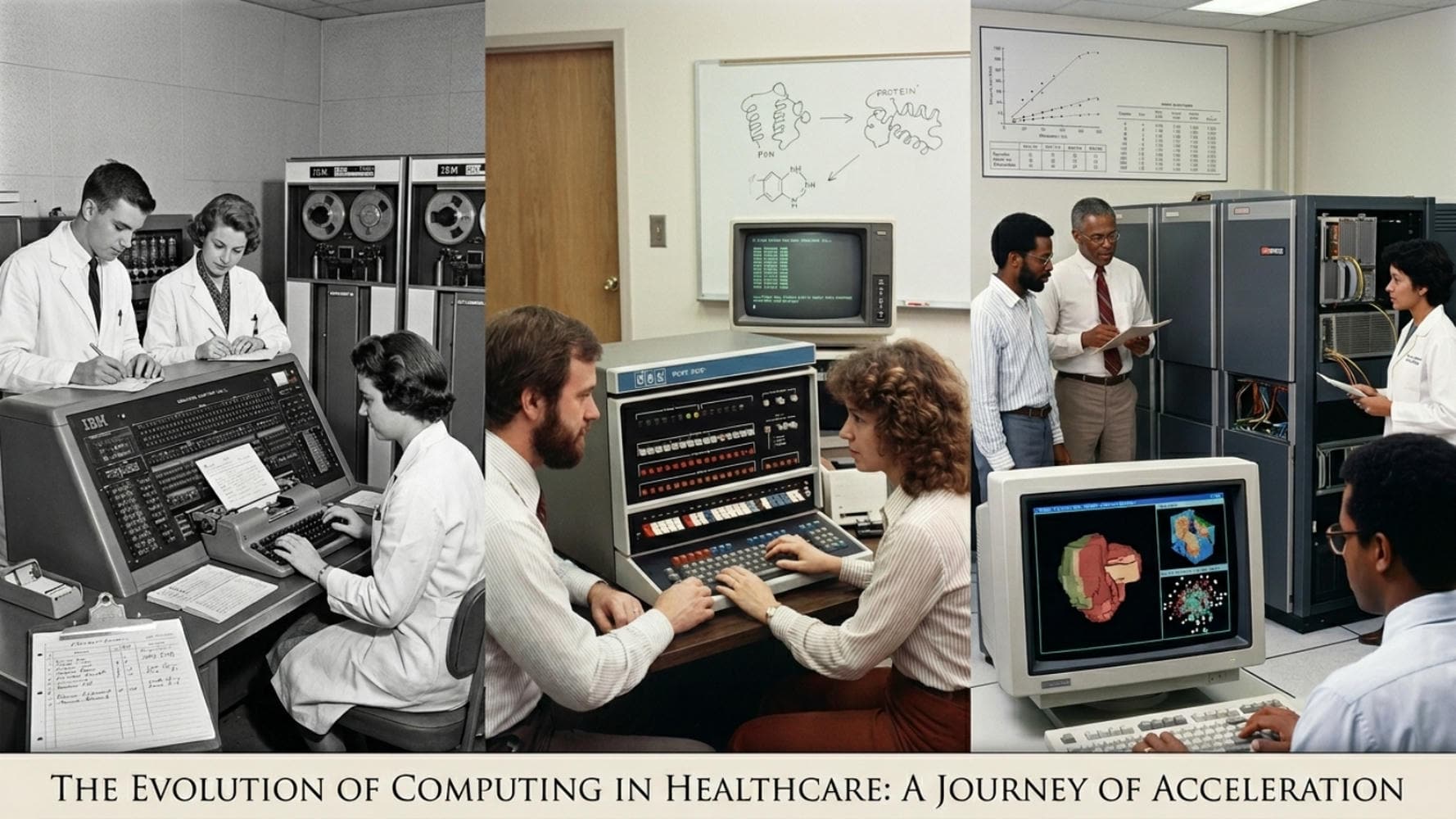
In the 1950s and 1960s, early mainframe computers first entered medical institutions primarily for administrative tasks and basic data management. These systems, though revolutionary for their time, offered computational power measured in kiloflops (thousands of floating-point operations per second)—barely sufficient for even the most basic medical calculations. The 1970s saw the emergence of minicomputers in research laboratories, enabling the first computational biology applications, though still severely limited by processing capabilities. By the 1980s, the introduction of parallel computing architectures began to hint at the potential for more complex medical simulations, with systems reaching megaflop performance (millions of operations per second).
The true transformation began in the 1990s with the emergence of cluster computing, where multiple computers were networked together to tackle larger problems collectively. This period marked the first genuine HPC in healthcare applications, enabling more sophisticated genomic analysis and the earliest attempts at molecular modeling for drug discovery. Performance benchmarks during this era show a dramatic acceleration:
| Era | Computing Paradigm | Typical Performance | Example Healthcare Application |
| 1960s | Mainframes | Kiloflops | Patient records, basic statistics |
| 1980s | Early parallel systems | Megaflops | Basic molecular modeling |
| 1990s | First clusters | Gigaflops | Initial genomic sequence alignment |
| 2000s | Modern HPC clusters | Teraflops | Protein folding, medical imaging |
| 2010s | Petascale systems | Petaflops | Whole genome analysis, complex simulations |
| 2020s | Exascale computing | Exaflops | Digital twins, real-time personalized medicine |
The early 2000s brought teraflop (trillions of operations per second) computing to medical research, coinciding with the completion of the Human Genome Project—a 13-year effort that modern HPC systems could now complete in days. This era saw the first applications of computational fluid dynamics in cardiovascular research, though simulations remained simplified and computationally expensive.
The last decade has witnessed the emergence of petascale computing (quadrillions of operations per second), enabling unprecedented applications in medical research:
- Complete patient-specific cardiovascular modeling
- Virtual clinical trials for medical devices
- Real-time processing of complex diagnostic imaging
- Simulation-based surgical planning
Today, as we enter the exascale era (quintillions of operations per second), we stand at the threshold of capabilities that will fundamentally transform medicine. These systems can simultaneously model multiple physiological systems, incorporate genetic information into treatment planning, and enable real-time analysis of population-level health data during pandemic response.
HPC Architecture in Modern Medical Research
Modern medical computing infrastructure represents a complex integration of specialized hardware, software, and networking components specifically optimized for healthcare’s unique computational challenges. Understanding these architectures is essential for researchers and healthcare organizations seeking to leverage HPC effectively.
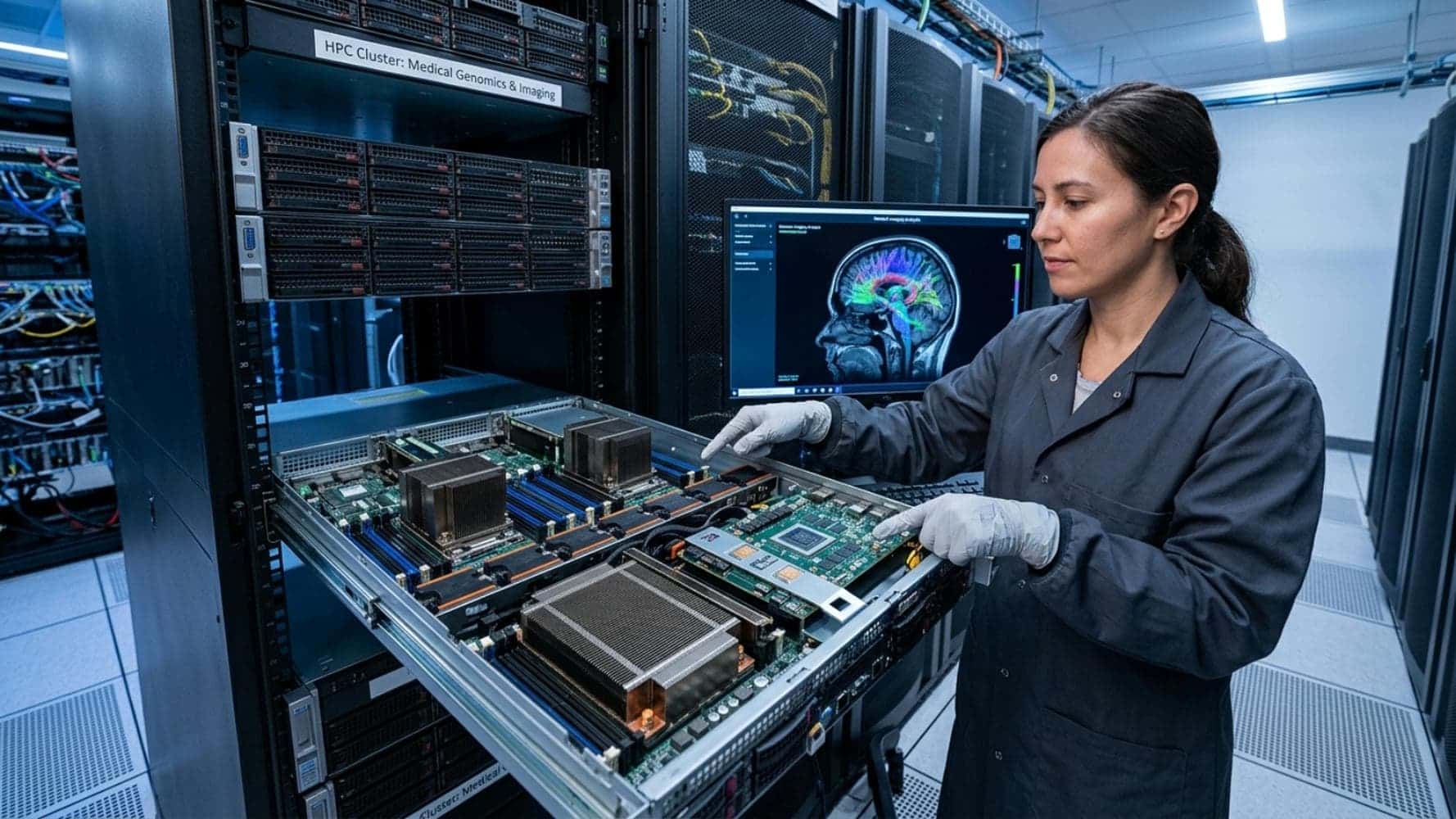
At the foundation of any medical HPC system are the compute nodes—the workhorses that execute the complex calculations required for medical simulations and data analysis. Unlike general-purpose computing, medical HPC demands specialized processor architectures optimized for the specific mathematical operations common in healthcare applications. Modern systems typically employ a heterogeneous computing approach, combining different processor types to maximize performance across varied workloads:
- CPU (Central Processing Units): Provide broad computational capability with high clock speeds and sophisticated instruction sets, ideal for sequential code execution and overall system management. Medical applications typically benefit from high core-count CPUs with large cache sizes to handle complex algorithms.
- GPU (Graphics Processing Units): Deliver massive parallelism with thousands of simpler cores, perfectly suited for the matrix operations common in medical imaging, molecular dynamics, and fluid simulations. NVIDIA’s A100 and AMD’s Instinct MI250 accelerators have become staples in medical HPC, offering 5-20× performance improvements for key healthcare algorithms compared to CPU-only implementations.
- FPGA (Field Programmable Gate Arrays): Provide reconfigurable hardware acceleration for specialized algorithms, particularly beneficial for real-time processing of medical sensor data and custom genomic sequence alignment.
The interconnect fabric binding these components represents another critical architectural element. Medical simulations often require extensive communication between compute nodes, making interconnect bandwidth and latency key performance determinants:
| Technology | Bandwidth | Latency | Suitability |
| InfiniBand HDR | 200 Gbps | 0.5-0.7 μs | Excellent for CFD, genomics |
| Intel Omni-Path | 100 Gbps | 0.8-1.0 μs | Good for general medical HPC |
| Ethernet (100G) | 100 Gbps | 1.5-2.0 μs | Suitable for distributed analytics |
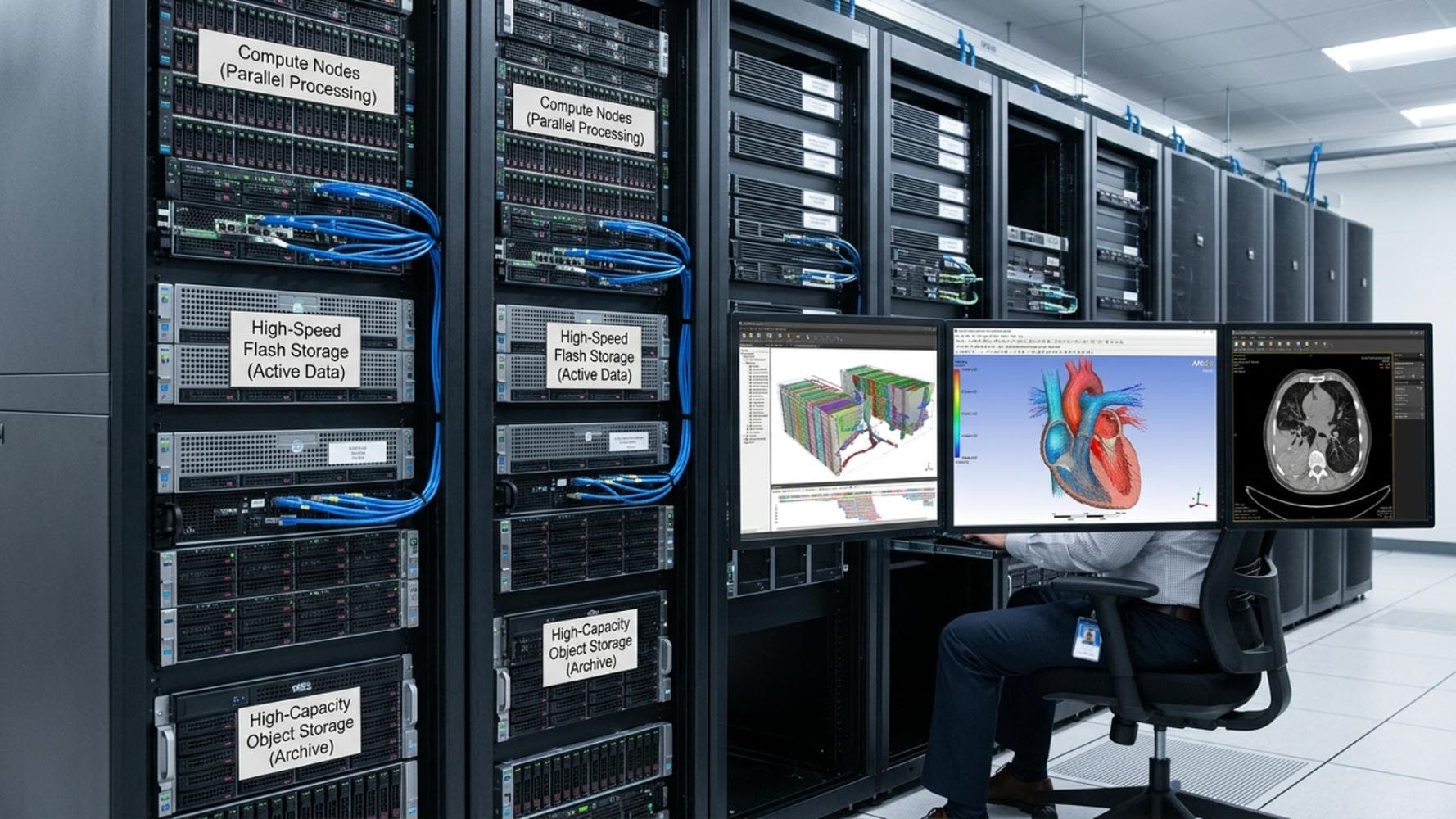
Storage architecture for medical HPC presents unique challenges due to the massive datasets involved. A typical genomic sequencing operation can generate terabytes of data, while medical imaging archives grow by petabytes annually. Modern medical HPC employs multi-tier storage architectures:
- High-Performance Parallel File Systems (like Lustre or BeeGFS) providing hundreds of GB/s throughput for active computation
- Flash-based intermediate storage for frequently accessed datasets and intermediate results
- Object storage systems for long-term retention of medical data with appropriate compliance capabilities
Healthcare workloads demand specific architectural optimizations that differentiate medical HPC from other scientific computing domains:
- Memory subsystems with higher capacity and bandwidth to accommodate the large biological datasets
- I/O optimization for the continuous streaming of patient monitoring data or medical imaging
- Specialized accelerators for specific medical algorithms like genomic alignment or heart model simulation
in HPC for ANSYS Fluent applications in healthcare, architectural considerations become even more specialized. Computational fluid dynamics simulations of blood flow or respiratory systems require:
- High memory bandwidth to handle the complex mesh representations of anatomical structures
- Enhanced floating-point precision for accurate representation of biological fluid properties
- Low-latency node interconnects to manage the tightly-coupled nature of CFD calculations
- Optimized I/O subsystems for handling the large mesh files and simulation results
The architectural requirements scale dramatically with simulation complexity. A simplified 2D blood flow simulation might run on a workstation, while a fully-coupled 3D simulation of a complete cardiovascular system with fluid-structure interaction requires a true HPC cluster with hundreds or thousands of cores.
| Simulation Type | Computational Requirements | Storage Requirements | Typical Infrastructure |
| Basic 2D CFD | 16-32 cores | 10-50 GB | Workstation |
| 3D Steady-State | 64-256 cores | 100-500 GB | Small cluster |
| 3D Transient | 256-1024 cores | 1-5 TB | Medium cluster |
| Multi-physics FSI | 1000+ cores | 5-20 TB | Large HPC system |
| Population-scale studies | 10,000+ cores | 100+ TB | Supercomputer |
Understanding these architectural considerations is crucial for healthcare organizations planning HPC investments. The right architecture can mean the difference between simulations that take weeks versus hours, or analyses that capture critical medical insights versus those that miss subtle patterns in the data.
How HPC Reduced Analysis Time from Years to Hours
The genomic revolution represents one of the most dramatic examples of how HPC in healthcare has transformed medical research capabilities. The computational demands of genomic analysis have driven some of the most significant advances in high-performance computing architecture, while simultaneously, HPC breakthroughs have enabled entirely new approaches to genomic medicine.
When the Human Genome Project completed its first draft in 2000 after 13 years of international effort, the computational resources required were staggering for the time—yet modest by today’s standards. The project utilized what would now be considered entry-level HPC systems, with the final assembly computations running on systems with just gigaflops of performance. The cost: approximately $3 billion. Today, a complete human genome can be sequenced and analyzed in under 24 hours for less than $1,000, representing a performance improvement of over 100,000× in just two decades.
This transformation has been driven by three parallel developments:
- Algorithmic innovations that dramatically reduced computational complexity
- HPC architecture advancements specifically optimized for genomic workloads
- Specialized hardware accelerators designed for sequence alignment and variant calling
The computational pipeline for modern genomic analysis illustrates the scale of this HPC challenge:
- Raw Data Processing: Convert sequencer output to readable sequences → 1-2 TB of raw data per human genome → Highly parallelizable across thousands of cores
- Sequence Alignment: Map fragments to reference genome → Computationally intensive pattern matching → Benefits from specialized accelerators (GPUs, FPGAs) → Requires high memory bandwidth
- Variant Calling: Identify differences from reference genome → Statistical analysis across aligned sequences → Memory-intensive operations → Benefits from high core counts with large caches
- Clinical Interpretation: Determine medical significance → Knowledge-based analysis requiring database access → Machine learning integration for pattern recognition → Benefits from heterogeneous computing architectures
The performance evolution of these pipelines demonstrates the impact of HPC advancements:
| Era | System Capabilities | Genome Analysis Time | Throughput |
| 2000 | Early clusters (Gigaflops) | Years | 1 genome/year |
| 2010 | HPC clusters (Teraflops) | Weeks | 50 genomes/year |
| 2015 | GPU-accelerated (100s of Teraflops) | Days | 1000 genomes/year |
| 2020 | Specialized HPC (Petaflops) | Hours | 10,000+ genomes/year |
| 2025 (projected) | Exascale systems | Minutes | 1,000,000+ genomes/year |
This computational acceleration has enabled entirely new medical applications that were previously inconceivable:
- Rapid pathogen genomics during disease outbreaks, allowing strain identification and tracking in real-time during epidemics
- Cancer genomics that can sequence tumor DNA during surgery, providing oncologists with mutation information before the patient leaves the operating room
- Pharmacogenomics that predicts medication responses based on a patient’s genetic profile, enabling truly personalized treatment plans
- Rare disease diagnosis through whole genome sequencing, ending diagnostic odysseys for patients with previously unidentifiable conditions
The technical implementations powering these advances leverage specialized HPC architectures. For example, the Edico Genome DRAGEN platform uses FPGA-based acceleration to achieve a 30× speedup for genome analysis compared to traditional CPU implementations. Similarly, NVIDIA’s Clara Parabricks leverages GPU acceleration to reduce analysis time from 30 hours to under 1 hour for a 30× whole genome.
The computational requirements for population-scale genomics—analyzing millions of genomes to identify patterns across populations—have pushed the boundaries of HPC even further. Projects like the UK Biobank, which aims to sequence 500,000 genomes, require exascale computing capabilities and novel approaches to distributed computing and data management.
The storage and data management challenges are equally significant. A single human genome generates approximately:
- 100-200 GB of raw sequencing data
- 30-50 GB of aligned sequence data
- 1-5 GB of variant data
For population-scale projects, this translates to exabytes of data that must be stored, managed, and analyzed—requiring specialized HPC storage architectures with hierarchical data management capabilities.
The future of genomic HPC lies in real-time analysis capabilities that will enable:
- Continuous monitoring of pathogen evolution during outbreaks
- Immediate genomic analysis in emergency medicine
- Integration of genomic data with other clinical information for comprehensive health modeling
These advances demonstrate how HPC has not merely accelerated existing genomic workflows but has fundamentally transformed what’s possible in genomic medicine—creating capabilities that simply could not exist without massive computational resources.
Digital Twins and Patient-Specific Modeling with ANSYS Fluent in hpc for healthcare
The concept of digital twins—virtual replicas of physical entities that simulate real-world behaviors—represents one of the most promising applications of HPC in healthcare. When applied to patient-specific modeling, this approach enables unprecedented precision in treatment planning and medical device design. ANSYS Fluent, with its advanced computational fluid dynamics capabilities, has emerged as a critical tool in this revolution, particularly for cardiovascular, respiratory, and neurological applications.
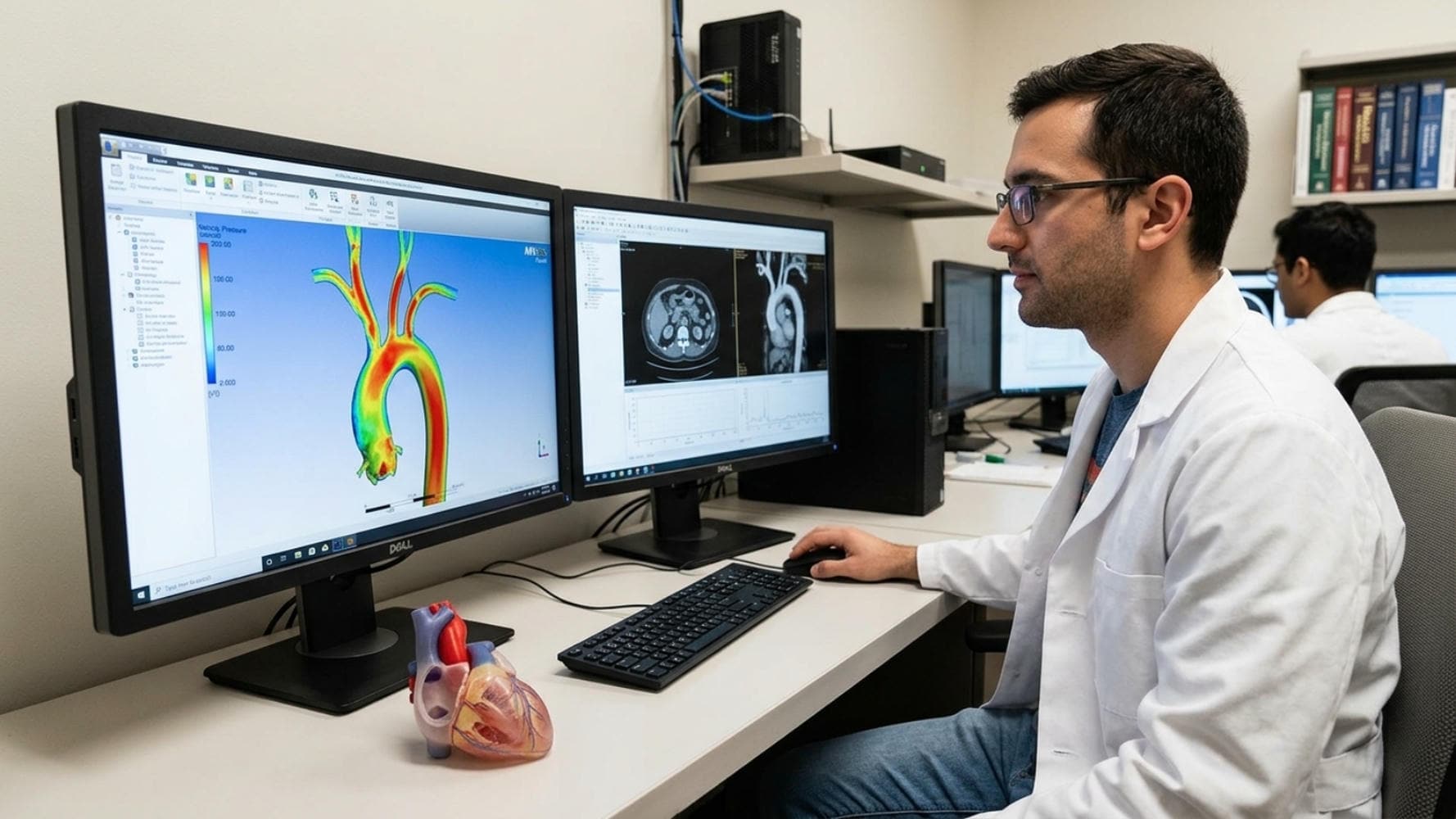
Patient-specific modeling fundamentally transforms the traditional “one-size-fits-all” approach to medicine. By creating detailed computational models based on an individual patient’s anatomy and physiology, clinicians can simulate interventions before performing them, predict outcomes with greater accuracy, and optimize treatments for each unique patient. This paradigm shift has been made possible by the convergence of three technologies:
- Advanced medical imaging (CT, MRI) providing high-resolution anatomical data
- Sophisticated computational fluid dynamics software like ANSYS Fluent
- High-performance computing infrastructure capable of running complex simulations in clinically relevant timeframes
The workflow for creating patient-specific models using ANSYS Fluent involves several computationally intensive steps:
- Image Acquisition & Segmentation: Convert medical imaging (CT/MRI) to 3D anatomical models, using semi-automated segmentation with machine learning assistance, outputting an accurate 3D representation of patient anatomy.
- Mesh Generation: Create computational mesh representing the fluid domain, requiring high-resolution near boundaries (vessel walls), typically 5-50 million elements for accurate cardiovascular models.
- Boundary Condition Assignment: Apply patient-specific flow conditions from clinical measurements, incorporate tissue properties and physiological parameters, and define simulation parameters based on clinical objectives.
- Parallel Simulation Execution: Distribute computation across HPC resources, solve Navier-Stokes equations with appropriate turbulence models, and capture transient phenomena across multiple cardiac cycles.
- Post-Processing & Clinical Interpretation: Extract clinically relevant parameters (pressure gradients, wall shear stress), visualize results for clinical decision-making, and compare intervention scenarios for optimal treatment selection.
The computational demands of these simulations are substantial. A typical patient-specific cardiovascular simulation in ANSYS Fluent requires:
| Simulation Aspect | Typical Requirements | Clinical Impact |
| Mesh Resolution | 10-50 million elements | Accuracy of flow prediction near vessel walls |
| Time Steps | 1000+ per cardiac cycle | Capture of transient flow phenomena |
| Simulation Duration | 3-5 cardiac cycles | Establishment of periodic solution |
| Compute Resources | 256-1024 cores | Delivery of results within clinical timeframes |
| Storage Requirements | 1-5 TB | Preservation of full solution for future analysis |
Real-world applications of patient-specific modeling with ANSYS Fluent have demonstrated significant clinical value:
Cardiovascular Applications
In cardiovascular medicine, ANSYS Fluent simulations enable detailed analysis of blood flow patterns in complex anatomies. For patients with aortic aneurysms, these simulations can predict rupture risk with greater accuracy than traditional diameter-based assessments. Studies have shown that incorporating wall shear stress predictions from CFD simulations improves risk stratification by 30-40% compared to conventional methods.
For surgical planning, virtual testing of different intervention options has proven invaluable. In complex congenital heart defect repairs, surgeons can evaluate multiple surgical approaches virtually before entering the operating room. One study at Boston Children’s Hospital demonstrated that pre-surgical CFD modeling changed the planned surgical approach in 30% of complex cases, leading to improved outcomes.
Respiratory Applications
In pulmonary medicine, ANSYS Fluent enables detailed modeling of airflow in the bronchial tree, helping predict drug delivery patterns for inhaled medications or optimizing ventilator settings for critically ill patients. During the COVID-19 pandemic, these capabilities proved particularly valuable, with researchers using HPC-powered Fluent simulations to:
- Optimize ventilator designs for emergency production
- Model aerosol transmission in hospital environments
- Predict the effectiveness of various mask designs
These simulations typically require even higher mesh resolutions than cardiovascular models due to the complex branching structure of the airways, with element counts often exceeding 100 million for detailed respiratory models.
Neurological Applications
Cerebrovascular modeling represents another frontier for patient-specific simulation. For patients with intracranial aneurysms, ANSYS Fluent simulations can predict flow patterns that correlate with rupture risk. Similarly, for stroke patients, virtual testing of thrombectomy devices can help optimize device selection and procedural approaches.
The computational requirements for these neurological applications are particularly demanding due to the need for:
- Extremely fine mesh resolution to capture small vessels
- Complex rheological models for blood behavior in low-flow conditions
- Fluid-structure interaction to model vessel wall deformation
The clinical impact of these patient-specific models extends beyond individual treatment planning. The aggregation of simulation results across patient populations is creating valuable databases that inform medical device design, surgical technique development, and clinical guideline formulation. As HPC resources become more accessible and simulation workflows more automated, patient-specific modeling is transitioning from a research tool to a standard component of clinical decision-making.
ANSYS Fluent’s HPC Requirements for Advanced Cardiovascular Simulations
Cardiovascular simulations represent some of the most computationally demanding applications in medical computing, requiring specialized HPC configurations to deliver clinically relevant results within practical timeframes. ANSYS Fluent, as an industry-leading CFD solver, has specific hardware and software requirements to efficiently handle these complex biomedical simulations.

The computational challenges of cardiovascular CFD stem from several factors that distinguish these simulations from traditional engineering applications:
- Geometric complexity: Vascular structures feature intricate branching patterns, curvature, and patient-specific anatomical variations that necessitate high-resolution meshes
- Multi-physics coupling: Blood flow simulations often require fluid-structure interaction to model vessel wall deformation and tissue response
- Non-Newtonian fluid behavior: Blood exhibits complex rheological properties that require sophisticated material models
- Pulsatile flow conditions: Cardiac-driven flow creates transient conditions requiring fine temporal resolution
- Multi-scale phenomena: Critical flow features span multiple scales from millimeters (large vessels) to micrometers (near-wall regions)
These challenges translate into specific HPC requirements for ANSYS Fluent to deliver accurate, timely results for cardiovascular applications:
Processor Architecture Requirements
ANSYS Fluent performance for cardiovascular simulations scales differently across processor architectures. Benchmark testing reveals significant performance variations:
| Architecture | Relative Performance | Optimal Use Case |
| Intel Xeon Gold | Baseline (1.0×) | General-purpose simulations |
| AMD EPYC Milan | 1.2-1.4× | Memory-intensive large meshes |
| Intel Xeon Ice Lake | 1.3-1.5× | Balanced performance |
| AMD EPYC Genoa | 1.4-1.6× | High core-count scaling |
| NVIDIA A100 GPU | 2.0-3.0× (with GPU solver) | Accelerated steady-state solutions |
For optimal performance, cardiovascular simulations benefit from:
- High core count processors (32+ cores per socket)
- Large L3 cache (64MB+) to accommodate complex solver data
- High memory bandwidth (200+ GB/s per socket)
- AVX-512 or equivalent vector extensions for floating-point operations
Memory Requirements
Memory consumption represents a critical constraint for cardiovascular simulations. The relationship between mesh size and memory requirements follows predictable patterns:
| Mesh Size (Elements) | Minimum RAM Required | Recommended RAM | Simulation Type |
| 1-5 million | 16-32 GB | 64 GB | Simplified steady-state |
| 5-20 million | 64-128 GB | 256 GB | Standard pulsatile flow |
| 20-50 million | 256-512 GB | 1 TB | Detailed FSI models |
| 50-100 million | 1-2 TB | 4 TB | Multi-vessel systems |
| 100+ million | 4+ TB | 8+ TB | Whole-circulation models |
Memory bandwidth becomes particularly important for transient simulations where solution data must be transferred between memory and processors at each time step. Systems with high memory bandwidth (200+ GB/s per socket) demonstrate 20-40% performance improvements for cardiovascular simulations compared to systems with standard memory configurations.
Storage Architecture
Cardiovascular simulations generate massive datasets that require specialized storage solutions:
| Workflow Phase | I/O Pattern | Throughput Requirement | Capacity Requirement |
| Mesh Loading | Sequential Read | 2-5 GB/s | 10-100 GB per case |
| Solution Progress | Random Write | 1-3 GB/s | 100-500 GB per case |
| Results Storage | Sequential Write | 5-10 GB/s | 1-5 TB per case |
| Post-processing | Random Read | 3-8 GB/s | Varies by analysis |
For production environments running multiple cardiovascular simulations, a multi-tier storage architecture is recommended:
- High-performance parallel file system (Lustre, BeeGFS) for active simulations
- Flash storage tier for frequently accessed patient data and results
- Object storage for long-term archival of simulation results
- Automated data lifecycle management to migrate results between tiers
Interconnect Requirements
The tightly-coupled nature of CFD calculations makes interconnect performance critical for scaling cardiovascular simulations across multiple nodes:
| Interconnect Technology | Latency | Bandwidth | Scaling Efficiency at 1024 Cores |
| 100 Gb Ethernet | 1.5-2.0 μs | 12.5 GB/s | 40-60% |
| InfiniBand HDR | 0.5-0.7 μs | 25 GB/s | 70-85% |
| InfiniBand NDR | 0.4-0.5 μs | 50 GB/s | 80-90% |
| Proprietary (Slingshot, OmniPath) | 0.5-0.8 μs | 25-32 GB/s | 75-85% |
For cardiovascular simulations with complex geometries, the communication overhead increases substantially as the simulation scales across nodes. Testing shows that latency-sensitive operations in the pressure-velocity coupling algorithm benefit significantly from high-performance interconnects, with scaling efficiency dropping below 50% on standard Ethernet networks beyond 512 cores.
Software Optimization
Maximizing ANSYS Fluent performance for cardiovascular simulations requires specific software configurations:
| Setting | Recommendation | Performance Impact |
| Solver Type | Pressure-based coupled | 30-40% faster than segregated |
| AMG Solver Settings | F-cycle, aggressive | 15-25% convergence improvement |
| Parallel Partitioning | METIS with load balancing | 10-20% better scaling |
| Precision | Double (required) | Necessary for accuracy |
| Turbulence Model | k-ω SST or LES | Application-dependent |
| Discretization | Second-order upwind | Required for accuracy |
Additional software considerations include:
- Proper MPI implementation selection (Intel MPI, OpenMPI, or MVAPICH2)
- Processor affinity settings to optimize NUMA access patterns
- I/O configuration to leverage parallel file systems effectively
- Use of in-situ visualization to reduce storage requirements
Scaling Characteristics
Understanding how cardiovascular simulations scale is essential for HPC resource planning. Benchmark data shows distinctive scaling patterns, with ideal scaling being linear, while actual scaling efficiency decreases as the number of cores increases beyond a certain point.
Typical parallel efficiency for medical simulations:
- 90-95% efficiency up to 128 cores
- 80-90% efficiency from 128-512 cores
- 70-80% efficiency from 512-2048 cores
- 50-70% efficiency beyond 2048 cores
The optimal core count depends on simulation size and time constraints:
| Simulation Size | Optimal Core Count | Time to Solution | Parallel Efficiency |
| 5-10M elements | 64-128 | 2-4 hours | 85-95% |
| 10-50M elements | 256-512 | 4-8 hours | 75-85% |
| 50-100M elements | 512-1024 | 8-12 hours | 65-75% |
| 100M+ elements | 1024-4096 | 12-24 hours | 50-65% |
For most clinical applications, configuring systems to deliver results within 12-24 hours represents the optimal balance between computational resource utilization and clinical workflow integration. This typically requires 256-1024 cores for standard cardiovascular models, though complex multi-physics simulations may require significantly more.
The specialized HPC requirements for ANSYS Fluent in cardiovascular applications highlight the importance of purpose-built computing infrastructure for advanced medical simulations. As these simulations become increasingly integrated into clinical workflows, optimizing HPC configurations becomes essential for delivering actionable results within timeframes that impact patient care.
HPC’s Role in Pharmaceutical Breakthroughs
The pharmaceutical industry has undergone a computational revolution, with HPC solutions for healthcare dramatically transforming the drug discovery process. Traditional drug development—a process that historically took 10-15 years and cost billions of dollars—is being compressed through computational methods that enable researchers to screen millions of compounds, simulate molecular interactions, and predict drug efficacy with unprecedented accuracy.

The impact of HPC on pharmaceutical research can be measured in both time and cost savings. Recent studies indicate that computational methods reduce early-stage drug discovery timelines by 40-50% and cut associated costs by 25-30%. More importantly, HPC-driven approaches increase the probability of clinical success by identifying potential failures earlier in the development pipeline.
Molecular Dynamics Simulations: The Computational Foundation
At the heart of computational drug discovery are molecular dynamics (MD) simulations—computationally intensive calculations that model the physical movements and interactions of atoms and molecules. These simulations reveal crucial insights about protein-ligand binding, conformational changes, and drug mechanism of action that would be impossible to observe through experimental methods alone.
The computational requirements for these simulations are staggering:
| System Size | Atoms | Simulation Time | Computational Demand |
| Small Protein | 10K-50K | Nanoseconds | 100s of core-hours |
| Protein-Ligand | 50K-100K | Microseconds | 1000s of core-hours |
| Membrane Protein | 100K-500K | Microseconds | 10,000s of core-hours |
| Cellular System | 1M-10M | Milliseconds | Millions of core-hours |
Modern drug discovery leverages specialized MD software optimized for HPC environments, including:
- AMBER (Assisted Model Building with Energy Refinement)
- GROMACS (GROningen MAchine for Chemical Simulations)
- NAMD (NAnoscale Molecular Dynamics)
- Desmond (part of Schrödinger’s platform)
These packages have been extensively optimized for parallel execution, with performance scaling demonstrated across thousands of cores. GPU acceleration has proven particularly effective for MD simulations, with NVIDIA’s specialized hardware delivering 10-30× performance improvements compared to CPU-only implementations.
Virtual Screening: Searching Chemical Space at Scale
Virtual screening represents another computationally intensive phase of modern drug discovery, where millions of compounds are evaluated for potential binding affinity to target proteins. This approach dramatically reduces the number of compounds that need to be synthesized and tested experimentally.
HPC enables two complementary approaches to virtual screening:
- Structure-based virtual screening: Docking simulations that predict how compounds bind to protein targets
- Ligand-based virtual screening: Machine learning models that identify patterns in known active compounds
The computational demands scale with the size of the chemical libraries being screened:
| Library Size | Compounds | CPU Core-Hours | GPU-Accelerated Hours | Typical HPC Configuration |
| Focused | 10K-100K | 1,000-10,000 | 100-1,000 | 64-128 cores or 4-8 GPUs |
| Corporate | 1M-10M | 100,000-1,000,000 | 10,000-100,000 | 1,000+ cores or 64+ GPUs |
| Ultra-large | 100M-1B | 10M-100M | 1M-10M | Supercomputing facility |
Recent breakthroughs in ultra-large virtual screening have been enabled by specialized HPC infrastructures. For example, researchers at the University of California used the Summit supercomputer to screen 1 billion compounds against COVID-19 targets in just 24 hours—a task that would have taken years on traditional computing resources.
De Novo Drug Design: Computational Creativity
Perhaps the most advanced application of HPC in drug discovery is de novo drug design—using computational methods to create entirely new molecular structures optimized for specific targets. These approaches leverage generative models, evolutionary algorithms, and reinforcement learning to explore chemical space far beyond known compounds.
The computational architecture for de novo drug design typically involves:
- Target Characterization: Protein structure preparation and binding site analysis, and MD simulations to identify dynamic binding pockets. Requires hundreds to thousands of core-hours per target.
- Generative Model Training: Deep learning on chemical databases (often 100M+ compounds), model optimization and validation. Requires GPU clusters with 16-64 GPUs for days/weeks.
- Compound Generation: Sampling from trained models with target constraints, property prediction and filtering. Moderate parallelization across tens to hundreds of cores.
- Candidate Evaluation: Docking and scoring of generated compounds, and MD simulation of promising candidates. Highly parallelizable across thousands of cores.
- Experimental Validation Planning: Synthesis pathway prediction and ADMET property prediction. Moderate computational requirements.
Recent successes in this field include the development of novel antibiotics against resistant bacteria and the creation of selective kinase inhibitors for cancer treatment—both achieved through HPC-powered computational design methods that identified molecules human researchers would likely never have conceived.
Real-World Impact: Case Studies for hpc in healthcare
The pharmaceutical industry has seen numerous examples where HPC has directly enabled major breakthroughs:

- Case Study 1: COVID-19 Antiviral Development. When the COVID-19 pandemic emerged, researchers leveraged HPC resources to rapidly identify potential treatments. Using a combination of virtual screening and MD simulations, scientists identified several promising compounds within weeks rather than years. The development of Pfizer’s Paxlovid (nirmatrelvir) benefited significantly from computational methods, with HPC simulations helping optimize the molecule’s interaction with the viral main protease.
- Case Study 2: Cancer Immunotherapy Target Discovery. Researchers at a major pharmaceutical company employed HPC-powered simulations to understand the binding mechanism between PD-1 and PD-L1—key proteins in cancer immunotherapy. These simulations, running on a 10,000-core cluster, revealed previously unknown binding dynamics that led to the development of small-molecule inhibitors with improved efficacy and reduced side effects.
- Case Study 3: Alzheimer’s Drug Development. The complex pathology of Alzheimer’s disease has made traditional drug development particularly challenging. HPC-enabled simulations of amyloid-beta aggregation—running on specialized Anton supercomputers—provided unprecedented insights into the molecular mechanisms of disease progression. These simulations guided the design of compounds that specifically target the early stages of protein misfolding, representing a novel therapeutic approach.
Future Directions: Exascale Impact
As exascale computing becomes available to pharmaceutical research, several transformative capabilities are emerging:
- Whole-cell simulations that model entire cellular environments, capturing drug effects across multiple pathways simultaneously
- Patient-specific drug response prediction by incorporating genomic data into pharmacological models
- Real-time adaptive drug design where AI algorithms continuously refine molecular structures based on simulation results
These capabilities promise to further compress drug discovery timelines while increasing success rates—potentially reducing the average time from target identification to clinical candidate from years to months for certain drug classes.
The integration of HPC into pharmaceutical research represents one of the most significant technological transformations in modern medicine, enabling researchers to explore chemical space and biological interactions with unprecedented depth and efficiency. As computational methods become more sophisticated and HPC resources more powerful, we can expect an acceleration in the pace of drug discovery that will directly translate to improved patient outcomes across a wide range of diseases.
Medical Imaging Revolution: How HPC Powers AI-Enhanced Diagnostics
Medical imaging has undergone a profound transformation through the integration of high-performance computing and artificial intelligence, creating diagnostic capabilities that were unimaginable just a decade ago. This convergence of HPC in healthcare with advanced imaging algorithms has not only enhanced the quality and speed of traditional diagnostics but has enabled entirely new approaches to disease detection, characterization, and monitoring.
The computational demands of modern medical imaging are extraordinary, driven by increasing resolution, dimensionality, and complexity. A typical hospital now generates petabytes of imaging data annually—from traditional modalities like CT, MRI, and ultrasound to advanced techniques like functional MRI, spectroscopic imaging, and molecular imaging. Processing this data at scale requires specialized HPC infrastructure optimized for both traditional image processing and emerging AI-based analysis.
Computational Challenges in Advanced Medical Imaging
Modern medical imaging presents unique computational challenges that distinguish it from other HPC workloads:
- Data Volume: High-resolution 3D and 4D imaging studies routinely generate gigabytes of data per patient examination
- Real-time Requirements: Many clinical workflows require immediate processing and analysis
- Complex Algorithms: Advanced reconstruction and analysis techniques involve computationally intensive operations
- Heterogeneous Workloads: Imaging pipelines combine different computational patterns (signal processing, linear algebra, neural network inference)
These challenges translate into specific HPC requirements:
| Modality | Data Size | Processing Type | HPC Requirement |
| CT Reconstruction | 1-5 GB | FFT-based, iterative | GPU acceleration |
| MRI Reconstruction | 2-10 GB | Complex matrix ops | High memory bandwidth |
| fMRI Analysis | 5-20 GB | Statistical, ML | High core count + GPU |
| 3D Ultrasound | 1-3 GB | Real-time processing | Low-latency inference |
| Digital Pathology | 10-100 GB | CNN-based analysis | GPU clusters |
| Molecular Imaging | 1-5 GB | Iterative recon | GPU acceleration |
For a typical hospital imaging department, the aggregate computational requirements are substantial:
| Workflow Component | Daily Processing Volume | Computational Demand | Storage Requirement |
| Image Acquisition | 100-500 studies | 10-50 TFLOPS | 1-5 TB/day |
| Image Reconstruction | 100-500 studies | 50-200 TFLOPS | Temporary |
| Primary Analysis | 100-500 studies | 100-500 TFLOPS | 5-10 TB/day |
| AI-based Detection | 50-250 studies | 200-1000 TFLOPS | Metadata only |
| Advanced Visualization | 20-100 studies | 50-200 TFLOPS | Temporary |
| Research Applications | 5-20 studies | 100-500 TFLOPS | 1-2 TB/day |
Conclusion: The Future of Healthcare Runs on High-Performance Computing
The evidence is clear — HPC solutions in healthcare are no longer an emerging trend; they are the present and future backbone of medical innovation. From decoding the human genome in hours to simulating patient-specific blood flow dynamics with ANSYS Fluent, high-performance computing has fundamentally redefined what is scientifically and clinically possible.
Key Takeaways From This Article
Before we close, here’s a summary of the most critical insights covered throughout this guide:
- HPC dramatically accelerates research timelines — cutting processes that once took years down to days or even hours
- CFD simulations powered by HPC are enabling life-saving insights into cardiovascular disease, respiratory conditions, and surgical planning
- ANSYS Fluent has emerged as a gold-standard tool for patient-specific medical simulations when backed by HPC infrastructure
- Genomics and precision medicine are only scalable at a population level thanks to HPC parallel processing capabilities
- AI and machine learning in diagnostics and drug discovery are entirely dependent on HPC computational power
- The ROI of HPC in healthcare extends beyond speed — it translates directly into saved lives, reduced costs, and faster drug approvals
Related Posts

Operating Pressure in ANSYS Fluent: Gauge, Absolute & Stagnation Pressure Explained
Operating pressure in ANSYS Fluent is the reference pressure (default 101325 Pa) to which all…
What is Conjugate Heat Transfer Simulation? Complete CHT Guide
Conjugate Heat Transfer (CHT) simulation is a CFD method that solves fluid flow and solid…

CFD Project Outsourcing: What Files, Reports, and Results Should You Expect?
When engineering teams decide to outsource CFD simulation, the conversation almost always starts with capability and…
 Talk On WhatsApp
Comments (0)