

Is a CFD Course Worth It? Boost Your Engineering Career with CFD Online Courses!
As a Principal CFD Simulation Engineer with over 15 years in the trenches, I’ve seen firsthand how the engineering landscape has evolved. The question I hear most often from ambitious engineers is simple: “Is a CFD course really worth the time and investment?” The short answer is an unequivocal yes. The longer answer is that it’s not just “worth it”—it’s one of the most strategic career moves an engineer can make today. This article will break down exactly why investing in advanced CFD training is your launchpad to higher salaries, more exciting job opportunities, and a skillset that makes you indispensable in a competitive market.
Why is CFD Essential for Modern Engineers?
Computational Fluid Dynamics (CFD) is no longer a niche specialization reserved for aerospace or Formula 1. It has become a foundational tool across nearly every engineering discipline. At its core, CFD allows us to visualize the invisible—the flow of air over a wing, the mixing of chemicals in a reactor, the cooling of a microprocessor. It empowers engineers to move beyond simplified textbook equations and tackle the complex, non-linear reality of fluid dynamics, heat transfer, and related physical phenomena.
What Industries Rely Heavily on CFD Expertise?
The demand for Computational Fluid Dynamics skills is broad and deep. Virtually any industry dealing with fluid flow, thermal management, or chemical reactions leverages CFD to gain a competitive edge.
- Aerospace & Defense: For aerodynamic analysis of aircraft, predicting lift and drag, and designing high-performance propulsion systems.
- Automotive: To optimize vehicle aerodynamics for fuel efficiency, manage under-hood thermal conditions, and design efficient HVAC systems.
- Energy & Power Generation: For designing wind turbines, optimizing combustion in gas turbines, and analyzing flow in nuclear reactor cores.
- Biomedical: To simulate blood flow in arteries, analyze drug delivery mechanisms, and design next-generation medical devices like artificial heart valves.
- Electronics: Crucial for thermal management of CPUs, GPUs, and data centers, ensuring components operate within safe temperature limits.
- Process Industries: For designing and optimizing chemical reactors, mixing vessels, and separation equipment in chemical, oil & gas, and pharmaceutical manufacturing.
How Does CFD Drive Innovation and Problem-Solving in Engineering?
CFD acts as a virtual laboratory on your desktop, fundamentally changing the engineering design and development cycle. 🚀
- Drastic Reduction in Prototyping Costs: Physical prototypes are expensive and time-consuming. A single CFD simulation can explore dozens of design iterations for a fraction of the cost of building just one physical model.
- Accelerated R&D Cycles: Instead of waiting weeks for a prototype to be built and tested, we can get detailed performance data from a simulation in hours or days. This allows for rapid innovation and gets products to market faster.
- Deep Physical Insight: Experimental testing can tell you what happened, but CFD tells you why. It provides detailed, field-wide data on velocity, pressure, temperature, and species concentration, revealing complex flow structures that are impossible to observe otherwise. This deep understanding is the key to true optimization.
- Predictive Analysis: CFD enables us to test designs under extreme or hazardous conditions that would be impractical or unsafe to replicate in the real world, such as simulating a catastrophic failure or modeling combustion instability. This predictive power is a game-changer for safety and reliability.
This ability to virtually test and gain profound insights is why a strong foundation in CFD is no longer a “nice to have”—it’s a core competency for any engineer serious about innovation.
How Can a CFD Course Significantly Increase Your Salary and Earning Potential?
Let’s address the bottom line: investing in a high-quality CFD training program directly translates to a higher market value and increased earning potential. Companies are willing to pay a premium for engineers who can deliver optimized, efficient, and reliable designs. The ability to use advanced simulation tools to solve high-stakes problems is a rare and valuable skill. This isn’t just about adding a line to your resume; it’s about acquiring a capability that directly impacts product performance, safety, and profitability.
What are the Average Salary Ranges for CFD Engineers?
While exact figures vary by location, industry, and experience, the trend is clear: CFD specialists command higher salaries than their generalist counterparts. The CFD engineer salary reflects the specialized nature of the work.
These figures demonstrate a clear financial incentive. The skills you gain from an advanced Ansys Fluent course directly position you to climb this ladder faster.
How Do Advanced CFD Skills Impact Career Progression and Pay?
Moving beyond basic simulations is where the real value is created. Mastering advanced CFD techniques is the key to unlocking the highest salary brackets and leadership roles.
- Multiphase Flow: Expertise in models like Volume of Fluid (VOF) or Discrete Phase Model (DPM) service is critical in industries from oil & gas to pharmaceuticals. Engineers who can accurately model sprays, boiling, or mixing are in extremely high demand.
- Fluid-Structure Interaction (FSI): Simulating the interplay between fluids and deforming structures is a complex but vital skill for applications like aircraft wing flutter, bridge aerodynamics, or biomechanical devices. Our FSI simulation course at MR CFD is designed specifically to build this high-value expertise.
- Combustion & Reactions: For any industry dealing with energy conversion, from gas turbines to internal combustion engines, skilled combustion modelers are indispensable.
- User-Defined Functions (UDFs): The ability to write UDFs in C to customize Ansys Fluent demonstrates a mastery that sets you apart. It allows you to solve non-standard problems that off-the-shelf software cannot, making you a true problem-solver and an invaluable asset to any R&D team.
Acquiring these advanced skills signals to employers that you can tackle their most challenging, highest-stakes problems, which naturally leads to a more senior role and a significantly higher salary.
What Job Opportunities Open Up with Advanced CFD Training?
A comprehensive CFD course doesn’t just enhance your current role; it opens doors to a wide array of new and exciting CFD simulation jobs. With a validated skillset and a strong portfolio of projects—a key focus of our training at MR CFD—you become a prime candidate for specialized positions that are both professionally rewarding and financially lucrative. The demand for engineers who can bridge the gap between theoretical knowledge and practical simulation is at an all-time high.
What Specific Job Titles Require CFD Proficiency?
After completing advanced training, you’ll be qualified for a range of specialized roles. Here are a few common titles and what they entail:
- CFD Engineer/Analyst: The core role, focused entirely on setting up, running, and analyzing CFD simulations to guide design decisions.
- Simulation Specialist: A broader role that may include CFD, Finite Element Analysis (FEA), and other CAE tools.
- Aerodynamicist: An aerospace-focused role dedicated to analyzing and optimizing the aerodynamic performance of vehicles like aircraft, rockets, and race cars.
- Thermal Analyst/Engineer: A role centered on heat transfer and thermal management, crucial in electronics, automotive, and power generation industries.
- R&D Engineer: In many R&D departments, CFD is a primary tool for exploring new concepts and validating innovative designs before they reach the prototyping stage.
- Design Engineer: Modern design engineers are increasingly expected to have CFD proficiency to perform initial simulations and optimize their designs early in the process.
Where Can I Find In-Demand CFD Roles (Industry vs. Academia vs. Consulting)?
Your CFD certification can lead you down several exciting career paths, each with its own unique environment and challenges.
- Industry (Large Corporations): Companies like Boeing, Tesla, Apple, or GE have dedicated simulation teams working on cutting-edge products. These roles offer stability, access to significant computational resources (HPC), and a direct impact on tangible products.
- Academia & Research Labs: For those passionate about fundamental research, universities and national labs (e.g., NASA, NREL) offer opportunities to push the boundaries of CFD methodology and apply it to groundbreaking scientific challenges.
- Consulting Firms: Specialized firms like MR CFD consulting offer the chance to work on diverse projects across multiple industries. This path provides rapid learning, exposure to a wide variety of engineering problems, and the opportunity to become a true expert in solving complex, multi-physics challenges.
No matter the path, the core skills remain the same, making CFD a versatile and transferable expertise.
What Essential Technical Skills Will You Gain from an Advanced CFD Course?
A top-tier CFD course goes far beyond teaching you which buttons to click in a software interface. It equips you with a deep, first-principles understanding of the physics and the numerical methods that underpin successful simulation. This is the difference between a technician and a true simulation engineer.
How Does Meshing Expertise (e.g., Overset, Poly-Hexcore) Enhance Simulation Accuracy?
Garbage in, garbage out. This is the golden rule of simulation, and it starts with the mesh. An advanced course teaches you that meshing is an art form grounded in science.
- Why it Matters: The mesh discretizes your geometry into finite volumes where the governing equations (Navier-Stokes) are solved. A poor-quality mesh will lead to inaccurate results or solution divergence, regardless of how sophisticated your physics models are.
- Advanced Techniques:
- Poly-Hexcore: This modern approach combines a high-quality, efficient hex-dominant core with a conformal polyhedral layer near the walls. It offers the best of both worlds: the speed and low numerical diffusion of hex meshes with the geometric flexibility of polyhedra.
- Overset (Chimera) Meshing: Indispensable for problems with large relative motion, like store separation from an aircraft or a valve opening and closing. It allows you to mesh complex components independently and have them move through each other without remeshing, saving immense engineering time.
Mastering these techniques ensures you can tackle complex, real-world geometries efficiently and with confidence in your results, a hallmark of our training methodology which focuses on benchmark simulation results.
Why are Advanced Physics Models (Multiphase, FSI, Combustion) Crucial for Complex Problems?
Real-world engineering problems are rarely single-physics. They involve the interaction of multiple phenomena, and your ability to model them accurately is what makes you valuable.
- Multiphase Flow: Whether it’s the VOF model for simulating free-surface flows (like sloshing in a fuel tank) or DPM for tracking Lagrangian particles (like fuel injection or dust transport), understanding these models is essential for a vast range of applications. Our multiphase flow training MR CFD course provides deep, practical insights into these complex models.
- Fluid-Structure Interaction (FSI): FSI is critical for ensuring structural integrity and performance when fluid forces are significant. Being able to perform a two-way coupled FSI simulation is a highly sought-after skill for analyzing everything from wind turbine blades to arterial stents.
- Combustion: Modeling combustion involves a delicate balance between fluid dynamics, chemical kinetics, and heat transfer. Expertise in models like Eddy Dissipation or Flamelet Generation is vital for designing cleaner, more efficient engines and power plants.
How Do User-Defined Functions (UDFs) Unlock Customization in Ansys Fluent?
This is where you graduate from being a software user to a true simulation developer. UDFs are C/C++ programs that you can write and hook into Ansys Fluent to customize its functionality.
- Unlocking Possibilities: With UDFs, you can implement:
- Custom boundary conditions that vary with time or location.
- Unique material properties that depend on temperature or pressure.
- Specialized source terms to model phenomena not built into the standard solver.
- Complex post-processing routines.
The ability to write UDFs is a massive differentiator. It proves you can think beyond the GUI and tailor the tool to solve the specific problem at hand, not the other way around. This is a core component of our most advanced training modules.
What Post-Processing and Data Analysis Skills are Developed in CFD Training?
A simulation is useless without the ability to interpret and communicate its results. Effective post-processing is a critical skill that separates novice analysts from seasoned experts. An advanced course will teach you to:
- Go Beyond Pretty Pictures: Learn to extract quantitative, actionable data from your results. This includes calculating integral quantities like lift and drag, generating XY plots along critical lines, and performing statistical analysis.
- Validate Your Results: Understand the importance of validation against experimental data. Learn how to perform mesh independence studies and compare your simulation results with benchmarks to quantify accuracy and build trust in your model.
- Communicate Effectively: Master the art of creating clear, concise reports and visualizations that convey key findings to non-experts, such as project managers and design leads. This skill is just as important as running the simulation itself.
Why Choose MR CFD for Your Advanced CFD Training?
When you decide to learn CFD online, choosing the right partner is critical. Your goal isn’t just to watch videos; it’s to acquire a deep, practical, and immediately applicable skill set that will tangibly advance your career. At MR CFD, our entire philosophy is built around transforming engineers into high-impact simulation experts through rigorous, industry-focused training.
What Makes MR CFD’s Courses Stand Out in the Industry?
We are not a generic online learning platform. We are practicing CFD engineers with decades of combined experience solving hard problems for leading companies. This real-world expertise is embedded in everything we do.
✅ Instruction from Certified Ansys Experts: Our courses are developed and taught by engineers who hold the highest levels of certification and have spent years applying these tools to real-world case studies.
✅ Project-Based Learning: You don’t just learn theory. You build a portfolio of impressive simulation projects from start to finish, applying industry best practices and peer-reviewed methods.
✅ Focus on Advanced Methodology: We specialize in the complex topics that deliver the most career impact—multiphase flow, FSI, DEM, UDFs, and advanced meshing.
✅ Unparalleled Support: You get direct access to expert instructors to ask questions and get guidance on your specific challenges, ensuring you never get stuck.
Which MR CFD Courses Align with Your Specific Career Goals?
We have structured our training to meet you where you are and take you where you want to go. Whether you’re looking to specialize in a particular physics area or build a broad foundation, we have a clear path for you.
- For Aspiring Multiphase Experts: Our Multiphase Flow Training Course is the most comprehensive program available for mastering VOF, DPM, and Eulerian models in Ansys Fluent.
- For Tackling Complex Interactions: The FSI Masterclass will equip you with the skills to confidently set up and solve complex two-way Fluid-Structure Interaction problems.
- For Ultimate Customization: Our UDF Advanced Course will teach you how to extend the power of Ansys Fluent with custom C programming, making you one of the most capable analysts in your field.
Ready to find the perfect fit for your ambitions? Explore our full catalog on our CFD Online Courses page.
Conclusion: Is a CFD Course Truly Worth the Investment?
After reviewing the evidence, the conclusion is clear. A high-quality CFD course is one of the highest-ROI investments you can make in your engineering career. It’s not an expense; it’s a strategic asset. You gain the technical skills to solve more complex problems, which unlocks access to more senior roles, a significantly higher salary, and a more fulfilling and future-proof career path. You move from being a designer to being an innovator, capable of providing the deep insights that drive modern engineering.
Take the Next Step: Explore MR CFD’s Advanced Training Programs
If you are serious about boosting your career, gaining an unfair advantage in the job market, and mastering a skill that is at the heart of modern R&D, then it’s time to act. Don’t let your career stagnate. Invest in yourself and become the expert that companies are desperately searching for.
➡️ Visit our CFD Online Courses page now to explore our curriculum and enroll in the program that will define the next chapter of your engineering career.
Frequently Asked Questions
How long does it typically take to become proficient in CFD simulations?
Proficiency depends on your background and dedication. A dedicated engineer taking a structured, project-based course can become competent in running standard CFD workflows in 3-4 months. However, true proficiency—the ability to handle complex, multi-physics problems, troubleshoot convergence issues, and confidently validate results—typically takes 12-18 months of consistent practice and application on real-world projects.
Is a strong background in fluid mechanics absolutely necessary before starting a CFD course?
While a foundational understanding of fluid mechanics, heat transfer, and numerical methods is highly beneficial, it’s not always a strict prerequisite. Most high-quality introductory courses, including those at MR CFD, revisit the core physical principles. A motivated engineer can learn these concepts concurrently. What’s more important is a strong aptitude for problem-solving and a logical mindset.
What is the primary difference between an online CFD course and a traditional university degree in terms of career impact?
A university degree provides broad theoretical knowledge, which is essential. An advanced online CFD course, especially one from an industry-focused provider like MR CFD, provides deep, practical, and tool-specific expertise. For your career, the online course often delivers a more immediate impact. Employers hire you to solve specific problems using specific tools (like Ansys Fluent). The hands-on, project-based skills from a specialized course are directly applicable from day one, making you a more attractive candidate for specific CFD simulation jobs.
Can I secure a competitive job as a CFD Engineer with only an online course certification?
Absolutely. In the simulation field, demonstrable skill and a strong project portfolio often carry more weight than traditional credentials alone. A CFD certification from a reputable, expert-led institution shows employers you have invested in practical, up-to-date skills. When you can walk into an interview and confidently discuss your experience with overset meshing, UDFs, or a complex FSI simulation you completed, you immediately stand out from candidates with only theoretical knowledge.
Which advanced Ansys Fluent modules are typically covered in MR CFD’s expert-level training?
Our expert-level training delves deep into the modules required for the toughest industry challenges. This includes:
- Multiphase Models: VOF, Eulerian, DPM, and DEM (via Fluent-Rocky coupling).
- Turbulence Modeling: Advanced models like Scale-Resolving Simulations (SAS, DES, LES) and the GEKO model.
- Heat Transfer: Conjugate Heat Transfer (CHT), radiation models (DO, S2S), and solar loading.
- Reacting Flows: Eddy Dissipation Concept (EDC), Flamelet models, and pollutant formation.
- Fluid-Structure Interaction (FSI): System Coupling for two-way FSI simulations.
- Customization: Advanced UDF and Expression programming.
Are there any recommended free resources or introductory materials to learn basic CFD concepts before committing to a course?
Yes, several excellent resources can provide a good foundation. The Cornell University “Practical CFD” notes by Prof. Z. J. Wang are a great academic resource. On the software side, Ansys offers a free student version of their software, which is perfect for familiarizing yourself with the interface. Watching introductory tutorials on YouTube can also be helpful. These resources can build your confidence before you invest in an advanced, structured program to take your skills to a professional level.
What are the recommended hardware specifications for running complex CFD simulations effectively?
For professional-level work, your hardware is crucial. Here are my practical recommendations:
- CPU: A modern CPU with a high clock speed and many cores is essential. For workstations, look at an Intel Core i9 or AMD Ryzen Threadripper. Clock speed is vital for solver performance, while more cores help with parallel processing. 12-16 cores is a great starting point.
- RAM: This is often the biggest bottleneck. For complex industrial cases, 128 GB of RAM is the recommended minimum. For very large meshes or multiphase simulations, 256 GB or more is not uncommon.
- Storage: A fast NVMe SSD is a must-have. It dramatically reduces file load/save times, which can be significant for large simulation files. A 1-2 TB NVMe for the OS and active projects, supplemented by a larger HDD for archiving, is a good setup.
- GPU: While the solver is CPU-bound, a decent professional GPU (e.g., NVIDIA RTX A-series) is important for smooth post-processing and rendering of complex 3D results.
How often do CFD methods and software capabilities evolve, requiring continuous learning and skill updates?
The field of CFD is constantly evolving. Software vendors like Ansys release major updates annually, introducing new models, improved solver algorithms, and streamlined workflows. New meshing techniques become mainstream, and computational power increases, making previously infeasible simulations (like LES) more accessible. A serious CFD engineer must be a lifelong learner. We recommend dedicating time every 2-3 months to study new release features and read technical papers on emerging methods to stay at the cutting edge. This commitment to continuous learning is what separates the experts from the average users
Related Posts
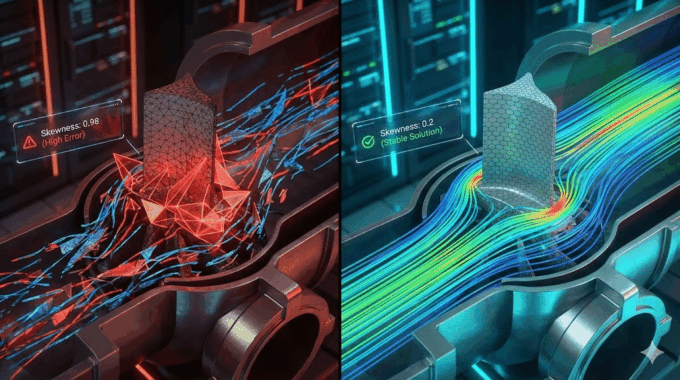
Errors Occurring in Simulations with ANSYS Fluent: A Technical Guide to Convergence & Stability
ANSYS Fluent simulates engineering problems based on the Finite Volume Method (FVM). Consequently, the errors…
How Ansys HPC Servers Accelerate Your Fluent Dynamic Simulations
We have all been there. You hit “Calculate” on a transient simulation, and the estimated…

Ansys HPC Case Study: Accelerating a 120-Million Cell Simulation Using MR CFD’s Ansys HPC Service
In the high-stakes world of aerodynamics, fidelity is everything. But as engineers, we often hit…
 Talk On WhatsApp
 Talk On WeChat

Comments (0)